Olive Young Skincare Consultation: Real Korean for Foreigners
올리브영 피부 상담 실전 한국어
A skincare consultation turns on whether you can name your skin type in Korean.
This post teaches the lines for each scene: the greeting, the type, the ingredients, the samples, the refund, the payment.
피부 상담은 자기 피부 타입을 한국어로 말할 수 있느냐에서 갈립니다.
이 글에서 인사와 타입, 성분, 샘플, 환급, 결제까지 장면마다 쓰는 말을 익힙니다.
All learning services for the teaching materials published on this blog are free for blog subscribers on the Hunmin Institute website ↗.
이 글에서 배우는 핵심 회화
Key Expressions in This Lesson
매장에서 오가는 말은 몇 마디로 정해져 있습니다. 아래 여섯 문장은 좌우가 한 쌍의 대화가 아니라 각각 따로 익히는 문장입니다. 먼저 눈에 담고 본문으로 들어가십시오.
Only a few lines go back and forth in the store. The two columns are not paired dialogue; each sentence is learned on its own. Take them in first, then move into the main text.
| 듣는 말 Listening |
하는 말 Speaking |
|---|---|
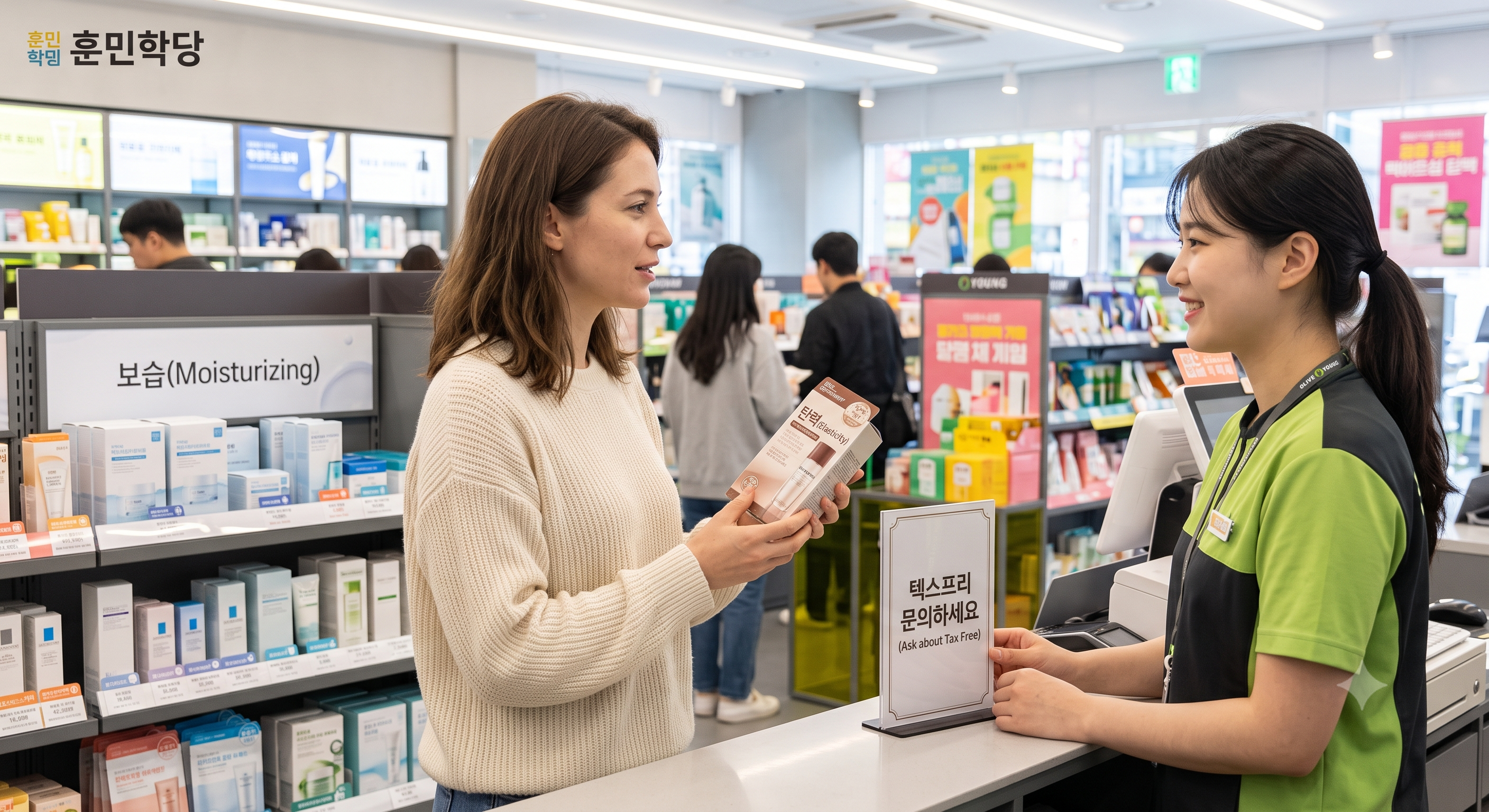
| 찾으시는 거 있으세요? [chajeusineun geo isseuseyo] Are you looking for something? |
피부 상담 받고 싶어요. [pibu sangdam batgo sipeoyo] I would like a skin consultation. |
| 피부 타입이 어떻게 되세요? [pibu taibi eotteoke doeseyo] What is your skin type? |
제 피부가 좀 건조한 편이에요. [je pibuga jom geonjohan pyeonieyo] My skin is on the dry side. |
| 멤버십 있으세요? [membeosip isseuseyo] Do you have a membership? |
텍스프리 되나요? [tekseupeuri doenayo] Is tax free available? |
첫째 줄은 소단락 1에서, 둘째 줄은 소단락 2에서, 셋째 줄은 소단락 5와 6에서 다룹니다.
The first row is covered in Section 1, the second in Section 2, and the third in Sections 5 and 6.
1. 들어서면 바로 듣는 말
What You Hear the Moment You Walk In
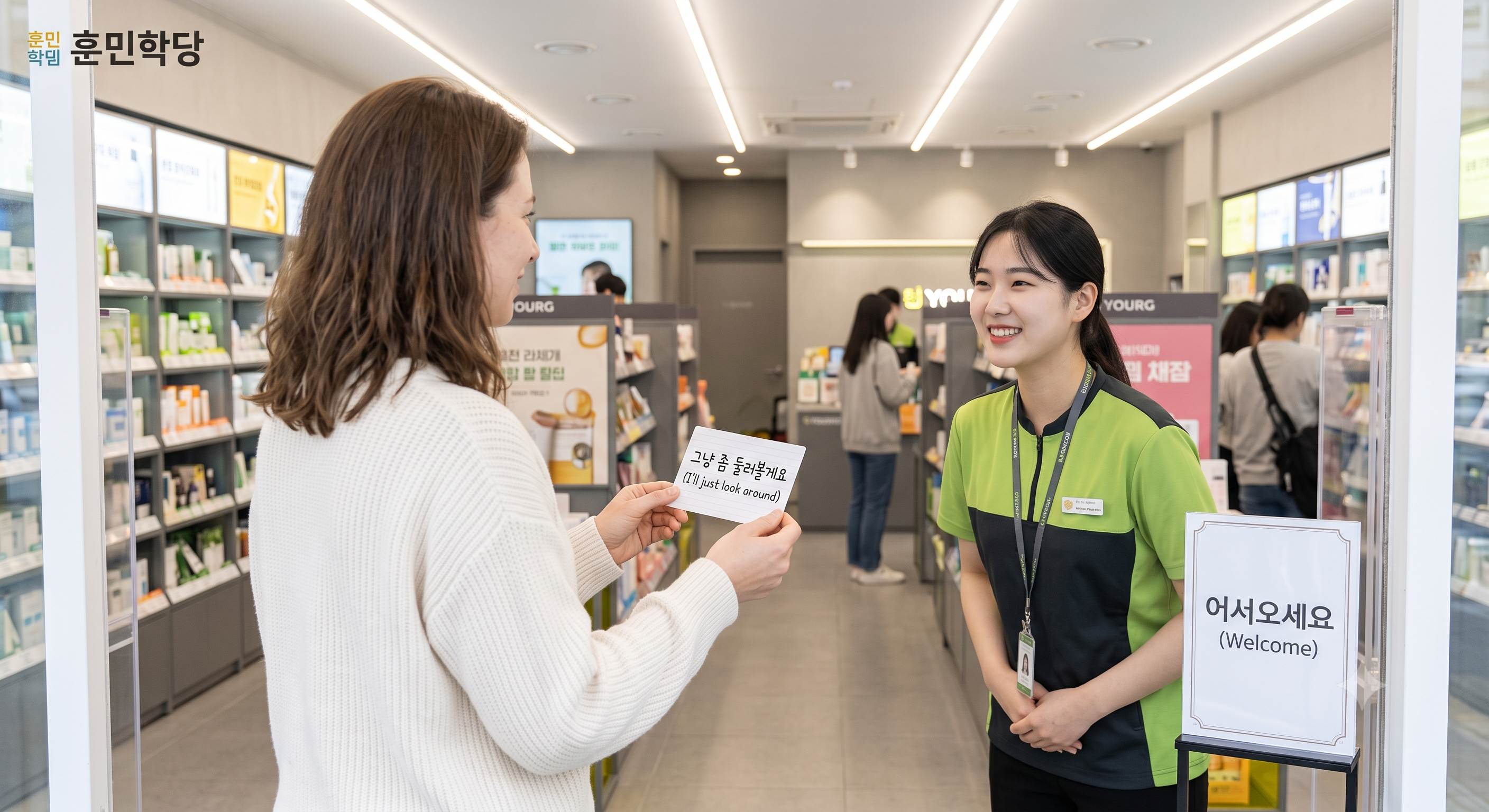
매장에 들어서면 직원이 먼저 인사를 건넵니다. 이 두 마디를 알아듣는 것이 첫 관문입니다.
Staff greet you first when you enter, and catching these two lines is the first hurdle.
여기서 쓰는 표현부터 배워봅시다. 문을 열고 들어선 순간 오가는 말입니다.
Start with the expressions you will use here. These pass the moment you walk in.
| 듣는 말 Listening |
하는 말 Speaking |
|---|---|
| 어서 오세요. [eoseo oseyo] Welcome. |
그냥 좀 둘러볼게요. [geunyang jom dulleobolgeyo] I will just look around. |
| 찾으시는 거 있으세요? [chajeusineun geo isseuseyo] Are you looking for something? |
피부 상담 받고 싶어요. [pibu sangdam batgo sipeoyo] I would like a skin consultation. |
| 도와 드릴까요? [dowa deurilkkayo] May I help you? |
추천 받고 싶어요. [chucheon batgo sipeoyo] I would like a recommendation. |
응용 Apply It
↳ [명사] 받고 싶어요
[noun] batgo sipeoyo
I would like a [noun].
ex 피부 상담 받고 싶어요./추천 받고 싶어요.
ROM pibu sangdam batgo sipeoyo/chucheon batgo sipeoyo
EN I would like a skin consultation./I would like a recommendation.
▶바로 답이 안 나오면 [그냥 좀 둘러볼게요] 한 문장으로 시간을 벌 수 있습니다.
If no answer comes, 그냥 좀 둘러볼게요 buys you time.
볼게요는 하겠다는 뜻의 부드러운 표현입니다. 거절이 아니라 지금은 혼자 보겠다는 뜻이므로 직원도 물러나 기다립니다.
볼게요 is a softer way of saying you will do something. It is not a refusal but a signal that you want to browse, and staff will step back.
반대로 도움이 필요하면 [피부 상담 받고 싶어요]라고 먼저 말하면 됩니다. 받고 싶어요 앞의 명사만 바꾸면 추천 받고 싶어요, 설명 받고 싶어요로 이어집니다.
If you do want help, say 피부 상담 받고 싶어요 first. Swap the noun in front and you get 추천 받고 싶어요 or 설명 받고 싶어요.
2. 피부 타입과 제품 추천
Your Skin Type and Asking for a Recommendation
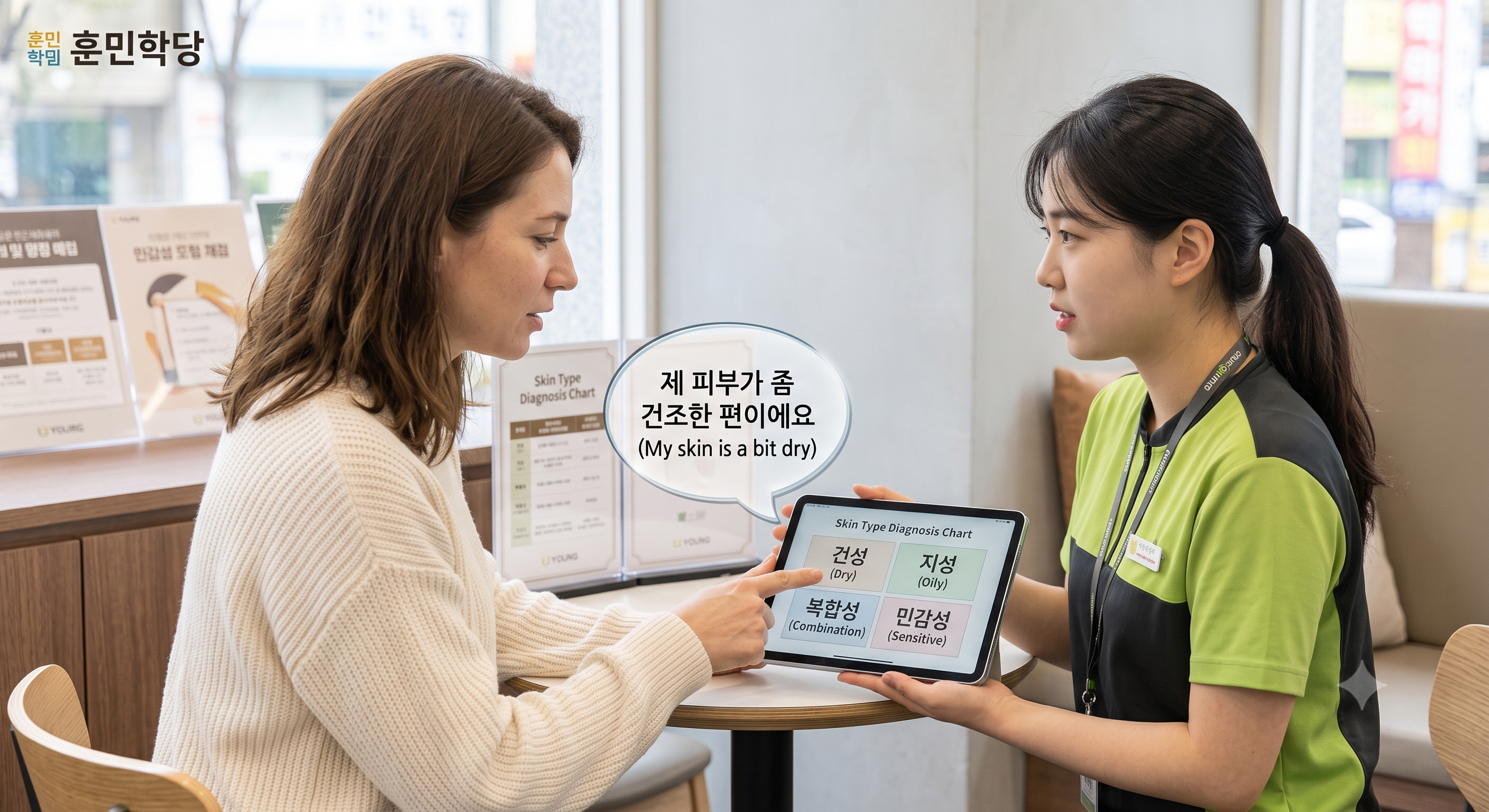
한국 화장품 매장은 피부를 이 네 가지로 나눠 이야기합니다. 자기 타입 한 단어만 알면 상담이 시작됩니다.
Korean cosmetics stores talk about skin in these four categories. One word for your type starts the consultation.
네 단어를 표로 먼저 보십시오.
See the four words in the table first.
| 한국어 Korean |
어떤 피부인가 What kind of skin it is |
|---|---|
| 건성 [geonseong] Dry |
당기고 각질이 생기는 피부 Skin that feels tight and flakes |
| 지성 [jiseong] Oily |
기름이 잘 도는 피부 Skin that gets oily easily |
| 복합성 [bokapseong] Combination |
부위마다 다른 피부 Skin that differs by area of the face |
| 민감성 [mingamseong] Sensitive |
쉽게 붉어지는 피부 Skin that reddens easily |
여기서 쓰는 표현부터 배워봅시다. 타입을 말하고 제품을 청할 때 오가는 말입니다.
Start with the expressions you will use here. These pass when you name your type and ask for a product.
| 듣는 말 Listening |
하는 말 Speaking |
|---|---|
| 피부 타입이 어떻게 되세요? [pibu taibi eotteoke doeseyo] What is your skin type? |
제 피부가 좀 건조한 편이에요. [je pibuga jom geonjohan pyeonieyo] My skin is on the dry side. |
| 어떤 게 고민이세요? [eotteon ge gominiseyo] What is bothering you? |
보습에 좋은 제품 있을까요? [boseube joeun jepum isseulkkayo] Do you have something good for hydration? |
| 이건 어떠세요? [igeon eotteoseyo] How about this one? |
탄력에 좋은 제품도 추천해 주시겠어요? [tallyeoge joeun jepumdo chucheonhae jusigesseoyo] Could you also recommend one for firmness? |
▶타입을 모르겠으면 [잘 모르겠어요]라고 말하면 됩니다.
If you are unsure of your type, just say 잘 모르겠어요.
직원이 당기는지 기름이 도는지 물어보며 좁혀 줍니다. 모른다고 말하는 것이 틀린 타입을 말하는 것보다 낫습니다.
The staff will ask whether your skin feels tight or oily and narrow it down. Saying you do not know beats naming the wrong type.
네 단어는 모두 성으로 끝납니다. 성은 성질을 뜻하므로 건성은 마른 성질, 지성은 기름진 성질입니다. 이 규칙을 알면 처음 보는 말도 뜻이 짐작됩니다.
All four end in 성, which means quality or nature. 건성 is dry-natured and 지성 oily-natured. Knowing this lets you guess new words.
보습 자리에 미백이나 탄력을 넣으면 그대로 다른 고민을 말할 수 있습니다. 있을까요는 있어요보다 부드러워 처음 보는 사람에게 자연스럽습니다.
Swap 보습 for 미백 or 탄력 and the same line names a different concern. 있을까요 is softer than 있어요, which suits someone you have just met.
3. 성분을 확인하는 말
Asking About Ingredients
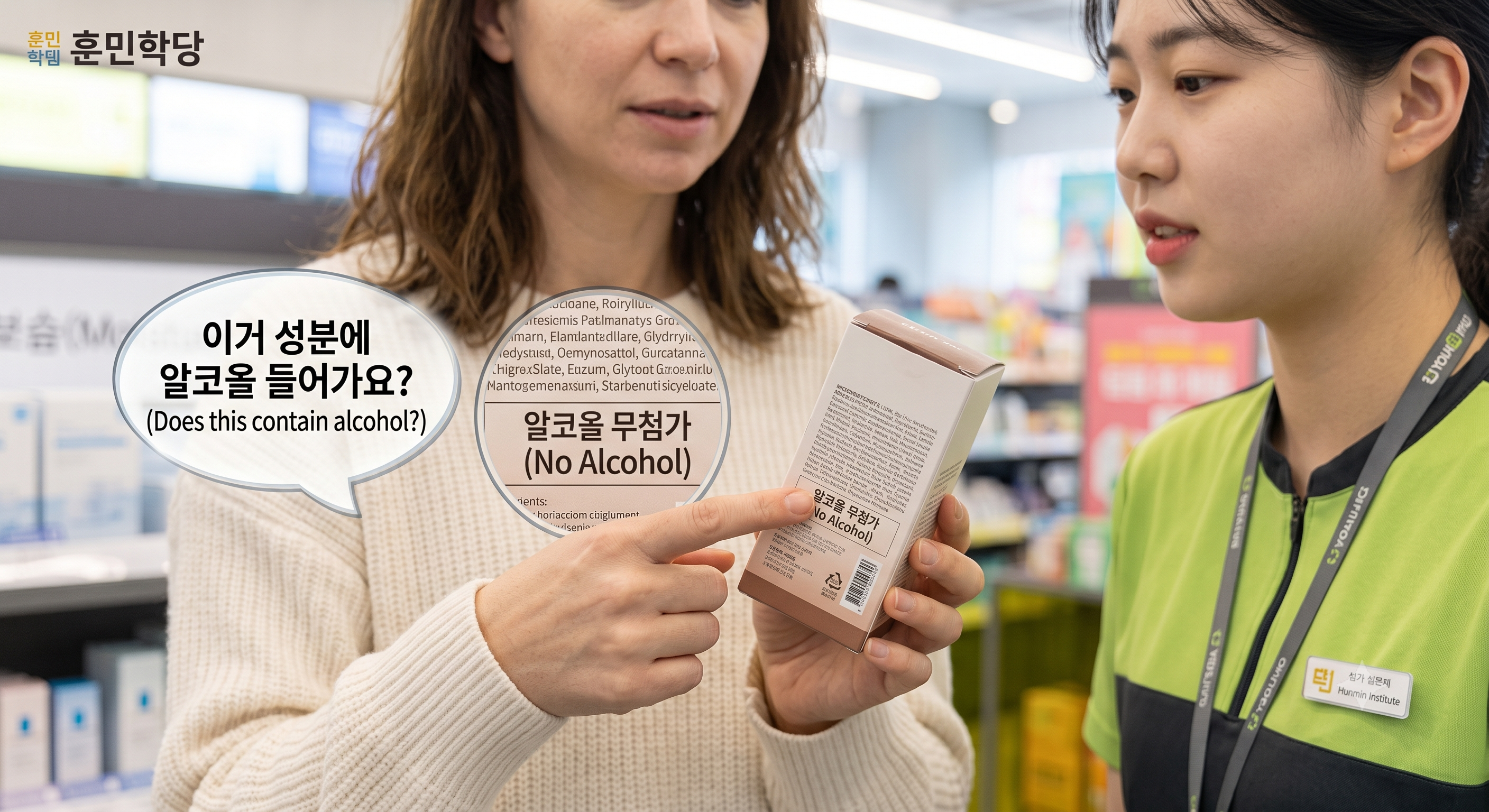
피부에 직접 닿는 제품이므로 성분 확인은 건너뛸 수 없는 자리입니다. 두 문장이면 충분합니다.
These products touch your skin directly, so checking the ingredients is not a step to skip. Two sentences are enough.
여기서 쓰는 표현부터 배워봅시다. 성분을 두고 오가는 말입니다.
Start with the expressions you will use here. These are exchanged about ingredients.
| 듣는 말 Listening |
하는 말 Speaking |
|---|---|
| 이거 순한 편이에요. [igeo sunhan pyeonieyo] This one is on the mild side. |
이거 성분에 알코올 들어가요? [igeo seongbune alkool deureogayo] Does this contain alcohol? |
| 알코올은 안 들어갔어요. [alkooreun an deureogasseoyo] It does not contain alcohol. |
자극적이지는 않나요? [jageukjeogijineun annayo] Is it not irritating? |
| 민감성도 쓰실 수 있어요. [mingamseongdo sseusil su isseoyo] It works for sensitive skin too. |
향 안 들어간 거 있을까요? [hyang an deureogan geo isseulkkayo] Do you have one without fragrance? |
▶성분을 묻는 것은 실례가 아닙니다. 직원이 가장 자주 받는 질문입니다.
Asking about ingredients is not rude. It is the question staff field most often.
들어가요는 무엇이 안에 있느냐고 묻는 말입니다. 알코올 자리에 향료, 오일, 스테로이드를 넣으면 그대로 다른 성분을 물을 수 있습니다.
들어가요 asks what is inside. Swap 알코올 for 향료, 오일, or 스테로이드 and the same question covers any ingredient.
자극적이지는 않나요는 확인을 한 번 더 받는 문장입니다. 순한 편이에요라는 답이 돌아오면 민감한 부위에도 쓸 수 있다는 뜻입니다.
자극적이지는 않나요 asks for one more confirmation. An answer of 순한 편이에요 means it is fine for sensitive areas.
성분표는 대개 한국어로만 적혀 있고 글자도 작습니다. 뒷면을 읽으려 애쓰기보다 이 두 문장을 직원에게 쓰는 편이 빠르고 정확합니다.
Ingredient lists are usually printed in Korean only, in small type. Rather than squinting at the back of the box, ask the staff with these two lines.
4. 샘플을 청하는 말
Asking for a Sample
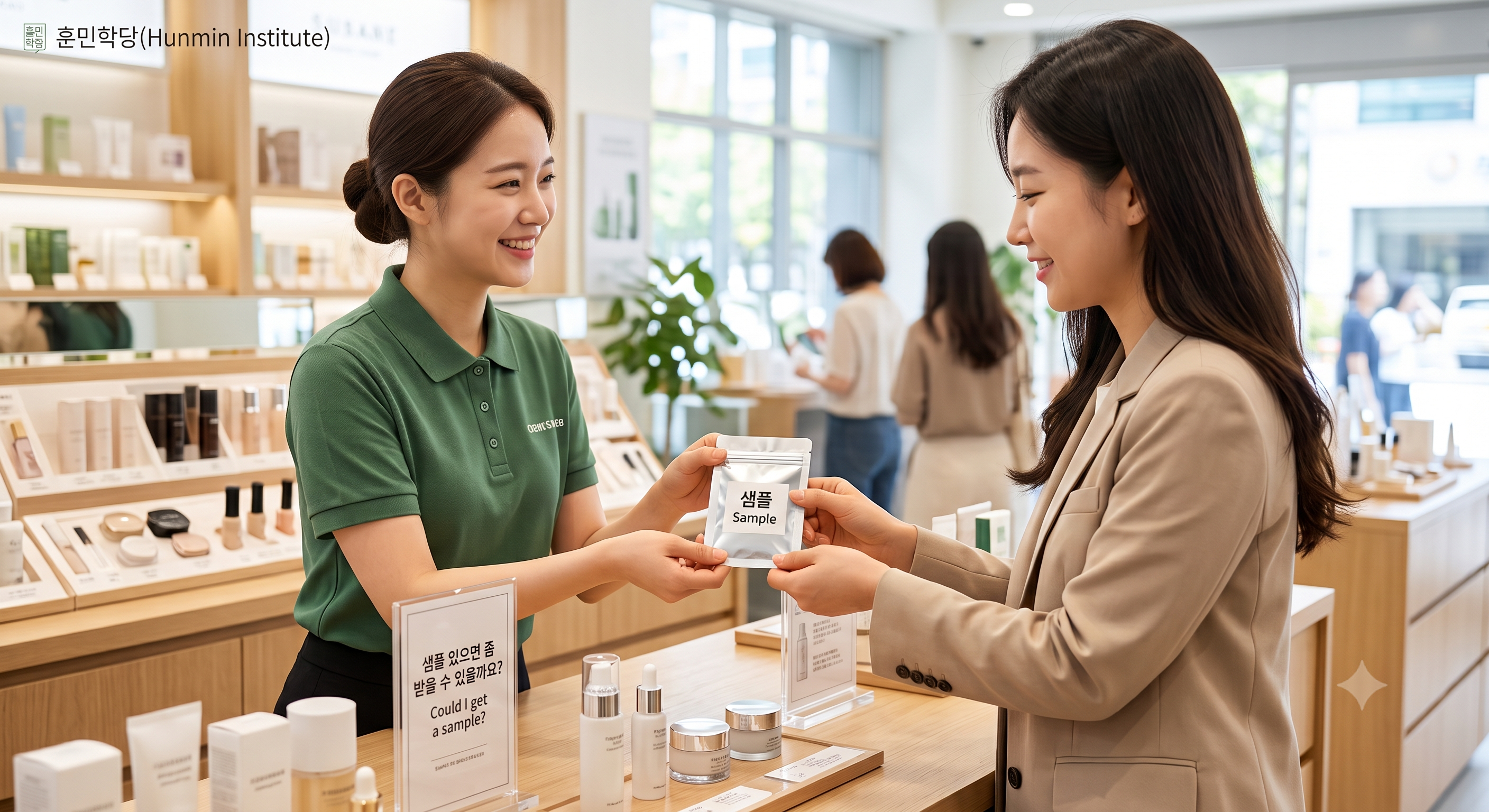
사기 전에 발라 보고 싶다면 샘플을 청하는 것이 가장 확실합니다. 한 문장이면 됩니다.
If you want to try before buying, asking for a sample is the surest way, and one sentence does it.
여기서 쓰는 표현부터 배워봅시다. 샘플을 두고 오가는 말입니다.
Start with the expressions you will use here. These are exchanged about samples.
| 듣는 말 Listening |
하는 말 Speaking |
|---|---|
| 샘플 챙겨 드릴게요. [saempeul chaenggyeo deurilgeyo] I will put in some samples. |
샘플 좀 받을 수 있을까요? [saempeul jom badeul su isseulkkayo] Could I get a sample? |
| 지금 재고가 없어요. [jigeum jaegoga eopseoyo] We are out of stock right now. |
없으면 다른 제품도 괜찮아요. [eopseumyeon dareun jepumdo gwaenchanayo] Another product is fine too. |
| 몇 개 넣어 드릴까요? [myeot gae neoeo deurilkkayo] How many shall I put in? |
두 개만 주세요. [du gaeman juseyo] Just two, please. |
▶[좀]과 [수 있을까요]가 부탁을 부드럽게 만듭니다.
좀 and 수 있을까요 are what soften a request.
좀은 조금이라는 뜻이 아니라 부탁을 눅이는 말입니다. 빼고 말해도 뜻은 통하지만 넣는 편이 훨씬 자연스럽습니다.
좀 here does not mean a little; it cushions the request. The sentence works without it, but it sounds far more natural with it.
재고는 매장마다 다르므로 없다는 답이 돌아올 수 있습니다. 이때 없으면 다른 제품도 괜찮아요를 붙이면 대화가 끊기지 않고 직원이 다른 것을 챙겨 줍니다.
Stock varies by branch, so the answer may be no. Adding 없으면 다른 제품도 괜찮아요 keeps the exchange going and the staff will find something else.
샘플은 대개 결제할 때 함께 담아 줍니다. 상담을 마친 뒤 계산대로 가기 전에 청하시면 자연스럽습니다.
Samples are usually added at checkout, so the natural moment to ask is after the consultation and before you reach the register.
5. 멤버십 적립
Membership Points
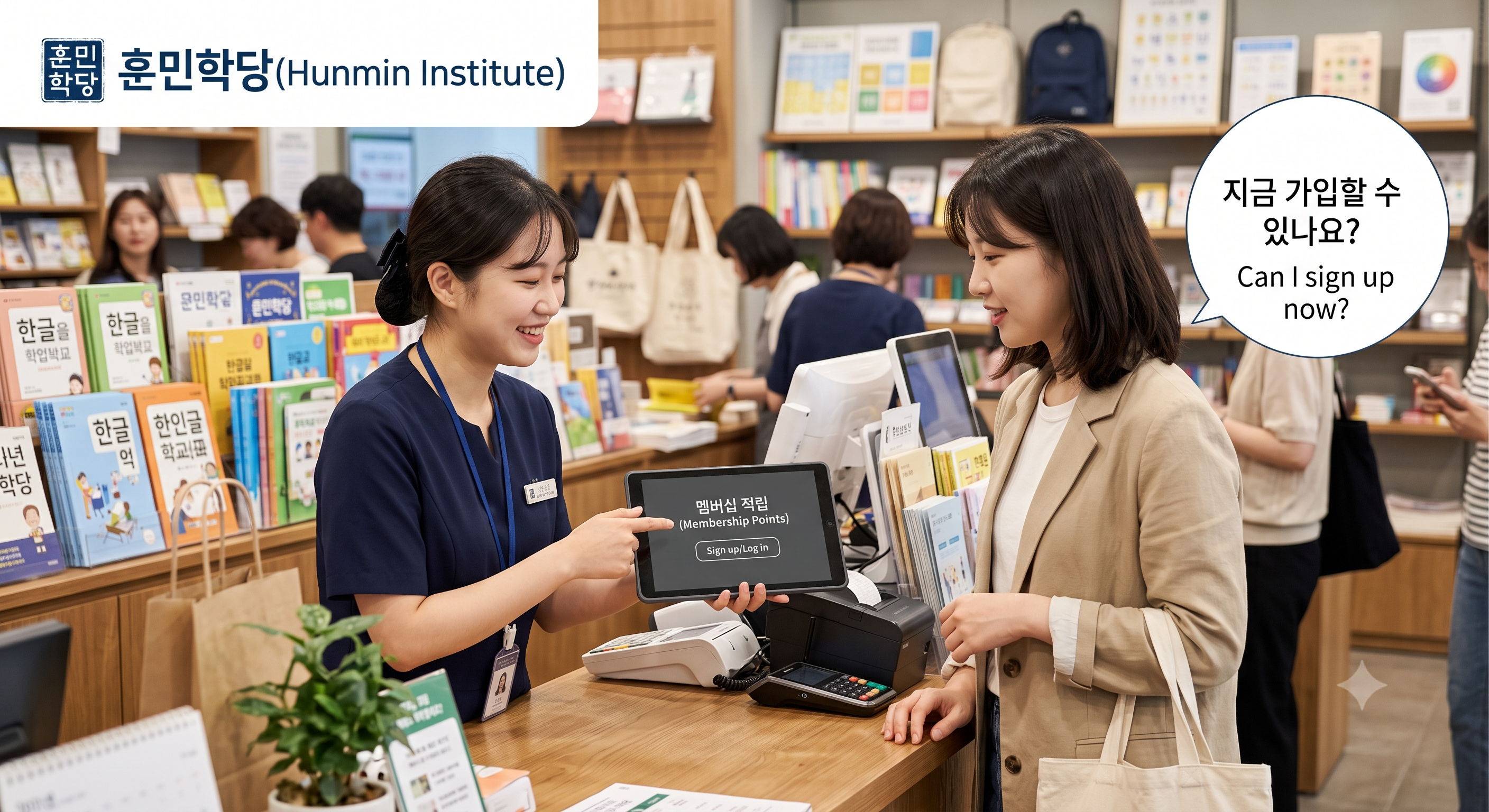
결제 직전에 멤버십부터 나옵니다. 적립 여부를 먼저 묻는 것이 순서입니다.
Membership comes up first, right before payment. Asking about points is the natural opening.
여기서 쓰는 표현부터 배워봅시다. 계산대 앞에서 오가는 말입니다.
Start with the expressions you will use here. These pass in front of the register.
| 듣는 말 Listening |
하는 말 Speaking |
|---|---|
| 멤버십 있으세요? [membeosip isseuseyo] Do you have a membership? |
지금 가입할 수 있나요? [jigeum gaipal su innayo] Can I sign up now? |
| 전화번호 알려 주시겠어요? [jeonhwabeonho allyeo jusigesseoyo] Could I have your phone number? |
외국인도 가입 가능한가요? [oegugindo gaip ganeunghangayo] Can foreigners sign up too? |
| 적립해 드릴까요? [jeongnipae deurilkkayo] Shall I add the points? |
적립 가능한가요? [jeongnip ganeunghangayo] Can I earn points? |
▶[있으세요]는 가지고 있느냐고 묻는 말입니다.
있으세요 asks whether you have something with you.
멤버십 있으세요는 회원인지 묻는 말이고, 답은 네 있어요나 아니요 없어요 두 가지면 충분합니다. 없다고 하면 대개 그 자리에서 가입을 권합니다.
멤버십 있으세요 asks whether you are a member, and 네 있어요 or 아니요 없어요 covers it. Say no and they will usually offer to sign you up on the spot.
가능한가요는 되는지 안 되는지를 묻는 틀입니다. 적립 자리에 교환, 환불, 배송을 넣으면 어느 가게에서나 그대로 쓰입니다.
가능한가요 asks whether something can be done. Swap 적립 for 교환, 환불, or 배송 and it works in any shop.
현장 가입에는 한국 휴대전화 번호가 필요한 경우가 많습니다. 짧게 머무는 여행자라면 적립보다 다음 소단락의 텍스프리를 챙기는 쪽이 실속 있습니다.
Signing up on the spot often needs a Korean mobile number. For a short trip, the tax refund in the next section is worth more than the points.
6. 텍스프리
Tax Free
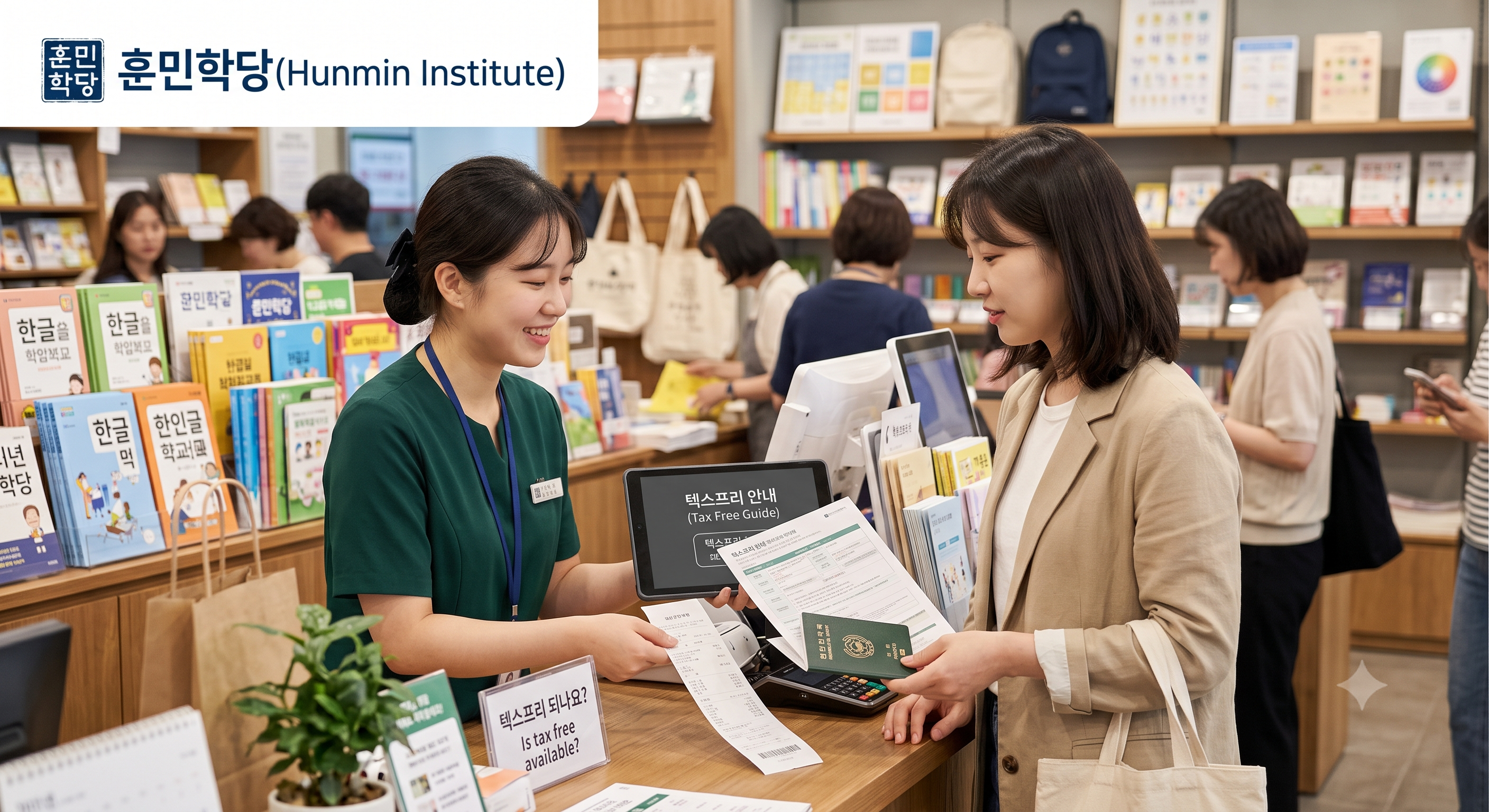
결제 직전에 반드시 물어야 할 한 가지가 남았습니다. 부가세 환급입니다.
One question remains before you pay: the VAT refund.
여기서 쓰는 표현부터 배워봅시다. 환급을 두고 오가는 말입니다.
Start with the expressions you will use here. These are exchanged about the refund.
| 듣는 말 Listening |
하는 말 Speaking |
|---|---|
| 여권 보여 주시겠어요? [yeogwon boyeo jusigesseoyo] Could I see your passport? |
텍스프리 되나요? [tekseupeuri doenayo] Is tax free available? |
| 여기서 바로 빼 드릴게요. [yeogiseo baro ppae deurilgeyo] We will deduct it here. |
여기서 바로 빼 주시나요? [yeogiseo baro ppae jusinayo] Do you deduct it here? |
| 공항에서 받으시면 돼요. [gonghangeseo badeusimyeon dwaeyo] You can claim it at the airport. |
서류 주시겠어요? [seoryu jusigesseoyo] Could I have the documents? |
▶[텍스프리]는 결제 전에 물어야 합니다.
Ask about tax free before you pay.
한국에 6개월 미만 머무는 외국인은 사후면세점에서 산 물건의 부가세를 돌려받을 수 있습니다. 한 영수증에 1만 5천 원 이상이어야 하고 구매일로부터 3개월 안에 출국해야 합니다. 매장 입구의 Tax Free 표시를 먼저 확인하십시오.
Foreign visitors staying in Korea under six months can reclaim VAT on goods bought at a tax refund store. A single receipt must be at least 15,000 won, and you must leave the country within three months of buying. Look for the Tax Free sign at the entrance first.
환급은 두 갈래입니다. 매장에서 세금을 빼고 결제하는 즉시환급과, 서류를 받아 공항에서 처리하는 방식입니다. 그래서 텍스프리 되나요 다음에 여기서 바로 빼 주시나요를 이어 물으십시오. 즉시환급에는 결제할 때 여권이 있어야 하며 결제가 끝난 뒤에는 소급되지 않습니다.
There are two routes: an immediate refund deducted at the register, and paperwork you process at the airport. So follow 텍스프리 되나요 with 여기서 바로 빼 주시나요. The immediate refund needs your passport at checkout and cannot be applied after payment.
7. 결제하고 마무리
Paying and Wrapping Up
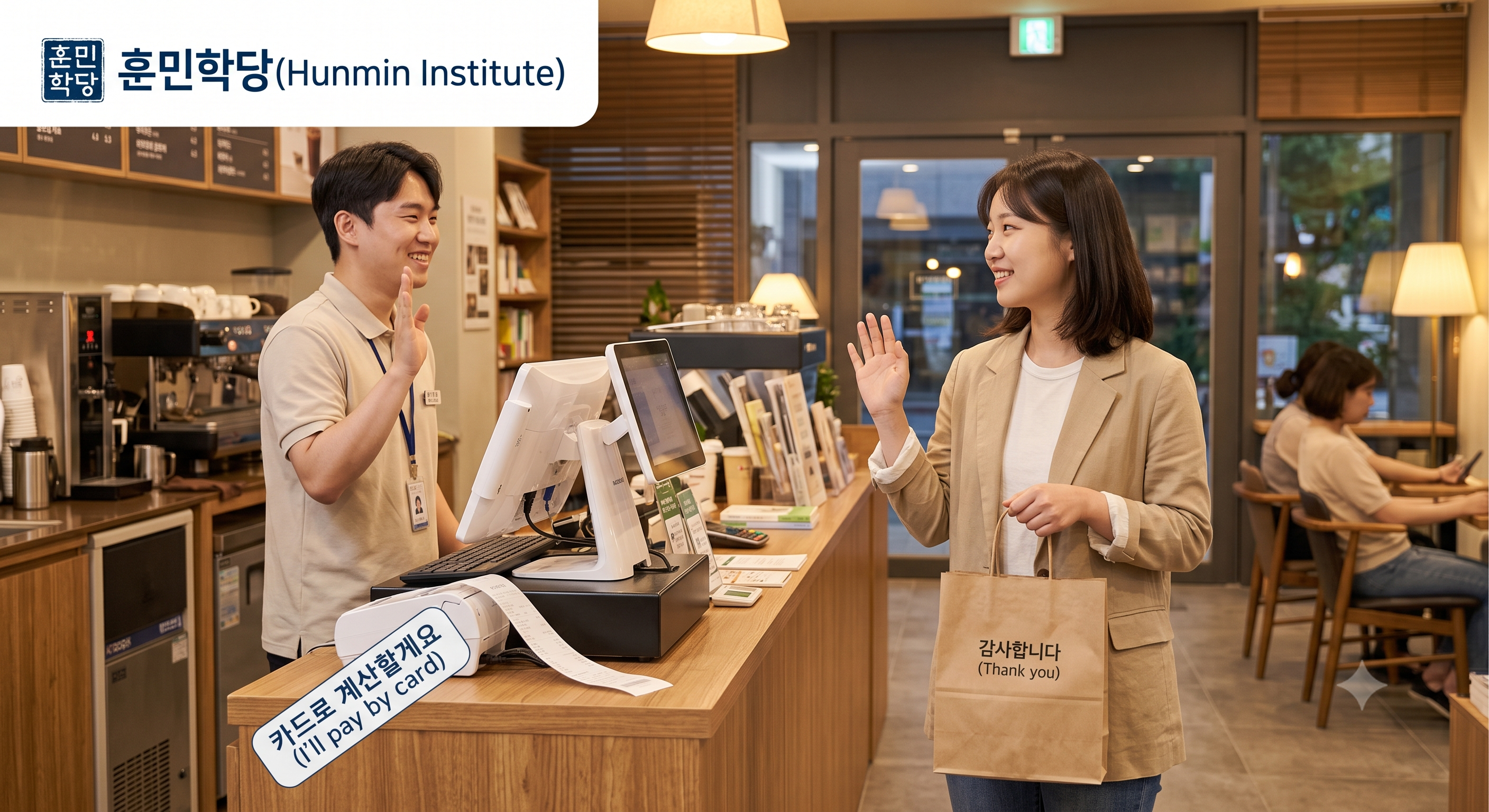
마지막 다섯 문장입니다. 결제 수단을 밝히고 받을 것을 챙기면 끝입니다.
The last five lines. State how you will pay, collect what you need, and you are done.
다섯 문장을 표로 먼저 보십시오.
See the five sentences in the table first.
| 하는 말 Speaking |
언제 쓰는가 When to use it |
|---|---|
| 카드로 계산할게요. [kadeuro gyesanhalgeyo] I will pay by card. |
현금으로 할게요로 바꿔 쓸 수 있습니다 Swap in 현금으로 할게요 for cash |
| 영수증이랑 서류 같이 주세요. [yeongsujeungirang seoryu gachi juseyo] The receipt and the documents together, please. |
텍스프리 서류를 빠뜨리지 않으려면 So you do not leave the tax free papers behind |
| 봉투에 넣어 주세요. [bongtue neoeo juseyo] In a bag, please. |
봉투는 대개 유료입니다 Bags usually cost extra |
| 천천히 말씀해 주시겠어요? [cheoncheonhi malsseumhae jusigesseoyo] Could you speak more slowly? |
못 알아들었을 때 언제든 씁니다 Use it any time you did not catch something |
| 감사합니다. [gamsahamnida] Thank you. |
마무리 인사 The closing line |
여기서 쓰는 표현부터 배워봅시다. 결제하고 나오기까지 오가는 말입니다.
Start with the expressions you will use here. These pass between paying and leaving.
| 듣는 말 Listening |
하는 말 Speaking |
|---|---|
| 어떻게 결제하시겠어요? [eotteoke gyeoljehasigesseoyo] How would you like to pay? |
카드로 계산할게요. [kadeuro gyesanhalgeyo] I will pay by card. |
| 봉투 필요하세요? [bongtu piryohaseyo] Do you need a bag? |
봉투에 넣어 주세요. [bongtue neoeo juseyo] In a bag, please. |
| 영수증 여기 있습니다. [yeongsujeung yeogi itseumnida] Here is your receipt. |
서류 같이 주세요. [seoryu gachi juseyo] The documents too, please. |
▶[주세요]는 무엇을 달라고 할 때 쓰는 틀입니다.
주세요 is the frame for asking to receive something.
앞의 명사만 바꾸면 어느 가게에서나 쓰입니다. 봉투는 대개 유료이므로 필요할 때만 청하시면 됩니다.
Change the noun in front and it works in any shop. Bags usually cost extra, so ask only when you need one.
[천천히 말씀해 주시겠어요]는 이 글에서 가장 오래 쓸 문장입니다. 매장뿐 아니라 병원과 은행, 관공서 어디서나 그대로 통합니다.
천천히 말씀해 주시겠어요 is the line from this post you will use longest. It works in clinics, banks, and government offices just as it does in a store.
매장에서 오가는 말은 결국 일곱 장면으로 나뉩니다. 인사와 타입, 성분, 샘플, 적립, 환급, 결제입니다. 장면마다 한 문장씩만 붙잡아도 상담이 끝까지 굴러갑니다. 오늘 나온 문장 가운데 딱 세 개만 외우자면 피부 상담 받고 싶어요, 제 피부가 좀 건조한 편이에요, 텍스프리 되나요입니다.
What gets said in the store falls into seven scenes: the greeting, the type, the ingredients, the samples, the points, the refund, and the payment. Hold on to one sentence per scene and the whole consultation keeps moving. If you memorize only three of today's lines, make them 피부 상담 받고 싶어요, 제 피부가 좀 건조한 편이에요, and 텍스프리 되나요.
Next: Korean Hair Salon Lines ↗
토픽 맛보기
TOPIK Preview
유형: TOPIK Ⅰ 읽기 [43~45], 안내문, 일치하는 내용 고르기
Type: TOPIK I Reading [43–45], notice, choose the statement that matches
다음 글의 내용과 같은 것을 고르십시오.
Choose the statement that matches the text.
텍스프리는 결제하기 전에 물어야 합니다. 매장에서 바로 세금을 빼 주는 곳도 있고 공항에서 받는 곳도 있습니다. 즉시환급을 받으려면 여권이 있어야 합니다. 계산이 끝난 뒤에는 되지 않습니다.
Ask about tax free before you pay. Some stores deduct the tax on the spot and others hand you papers for the airport. An immediate refund needs your passport, and it cannot be done once the payment is finished.
① 텍스프리는 계산한 뒤에 물어도 된다.
② 즉시환급에는 여권이 필요하다.
③ 모든 매장에서 바로 세금을 빼 준다.
④ 공항에서는 환급을 받을 수 없다.
Answer ▾
정답 ② 즉시환급에는 여권이 필요하다
Answer: ② An immediate refund needs your passport
즉시환급을 받으려면 여권이 있어야 한다고 했으므로 ②가 정답입니다. ①은 계산이 끝난 뒤에는 되지 않는다는 진술과 정반대이고, ③은 공항에서 받는 곳도 있다고 했으므로 모든 매장이 아니라 일부만 걸리며, ④는 공항에서 받는 방식이 있다고 한 대목과 어긋납니다. 흉내 낸 대문항은 TOPIK Ⅰ 읽기 [43~45]이고 배점은 3점입니다.
The passage says an immediate refund requires your passport, so ② is correct. ① reverses the line that it cannot be done after payment. ③ takes only part of the passage, since some stores hand you papers for the airport. ④ contradicts the statement that the airport route exists. The item type modeled here is TOPIK I Reading [43–45], worth 3 points.
FAQ
Q1. 샘플은 꼭 주나요?Answer ▾
Q1. Do they always give samples?
A1. 재고에 따라 다릅니다. 없으면 다른 제품 샘플도 괜찮아요라고 덧붙이면 대화가 이어집니다.
A1. It depends on stock. Adding 다른 제품 샘플도 괜찮아요 keeps the conversation going.
Q2. 즉시환급에는 금액 한도가 있나요?Answer ▾
Q2. Is there a limit on the immediate refund?
A2. 있습니다. 1회 구매액과 체류 중 누적 구매액에 각각 한도가 걸려 있고, 넘으면 공항에서 처리해야 합니다. 한도는 개정되므로 국세청 안내를 확인하시기 바랍니다.
A2. Yes. Limits apply to a single purchase and to the total during your stay; beyond them you process it at the airport. The figures are revised from time to time, so check the National Tax Service guidance.
Q3. 멤버십에 가입하면 무엇이 좋은가요?Answer ▾
Q3. What does a membership get me?
A3. 결제 금액에 따라 적립이 되고 할인 행사에 적용됩니다. 짧게 머무는 여행자라면 적립보다 텍스프리를 챙기는 쪽이 실속 있습니다.
A3. You earn points on what you spend and become eligible for promotions. For a short trip, the tax refund is worth more than the points.
Q4. 산 제품이 맞지 않으면 교환이나 환불이 되나요?Answer ▾
Q4. Can I exchange or return something that does not suit me?
A4. 영수증이 있으면 대개 가능하지만 개봉 여부에 따라 갈립니다. 텍스프리로 산 물건은 환급이 이미 처리되어 절차가 달라지므로 매장에 먼저 문의하십시오.
A4. Usually yes with the receipt, though it depends on whether the item has been opened. Items bought with a tax refund follow a different procedure since the refund is already processed, so ask the store first.
Q5. 매장에 외국어가 되는 직원이 있나요?Answer ▾
Q5. Is there staff who can speak a foreign language?
A5. 관광객이 많은 지점에는 있는 경우가 많고 없는 지점도 있습니다. 어느 쪽이든 이 글의 문장으로 상담이 끝납니다.
A5. Branches in tourist areas often have someone, and some branches do not. Either way, the sentences in this post are enough to finish a consultation.
Vocabulary and Pronunciation for Foreigners
| No | Korean | Romanisation | Meaning |
|---|---|---|---|
| 1 | 피부 | pibu | (n) skin [skɪn] |
| 2 | 상담 | sangdam | (n) consultation [ˌkɑːnsəlˈteɪʃn] |
| 3 | 건성 | geonseong | (n) dry skin [draɪ skɪn] |
| 4 | 텍스프리 | tekseupeuri | (n) tax free, a VAT refund [tæks friː] |
| 5 | 환급 | hwangeup | (n) refund [ˈriːfʌnd] |
| ▾ 단어 80개 더 보기 Show 80 more ↗ | |||
The blog page has limits of space and function, so only five words are shown here. The rest of the word list, the audio, the sentences and tables, the FAQ, the worksheet, the TOPIK questions and the lesson video are on the Hunmin Institute website ↗, free for blog subscribers.
참고 기관
Official Sources
국세청 ↗
National Tax Service
https://www.nts.go.kr
기관 설명 보기 About this institute ▾
This is the agency that runs the VAT refund system. Eligibility, the minimum purchase amount, and the immediate refund limits all follow its notices. The figures are revised, so check the current guidance before you travel.
한국관광공사 ↗
Korea Tourism Organization
https://kto.visitkorea.or.kr
기관 설명 보기 About this institute ▾
This organization provides guidance for visitors. Refund counter locations and lists of tax refund stores are available in English as well.
※ 본 콘텐츠(원고, 이미지, 예문 포함)는 저작권법에 의해 보호받는 훈민학당의 저작물입니다. 무단 복제, 전재, 재배포 및 AI 학습 데이터로의 이용을 금합니다.
This content (manuscript, images, and example sentences) is the copyrighted property of Hunmin Institute, protected under copyright law. Unauthorized copying, reproduction, redistribution, and use as AI training data are prohibited.
'Real Talk' 카테고리의 다른 글
| Korean Dentist Phrases: Covered or Not Covered (0) | 2026.08.08 |
|---|---|
| Korean Skin Clinic Phrases: What Staff Actually Ask (0) | 2026.08.08 |
| Korean Clinic Phrases: What the Doctor Actually Asks (0) | 2026.08.02 |
| Korean Immigration Questions (0) | 2026.07.25 |
| Korean Hair Salon Lines (0) | 2026.07.25 |


