Korean Skin Clinic Phrases: What Staff Actually Ask
한국 피부과에서 가격을 말하는 사람은 대개 의사가 아닙니다
At a Korean skin clinic, each desk asks you something different.
Learn the Korean spoken from check-in to payment.
한국 피부과에서는 접수대와 진료실, 상담실에서 묻는 말이 각각 다릅니다.
이 글에서 접수부터 진료와 상담, 결제까지 각 자리에서 오가는 한국어를 익힙니다.

All learning services for the teaching materials published on this blog are free for blog subscribers on the Hunmin Institute website ↗.
이 글에서 배우는 핵심 회화
Key Expressions in This Lesson
피부과에서 오가는 말은 자리마다 정해져 있습니다. 아래 여덟 문장은 좌우가 한 쌍의 대화가 아니라 각각 따로 익히는 문장입니다. 먼저 눈에 담고 본문으로 들어가십시오.
At a skin clinic the lines that come up are fixed, and they change with the desk you are standing at. The two columns are not paired dialogue; each sentence is learned on its own. Take them in first, then move into the main text.
| 듣는 말 Listening |
하는 말 Speaking |
|---|---|
| 예약하고 오셨어요? [yeyakago osyeosseoyo] Do you have an appointment? |
상담만 받아 볼 수 있을까요? [sangdamman bada bol su isseulkkayo] Could I just have a consultation? |
| 어디가 제일 신경 쓰이세요? [eodiga jeil singyeong sseuiseyo] What bothers you the most? |
여드름 자국을 없애고 싶어요. [yeodeureum jagugeul eopsaego sipeoyo] I would like to get rid of my acne marks. |
| 오늘 하시면 첫 회차로 잡아 드릴게요. [oneul hasimyeon cheot hoecharo jaba deurilgeyo] If you start today, I will put it down as your first session. |
회차로 끊으면 얼마예요? [hoecharo kkeuneumyeon eolmayeyo] How much is it for a set of sessions? |
| 시술 후에 삼 일 정도는 붉을 수 있어요. [sisul hue sam il jeongdoneun bulgeul su isseoyo] Your skin may stay red for about three days. |
회복 기간은 얼마나 걸려요? [hoebok giganeun eolmana geollyeoyo] How long does the recovery take? |
첫째 줄은 소단락 2에서, 둘째 줄은 소단락 3에서, 셋째 줄은 소단락 4에서, 넷째 줄은 소단락 5에서 다룹니다.
The first row is covered in Section 2, the second in Section 3, the third in Section 4, and the fourth in Section 5.
1. 피부과와 피부관리실은 같은 곳이 아닙니다
A Skin Clinic and a Skin Care Salon Are Not the Same Place
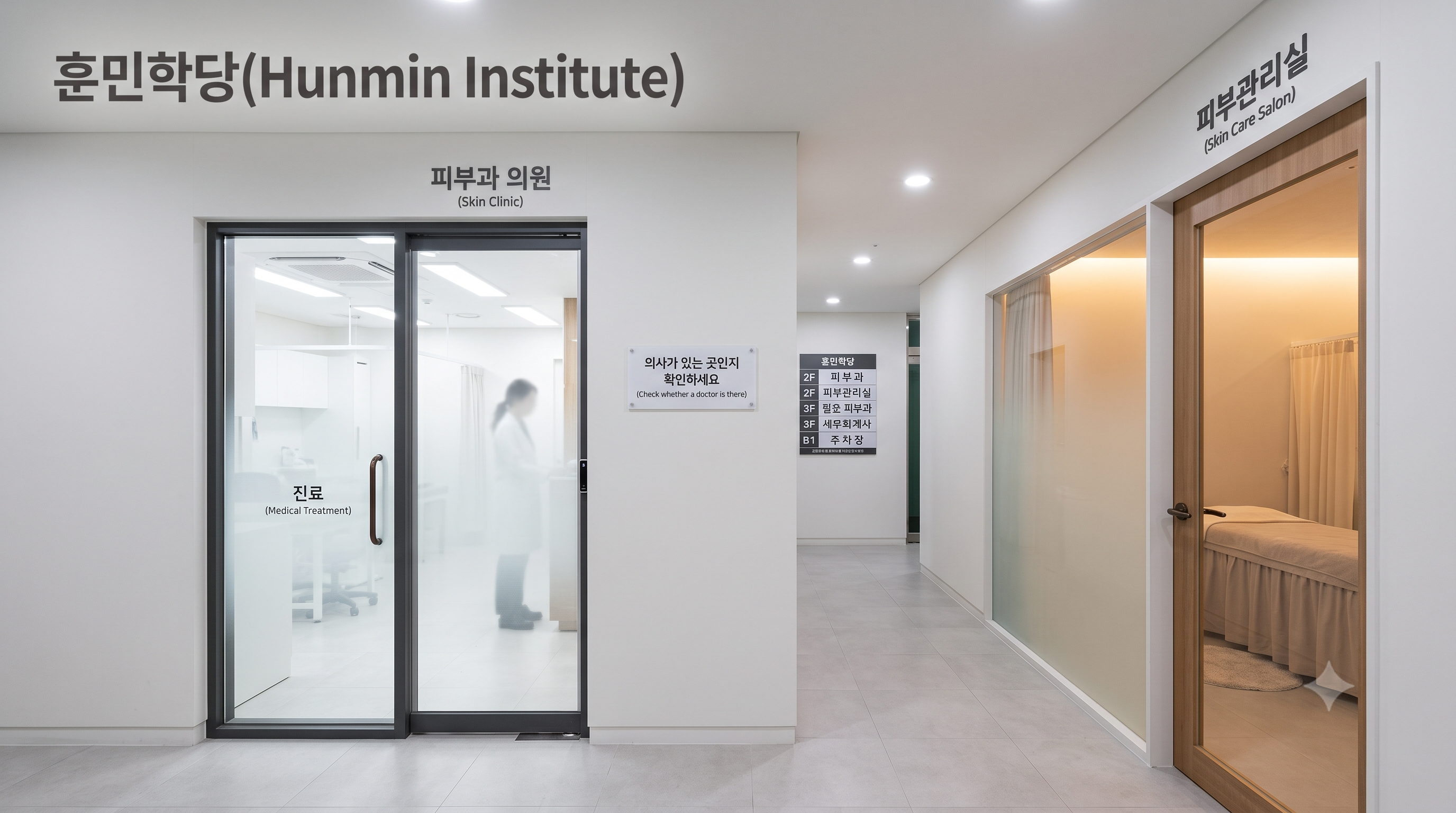
거리에서 보면 두 간판은 비슷해 보입니다. 그러나 피부과는 의사가 진료하는 의료기관이고, 피부관리실은 의료기관이 아닙니다. 레이저와 주사처럼 피부에 직접 작용하는 시술은 의료기관에서만 받을 수 있습니다.
From the street the two signs look much alike. A skin clinic, however, is a medical institution where a doctor sees patients, while a skin care salon is not. Procedures that act directly on the skin, such as lasers and injections, can only be done at a medical institution.
병원 안에서 말은 세 자리로 나뉩니다. 접수대에서 한 번, 진료실에서 한 번, 상담실에서 다시 한 번입니다. 자리마다 묻는 사람이 다르고 묻는 것도 다릅니다.
Inside, the talking splits into three places: once at the front desk, once in the exam room, and once more in the consulting room. Each place has a different person asking, and a different thing being asked.
두 곳이 어떻게 다른지 표로 먼저 보십시오.
See in the table how the two differ.
| 구분 Category |
피부과 Skin clinic |
피부관리실 Skin care salon |
|---|---|---|
| 성격 What it is | 의료기관 [uiryogigwan] A medical institution |
의료기관이 아님 Not a medical institution |
| 누가 있나 Who is there | 의사 [uisa] A doctor |
관리사 [gwallisa] A care specialist |
| 레이저와 주사 Lasers and injections | 가능 Available |
불가 Not available |
| 받는 것 What you get | 진료비 영수증 A receipt for the consultation fee |
관리 이용 영수증 A receipt for a care service |
여기서 쓰는 표현부터 배워봅시다. 문 앞에서 어느 쪽인지 가릴 때 오가는 말입니다.
Start with the expressions you will use here. These pass while you work out which one you are standing in front of.
| 듣는 말 Listening |
하는 말 Speaking |
|---|---|
| 저희는 피부과 의원이에요. [jeohuineun pibugwa uiwonieyo] We are a dermatology clinic. |
여기 의사 선생님 계세요? [yeogi uisa seonsaengnim gyeseyo] Is there a doctor here? |
| 레이저는 병원에서 받으셔야 해요. [reijeoneun byeongwoneseo badeusyeoya haeyo] Lasers have to be done at a clinic. |
여기서 레이저 되나요? [yeogiseo reijeo doenayo] Can I get a laser here? |
| 관리만 하는 곳이에요. [gwallimanhaneun gosieyo] We only do care here. |
진료도 받을 수 있어요? [jillyodo badeul su isseoyo] Can I also see a doctor? |
응용 Apply It
↳ 여기서 [명사] 되나요?
yeogiseo [noun] doenayo
Can I get [noun] here?
ex 여기서 레이저 되나요?/여기서 상담 되나요?
ROM yeogiseo reijeo doenayo/yeogiseo sangdam doenayo
EN Can I get a laser here?/Can I get a consultation here?
▶의사가 있는 곳인지부터 확인하십시오.
Start by checking whether a doctor is there.
피부과 의원에는 진료실이 있고 진료비 영수증이 발급됩니다. 관리실은 관리를 하는 곳이지 진료를 하는 곳이 아닙니다.
A skin clinic has an exam room and issues a receipt for the consultation fee. A salon provides care, not medical treatment.
두 곳은 하는 일이 다르므로 어느 쪽이 낫다는 문제가 아니라, 내가 받으려는 것이 진료인지 관리인지를 먼저 정해야 하는 문제입니다.
The two do different work, so the question is not which is better but whether what you want is treatment or care.
2. 접수대에서
At the Front Desk

문을 열면 가장 먼저 만나는 자리입니다. 여기서는 진료 내용을 묻지 않습니다. 예약을 했는지, 처음 왔는지, 확인할 신분증이 있는지만 확인합니다.
This is the first place you meet after opening the door. Nobody asks about your skin here. They only check whether you booked, whether this is your first visit, and whether there is any ID to confirm.
여기서 쓰는 표현부터 배워봅시다. 접수대에서 오가는 말입니다.
Start with the expressions you will use here. These pass at the front desk.
| 듣는 말 Listening |
하는 말 Speaking |
|---|---|
| 예약하고 오셨어요? [yeyakago osyeosseoyo] Do you have an appointment? |
오늘 진료 되나요? [oneul jillyo doenayo] Can I be seen today? |
| 처음 오셨으면 문진표부터 작성해 주세요. [cheoeum osyeosseumyeon munjinpyobuteo jakseonghae juseyo] If this is your first visit, please fill out the questionnaire. |
상담만 받아 볼 수 있을까요? [sangdamman bada bol su isseulkkayo] Could I just have a consultation? |
| 신분증 있으세요? [sinbunjeung isseuseyo] Do you have your ID with you? |
여권 드릴게요. [yeogwon deurilgeyo] Here is my passport. |
▶[만] 하나를 붙이면 범위를 잘라내는 문장이 됩니다.
Adding 만 to a noun draws a line around what you are asking for.
상담만, 진료만, 오늘만처럼 명사 뒤에 만을 붙이면 그것 외에는 하지 않겠다는 뜻이 분명해집니다. 시술을 정하지 않은 채 병원에 들어가는 일이 부담스럽다면 이 한 문장이 그 부담을 덜어 줍니다.
상담만, 진료만, 오늘만: put 만 after a noun and it is clear you want that and nothing beyond it. If walking in without having decided on a procedure feels awkward, this single line takes the weight off.
문진표는 초진일 때만 쓰며, 앓고 있는 병과 복용 중인 약을 적는 종이입니다.
The questionnaire comes up only on a first visit, and it asks for your conditions and any medication you are taking.
3. 진료실에서
In the Exam Room
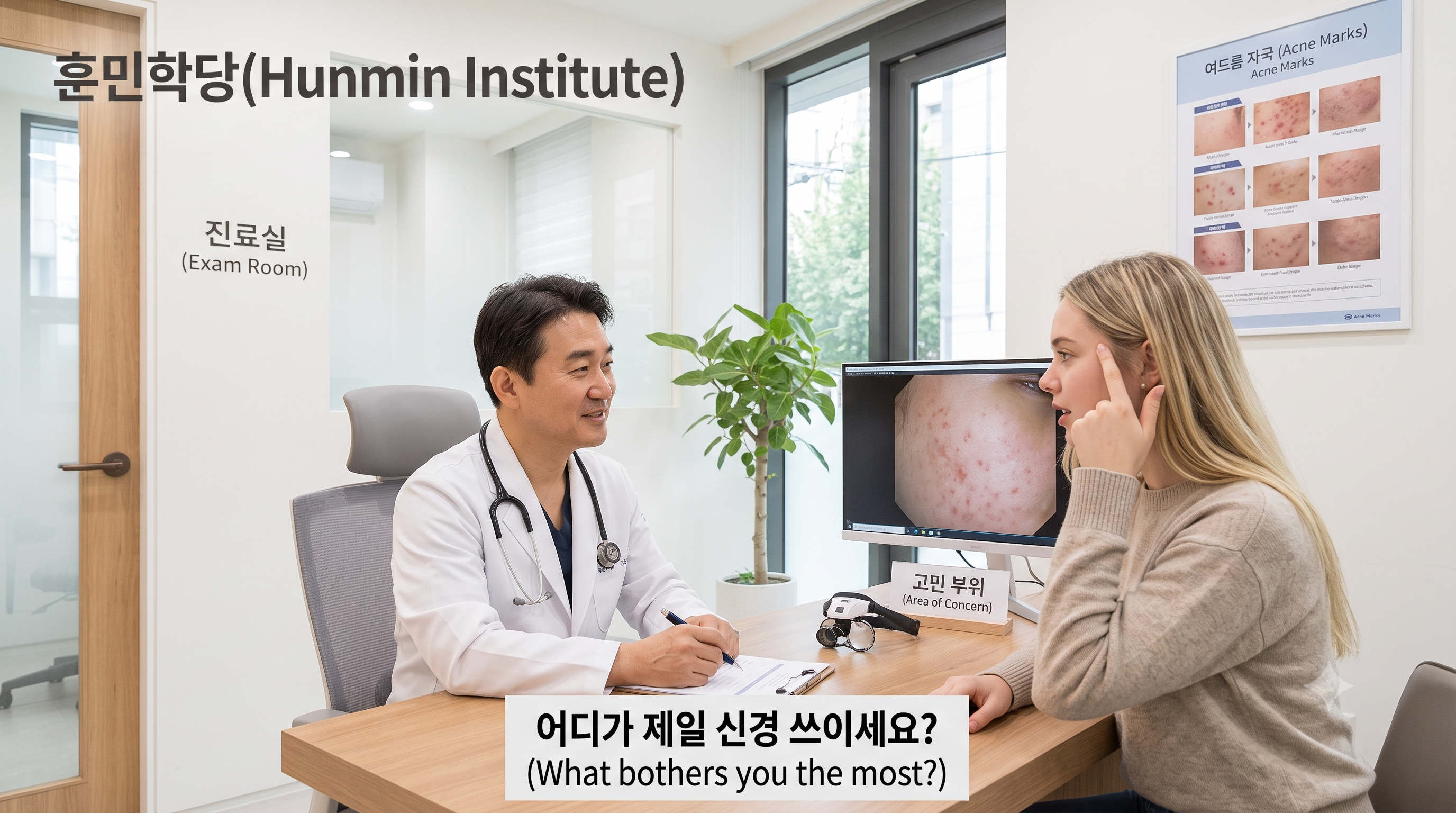
의사를 만나는 시간은 대체로 짧습니다. 그래서 이 자리에서는 어디가 어떻게 신경 쓰이는지를 한 문장으로 말할 수 있어야 합니다. 피부 타입보다 부위와 증상이 먼저입니다.
Time with the doctor is usually short. That is why you want one sentence ready for where it bothers you and how. The spot and the symptom come before your skin type.
어떤 자리에서 쓰는 문장인지 표로 먼저 보십시오.
See in the table where each sentence belongs.
| 하는 말 Speaking |
쓰는 상황 When to use it |
|---|---|
| 여드름 자국을 없애고 싶어요. [yeodeureum jagugeul eopsaego sipeoyo] I would like to get rid of my acne marks. |
개선하고 싶은 것을 말할 때 When naming what you want improved |
| 이마 쪽이 고민이에요. [ima jjogi gominieyo] The forehead area is my concern. |
부위를 짚어 말할 때 When pointing to a specific area |
| 시술은 처음이에요. [sisureun cheoeumieyo] This is my first time having a procedure. |
경험이 없다고 말할 때 When saying you have no experience |
| 지금 바르는 약이 있어요. [jigeum bareuneun yagi isseoyo] I am using a topical medication right now. |
사용 중인 약을 말할 때 When reporting medication you are on |
여기서 쓰는 표현부터 배워봅시다. 의사 앞에서 오가는 말입니다.
Start with the expressions you will use here. These pass in front of the doctor.
| 듣는 말 Listening |
하는 말 Speaking |
|---|---|
| 어디가 제일 신경 쓰이세요? [eodiga jeil singyeong sseuiseyo] What bothers you the most? |
여드름 자국을 없애고 싶어요. [yeodeureum jagugeul eopsaego sipeoyo] I would like to get rid of my acne marks. |
| 전에 시술 받아 보셨어요? [jeone sisul bada bosyeosseoyo] Have you had a procedure before? |
시술은 처음이에요. [sisureun cheoeumieyo] This is my first time. |
| 바르는 약 쓰고 계세요? [bareuneun yak sseugo gyeseyo] Are you using any topical medication? |
지금 바르는 약이 있어요. [jigeum bareuneun yagi isseoyo] I am using one right now. |
▶[신경 쓰이다]는 아프다와 다른 자리를 가리킵니다.
신경 쓰이다 points somewhere different from 아프다.
아프냐고 묻지 않고 신경 쓰이느냐고 묻는 이유는, 피부과에 오는 사람 대부분이 통증이 아니라 눈에 걸리는 것 때문에 오기 때문입니다. 자국, 색소, 모공처럼 부위와 증상을 짚어 말하면 대화가 빨라집니다.
The doctor asks what bothers you rather than what hurts, because most people come to a skin clinic for something they keep noticing, not for pain. Naming the area and the symptom, such as marks, pigmentation, or pores, moves the conversation along.
바르는 약이 있다는 말은 반드시 하십시오. 쓰고 있는 약에 따라 그날 받을 수 있는 시술이 달라집니다.
Do say if you are using a topical medication. What you are on can change which procedure is possible that day.
4. 상담실에서
In the Consulting Room
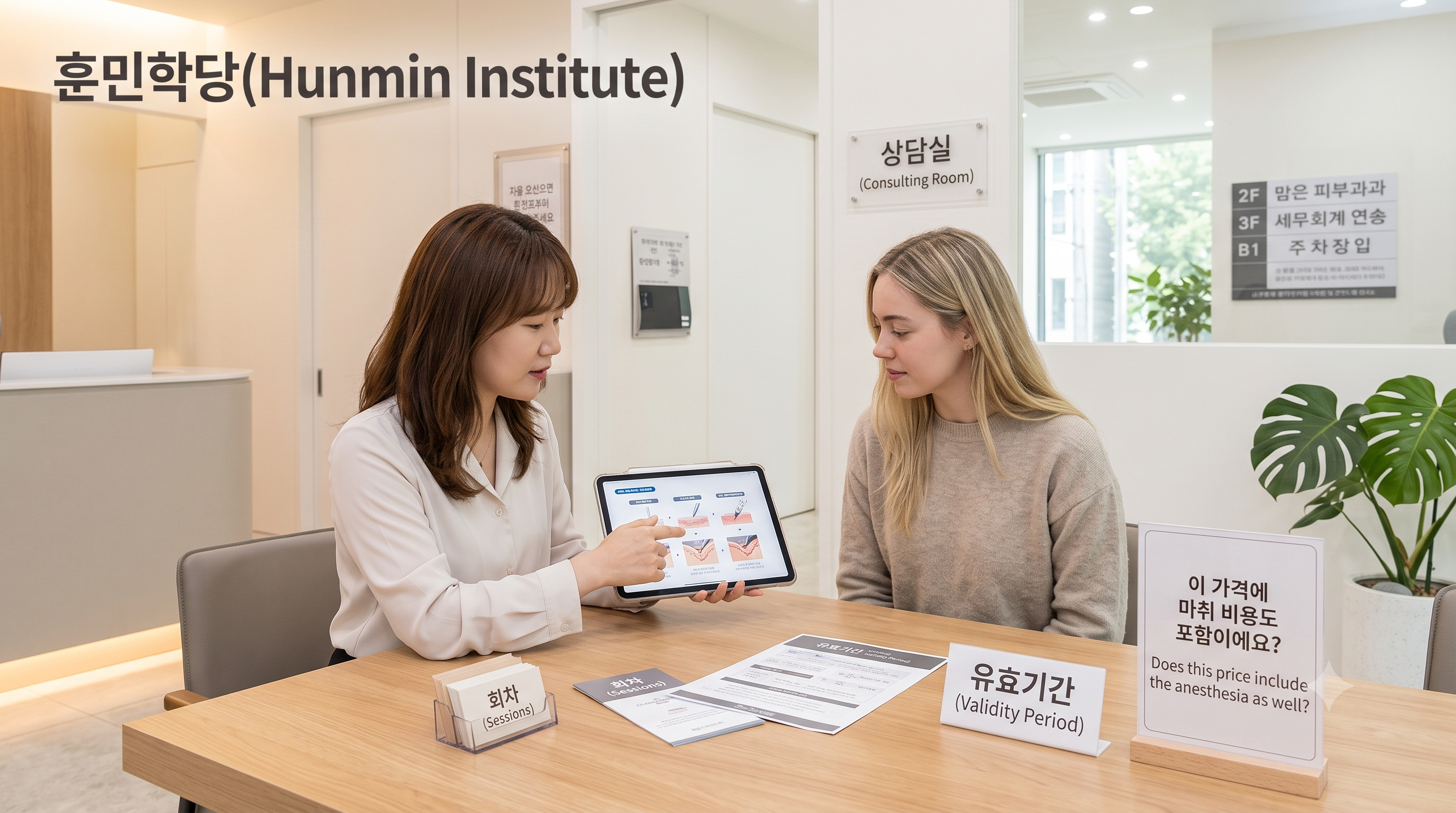
진료가 끝나면 다른 방으로 안내받는 곳이 많습니다. 여기서 만나는 사람은 의사가 아니라 상담을 맡은 직원입니다. 무엇을 몇 번 받을지, 비용이 얼마인지가 이 자리에서 정해집니다.
At many clinics you are shown into another room once the examination ends. The person you meet there is not the doctor but a staff member who handles consultations. What you will have, how many times, and at what cost are all settled here.
미용 목적 시술은 건강보험이 적용되지 않는 비급여이므로 금액이 전부 본인 부담이며, 그래서 이 대화가 길어집니다.
Cosmetic procedures fall outside national health insurance, so the whole amount is out of pocket, and that is why this conversation runs long.
여기서 쓰는 표현부터 배워봅시다. 상담실에서 오가는 말입니다.
Start with the expressions you will use here. These pass in the consulting room.
| 듣는 말 Listening |
하는 말 Speaking |
|---|---|
| 오늘 하시면 첫 회차로 잡아 드릴게요. [oneul hasimyeon cheot hoecharo jaba deurilgeyo] If you start today, I will put it down as your first session. |
회차로 끊으면 얼마예요? [hoecharo kkeuneumyeon eolmayeyo] How much is it for a set of sessions? |
| 마취 비용은 따로예요. [machwi biyongeun ttaroyeyo] The anesthesia is charged separately. |
이 가격에 마취 비용도 포함이에요? [i gagyeoge machwi biyongdo pohamieyo] Does this price include the anesthesia? |
| 남은 회차는 일 년 안에 쓰시면 돼요. [nameun hoechaneun il nyeon ane sseusimyeon dwaeyo] You have a year to use the remaining sessions. |
오늘은 상담만 하고 갈게요. [oneureun sangdamman hago galgeyo] I will just take the consultation today. |
▶[포함이에요] 하나로 추가 비용을 미리 걷어낼 수 있습니다.
One 포함이에요 clears away the extra charges before they appear.
마취 포함이에요, 진료비 포함이에요, 연고 포함이에요처럼 앞의 명사만 바꾸면 그대로 쓰입니다. 상담실에서 안내받은 금액과 계산대에서 결제하는 금액이 달라지는 일은 대개 이 질문을 하지 않아서 생깁니다.
Change only the noun in front and it keeps working: 마취 포함이에요, 진료비 포함이에요, 연고 포함이에요. When the figure quoted in the consulting room differs from the one at the counter, it is usually because nobody asked this.
결정을 그 자리에서 내리지 않아도 됩니다. 오늘은 상담만 하고 가겠다는 말은 무례한 표현이 아니라 흔히 쓰는 말입니다.
You are also not required to decide on the spot. Saying you will just take the consultation today is a common line, not a rude one.
5. 시술 당일과 그 후
On the Day and Afterward

시술이 정해지면 대화는 다시 짧아집니다. 대신 이때 오가는 말은 몸에 직접 닿는 내용입니다. 아픈지, 얼마나 붉은지, 언제까지 조심해야 하는지입니다.
Once the procedure is set, the talking gets short again. What is said now, though, lands directly on your body: whether it stings, how red it will be, and how long you need to be careful.
언제 듣고 언제 묻는 말인지 표로 먼저 보십시오.
See in the table when each line comes up.
| 한국어 Korean |
언제 쓰는가 When to use it |
|---|---|
| 마취 크림 바르고 시작할게요. [machwi keurim bareugo sijakalgeyo] We will apply the numbing cream and get started. |
시술을 시작하기 전에 듣는 말 Heard just before the procedure begins |
| 많이 따가우세요? [mani ttagauseyo] Does it sting a lot? |
시술 중에 상태를 확인하며 듣는 말 Heard as they check on you mid-procedure |
| 회복 기간은 얼마나 걸려요? [hoebok giganeun eolmana geollyeoyo] How long does the recovery take? |
일정을 잡기 전에 물을 때 When asking before planning your schedule |
| 오늘 세수해도 돼요? [oneul sesuhaedo dwaeyo] Can I wash my face today? |
당일에 해도 되는 일을 물을 때 When asking what is allowed the same day |
여기서 쓰는 표현부터 배워봅시다. 시술대 위에서 오가는 말입니다.
Start with the expressions you will use here. These pass on the treatment bed.
| 듣는 말 Listening |
하는 말 Speaking |
|---|---|
| 많이 따가우세요? [mani ttagauseyo] Does it sting a lot? |
조금 따가워요. [jogeum ttagawoyo] It stings a little. |
| 시술 후에 삼 일 정도는 붉을 수 있어요. [sisul hue sam il jeongdoneun bulgeul su isseoyo] Your skin may stay red for about three days. |
회복 기간은 얼마나 걸려요? [hoebok giganeun eolmana geollyeoyo] How long does the recovery take? |
| 오늘은 물만 닿게 하세요. [oneureun mulman datge haseyo] Keep it to water only today. |
오늘 세수해도 돼요? [oneul sesuhaedo dwaeyo] Can I wash my face today? |
▶[붉을 수 있어요]의 수 있어요는 가능성을 말하는 자리입니다.
The 수 있어요 in 붉을 수 있어요 marks a possibility, not a promise.
반드시 그렇게 된다는 뜻이 아니라 그럴 수도 있다는 뜻입니다. 삼 일이라는 기간도 안내를 위한 예시일 뿐이며, 실제로는 시술 종류와 사람에 따라 개인차가 있습니다. 붉기가 오래가거나 예상과 다르면 참고 견디지 말고 병원에 다시 연락하는 편이 낫습니다.
It says this could happen, not that it will. The three days is only an example used for guidance; in practice it varies with the procedure and with the person. If the redness lasts longer than expected, it is better to contact the clinic again than to wait it out.
[따갑다]는 아프다와 다릅니다. 찌르는 듯한 자극을 가리키며 시술 중에 가장 많이 듣는 말입니다.
따갑다 is not the same as 아프다. It describes a prickling sting, and it is the word you will hear most during the procedure itself.
피부과의 말은 결국 세 자리로 나뉩니다. 접수대에서는 신분과 예약을, 진료실에서는 부위와 증상을, 상담실에서는 회차와 비용을 말합니다. 오늘 나온 문장 가운데 딱 세 개만 외우자면 상담만 받아 볼 수 있을까요, 이 가격에 마취 비용도 포함이에요, 회복 기간은 얼마나 걸려요입니다.
In the end, the Korean of a skin clinic splits into three places. At the front desk you talk about ID and bookings, in the exam room about the area and the symptom, and in the consulting room about sessions and cost. If you carry only three lines away from today, make them 상담만 받아 볼 수 있을까요, 이 가격에 마취 비용도 포함이에요, and 회복 기간은 얼마나 걸려요.
Next: Korean Dentist Phrases: Covered or Not Covered ↗
토픽 맛보기
TOPIK Preview
유형: TOPIK Ⅰ 읽기 [34~39], 설명문, 빈칸에 알맞은 것 고르기
Type: TOPIK I Reading [34–39], expository text, choose the word for the blank
( )에 들어갈 말로 가장 알맞은 것을 고르십시오.
Choose the most appropriate word for the blank.
오늘 피부과에서 시술을 받습니다. 시작하기 전에 마취 크림을 ( ).
I am having a procedure at the skin clinic today. Before it starts, they ( ) the numbing cream.
① 바릅니다
② 마십니다
③ 읽습니다
④ 씻습니다
Answer ▾
정답 ① 바릅니다
Answer: ① 바릅니다
크림이나 연고처럼 피부에 얹어 펴는 것에는 바르다를 쓰므로 ①이 정답입니다. ②의 마시다는 액체를 입으로 넘기는 말이라 크림과 짝이 맞지 않고, ③의 읽다는 글을 대상으로 하는 말이라 지문과 어긋나며, ④의 씻다는 시술이 끝난 뒤의 세수에는 쓰이지만 크림을 얹는 자리에는 맞지 않아 일부만 걸립니다. 흉내 낸 대문항은 TOPIK Ⅰ 읽기 [34~39]이고 배점은 2점입니다.
바르다 is the verb for spreading something onto the skin, such as a cream, so ① is correct. 마시다 in ② is for swallowing liquid and does not go with cream, 읽다 in ③ takes text as its object, and 씻다 in ④ fits washing your face after the procedure but not applying a cream. The item type modeled here is TOPIK I Reading [34–39], worth 2 points.
FAQ
Q1. 상담만 받고 그냥 나와도 되나요?Answer ▾
Q1. Is it all right to have the consultation and simply leave?
A1. 됩니다. 상담은 시술을 약속하는 절차가 아닙니다. 다만 진료를 받았다면 진료비는 따로 발생하므로, 상담만 원한다면 접수대에서 미리 밝히는 편이 서로 명확합니다.
A1. Yes. A consultation is not a commitment to a procedure. If you were examined by the doctor, however, a consultation fee still applies, so saying at the front desk that you only want to talk keeps things clear on both sides.
Q2. 시술 비용을 미리 알 수 있나요?Answer ▾
Q2. Can I find out the cost in advance?
A2. 미용 목적 시술은 비급여라서 병원마다 값을 스스로 정합니다. 의료기관은 비급여 진료비를 환자가 볼 수 있게 알리도록 되어 있으므로 접수대나 상담실에서 확인할 수 있습니다.
A2. Cosmetic procedures are outside insurance coverage, so each clinic sets its own prices. Medical institutions are required to make those non-covered fees visible to patients, so you can check at the front desk or in the consulting room.
Q3. 외국인도 부가세를 돌려받을 수 있나요?Answer ▾
Q3. Can foreign visitors get the VAT refunded?
A3. 외국인 관광객의 미용성형 의료용역에 적용되던 부가가치세 환급 특례는 2025년 12월 31일로 끝났습니다. 제도 변경 가능성이 있으므로 방문 시점에 국세청 안내로 확인하시기 바랍니다. 또한 이 제도는 단기 방문객을 대상으로 한 것이어서 거주 중인 외국인에게는 처음부터 해당하지 않았습니다.
A3. The special VAT refund for cosmetic medical services provided to foreign tourists ended on 31 December 2025. The rules may change, so check the National Tax Service notices around the time of your visit. Note as well that the scheme was aimed at short-term visitors and never applied to foreign residents.
Q4. 통역이 되는 곳을 어떻게 찾나요?Answer ▾
Q4. How do I find a clinic with interpretation?
A4. 외국인 환자를 받으려면 의료기관이 유치기관으로 등록해야 하며, 등록 기관은 아래 참고 기관의 메디컬코리아에서 조회할 수 있습니다. 다만 등록 여부와 통역 제공은 다른 문제이므로 통역 언어와 가능 시간은 방문 전에 병원에 직접 확인하셔야 합니다.
A4. To treat foreign patients, a clinic must be registered for that purpose, and registered institutions can be looked up through Medical Korea, listed under Official Sources below. Registration and interpretation are separate matters, though, so ask the clinic directly which languages are covered and at what hours.
Q5. 외국인등록증이 없어도 진료를 받을 수 있나요?Answer ▾
Q5. Can I be seen without an alien registration card?
A5. 여권으로 접수할 수 있습니다. 미용 목적 시술은 건강보험과 무관하므로 보험 자격 확인이 필요하지 않습니다. 다만 병원에 따라 연락 가능한 한국 전화번호를 요구하는 곳이 있습니다.
A5. You can register with your passport. Cosmetic procedures have nothing to do with national health insurance, so there is no eligibility to verify. Some clinics, however, will ask for a Korean phone number they can reach you on.
Vocabulary and Pronunciation for Foreigners
| No | Korean | Romanisation | Meaning |
|---|---|---|---|
| 1 | 상담 | sangdam | (n) consultation [ˌkɑːnsəlˈteɪʃn] |
| 2 | 시술 | sisul | (n) a procedure [prəˈsiːdʒər] |
| 3 | 회차 | hoecha | (n) a session in a set [ˈseʃn] |
| 4 | 마취 | machwi | (n) anesthesia [ˌænəsˈθiːʒə] |
| 5 | 회복 | hoebok | (n) recovery [rɪˈkʌvəri] |
| ▾ 단어 77개 더 보기 Show 77 more ↗ | |||
The blog page has limits of space and function, so only five words are shown here. The rest of the word list, the audio, the sentences and tables, the FAQ, the worksheet, the TOPIK questions and the lesson video are on the Hunmin Institute website ↗, free for blog subscribers.
참고 기관
Official Sources
보건복지부 ↗
Ministry of Health and Welfare
https://www.mohw.go.kr
기관 설명 보기 About this institute ▾
This ministry runs the medical system. The line between medical and non-medical institutions, and the duty to disclose non-covered fees, follow its notices. The rules are revised, so check before you go.
한국보건산업진흥원 메디컬코리아 ↗
Medical Korea, Korea Health Industry Development Institute
https://www.medicalkorea.or.kr
기관 설명 보기 About this institute ▾
Here you can look up institutions registered to treat foreign patients. It has an English section and lets you search by department and area. Registration and interpretation are separate matters, so ask the clinic directly.
※ 본 콘텐츠(원고, 이미지, 예문 포함)는 저작권법에 의해 보호받는 훈민학당의 저작물입니다. 무단 복제, 전재, 재배포 및 AI 학습 데이터로의 이용을 금합니다.
This content (manuscript, images, and example sentences) is the copyrighted property of Hunmin Institute, protected under copyright law. Unauthorized copying, reproduction, redistribution, and use as AI training data are prohibited.
'Real Talk' 카테고리의 다른 글
| Korean Optician Phrases: No Prescription Needed (0) | 2026.08.09 |
|---|---|
| Korean Dentist Phrases: Covered or Not Covered (0) | 2026.08.08 |
| Korean Clinic Phrases: What the Doctor Actually Asks (0) | 2026.08.02 |
| Korean Immigration Questions (0) | 2026.07.25 |
| Korean Hair Salon Lines (0) | 2026.07.25 |


