Korean Dentist Phrases: Covered or Not Covered
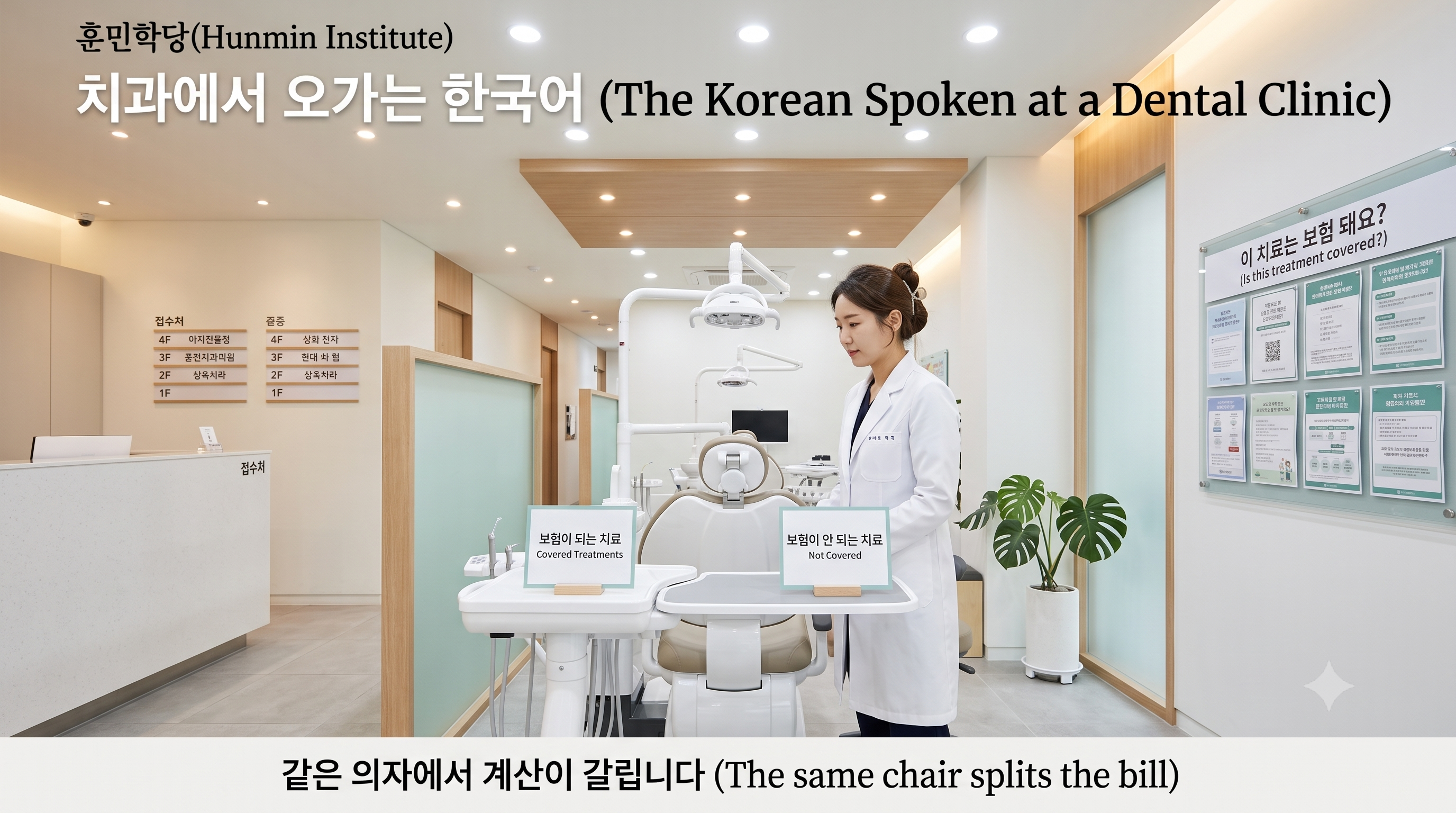
한국 치과에서는 같은 의자에서 보험이 갈립니다
At a Korean dental clinic, the same chair can produce two very different bills.
This post teaches how to describe the pain and how to ask what insurance covers.
한국 치과에서는 같은 의자에 앉아도 나가면서 내는 금액이 크게 갈립니다.
이 글에서 아픈 곳을 말하고 보험이 되는지 묻는 한국어를 익힙니다.
이 글에서 배우는 핵심 회화
Key Expressions in This Lesson
치과에서 오가는 말은 자리마다 정해져 있습니다. 아래 여섯 문장은 좌우가 한 쌍의 대화가 아니라 각각 따로 익히는 문장입니다. 먼저 눈에 담고 본문으로 들어가십시오.
The lines at a dental clinic are fixed, and they change with where you are sitting. The two columns are not paired dialogue; each sentence is learned on its own. Take them in first, then move into the main text.
| 듣는 말 Listening |
하는 말 Speaking |
|---|---|
| 올해 스케일링 받으셨어요? [olhae seukeilling badeusyeosseoyo] Have you had scaling this year? |
이가 아파서 왔어요. [iga apaseo wasseoyo] I came because my tooth hurts. |
| 어느 쪽 이가 시리세요? [eoneu jjogiga siriseyo] Which side feels the cold? |
찬물이 닿으면 시려요. [chanmuri daeumyeon siryeoyo] It stings when cold water touches it. |
| 이건 보험이 안 되는 치료예요. [igeon boheomi an doeneun chiryoyeyo] This treatment is not covered. |
언제부터 씹어도 돼요? [eonjebuteo ssibeodo dwaeyo] From when can I chew again? |
첫째 줄은 소단락 2에서, 둘째 줄은 소단락 3에서, 셋째 줄은 소단락 4와 5에서 다룹니다.
The first row is covered in Section 2, the second in Section 3, and the third in Sections 4 and 5.
1. 같은 의자, 다른 계산
Same Chair, Different Bill
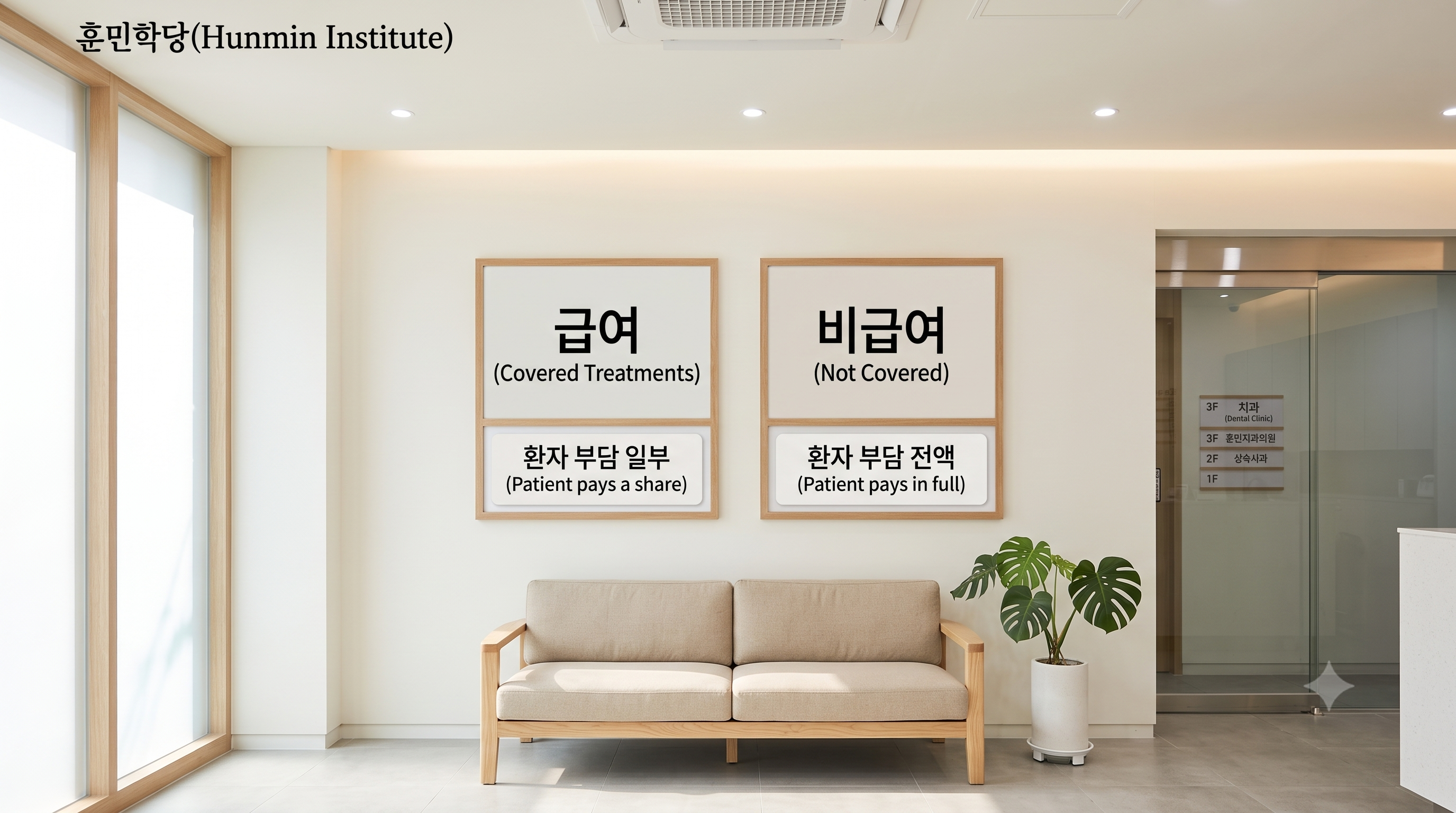
치과에서 두 사람이 같은 의자에 앉아도 나가면서 내는 금액은 크게 다를 수 있습니다. 치료가 달라서가 아니라 건강보험이 되는 치료와 안 되는 치료가 갈리기 때문입니다.
Two people can sit in the same dental chair and pay very different amounts on the way out. It is not that the treatment differs; it is that some treatments are covered by national health insurance and some are not.
두 말이 어떻게 다른지 표로 먼저 보십시오.
See in the table how the two words differ.
| 한국어 Korean |
무엇인가 What it is |
|---|---|
| 급여 [geubyeo] Covered |
건강보험이 적용되어 환자는 일부만 냅니다 Insurance applies and the patient pays only a share |
| 비급여 [bigeubyeo] Not covered |
공단이 부담하지 않아 전액을 환자가 냅니다 The service pays nothing and the patient pays in full |
| 본인 부담 [bonin budam] Patient's share |
동네 의원 기준으로 대체로 삼십 퍼센트입니다 Generally around thirty percent at a neighborhood clinic |
| 보험이 돼요 [boheomi dwaeyo] It is covered |
병원에서 급여를 줄여 부르는 말입니다 The clinic's shorthand for a covered item |
여기서 쓰는 표현부터 배워봅시다. 계산이 갈리는 자리에서 오가는 말입니다.
Start with the expressions you will use here. These pass where the bill parts ways.
| 듣는 말 Listening |
하는 말 Speaking |
|---|---|
| 이건 보험이 돼요. [igeon boheomi dwaeyo] This one is covered. |
이 치료는 보험 돼요? [i chiryoneun boheom dwaeyo] Is this treatment covered? |
| 이건 보험이 안 되는 치료예요. [igeon boheomi an doeneun chiryoyeyo] This treatment is not covered. |
그럼 얼마나 나와요? [geureom eolmana nawayo] Then how much will it come to? |
| 본인 부담금은 삼십 퍼센트예요. [bonin budamgeumeun samsip peosenteuyeyo] Your share is thirty percent. |
보험 되는 걸로 해 주세요. [boheom doeneun geollo hae juseyo] Please go with the covered option. |
응용 Apply It
↳ [명사] 보험 돼요?
[noun] boheom dwaeyo
Is [noun] covered?
ex 이 치료는 보험 돼요?/스케일링은 보험 돼요?
ROM i chiryoneun boheom dwaeyo/seukeillingeun boheom dwaeyo
EN Is this treatment covered?/Is scaling covered?
▶[급여]와 [비급여], 이 두 단어가 치과 대화의 축입니다.
급여 and 비급여 are the two words the whole conversation turns on.
급여 항목은 건강보험공단이 대부분을 부담하고 환자는 일부만 냅니다. 반면 비급여 항목은 공단이 한 푼도 부담하지 않고 병원이 정한 금액을 전부 환자가 냅니다. 같은 치과 안에서 이 두 계산이 나란히 돌아갑니다.
For covered items the insurance service pays most of the bill and the patient pays a share. For non-covered items the service pays nothing and the patient pays the full amount the clinic has set. Both of these run side by side inside the same practice.
병원에서는 이 말을 줄여 보험이 돼요, 보험이 안 돼요라고 합니다. 문장에 보험이라는 단어가 나오면 그 뒤에 나오는 것이 금액의 크기를 결정한다고 보시면 됩니다.
In practice the clinic shortens it to 보험이 돼요 or 보험이 안 돼요. When the word 보험 appears, whatever follows it decides the size of the bill.
어느 쪽인지 모른 채 고개만 끄덕이면 계산대에서 처음 듣는 금액을 마주하게 됩니다. 건강보험 적용은 본인이 가입자인지에 따라 갈리고 가입 시점은 체류 자격마다 다릅니다.
Nod along without knowing which side you are on and you meet the number for the first time at the counter. Whether coverage applies at all depends on being enrolled, and the date enrollment starts differs by visa status.
2. 접수대에서
At the Front Desk

치과 접수대에서는 무엇 때문에 왔는지를 먼저 묻습니다. 아파서 왔는지, 검진이나 스케일링을 받으러 왔는지에 따라 대기 순서와 진료 시간이 달라지기 때문입니다.
The front desk asks first what brought you in. Whether you came in pain or came for a checkup or scaling changes both the queue and how much chair time is set aside.
여기서 쓰는 표현부터 배워봅시다. 접수대에서 오가는 말입니다.
Start with the expressions you will use here. These pass at the front desk.
| 듣는 말 Listening |
하는 말 Speaking |
|---|---|
| 어떻게 오셨어요? [eotteoke osyeosseoyo] What brings you in? |
이가 아파서 왔어요. [iga apaseo wasseoyo] I came because my tooth hurts. |
| 올해 스케일링 받으셨어요? [olhae seukeilling badeusyeosseoyo] Have you had scaling this year? |
오늘 스케일링 되나요? [oneul seukeilling doenayo] Can I get scaling today? |
| 신분증 있으세요? [sinbunjjeung isseuseyo] Do you have your ID with you? |
외국인등록증 여기 있어요. [oegugindeungnokjeung yeogi isseoyo] Here is my alien registration card. |
▶올해 받으셨어요라는 질문은 안부가 아니라 보험 확인입니다.
Asking whether you have had it this year is a coverage check, not small talk.
스케일링 급여는 해마다 한 번이고 기준은 일월 일일부터 십이월 삼십일일까지입니다. 올해 이미 받았다면 같은 해에 다시 받을 때는 보험이 되지 않습니다.
Scaling is covered once per calendar year, counted from 1 January to 31 December. If you have already had it this year, a second one in the same year is not covered.
반대로 작년 십이월에 받았어도 해가 바뀌면 다시 됩니다. 쓰지 않은 횟수는 다음 해로 넘어가지 않고 사라지므로 연말이 가까우면 미루지 않는 편이 낫습니다.
Conversely, even if you had it last December, the new year opens it again. An unused turn does not roll over, so as the year closes it is better not to put it off.
3. 진료 의자에서
In the Dental Chair
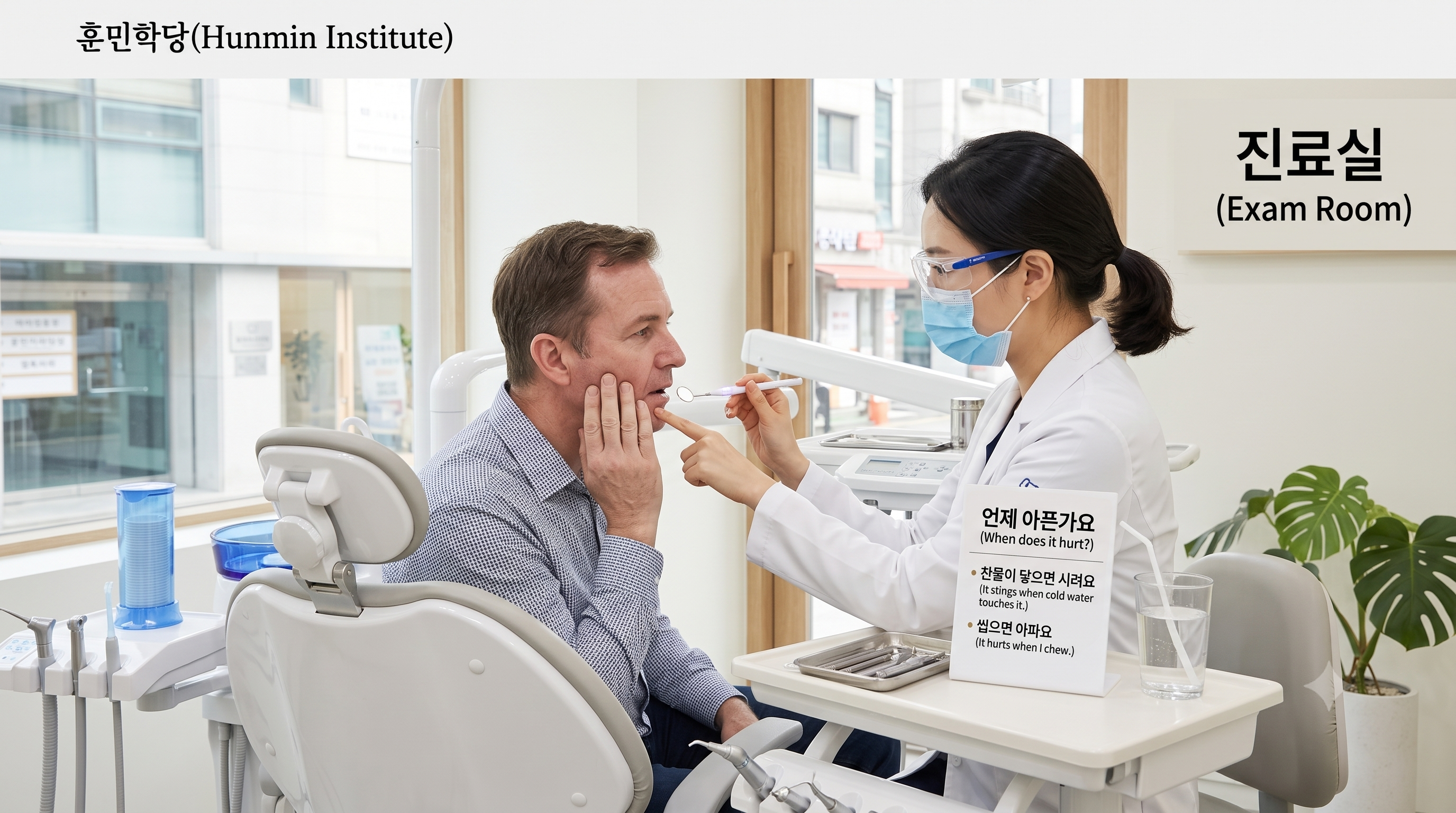
의자에 누우면 입을 벌린 채 대답해야 합니다. 그래서 짧고 정확한 말이 필요합니다. 한국어는 치아의 불편함을 한 단어로 뭉뚱그리지 않고 아프다와 시리다, 욱신거리다로 나눠 씁니다.
Once you are lying back you have to answer with your mouth open, so the words need to be short and exact. Korean does not lump dental discomfort into one word; it separates 아프다, 시리다, and 욱신거리다.
세 말이 어떻게 다른지 표로 먼저 보십시오.
See in the table how the three differ.
| 한국어 Korean |
어떤 느낌인가 What it feels like |
|---|---|
| 시리다 [sirida] A cold jolt |
차가운 것이 닿는 순간 짧고 날카롭게 지나갑니다 A short sharp jolt the moment something cold lands |
| 아프다 [apeuda] Pain |
힘을 줄 때나 가만히 있을 때 이어지는 통증입니다 A lasting pain under pressure or even at rest |
| 욱신거리다 [uksingeorida] Throbbing |
맥박처럼 규칙적으로 울리는 느낌입니다 A regular throb, like a pulse |
여기서 쓰는 표현부터 배워봅시다. 진료 의자에서 오가는 말입니다.
Start with the expressions you will use here. These pass in the dental chair.
| 듣는 말 Listening |
하는 말 Speaking |
|---|---|
| 어느 쪽 이가 시리세요? [eoneu jjogiga siriseyo] Which side feels the cold? |
찬물이 닿으면 시려요. [chanmuri daeumyeon siryeoyo] It stings when cold water touches it. |
| 눌러 볼게요. 아프세요? [nulleo bolgeyo apeuseyo] I will press here. Does it hurt? |
씹으면 아파요. [ssibeumyeon apayo] It hurts when I chew. |
| 전에 치료하신 적 있으세요? [jeone chiryohasin jeok isseuseyo] Have you had work done here before? |
때운 데가 빠졌어요. [ttaeun dega ppajyeosseoyo] The filling came out. |
▶언제 아픈지를 말하면 어디가 문제인지가 좁혀집니다.
Saying when it hurts narrows down where the problem is.
찬물이 닿을 때, 씹을 때, 아무것도 안 할 때는 각각 다른 신호입니다. 그래서 의사는 어디가 아프냐보다 언제 아프냐를 먼저 묻습니다.
Cold water, chewing, and doing nothing at all are three different signals. That is why the dentist asks when it hurts before asking where.
틀에 넣을 동사만 바꾸면 그대로 통합니다. 씹으면 시려요, 숨을 들이마시면 시려요처럼 씁니다. 예전 치료 자리가 떨어졌다면 때운 데가 빠졌어요 한 문장이면 충분합니다.
Swap the verb in the pattern and it keeps working: 씹으면 시려요, 숨을 들이마시면 시려요. If an old filling has come loose, 때운 데가 빠졌어요 is all you need.
4. 보험이 갈리는 자리
Where the Coverage Splits
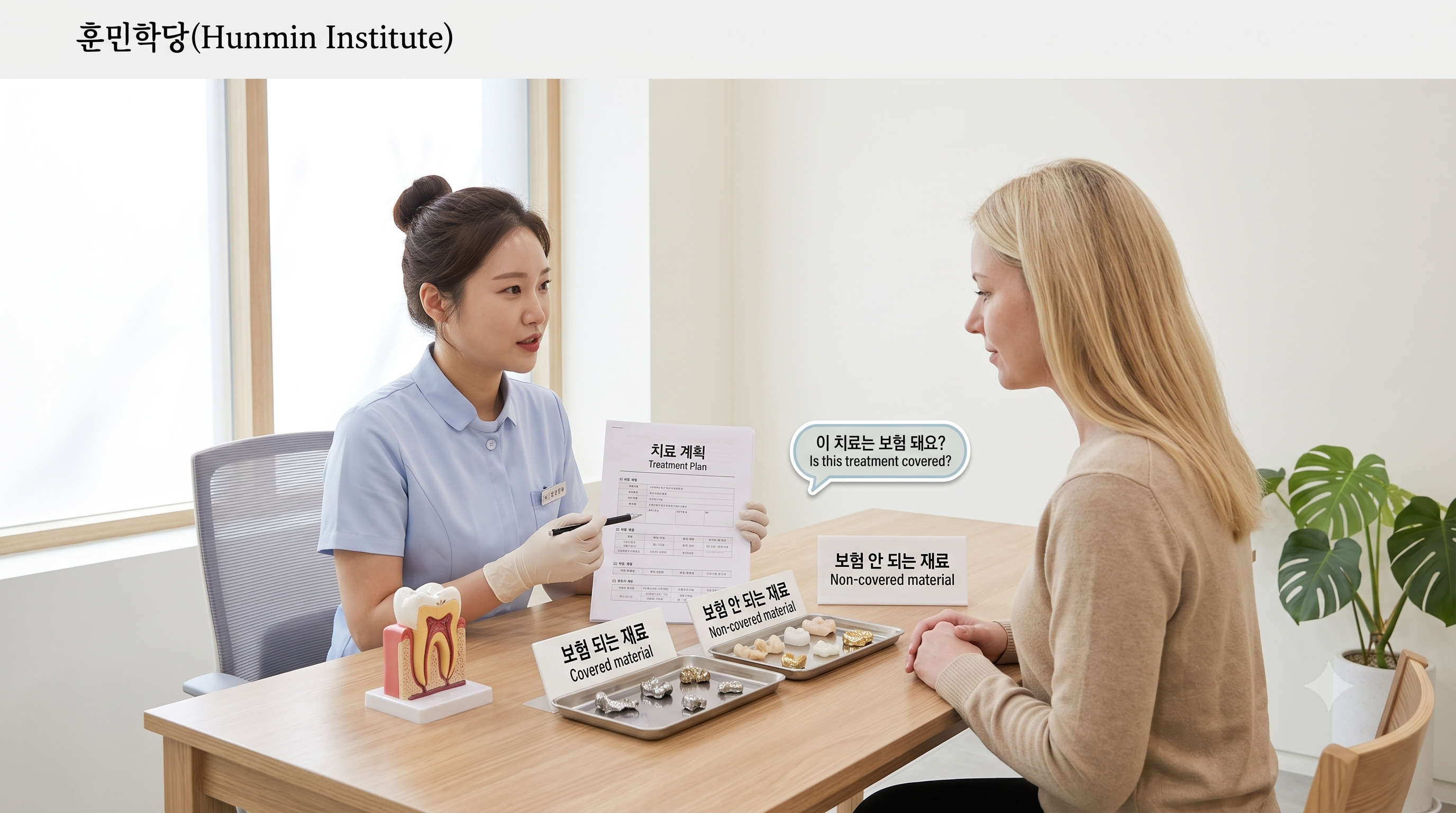
진료가 끝나면 무엇을 어떻게 치료할지 설명을 듣습니다. 이 자리에서 급여와 비급여가 갈립니다.
When the examination ends, you are told what will be treated and how. This is where covered and non-covered part ways.
어느 치료가 어느 쪽인지 표로 먼저 확인하십시오.
Check in the table which treatment falls on which side.
| 보험이 되는 치료 Covered treatments |
보험이 안 되는 치료 Not covered |
|---|---|
| 스케일링, 만 19세 이상 해마다 한 번 Scaling, age 19 and up, once each year |
치아 미백과 라미네이트 Teeth whitening and veneers |
| 충치 치료, 보험이 되는 재료로 할 때 Cavity filling with a covered material |
치아 교정 Orthodontic treatment |
| 신경 치료와 발치, 잇몸 치료 Root canal, extraction, and gum treatment |
보험이 안 되는 재료로 하는 보철 Prosthetics using non-covered materials |
| 임플란트, 만 65세 이상 평생 두 개까지 Implants, age 65 and up, two in a lifetime |
만 65세 미만의 임플란트 Implants under age 65 |
| 틀니, 만 65세 이상 칠 년에 한 번 Dentures, age 65 and up, once every seven years |
그 밖의 미용 목적 치료 Any other treatment for appearance |
여기서 쓰는 표현부터 배워봅시다. 치료를 정하는 자리에서 오가는 말입니다.
Start with the expressions you will use here. These pass as the treatment is decided.
| 듣는 말 Listening |
하는 말 Speaking |
|---|---|
| 이건 보험이 안 되는 치료예요. [igeon boheomi an doeneun chiryoyeyo] This treatment is not covered. |
보험 되는 재료로 해 주세요. [boheom doeneun jaeryoro hae juseyo] Please use a material that is covered. |
| 오늘은 여기까지 할게요. [oneureun yeogikkaji halgeyo] We will stop here for today. |
오늘 다 끝나요? [oneul da kkeunnayo] Will it all be finished today? |
| 세 번 정도 더 오셔야 해요. [se beon jeongdo deo osyeoya haeyo] You will need about three more visits. |
몇 번 더 와야 돼요? [myeot beon deo waya dwaeyo] How many more visits do I need? |
▶같은 치료라도 재료를 바꾸면 보험이 갈립니다.
The same treatment can cross the coverage line if the material changes.
충치 치료가 대표적입니다. 기본 재료로 하면 급여이지만 색과 모양을 맞춘 재료를 쓰면 비급여가 됩니다. 그래서 무엇을 치료하느냐만 묻지 말고 무슨 재료로 하느냐까지 물으셔야 합니다.
Cavity filling is the clearest case. With a basic material it is covered; with one matched to the colour and shape of the tooth it is not. So do not ask only what will be treated, ask what it will be made of.
이가 하나도 남지 않은 경우에는 임플란트가 아니라 틀니 쪽으로 급여가 적용됩니다. 급여 항목은 동네 의원 기준 환자 몫이 대체로 삼십 퍼센트이고 스케일링은 만 오천 원 안팎입니다.
When no teeth remain, coverage runs through dentures rather than implants. For covered items the patient's share at a neighborhood clinic is generally around thirty percent, and scaling comes to roughly fifteen thousand won.
병원 종별과 진료 시간대에 따라 금액이 달라질 수 있고 급여 조건은 고시가 바뀌면 함께 바뀝니다. 시작 전에 이 치료는 보험 돼요 한 문장을 반드시 넣으십시오.
The figure shifts with the type of institution and the hour of your visit, and the conditions change when the notices are revised. Before anything begins, put the line 이 치료는 보험 돼요 into the conversation.
5. 치료 후와 다음 예약
After the Treatment and the Next Visit
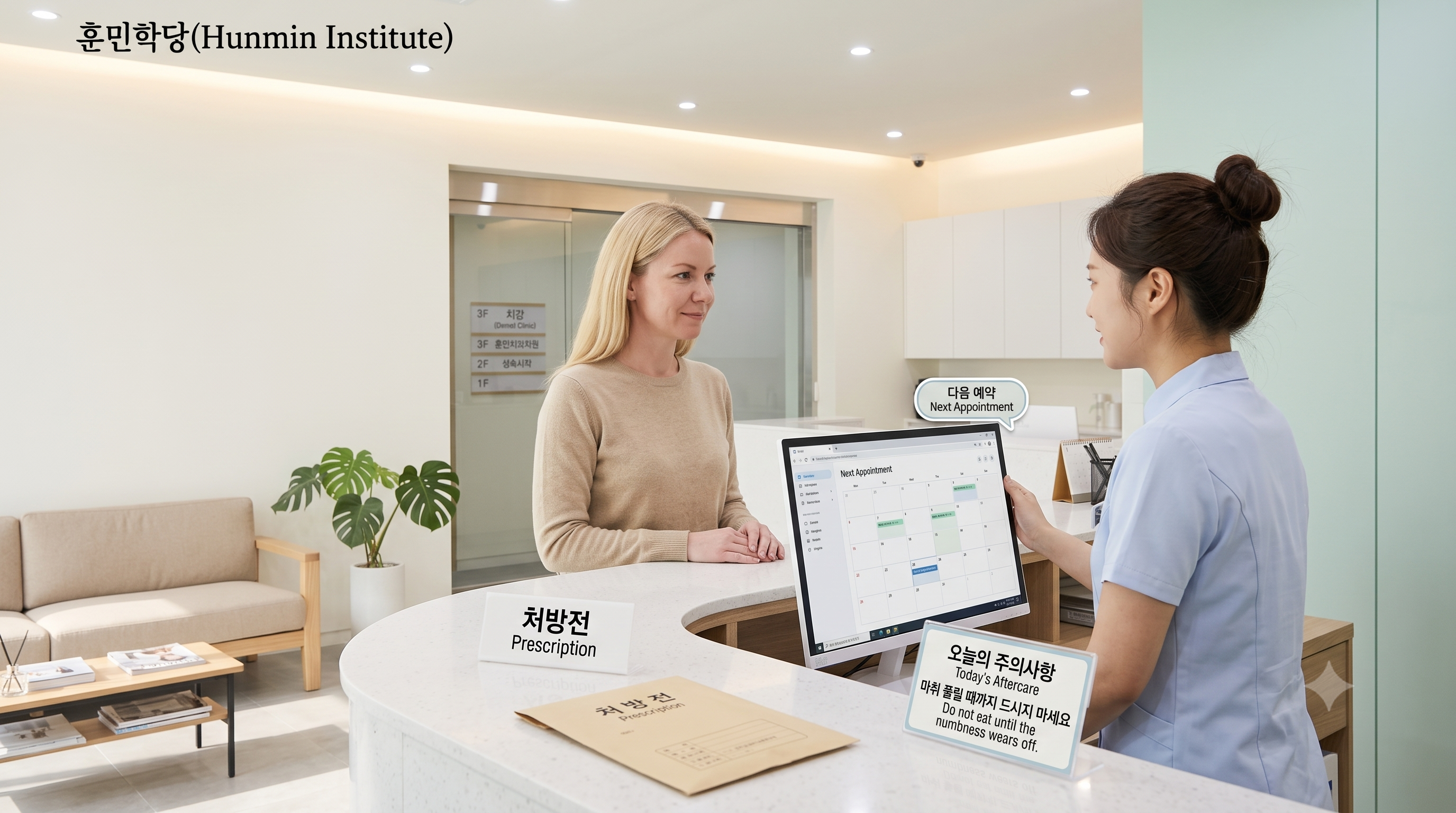
치과 치료는 한 번에 끝나지 않는 경우가 많습니다. 그래서 나가기 전에 두 가지를 챙겨야 합니다. 오늘 조심할 것과 다음에 언제 오는지입니다.
Dental work often does not finish in a single visit. So there are two things to take with you before you leave: what to be careful about today, and when to come back.
여기서 쓰는 표현부터 배워봅시다. 치료가 끝나고 오가는 말입니다.
Start with the expressions you will use here. These pass once the treatment ends.
| 듣는 말 Listening |
하는 말 Speaking |
|---|---|
| 마취 풀릴 때까지 드시지 마세요. [machwi pullil ttaekkaji deusiji maseyo] Do not eat until the numbness wears off. |
언제부터 씹어도 돼요? [eonjebuteo ssibeodo dwaeyo] From when can I chew again? |
| 두세 시간이면 풀려요. [duse siganimyeon pullyeoyo] It wears off in two or three hours. |
마취 언제 풀려요? [machwi eonje pullyeoyo] When will the numbness wear off? |
| 약 처방해 드릴게요. [yak cheobanghae deurilgeyo] I will write you a prescription. |
다음 예약 잡아 주세요. [daeum yeyak jaba juseyo] Please book my next appointment. |
▶마취가 풀리기 전에 먹지 말라는 말에는 이유가 있습니다.
There is a reason they tell you not to eat before the numbness fades.
감각이 없는 상태에서는 뺨이나 혀를 씹어도 알아채지 못합니다. 풀리는 시간에는 개인차가 있으므로 몇 시간이라는 말보다 감각이 돌아왔는지를 기준으로 삼으십시오.
While the area is numb you can bite your cheek or tongue without feeling it. How long it lasts varies from person to person, so go by whether sensation has returned rather than by a number of hours.
다음 예약을 잡아 달라는 문장에서 잡다는 자리를 확보한다는 뜻이며 병원 밖에서도 그대로 쓰입니다. 예약을 잡다, 날짜를 잡다처럼 넓게 씁니다.
In 다음 예약 잡아 주세요, the verb 잡다 means securing a slot, and it is used the same way well outside the clinic: 예약을 잡다, 날짜를 잡다.
치과에서 챙길 것은 두 가지입니다. 언제 어떻게 아픈지를 정확히 말하는 것, 그리고 이 치료가 보험이 되는지 묻는 것입니다. 오늘 나온 문장 가운데 딱 세 개만 외우자면 찬물이 닿으면 시려요, 이 치료는 보험 돼요, 언제부터 씹어도 돼요입니다.
Two things matter at the dentist: saying exactly when and how it hurts, and asking whether the treatment is covered. If you memorize only three of today's lines, make them 찬물이 닿으면 시려요, 이 치료는 보험 돼요, and 언제부터 씹어도 돼요.
Next: Korean Optician Phrases: No Prescription Needed ↗
토픽 맛보기
TOPIK Preview
유형: TOPIK Ⅰ 읽기 [34~39], 대화, 빈칸에 알맞은 것 고르기
Type: TOPIK I Reading [34–39], dialogue, choose the correct word for the blank
( )에 들어갈 말로 가장 알맞은 것을 고르십시오.
Choose the most appropriate word for the blank.
오늘 치과에서 치료를 받았습니다. 마취가 풀릴 때까지 아무것도 ( ).
I had treatment at the dentist today. Until the numbness wears off, I ( ) anything.
① 먹지 않습니다
② 듣지 않습니다
③ 읽지 않습니다
④ 사지 않습니다
Answer ▾
정답 ① 먹지 않습니다
Answer: ① 먹지 않습니다
마취가 풀리기 전에는 감각이 없어 뺨이나 혀를 씹을 수 있으므로 먹지 않는다는 ①이 정답입니다. ②의 듣다와 ③의 읽다는 마취와 관계가 없어 근거가 없고, ④의 사다는 아무것도와 이어지기는 하지만 치료 후 주의사항으로는 성립하지 않습니다. 흉내 낸 대문항은 TOPIK Ⅰ 읽기 [34~39]입니다.
Before the numbness fades you cannot feel your cheek or tongue, so ① is correct. 듣다 in ② and 읽다 in ③ have nothing to do with anesthesia, and while 사다 in ④ can follow 아무것도 grammatically, it does not work as aftercare advice. The item type modeled here is TOPIK I Reading [34–39].
FAQ
Q1. 외국인도 스케일링 보험이 되나요?Answer ▾
Q1. Is scaling covered for foreign residents too?
A1. 건강보험 가입자나 피부양자라면 국적과 상관없이 같은 기준이 적용됩니다. 만 19세 이상이면 해마다 한 번입니다. 다만 가입 시점은 체류 자격에 따라 다르므로 본인이 이미 가입되어 있는지부터 확인하셔야 합니다.
A1. If you are an enrollee or a dependent, the same rules apply regardless of nationality: once a year from age nineteen. When your enrollment begins depends on your visa status, so check first whether you are already covered.
Q2. 올해 스케일링을 안 받으면 내년에 두 번 받을 수 있나요?Answer ▾
Q2. If I skip scaling this year, can I have it twice next year?
A2. 안 됩니다. 쓰지 않은 횟수는 다음 해로 넘어가지 않고 사라집니다. 내년에도 보험이 되는 횟수는 한 번입니다.
A2. No. An unused turn does not carry over; it disappears. Next year still gives you one covered visit.
Q3. 보험료를 밀린 상태로 치과에 가면 어떻게 되나요?Answer ▾
Q3. What happens if I go to the dentist with unpaid premiums?
A3. 체납 중에는 급여가 제한되어 진료비를 전액 본인이 내게 됩니다. 밀린 보험료를 모두 내면 그 이후 진료부터 급여가 다시 적용됩니다. 다만 체납 기간에 전액 부담한 진료비는 소급해서 돌려받지 못하므로, 치료를 미루기 전에 납부 상태부터 확인하시는 편이 낫습니다.
A3. While premiums are overdue, benefits are restricted and you pay the full amount yourself. Once you clear the arrears, coverage resumes from your next visit onward. What you paid in full during the overdue period is not refunded retroactively, so check your payment status before you put treatment off.
Q4. 치료비를 나눠서 낼 수 있나요?Answer ▾
Q4. Can I pay for the treatment in instalments?
A4. 여러 번에 걸쳐 치료하는 경우에는 그날 받은 치료만큼 그날 결제하는 것이 일반적입니다. 비급여 치료를 한 번에 결제할 때는 카드 할부를 쓰는 경우가 많습니다. 병원마다 방식이 다르므로 시작 전에 물어보시기 바랍니다.
A4. When treatment runs over several visits, it is usual to pay each time for what was done that day. For a non-covered treatment paid in one go, card instalments are common. Practice varies by clinic, so ask before you begin.
Q5. 진료 기록을 본국으로 가져갈 수 있나요?Answer ▾
Q5. Can I take my dental records home with me?
A5. 본인이 요청하면 진료 기록과 영수증을 발급받을 수 있습니다. 다만 영문 서류 발급 여부와 촬영 자료 제공 방식은 병원마다 다르므로, 필요하다면 치료를 시작하기 전에 요청해 두시는 편이 확실합니다.
A5. On request you can be issued your records and receipts. Whether documents are available in English, and how imaging files are handed over, differs by clinic, so ask before treatment starts if you will need them.
Vocabulary and Pronunciation for Foreigners
| No | Korean | Romanisation | Meaning |
|---|---|---|---|
| 1 | 치과 | chigwa | (n) dental clinic [ˈdentl ˈklɪnɪk] |
| 2 | 접수대 | jeopsudae | (n) front desk [frʌnt desk] |
| 3 | 진료 의자 | jillyo uija | (n) dental chair [ˈdentl tʃer] |
| 4 | 계산대 | gyesandae | (n) payment counter [ˈkaʊntər] |
| 5 | 이 | i | (n) tooth [tuːθ] |
| ▾ 단어 57개 더 보기 Show 57 more ↗ | |||
The blog page has limits of space and function, so only five words are shown here. The rest of the word list, the audio, the sentences and tables, the FAQ, the worksheet, the TOPIK questions and the lesson video are on the Hunmin Institute website ↗, free for blog subscribers.
참고 기관
Official Sources
국민건강보험공단 ↗
National Health Insurance Service
https://www.nhis.or.kr
기관 설명 보기 About this institute ▾
This agency runs health insurance eligibility and contributions. You can check enrolment for foreign residents, when coverage starts, and how overdue premiums restrict benefits, all by visa status. The rules are revised, so check directly before you go.
건강보험심사평가원 ↗
Health Insurance Review and Assessment Service
https://www.hira.or.kr
기관 설명 보기 About this institute ▾
This agency sets the review standards for which treatments are covered and which are not. You can check the conditions and counts for scaling, implants, and dentures. The conditions change when the notices are revised.
※ 본 콘텐츠(원고, 이미지, 예문 포함)는 저작권법에 의해 보호받는 훈민학당의 저작물입니다. 무단 복제, 전재, 재배포 및 AI 학습 데이터로의 이용을 금합니다.
This content (manuscript, images, and example sentences) is the copyrighted property of Hunmin Institute, protected under copyright law. Unauthorized copying, reproduction, redistribution, and use as AI training data are prohibited.
'Real Talk' 카테고리의 다른 글
| Korean Part-Time Job Interview Phrases for Foreigners (0) | 2026.08.11 |
|---|---|
| Korean Optician Phrases: No Prescription Needed (0) | 2026.08.09 |
| Korean Skin Clinic Phrases: What Staff Actually Ask (0) | 2026.08.08 |
| Korean Clinic Phrases: What the Doctor Actually Asks (0) | 2026.08.02 |
| Korean Immigration Questions (0) | 2026.07.25 |


