
What You Check Is the List, Not the Amount
확인해야 할 것은 금액이 아니라 항목입니다
Two flats of the same size can cost very different amounts each month, because what is folded into the maintenance fee differs from building to building.
Learn the five lines to read on a bill, and who to ask about what.
같은 크기의 집에 살아도 매달 나가는 돈이 갈리는 것은 관리비에 무엇이 들어 있는지가 집마다 다르기 때문입니다.
고지서에서 읽어야 할 다섯 줄과 누구에게 무엇을 물어야 하는지를 익힙니다.

At the bottom of this post, you will find a vocabulary and pronunciation guide for Korean learners.
Key Phrases in This Post
왼쪽과 오른쪽은 한 쌍의 대화가 아닙니다. 듣고 알아들어야 할 말과 직접 말해야 할 말을 각각 따로 익히세요.
The two columns are not a single exchange. Learn what you must understand and what you must say as two separate sets.
| 듣는 말 What you will hear |
하는 말 What you will say |
|---|---|
| 전기는 따로 나와요. Electricity is billed separately. |
관리비에 뭐가 포함되나요? gwallibie What is included in the maintenance fee? |
| 계량기 보고 계산해요. We read the meter and work it out. |
이건 몇 월분이에요? myeodwolbunieyo Which month is this bill for? |
| 늦으면 연체료가 붙어요. neujeumyeon / buteoyo A late fee is added if you miss the date. |
어디로 내면 되나요? Where do I pay it? |
위 문장은 1번과 2번, 3번 소단락에서 나눠 다룹니다.
These sentences appear across sections 1, 2 and 3.
1. The Maintenance Fee Is a Separate Bill, Not Part of the Rent
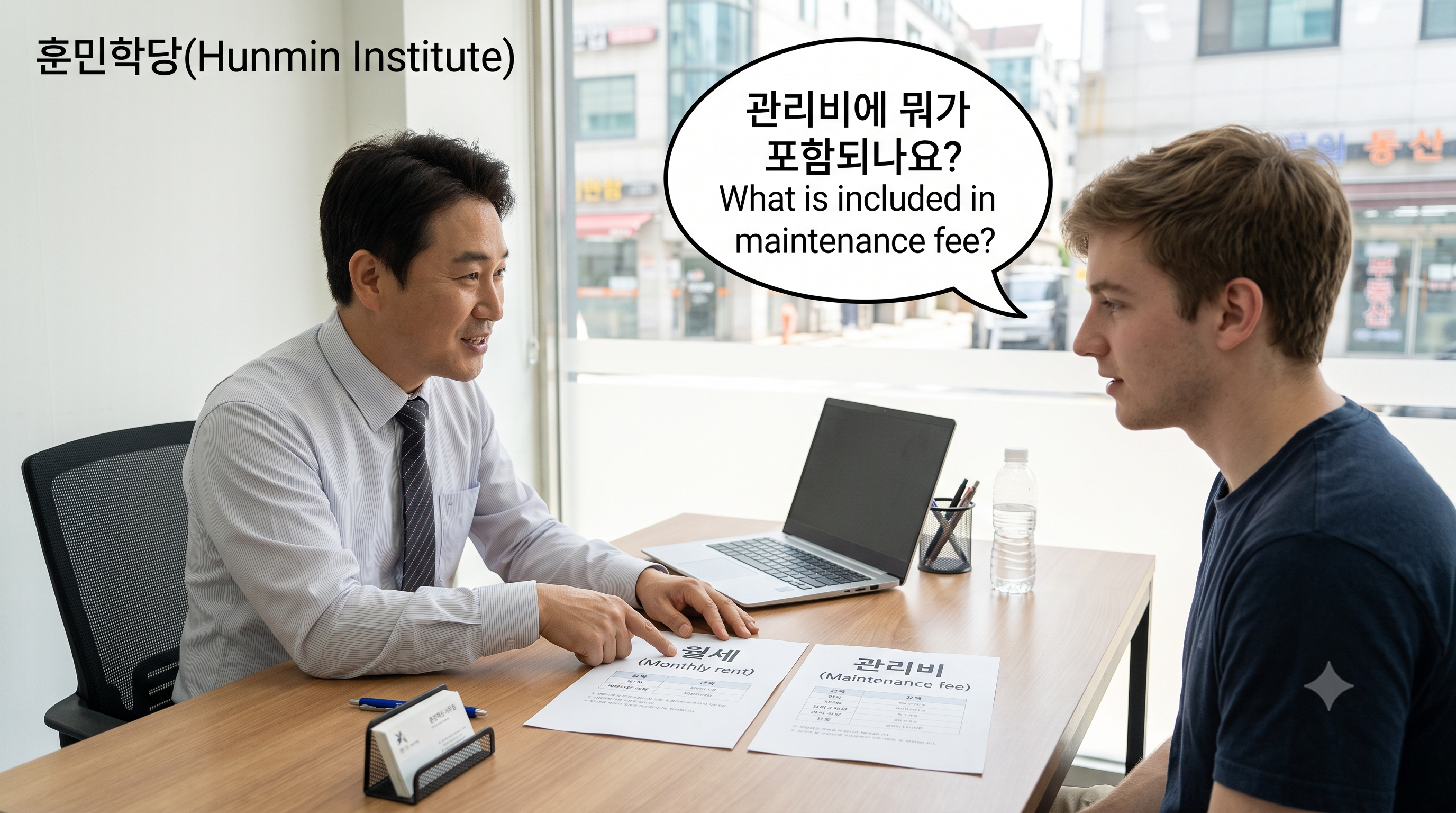
월세가 오십만원이라는 말을 듣고 매달 오십만원만 나갈 것이라고 생각하면 첫 달에 놀라게 됩니다. 한국의 임대차에서 월세와 관리비는 성격이 다른 두 개의 청구입니다. 월세는 집을 빌리는 값이고, 관리비는 그 건물을 유지하는 데 드는 비용을 나누어 내는 것입니다.
Hear that the rent is 500,000 won, assume that is all you pay each month, and the first month will surprise you. In a Korean tenancy the rent and the maintenance fee are two bills of different kinds. The rent is the price of borrowing the home; the fee is your share of keeping the building running.
관리비에 들어가는 것은 건물마다 다릅니다. 복도와 계단의 전기, 엘리베이터 유지, 청소, 경비, 인터넷, 수도가 들어가기도 하고 하나도 들어가지 않기도 합니다. 그래서 관리비 십만원이 어떤 집에서는 비싸고 어떤 집에서는 오히려 저렴합니다. 금액만 보고는 판단할 수 없습니다.
What sits inside that fee varies by building. Lighting in the corridors and stairwells, lift servicing, cleaning, security, internet and water may all be in there, or none of them may be. That is why 100,000 won is expensive in one building and a bargain in another. The figure alone tells you nothing.
계약할 때 관리비 항목을 확인하는 방법은 집 구하기 2편에서 다뤘습니다. 이 글은 이미 살고 있는 집에서 매달 날아오는 고지서를 어떻게 읽고 누구에게 무엇을 묻는지에 집중합니다.
How to check those items before you sign was covered in the second housing post. This one is about the home you already live in: how to read the bills that arrive each month, and who to ask about what.
| 구분 Item |
내용 Detail |
|---|---|
| 월세 Monthly rent |
집을 빌리는 값. 계약서에 적힌 금액으로 고정 The price of the home, fixed at the figure in the contract |
| 관리비 Maintenance fee |
건물 유지 비용을 나눈 몫. 포함 항목이 건물마다 다름 Your share of running the building; contents vary by building |
| 공과금 Utility bills |
전기, 수도, 가스처럼 쓴 만큼 내는 요금 Electricity, water and gas, charged by what you use |
| 확인할 것 What to check |
금액이 아니라 관리비에 어떤 항목이 들어 있는지 Not the amount, but which items the fee contains |
| 듣는 말 What you will hear |
하는 말 What you will say |
|---|---|
| 월세 따로, 관리비 따로예요. gwallibi Rent and maintenance are billed separately. |
관리비에 뭐가 포함되나요? gwallibie What is included in the maintenance fee? |
| 관리비는 매달 같아요. gwallibineun / gatayo The maintenance fee is the same every month. |
다 합치면 얼마쯤 나와요? Roughly how much is it all together? |
바꿔 쓰는 틀 [명사]에 뭐가 포함되나요?
Swap-in pattern: What is included in [noun]?
▶ 따로는 한국 생활에서 자주 듣는 말입니다.
▶ Separately is a word you will hear constantly here.
따로는 하나로 묶이지 않고 나뉘어 있다는 뜻입니다. 월세 따로 관리비 따로라는 말은 두 개를 각각 낸다는 뜻이고, 전기는 따로 나와요는 관리비에 들어 있지 않고 별도로 청구된다는 뜻입니다.
It means kept apart rather than bundled. Rent separately, maintenance separately means you pay each on its own; electricity comes separately means it is not inside the fee but billed on its own.
관리비는 받침이 뒤 소리와 만나 괄리비로 소리 납니다. 글자대로 읽으면 알아듣기 어려우니 소리를 함께 익혀 두시기 바랍니다.
The word for maintenance fee shifts in speech, so it is heard as gwallibi rather than gwan-ri-bi. Read it letter by letter and people will struggle to follow you.
2. Some Buildings Fold It In, Others Bill You Directly
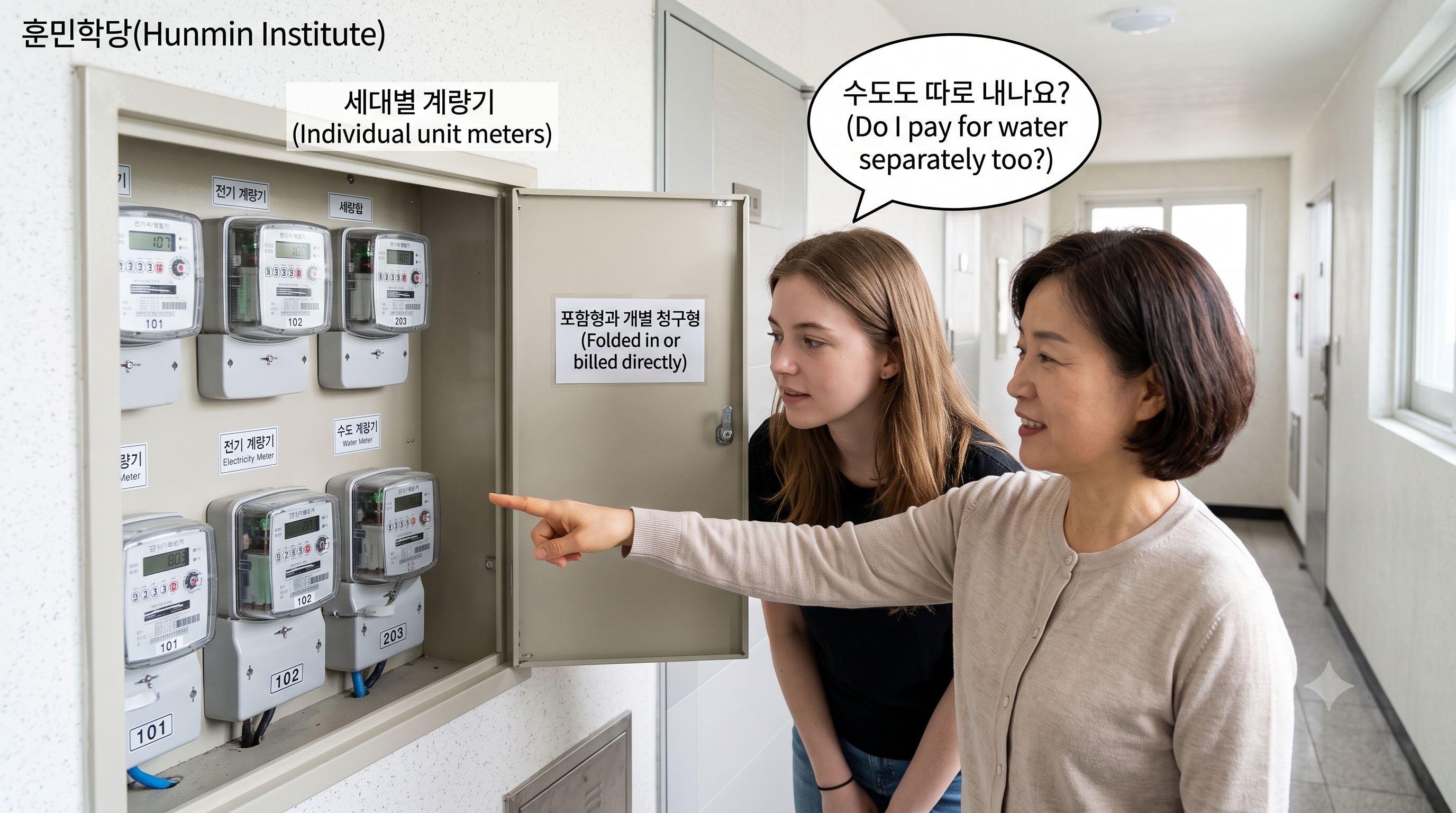
실제로 돈이 갈리는 자리는 여기입니다. 전기와 수도, 가스가 관리비 안에 들어 있는 집이 있고, 계량기를 따로 달아 쓴 만큼 청구하는 집이 있습니다. 어느 쪽인지 모르면 관리비를 냈는데 얼마 뒤 전기 고지서가 또 오는 상황을 겪게 됩니다.
This is where the money actually diverges. In some buildings electricity, water and gas sit inside the maintenance fee; in others each unit has its own meter and you are billed for what you used. Not knowing which is which is how people pay the fee and then find an electricity bill in the post a fortnight later.
구분하는 방법은 간단합니다. 집 안이나 복도에 그 집만의 계량기가 달려 있고 매달 숫자를 읽어 간다면 개별 청구입니다. 계량기가 건물 하나에만 있고 세대 수로 나눈다면 관리비에 섞여 나옵니다. 원룸과 오피스텔은 두 방식이 섞여 있는 경우가 많아 항목별로 확인해야 합니다.
Telling them apart is simple. If your unit has its own meter, inside or in the corridor, and someone reads it each month, you are billed directly. If there is a single meter for the whole building and the total is split between units, it comes through the fee. Studios and officetels often mix the two, so check item by item.
계절도 함께 보셔야 합니다. 여름과 겨울에는 냉난방 때문에 전기와 가스 사용량이 크게 늘어 같은 집에서도 달마다 금액이 달라집니다. 관리비가 매달 같다는 말을 들었더라도 공과금이 따로 나오는 집이라면 여름과 겨울 고지서는 다르게 나옵니다.
Season matters too. Cooling and heating push electricity and gas use up sharply in summer and winter, so the same home costs different amounts month to month. Even if you were told the maintenance fee never changes, in a directly billed home the summer and winter bills will not match.
| 구분 Type |
내용 Detail |
|---|---|
| 포함형 Folded in |
전기·수도·가스가 관리비 안에 들어 있음. 별도 고지서가 오지 않음 Utilities sit inside the fee; no separate bill arrives |
| 개별 청구형 Billed directly |
세대별 계량기로 쓴 만큼 청구. 관리비와 별도로 고지서가 옴 Charged by your own meter; a bill comes on top of the fee |
| 구분하는 법 How to tell |
그 집만의 계량기가 있는지, 매달 검침을 하는지 Whether your unit has its own meter and it is read monthly |
| 혼합 Mixed |
수도는 포함이고 전기는 개별인 경우가 많음. 항목별로 확인 Water folded in, electricity direct, is a common split; check each |
| 계절 변동 Seasonal swing |
여름과 겨울은 냉난방으로 사용량이 늘어 금액이 달라짐 Summer and winter use rises with cooling and heating |
| 듣는 말 What you will hear |
하는 말 What you will say |
|---|---|
| 전기는 따로 나와요. Electricity is billed separately. |
수도도 따로 내나요? Do I pay for water separately too? |
| 계량기 보고 계산해요. We read the meter and work it out. |
계량기가 어디에 있어요? isseoyo Where is the meter? |
바꿔 쓰는 틀 [명사]도 따로 내나요?
Swap-in pattern: Do I pay for [noun] separately too?
▶ 나오다가 여기서는 청구된다는 뜻입니다.
▶ Here the verb to come out means to be billed.
전기가 따로 나와요는 전기가 밖으로 나온다는 말이 아니라 요금이 따로 청구된다는 뜻입니다. 고지서가 나오다, 요금이 나오다처럼 씁니다. 얼마 나왔어요는 얼마가 청구되었느냐고 묻는 말입니다.
Electricity comes out separately does not describe electricity leaving anything; it means the charge is issued on its own. Bills come out, charges come out. How much came out asks what you have been billed.
계량기는 쓴 양을 재는 기계이고, 그 숫자를 읽어 가는 일을 검침이라고 합니다. 이 두 단어가 개별 청구형 집의 핵심 어휘입니다.
A meter measures what you used, and the act of reading its number is called meter reading. Those two words carry a directly billed home.
번역기가 놓치는 자리What the translator misses
관리비는 maintenance fee만이 아닙니다
The Korean word covers more than a maintenance fee
번역기는 관리비를 maintenance fee로 옮깁니다. 영어의 maintenance fee는 건물을 고치고 관리하는 비용이라는 느낌이 강해서, 내가 쓴 전기와 물이 거기 들어 있을 것이라고는 생각하기 어렵습니다.
A translator gives you maintenance fee. In English that phrase points at repairs and upkeep, so it never occurs to you that the electricity and water you personally used might be sitting inside it.
그러나 한국의 관리비는 건물 유지비에 개인이 쓴 공과금이 섞여 들어오기도 하는 주머니입니다. 그래서 금액이 아니라 항목을 물어야 합니다. 무엇이 들어 있느냐는 질문 하나가 이 편 전체의 핵심입니다.
But the Korean fee is a pocket into which personal utility charges are sometimes folded alongside building upkeep. So ask about the contents, not the figure. What is in it is the one question this whole post turns on.
3. Five Lines to Read on the Bill
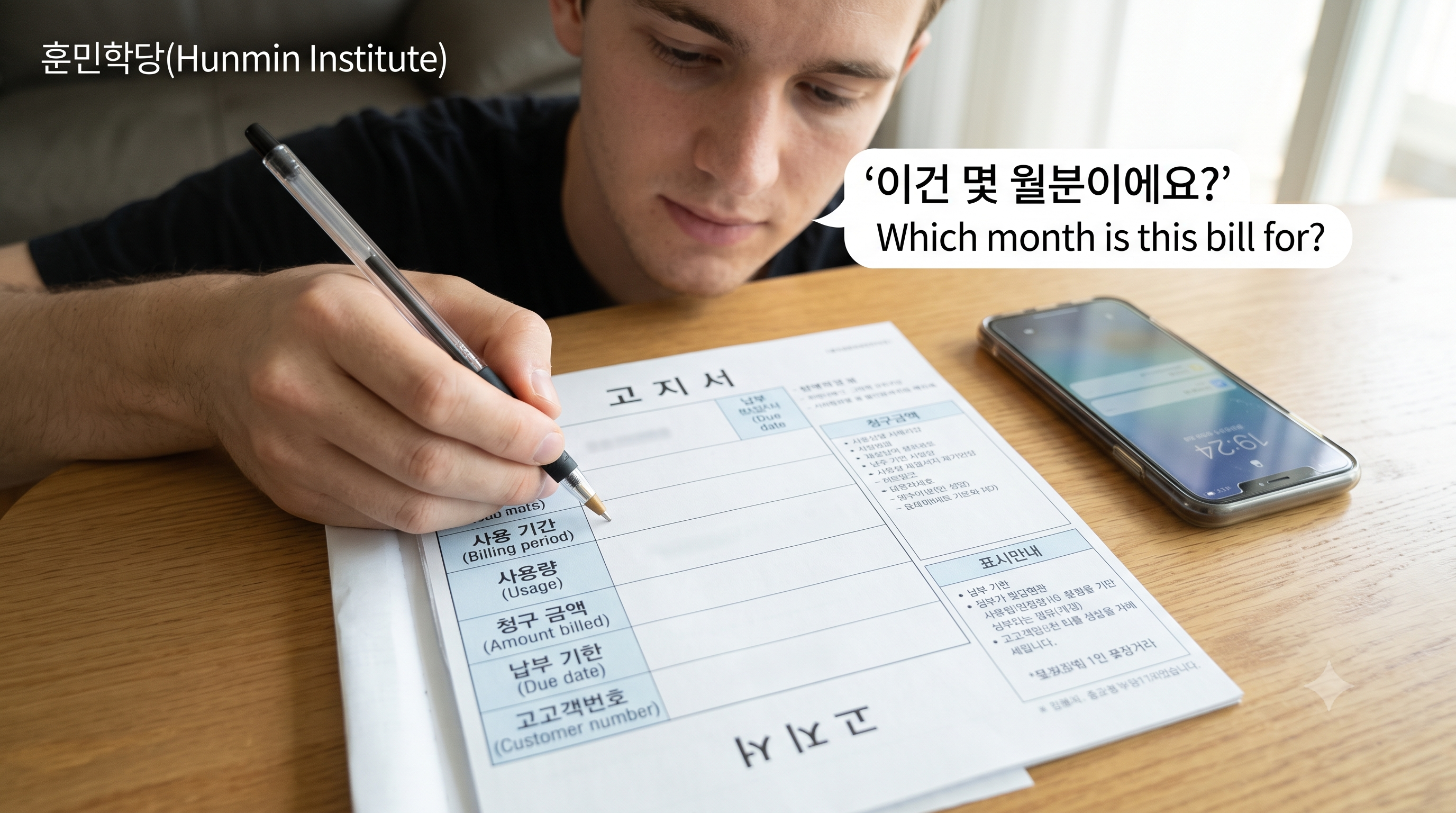
고지서는 숫자가 빽빽해서 전부 읽으려 하면 지칩니다. 그런데 실제로 확인해야 할 줄은 다섯입니다. 금액은 그중 하나일 뿐이고, 나머지 넷이 문제가 생겼을 때 근거가 됩니다.
A bill is dense with figures and reading all of them wears you out. In practice five lines matter. The amount is only one of them; the other four are what you rely on when something goes wrong.
특히 사용 기간을 먼저 보시기 바랍니다. 고지서는 지난달에 쓴 것을 이번 달에 청구하므로, 이사한 달에는 앞사람이 쓴 몫이 섞여 오는 일이 있습니다. 사용 기간과 본인이 입주한 날짜를 나란히 놓고 보면 바로 드러납니다.
Start with the billing period. A bill charges this month for last month's use, so in the month you move in, part of the previous tenant's consumption can ride along. Set the period against your move-in date and it shows immediately.
| 고지서에 적힌 말 Term on the bill |
무엇을 확인하나 What to check |
|---|---|
| 사용 기간 Billing period |
언제부터 언제까지 쓴 몫인지. 입주일과 겹치는지 The dates covered, and whether they overlap your move-in |
| 사용량 Usage |
지난달과 비교해 얼마나 늘고 줄었는지 How it rose or fell against last month |
| 청구 금액 Amount billed |
이번에 내야 할 총액 The total due this time |
| 납부 기한 Due date |
언제까지 내야 연체료가 붙지 않는지 The date beyond which a late fee is added |
| 고객번호와 문의처 Customer number and contact |
내 관할 사업자의 이름과 전화번호 The name and number of the provider for your area |
| 듣는 말 What you will hear |
하는 말 What you will say |
|---|---|
| 늦으면 연체료가 붙어요. neujeumyeon / buteoyo A late fee is added if you miss the date. |
이건 몇 월분이에요? myeodwolbunieyo Which month is this bill for? |
| 고지서 보고 내시면 돼요. Just pay according to the bill. |
어디로 내면 되나요? Where do I pay it? |
바꿔 쓰는 틀 이건 [명사]분이에요?
Swap-in pattern: Is this the portion for [noun]?
▶ 분은 그 기간에 해당한다는 뜻입니다.
▶ The suffix marks the period a charge belongs to.
칠월분, 팔월분처럼 씁니다. 이건 몇 월분이에요는 이 고지서가 어느 달에 쓴 몫이냐는 질문입니다. 이사한 직후에 반드시 물어야 하는 문장입니다.
You attach it to a month: the July portion, the August portion. Asking which month this is for asks which month's use the bill covers, and it is the sentence to use right after you move.
고지서에 적힌 사업자 이름과 전화번호는 반드시 사진으로 남겨 두시기 바랍니다. 전기는 전국이 한 회사이지만, 가스와 수도는 사는 지역마다 사업자가 다르므로 내 관할을 아는 방법이 그 번호뿐입니다.
Photograph the provider's name and phone number printed on the bill. Electricity runs through one nationwide company, but gas and water providers differ by district, and that number is the only way to know which one is yours.
4. Who to Ask, and About What
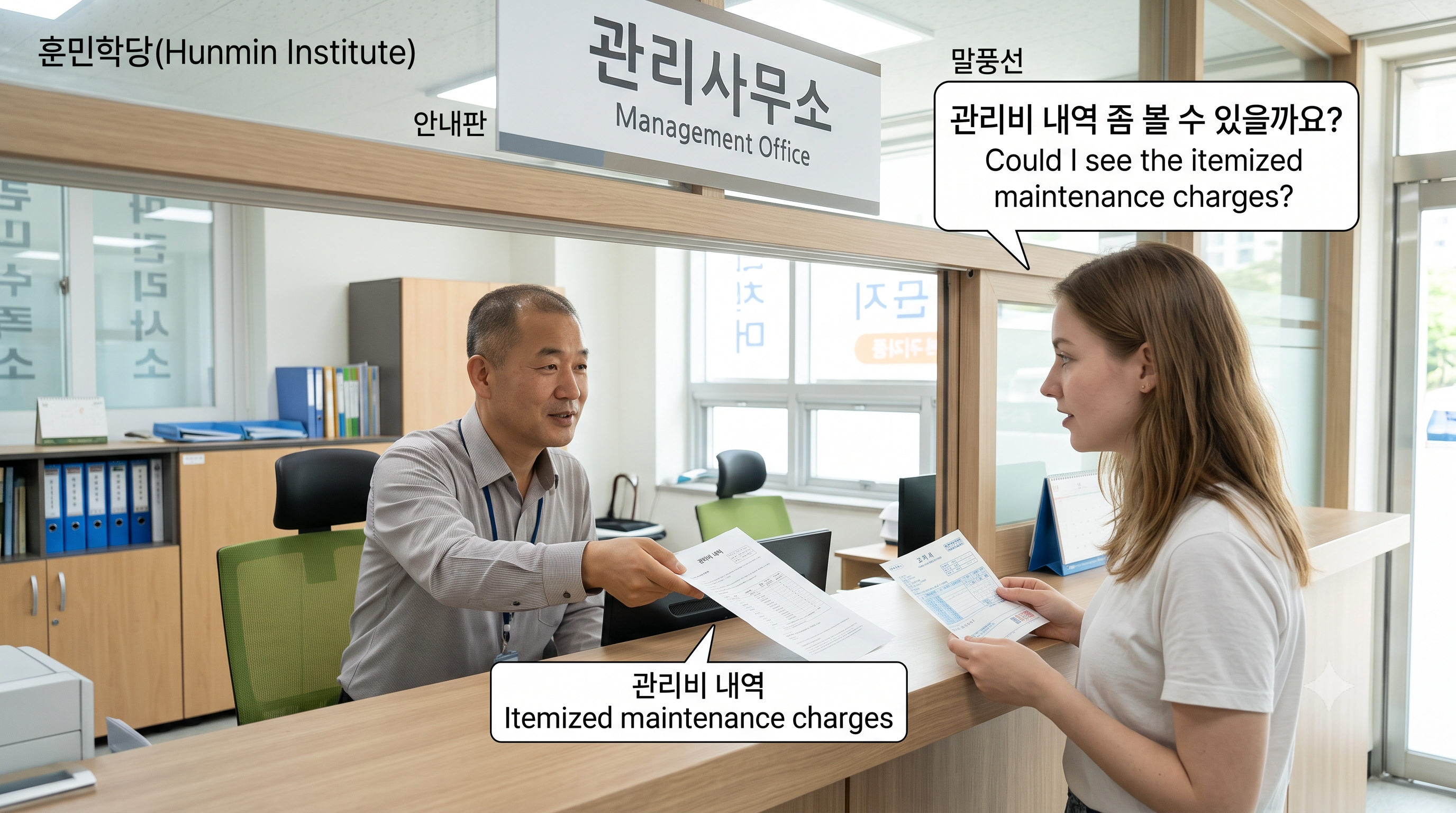
묻는 문장을 알아도 상대를 잘못 고르면 답을 듣지 못합니다. 아파트나 큰 오피스텔에는 관리사무소가 있어 관리비에 관한 것은 그곳이 답합니다. 반면 원룸과 다세대, 고시원에는 관리사무소가 없고 집주인이나 중개했던 부동산이 상대가 됩니다.
Knowing the sentence does not help if you say it to the wrong person. Flats and larger officetels have a management office, and that is where maintenance questions belong. Studios, multiplex houses and goshiwons have no such office, so your counterpart is the landlord or the agency that brokered the lease.
공과금은 또 다릅니다. 전기 요금은 한국전력, 가스와 수도는 그 지역의 사업자가 담당하므로 관리사무소나 집주인이 아니라 고지서에 적힌 번호로 물어야 정확한 답이 나옵니다. 관리비는 건물 쪽, 공과금은 사업자 쪽이라고 기억해 두시면 됩니다.
Utilities are different again. Electricity sits with the national power company, gas and water with your district's provider, so an accurate answer comes from the number on the bill rather than from the office or the landlord. Remember it as a pair: maintenance to the building, utilities to the provider.
| 묻는 내용 Your question |
상대 Who to ask |
|---|---|
| 관리비 항목과 금액 Maintenance items and amount |
아파트·오피스텔은 관리사무소, 원룸·고시원은 집주인이나 부동산 Management office for flats and officetels; landlord or agency for studios and goshiwons |
| 전기 요금 Electricity |
한국전력공사. 전국 어디서나 123 KEPCO, on 123 anywhere in the country |
| 가스 요금 Gas |
지역 도시가스 사업자. 고지서에 적힌 번호로 확인 Your district's city gas provider, on the number printed on the bill |
| 수도 요금 Water |
관할 상수도사업소. 고지서에 적힌 번호로 확인 Your local waterworks office, on the number printed on the bill |
| 계량기 고장 A faulty meter |
해당 사업자. 집주인에게도 함께 알릴 것 The provider concerned; tell the landlord as well |
| 듣는 말 (집주인·관리사무소) From the landlord or office |
하는 말 What you will say |
|---|---|
| 그건 저희 쪽이 아니에요. jjogi That is not handled by us. |
어디에 물어보면 될까요? Then who should I ask? |
| 고지서에 번호 적혀 있어요. jeokyeo isseoyo The number is printed on the bill. |
관리비 내역 좀 볼 수 있을까요? gwallibi naeyeok / bol su isseulkkayo Could I see the itemized maintenance charges? |
바꿔 쓰는 틀 [명사] 좀 볼 수 있을까요?
Swap-in pattern: Could I have a look at [noun]?
▶ 내역은 무엇이 얼마인지 나눈 목록입니다.
▶ The word means the broken-down list, not the total.
금액 하나만 적힌 것이 아니라 항목마다 얼마인지 갈라 놓은 것을 내역이라고 합니다. 관리비 내역을 보여 달라는 말은 총액 말고 무엇에 얼마가 들어갔는지 보여 달라는 뜻입니다.
Not a single figure but the split showing how much went to each item. Asking to see it means asking what the total was made of, rather than what the total was.
좀은 부탁을 부드럽게 만드는 말입니다. 볼 수 있을까요 앞에 좀을 붙이면 요구가 아니라 부탁이 되어 대부분 어렵지 않게 받아들여집니다.
The little particle before the verb softens a request. Slipped in front of could I see, it turns a demand into a favour, and it is rarely refused.
5. When the Bill Suddenly Jumps

고지서 금액이 지난달의 두 배가 되면 당황하게 됩니다. 그런데 원인은 대개 셋 중 하나입니다. 계절 때문에 실제로 많이 썼거나, 사용 기간에 앞사람 몫이 섞였거나, 계량기나 검침에 문제가 있었던 경우입니다.
Seeing double last month's figure is alarming. The cause is usually one of three: the season genuinely pushed your use up, the billing period includes the previous tenant, or something went wrong with the meter or its reading.
순서대로 확인하시면 됩니다. 먼저 고지서의 사용량을 지난달과 비교합니다. 사용량은 비슷한데 금액만 늘었다면 계산 쪽을 물어야 하고, 사용량 자체가 크게 늘었다면 냉난방이나 누수를 의심합니다. 특히 물이 계속 흐르는 소리가 나거나 아무것도 안 쓰는데 계량기가 돌아간다면 곧바로 알려야 합니다.
Work through it in order. Compare this month's usage with last month's. If usage held steady but the amount rose, ask about the calculation; if usage itself jumped, suspect heating, cooling or a leak. Running water you cannot account for, or a meter turning while nothing is switched on, should be reported at once.
확인한 뒤에도 이유를 알 수 없다면 고지서에 적힌 번호로 문의하십시오. 전기는 한국전력 123이 전국 공통이고, 가스와 수도는 고지서의 사업자 번호가 정확한 창구입니다.
If the reason still escapes you, call the number on the bill. For electricity that is KEPCO on 123 nationwide; for gas and water, the provider's number on your own bill is the right desk.
| 듣는 말 (사업자·관리사무소) From the provider or office |
하는 말 What you will say |
|---|---|
| 여름이라 많이 나온 거예요. yeoreumira mani It is high because it is summer. |
지난달보다 너무 많이 나왔어요. mani nawasseoyo It came out much higher than last month. |
| 한번 확인해 볼게요. hwaginhae bolkkeyo Let me have a look at it. |
계량기 한번 봐 주실 수 있을까요? jusil su isseulkkayo Could you take a look at the meter? |
바꿔 쓰는 틀 [명사] 한번 봐 주실 수 있을까요?
Swap-in pattern: Could you take a look at [noun]?
▶ 너무 많이 나왔어요는 항의가 아니라 신호입니다.
▶ It came out too high is a signal, not a complaint.
이 문장은 상대를 탓하는 말이 아니라 확인해 달라는 신호로 받아들여집니다. 한국에서는 이 한마디로 대개 검침 기록을 다시 보아 주고, 실제로 착오가 발견되는 일도 적지 않습니다.
It is not heard as blaming anyone but as a request to check. In Korea that one line usually gets the meter record pulled up again, and errors do turn up often enough to be worth the asking.
한번을 붙이면 더 부드러워집니다. 한번 봐 주실 수 있을까요는 가볍게 확인만 부탁한다는 뜻이 되어 상대가 응하기 쉬워집니다.
Adding the word for once softens it further. Could you just take a look asks for nothing more than a glance, which makes it easy to agree to.
정리하면 이렇습니다. 관리비는 월세와 별개의 청구이고, 그 안에 공과금이 들어 있는지 아닌지가 집마다 갈립니다. 고지서에서는 금액보다 사용 기간과 사용량을 먼저 보고, 관리비는 건물 쪽에 공과금은 사업자 쪽에 물으십시오. 아래 단어장에서 고지서에 나오는 말을 한 번 더 확인하시기 바랍니다.
To put it together: the maintenance fee is a bill of its own, and whether utilities sit inside it varies from building to building. On a bill, read the period and the usage before the amount, and take maintenance questions to the building and utility questions to the provider. Run through the billing vocabulary once more below.
TOPIK Practice
TOPIK Ⅰ 읽기 [34~39] 유형입니다. 빈칸에 들어갈 말을 고르는 문제입니다.
This follows TOPIK I Reading, questions 34 to 39: choose the word for the blank.
다음을 읽고 ( )에 들어갈 말로 가장 알맞은 것을 고르십시오.
우리 집은 관리비에 수도가 들어 있습니다. 그렇지만 전기는 들어 있지 않습니다. 그래서 전기 요금은 ( ) 나옵니다.
1) 같이
2) 따로
3) 빨리
4) 조금
정답과 해설은 이 글의 맨 아래에 있습니다.
The answer and explanation are at the very bottom of this post.
Q. 이사한 첫 달에 전 세입자의 요금이 청구되었습니다.
Q. My first bill includes the previous tenant's usage.
고지서의 사용 기간과 입주일을 나란히 놓고 보시기 바랍니다. 입주 전 기간이 섞여 있다면 사업자에 연락해 날짜를 기준으로 나누어 달라고 요청할 수 있습니다. 임대차 계약서와 입주일을 확인할 수 있는 자료를 함께 준비하시면 처리가 빠릅니다.
Set the billing period against your move-in date. If it reaches back before you arrived, you can ask the provider to split the charge by date. Have the lease and something showing your move-in date ready and it moves faster.
Q. 고지서가 오지 않습니다. 안 내도 되나요?
Q. No bill has arrived. Can I just not pay?
고지서가 오지 않아도 요금은 발생합니다. 종이 고지서 대신 문자나 이메일로 오도록 되어 있거나 주소가 잘못 등록된 경우가 많습니다. 납부 기한을 넘기면 연체료가 붙으므로 사업자에 연락해 발송 방법과 주소를 확인하시기 바랍니다. 본인 계좌로 자동이체를 걸어 두면 고지서를 놓쳐도 납부일이 지나가지 않습니다.
The charge accrues whether or not the paper arrives. Often the bill is set to come by text or email, or the registered address is wrong. A late fee follows a missed due date, so contact the provider about the delivery method and address. Setting up automatic transfer from your bank account means a missed bill never becomes a missed payment.
Q. 관리비가 매달 같은데 정상인가요?
Q. My maintenance fee never changes. Is that normal?
정액으로 정해 둔 건물이라면 그럴 수 있습니다. 다만 정액 관리비 안에 공과금이 포함되어 있는지는 별개의 문제이므로 항목 내역을 확인해 두시기 바랍니다. 포함되어 있지 않다면 공과금 고지서가 따로 옵니다.
It can be, in a building that sets a flat fee. Whether utilities are inside that flat figure is a separate question, so check the itemized list. If they are not, utility bills will arrive on their own.
Q. 요금은 얼마나 나오는 것이 보통인가요?
Q. What is a normal amount for these bills?
집의 크기와 사용량, 계절, 건물의 청구 방식에 따라 크게 달라져 하나의 금액으로 답할 수 없습니다. 요금 단가도 해마다 조정됩니다. 한국전력 홈페이지의 요금 계산 도구에 본인의 사용량을 넣어 확인하시는 편이 정확합니다.
It swings with the size of the home, your usage, the season and how the building bills, so no single figure answers it. Unit rates are also revised year by year. Enter your own usage into the calculator on the KEPCO site for an accurate picture.
1. 관리비(gwallibi) : (n) maintenance fee[ˈmeɪntənəns fiː]
2. 공과금(gonggwageum) : (n) utility bills[juːˈtɪləti bɪlz]
3. 월세(wolse) : (n) monthly rent[ˈmʌnθli rent]
4. 임대차(imdaecha) : (n) lease[liːs]
5. 고지서(gojiseo) : (n) bill, notice[bɪl]
6. 청구(cheonggu) : (n) billing, claim[ˈbɪlɪŋ]
7. 청구 금액(cheonggu geumaek) : (n) amount billed[əˈmaʊnt bɪld]
8. 납부(nabu) : (n) payment[ˈpeɪmənt]
9. 납부 기한(nabu gihan) : (n) due date[djuː deɪt]
10. 연체료(yeoncheryo) : (n) late fee[leɪt fiː]
11. 사용량(sayongnyang) : (n) usage, consumption[ˈjuːsɪdʒ]
12. 사용 기간(sayong gigan) : (n) billing period[ˈbɪlɪŋ ˈpɪriəd]
13. 계량기(gyeryanggi) : (n) meter[ˈmiːtər]
14. 검침(geomchim) : (n) meter reading[ˈmiːtər ˈriːdɪŋ]
15. 전기(jeongi) : (n) electricity[ɪˌlekˈtrɪsəti]
16. 전기 요금(jeongi yogeum) : (n) electricity bill[ɪˌlekˈtrɪsəti bɪl]
17. 수도(sudo) : (n) water supply[ˈwɔːtər səˈplaɪ]
18. 수도 요금(sudo yogeum) : (n) water bill[ˈwɔːtər bɪl]
19. 도시가스(dosigaseu) : (n) city gas[ˈsɪti ɡæs]
20. 난방(nanbang) : (n) heating[ˈhiːtɪŋ]
21. 냉방(naengbang) : (n) cooling[ˈkuːlɪŋ]
22. 에어컨(eeokeon) : (n) air conditioner[er kənˈdɪʃənər]
23. 누수(nusu) : (n) water leak[ˈwɔːtər liːk]
24. 내역(naeyeok) : (n) itemized details[ˈaɪtəmaɪzd]
25. 항목(hangmok) : (n) item[ˈaɪtəm]
26. 포함(poham) : (n) inclusion[ɪnˈkluːʒn]
27. 별도(byeoldo) : (n) separate[ˈseprət]
28. 정액(jeongaek) : (n) fixed amount[fɪkst əˈmaʊnt]
29. 세대(sedae) : (n) household unit[ˈhaʊshoʊld]
30. 관리사무소(gwallisamuso) : (n) management office[ˈmænɪdʒmənt ˈɔːfɪs]
31. 집주인(jipjuin) : (n) landlord[ˈlændlɔːrd]
32. 세입자(seipja) : (n) tenant[ˈtenənt]
33. 부동산(budongsan) : (n) real estate agency[ˈriːəl ɪsteɪt]
34. 입주(ipju) : (n) moving in[ˈmuːvɪŋ ɪn]
35. 입주일(ipjuil) : (n) move-in date[muːv ɪn deɪt]
36. 원룸(wollum) : (n) studio flat[ˈstuːdioʊ flæt]
37. 오피스텔(opiseutel) : (n) officetel[ˈɔːfɪstel]
38. 고객번호(gogaekbeonho) : (n) customer number[ˈkʌstəmər ˈnʌmbər]
39. 문의처(munuicheo) : (n) contact point[ˈkɑːntækt pɔɪnt]
40. 사업자(saeopja) : (n) service provider[ˈsɜːrvɪs prəˈvaɪdər]
41. 자동이체(jadongiche) : (n) automatic transfer[ˌɔːtəˈmætɪk]
42. 계좌(gyejwa) : (n) bank account[bæŋk əˈkaʊnt]
43. 따로(ttaro) : (adv) separately[ˈseprətli]
44. 나오다(naoda) : (v) to be billed, to come out[bɪld]
45. 내다(naeda) : (v) to pay[peɪ]
46. 늘다(neulda) : (v) to increase[ɪnˈkriːs]
한국전력공사
Korea Electric Power Corporation
https://home.kepco.co.kr / 전화 123
전기 요금은 전국이 같은 창구를 씁니다. 요금 조회와 계산 도구를 제공하며 명의 변경도 이곳에서 처리합니다.
One nationwide desk handles electricity. It offers bill lookup and a calculator, and name changes are processed here.
정부24
Government24
https://www.gov.kr
가스와 수도는 지역마다 사업자가 다릅니다. 가장 정확한 확인처는 고지서에 적힌 사업자 번호이며, 이곳은 관할 기관과 민원 창구를 찾을 때 보조로 이용하시기 바랍니다.
Gas and water providers differ by district. The number printed on your bill is the most reliable contact; use this site as a secondary way to locate the relevant local office.
TOPIK Practice: Answer
▶ 정답은 2번입니다.
▶ The answer is 2.
전기가 관리비에 들어 있지 않다고 했으므로 요금이 따로 나온다는 말이 이어져야 합니다. 2번 소단락에서 다룬 개별 청구형이 바로 이 경우입니다.
Electricity is said not to be inside the maintenance fee, so the charge must come separately. This is the directly billed type covered in section 2.
1번 같이는 관리비에 들어 있지 않다는 앞 문장과 어긋납니다.
Option 1 contradicts the preceding sentence.
3번 빨리는 청구 시점을 말하는 부사여서 포함 여부와 이어지지 않습니다.
Option 3 speaks to timing and does not connect to whether something is included.
4번 조금은 금액의 크기를 말하는 말이라 빈칸 자리에 맞지 않습니다.
Option 4 describes size of amount and does not fit the blank.
이 문항은 TOPIK Ⅰ 읽기 [34~39] 빈칸 채우기 유형입니다.
This item follows TOPIK I Reading 34 to 39, the fill-in-the-blank type.
※본 콘텐츠(원고, 이미지, 예문 포함)는 저작권법에 의해 보호받는 훈민학당의 저작물입니다. 무단 복제, 전재, 재배포를 금합니다.
This content (manuscript, images, and example sentences) is the copyrighted property of Hunmin Institute, protected under copyright law. Unauthorized copying, reproduction, or redistribution is prohibited.
'K-Language(한국어교육)' 카테고리의 다른 글
| Korean Employment Contract and Minimum Wage (0) | 2026.08.20 |
|---|---|
| Korean Visa Extension and Part-Time Work Permit (0) | 2026.08.20 |
| Korean Taxi Phrases: Speak, Watch the Meter, Pay (0) | 2026.08.18 |
| Korean Bus Phrases: Read the Color, Signal Twice (0) | 2026.08.18 |
| Korean Subway Phrases: From the Gate to the Right Exit (0) | 2026.08.18 |


