
Korean Visa Extension and Part-Time Work Permit
허가는 기간이 아니라 조건에 붙습니다
An extension does not add months; it reopens whether your conditions still hold.
Learn the questions officers ask and the words printed on the forms.
체류기간 연장은 기간을 늘려 주는 절차가 아니라 그 자격의 조건이 아직 유지되는지 다시 심사받는 절차입니다.
이 글에서 출입국 창구에서 듣게 되는 질문과 신청서에 적힌 제도 용어를 함께 익힙니다.

The learning services for the teaching materials published on this blog are free and open to everyone on the Hunmin Institute website ↗, with no account needed.
이 글에서 배우는 핵심 회화
Key Expressions in This Lesson
출입국 창구에서 오가는 말은 정해져 있습니다. 아래 여덟 문장은 좌우가 한 쌍의 대화가 아니라 각각 따로 익히는 문장입니다. 먼저 눈에 담고 본문으로 들어가십시오.
The language at an immigration counter is fixed. The two columns below are not paired dialogue; each sentence is learned on its own. Take them in first, then move into the main text.
| 듣는 말 Listening |
하는 말 Speaking |
|---|---|
| 체류기간 만료일이 언제예요? [cheryugigan mallyoiri eonjeyeyo] When does your period of stay expire? |
체류기간 연장하러 왔습니다. [cheryugigan yeonjanghareo watseumnida] I am here to extend my period of stay. |
| 이 서류는 발급일이 삼 개월 이내여야 해요. [i seoryuneun balgeubiri sam gaewol inaeyeoya haeyo] This document has to be issued within the last three months. |
이 서류 다시 떼어 와야 하나요? [i seoryu dasi tteeo waya hanayo] Do I need to get this document issued again? |
| 여기 적힌 데서만 일하실 수 있어요. [yeogi jeokin deseoman ilhasil su isseoyo] You may work only at the place written here. |
편의점에서 일하려고 합니다. [pyeonuijeomeseo ilharyeogo hamnida] I am planning to work at a convenience store. |
| 허가 나오기 전에는 일하시면 안 돼요. [heoga naogi jeoneneun ilhasimyeon an dwaeyo] You must not work before the permit is issued. |
결과는 언제 나오나요? [gyeolgwaneun eonje naonayo] When will the result come out? |
첫째 줄은 소단락 1에서, 둘째 줄은 소단락 2에서, 셋째 줄은 소단락 3에서, 넷째 줄은 소단락 5에서 다루고, 서류에 적힌 말은 소단락 4에서 다룹니다.
The first row is covered in Section 1, the second in Section 2, the third in Section 3 and the fourth in Section 5, while the words printed on the forms come in Section 4.
1. 연장은 늘리는 것이 아니라 다시 심사받는 것입니다
An Extension Is a Fresh Review, Not Extra Time
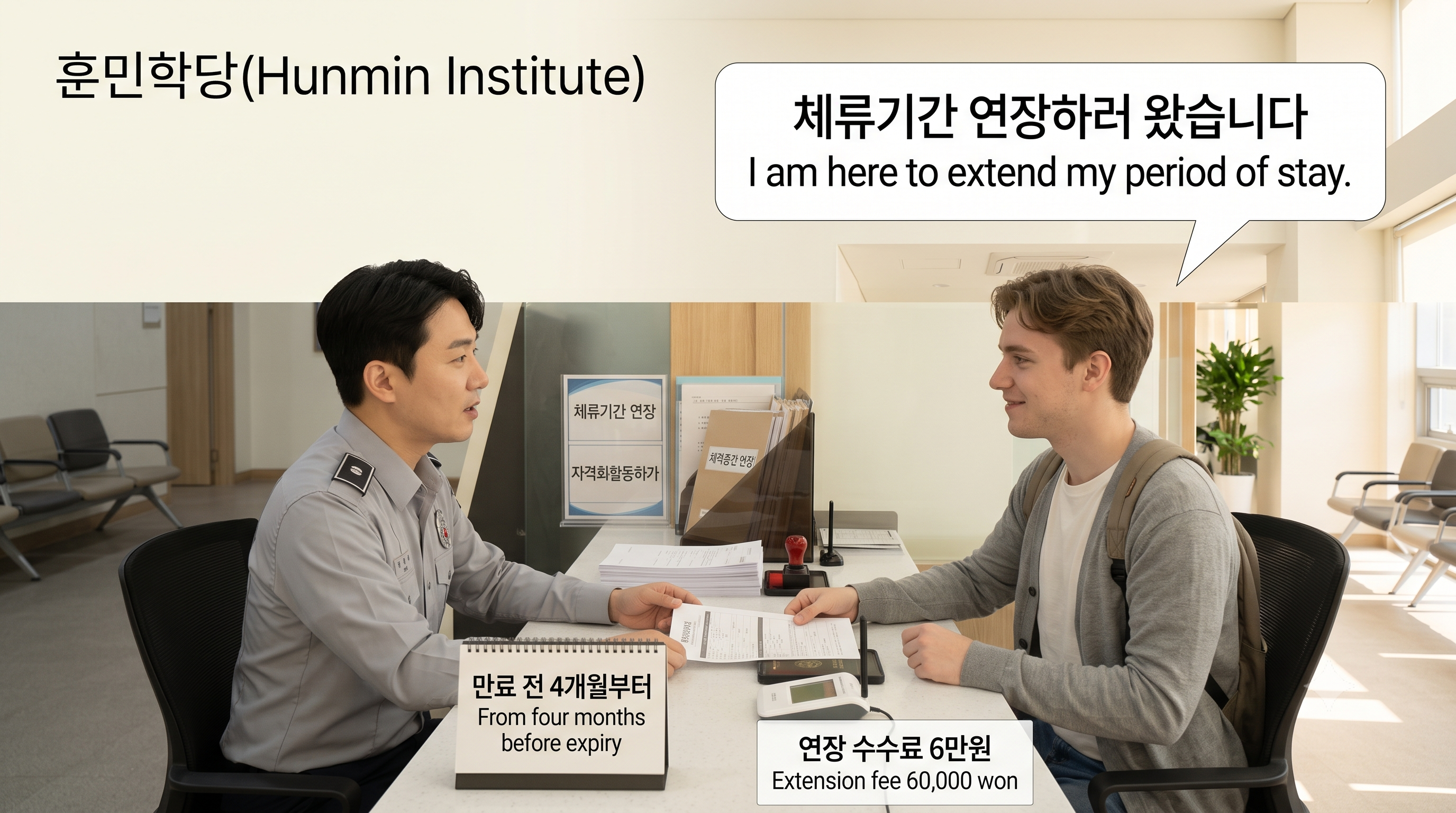
많은 외국인이 체류기간 연장을 보험 갱신처럼 생각합니다. 날짜가 다가오면 돈을 내고 기간을 늘리는 일이라고 여기는 것입니다. 그러나 한국의 출입국 제도에서 연장은 그런 절차가 아닙니다.
Many foreign residents picture an extension the way they picture renewing insurance: the date approaches, you pay, and the clock is pushed forward. Korean immigration does not work that way.
연장은 지금 가진 체류자격의 조건이 아직 그대로인지를 다시 확인받는 절차입니다. 유학이라면 학교에 계속 다니고 있는지, 결혼이민이라면 혼인관계가 유지되고 있는지를 봅니다. 조건이 무너졌다면 기간은 늘어나지 않습니다.
An extension asks whether the conditions behind your current status are still intact. For a student visa, that means you are still enrolled and attending. For a marriage visa, that the marriage still stands. If the condition has collapsed, the time does not move.
| 구분 Item |
내용 Detail |
|---|---|
| 신청 시기 [sincheong sigi] When to apply |
만료 전 4개월부터 만료 당일까지 From four months before expiry through the expiry date |
| 수수료 [susuryo] Fee |
6만 원, 결혼이민 F-6은 3만 원이며 전자민원 신청 시 감면됩니다 60,000 won, or 30,000 won for the F-6 marriage visa; reduced when filed online |
| 신청 방법 [sincheong bangbeop] How to apply |
하이코리아 전자민원 또는 출입국·외국인관서 방문 The HiKorea online service, or a visit to an immigration office |
| 확인할 것 [hwaginhal geot] What to check |
자격별 필요 서류와 처리기간은 하이코리아 안내에서 확인합니다 Required documents and processing times vary by status; confirm on HiKorea |
여기서 쓰는 표현부터 배워봅시다. 창구에 앉자마자 오가는 말입니다.
Start with the expressions you will use here. These go back and forth the moment you sit down.
| 듣는 말 Listening |
하는 말 Speaking |
|---|---|
| 체류기간 만료일이 언제예요? [cheryugigan mallyoiri eonjeyeyo] When does your period of stay expire? |
체류기간 연장하러 왔습니다. [cheryugigan yeonjanghareo watseumnida] I am here to extend my period of stay. |
| 지금 무슨 자격으로 계세요? [jigeum museun jagyeogeuro gyeseyo] What status are you on right now? |
다음 달 십오 일에 만료됩니다. [daeum dal sibo ire mallyodoemnida] It expires on the fifteenth of next month. |
| 연장이 안 될 수도 있어요. [yeonjangi an doel sudo isseoyo] The extension might not go through. |
조건이 뭐예요? [jogeoni mwoyeyo] What are the conditions? |
| 수수료는 육만 원입니다. [susuryoneun yungman wonimnida] The fee is sixty thousand won. |
인터넷으로도 되나요? [inteoneteurodo doenayo] Can I do it online too? |
응용 Apply It
↳ [명사]하러 왔습니다
[noun]hareo watseumnida
I am here to [verb].
ex [연장]하러 왔습니다./[신청]하러 왔습니다./[등록]하러 왔습니다.
ROM [yeonjang]hareo watseumnida/[sincheong]hareo watseumnida/[deungnok]hareo watseumnida
EN I am here to extend my stay./I am here to apply./I am here to register.
▶연장하러 왔습니다는 창구에서 가장 먼저 꺼내야 하는 문장입니다.
This is the first sentence to put on the counter.
한국의 민원 창구는 무슨 일로 왔는지를 먼저 밝히는 것을 전제로 움직입니다. 자리에 앉아 서류부터 내밀면 직원이 다시 묻습니다. 하러 왔습니다는 목적을 밝히는 틀이며 연장 자리에 다른 명사를 넣으면 그대로 쓸 수 있습니다.
A Korean public service counter expects you to state your purpose before anything else. Sit down and push documents across, and the officer will simply ask again. The pattern names your purpose, and any other noun slots into the same frame.
만료일이라는 말도 함께 익혀 둡니다. 만료는 기간이 끝나는 것이며 받침이 뒤 소리와 만나 말료로 들립니다.
Learn the word for expiry date as well. The final consonant blends into the next syllable, so it is heard as mallyo rather than man-ryo.
2. 창구에서 반드시 듣게 되는 질문
The Questions You Are Certain to Hear
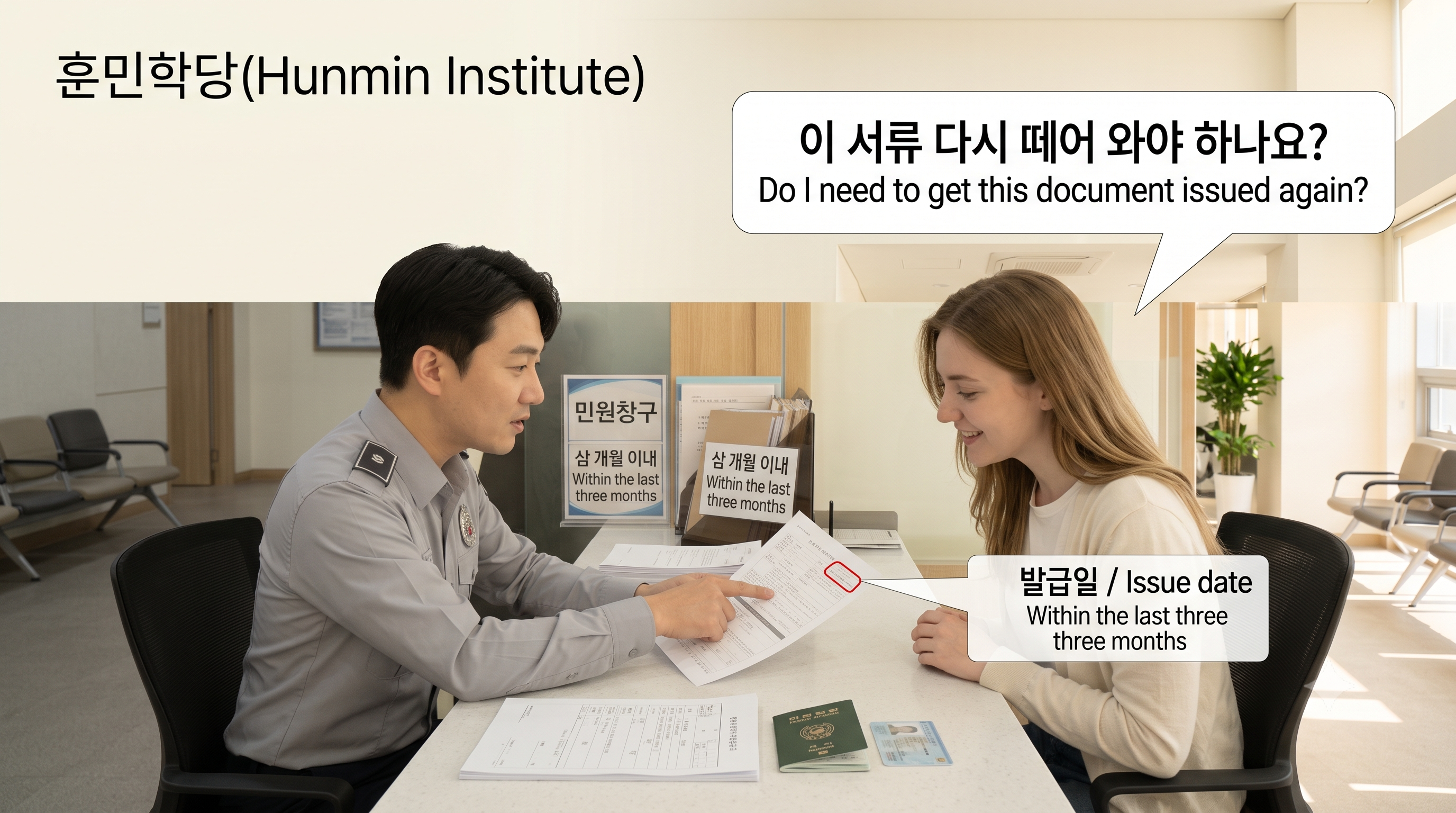
출입국 창구에서 오가는 말은 정해져 있습니다. 직원이 확인해야 할 것이 정해져 있기 때문입니다. 그 질문을 미리 알아 두면 통역 없이도 창구를 통과할 수 있습니다.
The language at an immigration counter is fixed, because the list of things an officer has to verify is fixed. Learn those questions in advance and you can get through the counter without an interpreter.
여기서 쓰는 표현부터 배워봅시다. 서류를 확인하며 오가는 말입니다.
Start with the expressions you will use here. These go back and forth as the documents are checked.
| 듣는 말 Listening |
하는 말 Speaking |
|---|---|
| 이 서류는 발급일이 삼 개월 이내여야 해요. [i seoryuneun balgeubiri sam gaewol inaeyeoya haeyo] This document has to be issued within the last three months. |
이 서류 다시 떼어 와야 하나요? [i seoryu dasi tteeo waya hanayo] Do I need to get this document issued again? |
| 여권이랑 외국인등록증 주세요. [yeogwonirang oegugindeungnokjeung juseyo] Your passport and alien registration card, please. |
방문예약하고 왔습니다. [bangmunyeyakhago watseumnida] I booked a visit appointment. |
| 여기 서명해 주세요. [yeogi seomyeonghae juseyo] Sign here, please. |
수수료는 여기서 내나요? [susuryoneun yeogiseo naenayo] Do I pay the fee here? |
| 서류가 하나 더 필요해요. [seoryuga hana deo piryohaeyo] One more document is needed. |
어디서 떼요? [eodiseo tteyo] Where do I get it issued? |
▶떼다는 사전에 없는 뜻으로 쓰입니다.
This verb is used in a sense your dictionary will not give you.
서류를 떼다는 발급받는다는 뜻입니다. 등본을 떼다, 증명서를 떼다처럼 씁니다. 창구에서 다시 떼어 오세요라는 말을 들었다면 그 서류를 새로 발급받아 오라는 뜻입니다.
Paired with a document, the verb means to have that document issued. Koreans say it of residence records and certificates alike. If an officer tells you to go and do it again, they are asking for a freshly issued copy.
발급일이라는 말도 함께 익힙니다. 서류에 적힌 날짜 가운데 언제 만들어졌는지를 가리키며, 이 날짜가 오래되면 서류가 있어도 받아 주지 않습니다.
Learn the word for issue date as well. Among the dates printed on a document, it is the one marking when the paper itself was made, and if it is too old the document will not be accepted even though you have it in hand.
3. 허가는 근무처와 업무와 시간까지 묶여 나옵니다
The Permit Names the Workplace, the Job and the Hours
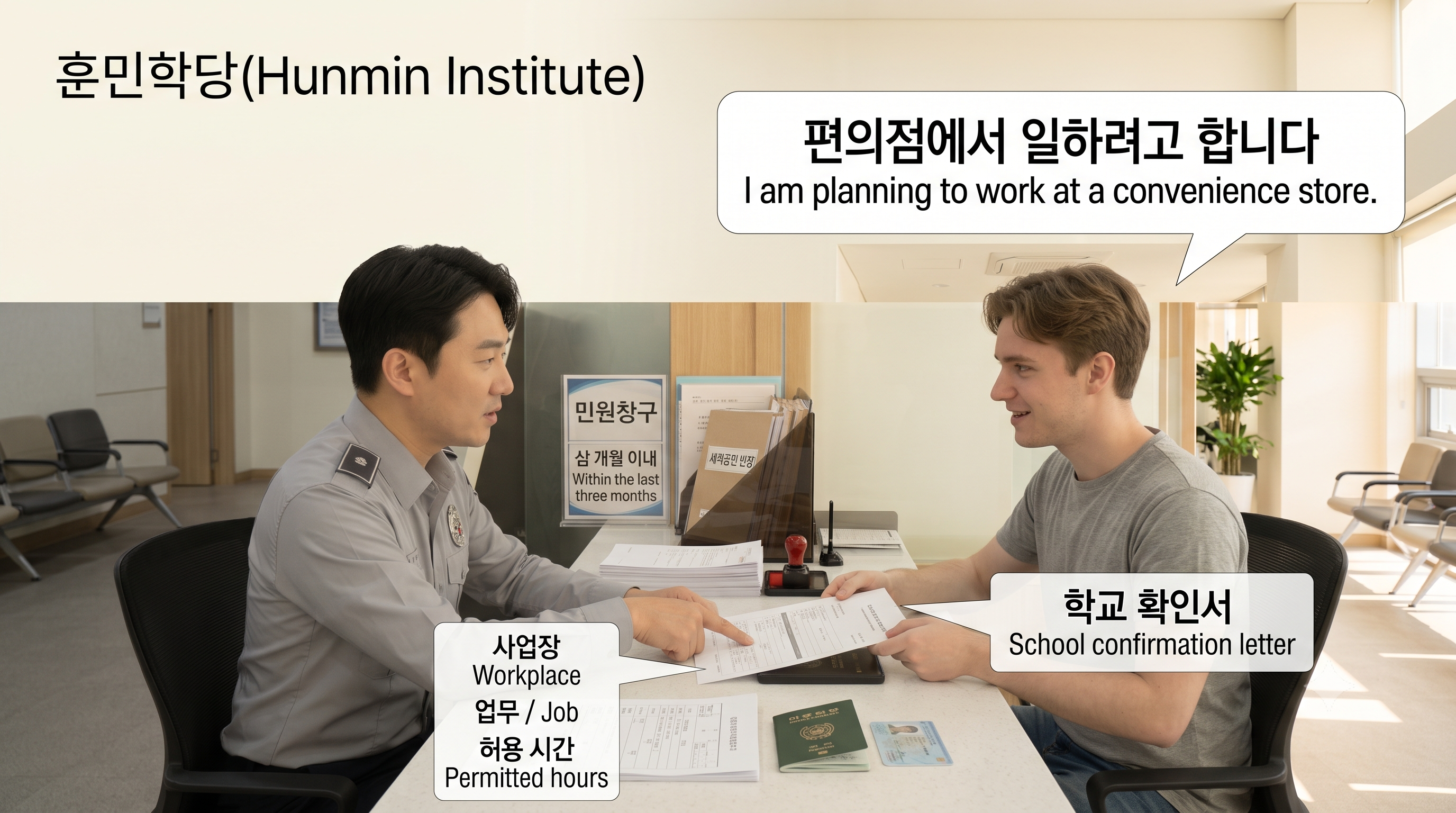
유학이나 어학연수 자격으로 한국에 있는 사람이 아르바이트를 하려면 별도의 허가가 필요합니다. 이 허가를 체류자격외활동허가라 부르고, 유학생의 경우 시간제취업 허가라는 이름으로 처리합니다.
If you are in Korea on a study or language-training visa, taking a part-time job requires a separate permit. The formal name is permission for activities outside your status; for students it is handled under the name part-time employment permit.
여기서 반드시 이해해야 할 것이 하나 있습니다. 이 허가는 사람에게 나오지 않습니다. 어느 사업장에서, 무슨 업무를, 어느 기간에, 몇 시간 하는지가 묶인 하나의 조합에 나옵니다. 그래서 같은 사람이 일하는 곳을 옮기면 허가를 다시 받아야 합니다.
One point decides everything else here. The permit is not granted to a person. It is granted to a combination: this workplace, this job, this period, these hours. Move to a different shop and the same person needs a new permit.
| 구분 Item |
내용 Detail |
|---|---|
| 허가 이름 [heoga ireum] Name of the permit |
체류자격외활동허가이며 유학생은 시간제취업 허가로 처리합니다 Permission for activities outside status; for students, the part-time employment permit |
| 수수료 [susuryo] Fee |
체류자격에 따라 갈리므로 하이코리아에서 확인합니다 Varies by status; confirm on HiKorea |
| 근무 시작 시점 [geunmu sijak sijeom] When you may start |
신청일이 아니라 허가가 완료된 날부터입니다 From the day the permit is granted, not the day you apply |
| 허가에 적히는 것 [heogae jeokhineun geot] What the permit records |
사업장과 업무, 기간, 허용 시간이 함께 적힙니다 The workplace, the job, the period and the permitted hours |
| 주당 시간 [judang sigan] Weekly hours |
자격과 과정, 한국어 능력에 따라 갈리므로 하이코리아에서 확인합니다 Depends on status, programme and Korean proficiency; confirm on HiKorea |
여기서 쓰는 표현부터 배워봅시다. 허가를 신청할 때 오가는 말입니다.
Start with the expressions you will use here. These go back and forth as you apply for the permit.
| 듣는 말 Listening |
하는 말 Speaking |
|---|---|
| 학교 확인서 받아 오셨어요? [hakgyo hwaginseo bada osyeosseoyo] Did you bring the confirmation letter from your school? |
편의점에서 일하려고 합니다. [pyeonuijeomeseo ilharyeogo hamnida] I am planning to work at a convenience store. |
| 여기 적힌 데서만 일하실 수 있어요. [yeogi jeokin deseoman ilhasil su isseoyo] You may work only at the place written here. |
일하는 곳이 바뀌면 어떻게 하나요? [ilhaneun gosi bakkwimyeon eotteoke hanayo] What do I do if my workplace changes? |
| 주당 시간이 정해져 있어요. [judang sigani jeonghaejyeo isseoyo] There is a cap on weekly hours. |
몇 시간까지 돼요? [myeot sigankkaji dwaeyo] How many hours am I allowed? |
| 사업자등록증도 필요합니다. [saeopjadeungnokjeungdo piryohamnida] The business registration certificate is needed too. |
사장님한테 받아 올게요. [sajangnimhante bada olgeyo] I will get it from the owner. |
▶여기 적힌 데서만이라는 말이 이 제도의 핵심입니다.
Only at the place written here is the whole system in one phrase.
데는 곳이라는 뜻이고 에서만은 그 밖은 안 된다는 뜻입니다. 직원이 이 말을 하면 허가서에 적힌 그 사업장에서만 일할 수 있다는 뜻이며, 다른 가게로 옮기면 그 순간부터 허가 밖입니다.
One word means place, the particle after it means there and nowhere else. When an officer uses this phrase, you may work at the workplace named on the permit and nothing more. Move to another shop and you are outside the permit from that moment.
려고 합니다는 아직 하지 않은 계획을 밝히는 틀입니다. 창구에서는 이미 일하고 있다고 말하지 않도록 주의해야 합니다. 허가 전에 일한 사실을 스스로 밝히는 셈이 되기 때문입니다.
The pattern above states a plan you have not yet carried out. Be careful not to say at the counter that you are already working, because that would be reporting unpermitted work in your own words.
수수료와 주당 허용 시간은 체류자격에 따라 갈리고 기준이 자주 바뀝니다. 신청 직전에 하이코리아와 학교 유학생 담당 부서에서 함께 확인하시기 바랍니다.
Both the fee and the weekly hour cap depend on your status, and the rules change often. Confirm with HiKorea and your university’s international student office right before you apply.
4. 신청서와 접수증에 적힌 말
The Words Printed on the Form and the Receipt
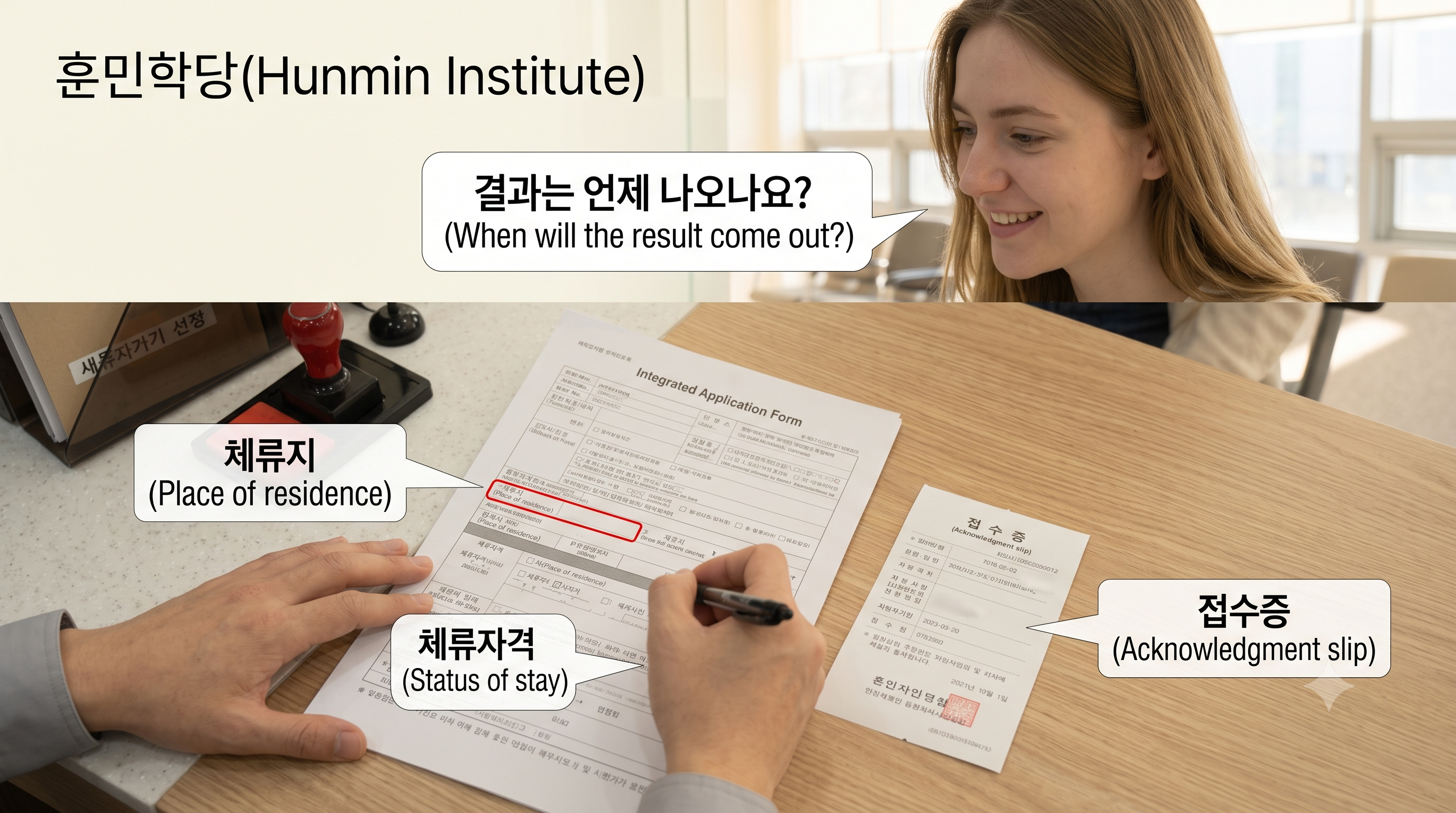
출입국 서류에 쓰이는 말은 일상 한국어와 다릅니다. 뜻을 모르면 무엇을 쓰라는 것인지 알 수 없어 창구에서 시간이 길어집니다. 신청서에 반복해서 나오는 말을 먼저 익혀 둡니다.
The Korean on immigration paperwork is not the Korean of daily life. Without these words you cannot tell what a field is asking for, and the queue behind you grows. Learn the terms that keep reappearing on the form.
| 서류에 적힌 말 Term on the form |
뜻 What it means |
|---|---|
| 통합신청서 [tonghapsincheongseo] Integrated application form |
연장과 변경, 등록을 한 장에서 처리하는 서식입니다 One sheet covering extension, change of status and registration |
| 체류지 [cheryuji] Place of residence |
지금 실제로 살고 있는 주소입니다 The address where you actually live now |
| 체류자격 [cheryujagyeok] Status of stay |
D-2, F-6처럼 지금 가진 자격의 종류입니다 The category you currently hold, such as D-2 or F-6 |
| 접수증 [jeopsujeung] Acknowledgment slip |
신청을 받았다는 종이이며 허가증이 아닙니다 Proof that the application was received; not a permit |
| 처리기간 [cheorigigan] Processing period |
결과가 나오기까지 걸리는 기간입니다 How long it takes for the result to come out |
여기서 쓰는 표현부터 배워봅시다. 서식을 채우며 오가는 말입니다.
Start with the expressions you will use here. These go back and forth as you fill in the form.
| 듣는 말 Listening |
하는 말 Speaking |
|---|---|
| 여기 체류지 주소 적어 주세요. [yeogi cheryuji juso jeogeo juseyo] Write your current address here, please. |
결과는 언제 나오나요? [gyeolgwaneun eonje naonayo] When will the result come out? |
| 문자로 알려 드릴게요. [munjaro allyeo deurilgeyo] We will let you know by text message. |
이거 어디에 적으면 되나요? [igeo eodie jeogeumyeon doenayo] Where should I write this? |
| 통합신청서 한 장이면 됩니다. [tonghapsincheongseo han jangimyeon doemnida] One integrated form is enough. |
이 칸은 안 써도 돼요? [i kaneun an sseodo dwaeyo] Can I leave this field blank? |
| 접수증 잃어버리지 마세요. [jeopsujeung ireobeoriji maseyo] Do not lose the slip. |
이건 허가증인가요? [igeon heogajeungingayo] Is this the permit? |
▶나오다는 결과를 말할 때 쓰는 동사입니다.
Korean uses come out when talking about results.
한국어에서는 결과가 나오다, 성적이 나오다, 허가가 나오다처럼 씁니다. 사람이 받는 것이 아니라 결과가 스스로 나온다고 표현하는 것이 특징입니다.
Results come out, grades come out, permits come out. The striking part is that the result is the subject: it emerges on its own rather than being received by a person.
결과는 언제 나오나요는 창구에서 가장 자주 쓰게 될 문장이며, 결과 자리에 허가와 등록증을 넣어 그대로 쓸 수 있습니다.
This is the sentence you will use most at the counter, and you can drop permit or registration card into the same slot.
5. 허가는 신청한 날이 아니라 나온 날부터 시작합니다
The Permit Starts the Day It Is Granted, Not the Day You Apply
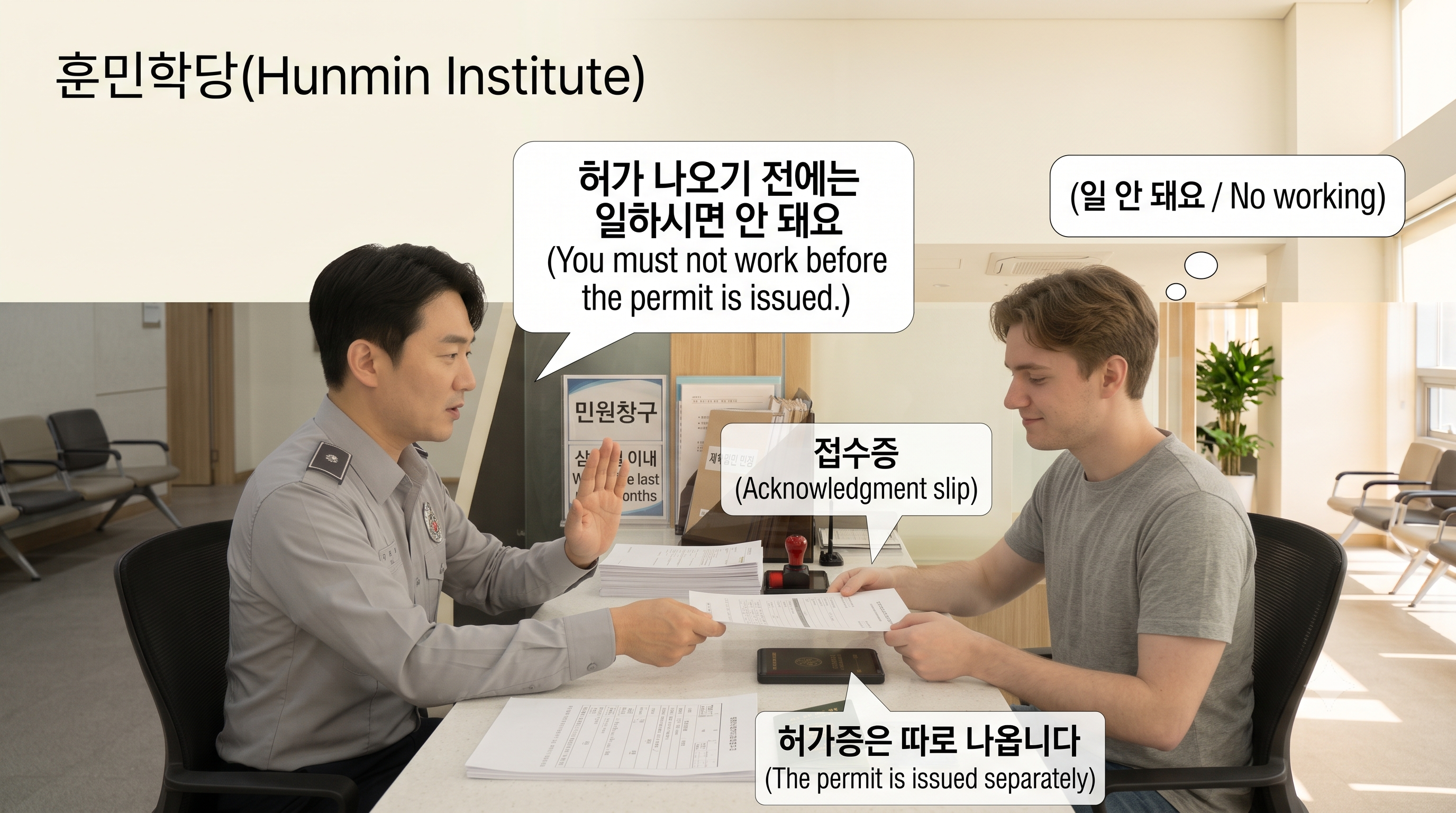
가장 많은 사람이 걸리는 지점이 여기입니다. 신청을 마치고 접수증을 받으면 절차가 끝났다고 생각하기 쉽습니다. 그러나 아르바이트를 시작할 수 있는 시점은 신청한 날이 아니라 허가가 완료된 뒤입니다. 심사 중에 먼저 일하면 무허가 취업으로 처리될 수 있습니다.
This is where most people come unstuck. You file the application, you are handed a slip, and it feels finished. But you may begin the job only after the permit is granted, not on the day you applied. Working while the review is still running can be treated as unpermitted employment.
허가가 나면 그 안에 사업장과 업무, 기간, 시간이 함께 적혀 나옵니다. 그 내용을 확인한 뒤에 근무를 시작해야 합니다. 접수증에는 그 내용이 없습니다.
When the permit comes, it names the workplace, the job, the period and the hours. Read those and only then start work. The slip you were handed carries none of it.
여기서 쓰는 표현부터 배워봅시다. 결과를 기다리며 오가는 말입니다.
Start with the expressions you will use here. These go back and forth while you wait for the result.
| 듣는 말 Listening |
하는 말 Speaking |
|---|---|
| 허가 나오기 전에는 일하시면 안 돼요. [heoga naogi jeoneneun ilhasimyeon an dwaeyo] You must not work before the permit is issued. |
지금은 아직 일 안 하고 있습니다. [jigeumeun ajik il an hago itseumnida] I have not started working yet. |
| 이건 접수증이고 허가증은 따로 나와요. [igeon jeopsujeungigo heogajeungeun ttaro nawayo] This is the acknowledgment slip; the permit comes separately. |
허가 나오면 문자로 오나요? [heoga naomyeon munjaro onayo] Will I get a text message when the permit is issued? |
| 처리기간은 보름쯤 걸려요. [cheorigiganeun boreumjjeum geollyeoyo] Processing takes about a fortnight. |
그때까지 기다릴게요. [geuttaekkaji gidarilgeyo] I will wait until then. |
| 허가서에 적힌 내용 확인하세요. [heogaseoe jeokin naeyong hwaginhaseyo] Check what is written on the permit. |
시간도 적혀 있어요? [sigando jeokyeo isseoyo] Are the hours written on it too? |
▶안 돼요는 불가능이 아니라 금지입니다.
This phrase is a prohibition, not an impossibility.
영어로 옮기면 cannot이 되어 능력의 문제처럼 읽히지만, 여기서는 하면 안 된다는 금지입니다. 직원이 일하시면 안 돼요라고 말했다면 제도상 금지된 행위라는 뜻이며 사정을 설명해 바꿀 수 있는 말이 아닙니다.
Rendered as cannot in English it reads like a question of ability, but here it means must not. When an officer tells you not to work, they are naming an act the system forbids, and no explanation of your circumstances will move it.
기 전에는이라는 틀도 함께 익힙니다. 어떤 일이 끝나기 전까지는 다른 일을 할 수 없다는 조건을 만드는 자리이며, 출입국 창구에서 자주 듣게 됩니다.
Learn the before-pattern with it. It builds the condition that nothing may happen until something else is complete, and immigration counters lean on it constantly.
정리하면 이렇습니다. 연장은 조건을 다시 증명하는 절차이고, 자격외활동허가는 사람이 아니라 근무 조건의 조합에 나오는 허가입니다. 두 가지 모두 기간이 아니라 조건에 붙습니다. 창구에서 오가는 말을 미리 익혀 두면 통역 없이도 절차가 끝납니다.
To put it together: an extension is a fresh proof of conditions, and the activity permit attaches to a combination of working conditions rather than to a person. Both follow the conditions, not the calendar. Learn the counter language in advance and you will finish the procedure without an interpreter.
Next: Korean Employment Contract and Minimum Wage ↗
토픽 맛보기
TOPIK Preview
유형: TOPIK Ⅰ 읽기 [43~45], 수기, 일치하는 내용 고르기
Type: TOPIK I Reading [43–45], personal account, choose the statement that matches
다음을 읽고 내용이 같은 것을 고르십시오.
Read the following and choose the statement that matches.
저는 다음 달에 체류기간이 끝납니다. 그래서 지난주에 방문예약을 하고 출입국사무소에 갔습니다. 직원이 서류를 보고 발급일이 삼 개월보다 오래되었다고 했습니다. 저는 그 서류를 다시 떼어서 다음 날 갔습니다.
My period of stay ends next month, so last week I booked an appointment and went to the immigration office. The officer looked at my documents and said one had been issued more than three months ago. I had it reissued and went back the next day.
① 저는 예약을 하지 않고 사무소에 갔습니다.
② 저는 서류를 하나 다시 준비했습니다.
③ 저는 체류기간이 끝나서 사무소에 갔습니다.
④ 저는 인터넷으로 연장을 신청했습니다.
Answer ▾
정답 ② 저는 서류를 하나 다시 준비했습니다
Answer: ② 저는 서류를 하나 다시 준비했습니다
글쓴이가 발급일이 오래된 서류를 다시 떼어서 다음 날 갔다고 했으므로 서류 하나를 다시 준비한 것이 맞습니다. ①은 지문에 나온 방문예약을 반대로 진술했고, ③은 사무소에 간 것만 맞고 체류기간은 다음 달에 끝난다고 했으므로 일부만 걸리며, ④는 그럴듯해 보여도 인터넷 신청 이야기가 지문에 없습니다. 흉내 낸 대문항은 TOPIK Ⅰ 읽기 [43~45]입니다.
The writer had one document reissued and returned the next day, so ② matches. ① reverses the booking the passage mentions, ③ is only half right since the stay ends next month, and ④ never appears in the passage. The item type modelled here is TOPIK I Reading [43–45].
FAQ
Q1. 체류기간이 하루 지났습니다. 지금 가도 되나요?Answer ▾
Q1. My period of stay expired yesterday. Can I still go?
A1. 연장 신청은 만료 당일까지 받습니다. 만료일이 지난 뒤에는 다른 절차로 넘어가므로 스스로 판단하지 말고 1345 외국인종합안내센터나 관할 출입국·외국인관서에 바로 문의하시기 바랍니다.
A1. Extension applications are accepted through the expiry date itself. Once that date has passed you move into a different procedure, so do not decide for yourself. Call the 1345 Immigration Contact Center or your local immigration office straight away.
Q2. 아르바이트 자리를 옮겼습니다. 허가는 그대로인가요?Answer ▾
Q2. I changed part-time jobs. Does my permit carry over?
A2. 그대로가 아닙니다. 허가는 사업장과 업무까지 묶여 나오므로 근무처가 바뀌면 다시 받아야 합니다. 이전 허가서에 적힌 곳이 아닌 데서 일하면 허가 밖의 근무가 됩니다.
A2. It does not. The permit is tied to a named workplace and job, so a change of workplace means a new permit. Working anywhere other than the place written on the existing permit puts you outside it.
Q3. 접수증이 있으면 일해도 되나요?Answer ▾
Q3. May I work once I have the acknowledgment slip?
A3. 안 됩니다. 접수증은 신청을 받았다는 종이이고 허가증은 따로 나옵니다. 허가가 완료된 뒤에 근무를 시작해야 하며, 심사 중에 일하면 무허가 취업으로 처리될 수 있습니다.
A3. No. The slip records only that your application was received; the permit is issued separately. Start work after the permit is granted. Working during the review can be treated as unpermitted employment.
Q4. 주당 몇 시간까지 일할 수 있나요?Answer ▾
Q4. How many hours a week am I allowed to work?
A4. 하나의 숫자로 답할 수 없습니다. 체류자격과 학위과정, 한국어 능력 기준 충족 여부에 따라 갈리고 기준이 자주 바뀝니다. 신청 직전에 하이코리아 공지와 학교 유학생 담당 부서에서 함께 확인하시기 바랍니다.
A4. There is no single number. The cap depends on your status, your degree programme and whether you meet the Korean proficiency threshold, and the rules change often. Check the HiKorea notices together with your university’s international student office right before you apply.
Vocabulary and Pronunciation for Foreigners
| No | Korean | Romanisation | Meaning |
|---|---|---|---|
| 1 | 연장 | yeonjang | (n) extension [ɪkˈstenʃn] |
| 2 | 만료일 | mallyoil | (n) expiry date [ɪkˈspaɪəri deɪt] |
| 3 | 발급일 | balgeubil | (n) issue date [ˈɪʃuː deɪt] |
| 4 | 접수증 | jeopsujeung | (n) acknowledgment slip [əkˈnɑːlɪdʒmənt] |
| 5 | 허가 | heoga | (n) permission [pərˈmɪʃn] |
| ▾ 단어 50개 더 보기 Show 50 more ↗ | |||
The blog page has limits of space and function, so only five words are shown here. The rest of the word list, the audio, the sentences and tables, the FAQ, the worksheet, the TOPIK questions and the lesson video are on the Hunmin Institute website ↗, free and open to everyone, with no account needed.
참고 기관
Official Sources
법무부 하이코리아 ↗
HiKorea, Korea Immigration Service
https://www.hikorea.go.kr
기관 설명 보기 About this institute ▾
This is where online applications and visit bookings are both handled. It supports English and other languages, and since the required documents, fees and weekly hour caps are published here and change often, check right before you apply.
1345 외국인종합안내센터 ↗
1345 Immigration Contact Center
https://www.immigration.go.kr
기관 설명 보기 About this institute ▾
This is the phone line for cases that need an individual judgment. Interpretation is available in Korean, English, Chinese, Vietnamese and more.
※ 본 콘텐츠(원고, 이미지, 예문 포함)는 저작권법에 의해 보호받는 훈민학당의 저작물입니다. 무단 복제, 전재, 재배포 및 AI 학습 데이터로의 이용을 금합니다.
This content (manuscript, images, and example sentences) is the copyrighted property of Hunmin Institute, protected under copyright law. Unauthorized copying, reproduction, redistribution, and use as AI training data are prohibited.
'K-Life' 카테고리의 다른 글
| Korean Utility Bills and Maintenance Fees (0) | 2026.08.20 |
|---|---|
| Korean Employment Contract and Minimum Wage (0) | 2026.08.20 |
| Korean Health Insurance for Foreigners Explained (0) | 2026.08.08 |
| Getting a Phone Number in Korea as a Foreigner (0) | 2026.08.08 |
| Opening a Bank Account in Korea as a Foreigner (0) | 2026.08.08 |


