
Korean Lease Contract Part 2: Protect Your Deposit
보증금은 서명한 날이 아니라 그다음 날 0시부터 지켜집니다
In Korea, what happens after you sign matters more than the signature itself.
Learn the order that closes the one-day gap after you sign.
한국의 임대차 계약은 서명보다 그 뒤에 하는 신고가 더 중요합니다.
등기부등본 확인부터 확정일자와 체류지 변경신고까지, 하루의 공백을 메우는 순서를 익힙니다.
All learning services for the teaching materials published on this blog are free for blog subscribers on the Hunmin Institute website ↗.
이 글에서 배우는 핵심 회화
Key Expressions in This Lesson
계약과 신고 자리에서 오가는 말은 몇 마디로 정해져 있습니다. 아래 여덟 문장은 좌우가 한 쌍의 대화가 아니라 각각 따로 익히는 문장입니다. 먼저 눈에 담고 본문으로 들어가십시오.
Only a set number of lines go back and forth at a signing or a service counter. The two columns are not paired dialogue; each sentence is learned on its own. Take them in first, then move into the main text.
| 듣는 말 Listening |
하는 말 Speaking |
|---|---|
| 등기부등본 떼 보셨어요? [deunggibudeungbon tte bosyeosseoyo] Have you pulled the property register? |
집주인 본인 계좌 맞나요? [jipjuin bonin gyejwa mannayo] Is this the landlord’s own account? |
| 특약은 뭐 넣어 드릴까요? [teugyageun mwo neoeo deurilkkayo] What special clauses would you like added? |
특약에 이 내용 넣어 주세요. [teugyage i naeyong neoeo juseyo] Please add this to the special clauses. |
| 신고는 30일 안에 하셔야 해요. [singoneun samsibil ane hasyeoya haeyo] You have to file within 30 days. |
확정일자 받으러 왔는데요. [hwakjeongilja badeureo wanneundeyo] I am here to get the fixed date stamp. |
| 만료 두 달 전에는 말씀해 주세요. [mallyo du dal jeoneneun malsseumhae juseyo] Let me know two months before the lease ends. |
보증금 언제까지 주시면 돼요? [bojeunggeum eonjekkaji jusimyeon dwaeyo] By when can you return the deposit? |
첫째 줄은 소단락 2에서, 둘째 줄은 소단락 3에서, 셋째 줄은 소단락 4에서, 넷째 줄은 소단락 5에서 다루고, 계약 자리를 잡을 때 쓰는 말은 소단락 1에서 다룹니다.
The first row is covered in Section 2, the second in Section 3, the third in Section 4 and the fourth in Section 5, while the lines for arranging a signing come in Section 1.
1. 계약서보다 조심할 것은 그다음 날입니다
What Needs Care Is the Day After, Not the Contract
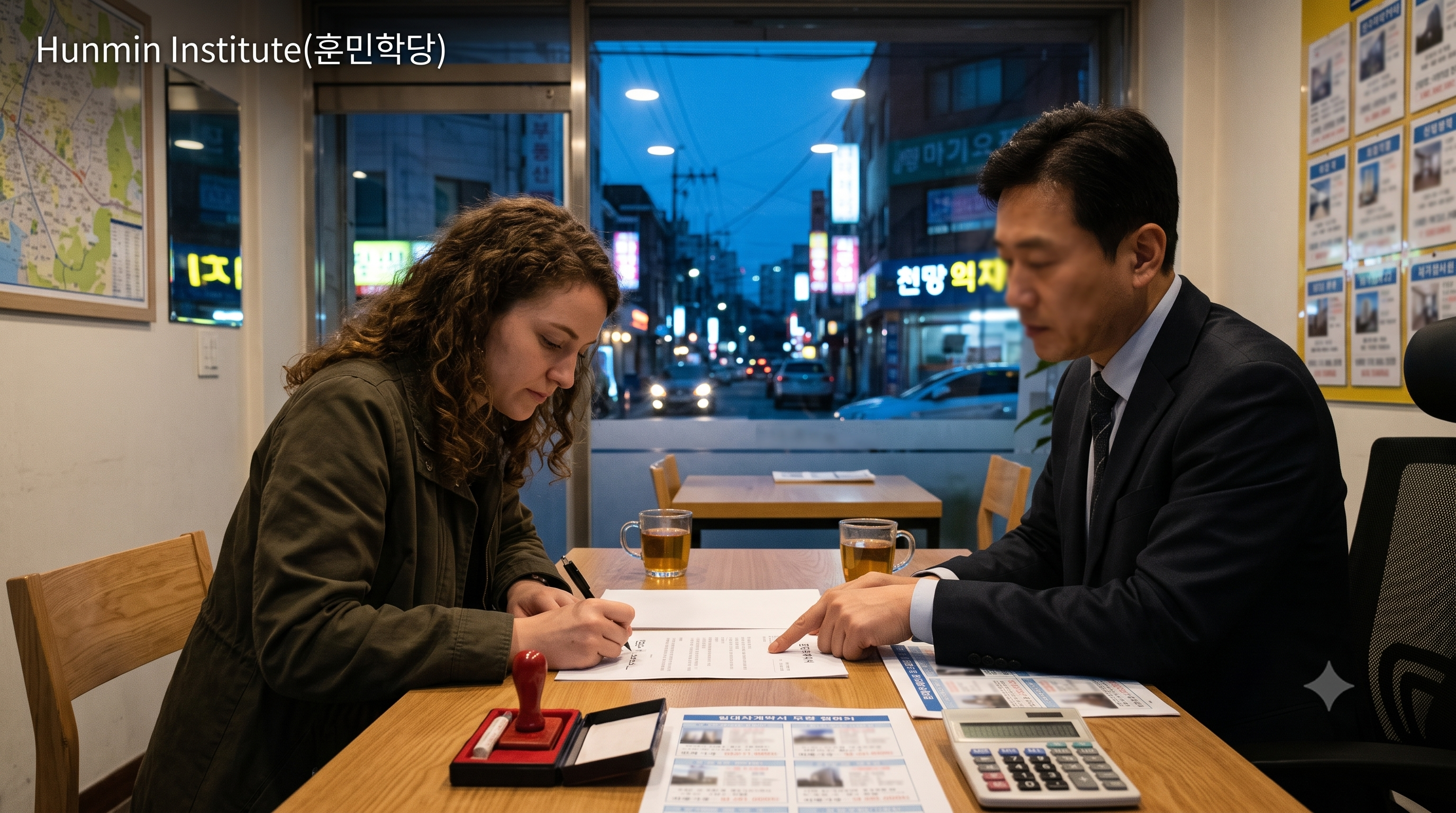
계약서에 서명하고 잔금을 치르면 끝난 것처럼 느껴집니다. 그런데 한국에서 보증금을 지키는 힘은 계약서가 아니라 신고에서 나옵니다.
Signing the contract and paying the balance feels like the end of it. But in Korea what protects your deposit comes from the filings, not the contract.
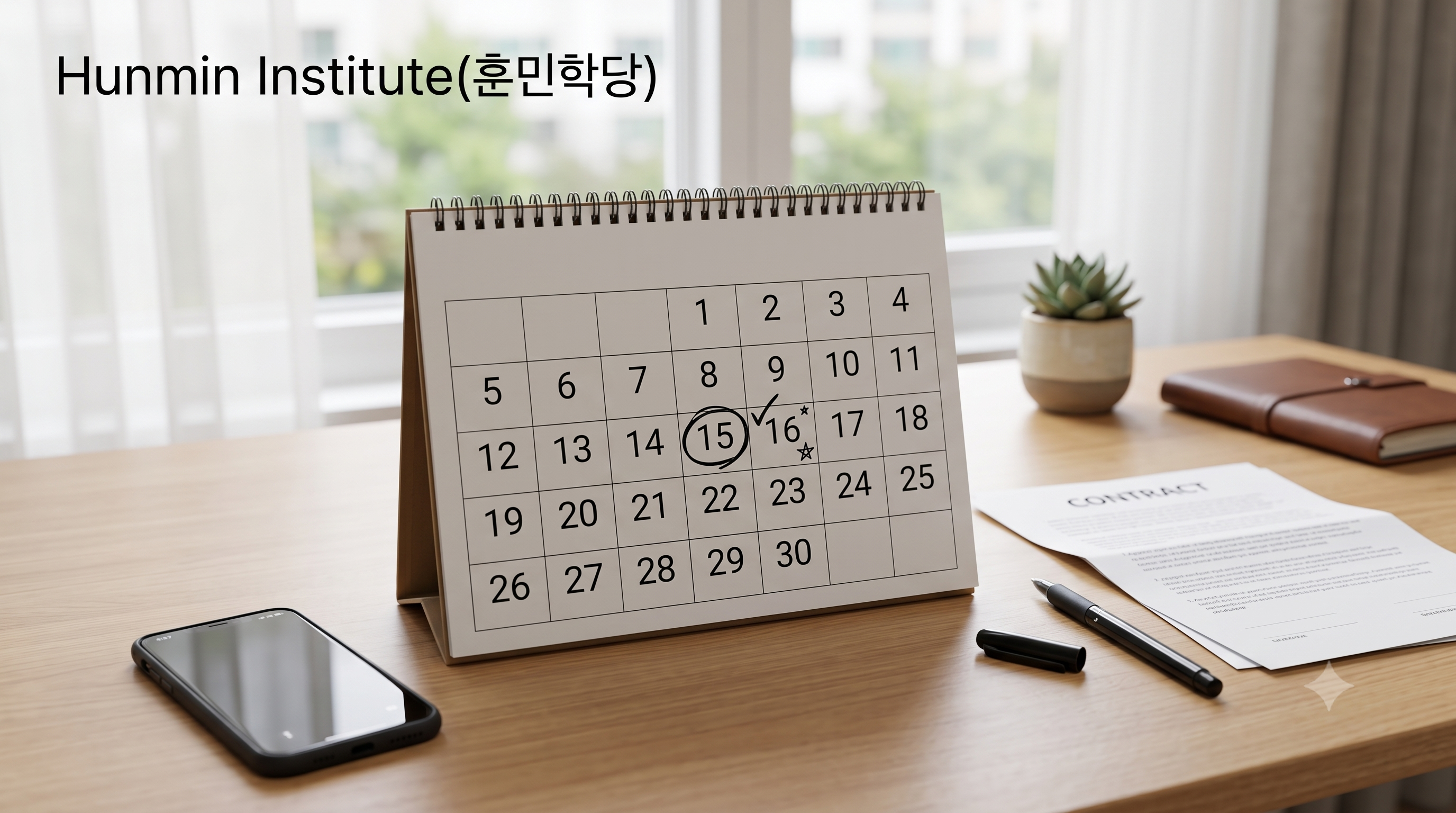
주택을 넘겨받고 주소를 등록하고 확정일자를 갖추면 그다음 날 0시부터 권리가 생깁니다. 서명한 날과 권리가 생기는 날 사이에 하루가 비어 있습니다.
Once you have taken possession, registered your address, and obtained the fixed date stamp, your rights take effect from 00:00 the following day. Between the day you sign and the day your rights begin, one day sits empty.
여기서 쓰는 표현부터 배워봅시다. 계약 자리를 잡을 때 오가는 말입니다.
Start with the expressions you will use here. These go back and forth when a signing is being arranged.
| 듣는 말 Listening |
하는 말 Speaking |
|---|---|
| 계약은 언제 하실 거예요? [gyeyageun eonje hasil geoyeyo] When would you like to sign? |
계약서 미리 볼 수 있을까요? [gyeyakseo miri bol su isseulkkayo] Could I see the contract in advance? |
| 잔금은 이사 당일에 치릅니다. [jangeumeun isa dangire chireumnida] The balance is paid on moving day. |
그 하루가 왜 중요해요? [geu haruga wae jungyohaeyo] Why does that one day matter? |
응용 Apply It
↳ [명사] 미리 볼 수 있을까요?
[noun] miri bol su isseulkkayo
Could I see [noun] in advance?
ex 계약서 미리 볼 수 있을까요?/특약 미리 볼 수 있을까요?/등기부등본 미리 볼 수 있을까요?
ROM gyeyakseo miri bol su isseulkkayo/teugyak miri bol su isseulkkayo/deunggibudeungbon miri bol su isseulkkayo
EN Could I see the contract in advance?/Could I see the special clauses in advance?/Could I see the property register in advance?
▶이 글은 그 하루를 어떻게 메우는지 순서대로 다룹니다.
This article covers how to close that one-day gap, in order.
서명 전에 무엇을 확인하고, 계약서에 무엇을 넣고, 서명 뒤에 무엇을 신고하는지가 차례로 이어집니다. 이 순서를 지키면 하루의 공백이 메워집니다.
What to check before signing, what to put in the contract, and what to file afterwards follow in that order. Keep the order and the empty day is closed.
아래 내용은 2026년 8월 기준입니다. 전입신고만으로 권리가 곧바로 생기도록 하는 법 개정안이 국회에 올라가 있으므로, 계약 전에 현재 기준을 한 번 더 확인하십시오.
The following reflects the rules as of August 2026. A bill that would grant these rights immediately upon the move-in report is before the National Assembly, so check the current standard once more before you sign.
2. 서명 전에 확인할 것
What to Check Before You Sign
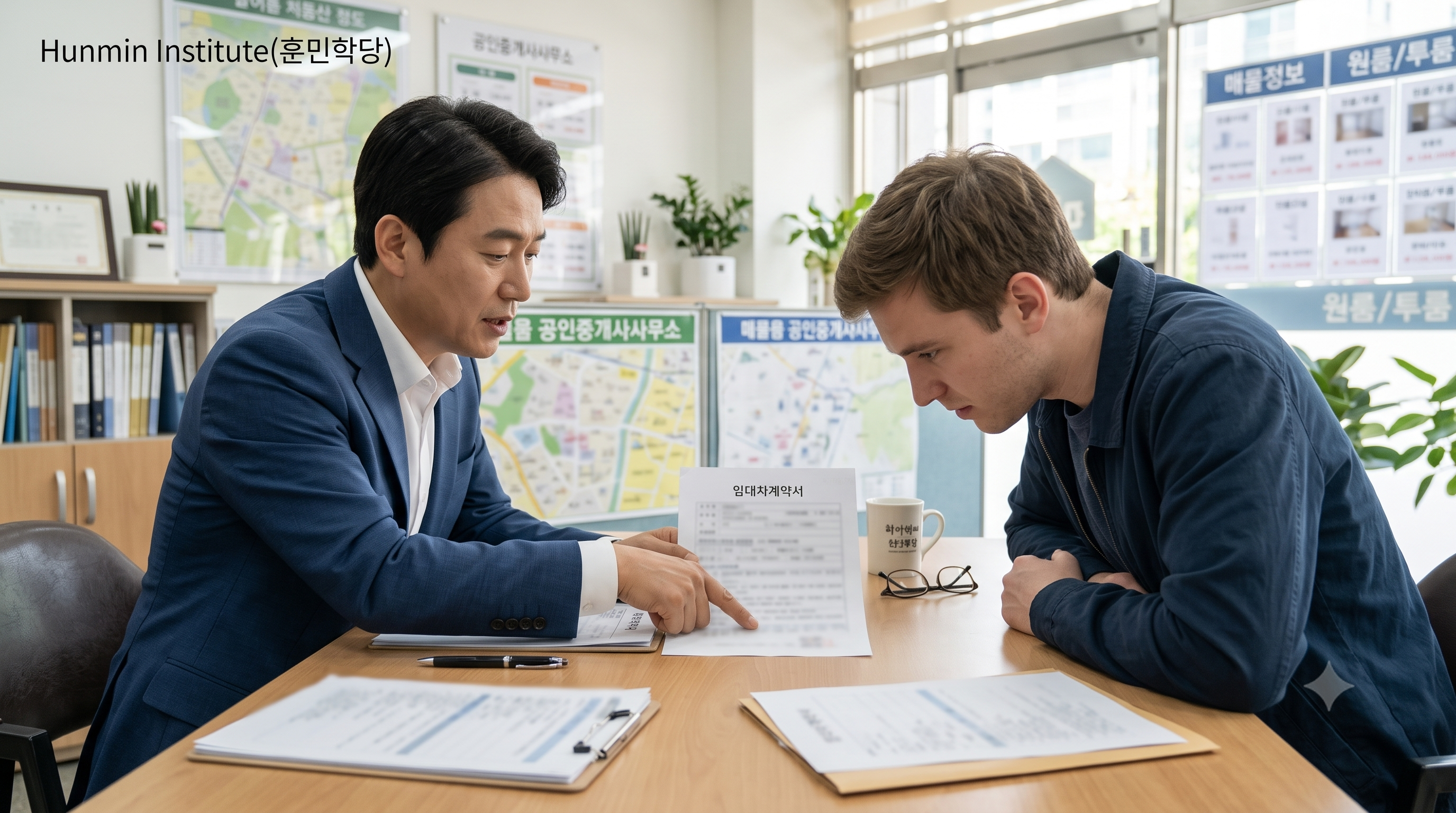
계약서를 쓰기 전에 확인할 것은 세 가지입니다. 집이 누구 것인지, 그 집에 빚이 얼마나 걸려 있는지, 돈을 어디로 보내는지입니다.
Three things to check before writing a contract: who owns the place, how much debt is attached to it, and where your money is going.
| 확인할 것 What to check |
어디서 보는가 Where to look |
무엇을 보는가 What to look for |
|---|---|---|
| 소유자 [soyuja] Owner |
등기부등본 Property register |
계약서에 적힌 임대인 이름과 등기부의 소유자 이름이 같은지 봅니다 Check that the landlord’s name on the contract matches the owner’s on the register |
| 근저당 [geunjeodang] Mortgage |
등기부등본 Property register |
얼마나 잡혀 있는지 봅니다. 이 금액이 크면 보증금 순위가 뒤로 밀립니다 Check how much is registered; a large amount pushes your deposit down the priority order |
| 입금 계좌 [ipgeum gyejwa] Payment account |
계약 현장 At the signing |
등기부상 소유자 본인 명의 계좌인지 확인하고 그 계좌로만 보냅니다 Confirm it is in the registered owner’s own name and send money only there |
| 공제증서 [gongjejeungseo] Mutual aid certificate |
사무소 벽면 Office wall |
중개사무소 등록증과 함께 걸려 있는지 봅니다 Check that it is posted along with the agency licence |
여기서 쓰는 표현부터 배워봅시다. 집을 확인할 때 오가는 말입니다.
Start with the expressions you will use here. These go back and forth while you check the property.
| 듣는 말 Listening |
하는 말 Speaking |
|---|---|
| 등기부등본 떼 보셨어요? [deunggibudeungbon tte bosyeosseoyo] Have you pulled the property register? |
집주인 본인 계좌 맞나요? [jipjuin bonin gyejwa mannayo] Is this the landlord’s own account? |
| 근저당은 얼마 안 잡혀 있어요. [geunjeodangeun eolma an japyeo isseoyo] There is not much mortgage on it. |
등기부등본 한 번 볼 수 있을까요? [deunggibudeungbon han beon bol su isseulkkayo] Could I take a look at the property register? |
▶보증금이 크면 부동산을 끼고, 작으면 직접 확인해야 합니다.
With a large deposit, go through an agency. With a small one, check it yourself.
부동산을 통해 계약하면 이 확인은 중개사가 합니다. 등기부등본을 떼어 와 소유자와 근저당을 설명해 주고, 잘못되면 책임도 집니다.
If you sign through an agency, the agent does this checking. They pull the register, explain the owner and the mortgage, and carry liability if something goes wrong.
고시원과 원룸텔처럼 보증금이 적은 방은 주인과 직접 계약하는 경우가 많습니다. 이때는 대법원 인터넷등기소에서 주소만 넣으면 누구나 열람할 수 있고 수수료는 아주 적습니다.
Rooms with small deposits, like goshiwon and one-room tels, are often signed directly with the owner. Then anyone can view the register on the Supreme Court internet registry by entering the address, and the fee is very small.
근저당이 잡혀 있다고 무조건 나쁜 계약은 아닙니다. 다만 그 금액과 내 보증금을 더한 값이 그 집값에 가까우면 위험합니다.
A registered mortgage does not by itself make a bad contract. It becomes dangerous when that amount plus your deposit approaches the value of the property.
3. 계약서에 넣을 특약
Special Clauses to Put in the Contract
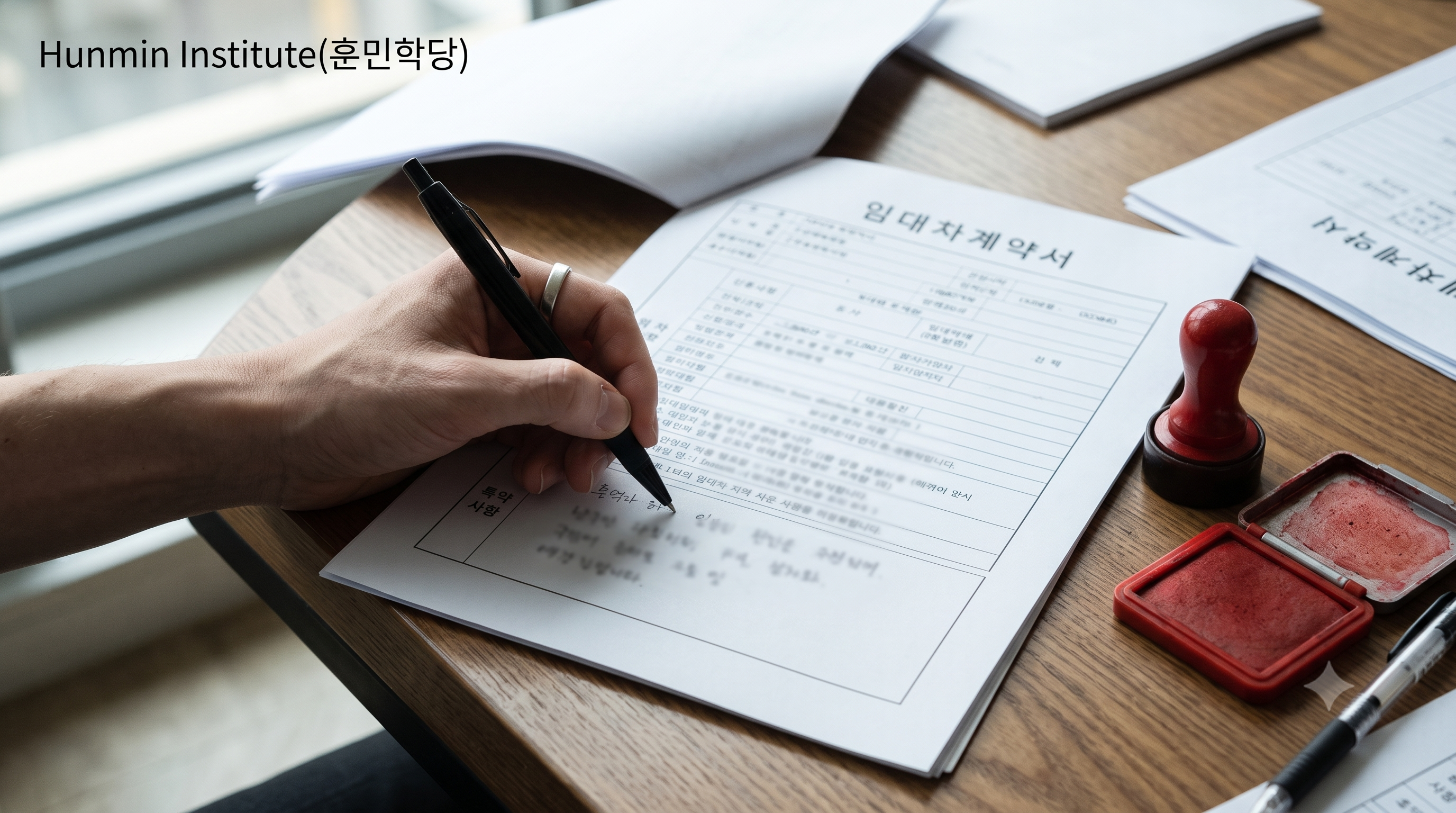
특약은 계약서 아래쪽에 손으로 덧붙이는 약속입니다. 넣어 달라고 말하면 넣어 주고, 말하지 않으면 비어 있습니다.
Special clauses are promises added by hand at the bottom of the contract. Ask and they go in; say nothing and the space stays empty.
| 넣을 문구 Clause to add |
왜 필요한가 Why it matters |
|---|---|
| 계약 당시의 권리관계를 입주 다음 날까지 유지한다 The rights on the property as of signing shall remain unchanged until the day after move-in |
서명한 날 집주인이 그 집을 담보로 대출을 받으면 순위가 밀립니다. 그 하루를 막는 문구입니다 If the landlord takes a loan against the property on the day you sign, your priority drops; this clause blocks that day |
| 잔금일 기준 새로운 권리가 설정되지 않았음을 확인한다 The landlord confirms no new rights have been registered as of the balance payment date |
잔금을 치르기 직전에 생긴 변화를 확인하게 만듭니다 Forces a check on anything that changed just before the balance is paid |
| 임대인은 전입신고와 확정일자 취득에 협조한다 The landlord shall cooperate with the move-in report and the fixed date stamp |
신고를 미루게 하는 경우를 막습니다 Prevents cases where filing is put off |
| 시설물 하자는 입주 후 며칠 이내에 임대인이 수리한다 The landlord shall repair defects within a set number of days after move-in |
보일러와 수도처럼 살아 봐야 아는 문제를 정리합니다 Covers problems you only find by living there, like the boiler and the plumbing |
여기서 쓰는 표현부터 배워봅시다. 특약을 두고 오가는 말입니다.
Start with the expressions you will use here. These go back and forth over the special clauses.
| 듣는 말 Listening |
하는 말 Speaking |
|---|---|
| 특약은 뭐 넣어 드릴까요? [teugyageun mwo neoeo deurilkkayo] What special clauses would you like added? |
특약에 이 내용 넣어 주세요. [teugyage i naeyong neoeo juseyo] Please add this to the special clauses. |
| 그건 집주인분께 여쭤볼게요. [geugeon jipjuinbunkke yeojjwobolgeyo] I will ask the landlord about that. |
이거 안 되면 계약은 다시 생각해 볼게요. [igeo an doemyeon gyeyageun dasi saenggakae bolgeyo] If this is not possible, I will reconsider the contract. |
▶특약은 요구하는 것이 아니라 상의하는 것입니다.
Special clauses are discussed, not demanded.
중개사가 먼저 특약은 뭐 넣어 드릴까요라고 묻는 경우가 많습니다. 그때 준비한 문구를 그대로 말하면 되고, 종이에 적어 가서 보여 줘도 됩니다.
Agents often ask first what clauses you want. Just say the wording you prepared, and writing it on paper to show them works fine.
임대인이 거절할 수도 있습니다. 거절 자체가 이상한 일은 아니지만, 첫 번째 문구를 끝까지 거절한다면 그 이유를 물어보는 편이 낫습니다.
The landlord may refuse. A refusal is not strange in itself, but if the first clause is refused outright, it is worth asking why.
4. 서명 다음에 할 신고
The Filings That Come After Signing
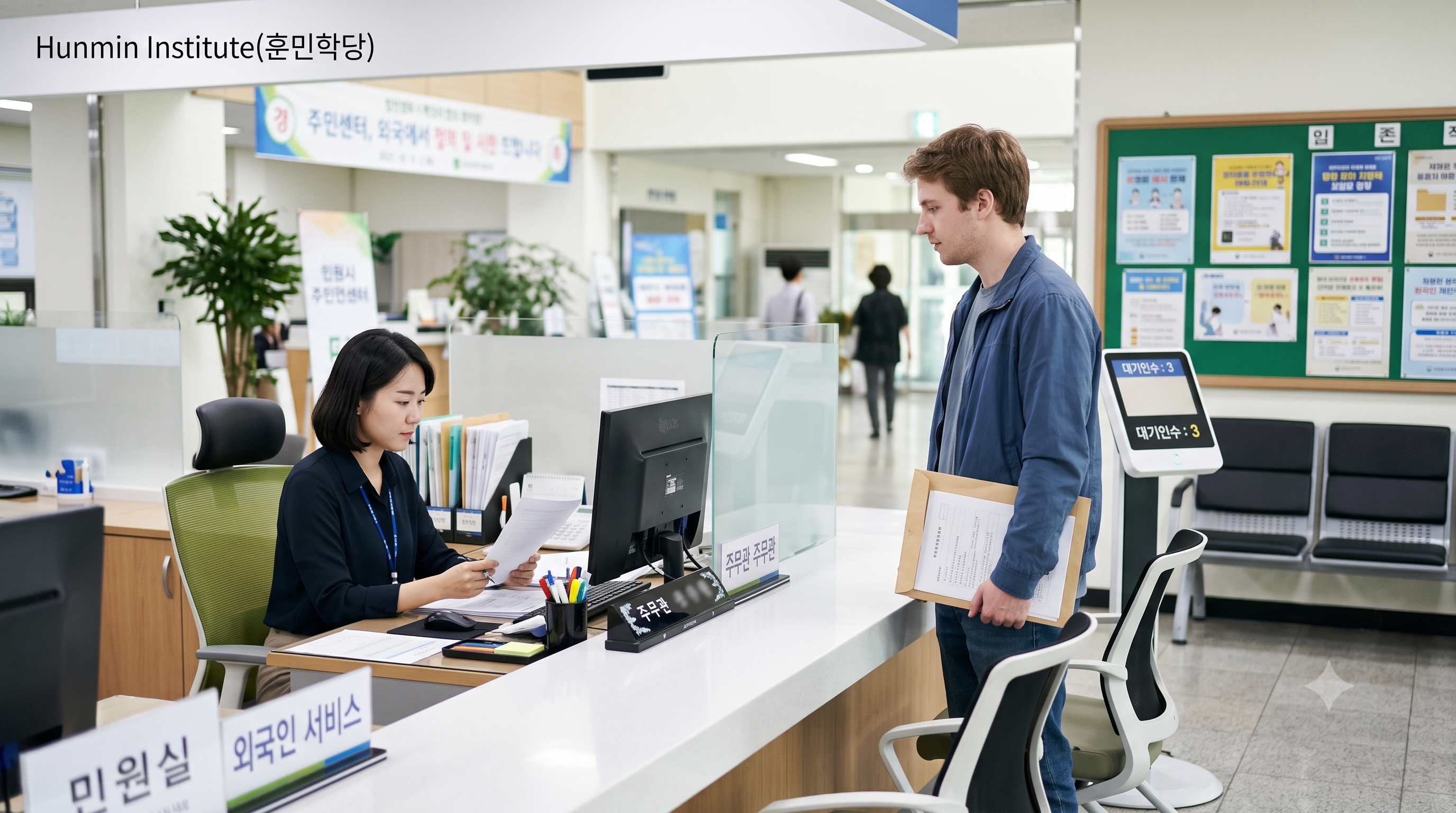
신고는 셋으로 보이지만 실제로는 둘로 줄어듭니다. 온라인으로 전월세 신고를 하면 확정일자가 함께 부여되기 때문입니다.
It looks like three filings but comes down to two. Filing the lease report online gives you the fixed date stamp at the same time.
| 무엇을 What |
어디서 Where |
언제까지 By when |
외국인 유의점 Notes for foreigners |
|---|---|---|---|
| 전월세 신고 [jeonwolse singo] Lease report |
부동산거래관리시스템 Real estate transaction system |
계약일부터 30일 30 days from signing |
보증금 6천만 원 초과 또는 월세 30만 원 초과 계약이 대상입니다 Required for deposits over 60 million won or rent over 300,000 won |
| 확정일자 [hwakjeongilja] Fixed date stamp |
온라인 신고 시 자동 부여 Automatic with online filing |
이사 당일 Moving day |
따로 받으려면 계약서 원본을 들고 갑니다 To get it separately, bring the original contract |
| 체류지 변경신고 [cheryuji byeongyeong singo] Change of residence report |
하이코리아 HiKorea |
전입한 날부터 15일 15 days from moving in |
전입신고를 갈음하며 15일 안에만 온라인으로 됩니다 It stands in place of the move-in report and is online only within 15 days |
여기서 쓰는 표현부터 배워봅시다. 창구에서 오가는 말입니다.
Start with the expressions you will use here. These go back and forth at the counter.
| 듣는 말 Listening |
하는 말 Speaking |
|---|---|
| 신고는 30일 안에 하셔야 해요. [singoneun samsibil ane hasyeoya haeyo] You have to file within 30 days. |
확정일자 받으러 왔는데요. [hwakjeongilja badeureo wanneundeyo] I am here to get the fixed date stamp. |
| 계약서 원본 가져오셨어요? [gyeyakseo wonbon gajyeoosyeosseoyo] Did you bring the original contract? |
이거 언제까지 하면 돼요? [igeo eonjekkaji hamyeon dwaeyo] By when do I need to do this? |
▶15일은 계약한 날이 아니라 실제로 들어가 산 날부터 셉니다.
The 15 days run from the day you actually moved in, not the day you signed.
짐을 옮기고 그 집에서 자기 시작한 날이 기산일입니다. 온라인 신고는 처리에 사흘 정도 걸리며 토요일과 일요일, 공휴일은 세지 않습니다.
The count starts the day you moved your things in and began sleeping there. Online filing takes about three days to process, not counting Saturdays, Sundays, and holidays.
계약 명의자가 본인이 아니면 서류가 하나 더 붙습니다. 숙소를 제공한 사람의 확인서와 신분증 사본이며, 기숙사나 회사 숙소가 여기 해당합니다.
If the contract is not in your name, one more document is required: a confirmation from whoever provided the housing plus a copy of their ID. Dorms and company housing fall here.
기한을 넘기면 과태료가 붙습니다. 다만 늦었다고 포기하지 마십시오. 지금이라도 하는 편이 훨씬 낫습니다.
Missing the deadline brings a fine. Still, do not give up because you are late. Filing now is far better than not filing.
5. 나갈 때 돌려받기까지
Getting Your Deposit Back When You Leave
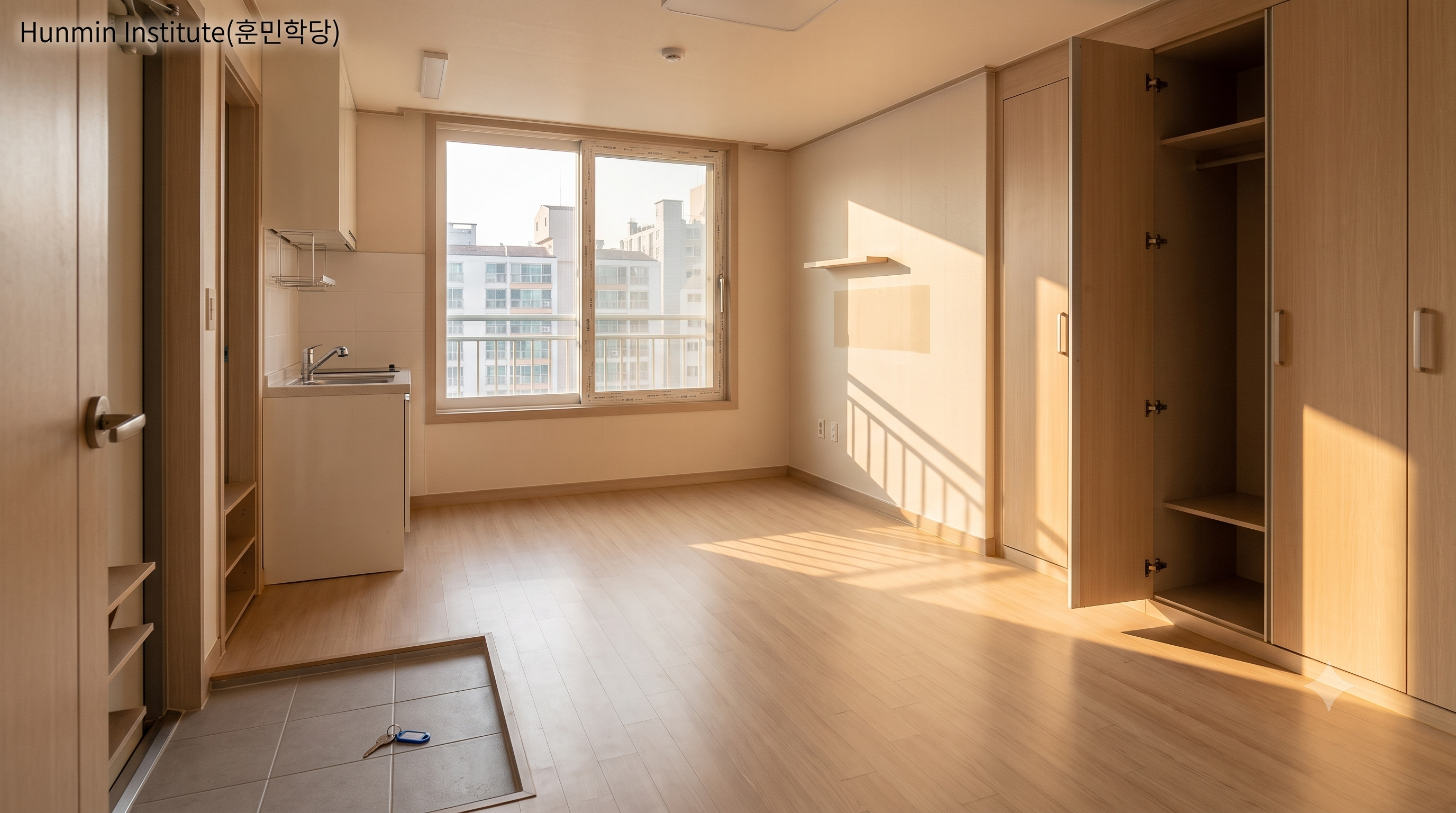
보증금은 나갈 때 돌려받는 돈입니다. 그런데 나가는 날 그냥 돌려주는 것이 아니라 미리 말해 두어야 준비됩니다.
The deposit is money you get back when you leave. But it is not simply handed over on moving day; it gets prepared only if you give notice in advance.
| 시점 When |
할 일 What to do |
|---|---|
| 계약 만료 두 달 전 Two months before the lease ends |
나가겠다고 집주인에게 알립니다. 말로만 하지 말고 문자로 남겨 두십시오 Tell the landlord you are leaving; do not leave it at a conversation, put it in a text |
| 나가는 날 Moving-out day |
짐을 다 뺀 뒤 보증금을 받습니다. 공과금 정산 내역을 함께 확인합니다 Receive the deposit after everything is out, and check the utility settlement at the same time |
| 이사한 뒤 15일 안 Within 15 days of moving |
새 주소로 체류지 변경신고를 다시 합니다. 이사할 때마다 반복됩니다 File the change of residence report again for the new address; this repeats with every move |
여기서 쓰는 표현부터 배워봅시다. 나갈 때 오가는 말입니다.
Start with the expressions you will use here. These go back and forth when you move out.
| 듣는 말 Listening |
하는 말 Speaking |
|---|---|
| 만료 두 달 전에는 말씀해 주세요. [mallyo du dal jeoneneun malsseumhae juseyo] Let me know two months before the lease ends. |
보증금 언제까지 주시면 돼요? [bojeunggeum eonjekkaji jusimyeon dwaeyo] By when can you return the deposit? |
| 다음 세입자 들어오면 드릴게요. [daeum seipja deureoomyeon deurilgeyo] I will pay you once the next tenant moves in. |
이번 달 말에 나가려고 하는데요. [ibeon dal mare nagaryeogo haneundeyo] I am planning to move out at the end of this month. |
▶나가겠다는 말은 반드시 기록으로 남기십시오.
Always leave a record that you gave notice.
전화로만 이야기하면 나중에 들은 적 없다는 말이 나올 수 있습니다. 통화한 뒤에 문자로 한 줄 보내 두면 그것이 근거가 됩니다.
If it stays a phone call, you may later hear that no one was told. Send one line by text after the call and that becomes your evidence.
보증금을 제때 돌려받지 못하는 상황이 생기면 혼자 판단하지 마십시오. 주택도시보증공사와 지자체 전세피해지원센터에 상담 창구가 있습니다.
If the deposit does not come back on time, do not handle it alone. The Korea Housing and Urban Guarantee Corporation and local deposit-fraud support centres have counselling desks.
여기까지가 계약과 신고입니다. 서명 전에 등기부등본으로 집을 확인하고, 특약으로 하루의 공백을 막고, 이사한 뒤 기한 안에 신고를 마치면 보증금은 지켜집니다.
That covers the contract and the filings. Check the property with the register before signing, close the one-day gap with a special clause, and complete the filings within the deadline after you move, and your deposit is protected.
Next: Opening a Bank Account in Korea as a Foreigner ↗
토픽 맛보기
TOPIK Preview
유형: TOPIK Ⅰ 읽기 [34~39], 대화, 빈칸에 알맞은 것 고르기
Type: TOPIK I Reading [34–39], dialogue, choose the correct word for the blank
( )에 들어갈 말로 가장 알맞은 것을 고르십시오.
Choose the most appropriate word for the blank.
가: 오늘 신고도 하고 확정일자도 받았어요. 그럼 오늘부터 안전한 거죠? 나: 아니요, ( ) 0시부터예요.
A: I filed today and got the fixed date stamp. So I am safe from today? B: No, it is from 00:00 ( ).
① 다음 날
② 어제
③ 지난주
④ 오늘 아침
Answer ▾
정답 ① 다음 날
Answer: ① 다음 날
주택을 넘겨받고 주소를 등록하고 확정일자를 갖추면 그다음 날 0시부터 권리가 생기므로 ①이 정답입니다. ②는 지난 시점이라 지문의 오늘과 어긋나고, ③은 시점을 말한다는 점만 맞아 일부만 걸리며, ④는 그럴듯해 보여도 같은 날 안이라 효력이 생기기 전입니다. 흉내 낸 대문항은 TOPIK Ⅰ 읽기 [34~39]입니다.
Rights begin at 00:00 the day after possession, address registration, and the fixed date stamp, so ① is correct. ② points to a past moment that contradicts 오늘, ③ only matches in naming a time, and ④ is still within the same day, before the rights take effect. The item type modelled here is TOPIK I Reading [34–39].
FAQ
Q1. 계약서 명의가 제 이름이 아닌데 체류지 변경신고를 할 수 있나요?Answer ▾
Q1. The contract is not in my name. Can I still file a change of residence report?
A1. 할 수 있습니다. 다만 숙소를 제공한 사람의 확인서와 그 사람의 신분증 사본이 필요합니다. 기숙사나 회사 숙소, 친구 명의의 집에 들어가는 경우가 여기 해당합니다.
A1. Yes. You will need a confirmation from whoever provided the housing and a copy of their ID. Dorms, company housing, and a place in a friend’s name all fall here.
Q2. 고시원이나 기숙사도 신고 대상인가요?Answer ▾
Q2. Do goshiwon and dormitories require filing too?
A2. 체류지 변경신고는 어디에 살든 해야 합니다. 전월세 신고는 금액 기준을 넘는 임대차 계약이 대상이라 고시원 월세는 대부분 해당하지 않습니다.
A2. The change of residence report applies wherever you live. The lease report applies only to leases above the amount thresholds, so most goshiwon rents fall outside it.
Q3. 확정일자만 받고 주소 신고를 하지 않으면 어떻게 되나요?Answer ▾
Q3. What if I get the fixed date stamp but never register my address?
A3. 보증금을 먼저 돌려받을 권리가 생기지 않습니다. 그 권리는 실제로 그 집에 살고 있고 주소가 등록되어 있어야 성립합니다.
A3. The right to be repaid ahead of others never arises. That right requires that you actually live there and that your address is registered.
Q4. 신고 기한을 이미 넘겼는데 지금이라도 해야 하나요?Answer ▾
Q4. I already missed the deadline. Should I still file?
A4. 지금 하십시오. 과태료가 붙을 수 있지만 신고하지 않고 두는 쪽이 훨씬 불리합니다. 기한이 지나면 체류지 변경신고는 온라인으로 되지 않아 관할 출입국·외국인관서를 직접 방문해야 합니다.
A4. File now. A fine may apply, but leaving it unfiled puts you in a far worse position. Once the deadline passes, the change of residence report cannot be filed online, so you must visit your local immigration office.
Q5. 중개수수료는 언제 내나요?Answer ▾
Q5. When do I pay the agency commission?
A5. 보통 잔금을 치르는 날 함께 냅니다. 금액은 지방자치단체 조례로 상한이 정해져 있으므로 계약 전에 얼마인지 물어보고 현금영수증을 받아 두십시오.
A5. Usually on the day you pay the balance. Ceiling rates are set by local ordinance, so ask the amount before signing and get a cash receipt.
Vocabulary and Pronunciation for Foreigners
| No | Korean | Romanisation | Meaning |
|---|---|---|---|
| 1 | 등기부등본 | deunggibudeungbon | (n) certified copy of the property register [ˈredʒɪstər] |
| 2 | 근저당 | geunjeodang | (n) mortgage on the property [ˈmɔːrɡɪdʒ] |
| 3 | 특약 | teugyak | (n) special clause [klɔːz] |
| 4 | 확정일자 | hwakjeongilja | (n) fixed date stamp [feɪst deɪt] |
| 5 | 보증금 | bojeunggeum | (n) deposit [dɪˈpɑːzɪt] |
| ▾ 단어 50개 더 보기 Show 50 more ↗ | |||
The blog page has limits of space and function, so only five words are shown here. The rest of the word list, the audio, the sentences and tables, the FAQ, the worksheet, the TOPIK questions and the lesson video are on the Hunmin Institute website ↗, free for blog subscribers.
참고 기관
Official Sources
부동산거래관리시스템 ↗
Real Estate Transaction Management System
https://rtms.molit.go.kr
기관 설명 보기 About this institute ▾
This is the Ministry of Land system that receives lease reports. Filing online grants the fixed date stamp at the same time, and since the amount and area thresholds change, check them directly before you sign.
법무부 하이코리아 ↗
HiKorea, Ministry of Justice
https://www.hikorea.go.kr
기관 설명 보기 About this institute ▾
This is where the change of residence report is filed, and it has an English interface. You can file it under the e-Application menu; once the deadline passes online filing is closed and you go to your local immigration office instead.
※ 본 콘텐츠(원고, 이미지, 예문 포함)는 저작권법에 의해 보호받는 훈민학당의 저작물입니다. 무단 복제, 전재, 재배포 및 AI 학습 데이터로의 이용을 금합니다.
This content (manuscript, images, and example sentences) is the copyrighted property of Hunmin Institute, protected under copyright law. Unauthorized copying, reproduction, redistribution, and use as AI training data are prohibited.
'K-Life' 카테고리의 다른 글
| Getting a Phone Number in Korea as a Foreigner (0) | 2026.08.08 |
|---|---|
| Opening a Bank Account in Korea as a Foreigner (0) | 2026.08.08 |
| How to Find Housing in Korea Part 1: Room Types (0) | 2026.08.07 |
| Alien Registration Card Korea: The 90-Day Deadline (0) | 2026.08.04 |
| Exchange Student vs Language Course: Two Korean Student Visas (0) | 2026.07.26 |


