
Korean Part-Time Job Interview Phrases
한국의 아르바이트 면접은 경력보다 요일을 먼저 묻습니다
A part-time job in Korea starts with one phone call and ends with a contract.
This post teaches the Korean for calling in, sitting the interview, and checking the terms.
한국의 아르바이트는 전화 한 통에서 시작해 계약서로 끝납니다.
이 글에서 전화로 연락하고 면접에서 조건을 확인하는 한국어를 익힙니다.
이 글에서 배우는 핵심 회화
Key Expressions in This Lesson
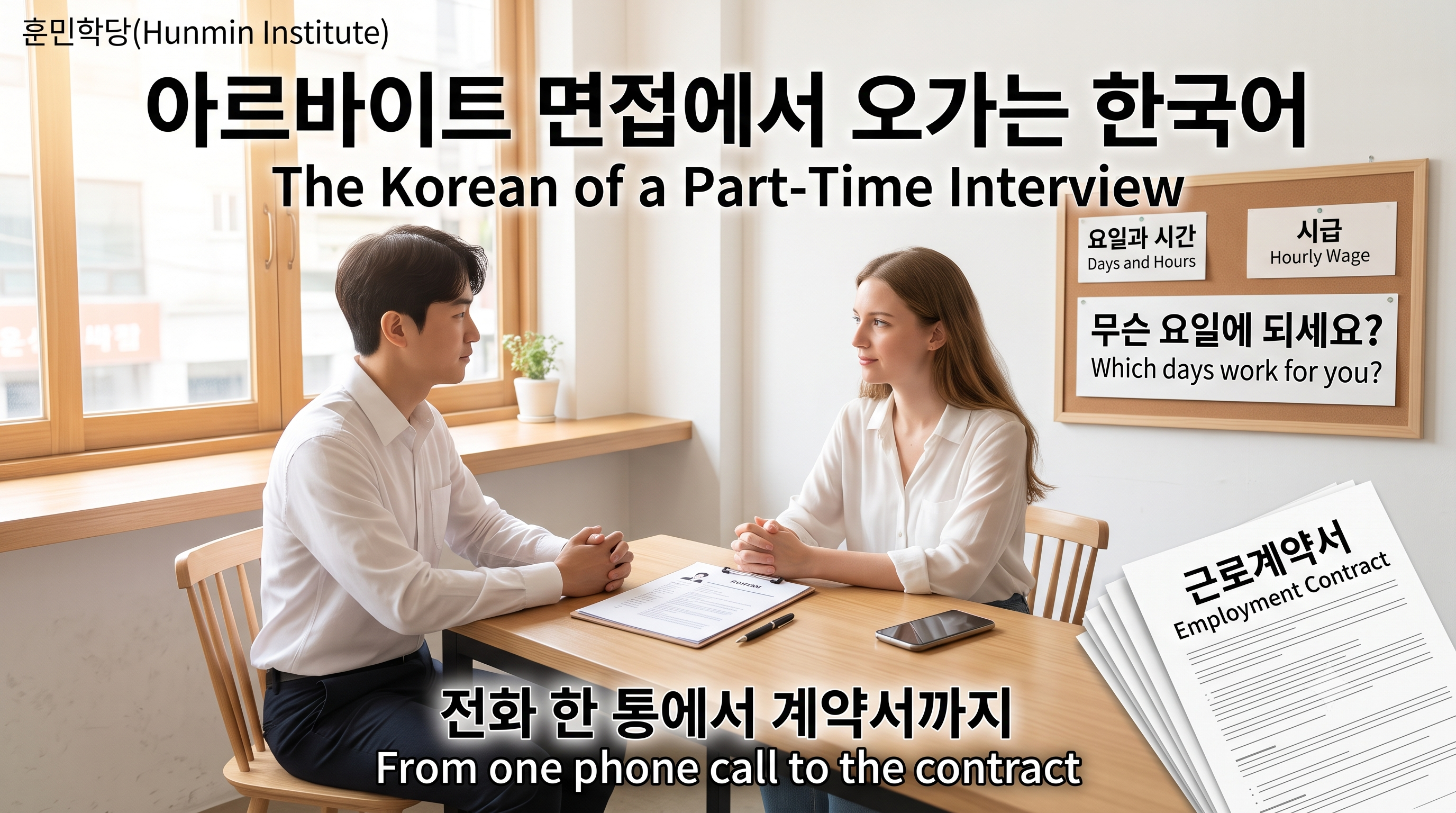
아르바이트를 구할 때 오가는 말은 자리마다 정해져 있습니다. 아래 여섯 문장은 좌우가 한 쌍의 대화가 아니라 각각 따로 익히는 문장입니다. 먼저 눈에 담고 본문으로 들어가십시오.
The lines that come up while looking for part-time work are fixed, and they change with the stage you are at. The two columns are not paired dialogue; each sentence is learned on its own. Take them in first, then move into the main text.
| 듣는 말 Listening |
하는 말 Speaking |
|---|---|
| 언제 면접 보러 오실 수 있어요? [eonje myeonjeop boreo osil su isseoyo] When can you come in for an interview? |
알바 보고 연락드렸어요. [alba bogo yeollakdeuryeosseoyo] I am calling about the job posting. |
| 무슨 요일에 되세요? [museun yoire doeseyo] Which days work for you? |
주말에는 다 돼요. [jumareneun da dwaeyo] Weekends are all fine for me. |
| 내일부터 나올 수 있어요? [naeilbuteo naol su isseoyo] Can you start coming in from tomorrow? |
근로계약서 써야 하나요? [geullo gyeyakseo sseoya hanayo] Should we write up an employment contract? |
첫째 줄은 소단락 2에서, 둘째 줄은 소단락 3에서, 셋째 줄은 소단락 5에서 다룹니다.
The first row is covered in Section 2, the second in Section 3, and the third in Section 5.
1. 면접 전에 정해 두어야 할 것
What to Settle Before the Interview
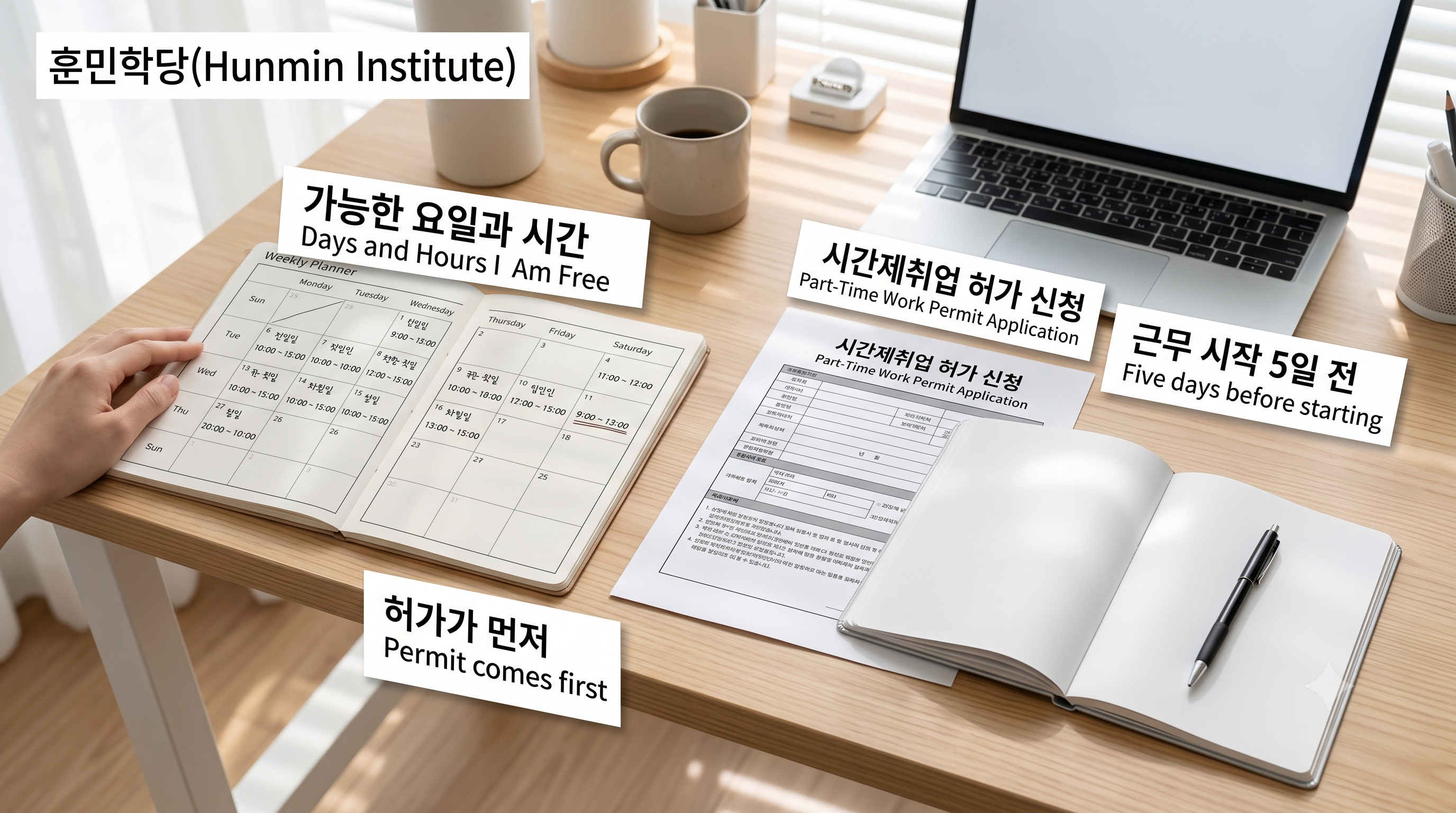
한국의 아르바이트 면접은 길지 않습니다. 언제 나올 수 있는지, 얼마나 오래 할 수 있는지 두 가지가 정해지면 대부분 끝납니다. 그래서 전화를 걸기 전에 요일과 시간을 먼저 정리해 두어야 합니다.
A part-time interview in Korea is short. Once two things are settled, when you can come in and how long you can keep it up, it is mostly over. So sort out your days and hours before you dial.
그보다 먼저 확인할 것이 있습니다. 유학생의 시간제취업 허가입니다. 표로 먼저 보십시오.
There is one thing to settle even before that: the part-time work permit for international students. See it in the table first.
| 한국어 Korean |
무엇인가 What it is |
|---|---|
| 시간제취업 허가 [siganje chwieop heoga] Part-time work permit |
일을 시작하기 전에 반드시 받아야 합니다 Must be obtained before you start |
| 근무처 [geunmucheo] The named workplace |
허가받은 곳에서만, 동시에 두 곳까지 Only where the permit names, up to two at once |
| 허가 기간 [heoga gigan] Permit period |
최장 일 년입니다 One year at most |
| 제외 업종 [jeoe eopjong] Excluded industries |
건설업과 파견, 알선업, 유흥업은 대상이 아닙니다 Construction, dispatch, brokerage, and entertainment are out |
여기서 쓰는 표현부터 배워봅시다. 허가를 두고 오가는 말입니다.
Start with the expressions you will use here. These are exchanged about the permit.
| 듣는 말 Listening |
하는 말 Speaking |
|---|---|
| 유학생이세요? [yuhaksaengiseyo] Are you an international student? |
네, 유학생이에요. [ne yuhaksaengieyo] Yes, I am. |
| 그럼 허가가 필요하겠네요. [geureom heogaga piryohagenneyo] Then you will need a permit. |
허가받고 시작해야 해서요. [heogabatgo sijakaeya haeseoyo] I have to get the permit before I start. |
| 얼마나 걸려요? [eolmana geollyeoyo] How long does it take? |
닷새 정도 걸려요. [datsae jeongdo geollyeoyo] About five days. |
응용 Apply It
↳ [동사]고 시작해야 해서요
[verb]go sijakaeya haeseoyo
I have to [verb] before I start.
ex 허가받고 시작해야 해서요./신청하고 시작해야 해서요.
ROM heogabatgo sijakaeya haeseoyo/sincheonghago sijakaeya haeseoyo
EN I have to get the permit before I start./I have to apply before I start.
▶허가는 면접보다 먼저입니다.
The permit comes before the interview.
허가 없이 일하면 학생과 고용주가 함께 제재를 받으며, 학생에게는 범칙금과 체류 연장 제한, 강제퇴거까지 따라올 수 있습니다. 신청은 근무 시작 최소 닷새 전에 하시고, 접수증이 아니라 허가 결과를 확인한 뒤에 첫 근무를 시작하십시오.
Working without it exposes both the student and the employer to penalties, and for the student that can mean fines, restrictions on extending your stay, and even deportation. Apply at least five days before your first shift, and start only once the permit has been granted, not when the application is filed.
일할 곳을 정한 뒤에 신청하는 순서이므로 면접과 허가는 맞물려 돌아갑니다. 사장님에게 유학생이라는 사실과 허가 절차가 필요하다는 점을 면접에서 미리 밝히는 편이 낫습니다.
You apply once the workplace is decided, so the interview and the permit turn together. It is better to say at the interview that you are an international student and that a permit is required.
나중에 알려서 좋을 것이 하나도 없고, 이미 이 절차를 겪어 본 가게도 많습니다. 구인 글을 볼 때부터 그 업종이 허가 대상인지 먼저 확인하십시오.
Nothing is gained by mentioning it later, and plenty of shops have been through the process before. Check whether the industry is even eligible from the moment you read the posting.
2. 전화로 연락하기
Making the First Call
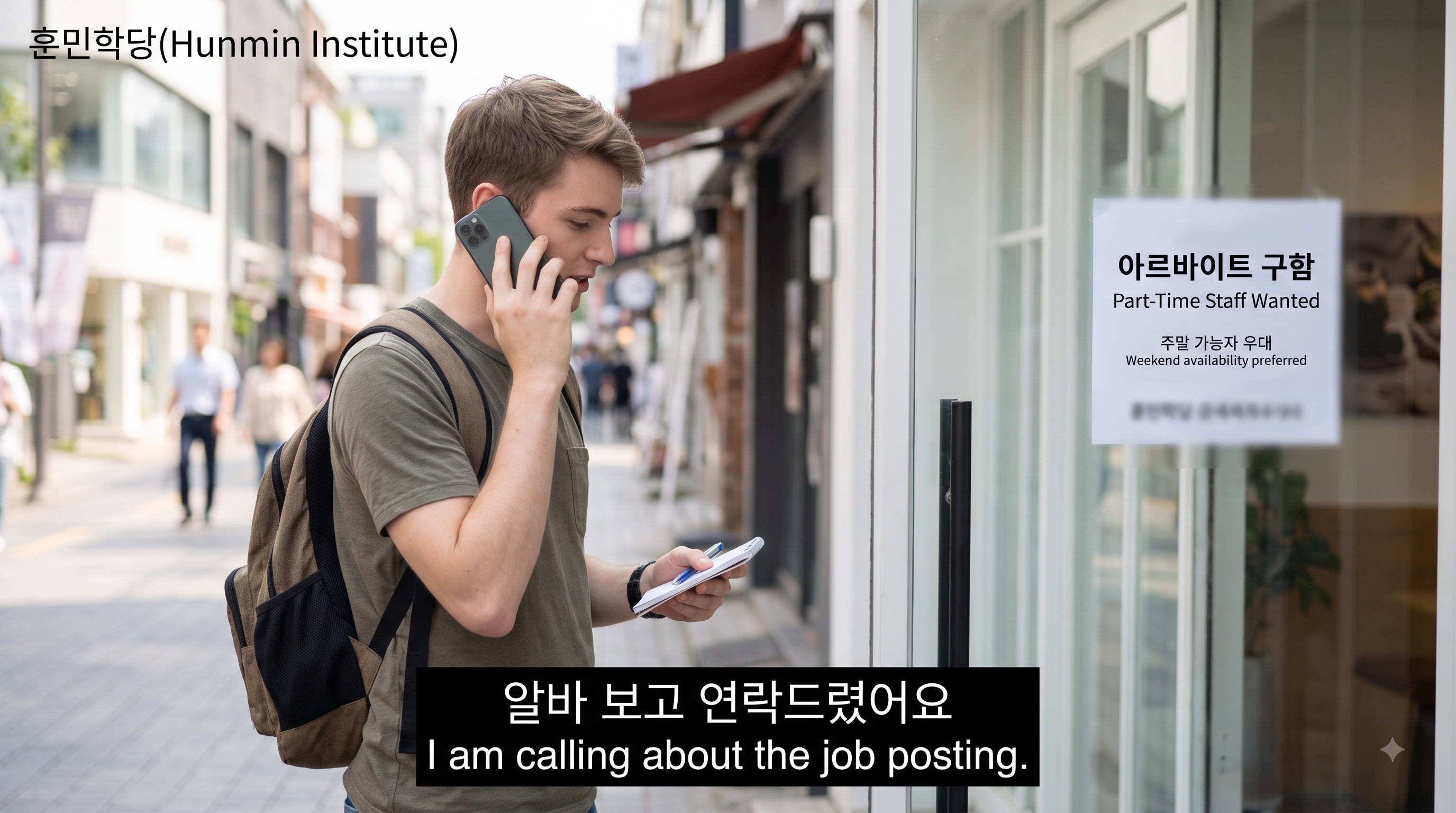
한국의 아르바이트는 대개 전화로 시작합니다. 구인 글을 보고 번호로 걸어 면접 날짜를 잡는 것이 첫 단계입니다. 얼굴이 보이지 않으니 첫 문장이 특히 중요합니다.
Part-time work in Korea usually starts on the phone. You see a posting, call the number, and set an interview date. Nobody can see your face, so the opening line carries more weight than usual.
여기서 쓰는 표현부터 배워봅시다. 전화를 걸어 오가는 말입니다.
Start with the expressions you will use here. These pass on the phone.
| 듣는 말 Listening |
하는 말 Speaking |
|---|---|
| 네, 여보세요. [ne yeoboseyo] Hello, yes? |
알바 보고 연락드렸어요. [alba bogo yeollakdeuryeosseoyo] I am calling about the job posting. |
| 아직 자리 있어요. [ajik jari isseoyo] The position is still open. |
지금 통화 괜찮으세요? [jigeum tonghwa gwaenchaneuseyo] Is this a good time to talk? |
| 언제 면접 보러 오실 수 있어요? [eonje myeonjeop boreo osil su isseoyo] When can you come in for an interview? |
이력서 가져갈까요? [iryeokseo gajyeogalkkayo] Should I bring a resume? |
▶첫 문장은 왜 전화했는지부터 밝힙니다.
Open by saying why you are calling.
이름을 먼저 말하지 않아도 됩니다. 무엇을 보고 걸었는지가 먼저입니다. 틀에 넣을 명사를 바꿔 공고 보고, 문자 보고, 소개받고처럼 쓰시면 그대로 통합니다.
You do not have to give your name first. What you saw comes first. Swap the noun in the pattern and it keeps working: 공고 보고, 문자 보고, 소개받고.
알바는 아르바이트를 줄인 말이며 구인 글과 대화 양쪽에서 이 형태로 더 많이 쓰입니다. 지금 통화 괜찮으세요 한마디를 붙이면 인상이 크게 달라집니다.
알바 is the shortened form of 아르바이트, and it is the form you will meet more often in both postings and conversation. Adding 지금 통화 괜찮으세요 changes the impression considerably.
3. 면접에서 듣는 질문
The Questions You Will Be Asked
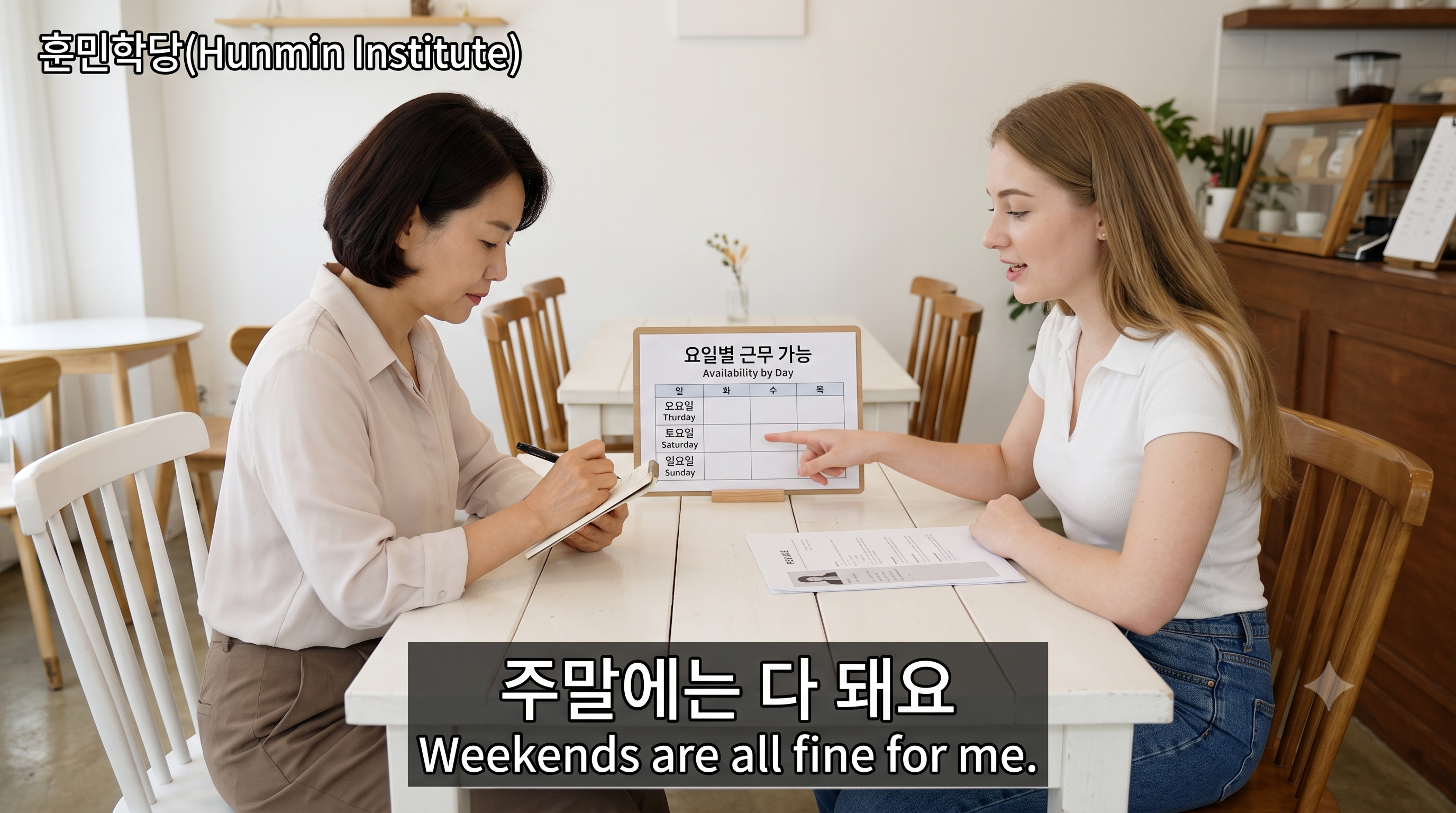
면접은 대개 십 분 안팎입니다. 질문의 절반이 되다라는 동사 하나로 이루어집니다. 무슨 요일에 되세요, 저녁에도 되세요처럼 묻는데, 이때의 되다는 그 시간에 나올 수 있느냐는 뜻입니다.
The interview runs about ten minutes. Half the questions are built on a single verb, 되다. 무슨 요일에 되세요, 저녁에도 되세요: here 되다 asks whether you are free at that time.
여기서 쓰는 표현부터 배워봅시다. 면접 자리에서 오가는 말입니다.
Start with the expressions you will use here. These pass at the interview.
| 듣는 말 Listening |
하는 말 Speaking |
|---|---|
| 무슨 요일에 되세요? [museun yoire doeseyo] Which days work for you? |
주말에는 다 돼요. [jumareneun da dwaeyo] Weekends are all fine for me. |
| 저녁에도 되세요? [jeonyeogedo doeseyo] Are evenings possible too? |
수요일은 수업이 있어서 안 돼요. [suyoireun sueobi isseoseo an dwaeyo] Wednesdays do not work; I have class. |
| 전에 해 보신 적 있어요? [jeone hae bosin jeok isseoyo] Have you done this kind of work before? |
처음이라 배우면서 하고 싶어요. [cheoeumira baeumyeonseo hago sipeoyo] It is my first time, so I would like to learn as I go. |
▶가능한 날은 넓게, 안 되는 날은 분명하게 말하십시오.
Be generous about the days you can work and exact about the ones you cannot.
틀에 넣을 명사를 바꿔 평일에는, 오전에는, 화요일에는처럼 쓰시면 그대로 통합니다. 반대로 안 되는 날은 얼버무리지 말고 수요일은 수업이 있어서 안 돼요처럼 이유와 함께 말하는 편이 낫습니다.
Swap the noun in the pattern and it keeps working: 평일에는, 오전에는, 화요일에는. For the days you cannot work, do not hedge; give the reason, as in 수요일은 수업이 있어서 안 돼요.
나중에 빠지는 것보다 처음에 못 한다고 하는 쪽이 신뢰를 얻습니다. 경험이 없다는 답도 감점이 아닙니다. 아르바이트는 대부분 가르쳐서 쓰는 자리입니다.
Saying no at the start earns more trust than dropping a shift later. Having no experience is not a mark against you either; most of these jobs expect to train you.
4. 시급과 근무 조건
Wages and Working Terms

시급을 묻는 것은 무례한 일이 아닙니다. 계약서에 적힐 조건이므로 면접 자리에서 확인하는 것이 정상입니다. 2026년 최저임금은 시간급 10,320원이며 국적과 체류자격에 관계없이 같은 기준이 적용됩니다.
Asking about the hourly rate is not rude. It is a term that will appear in the contract, so checking it at the interview is the normal thing to do. The 2026 minimum wage is 10,320 won an hour, and the same figure applies regardless of nationality or visa status.
주 15시간이 무엇을 가르는지 표로 보십시오.
See in the table what fifteen hours a week decides.
| 구분 Category |
주 15시간을 기준으로 At the fifteen-hour line |
|---|---|
| 주휴수당 [juhyusudang] Weekly holiday allowance |
15시간 이상이고 정해진 근무일을 다 채워야 나옵니다 Paid at fifteen hours or more with all scheduled days worked |
| 연차와 퇴직금 [yeoncha wa toejikgeum] Leave and severance |
15시간 미만이면 발생하지 않습니다 Do not arise below fifteen hours |
| 사회보험 [sahoeboheom] Social insurance |
15시간 미만이면 가입 대상에서 빠집니다 You fall outside enrolment below fifteen hours |
| 수습 감액 [suseup gamaek] Probation reduction |
계약이 일 년 이상일 때만 가능합니다 Allowed only where the contract runs a year or longer |
여기서 쓰는 표현부터 배워봅시다. 조건을 확인하며 오가는 말입니다.
Start with the expressions you will use here. These pass as the terms are checked.
| 듣는 말 Listening |
하는 말 Speaking |
|---|---|
| 시급은 최저시급으로 시작해요. [sigeumeun choejeosigeugeuro sijakaeyo] The pay starts at the minimum wage. |
주휴수당도 나와요? [juhyusudangdo nawayo] Does the weekly holiday allowance apply as well? |
| 하루 다섯 시간이에요. [haru daseot siganieyo] It is five hours a day. |
하루 몇 시간이에요? [haru myeot siganieyo] How many hours a day is it? |
| 급여는 매달 십일에 나가요. [geubyeoneun maedal sibire nagayo] Pay goes out on the tenth of each month. |
식사는 제공돼요? [siksaneun jegongdwaeyo] Are meals provided? |
▶주 15시간이 여러 가지를 가르는 선입니다.
Fifteen hours a week is the line that decides several things.
일주일에 정해진 근무일을 모두 채우고 주 15시간 이상 일하면 주휴수당이 발생합니다. 주 15시간 미만이면 주휴수당과 연차, 퇴직금이 발생하지 않고 고용보험과 국민연금, 건강보험 가입 대상에서도 빠집니다.
Work all your scheduled days in a week and fifteen hours or more, and the weekly holiday allowance applies. Below fifteen hours there is no such allowance, no annual leave, no severance, and you fall outside employment insurance, the national pension, and health insurance as well.
그래서 하루 몇 시간이냐는 질문이 시급만큼 중요합니다. 수습을 이유로 최저임금을 깎는 것은 근로계약 기간이 일 년 이상일 때만 가능하며, 일 년 미만 계약과 단순노무 직종은 처음부터 전액을 받아야 합니다.
That is why how many hours a day matters as much as the rate. Cutting the minimum wage for a probation period is allowed only where the contract runs a year or longer; contracts under a year and simple manual work must pay the full rate from day one.
5. 합격 이후와 근로계약서
After the Offer and the Contract
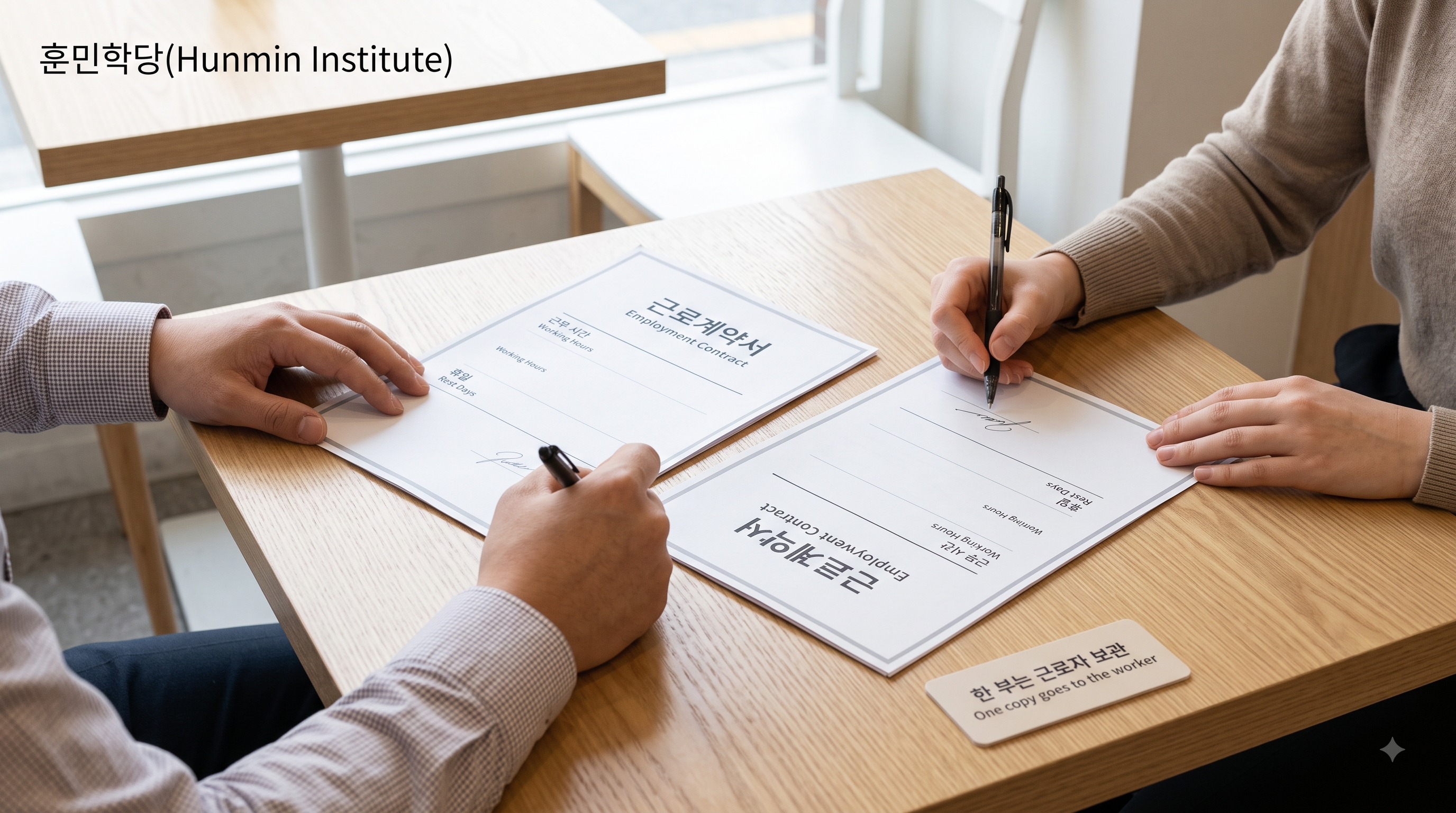
합격 연락은 대개 짧습니다. 언제부터 나올 수 있느냐는 한 문장으로 끝나는 경우가 많습니다. 여기서 놓치지 말아야 할 것이 근로계약서입니다.
The offer call is usually brief, often no more than asking when you can start. What you must not let slide at this point is the employment contract.
여기서 쓰는 표현부터 배워봅시다. 합격 연락과 계약 자리에서 오가는 말입니다.
Start with the expressions you will use here. These pass at the offer and the signing.
| 듣는 말 Listening |
하는 말 Speaking |
|---|---|
| 내일부터 나올 수 있어요? [naeilbuteo naol su isseoyo] Can you start coming in from tomorrow? |
다음 주부터 가능해요. [daeum jubuteo ganeunghaeyo] I can start from next week. |
| 첫날은 일찍 오세요. [cheonnareun iljjik oseyo] Come in early on the first day. |
근로계약서 써야 하나요? [geullo gyeyakseo sseoya hanayo] Should we write up an employment contract? |
| 계약서는 이따 쓸게요. [gyeyakseoneun itta sseulgeyo] We will do the contract later. |
한 부 주시나요? [han bu jusinayo] Will I be given a copy? |
▶근로계약서는 부탁이 아니라 사용자의 의무입니다.
The contract is not a favour; it is the employer's duty.
임금과 근무 시간, 휴일을 적은 계약서를 작성해 근로자에게 주는 것은 사용자가 해야 할 일로 정해져 있습니다. 아르바이트도 예외가 아닙니다.
Drawing up a contract that states the pay, the hours, and the rest days, and handing it to the worker, is set down as the employer's job. Part-time work is no exception.
받지 못했다면 고용노동부 고객상담센터 1350이나 외국인종합안내센터 1345에서 어떻게 해야 하는지 물어볼 수 있습니다. 계약서가 없으면 나중에 시간과 임금을 두고 다툼이 생겼을 때 근거가 남지 않습니다.
If you do not receive one, you can ask what to do at the Ministry of Employment and Labor counselling line 1350 or the Immigration Contact Center 1345. Without a contract there is nothing to point to if hours or pay are later disputed.
아르바이트는 전화 한 통에서 시작해 계약서로 끝납니다. 그 사이에 오가는 말은 요일과 시간, 시급과 시작일 넷으로 좁혀집니다. 오늘 나온 문장 가운데 딱 세 개만 외우자면 알바 보고 연락드렸어요, 주말에는 다 돼요, 근로계약서 써야 하나요입니다.
A part-time job starts with one phone call and ends with a contract. Everything spoken in between narrows to four things: days, hours, pay, and start date. If you memorize only three of today's lines, make them 알바 보고 연락드렸어요, 주말에는 다 돼요, and 근로계약서 써야 하나요.
Next: Korean Delivery Phrases: Parcels and Convenience Stores ↗
토픽 맛보기
TOPIK Preview
유형: TOPIK Ⅰ 읽기 [34~39], 대화, 빈칸에 알맞은 것 고르기
Type: TOPIK I Reading [34–39], dialogue, choose the correct word for the blank
( )에 들어갈 말로 가장 알맞은 것을 고르십시오.
Choose the most appropriate word for the blank.
내일부터 카페에서 일합니다. 오늘 사장님과 근로 ( )를 씁니다.
I start at the cafe tomorrow. Today I am signing an employment ( ) with the owner.
① 계약서
② 이력서
③ 영수증
④ 신청서
Answer ▾
정답 ① 계약서
Answer: ① 계약서
근로 뒤에 붙어 임금과 시간을 적는 서류는 계약서이므로 ①이 정답입니다. ②는 지원할 때 내는 서류라 일을 시작한 뒤의 자리에 맞지 않고, ③은 결제 뒤에 받는 종이여서 근거가 없으며, ④는 그럴듯해 보여도 근로라는 말과 짝을 이루지 않습니다. 흉내 낸 대문항은 TOPIK Ⅰ 읽기 [34~39]입니다.
The document that follows 근로 and records pay and hours is 계약서, so ① is correct. ② is what you submit when applying, ③ is a paper you get after paying, and ④ does not pair with 근로. The item type modeled here is TOPIK I Reading [34–39].
FAQ
Q1. 유학생은 몇 시간까지 일할 수 있나요?Answer ▾
Q1. How many hours may an international student work?
A1. 체류자격과 한국어 능력에 따라 갈립니다. 2026년 8월 기준으로 한국어 능력 기준을 충족한 경우 어학연수생과 학부과정은 주 20시간, 인증대학 학부는 25시간, 석박사는 30시간까지이며, 미충족 시 어학연수생과 학부생은 10시간, 석박사는 15시간입니다. 이 기준은 자주 바뀌므로 신청 전에 하이코리아나 외국인종합안내센터 1345에서 반드시 확인하십시오.
A1. It depends on your visa status and your Korean. As of August 2026, those who meet the language requirement may work up to 20 hours a week on a language course or an undergraduate programme, 25 hours at a certified university, and 30 hours as a postgraduate; those who do not meet it are limited to 10 hours for language and undergraduate students and 15 hours for postgraduates. These rules change often, so check with HiKorea or the Immigration Contact Center 1345 before you apply.
Q2. 허가 없이 일하면 어떻게 되나요?Answer ▾
Q2. What happens if I work without the permit?
A2. 학생과 고용주가 함께 처벌 대상이 됩니다. 학생에게는 범칙금과 체류 연장 제한이 따르고 강제퇴거로 이어질 수 있습니다. 허가는 근무 시작 최소 닷새 전에 신청하시고, 접수증이 아니라 허가 결과를 확인한 뒤에 첫 근무를 시작하셔야 합니다.
A2. Both the student and the employer face penalties. For the student that means fines and restrictions on extending your stay, and it can lead to deportation. Apply at least five days before your first shift, and begin only once the permit has been granted rather than merely filed.
Q3. 근로계약서를 안 쓰면 어떻게 하나요?Answer ▾
Q3. What if no employment contract is written?
A3. 작성과 교부는 사용자의 의무입니다. 요청했는데도 받지 못했다면 고용노동부 고객상담센터 1350이나 외국인종합안내센터 1345에 문의하실 수 있습니다. 계약서가 없으면 나중에 시간과 임금을 두고 다툼이 생겼을 때 근거가 남지 않습니다.
A3. Drawing it up and handing it over is the employer's duty. If you have asked and still not received one, you can raise it with the Ministry of Employment and Labor counselling line 1350 or the Immigration Contact Center 1345. Without a contract there is nothing to point to if hours or pay are later disputed.
Q4. 주휴수당은 누구에게 나오나요?Answer ▾
Q4. Who receives the weekly holiday allowance?
A4. 일주일에 정해진 근무일을 모두 채우고 주 15시간 이상 일한 근로자에게 지급됩니다. 주 15시간 미만이면 주휴수당과 연차, 퇴직금이 발생하지 않고 고용보험과 국민연금, 건강보험 가입 대상에서도 빠집니다.
A4. It goes to workers who complete all their scheduled days in a week and work fifteen hours or more. Below fifteen hours there is no allowance, no annual leave, and no severance, and you fall outside employment insurance, the national pension, and health insurance.
Q5. 두 곳에서 동시에 일할 수 있나요?Answer ▾
Q5. Can I work at two places at once?
A5. 허가를 받으면 동시에 두 곳까지 가능하며 허가 기간은 최장 일 년입니다. 다만 허가받은 근무처에서만 일할 수 있고 두 곳을 합친 시간도 허용 범위 안에 있어야 합니다. 건설업과 파견 및 도급, 알선업, 유흥업은 허가 대상이 아니며 제조업은 한국어 능력 기준을 충족한 경우에만 예외적으로 허용됩니다.
A5. With a permit you may hold up to two jobs, and the permit runs for a year at most. You may work only at the places it names, and the two together must stay within your hourly limit. Construction, dispatch and subcontracting, job brokerage, and the entertainment trade are excluded, and manufacturing is allowed only for those who meet the Korean language requirement.
Vocabulary and Pronunciation for Foreigners
| No | Korean | Romanisation | Meaning |
|---|---|---|---|
| 1 | 아르바이트 | areubaiteu | (n) part-time job [pɑːrt taɪm dʒɑːb] |
| 2 | 알바 | alba | (n) part-time job, short form [dʒɑːb] |
| 3 | 면접 | myeonjeop | (n) job interview [ˈɪntərvjuː] |
| 4 | 구인 글 | guin geul | (n) job posting [ˈpoʊstɪŋ] |
| 5 | 공고 | gonggo | (n) notice, posting [ˈnoʊtɪs] |
| ▾ 단어 55개 더 보기 Show 55 more ↗ | |||
The blog page has limits of space and function, so only five words are shown here. The rest of the word list, the audio, the sentences and tables, the FAQ, the worksheet, the TOPIK questions and the lesson video are on the Hunmin Institute website ↗, free for blog subscribers.
참고 기관
Official Sources
고용노동부 ↗
Ministry of Employment and Labor
https://www.moel.go.kr
기관 설명 보기 About this institute ▾
This ministry sets the minimum wage, the employment contract requirement, and the weekly holiday allowance. Part-time work falls under the Labor Standards Act, and advice is available on the counselling line 1350. The figures change each year, so check the current notice.
하이코리아 ↗
HiKorea, Korea Immigration Service
https://www.hikorea.go.kr
기관 설명 보기 About this institute ▾
This is where students apply for and check the part-time work permit. You can see the permitted hours by visa status, the excluded industries, and the Korean language requirement. Enquiries can also go to the Immigration Contact Center 1345.
※ 본 콘텐츠(원고, 이미지, 예문 포함)는 저작권법에 의해 보호받는 훈민학당의 저작물입니다. 무단 복제, 전재, 재배포 및 AI 학습 데이터로의 이용을 금합니다.
This content (manuscript, images, and example sentences) is the copyrighted property of Hunmin Institute, protected under copyright law. Unauthorized copying, reproduction, redistribution, and use as AI training data are prohibited.
'Real Talk' 카테고리의 다른 글
| How to Order in a Korean Restaurant: Call, Ask, Pay (0) | 2026.08.16 |
|---|---|
| Korean Delivery Phrases: Parcels and Convenience Stores (0) | 2026.08.11 |
| Korean Optician Phrases: No Prescription Needed (0) | 2026.08.09 |
| Korean Dentist Phrases: Covered or Not Covered (0) | 2026.08.08 |
| Korean Skin Clinic Phrases: What Staff Actually Ask (0) | 2026.08.08 |


