
In East Busan You Book the Time Before You Go
해운대 동쪽은 가기 전에 시간부터 정합니다
A Sky Capsule is not a seat you book but a whole car, and you book it for a set time.
Learn the Korean of an eastern Busan that only moves once the time is settled.
스카이캡슐은 자리가 아니라 한 대를 통째로 사는 것이고, 시간을 정해서 삽니다.
시간을 먼저 정해야 움직일 수 있는 부산 동쪽에서 오가는 한국어를 장면별로 익힙니다.
You can check the vocabulary list summarizing today's key words at the bottom of this post.
Previous: In Jagalchi You Buy Downstairs and Eat Upstairs
Key Expressions in This Lesson
부산 동쪽에서는 표를 사기 전에 시간과 인원을 먼저 정하게 됩니다. 아래 여덟 문장은 좌우가 한 쌍의 대화가 아니라 각각 따로 익히는 문장입니다.
In eastern Busan the time and the head count get settled before any ticket changes hands. The two columns below are not paired dialogue; learn each sentence on its own.
| 듣는 말 Listening |
하는 말 Speaking |
|---|---|
| 여기부터는 요금이 달라져요. The fare changes from here on. |
왕복으로 주세요. A return ticket, please. |
| 그 시간은 매진이에요. geu siganeun maejinieyo That time is sold out. |
여기서 걸어갈 수 있어요? Can I walk from here? |
| 이건 편도라 내리면 다시 못 타세요. This is one-way; once you get off, that is it. |
다음 열차 몇 시예요? What time is the next train? |
| 삼십 분쯤 기다리셔야 돼요. It will be about a thirty minute wait. |
자리 있어요? Do you have a table? |
여덟 문장은 소단락 1부터 5까지에서 나머지 문장과 함께 다룹니다.
These eight lines are covered across Sections 1 to 5 together with the rest.
Heading East, Where the Fare Steps Up
1편에서 다닌 원도심은 모두 1구간이었습니다. 해운대 쪽으로 나오면 사정이 달라집니다. 부산 도시철도는 10킬로미터를 넘으면 2구간이 되어 요금이 한 단계 오릅니다. 그리고 이 편의 출발점인 미포정거장은 지하철역에서 한 번 더 이동해야 닿습니다.
Everything in part one sat inside zone one. Heading toward Haeundae changes that. Busan subway fares step up to zone two past ten kilometers. And Mipo Station, where this trip begins, takes one more leg beyond the subway.
| 구분 Item |
내용 Detail |
|---|---|
| 도시철도 1구간 Subway zone 1 |
10km 이내, 어른 카드 1,600 / 1회권 1,700 up to 10km, 1,600 by card, 1,700 single ticket |
| 도시철도 2구간 Subway zone 2 |
10km 초과, 어른 카드 1,800 / 1회권 1,900 over 10km, 1,800 by card, 1,900 single ticket |
| 동해선 Donghae Line |
도시철도 정기승차권을 쓸 수 없고 요금을 따로 냅니다 the subway pass does not apply; you pay separately |
| 미포정거장 가는 길 Getting to Mipo Station |
해운대역 1번 출구 또는 중동역 7번 출구에서 택시, 장산역 5번 출구에서 버스 taxi from Haeundae Station exit 1 or Jung-dong Station exit 7, or a bus from Jangsan Station exit 5 |
| 듣는 말 Listening |
하는 말 Speaking |
|---|---|
| 여기부터는 요금이 달라져요. The fare changes from here on. |
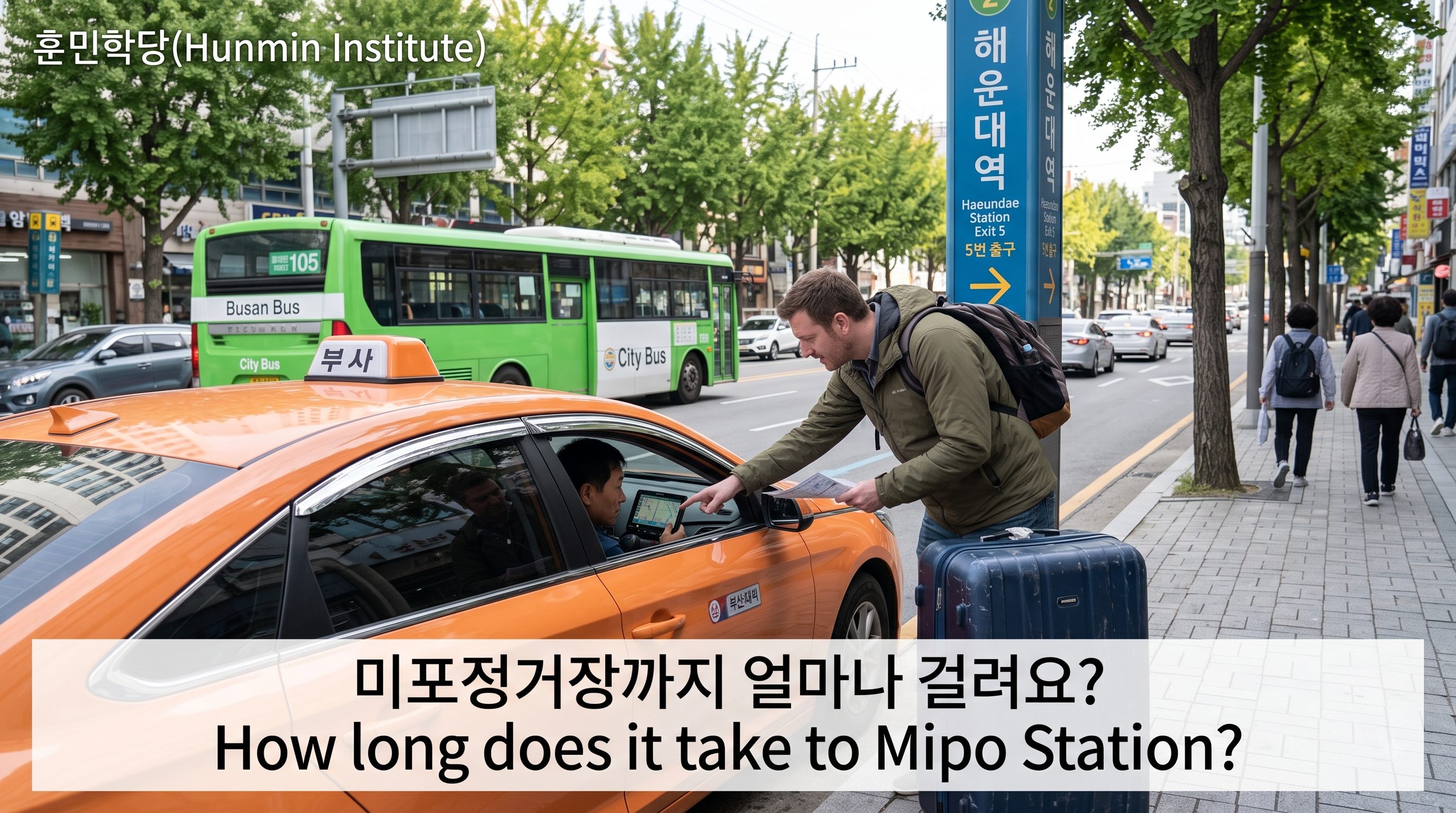
미포정거장까지 얼마나 걸려요? How long does it take to Mipo Station? |
| 택시로 오 분이면 가요. Five minutes by taxi. |
걸어가기에는 멀어요? Is it too far to walk? |
| 그 카드는 동해선에서 안 돼요. That card does not work on the Donghae Line. |
여기서 갈아타면 돼요? Do I change here? |
Swap-in frames: How long does it take to [place]? / Is it too far to [verb]? / Do I [verb] here?
▶ 부산 지하철은 거리에 따라 두 단계로만 갈립니다.
▶ Busan splits its subway fare into just two steps.
서울처럼 거리에 따라 조금씩 오르는 방식이 아니라 10킬로미터를 기준으로 한 번에 나뉩니다. 원도심 안에서는 1구간, 해운대 쪽으로 나오면 2구간입니다. 그래서 어디서 타느냐보다 어디서 내리느냐로 요금이 정해집니다.
Rather than creeping up with distance as in Seoul, it divides once at the ten kilometer mark. Inside the old town you stay in zone one; head out toward Haeundae and you are in zone two. Where you get off, not where you board, decides the fare.
동해선은 도시철도와 다른 선이라 정기승차권을 쓸 수 없습니다. 교통카드로 타면 되고 환승 할인은 적용됩니다. 미포정거장은 지하철역에서 조금 떨어져 있어 택시나 버스로 한 번 더 이동해야 하므로, 예약 시간이 있다면 이 구간의 시간을 미리 넣어 두시기 바랍니다.
The Donghae Line runs on a separate system, so the subway pass is no good on it. A transit card works, and the transfer discount still applies. Mipo Station sits a short ride from the subway, so if you are booked for a set time, build that leg into your plan.
Booking at Blueline Park, by the Car and by the Head
블루라인파크는 미포에서 청사포를 거쳐 송정까지 4.8킬로미터를 잇는 해안 노선입니다. 여기에 두 가지가 다닙니다. 공중 레일 위를 가는 스카이캡슐과 해안을 따라 달리는 해변열차입니다. 값을 세는 단위가 서로 다릅니다.
Blueline Park runs 4.8 kilometers along the coast from Mipo through Cheongsapo to Songjeong. Two things travel it: the Sky Capsule on an elevated rail and the beach train at ground level. They are priced by different units.
| 스카이캡슐 (1대 요금) Sky Capsule (per car) |
한 대 값 Per Car |
1인당 Per Person |
|---|---|---|
| 2인승 2-seater |
50,000원 50,000 won |
25,000원 25,000 won |
| 3인승 3-seater |
55,000원 55,000 won |
18,300원 18,300 won |
| 4인승 4-seater |
60,000원 60,000 won |
15,000원 15,000 won |
| 해변열차 (1인 요금) Beach Train (per person) |
어른 Adult |
쓸 수 있는 범위 What It Covers |
|---|---|---|
| 1회 탑승권 Single ride |
미포·송정 10,000 / 청사포·간이역 8,000 10,000 from Mipo or Songjeong, 8,000 from Cheongsapo or a minor stop |
한 번만 탑니다. 내리면 끝입니다 one ride only; getting off ends it |
| 2회 탑승권 Two rides |
14,000원 14,000 won |
두 정거장에서 한 번씩, 왕복 가능 one ride from each of two stations, return possible |
| 모든역 탑승권 All-station ticket |
16,000원 16,000 won |
모든 정거장에서 한 번씩, 최대 일곱 번 one ride from every station, up to seven |
| 패키지 (2인) Package (2 people) |
73,000원 73,000 won |
캡슐 편도와 열차 모든역권을 묶은 값 a one-way capsule plus the all-station train ticket |
인원수에 맞는 캡슐을 타야 합니다. 다만 일곱 살 이하 아이를 포함한 다섯 명은 4인승에 탈 수 있습니다.
You must ride the capsule that matches your number. A group of five including a child aged seven or under may take the 4-seater.
| 듣는 말 Listening |
하는 말 Speaking |
|---|---|
| 그 시간은 매진이에요. That time is sold out. |
왕복으로 주세요. A return ticket, please. |
| 몇 분이세요? How many in your party? |
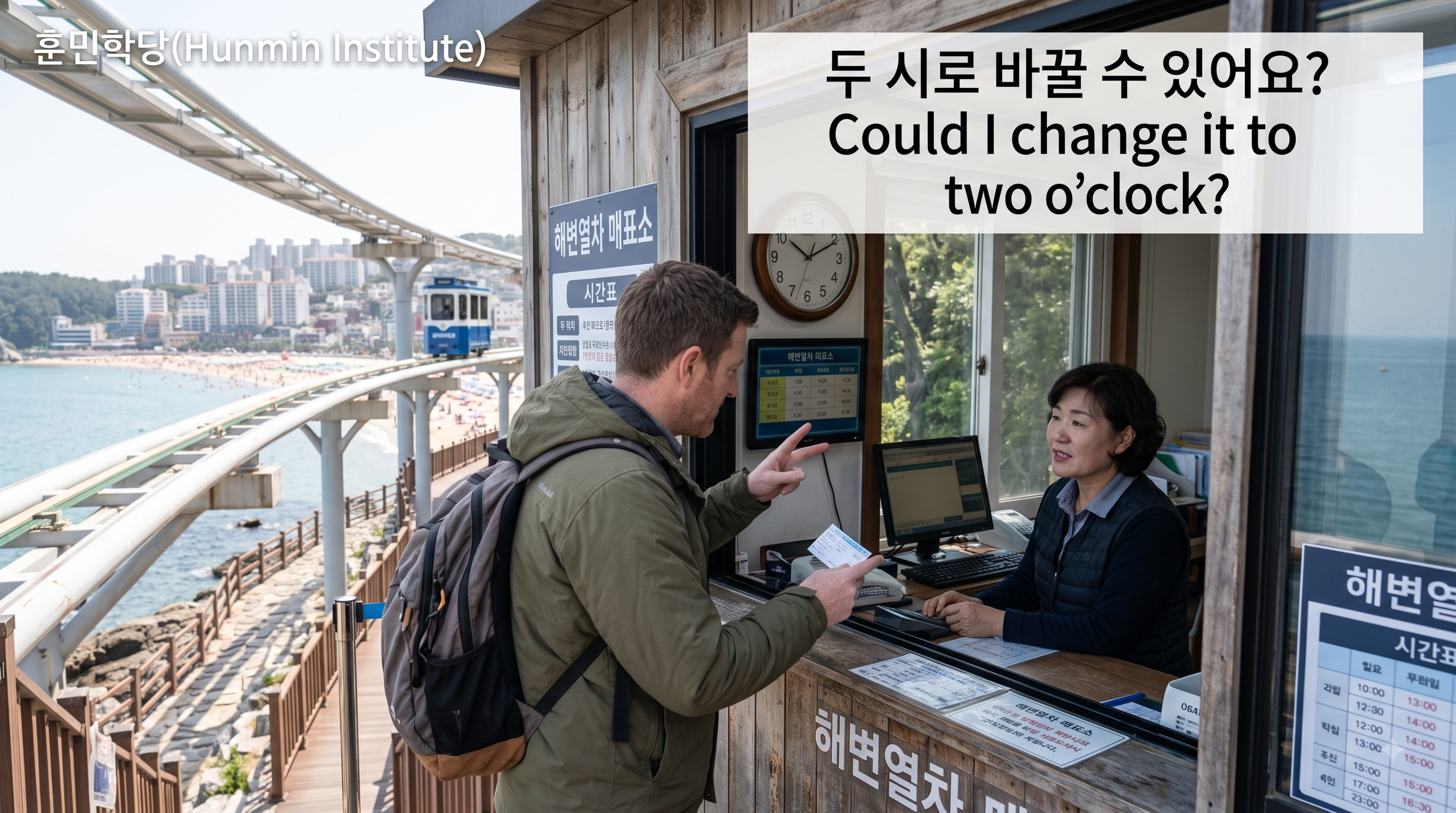
두 시로 바꿀 수 있어요? Could I change it to two o clock? |
| 캡슐은 인원수에 맞춰 타셔야 돼요. The capsule has to match your number. |
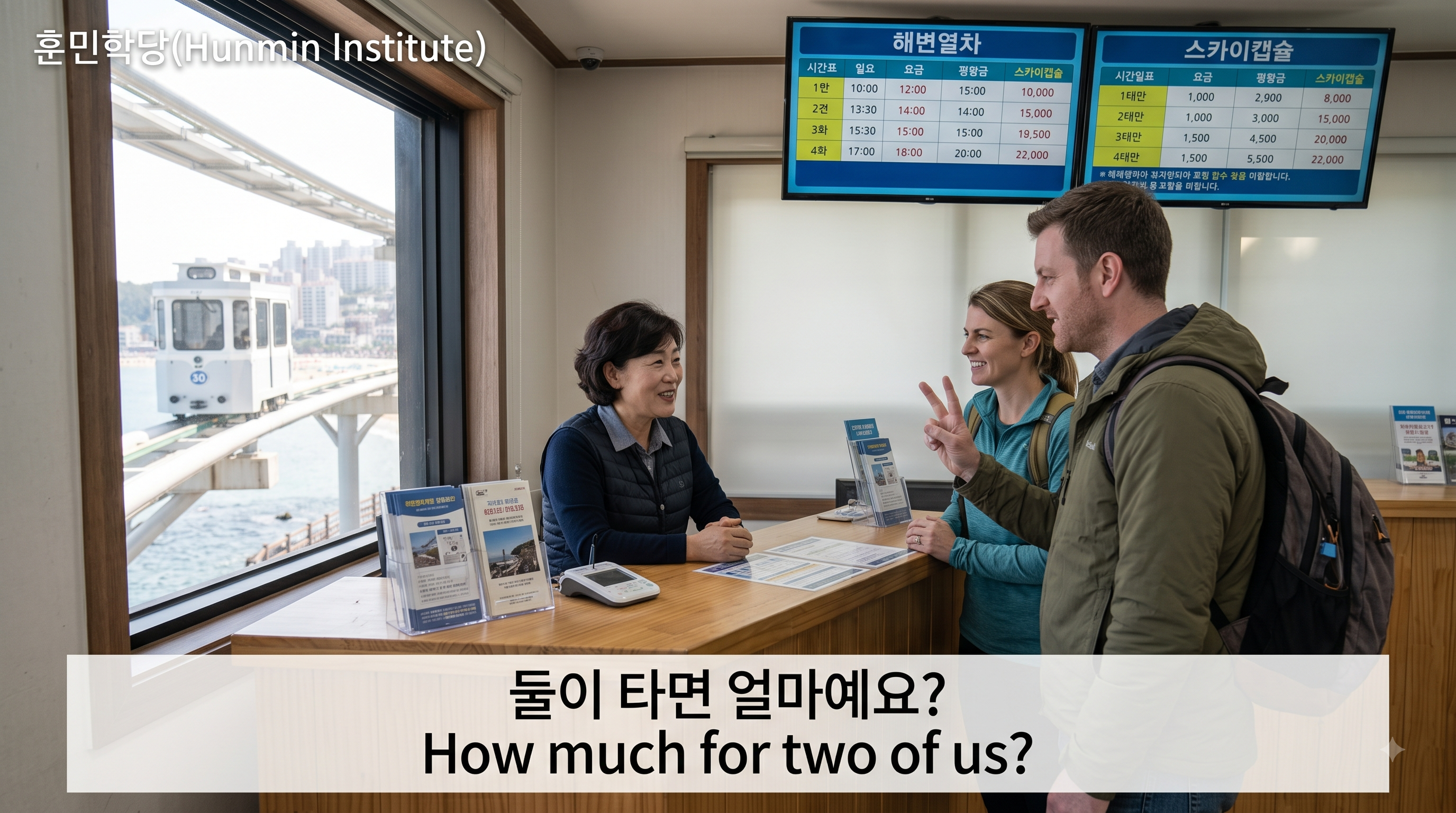
둘이 타면 얼마예요? How much for two of us? |
Swap-in frames: [noun], please / Could I change it to [time]? / How much for [number] of us?
▶ 캡슐은 대 단위, 열차는 인 단위입니다.
▶ The capsule is sold by the car, the train by the head.
스카이캡슐은 한 대를 통째로 삽니다. 인원과 캡슐 등급이 묶여 있어 둘이서 4인승을 살 수는 없고, 혼자 타고 싶어도 가장 작은 2인승 값을 내게 됩니다. 반대로 인원이 많을수록 한 사람 몫은 내려갑니다. 해변열차는 한 사람씩 값이 붙으므로 일행 수와 상관없습니다.
A Sky Capsule is bought whole. The size is tied to your number, so two people cannot buy the 4-seater, and riding alone still means paying for the smallest car, the 2-seater. The larger the group, the smaller each share becomes. The beach train charges per person, so group size makes no difference.
취소는 날짜에 따라 돌려받는 돈이 달라집니다. 사흘 전에는 전액, 이틀 전에는 20퍼센트, 하루 전에는 30퍼센트, 당일 출발 전에는 절반이 공제됩니다. 현장에서 파는 부산시민과 해운대구민 할인은 외국인에게도 열려 있지만 재외동포와 영주, 결혼이민 비자에만 해당해서 유학이나 단기 체류 비자로는 받을 수 없습니다.
Refunds shrink as the date approaches: full three days out, twenty percent deducted two days out, thirty percent the day before, and half on the day itself before departure. The resident discounts sold on site are open to foreign nationals, but only on overseas Korean, permanent residency and marriage migration visas, so a student or short-stay visa does not qualify.
Mipo to Cheongsapo and Songjeong

스카이캡슐은 미포에서 청사포까지 가고, 해변열차는 송정까지 이어집니다. 여기서 표를 잘못 사면 걷게 됩니다. 1회 탑승권은 내리는 순간 끝나기 때문입니다. 미포와 송정은 종점이라 반드시 내려야 하고, 되돌아오려면 2회 탑승권이나 모든역 탑승권이 필요합니다. 송정정거장에서 동해선 송정역까지는 걸어갈 수 있어 다음 소단락으로 이어집니다.
The Sky Capsule runs from Mipo to Cheongsapo; the beach train carries on to Songjeong. Buy the wrong ticket here and you walk, because a single-ride ticket ends the moment you step off. Mipo and Songjeong are terminals where everyone gets off, and returning means a two-ride or all-station ticket. From Songjeong Station it is a walk to the Donghae Line station, which is where the next section picks up.
| 듣는 말 Listening |
하는 말 Speaking |
|---|---|
| 이건 편도라 내리면 다시 못 타세요. This is one-way; once you get off, that is it. |
여기서 걸어갈 수 있어요? Can I walk from here? |
| 여기가 종점이라 다 내리셔야 돼요. This is the terminal, everyone off. |
송정역까지 얼마나 걸려요? How long to Songjeong Station? |
| 여기서 사진 찍고 가세요. Take your photos here. |
여기서 내려도 돼요? Can I get off here? |
Swap-in frames: Can I [verb] from here? / How long to [place]? / Can I [verb] here?
▶ 종점에서는 표가 남아 있어도 내려야 합니다.
▶ At a terminal you get off whether or not your ticket has rides left.
미포와 송정은 노선의 양 끝이라 모두 하차합니다. 되돌아 탈 생각이라면 표 종류를 먼저 확인해야 하고, 1회 탑승권이라면 그 자리에서 여정이 끝납니다. 청사포에서 송정까지는 해안을 따라 걸어가는 사람도 많으니 표를 아끼려면 걷는 쪽을 택하셔도 됩니다.
Mipo and Songjeong are the two ends of the line and everyone disembarks. If you plan to ride back, check what ticket you hold first; with a single ride, the trip ends there. Plenty of people walk the coast from Cheongsapo to Songjeong, so walking is a fair way to save a fare.
송정정거장에서 나와 동해선 송정역으로 옮겨 타면 기장 방향으로 이어집니다. 여기서부터는 관광열차가 아니라 일반 전철이므로 요금도 시간표도 다릅니다.
Walk out of Songjeong Station, cross to the Donghae Line station of the same name, and the route continues toward Gijang. From here it is an ordinary commuter train rather than a tourist one, with its own fares and its own timetable.
번역기가 놓치는 자리What the translator misses
회차와 모든역 탑승권, 표를 살 때 걸리는 두 말
회차 and 모든역 탑승권, two phrases that trip you at the ticket window
회차는 몇 번째로 운행하는 차인지를 가리키는 말입니다. 예매 화면에서 다음 회차라고 하면 다음 차례라는 뜻이고, 시각으로 안내될 때도 있습니다. 번역기는 대개 돌아온다는 뜻으로 옮기지만 방향과는 관계가 없고, 회차 변경이라는 말은 시간을 바꾼다는 뜻입니다.
회차 names which scheduled run a vehicle is on. On a booking screen 다음 회차 means the next run, sometimes shown as a clock time. Translators tend to render it as returning, but it has nothing to do with direction, and 회차 변경 simply means changing your time slot.
모든역 탑승권은 모든 역에 다 간다는 뜻이 아니라 각 역에서 한 번씩 탈 수 있다는 뜻입니다. 열차는 어느 표를 사든 같은 구간을 달리고, 표가 정하는 것은 몇 번 타고 내릴 수 있느냐입니다. 간이역은 종점과 중간 정거장 사이에 있는 작은 승강장을 가리키며 출발 요금이 청사포와 같습니다.
An 모든역 탑승권 does not mean the train visits every station; it means you may board once at each of them. Every ticket rides the same line, and what the ticket sets is how many times you may get on and off. A 간이역 is a small halt between the terminals and the main stops, priced the same as boarding at Cheongsapo.
Riding the Donghae Line to Gijang

동해선은 부산 동쪽 해안을 따라 북쪽으로 올라가는 전철입니다. 송정에서 오시리아를 지나 기장까지 이어지고, 여기서부터 관광지 밀도가 낮아지는 대신 배차 간격이 중요해집니다. 지하철처럼 자주 오지 않으므로 도착하자마자 다음 열차 시각부터 확인하는 편이 좋습니다.
The Donghae Line runs north along the eastern coast of Busan, carrying on from Songjeong past Osiria to Gijang. Attractions thin out from here and the timetable starts to matter instead. Trains do not come as often as the subway, so check the next departure the moment you arrive.
| 듣는 말 Listening |
하는 말 Speaking |
|---|---|
| 방금 한 대 갔어요. One just left. |
다음 열차 몇 시예요? What time is the next train? |
| 시간표는 저기 붙어 있어요. The timetable is posted over there. |
이 열차 기장 가요? Does this train go to Gijang? |
| 반대편에서 타셔야 돼요. You need the other platform. |
막차는 몇 시예요? What time is the last train? |
Swap-in frames: What time is the next [noun]? / Does this [noun] go to [place]? / What time is the last train?
▶ 반대편에서 타셔야 돼요는 방향을 잘못 잡았다는 뜻입니다.
▶ 반대편에서 타셔야 돼요 means you are on the wrong side.
같은 역에서도 위로 가는 열차와 아래로 가는 열차의 승강장이 다릅니다. 개찰구를 나가야 반대편으로 갈 수 있는 역도 있으니 이 말을 들으면 그 자리에서 표시를 다시 확인하시는 편이 좋습니다.
Northbound and southbound trains use different platforms at the same station, and at some stops the only way across is back through the gates. Hear this line and check the signs before moving.
동해선 광역전철은 한국철도공사가 운영하므로 시각표도 그쪽 안내를 봅니다. 계절과 요일에 따라 바뀌므로 승강장 안내판이나 한국철도공사 안내에서 확인하시기 바랍니다. 돌아오는 시간을 먼저 정해 두면 기장에서 머무는 시간을 편하게 쓸 수 있습니다.
The Donghae Line is run by Korail, so its timetable comes from there rather than from the subway operator. Times shift by season and by day of the week, so check the platform board or the Korail listing. Fix your return time first and the hours in Gijang become yours to spend.
Getting a Table on the Gijang Coast
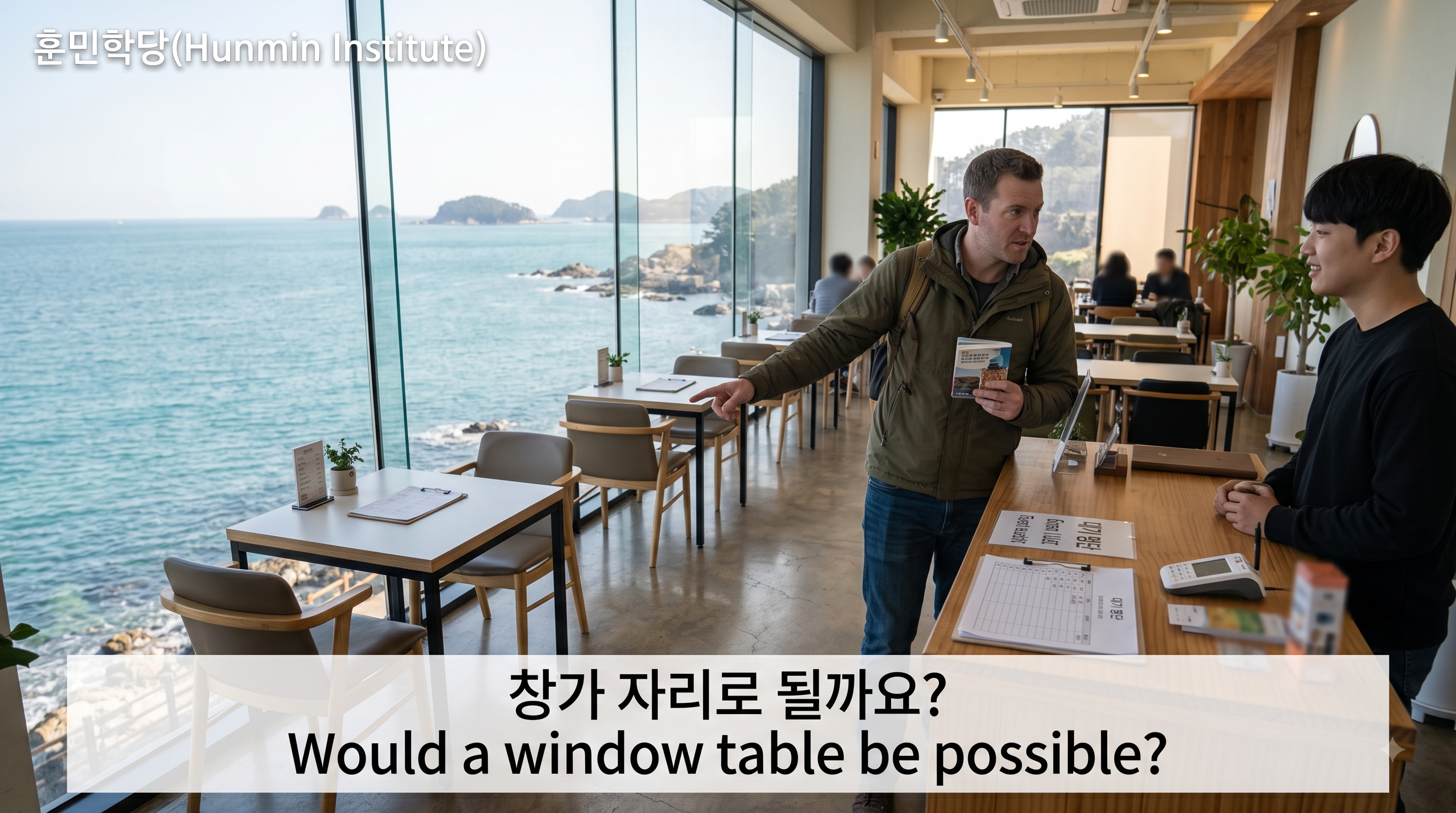
기장 쪽 바닷가에는 바다를 향해 앉는 카페가 늘어서 있습니다. 여기서 필요한 말은 주문이 아니라 자리입니다. 창가 자리가 나느냐, 얼마나 기다려야 하느냐, 이름을 적어야 하느냐가 실제 대화의 대부분입니다.
The Gijang coast is lined with cafes that face the water. What you need here is not ordering but seating. Whether a window table is free, how long the wait runs, whether to leave your name: that is most of the conversation.
| 듣는 말 Listening |
하는 말 Speaking |
|---|---|
| 삼십 분쯤 기다리셔야 돼요. It will be about a thirty minute wait. |
자리 있어요? Do you have a table? |
| 창가는 지금 다 찼어요. The window seats are all taken. |
창가 자리로 될까요? Would a window table be possible? |
| 주문은 저기서 하시면 돼요. You order over there. |
얼마나 걸릴까요? How long will it take? |
Swap-in frames: Do you have [noun]? / Would [noun] be possible? / How long will it [verb]?
▶ 될까요는 부탁을 부드럽게 만드는 말입니다.
▶ 될까요 is what softens a request.
창가 자리 주세요라고 해도 뜻은 통하지만, 창가 자리로 될까요라고 하면 가능한지를 묻는 형태가 되어 상대가 답하기 편해집니다. 안 되면 다른 자리를 권해 주므로 대화가 이어집니다.
창가 자리 주세요 gets the meaning across, but 창가 자리로 될까요 asks whether it is possible, which is easier to answer. If it is not, they offer something else and the exchange keeps going.
부산 동쪽에서는 하루가 시간표 위에서 움직입니다. 캡슐은 예약한 회차에, 열차는 시간표에, 카페는 대기 순번에 걸려 있습니다. 시간을 먼저 묻고 인원을 먼저 말하면 부산 두 편에서 익힌 말이 거의 다 쓰입니다.
A day in eastern Busan runs on schedules: the capsule on its booked slot, the train on its timetable, the cafe on its waiting list. Ask the time first, state your number first, and nearly everything from these two Busan posts gets used.
아래 단어장에서 오늘의 어휘를 정리하고 가시기 바랍니다.
Work through the vocabulary list below before you go.
TOPIK Preview
유형: 토픽 Ⅰ 읽기, 안내문과 다른 내용 고르기
Type: TOPIK I Reading, find the statement that does not match
다음을 읽고 맞지 않는 것을 고르십시오.
Read the notice and choose the statement that does not match.
미포와 송정에서 타면 10,000원
청사포에서 타면 8,000원
내린 뒤에는 다시 탈 수 없습니다
① 청사포에서 타면 팔천 원입니다
② 미포에서 타면 만 원입니다
③ 내린 뒤에 다시 탈 수 있습니다
④ 타는 곳에 따라 값이 다릅니다
정답과 해설은 이 글의 맨 아래에 있습니다. 먼저 스스로 답해 보십시오.
The answer and explanation are at the very bottom of this post. Try it yourself first.
Frequently Asked Questions
Q1. 스카이캡슐은 꼭 예약해야 하나요?
Q1. Do I have to book the Sky Capsule?
A1. Tickets are sold on site, but popular slots go quickly. If your date and time are fixed, book ahead.
Q2. 혼자 여행하면 스카이캡슐을 못 타나요?
Q2. Can I ride the Sky Capsule alone?
A2. You can, but you pay the full price of the smallest car, the 2-seater. Travelling alone, the beach train costs far less.
Q3. 해변열차만 타도 괜찮을까요?
Q3. Is the beach train alone enough?
A3. The coastline looks much the same from the train. The capsule rides an elevated rail, so the eye level differs; if you want both, the package costs less than buying them separately.
Q4. 해운대와 기장을 하루에 다 볼 수 있나요?
Q4. Can I do Haeundae and Gijang in one day?
A4. Possible but tight. The capsule booking anchors the whole day, so finishing Blueline Park in the morning and moving to the Donghae Line after lunch works best.
1. 해안(haean) : (n) coast, shoreline[koʊst]
2. 해변(haebyeon) : (n) beach[biːtʃ]
3. 정거장(jeonggeojang) : (n) station, stop[ˈsteɪʃn]
4. 간이역(ganiyeok) : (n) minor halt, small platform[hɔːlt]
5. 종점(jongjeom) : (n) terminal, final stop[ˈtɜːrmɪnl]
6. 노선(noseon) : (n) route, line[laɪn]
7. 구간(gugan) : (n) fare zone, section[zoʊn]
8. 요금(yogeum) : (n) fare, charge[fer]
9. 교통카드(gyotongkadeu) : (n) transit card[ˈtrænzɪt kɑːrd]
10. 정기승차권(jeonggiseungchagwon) : (n) travel pass[pæs]
11. 환승(hwanseung) : (n) transfer[ˈtrænsfɜːr]
12. 갈아타다(garatada) : (v) to change trains[tʃeɪndʒ]
13. 전철(jeoncheol) : (n) commuter train[kəˈmjuːtər treɪn]
14. 열차(yeolcha) : (n) train[treɪn]
15. 시간표(siganpyo) : (n) timetable[ˈtaɪmteɪbl]
16. 배차(baecha) : (n) service interval[ˈɪntərvl]
17. 막차(makcha) : (n) last train[læst treɪn]
18. 승강장(seunggangjang) : (n) platform[ˈplætfɔːrm]
19. 개찰구(gaechalgu) : (n) ticket gate[ɡeɪt]
20. 반대편(bandaepyeon) : (n) the opposite side[ˈɑːpəzɪt]
21. 방향(banghyang) : (n) direction[dəˈrekʃn]
22. 예매(yemae) : (n) advance booking[ədˈvæns]
23. 예약(yeyak) : (n) reservation[ˌrezərˈveɪʃn]
24. 회차(hoecha) : (n) scheduled run, time slot[slɑːt]
25. 매진(maejin) : (n) sold out[soʊld aʊt]
26. 탑승권(tapseunggwon) : (n) boarding ticket[ˈbɔːrdɪŋ]
27. 편도(pyeondo) : (n) one way[wʌn weɪ]
28. 왕복(wangbok) : (n) round trip[raʊnd trɪp]
29. 탑승(tapseung) : (n) boarding[ˈbɔːrdɪŋ]
30. 하차(hacha) : (n) getting off[ɡet ɔːf]
31. 인승(inseung) : (n) seating capacity of a vehicle[kəˈpæsəti]
32. 인원(inwon) : (n) number of people[ˈnʌmbər]
33. 일행(ilhaeng) : (n) party, companions[ˈpɑːrti]
34. 패키지(paekiji) : (n) package deal[ˈpækɪdʒ]
35. 할인(harin) : (n) discount[ˈdɪskaʊnt]
36. 공제(gongje) : (n) deduction[dɪˈdʌkʃn]
37. 환불(hwanbul) : (n) refund[ˈriːfʌnd]
38. 취소(chwiso) : (n) cancellation[ˌkænsəˈleɪʃn]
39. 현장(hyeonjang) : (n) on site, in person[ɑːn saɪt]
40. 발권(balgwon) : (n) ticket issuing[ˈtɪkɪt]
41. 비자(bija) : (n) visa[ˈviːzə]
42. 거주(geoju) : (n) residence[ˈrezɪdəns]
43. 전망(jeonmang) : (n) view, outlook[vjuː]
44. 창가(changga) : (n) by the window[ˈwɪndoʊ]
45. 자리(jari) : (n) seat, table[siːt]
46. 대기(daegi) : (n) waiting[ˈweɪtɪŋ]
47. 순번(sunbeon) : (n) turn in a queue[tɜːrn]
48. 주문(jumun) : (n) order[ˈɔːrdər]
49. 택시(taeksi) : (n) taxi[ˈtæksi]
50. 출구(chulgu) : (n) exit[ˈeksɪt]
51. 걸어가다(georeogada) : (v) to go on foot[wɔːk]
52. 내리다(naerida) : (v) to get off[ɡet ɔːf]
53. 바꾸다(bakkuda) : (v) to change something[tʃeɪndʒ]
54. 정하다(jeonghada) : (v) to decide, to fix[dɪˈsaɪd]
55. 묶이다(mukkida) : (v) to be tied together[taɪd]
56. 붙다(butda) : (v) to be attached, to apply[əˈtætʃt]
57. 차다(chada) : (v) to be full[fʊl]
58. 기다리다(gidarida) : (v) to wait[weɪt]
Official Sources
해운대블루라인파크
Haeundae Blueline Park
https://www.bluelinepark.com
부산교통공사
Busan Transportation Corporation
https://www.humetro.busan.kr
한국철도공사
Korail
https://www.letskorail.com
기장군
Gijang County
https://www.gijang.go.kr
부산광역시
Busan Metropolitan City
https://www.busan.go.kr
TOPIK Preview Answer
정답 ③ 내린 뒤에 다시 탈 수 있습니다
Answer: ③ 내린 뒤에 다시 탈 수 있습니다
1회 탑승권은 내린 뒤에 다시 탈 수 없다고 했으므로 맞지 않습니다. 청사포 팔천 원과 미포 만 원은 안내문에 그대로 나와 있고, 타는 곳에 따라 값이 다르다는 설명도 안내문과 일치합니다.
The notice states that a single-ride ticket cannot be used again after you get off, so this one does not match. The 8,000 won from Cheongsapo and 10,000 won from Mipo appear as written, and the fare does indeed depend on where you board.
※본 콘텐츠(원고, 이미지, 예문 포함)는 저작권법에 의해 보호받는 훈민학당의 저작물입니다. 무단 복제, 전재, 재배포를 금합니다.
This content (manuscript, images, and example sentences) is the copyrighted property of Hunmin Institute, protected under copyright law. Unauthorized copying, reproduction, or redistribution is prohibited.
'K-Language(한국어교육)' 카테고리의 다른 글
| Busan Old Town: Jagalchi, Gukje Market and Korean (0) | 2026.08.13 |
|---|---|
| Jeonju Travel Guide: Hanok Village and How to Order (0) | 2026.08.12 |
| Gyeongju Travel Guide: Free Sites and Bus Korean (0) | 2026.08.12 |
| Korean Part-Time Job Interview Phrases for Foreigners (0) | 2026.08.11 |
| Korean Optician Phrases: No Prescription Needed (0) | 2026.08.09 |


