Jeonju Travel Guide: Hanok Village and How to Order
전주는 그릇이 아니라 상으로 시키는 도시입니다
Hanbok is rented by the hour, gukbap by the bowl, and makgeolli by the table.
Jeonju changes its unit at every stop, and the Korean changes with it.
한복은 시간으로 빌리고 국밥은 그릇으로 시키지만 막걸리집은 상으로 시킵니다.
단위가 바뀔 때마다 달라지는 전주의 한국어를 장면별로 익힙니다.
All learning services for the teaching materials published on this blog are free for blog subscribers on the Hunmin Institute website ↗.
이 글에서 배우는 핵심 회화
Key Expressions in This Lesson
전주에서 오가는 말은 대부분 무엇을 얼마나 시키느냐에 걸려 있습니다. 아래 여덟 문장은 좌우가 한 쌍의 대화가 아니라 각각 따로 익히는 문장입니다. 먼저 눈에 담고 본문으로 들어가십시오.
Most of the talking in Jeonju turns on what you order and how much of it. The two columns are not paired dialogue; each sentence is learned on its own. Take them in first, then move into the main text.
| 듣는 말 Listening |
하는 말 Speaking |
|---|---|
| 내리실 때 카드 한 번 더 찍어 주세요. [naerisil ttae kadeu han beon deo jjigeo juseyo] Tap your card again when you get off. |
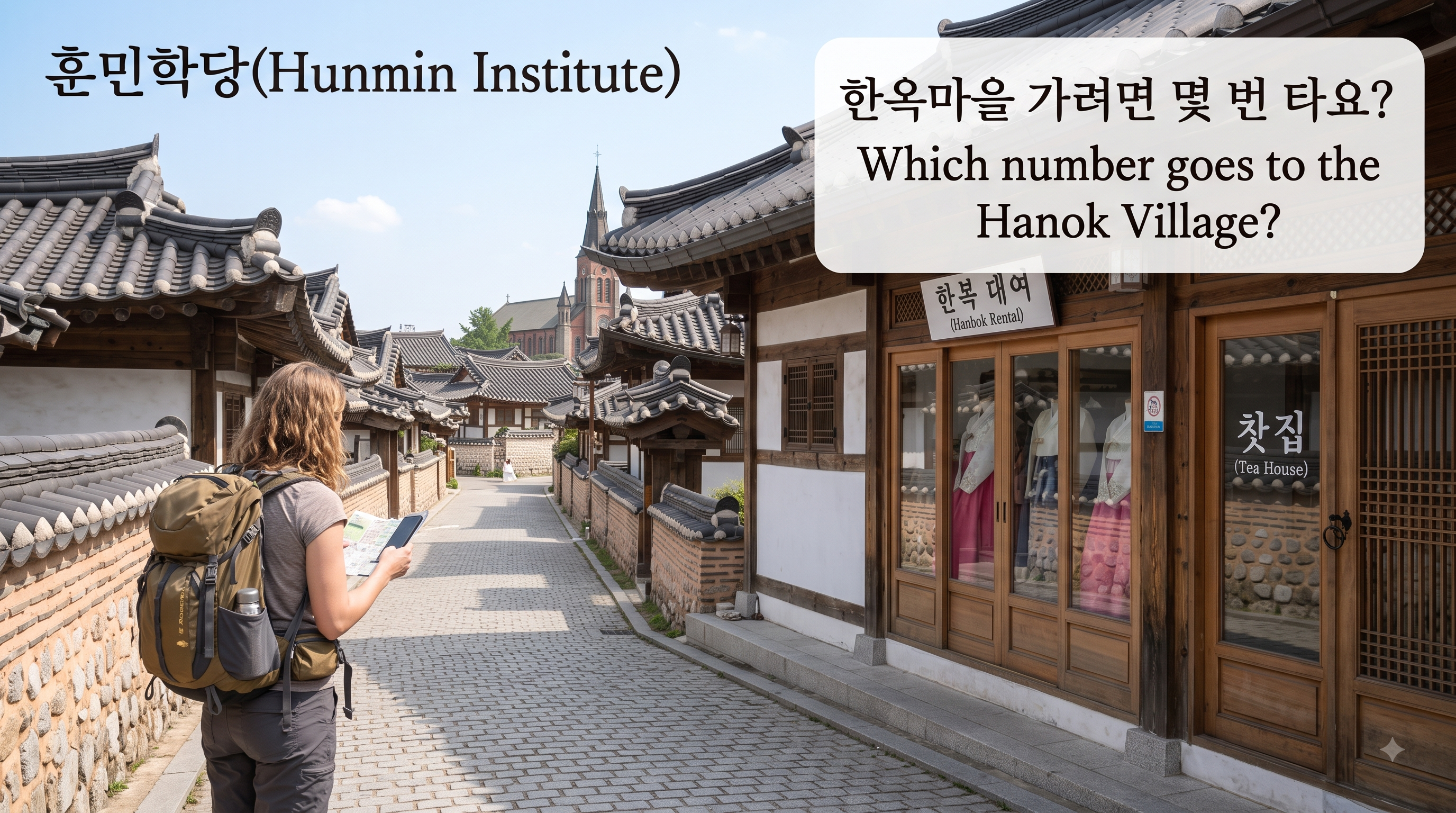
한옥마을 가려면 몇 번 타요? [hanongmaeul garyeomyeon myeot beon tayo] Which number goes to the Hanok Village? |
| 여기는 신발 벗고 들어가셔야 돼요. [yeogineun sinbal beotgo deureogasyeoya dwaeyo] You need to take your shoes off here. |
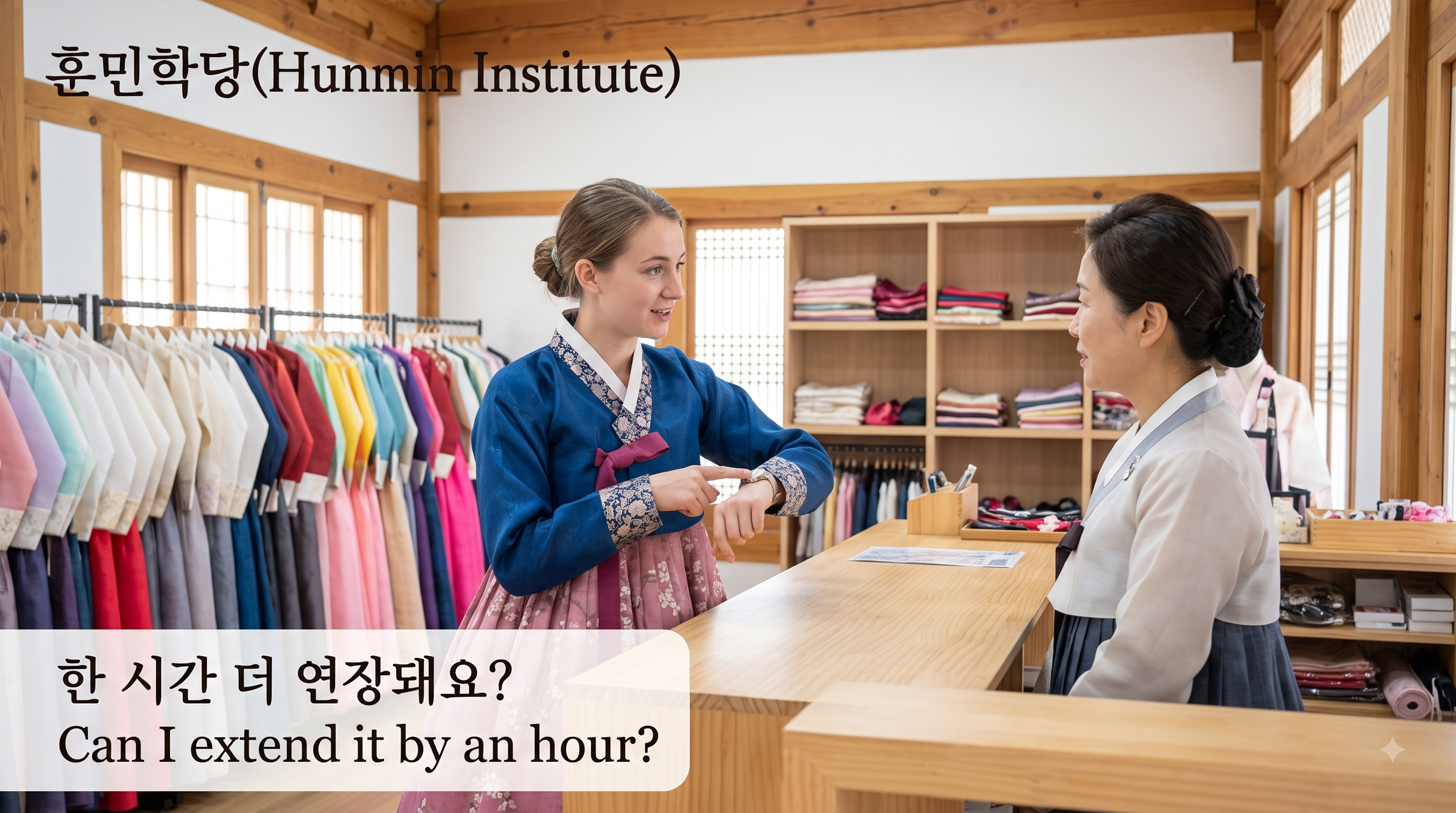
한 시간 더 연장돼요? [han sigan deo yeonjangdwaeyo] Can I extend it by an hour? |
| 안 맵게 해 드릴까요? [an maepge hae deurilkkayo] Would you like it mild? |
고추장 따로 주세요. [gochujang ttaro juseyo] Gochujang on the side, please. |
| 저희는 상으로만 나가요. [jeohuineun sangeuroman nagayo] We only serve by the table. |
이거 하나 얼마예요? [igeo hana eolmayeyo] How much is one of these? |
여덟 문장은 소단락 1부터 5까지에서 나머지 문장과 함께 다룹니다.
All eight lines are covered across Sections 1 to 5, together with the rest.
1. 전주역에서 한옥마을까지
From Jeonju Station to the Hanok Village
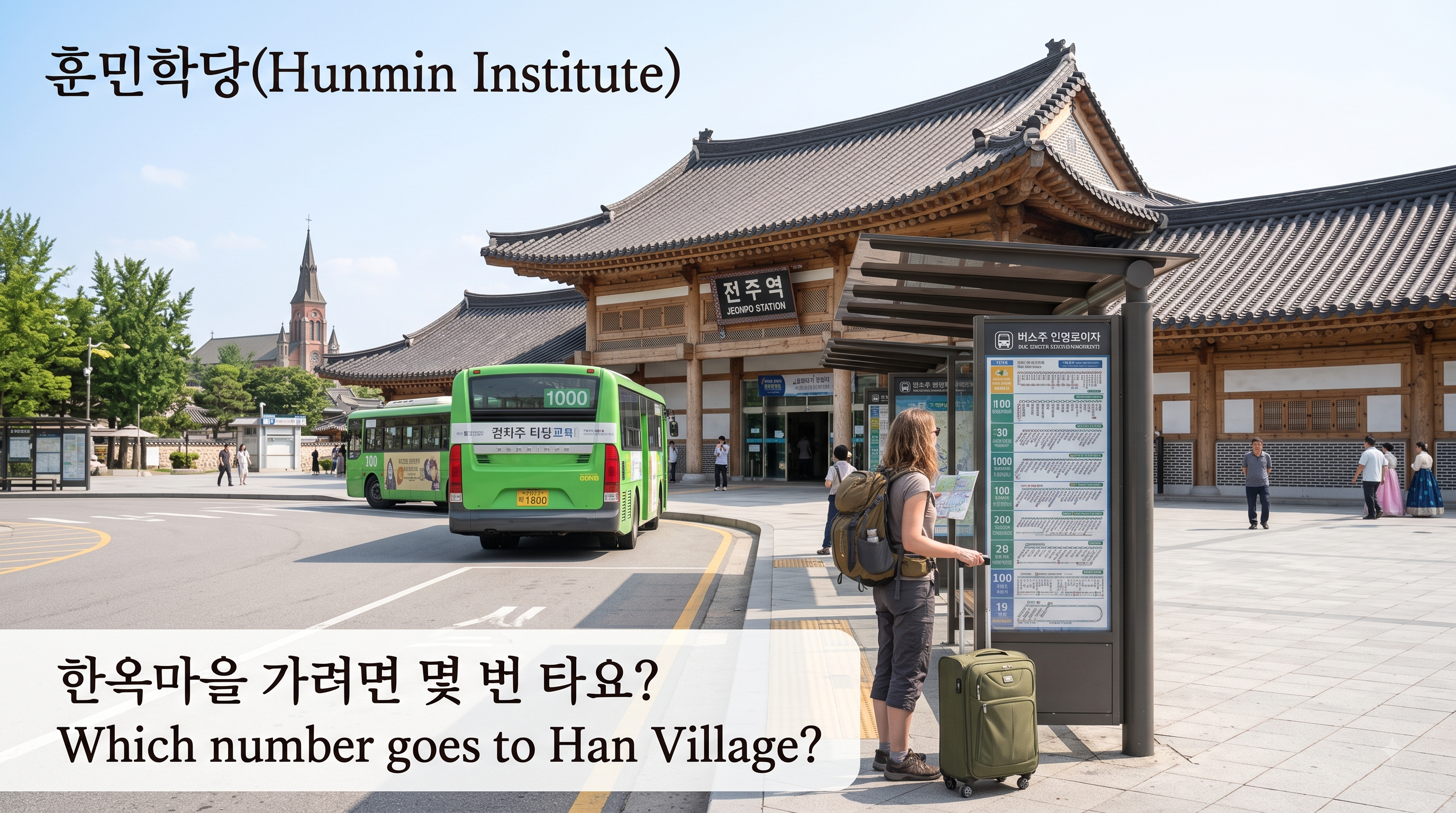
전주 여행은 사실상 한옥마을 한 곳에서 시작해 그 주변으로 퍼집니다. 전주역에서 한옥마을까지는 버스로 이십 분 남짓이고, 도착한 뒤로는 대부분 걸어 다니게 됩니다. 그래서 처음에 고를 것은 코스가 아니라 어떤 버스를 타느냐입니다.
A trip to Jeonju effectively starts at the Hanok Village and spreads out from there. The ride from Jeonju Station takes a little over twenty minutes, and once you arrive you will mostly be on foot. So the first choice is not an itinerary but a bus.
| 노선 Route |
성격 Character |
쓰는 자리 When to use it |
|---|---|---|
| 119번 No. 119 |
전주역과 한옥마을을 최단으로 잇는 일반 노선 The ordinary route, the shortest link between station and village |
바로 한옥마을로 갈 때 When you want to get there directly |
| 999번 No. 999 |
터미널과 시내를 도는 관광형, 배차 약 55분 A tourist loop via the terminal and city center, roughly every 55 minutes |
시간이 넉넉하고 시내를 둘러볼 때 When time is loose and you want to see the city |
| 구분 Fare type |
요금 Amount |
|---|---|
| 시내버스 어른 City bus, adult |
현금 1,700원, 카드 1,650원 1,700 won cash, 1,650 won by card |
| 시내버스 청소년 City bus, youth |
현금 1,350원 1,350 won cash |
| 정기권 1일권 Pass, one day |
6,000원 6,000 won |
| 정기권 2일권 Pass, two days |
11,000원 11,000 won |
여기서 쓰는 표현부터 배워봅시다. 버스 안과 정류장에서 오가는 말입니다.
Start with the expressions you will use here. These go back and forth on the bus and at the stop.
| 듣는 말 Listening |
하는 말 Speaking |
|---|---|
| 내리실 때 카드 한 번 더 찍어 주세요. [naerisil ttae kadeu han beon deo jjigeo juseyo] Tap your card again when you get off. |
한옥마을 가려면 몇 번 타요? [hanongmaeul garyeomyeon myeot beon tayo] Which number goes to the Hanok Village? |
| 이거 타시면 돌아서 가요. [igeo tasimyeon doraseo gayo] That one takes the long way round. |
이게 더 빨라요? [ige deo ppallayo] Is this one faster? |
| 이 카드는 여기서 안 돼요. [i kadeuneun yeogiseo an dwaeyo] That card does not work here. |
하루짜리도 있어요? [harujjarido isseoyo] Is there a one-day pass? |
응용 Apply It
↳ [장소] 가려면 몇 번 타요?
[place] garyeomyeon myeot beon tayo
Which number goes to [place]?
ex 한옥마을 가려면 몇 번 타요?/남부시장 가려면 몇 번 타요?/터미널 가려면 몇 번 타요?
ROM hanongmaeul garyeomyeon myeot beon tayo/nambusijang garyeomyeon myeot beon tayo/teomineol garyeomyeon myeot beon tayo
EN Which number goes to the Hanok Village?/Which number goes to Nambu Market?/Which number goes to the terminal?
▶1일권은 네 번 이상 탈 계획일 때만 앞섭니다.
The one-day pass only wins if you plan on four rides or more.
카드로 네 번 타면 6,600원이므로 6,000원짜리 1일권이 그때부터 이깁니다. 한옥마을 안에서만 걸어 다니는 하루라면 두세 번에 그쳐 낱장이 쌉니다. 정기권은 전주와 완주에서만 쓰이므로 다른 도시로 넘어가면 쓸 수 없고, 요금은 개정될 수 있으니 출발 전에 확인하시기 바랍니다.
Four card rides come to 6,600 won, so the 6,000 won pass pulls ahead from there. A day spent walking inside the village usually means two or three rides, and single fares stay cheaper. The pass is valid only in Jeonju and Wanju, and fares can be revised, so check before you travel.
내릴 때 카드를 한 번 더 찍으라는 말은 환승 때문입니다. 찍지 않으면 다음 버스에서 요금이 다시 붙습니다. 이게 더 빨라요는 두 노선을 두고 고를 때 쓰는 말이며, 돌아서 간다는 대답이 오면 시간이 더 걸린다는 뜻입니다.
Tapping again on the way out is what registers the transfer. Skip it and the next bus charges you in full. 이게 더 빨라요 is what you say when choosing between two routes, and if the answer is 돌아서 가요, that route takes longer.
2. 한옥마을에서 표를 사는 곳과 한복을 빌리는 곳
Where You Pay and Where You Rent
한옥마을에서 입장료를 받는 곳은 경기전 한 곳입니다. 조선을 연 태조의 어진을 모신 곳이고 안에 어진박물관이 있습니다. 전동성당과 전주향교는 무료이며 골목 자체도 걸어 다니는 데 돈이 들지 않습니다. 대신 지갑이 열리는 자리가 따로 있는데 한복 대여점입니다.
Only one place in the Hanok Village charges admission, and that is Gyeonggijeon, the shrine holding the portrait of the king who founded Joseon, with a portrait museum inside. Jeondong Cathedral and the Confucian school are free, and the lanes themselves cost nothing to walk. The wallet opens somewhere else here: the hanbok rental shops.
| 장소 Place |
어른 요금 Adult fee |
운영 Hours |
|---|---|---|
| 경기전 Gyeonggijeon Shrine |
3,000원 3,000 won |
3월부터 10월은 아홉 시부터 일곱 시, 11월부터 2월은 여섯 시까지, 매표는 종료 한 시간 전 마감 March to October 9 to 7, November to February until 6, ticket sales close an hour before |
| 전동성당 Jeondong Catholic Church |
무료 Free |
미사 시간에는 관람이 제한됩니다 Viewing is limited during mass |
| 전주향교 Jeonju Confucian School |
무료 Free |
한옥마을 동쪽 끝에 있습니다 At the eastern edge of the village |
여기서 쓰는 표현부터 배워봅시다. 대여점에서 오가는 말입니다.
Start with the expressions you will use here. These go back and forth at the rental shop.
| 듣는 말 Listening |
하는 말 Speaking |
|---|---|
| 여기는 신발 벗고 들어가셔야 돼요. [yeogineun sinbal beotgo deureogasyeoya dwaeyo] You need to take your shoes off here. |
한 시간 더 연장돼요? [han sigan deo yeonjangdwaeyo] Can I extend it by an hour? |
| 반납은 여기로 다시 오시면 돼요. [bannabeun yeogiro dasi osimyeon dwaeyo] Just come back here to return it. |
사진 찍어 주실 수 있어요? [sajin jjigeo jusil su isseoyo] Could you take a photo for us? |
| 짐은 여기 두고 가셔도 돼요. [jimeun yeogi dugo gasyeodo dwaeyo] You can leave your bags here. |
늦으면 어떻게 돼요? [neujeumyeon eotteoke dwaeyo] What happens if I am late? |
▶한복은 빌리는 순간보다 돌려주는 순간에 말이 더 필요합니다.
Hanbok needs more Korean at the return than at the rental.
요금은 대부분 시간 단위로 붙어 있어 고르기만 하면 되지만 문제는 그 뒤입니다. 연장돼요는 시간을 더 쓸 수 있느냐는 뜻이고, 늦으면 어떻게 돼요는 추가 요금을 미리 확인하는 말입니다. 두 문장을 먼저 물어 두면 반납 시각에 쫓기지 않습니다.
Prices are set by the hour, so picking one is easy; what follows is not. 연장돼요 asks whether you can keep it longer, and 늦으면 어떻게 돼요 checks the late charge before it happens. Ask both at the counter and the return time stops chasing you.
한옥 실내에 들어갈 때는 신발을 벗습니다. 벗고 들어가셔야 돼요는 부탁이 아니라 그렇게 해야 한다는 안내이며, 대여점과 찻집, 체험관에서 자주 듣습니다. 대여점에 짐을 맡기고 나가는 것도 대개 가능하므로 물어보시면 됩니다.
You take your shoes off before stepping inside a hanok. 벗고 들어가셔야 돼요 is not a request but a rule stated politely, and you will hear it at rental shops, tea houses and craft studios. Most rental shops will also hold your bags, so it is worth asking.
3. 비빔밥과 콩나물국밥, 그릇으로 시키는 자리
Bibimbap and Gukbap, Ordered by the Bowl
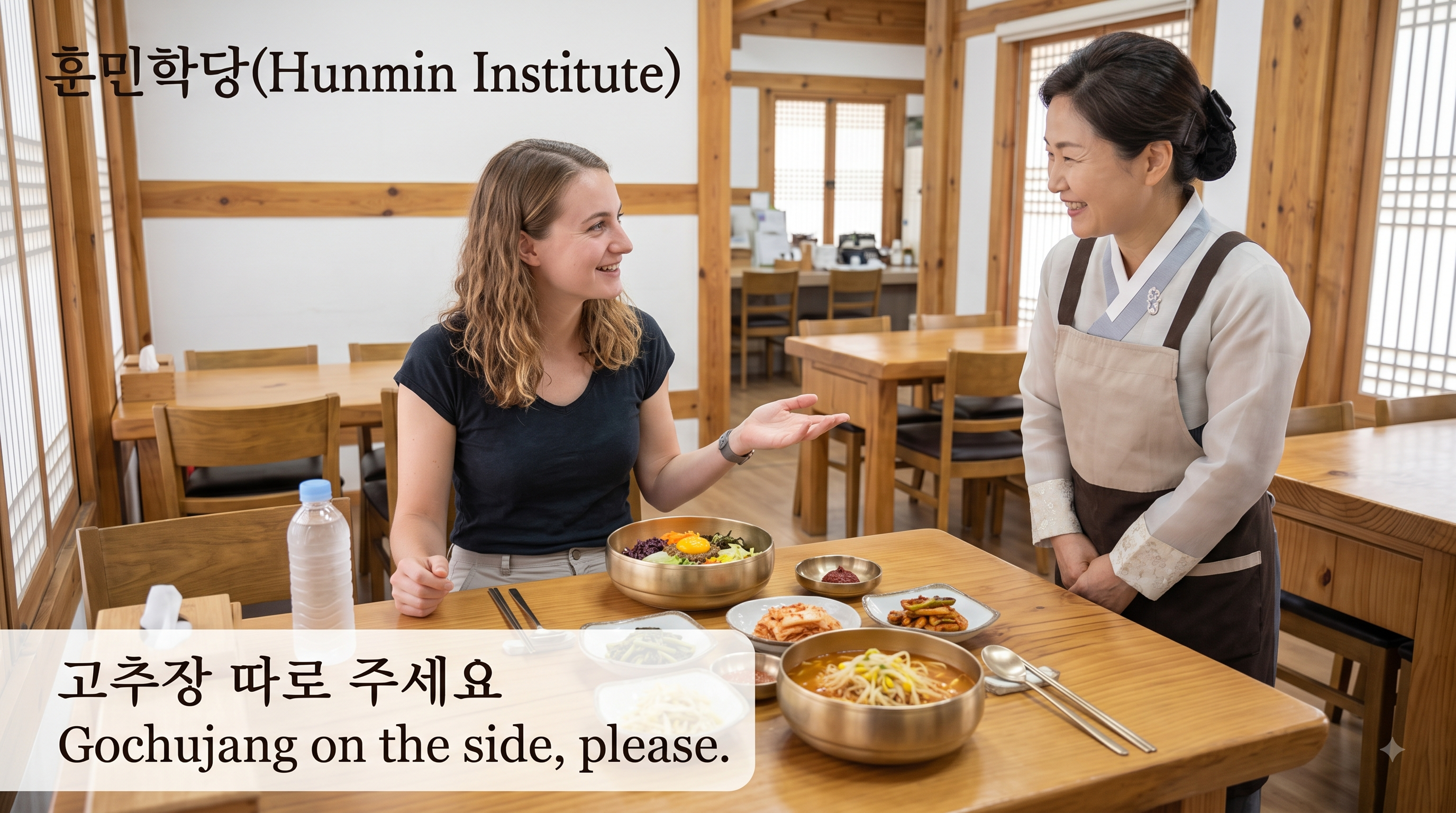
전주에서 밥은 그릇 단위로 시킵니다. 비빔밥은 고추장을 넣어 비벼 나오고, 콩나물국밥은 뜨겁게 나옵니다. 여기서 한국어가 필요한 지점은 메뉴 이름이 아니라 맵기와 재료를 조절하는 한마디입니다.
Rice dishes in Jeonju come by the bowl. Bibimbap arrives mixed with gochujang, and bean sprout soup arrives scalding. The Korean you need here is not the name of the dish but the one line that adjusts the heat and the ingredients.
여기서 쓰는 표현부터 배워봅시다. 식당에서 주문할 때 오가는 말입니다.
Start with the expressions you will use here. These come up as you order at the table.
| 듣는 말 Listening |
하는 말 Speaking |
|---|---|
| 안 맵게 해 드릴까요? [an maepge hae deurilkkayo] Would you like it mild? |
고추장 따로 주세요. [gochujang ttaro juseyo] Gochujang on the side, please. |
| 비벼 드릴까요? [bibyeo deurilkkayo] Shall I mix it for you? |
안 맵게 해 주세요. [an maepge hae juseyo] Mild, please. |
| 뜨거우니까 조심하세요. [tteugeounikka josimhaseyo] Careful, it is very hot. |
이거 빼고 주실 수 있어요? [igeo ppaego jusil su isseoyo] Could you leave this out? |
▶따로 주세요 한마디면 맵기를 스스로 정할 수 있습니다.
One line, 따로 주세요, hands the heat back to you.
고추장을 아예 빼 달라고 하면 맛의 축이 사라지지만, 따로 달라고 하면 넣는 양을 직접 정하게 됩니다. 따로는 접시를 나눠 달라는 뜻이 아니라 섞지 말고 내달라는 뜻이며 소스와 국물, 반찬에 두루 쓰입니다.
Leaving gochujang out entirely removes the axis of the dish; asking for it on the side lets you decide the amount. 따로 does not mean split it onto another plate, it means serve it unmixed, and the same word works for sauces, broth and side dishes.
비벼 드릴까요는 대신 비벼 주겠다는 제안입니다. 직접 비비고 싶으면 제가 할게요라고 답하시면 됩니다. 빼고 주세요는 재료를 뺄 때 쓰며 알레르기나 채식 때문에 못 드시는 재료가 있다면 이 문장을 먼저 익혀 두시는 편이 안전합니다.
비벼 드릴까요 offers to mix the bowl for you; if you would rather do it yourself, answer 제가 할게요. 빼고 주세요 removes an ingredient, and if an allergy or a diet rules something out, this is the sentence to learn first.
4. 남부시장과 야시장, 낱개로 사는 자리
Nambu Market and the Night Market
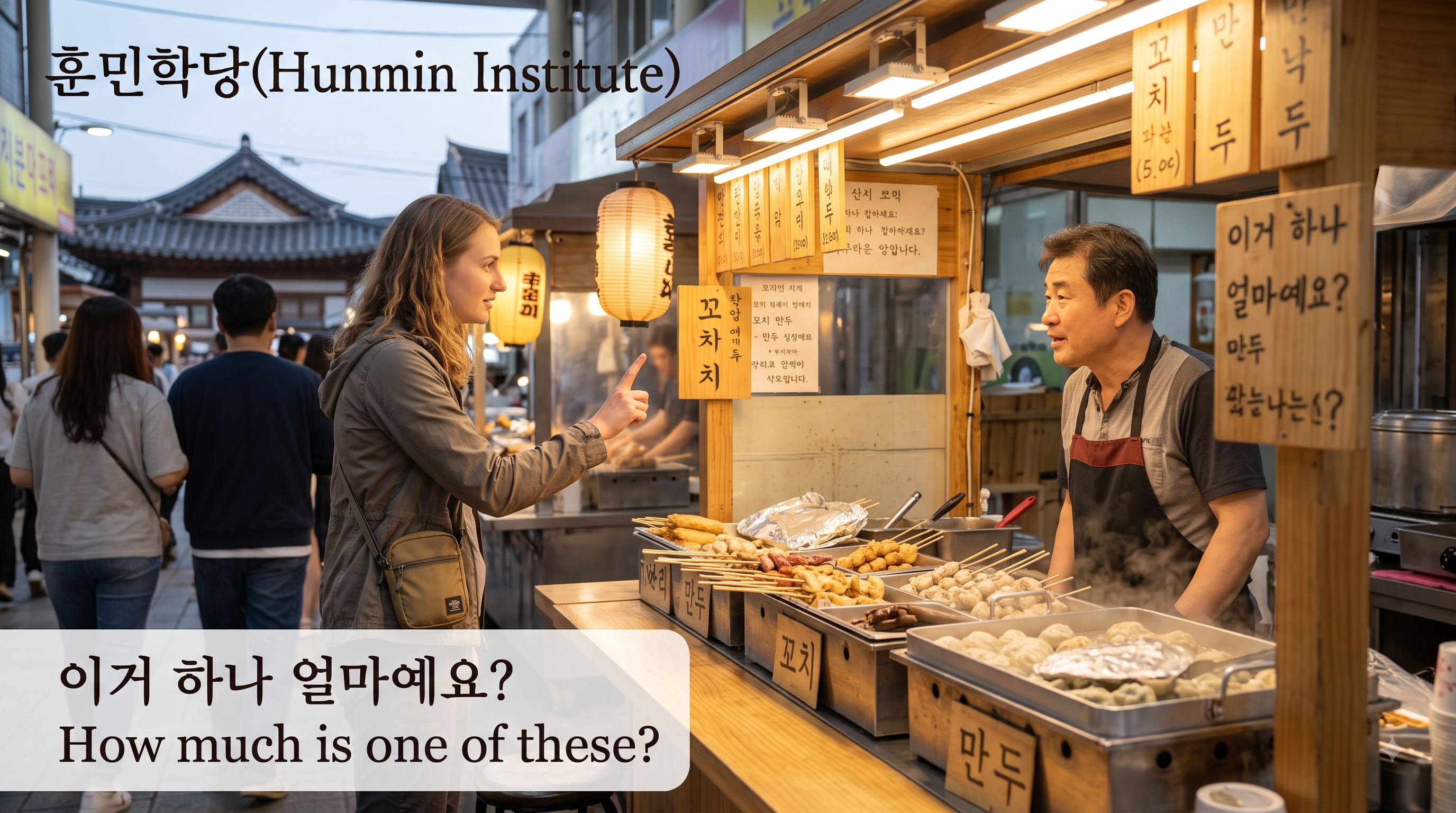
한옥마을 남쪽 풍남문을 지나면 남부시장입니다. 낮에는 일반 시장이고, 금요일과 토요일 저녁에는 같은 자리에 야시장이 섭니다. 오후 다섯 시부터 밤 열한 시 반까지이며 먹거리 매대가 줄지어 늘어섭니다. 여기서는 값을 묻고 개수를 말하는 말이 계속 필요합니다.
Pass Pungnammun Gate at the southern edge of the village and you reach Nambu Market. By day it is an ordinary market; on Friday and Saturday evenings a night market fills the same aisles, five in the afternoon until half past eleven, lined with food stalls. Here you keep asking prices and naming quantities.
여기서 쓰는 표현부터 배워봅시다. 매대 앞에서 오가는 말입니다.
Start with the expressions you will use here. These come up in front of the stalls.
| 듣는 말 Listening |
하는 말 Speaking |
|---|---|
| 두 개 사시면 오천 원이에요. [du gae sasimyeon ocheon wonieyo] Two for five thousand. |
이거 하나 얼마예요? [igeo hana eolmayeyo] How much is one of these? |
| 현금만 받아요. [hyeongeumman badayo] Cash only. |
하나만 주세요. [hanaman juseyo] Just one, please. |
| 여기서 드시고 가세요. [yeogiseo deusigo gaseyo] You can eat it right here. |
이거 매운 거예요? [igeo maeun geoyeyo] Is this a spicy one? |
▶하나만 주세요의 만이 개수를 지킵니다.
The 만 in 하나만 주세요 is what holds the number at one.
시장에서는 두 개 사면 싸다는 말이 자주 돌아옵니다. 하나만 주세요라고 하면 그것만 사겠다는 뜻이 분명해집니다. 만을 빼고 하나 주세요라고 하면 더 권하는 말이 이어지기도 합니다.
Stalls will often tell you two costs less. 하나만 주세요 makes it clear that one is all you want. Drop the 만 and say 하나 주세요, and the offer to sell you more usually keeps coming.
매대에는 현금만 받는 곳이 남아 있습니다. 야시장은 금요일과 토요일 저녁에만 서므로 다른 요일에 오시면 낮 시장만 보게 됩니다. 운영 일정은 사정에 따라 바뀌므로 전주시 관광 안내에서 확인하시기 바랍니다.
Some stalls still take cash only. The night market runs on Friday and Saturday evenings alone, so any other day you will see the daytime market instead. Schedules do shift, so check the Jeonju city tourism information before you go.
5. 막걸리 골목, 상으로 시키는 자리
The Makgeolli Alley, Ordered by the Table
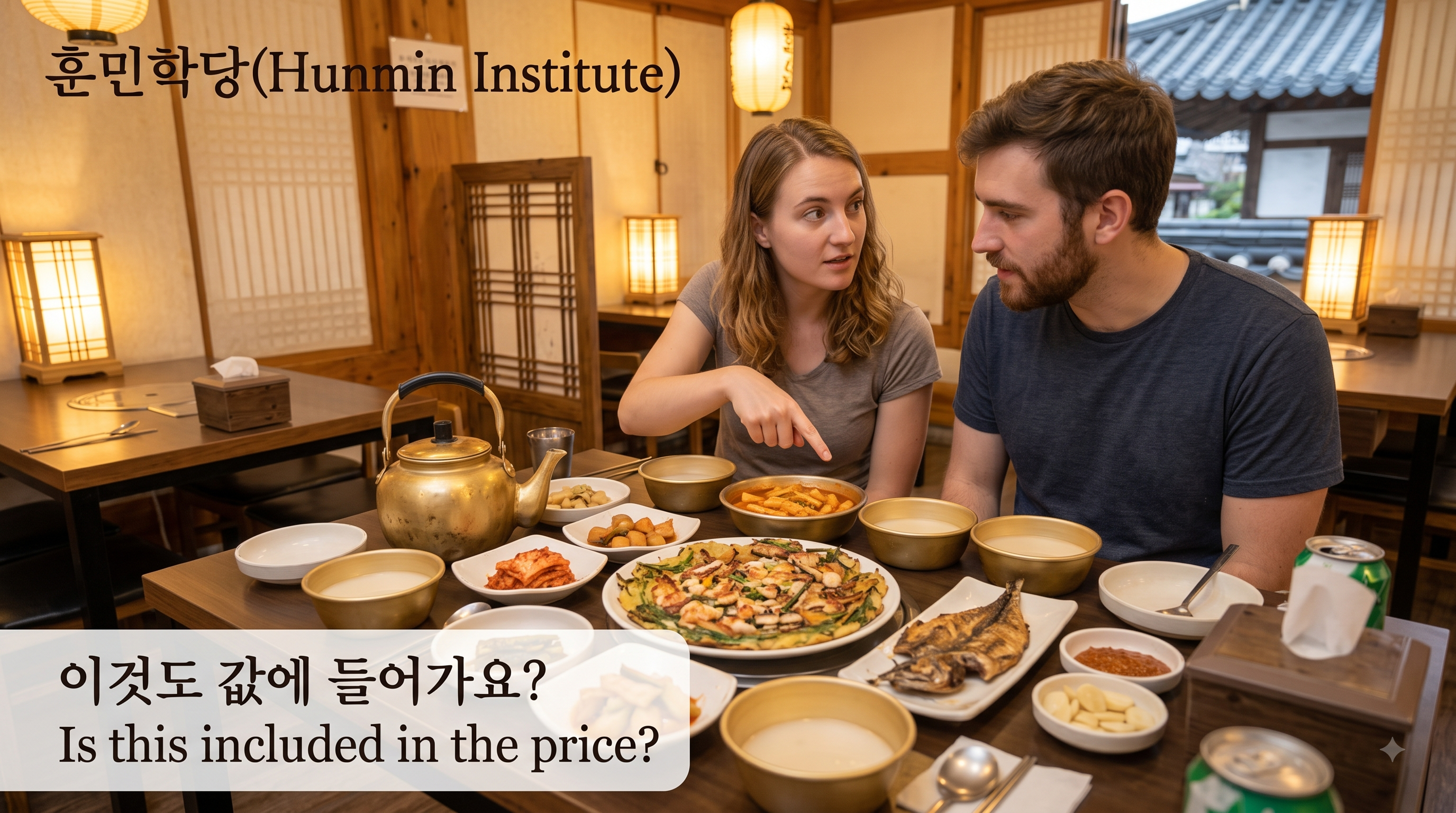
한옥마을에서 걸어 나가면 경원동 일대에 막걸리집이 모여 있습니다. 여기서 주문 단위가 바뀝니다. 잔이나 병이 아니라 상입니다. 인원에 맞는 상을 시키면 주전자와 함께 안주가 한꺼번에 차려져 나오고, 주전자를 더 시키면 안주가 더 나옵니다.
Walk out of the Hanok Village and makgeolli houses cluster around Gyeongwon-dong. The unit of ordering changes here. Not a glass, not a bottle, but a table. Order the table that matches your group and a kettle arrives with a full spread of dishes at once; order another kettle and more dishes follow.
여기서 쓰는 표현부터 배워봅시다. 가게에 들어서고 시킬 때 오가는 말입니다.
Start with the expressions you will use here. These come up as you walk in and order.
| 듣는 말 Listening |
하는 말 Speaking |
|---|---|
| 저희는 상으로만 나가요. [jeohuineun sangeuroman nagayo] We only serve by the table. |
두 명인데 괜찮아요? [du myeonginde gwaenchanayo] There are two of us, is that all right? |
| 몇 분이세요? [myeot buniseyo] How many in your party? |
한 주전자 더 주세요. [han jujeonja deo juseyo] One more kettle, please. |
| 안주는 따로 안 시키셔도 돼요. [anjuneun ttaro an sikisyeodo dwaeyo] You do not need to order dishes separately. |
이것도 값에 들어가요? [igeotdo gapse deureogayo] Is this included in the price? |
▶상은 최소 주문 단위이므로 인원부터 말해야 합니다.
The table is the minimum order, so the head count comes first.
몇 분이세요라는 물음이 먼저 오는 이유가 여기 있습니다. 상이 인원에 맞춰 짜여 있어 두 명이면 2인상, 네 명이면 3인상이나 4인상으로 나갑니다. 혼자 들어가는 것은 사실상 어려우므로 일행이 없다면 국밥집이나 카페 쪽이 낫습니다.
That is why 몇 분이세요 comes before anything else. Tables are built around the head count: two people get a two-person table, four get the three or four. Going in alone is not really workable, so without company a gukbap house or a cafe is the better call.
안주를 따로 안 시켜도 된다는 말은 공짜라는 뜻이 아니라 이미 상값에 들어 있다는 뜻입니다. 헷갈리면 이것도 값에 들어가요라고 확인하시면 됩니다. 가게마다 상 구성과 값이 다르므로 들어가기 전에 입구의 차림표를 보시는 편이 좋습니다.
Being told you need not order dishes separately does not mean they are free; it means they are already inside the table price. If you are unsure, ask 이것도 값에 들어가요. Every house builds its table differently, so read the board at the door before you sit down.
전주에서 하루를 보내면 같은 물음을 단위만 바꿔 여러 번 하게 됩니다. 몇 번 타요, 몇 시간 빌려요, 하나 얼마예요, 몇 명이에요입니다. 단위를 먼저 말하는 습관이 붙으면 어느 가게에 들어가도 첫 마디가 막히지 않습니다.
A day in Jeonju has you asking the same question with the unit swapped out: which number, how many hours, how much for one, how many people. Once naming the unit first becomes a habit, the opening line never sticks, whichever door you walk through.
Next: Busan Old Town: Jagalchi, Gukje Market and Korean ↗
토픽 맛보기
TOPIK Preview
유형: TOPIK Ⅰ 읽기 [31~33], 설명문, 화제 고르기
Type: TOPIK I Reading [31–33], expository text, identify the topic
무엇에 대한 이야기입니까? 알맞은 것을 고르십시오.
What is the passage about? Choose the correct answer.
전주에서 국밥은 한 그릇씩 시킵니다. 그렇지만 막걸리집에서는 상으로 시킵니다.
In Jeonju you order gukbap one bowl at a time, but at a makgeolli house you order by the table.
① 값
② 주문
③ 날씨
④ 교통
Answer ▾
정답 ② 주문
Answer: ② 주문
그릇으로 시키는 자리와 상으로 시키는 자리를 견주고 있으므로 화제는 주문입니다. ①은 시킨다는 말에 값이 따라붙을 뿐 지문에 값이 나오지 않아 일부만 걸리고, ③과 ④는 그럴듯해 보여도 지문에 근거가 없습니다. 흉내 낸 대문항은 TOPIK Ⅰ 읽기 [31~33]입니다.
The passage sets ordering by the bowl against ordering by the table, so the topic is ordering. ① rides on the idea of ordering but no price appears in the passage, and ③ and ④ have no basis in it at all. The item type modeled here is TOPIK I Reading [31–33].
FAQ
Q1. 전주는 당일치기로 충분한가요?Answer ▾
Q1. Is a day trip enough for Jeonju?
A1. 한옥마을과 남부시장까지는 하루로 가능합니다. 다만 야시장과 막걸리 골목은 저녁 일정이라 기차 시간에 쫓기기 쉽습니다. 저녁까지 보려면 하룻밤 묵는 편이 편합니다.
A1. The Hanok Village and Nambu Market fit into one day. The night market and the makgeolli alley are evening affairs, though, and the last train tends to cut them short. To keep the evening, stay the night.
Q2. 1일권은 어디서 사나요?Answer ▾
Q2. Where do I buy the one-day pass?
A2. 전주와 완주의 편의점에서 실물 카드를 살 수 있습니다. 다만 전주와 완주에서만 쓰이므로 다른 도시로 이동할 계획이라면 일반 교통카드가 낫습니다.
A2. Convenience stores in Jeonju and Wanju sell the physical card. It only works in those two areas, so if you are moving on to another city an ordinary transit card serves better.
Q3. 한복을 입고 어디까지 다닐 수 있나요?Answer ▾
Q3. How far can I walk around in hanbok?
A3. 한옥마을 골목과 경기전, 전동성당 앞까지 대부분 그대로 다닙니다. 대여점에 짐을 맡기고 나가는 경우가 많으니 반납 시각과 함께 미리 확인해 두시면 좋습니다.
A3. Most people wear it through the village lanes, into Gyeonggijeon and up to the cathedral. Rental shops usually hold your bags while you go, so settle that along with the return time.
Q4. 혼자 여행해도 괜찮을까요?Answer ▾
Q4. Is Jeonju all right on my own?
A4. 한옥마을과 시장, 국밥집은 혼자여도 전혀 문제가 없습니다. 상 단위로 파는 막걸리집만 예외이므로 그 자리는 일행이 있을 때로 미루시면 됩니다.
A4. The village, the market and the gukbap houses are entirely fine alone. The makgeolli houses that sell by the table are the exception, so save that one for a trip with company.
Q5. 매운 것을 못 먹는데 비빔밥을 시켜도 될까요?Answer ▾
Q5. Can I order bibimbap if I cannot take spice?
A5. 됩니다. 고추장 따로 주세요라고 하면 넣는 양을 직접 정할 수 있고, 안 맵게 해 주세요라고 하면 조리 단계에서 조절해 줍니다. 못 드시는 재료가 있으면 이거 빼고 주세요라고 미리 말씀하시면 됩니다.
A5. You can. Ask 고추장 따로 주세요 and you decide the amount yourself, or 안 맵게 해 주세요 and they adjust it in the kitchen. If an ingredient is out for you, say 이거 빼고 주세요 when you order.
Vocabulary and Pronunciation for Foreigners
| No | Korean | Romanisation | Meaning |
|---|---|---|---|
| 1 | 상 | sang | (n) one ordering set for a table [set] |
| 2 | 기본 | gibon | (n) what the price already covers [ˈkʌvərz] |
| 3 | 따로 | ttaro | (adv) separately, unmixed [ˈseprətli] |
| 4 | 연장 | yeonjang | (n) extension of time [ɪkˈstenʃn] |
| 5 | 정기권 | jeonggigwon | (n) travel pass [pæs] |
| ▾ 단어 45개 더 보기 Show 45 more ↗ | |||
The blog page has limits of space and function, so only five words are shown here. The rest of the word list, the audio, the sentences and tables, the FAQ, the worksheet, the TOPIK questions and the lesson video are on the Hunmin Institute website ↗, free for blog subscribers.
참고 기관
Official Sources
한국관광공사 ↗
Korea Tourism Organization
https://english.visitkorea.or.kr
기관 설명 보기 About this institute ▾
This is the public agency that provides travel information for Korea. Its English site lets you look up the location, transport and opening hours of the Jeonju Hanok Village and Nambu Market. For values that change often, such as the night market schedule, city bus fares and passes, check the Jeonju city tourism information as well.
※ 본 콘텐츠(원고, 이미지, 예문 포함)는 저작권법에 의해 보호받는 훈민학당의 저작물입니다. 무단 복제, 전재, 재배포 및 AI 학습 데이터로의 이용을 금합니다.
This content (manuscript, images, and example sentences) is the copyrighted property of Hunmin Institute, protected under copyright law. Unauthorized copying, reproduction, redistribution, and use as AI training data are prohibited.
'K-Travel' 카테고리의 다른 글
| Haeundae and Gijang: Booking Times in East Busan (0) | 2026.08.13 |
|---|---|
| Busan Old Town: Jagalchi, Gukje Market and Korean (0) | 2026.08.13 |
| Gyeongju Travel Guide: Free Sites and Bus Korean (0) | 2026.08.12 |
| Garden of Morning Calm: Four Seasons, One Day Trip (0) | 2026.07.30 |
| Nami Island by Train: A Car-Free Day Trip from Seoul (0) | 2026.07.30 |


