
Gyeongju Travel Guide: Free Sites and Bus Korean
경주는 표를 살 일이 거의 없는 도시입니다
In Gyeongju only two places sell tickets, and you walk into everything else.
Learn the Korean spoken at bus stops rather than at ticket windows.
경주에서 표를 사는 곳은 두 곳뿐이고 나머지는 그냥 걸어 들어갑니다.
매표소 대신 정류장에서 오가는 말을 장면별로 익힙니다.
All learning services for the teaching materials published on this blog are free for blog subscribers on the Hunmin Institute website ↗.
이 글에서 배우는 핵심 회화
Key Expressions in This Lesson
경주에서 오가는 말은 매표소가 아니라 정류장과 거리에 몰려 있습니다. 아래 여덟 문장은 좌우가 한 쌍의 대화가 아니라 각각 따로 익히는 문장입니다. 먼저 눈에 담고 본문으로 들어가십시오.
In Gyeongju the talking happens at bus stops and on the street, not at ticket windows. The two columns are not paired dialogue; each sentence is learned on its own. Take them in first, then move into the main text.
| 듣는 말 Listening |
하는 말 Speaking |
|---|---|
| 시내 나가시려면 50번 타세요. [sinae nagasiryeomyeon osipbeon taseyo] For downtown, take number 50. |
시내 가는 버스 어디서 타요? [sinae ganeun beoseu eodiseo tayo] Where do I catch the bus downtown? |
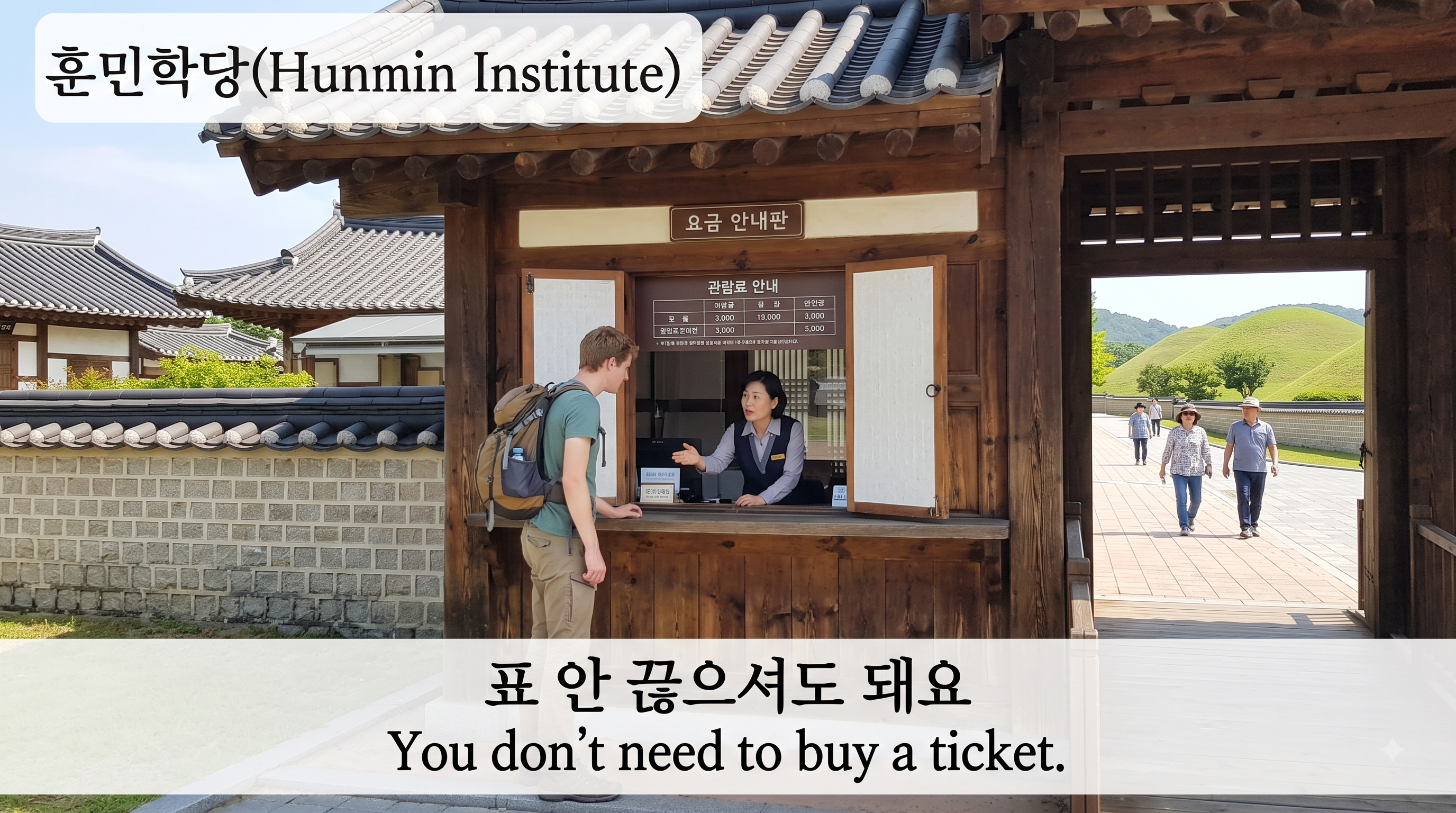
| 표 안 끊으셔도 돼요. [pyo an kkeuneusyeodo dwaeyo] You do not need to buy a ticket. |
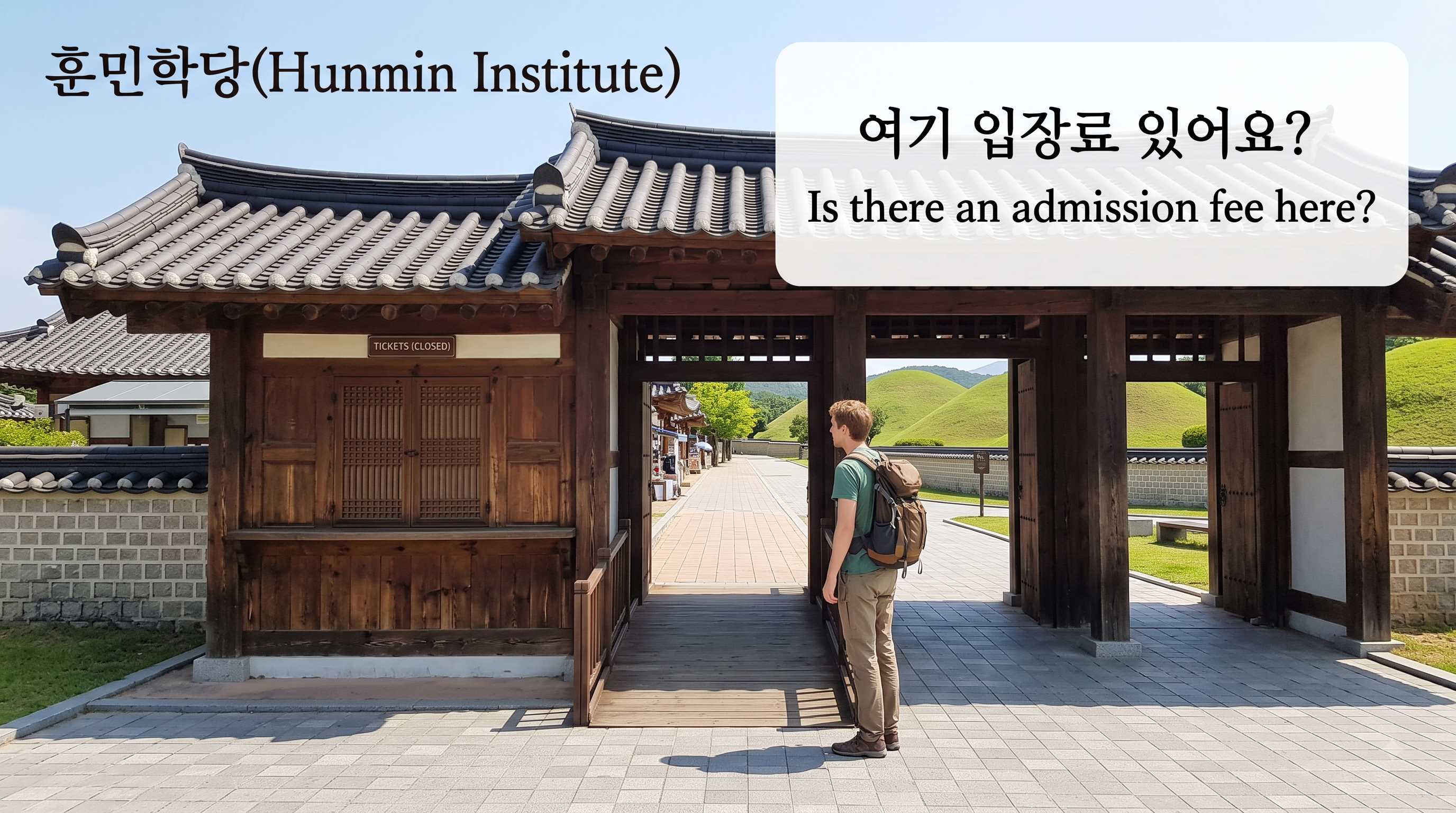
여기 입장료 있어요? [yeogi ipjangnyo isseoyo] Is there an admission fee here? |
| 다음 차는 한 시간 뒤예요. [daeum chaneun han sigan dwiyeyo] The next one comes in an hour. |
다음 차 언제 와요? [daeum cha eonje wayo] When does the next one come? |
| 이름 남기고 가시면 돼요. [ireum namgigo gasimyeon dwaeyo] Just leave your name and come back. |
짐 좀 맡길 수 있을까요? [jim jom matgil su isseulkkayo] Could I leave my bag here? |
여덟 문장은 소단락 1과 2, 4, 5에서 나머지 문장과 함께 다룹니다.
All eight lines are covered in Sections 1, 2, 4 and 5, together with the rest.
1. 경주에 도착하면 먼저 결정할 것
The First Decision After You Arrive
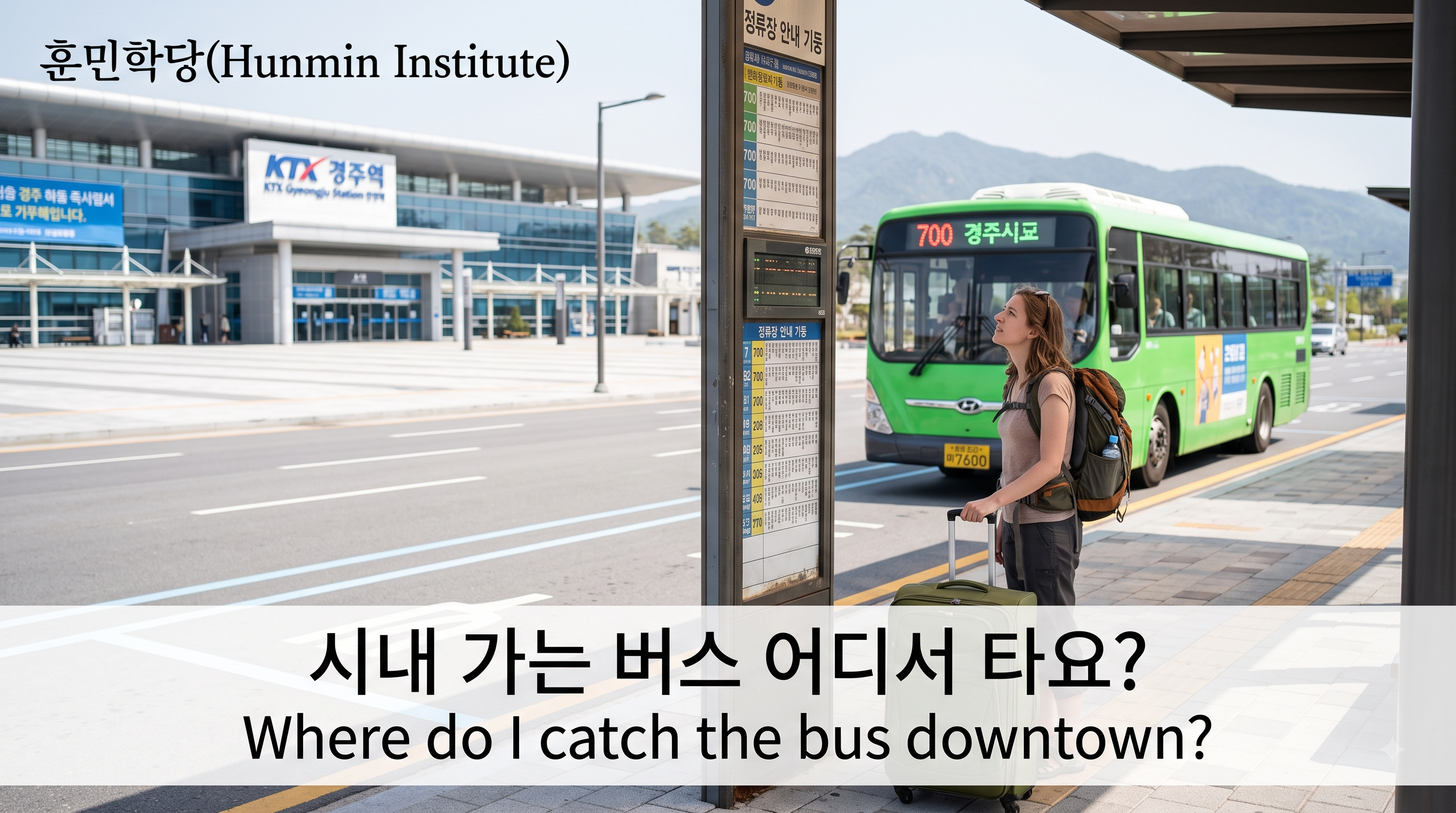
경주는 신라 천 년의 수도였고 도시 전체가 유적입니다. 그런데 여행자가 가장 먼저 부딪히는 것은 유적이 아니라 이동입니다. KTX가 서는 경주역은 시내에서 약 10킬로미터 떨어진 외곽에 있어 내리자마자 걸어서 유적으로 갈 수 없습니다. 시외버스와 고속버스로 오면 사정이 다릅니다.
Gyeongju was the capital of Silla for a thousand years, and the whole city is a historic site. What a traveler runs into first, though, is not the ruins but the question of getting around. Gyeongju Station, where the KTX stops, sits about ten kilometers outside the center, so you cannot step off and walk to anything. Arriving by intercity or express bus is a different story.
| 도착지 Arrival point |
시내까지 To downtown |
타는 버스 Buses |
|---|---|---|
| 경주역, KTX Gyeongju Station, KTX |
약 10킬로미터 About ten kilometers |
50번과 51번, 급행 1100번과 1200번, 1600번 Nos. 50 and 51, express 1100, 1200 and 1600 |
| 시외와 고속버스터미널 Intercity and express bus terminal |
도보권 Walkable |
버스를 타지 않아도 됩니다 No bus needed |
여기서 쓰는 표현부터 배워봅시다. 정류장에서 오가는 말입니다.
Start with the expressions you will use here. These go back and forth at the bus stop.
| 듣는 말 Listening |
하는 말 Speaking |
|---|---|
| 시내 나가시려면 50번 타세요. [sinae nagasiryeomyeon osipbeon taseyo] For downtown, take number 50. |
시내 가는 버스 어디서 타요? [sinae ganeun beoseu eodiseo tayo] Where do I catch the bus downtown? |
| 이 버스는 시내 안 갑니다. [i beoseuneun sinae an gamnida] This bus does not go downtown. |
황리단길 가려면 몇 번 타요? [hwangnidangil garyeomyeon myeot beon tayo] Which number goes to Hwangnidan-gil? |
| 카드 찍어 주세요. [kadeu jjigeo juseyo] Please tap your card. |
여기 카드 돼요? [yeogi kadeu dwaeyo] Do you take cards here? |
응용 Apply It
↳ [장소] 가는 버스 어디서 타요?
[place] ganeun beoseu eodiseo tayo
Where do I catch the bus to [place]?
ex 시내 가는 버스 어디서 타요?/불국사 가는 버스 어디서 타요?/터미널 가는 버스 어디서 타요?
ROM sinae ganeun beoseu eodiseo tayo/bulguksa ganeun beoseu eodiseo tayo/teomineol ganeun beoseu eodiseo tayo
EN Where do I catch the bus downtown?/Where do I catch the bus to Bulguksa?/Where do I catch the bus to the terminal?
▶경주에서 첫 한국어는 매표소가 아니라 정류장에서 나옵니다.
Your first Korean in Gyeongju comes at a bus stop, not a ticket window.
가는 버스 어디서 타요는 장소만 바꾸면 어디서든 그대로 쓰입니다. 몇 번 타요는 번호를 묻는 말이라 대답이 숫자로 돌아옵니다.
가는 버스 어디서 타요 works anywhere once you swap the place name, and 몇 번 타요 asks for a route number, so the answer comes back as a figure.
시내버스 요금은 어른 기준 현금 1,500원, 교통카드 1,450원입니다. 편의점에서 파는 교통카드 한 장이면 환승까지 되므로 도착하자마자 사 두는 편이 낫습니다. 요금은 개정될 수 있으므로 출발 전에 확인하시기 바랍니다.
The adult city bus fare is 1,500 won in cash and 1,450 won with a transit card. One card from any convenience store also covers transfers, so buy one as soon as you arrive. Fares can be revised, so check before you travel.
2. 표를 사는 곳과 사지 않는 곳
Where You Pay and Where You Do Not
경주 여행에서 가장 많이 어긋나는 정보가 입장료입니다. 2023년 5월 4일부터 불국사와 석굴암을 비롯한 사찰의 관람료가 면제되었는데, 아직도 요금을 안내하는 글이 많습니다. 지금 경주에서 표를 사는 곳은 아래 정도로 좁혀집니다.
Admission is where guides to Gyeongju go wrong most often. Temple admission, including Bulguksa and Seokguram, has been waived since 4 May 2023, yet plenty of posts still quote a price. Here is what actually costs money today.
| 장소 Place |
어른 입장료 Adult admission |
|---|---|
| 불국사 Bulguksa Temple |
무료 Free |
| 석굴암 Seokguram Grotto |
무료 Free |
| 분황사 Bunhwangsa Temple |
무료 Free |
| 대릉원 Daereungwon Tomb Complex |
무료 Free |
| 첨성대 Cheomseongdae Observatory |
무료 Free |
| 국립경주박물관 Gyeongju National Museum |
무료 Free |
| 천마총, 대릉원 안 Cheonmachong, inside Daereungwon |
3,000원 KRW 3,000 |
| 동궁과 월지 Donggung Palace and Wolji Pond |
3,000원 KRW 3,000 |
여기서 쓰는 표현부터 배워봅시다. 매표소 앞에서 오가는 말입니다.
Start with the expressions you will use here. These go back and forth at the ticket window.
| 듣는 말 Listening |
하는 말 Speaking |
|---|---|
| 표 안 끊으셔도 돼요. [pyo an kkeuneusyeodo dwaeyo] You do not need to buy a ticket. |
여기 입장료 있어요? [yeogi ipjangnyo isseoyo] Is there an admission fee here? |
| 그냥 들어가시면 됩니다. [geunyang deureogasimyeon doemnida] Just walk right in. |
표는 어디서 사요? [pyoneun eodiseo sayo] Where do I buy the ticket? |
| 여기는 입장료 따로 받습니다. [yeogineun ipjangnyo ttaro batseumnida] This part charges separately. |
어른 두 장 주세요. [eoreun du jang juseyo] Two adult tickets, please. |
▶유료인 두 곳만 외우면 나머지는 그냥 걸어 들어가면 됩니다.
Remember the two paid sites and you can walk straight into everything else.
헷갈리기 쉬운 곳이 대릉원입니다. 능이 늘어선 공원 자체는 무료이고, 그 안에서 무덤 내부로 들어가는 천마총만 돈을 받습니다. 대릉원 입장료를 물었는데 없다는 대답이 돌아왔다고 해서 천마총도 무료라고 생각하시면 안 됩니다.
Daereungwon is the easy one to misread. The park of grass-covered mounds is free; only Cheonmachong, where you step inside a tomb, charges. A no when you ask about Daereungwon does not extend to Cheonmachong.
따로 받습니다는 매표소에서 자주 듣는 말입니다. 여기까지는 무료지만 이 안은 별도라는 뜻이며, 주차료나 특별전시에도 같은 말이 쓰입니다.
따로 받습니다 is a line you will hear at ticket windows. It means free up to here, charged beyond, and the same phrase covers parking and special exhibitions.
3. 셔틀을 타거나, 빌려 타거나
Ride the Shuttle or Rent Your Own

대릉원과 첨성대, 황리단길은 걸어서 오갈 수 있는 거리에 붙어 있습니다. 2026년 1월에는 이 일대를 도는 월정 셔틀이 새로 생겨 선택지가 늘었습니다. 무료 구간만 골라 도는 노선이지만 번호마다 가는 곳이 다르므로, 정류장에서 월정만 찾지 말고 번호를 확인하셔야 합니다.
Daereungwon, Cheomseongdae and Hwangnidan-gil sit within walking distance of one another. In January 2026 the Woljeong shuttle was added, looping through this same area. It threads together the free sites, but each number covers a different set of stops, so check the number rather than looking for a bus marked Woljeong.
| 노선 Route |
기점 Starting point |
주요 구간 Main stops |
|---|---|---|
| 월정2 Woljeong 2 |
황리단길 공영주차장 Hwangnidan-gil public car park |
터미널, 성동시장, 동궁과 월지, 국립경주박물관, 월정교, 교촌한옥마을 Bus terminal, Seongdong Market, Donggung and Wolji, the museum, Woljeonggyo, Gyochon |
| 월정3 Woljeong 3 |
교촌한옥마을 Gyochon Village |
월정교, 국립경주박물관, 동궁과 월지, 첨성대 Woljeonggyo, the museum, Donggung and Wolji, Cheomseongdae |
여기서 쓰는 표현부터 배워봅시다. 셔틀과 대여점에서 오가는 말입니다.
Start with the expressions you will use here. These come up on the shuttle and at rental shops.
| 듣는 말 Listening |
하는 말 Speaking |
|---|---|
| 첨성대는 월정3 타셔야 돼요. [cheomseongdaeneun woljeongsam tasyeoya dwaeyo] For Cheomseongdae you need Woljeong 3. |
이거 첨성대 가요? [igeo cheomseongdae gayo] Does this one go to Cheomseongdae? |
| 여기서 타시면 됩니다. [yeogiseo tasimyeon doemnida] This is the right place to board. |
자전거 하루 빌리면 얼마예요? [jajeongeo haru billimyeon eolmayeyo] How much to rent a bike for a day? |
| 반납은 여섯 시까지예요. [bannabeun yeoseot sikkajiyeyo] Return it by six. |
한복 두 시간에 얼마예요? [hanbok du sigane eolmayeyo] How much is hanbok for two hours? |
▶빌리는 것은 시간 단위를 먼저 말해야 값이 나옵니다.
Name the block of time first and the price follows.
한복이든 자전거든 한국에서는 하루, 두 시간, 네 시간처럼 시간 단위가 먼저 오고 값이 뒤에 붙습니다. 얼마예요만 물으면 되묻는 말이 돌아오므로 시간을 앞에 붙여 묻는 편이 빠릅니다.
Whether it is hanbok or a bicycle, Korean rental pricing starts from the block of time: a day, two hours, four hours. Ask 얼마예요 on its own and you will be asked back, so lead with the time.
반납은 여섯 시까지예요라는 대답에서 까지는 마감 시각을 가리킵니다. 여섯 시에 반납한다는 뜻이 아니라 그 시각을 넘기면 안 된다는 뜻이며, 늦으면 추가 요금이 붙습니다. 셔틀 운행 시각과 배차는 계절에 따라 조정되므로 경주시 관광 안내에서 당일 시간표를 확인하시기 바랍니다.
In 반납은 여섯 시까지예요, the 까지 marks a deadline. It is not return it at six but do not pass six, and going over adds a charge. Shuttle hours and intervals shift with the season, so check the day’s timetable on the Gyeongju city tourism information.
4. 불국사에서 석굴암으로, 한 시간에 한 대
Bulguksa to Seokguram, One Bus an Hour
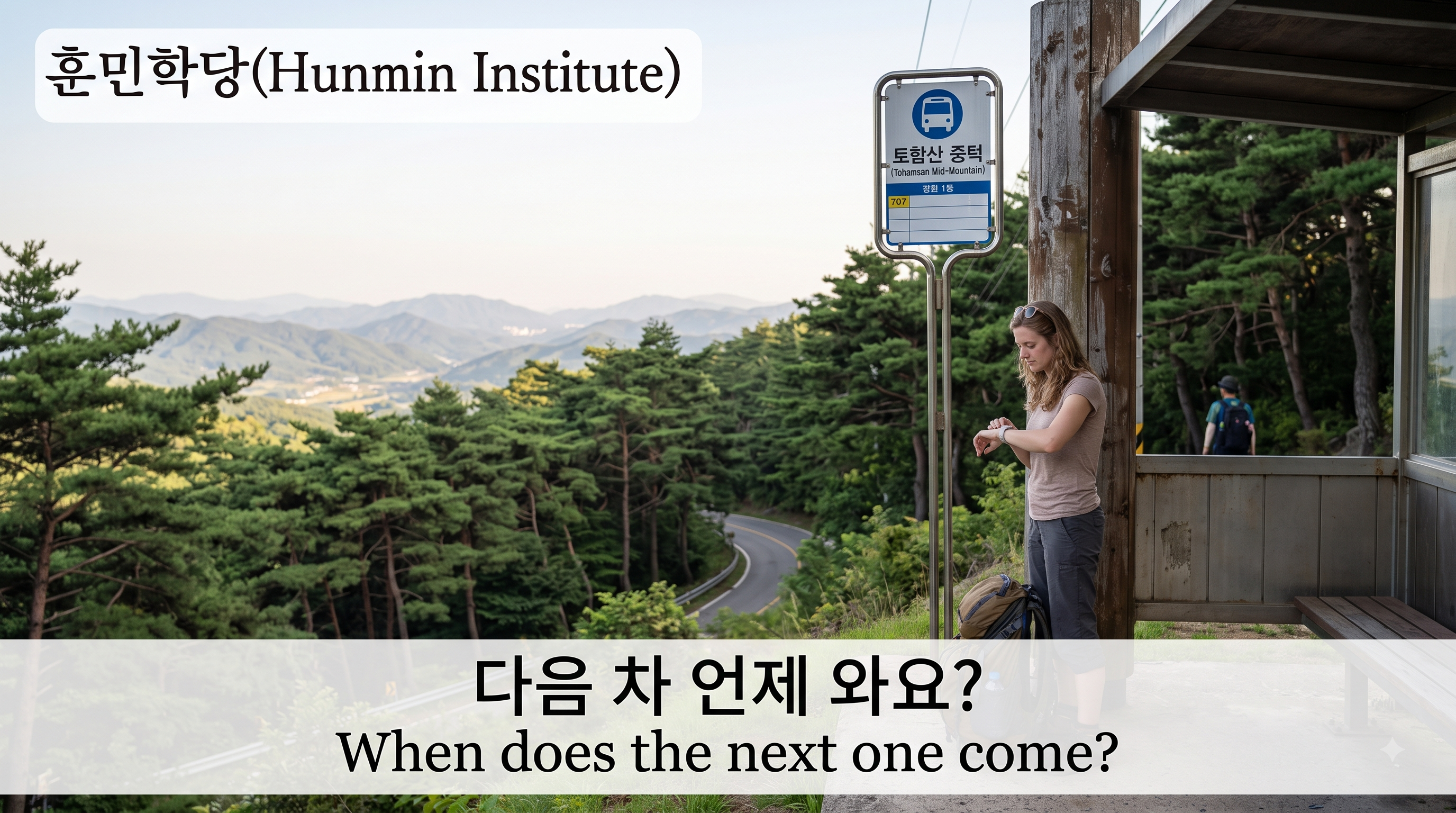
불국사와 석굴암은 같은 세계유산으로 묶여 있지만 한자리에 있지 않습니다. 석굴암은 토함산 중턱에 있고, 불국사 주차장 건너편에서 출발하는 12번 버스가 두 곳을 잇습니다. 문제는 배차입니다. 한 시간에 한 대이므로 한 대를 놓치면 산 위에서 한 시간을 기다리게 됩니다.
Bulguksa and Seokguram share one World Heritage listing but not one location. Seokguram sits partway up Mount Toham, and bus number 12, leaving from across the Bulguksa car park, connects the two. The catch is the schedule: one bus an hour, so missing it means an hour on the mountain.
여기서 쓰는 표현부터 배워봅시다. 여기서 필요한 말은 어디서 타느냐가 아니라 언제 오느냐입니다.
Start with the expressions you will use here. What you need is not where to board but when it comes.
| 듣는 말 Listening |
하는 말 Speaking |
|---|---|
| 다음 차는 한 시간 뒤예요. [daeum chaneun han sigan dwiyeyo] The next one comes in an hour. |
다음 차 언제 와요? [daeum cha eonje wayo] When does the next one come? |
| 방금 출발했어요. [banggeum chulbalhaesseoyo] It just left. |
막차 몇 시예요? [makcha myeot siyeyo] What time is the last bus? |
| 여기가 마지막 정류장이에요. [yeogiga majimak jeongnyujangieyo] This is the final stop. |
얼마나 걸려요? [eolmana geollyeoyo] How long does it take? |
▶언제 와요와 몇 시예요는 돌아오는 대답이 다릅니다.
언제 와요 and 몇 시예요 bring back different kinds of answers.
언제 와요라고 물으면 한 시간 뒤처럼 남은 시간으로 답이 오고, 몇 시예요라고 물으면 다섯 시처럼 시각으로 답이 옵니다. 막차를 확인할 때는 시각으로 받아야 계획이 서므로 몇 시예요를 쓰시는 편이 좋습니다.
Ask 언제 와요 and the answer is time remaining, as in an hour. Ask 몇 시예요 and it is a clock time, as in five o’clock. For the last bus you want the clock time, so use 몇 시예요.
얼마나 걸려요는 이동 시간을 묻는 말입니다. 얼마예요와 몇 글자 차이지만 얼마예요는 값을, 얼마나 걸려요는 시간을 묻습니다. 운행 시각은 계절과 사정에 따라 바뀌므로 출발 전에 현장 안내판이나 경주시 관광 안내에서 확인하시기 바랍니다.
얼마나 걸려요 asks about travel time. It differs from 얼마예요 by a syllable or two, but one asks a price and the other a duration. Service times change with the season, so check the stop’s board or the city tourism information before you set off.
5. 황리단길에서 쓰는 말
The Korean of Hwangnidan-gil
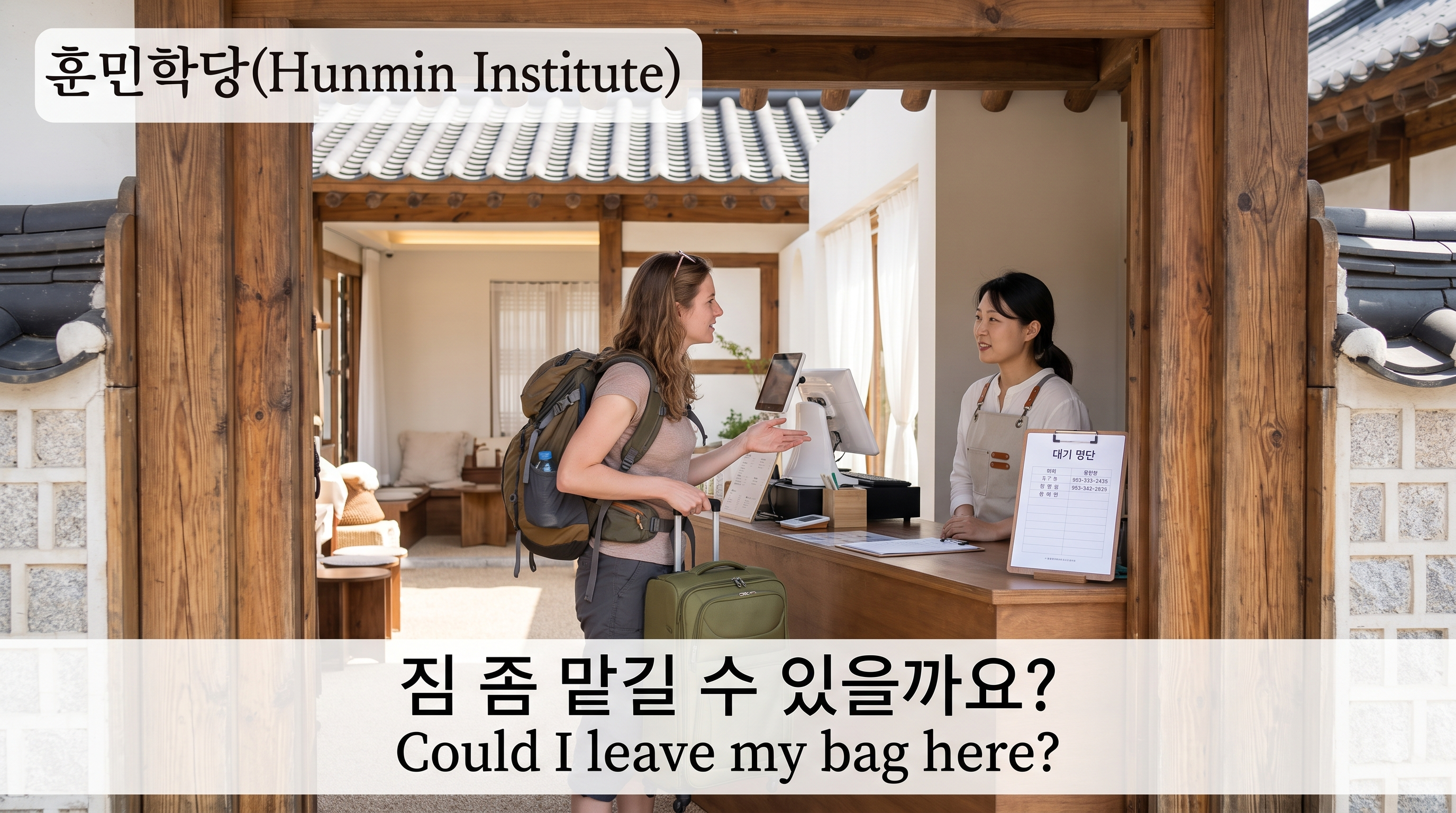
황리단길은 대릉원 담장을 따라 이어지는 거리이고, 한옥을 고친 카페와 식당이 몰려 있습니다. 유적 앞에서는 말이 거의 필요 없었지만 여기서는 다릅니다. 기다리는 말, 주문하는 말, 짐을 맡기는 말이 한꺼번에 나옵니다.
Hwangnidan-gil runs along the Daereungwon wall, lined with cafes and restaurants built into old hanok. At the monuments you barely needed to speak; here it is different. Waiting, ordering and checking a bag all come at once.
여기서 쓰는 표현부터 배워봅시다. 가게 앞과 계산대에서 오가는 말입니다.
Start with the expressions you will use here. These come up at the door and at the counter.
| 듣는 말 Listening |
하는 말 Speaking |
|---|---|
| 지금 앞에 세 팀 계세요. [jigeum ape se tim gyeseyo] There are three groups ahead of you. |
얼마나 기다려야 돼요? [eolmana gidaryeoya dwaeyo] How long is the wait? |
| 이름 남기고 가시면 돼요. [ireum namgigo gasimyeon dwaeyo] Just leave your name and come back. |
짐 좀 맡길 수 있을까요? [jim jom matgil su isseulkkayo] Could I leave my bag here? |
| 포장이세요? [pojangiseyo] Is this to go? |
여기서 먹고 갈게요. [yeogiseo meokgo galgeyo] I will eat in, thanks. |
▶팀은 운동 경기가 아니라 대기 순번을 세는 말입니다.
팀 here counts parties in a queue, not sports teams.
세 팀 계세요는 앞에 세 무리가 기다리고 있다는 뜻입니다. 한 사람이든 네 사람이든 한 팀으로 셉니다. 이름 남기고 가시라는 말은 명단에 적어 두면 자리가 났을 때 연락을 준다는 뜻이며, 그동안 근처를 둘러보고 와도 됩니다.
세 팀 계세요 means three parties are ahead of you, and a party is one person or four alike. 이름 남기고 가시면 돼요 means your name goes on the list and they will call when a table opens, so you are free to wander nearby.
포장이세요는 가져가실 건가요라는 뜻입니다. 매장에서 드실 때는 여기서 먹고 갈게요라고 답하시면 됩니다.
포장이세요 asks whether you are taking it away. If you are staying, answer 여기서 먹고 갈게요.
경주는 돈을 쓰는 자리가 적은 대신 말을 쓰는 자리가 많은 도시입니다. 정류장과 거리에서 익힌 문장은 경주를 벗어나도 그대로 쓰입니다.
Gyeongju gives you few places to spend money and many places to speak. The lines you picked up at the stops and on the street work the same well beyond Gyeongju.
Next: Jeonju Travel Guide: Hanok Village and How to Order ↗
토픽 맛보기
TOPIK Preview
유형: TOPIK Ⅰ 읽기 [43~45], 설명문, 일치하는 내용 고르기
Type: TOPIK I Reading [43–45], expository text, choose the matching statement
다음 글의 내용과 같은 것을 고르십시오.
Choose the statement that matches the passage.
경주에서는 불국사와 석굴암에 입장료가 없습니다. 대릉원도 무료입니다. 그러나 대릉원 안에 있는 천마총은 어른이 3,000원을 냅니다.
In Gyeongju there is no admission fee at Bulguksa or Seokguram, and Daereungwon is free as well. Cheonmachong inside Daereungwon, however, charges adults 3,000 won.
① 불국사는 입장료가 있습니다.
② 대릉원은 어른이 3,000원을 냅니다.
③ 천마총은 돈을 내고 들어갑니다.
④ 석굴암은 표를 미리 예약합니다.
Answer ▾
정답 ③ 천마총은 돈을 내고 들어갑니다
Answer: ③ 천마총은 돈을 내고 들어갑니다
천마총은 어른이 3,000원을 낸다고 했으므로 돈을 내고 들어가는 곳입니다. ①은 지문에 나온 불국사를 반대로 진술했고, ②는 3,000원이라는 값만 맞고 대상이 대릉원이 아니라 그 안의 천마총이라 일부만 걸리며, ④는 그럴듯하지만 예약 이야기가 지문에 없습니다. 흉내 낸 대문항은 TOPIK Ⅰ 읽기 [43~45]입니다.
The passage says adults pay 3,000 won at Cheonmachong, so it is a paid entry. ① reverses what the passage says about Bulguksa, ② keeps the figure but attaches it to Daereungwon rather than Cheonmachong inside it, and ④ mentions a booking the passage never makes. The item type modeled here is TOPIK I Reading [43–45].
FAQ
Q1. 경주는 하루로 충분한가요?Answer ▾
Q1. Is one day enough for Gyeongju?
A1. 시내권만 보면 하루로 가능합니다. 불국사와 석굴암은 시내에서 떨어져 있고 두 곳을 잇는 버스가 한 시간에 한 대라, 함께 넣으면 하루가 빠듯합니다.
A1. For the central sites, yes. Bulguksa and Seokguram sit outside the center with one bus an hour between them, so adding both makes a single day tight.
Q2. 동궁과 월지 야경은 몇 시까지 들어갈 수 있나요?Answer ▾
Q2. How late can I enter Donggung and Wolji at night?
A2. 밤 열 시까지 운영하며 입장 마감은 아홉 시 반입니다. 야경을 보러 오는 사람이 몰려 마감 직전에는 줄이 길어지므로 여유 있게 도착하시는 편이 좋습니다.
A2. It stays open until ten, with last entry at nine thirty. Crowds come for the night view, so the queue grows near closing; arrive with time to spare.
Q3. 교통카드는 어디서 사나요?Answer ▾
Q3. Where can I buy a transit card?
A3. 편의점에서 살 수 있고 충전도 그 자리에서 됩니다. 서울에서 쓰던 티머니와 캐시비는 그대로 쓰이지만 대경교통카드와 탑패스는 경주에서 사용할 수 없습니다.
A3. Any convenience store sells and tops them up. T-money and Cashbee from Seoul work here, but the Daegyeong card and Toppass are not accepted in Gyeongju.
Q4. 비가 오면 어디를 가면 좋을까요?Answer ▾
Q4. Where should I go if it rains?
A4. 국립경주박물관이 실내이고 상설전시가 무료입니다. 영문 안내가 갖춰져 있어 유적을 먼저 보고 오면 이해가 훨씬 쉬워집니다.
A4. Gyeongju National Museum is indoors and its permanent exhibition is free. English labels are in place, and it reads far better once you have seen the sites themselves.
Q5. 표를 사야 하는 곳을 어떻게 확인하나요?Answer ▾
Q5. How do I check which places charge?
A5. 매표소 앞에서 여기 입장료 있어요라고 물으시면 됩니다. 표 안 끊으셔도 돼요라는 답이 돌아오면 그냥 들어가시면 되고, 따로 받습니다라는 답이 돌아오면 그 안쪽 구간만 유료라는 뜻입니다.
A5. At the window, ask 여기 입장료 있어요. If the answer is 표 안 끊으셔도 돼요, walk right in; if it is 따로 받습니다, only the section beyond that point is paid.
Vocabulary and Pronunciation for Foreigners
| No | Korean | Romanisation | Meaning |
|---|---|---|---|
| 1 | 입장료 | ipjangnyo | (n) admission fee [ədˈmɪʃn] |
| 2 | 매표소 | maepyoso | (n) ticket window [ˈtɪkɪt] |
| 3 | 정류장 | jeongnyujang | (n) bus stop [stɑːp] |
| 4 | 막차 | makcha | (n) last bus or train [læst] |
| 5 | 교통카드 | gyotongkadeu | (n) transit card [ˈtrænzɪt] |
| ▾ 단어 45개 더 보기 Show 45 more ↗ | |||
The blog page has limits of space and function, so only five words are shown here. The rest of the word list, the audio, the sentences and tables, the FAQ, the worksheet, the TOPIK questions and the lesson video are on the Hunmin Institute website ↗, free for blog subscribers.
참고 기관
Official Sources
한국관광공사 ↗
Korea Tourism Organization
https://english.visitkorea.or.kr
기관 설명 보기 About this institute ▾
This is the public agency that provides travel information for Korea. Its English site lets you search Gyeongju’s sites, transport, and opening hours. For values that change often, such as the Woljeong shuttle timetable and city bus fares, check the Gyeongju city tourism information as well.
※ 본 콘텐츠(원고, 이미지, 예문 포함)는 저작권법에 의해 보호받는 훈민학당의 저작물입니다. 무단 복제, 전재, 재배포 및 AI 학습 데이터로의 이용을 금합니다.
This content (manuscript, images, and example sentences) is the copyrighted property of Hunmin Institute, protected under copyright law. Unauthorized copying, reproduction, redistribution, and use as AI training data are prohibited.
'K-Travel' 카테고리의 다른 글
| Busan Old Town: Jagalchi, Gukje Market and Korean (0) | 2026.08.13 |
|---|---|
| Jeonju Travel Guide: Hanok Village and How to Order (0) | 2026.08.12 |
| Garden of Morning Calm: Four Seasons, One Day Trip (0) | 2026.07.30 |
| Nami Island by Train: A Car-Free Day Trip from Seoul (0) | 2026.07.30 |
| BTS Trail Part 4: Yongsan and Hongdae (0) | 2026.07.25 |


