
In Jagalchi You Buy Downstairs and Eat Upstairs
자갈치는 1층에서 사고 2층에서 먹는 시장입니다
At Jagalchi the person who sells you the fish is not the person who cooks it, and each charges separately.
Learn the Korean of a market where buying and eating happen in two different places.
자갈치에서는 생선을 파는 사람과 요리해 주는 사람이 다르고, 값도 따로 붙습니다.
사는 자리와 먹는 자리가 나뉜 시장에서 실제로 오가는 한국어를 장면별로 익힙니다.

You can check the vocabulary list summarizing today's key words at the bottom of this post.
Previous: In Jeonju You Order by the Table, Not by the Bowl
Key Expressions in This Lesson
부산 원도심에서는 사는 자리와 먹는 자리가 나뉘어 있어 같은 가게에서도 말을 두 번 걸게 됩니다. 아래 여덟 문장은 좌우가 한 쌍의 대화가 아니라 각각 따로 익히는 문장입니다.
In old Busan, buying and eating happen in separate places, so you end up speaking twice at what looks like one shop. The two columns below are not paired dialogue; learn each sentence on its own.
| 듣는 말 Listening |
하는 말 Speaking |
|---|---|
| 삼십 분 안에 갈아타시면 무료예요. Transfer within thirty minutes and it is free. |
여기서 갈아탈 수 있어요? Can I transfer here? |
| 차림비는 따로 받습니다. charimbineun ttaro batseumnida The table charge is separate. |
이거 손질해 주세요. igeo sonjilhae juseyo Could you prepare this for me? |
| 저 위에서 도장 찍으시면 돼요. You can get your stamp up there. |
조금만 살 수 있어요? Could I buy just a little? |
| 밥 따로 드릴까요? Rice on the side? |
정구지가 뭐예요? What is jeongguji? |
여덟 문장은 소단락 1부터 5까지에서 나머지 문장과 함께 다룹니다.
These eight lines are covered across Sections 1 to 5 together with the rest.
A Day That Starts at Jagalchi Station
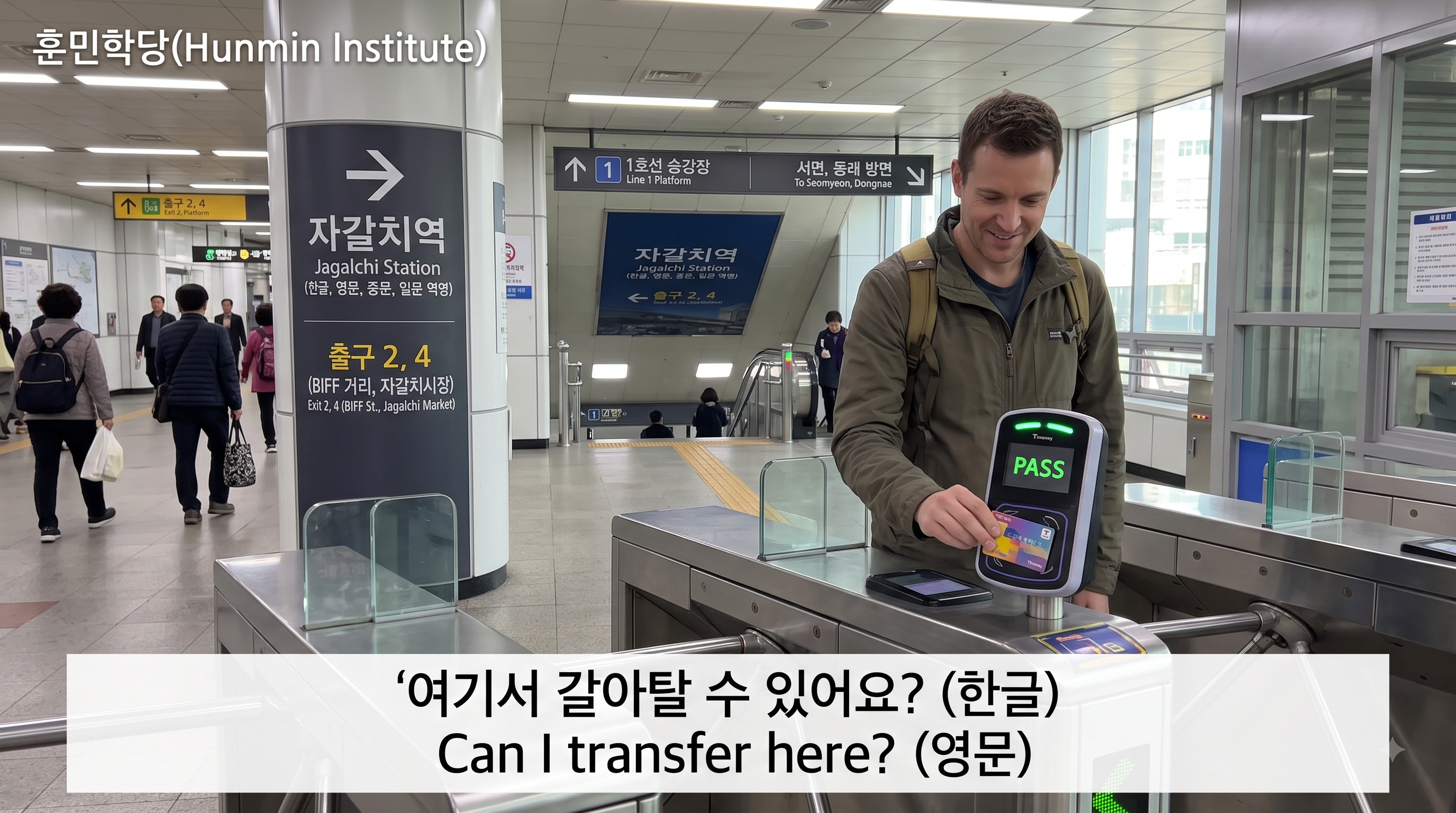
부산 원도심은 지하철 1호선 한 줄에 거의 다 걸려 있습니다. 부산역에서 자갈치역까지 세 정거장이고, 시장과 광장과 공원이 그 주변에 걸어서 이어집니다. 오늘 하루 지하철에서 필요한 것은 노선이 아니라 갈아타는 방법입니다. 감천문화마을에 갈 때 마을버스로 한 번 갈아타야 하기 때문입니다.
Old Busan hangs almost entirely off one subway line. Jagalchi Station is three stops from Busan Station, and the markets, the square and the park all connect on foot from there. What you need underground today is not a route map but a transfer rule, because reaching Gamcheon Culture Village means changing to a village bus.
| 구분 Item |
내용 Detail |
|---|---|
| 도시철도 어른 요금 Subway fare, adult |
카드 1,600 / 1회권 1,700 (원도심은 모두 이 구간) 1,600 by card, 1,700 single ticket; the whole old town sits in this zone |
| 환승 Transfer |
내린 뒤 삼십 분 안에 갈아타면 두 번까지 무료 free for up to two changes made within thirty minutes of tapping out |
| 하차 태그 Tapping out |
버스에서 내릴 때 카드를 찍어야 환승이 잡힙니다 the transfer only registers if you tap the card on the way off the bus |
| 정기승차권 Travel pass |
1일권 6,000 / 3일권 13,000, 앱으로만 구매 6,000 for one day, 13,000 for three, sold through the app only |
| 듣는 말 Listening |
하는 말 Speaking |
|---|---|
| 삼십 분 안에 갈아타시면 무료예요. Transfer within thirty minutes and it is free. |
여기서 갈아탈 수 있어요? Can I transfer here? |
| 내릴 때 꼭 찍고 내리세요. Be sure to tap when you get off. |
1일권으로 버스도 돼요? Does the one-day pass work on buses? |
| 그건 지하철에서만 돼요. That one is subway only. |
자갈치시장 몇 번 출구예요? Which exit for Jagalchi Market? |
Swap-in frames: Can I [verb] here? / Does [noun] work for [noun] too? / Which exit for [place]?
▶ 부산에서 환승은 내릴 때 찍어야 완성됩니다.
▶ In Busan a transfer is only complete when you tap out.
탈 때만 찍고 내릴 때 그냥 내리면 다음 차에서 요금이 다시 붙습니다. 내린 뒤 삼십 분 안에 갈아타면 두 번까지 무료이므로, 지하철에서 마을버스로 넘어가는 감천 구간에서 이 규칙이 바로 걸립니다.
Tap on but step off without tapping and the next vehicle charges you in full. Change within thirty minutes of tapping out and up to two rides are free, which is exactly what happens on the subway-to-village-bus leg toward Gamcheon.
정기승차권은 편해 보이지만 도시철도 전용입니다. 마을버스와 시내버스, 동해선에는 쓸 수 없어서 감천에 갈 때는 따로 요금을 냅니다. 원도심은 걸어 다니는 동선이라 하루에 두세 번 타는 데 그치므로, 이번 편에서는 교통카드 한 장이면 충분합니다.
The pass looks convenient but covers the subway alone. It does not work on village buses, city buses or the Donghae Line, so Gamcheon costs extra anyway. The old town is walkable enough that two or three rides is the whole day, and a plain transit card covers it.
Jagalchi, Where Buying and Eating Split
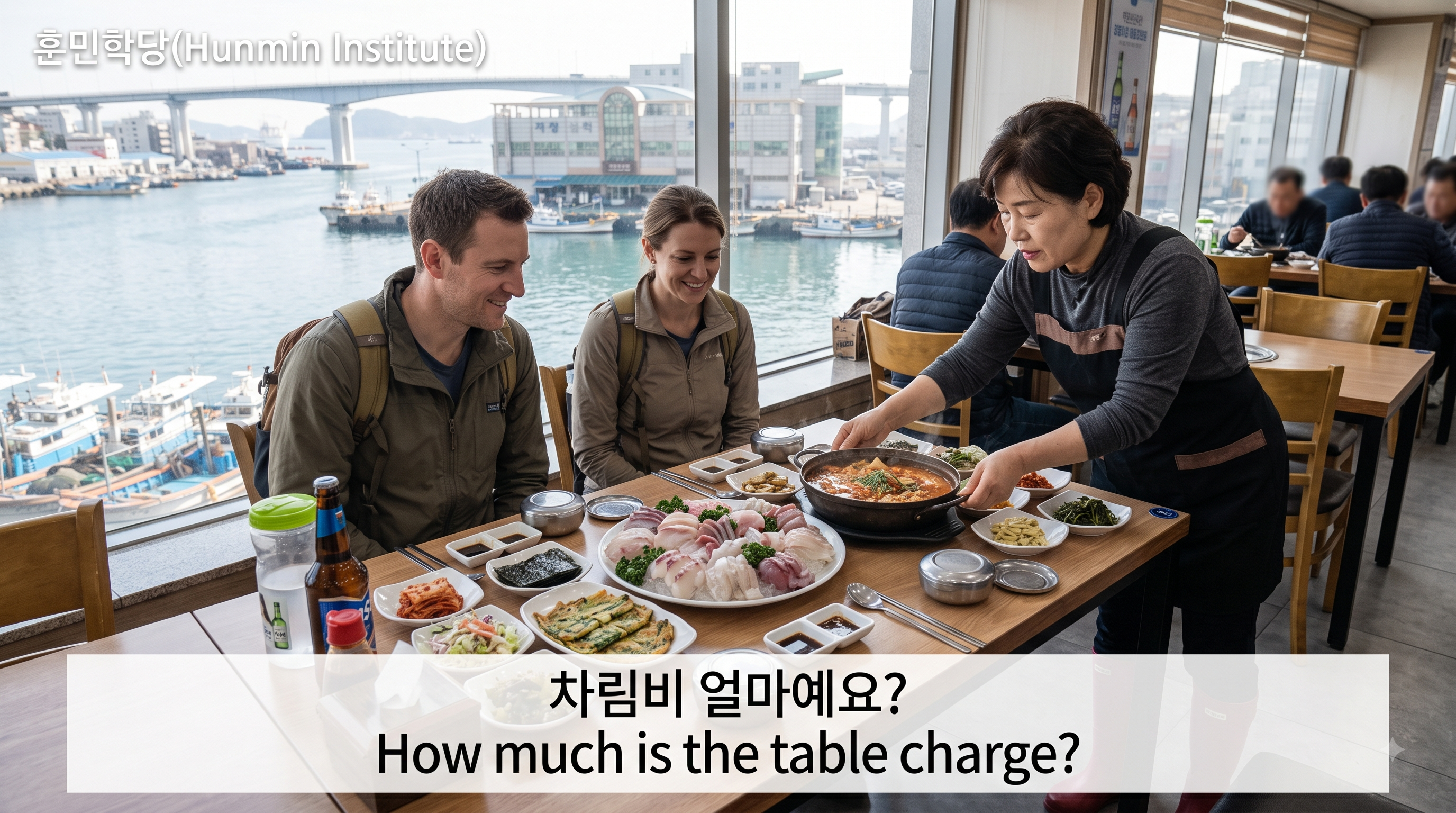
자갈치는 한국에서 가장 큰 어시장이고 자갈치역 10번 출구로 나오면 바로입니다. 여기서 외국인이 가장 많이 당황하는 지점은 값이 아니라 순서입니다. 생선은 1층에서 사고, 그 생선을 들고 2층 식당으로 올라가 조리해 먹습니다. 파는 사람과 요리해 주는 사람이 다르고 값도 각각 붙습니다.
Jagalchi is the largest fish market in Korea and sits right outside exit 10 of Jagalchi Station. What throws visitors is not the price but the order of things. You buy the fish downstairs, carry it upstairs to a restaurant, and they cook it for you. The seller and the cook are different people, and each one charges you.
| 순서 Step |
하는 일 What You Do |
돈을 내는 곳 What You Pay For |
|---|---|---|
| 1 1 |
1층 좌판에서 생선을 고르고 손질을 부탁합니다 pick your fish at a ground-floor stall and ask them to prepare it |
생선 값 the fish |
| 2 2 |
손질한 생선을 들고 2층 식당으로 올라갑니다 carry it up to a restaurant on the second floor |
없음 nothing |
| 3 3 |
자리를 잡고 반찬과 매운탕을 받아 먹습니다 take a table and receive side dishes and a spicy stew |
차림비, 1인 단위 the table charge, per person |
| 듣는 말 Listening |
하는 말 Speaking |
|---|---|
| 차림비는 따로 받습니다. The table charge is separate. |
이거 손질해 주세요. Could you prepare this for me? |
| 위에 올라가서 드시면 돼요. Take it upstairs and eat there. |
차림비 얼마예요? How much is the table charge? |
| 두 분이면 이 정도면 돼요. This much is right for two. |
둘이 먹을 만큼만 주세요. Just enough for two, please. |
Swap-in frames: Could you [verb] this for me? / How much is [noun]? / Just enough for [number], please
▶ 생선 값을 물었다고 계산이 끝난 것이 아닙니다.
▶ Asking the price of the fish does not settle the bill.
2층에서 자리를 잡으면 반찬과 매운탕이 나오고 여기에 차림비가 붙습니다. 사람 수대로 붙는 것이 보통이라 일행이 많으면 그만큼 늘어납니다. 가게마다 금액이 다르므로 올라가기 전에 차림비 얼마예요라고 한 번 물어 두시면 계산에서 당황하지 않습니다.
Once you sit down upstairs, side dishes and a stew arrive, and a table charge comes with them. It is normally counted per head, so a larger group pays more. Amounts differ by restaurant, so ask 차림비 얼마예요 before you go up and the bill will hold no surprises.
얼마나 사야 할지 모르겠다면 둘이 먹을 만큼만 주세요라고 하시면 됩니다. 인원을 말하면 상인이 알아서 양을 맞춰 줍니다. 값을 깎는 것보다 양을 맞추는 편이 실제로 더 쓸모 있는 말입니다.
If you have no idea how much to buy, say 둘이 먹을 만큼만 주세요. Give the number of people and the seller sizes the portion for you. Adjusting the amount is a far more useful move here than haggling over the price.
번역기가 놓치는 자리What the translator misses
회를 뜨다와 초장집, 사전이 헛짚는 두 말
회를 뜨다 and 초장집, two phrases the dictionary gets wrong
회를 뜨다는 회를 뜬다는 뜻이 아니라 생선을 얇게 저며 회로 만든다는 뜻입니다. 번역기에 넣으면 뜨다가 float으로 나오지만 물 위에 뜨는 것과는 아무 관계가 없습니다. 좌판에서 회 떠 드릴까요라고 물으면 저며 드릴까요라는 뜻이고, 손질해 주세요라고 답하면 통합니다.
회를 뜨다 means slicing a fish into sashimi. A translator hands you float for 뜨다, which has nothing to do with anything here. When a stall asks 회 떠 드릴까요, they are offering to slice it, and 손질해 주세요 is an answer that works.
초장집은 초장을 파는 가게가 아니라 사 온 생선을 차려 주는 2층 식당을 가리킵니다. 초장은 상에 나오는 소스 이름이지만, 초장집이라는 말은 소스가 아니라 그 식당의 역할을 가리키는 이름입니다. 자갈치에서 초장집 가세요라는 말을 들으면 위층으로 올라가라는 뜻으로 알아들으시면 됩니다.
초장집 does not sell chojang; it is the upstairs restaurant that serves the fish you bought. Chojang is the red sauce on the table, but the word 초장집 names the restaurant by its role, not by its sauce. Hear 초장집 가세요 at Jagalchi and it means head upstairs.
Gukje Market, BIFF Square and Yongdusan Park

자갈치에서 길 하나를 건너면 BIFF광장이고, 그 뒤가 국제시장입니다. 여기서는 길에서 파는 것을 서서 먹습니다. 씨앗호떡과 어묵이 대표적이고, 한 개씩 사서 걸으며 먹는 자리라 낱개로 사는 말이 계속 필요합니다. 시장 끝에서 계단을 오르면 용두산공원과 부산타워가 나오고, 거기서 항구가 내려다보입니다.
Cross one road from Jagalchi and you are at BIFF Square, with Gukje Market behind it. Here you eat standing up, from stalls. Seed-filled hotteok and fish cake are the staples, bought one at a time and eaten while walking, so the language of single portions keeps coming up. Climb the steps at the far end and you reach Yongdusan Park and Busan Tower, looking down over the harbor.
| 듣는 말 Listening |
하는 말 Speaking |
|---|---|
| 두 개부터 팔아요. We sell them two at a time. |
조금만 살 수 있어요? Could I buy just a little? |
| 뜨거우니까 천천히 드세요. It is hot, take your time. |
한 개만 주세요. Just one, please. |
| 국물은 저기서 떠 드시면 돼요. Help yourself to the broth over there. |
이거 안에 뭐 들었어요? What is inside this? |
Swap-in frames: Could I [verb] just a little? / Just [number], please / What is inside this?
▶ 안에 뭐 들었어요는 못 먹는 재료를 피하는 가장 짧은 말입니다.
▶ 안에 뭐 들었어요 is the shortest way to avoid what you cannot eat.
길에서 파는 음식은 겉만 봐서는 속을 알 수 없습니다. 씨앗호떡에는 견과류가 들어가고 어묵은 종류마다 재료가 다릅니다. 알레르기가 있거나 못 먹는 것이 있다면 이 한마디를 먼저 익혀 두시는 편이 안전합니다.
Street food gives nothing away from the outside. Seed hotteok is filled with nuts, and fish cake varies by kind. If you have an allergy or something you avoid, this is the line to learn first.
어묵집에서 국물은 대개 공짜이고 종이컵에 직접 떠 마십니다. 저기서 떠 드시면 돼요라는 말이 그 뜻입니다. 용두산공원까지는 시장에서 걸어 올라갈 수 있고 공원 자체는 무료입니다. 부산타워 전망대는 별도 요금이 있으니 올라가실 분만 표를 끊으시면 됩니다.
At a fish cake stall the broth is usually free and you ladle it into a paper cup yourself; that is what 저기서 떠 드시면 돼요 means. Yongdusan Park is a walk up from the market and costs nothing. The Busan Tower observation deck charges separately, so buy a ticket only if you are going up.
Gamcheon, the Village You Transfer to Reach
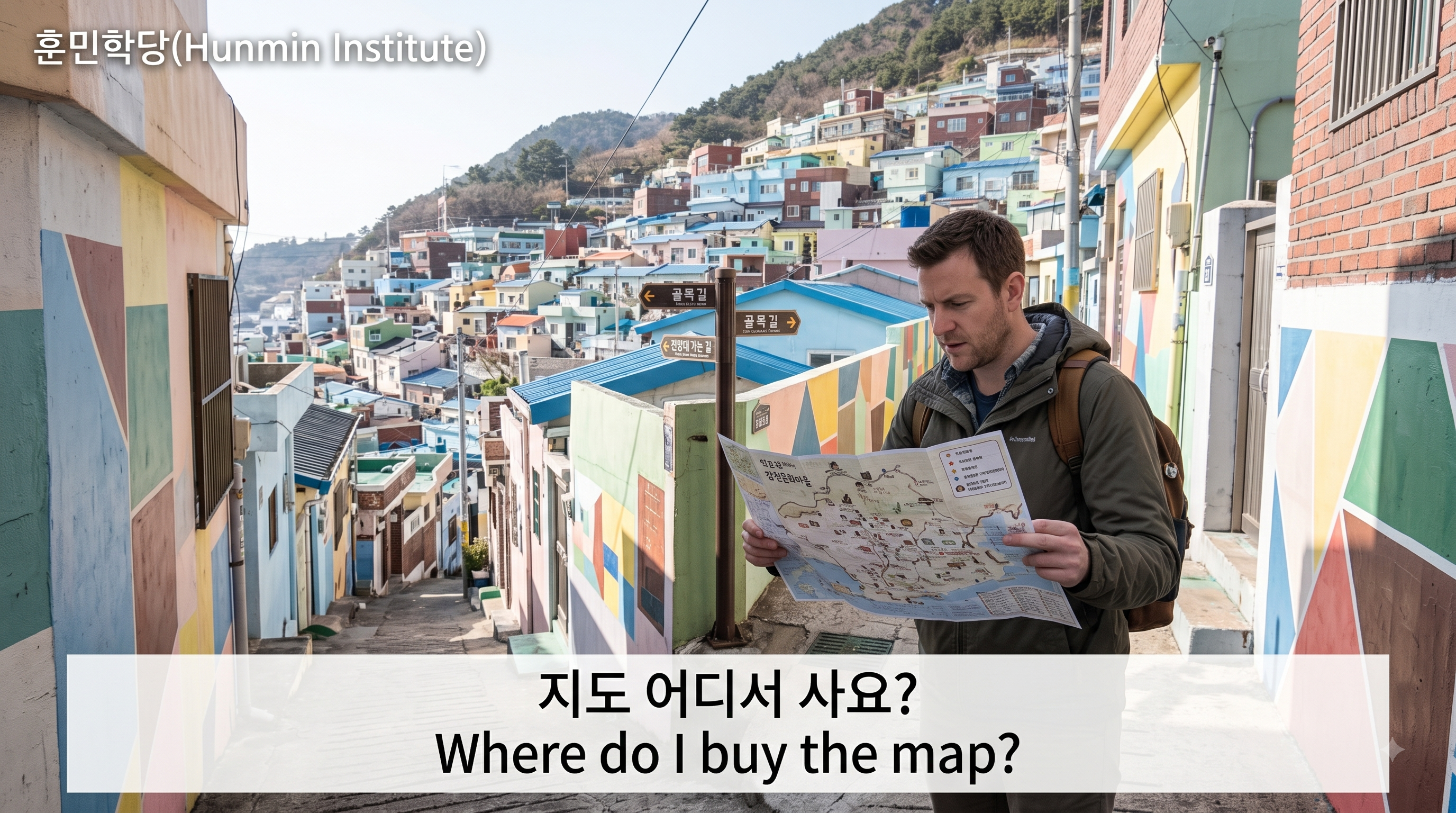
감천문화마을은 산비탈에 집이 층층이 앉은 동네입니다. 입장료는 없지만 걸어 올라가기는 어렵고 마을버스로 갈아타야 합니다. 여기서 소단락1의 환승이 실제로 걸립니다. 지하철에서 내릴 때 카드를 찍고, 삼십 분 안에 마을버스를 타면 요금이 붙지 않습니다.
Gamcheon Culture Village is a hillside of houses stacked in layers. There is no admission fee, but walking up is hard work and a village bus is the way in. This is where the transfer rule from Section 1 finally applies: tap out of the subway, board the village bus within thirty minutes, and the ride is free.
| 내리는 역 Get Off At |
출구 Exit |
갈아타는 마을버스 Village Bus |
|---|---|---|
| 토성역 Toseong Station |
6번 exit 6 |
사하1-1, 서구2, 서구2-2 Saha 1-1, Seo-gu 2, Seo-gu 2-2 |
| 괴정역 Goejeong Station |
6번 exit 6 |
사하1, 사하1-1 Saha 1, Saha 1-1 |
감정초등학교에서 내려 걸어서 오 분입니다.
Get off at Gamjeong Elementary School and walk five minutes.
| 듣는 말 Listening |
하는 말 Speaking |
|---|---|
| 저 위에서 도장 찍으시면 돼요. You can get your stamp up there. |
지도 어디서 사요? Where do I buy the map? |
| 여기서 내리시면 돼요. This is your stop. |
감천마을 다 왔어요? Are we at Gamcheon yet? |
| 여기는 사람 사는 곳이에요. People actually live here. |
여기 들어가도 돼요? Is it all right to go in here? |
Swap-in frames: Where do I buy [noun]? / Are we at [place] yet? / Is it all right to [verb] here?
▶ 도장을 찍는다는 말은 스탬프 투어를 가리킵니다.
▶ Getting a stamp here means the village stamp tour.
마을 안내소에서 스탬프 지도를 사면 골목마다 놓인 도장을 찍으며 돌게 됩니다. 지도가 곧 코스여서 처음 온 사람이 길을 잃지 않고 마을을 한 바퀴 돌 수 있습니다. 지도 값은 안내소에서 확인하시면 됩니다.
Buy the stamp map at the village information center and you collect stamps placed along the lanes. The map doubles as the route, so a first-time visitor can circle the whole village without getting lost. Ask at the center for the current price.
여기는 사람 사는 곳이에요라는 말은 자주 듣게 됩니다. 관광지처럼 보여도 실제 주민이 사는 동네라서 대문 안이나 옥상에는 들어가지 않습니다. 헷갈리면 여기 들어가도 돼요라고 물으시면 됩니다.
You will hear 여기는 사람 사는 곳이에요 more than once. It looks like an attraction, but people live here, so gates and rooftops are off limits. When in doubt, ask 여기 들어가도 돼요.
Dwaeji Gukbap, Where Busan Dialect Reaches the Table
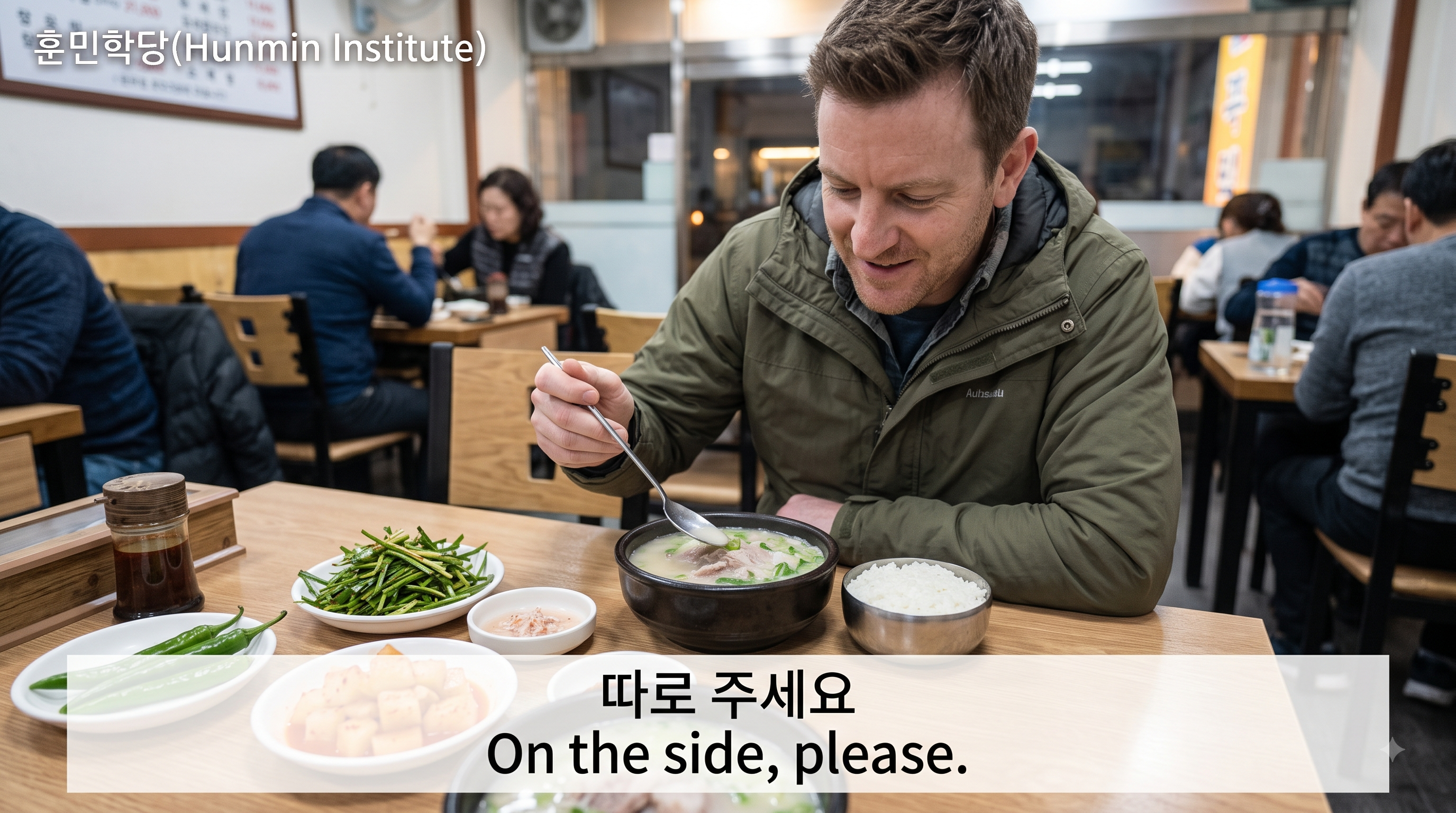
부산에서 하루를 마무리하는 자리는 대개 돼지국밥집입니다. 돼지뼈로 낸 국물에 고기를 넣고 밥과 함께 냅니다. 여기서 처음 듣는 말이 둘 있습니다. 하나는 밥을 어떻게 낼지 묻는 말이고, 다른 하나는 반찬 이름입니다.
A day in Busan tends to end at a dwaeji gukbap house: pork bone broth, sliced pork, rice. Two phrases here will be new. One asks how you want the rice served, and the other is the name of a side dish.
| 듣는 말 Listening |
하는 말 Speaking |
|---|---|
| 밥 따로 드릴까요? Rice on the side? |
따로 주세요. On the side, please. |
| 정구지 더 드릴까요? More jeongguji? |
정구지가 뭐예요? What is jeongguji? |
| 새우젓으로 간 맞추세요. Season it with the salted shrimp. |
이거 어떻게 먹어요? How do I eat this? |
Swap-in frames: [noun] on the side, please / What is [noun]? / How do I [verb] this?
▶ 따로 주세요는 밥을 국에 말지 말라는 뜻입니다.
▶ 따로 주세요 here means keep the rice out of the soup.
돼지국밥은 밥을 국에 말아 내는 것이 기본이라 밥 따로 드릴까요라고 묻습니다. 따로 주세요라고 답하면 밥이 그릇에 따로 나오고, 국물을 먼저 맛본 뒤 원하는 만큼 말아 먹을 수 있습니다. 전주 편에서 익힌 따로와 같은 말이지만 여기서는 기준이 소스가 아니라 밥입니다.
Dwaeji gukbap normally arrives with the rice already in the soup, which is why they ask 밥 따로 드릴까요. Answer 따로 주세요 and the rice comes in its own bowl, letting you taste the broth first and add as much as you want. It is the same 따로 you learned in Jeonju, but the thing being separated is rice, not sauce.
정구지는 부추를 가리키는 경상도 말입니다. 표준어가 아니므로 시험이나 서울에서는 부추라고 해야 하지만, 부산 국밥집에서는 정구지라는 말이 그대로 상에 올라옵니다. 간은 소금이 아니라 새우젓으로 맞추는데 조금씩 넣고 맛을 보시는 편이 좋습니다.
Jeongguji is the Gyeongsang word for garlic chives. It is not standard Korean, so use 부추 in an exam or in Seoul, but in a Busan gukbap house the dialect word comes to the table as it is. Seasoning is done with salted shrimp rather than salt, and it is best added a little at a time.
부산 원도심은 값을 묻는 말보다 순서를 확인하는 말이 더 많이 필요한 곳입니다. 어디서 사서 어디서 먹는지, 어디서 갈아타는지, 무엇이 값에 붙는지를 물으면 하루가 막히지 않습니다. 아래 단어장에서 오늘의 어휘를 정리하고 가시기 바랍니다.
Old Busan asks less about prices than about sequence. Where you buy and where you eat, where you change, what gets added to the bill: ask those and the day runs clean. Work through the vocabulary list below before you go.
Coming next: Part two rides east from here to Haeundae and Gijang, where the fare zone changes and a different set of phrases begins.
TOPIK Preview
유형: 토픽 Ⅰ 읽기, 빈칸에 알맞은 말 고르기
Type: TOPIK I Reading, choose the word for the blank
( )에 들어갈 말로 알맞은 것을 고르십시오.
Choose the word that best fits the blank.
① 요리해서
② 사서
③ 팔아서
④ 만나서
정답과 해설은 이 글의 맨 아래에 있습니다. 먼저 스스로 답해 보십시오.
The answer and explanation are at the very bottom of this post. Try it yourself first.
Frequently Asked Questions
Q1. 자갈치에서 회를 못 먹으면 무엇을 먹나요?
Q1. What if I cannot eat raw fish at Jagalchi?
A1. They will grill it, steam it or turn it into a spicy stew. Ask for it grilled before you head upstairs. Just outside the market there are also gukbap and milmyeon places within a short walk.
Q2. 감천문화마을은 얼마나 걸리나요?
Q2. How long does Gamcheon take?
A2. Two or three hours is plenty. The lanes run steeply up and down, so wear shoes you can walk in, and go while the light holds if you want the alleys and the viewpoints.
Q3. 1일권을 사는 게 나을까요?
Q3. Should I buy the one-day pass?
A3. Not for this itinerary. The old town connects on foot, the subway comes to two or three rides, and the pass does not cover the village bus you need for Gamcheon.
Q4. 시장에서 값을 깎아도 되나요?
Q4. Is haggling normal at the market?
A4. Adjusting the amount reads more naturally than pushing the price down. Say how many people you are and ask for that much, and the seller settles portion and price together.
1. 원도심(wondosim) : (n) old town center[oʊld taʊn]
2. 시장(sijang) : (n) market[ˈmɑːrkɪt]
3. 어시장(eosijang) : (n) fish market[fɪʃ ˈmɑːrkɪt]
4. 좌판(jwapan) : (n) market stall[stɔːl]
5. 상인(sangin) : (n) merchant, vendor[ˈvendər]
6. 손질하다(sonjilhada) : (v) to prepare, to clean fish[prɪˈper]
7. 회(hoe) : (n) sliced raw fish[rɔː fɪʃ]
8. 뜨다(tteuda) : (v) to slice fish for hoe[slaɪs]
9. 초장(chojang) : (n) red chili vinegar sauce[sɔːs]
10. 초장집(chojangjip) : (n) the upstairs restaurant that cooks your fish
11. 차림비(charimbi) : (n) table charge[tʃɑːrdʒ]
12. 매운탕(maeuntang) : (n) spicy fish stew[stuː]
13. 구이(gui) : (n) grilled dish[ɡrɪld]
14. 반찬(banchan) : (n) side dish[saɪd dɪʃ]
15. 국물(gungmul) : (n) broth[brɔːθ]
16. 어묵(eomuk) : (n) fish cake[fɪʃ keɪk]
17. 호떡(hotteok) : (n) filled griddle pancake[ˈpænkeɪk]
18. 씨앗(ssiat) : (n) seed[siːd]
19. 견과류(gyeon-gwaryu) : (n) nuts[nʌts]
20. 낱개(natgae) : (n) single item[piːs]
21. 돼지국밥(dwaeji gukbap) : (n) pork and rice soup[pɔːrk suːp]
22. 국밥(gukbap) : (n) rice served in soup[suːp]
23. 말다(malda) : (v) to put rice into soup[stɜːr ɪn]
24. 따로(ttaro) : (ad) separately, on the side[ˈseprətli]
25. 정구지(jeongguji) : (n) garlic chives, Gyeongsang dialect[tʃaɪvz]
26. 부추(buchu) : (n) garlic chives, standard Korean[tʃaɪvz]
27. 새우젓(saeujeot) : (n) salted shrimp[ˈsɔːltɪd ʃrɪmp]
28. 간(gan) : (n) seasoning, saltiness[ˈsiːzənɪŋ]
29. 사투리(saturi) : (n) dialect[ˈdaɪəlekt]
30. 표준어(pyojuneo) : (n) standard language[ˈstændərd]
31. 도시철도(dosicheoldo) : (n) urban railway, subway[ˈsʌbweɪ]
32. 호선(hoseon) : (n) subway line number[laɪn]
33. 구간(gugan) : (n) fare zone, section[zoʊn]
34. 환승(hwanseung) : (n) transfer[ˈtrænsfɜːr]
35. 갈아타다(garatada) : (v) to change vehicles[tʃeɪndʒ]
36. 찍다(jjikda) : (v) to tap a card[tæp]
37. 정기승차권(jeonggiseungchagwon) : (n) travel pass[pæs]
38. 교통카드(gyotongkadeu) : (n) transit card[ˈtrænzɪt kɑːrd]
39. 마을버스(maeulbeoseu) : (n) village bus[ˈvɪlɪdʒ bʌs]
40. 출구(chulgu) : (n) exit[ˈeksɪt]
41. 정류장(jeongnyujang) : (n) bus stop[bʌs stɑːp]
42. 내리다(naerida) : (v) to get off[ɡet ɔːf]
43. 산비탈(sanbital) : (n) hillside[ˈhɪlsaɪd]
44. 골목(golmok) : (n) alley, lane[ˈæli]
45. 벽화(byeokhwa) : (n) mural[ˈmjʊrəl]
46. 안내소(annaeso) : (n) information center[ˌɪnfərˈmeɪʃn]
47. 도장(dojang) : (n) stamp, seal[stæmp]
48. 전망대(jeonmangdae) : (n) observation deck[ˌɑːbzərˈveɪʃn dek]
49. 항구(hanggu) : (n) harbor, port[ˈhɑːrbər]
50. 광장(gwangjang) : (n) public square[skwer]
51. 공원(gong-won) : (n) park[pɑːrk]
52. 무료(muryo) : (n) free of charge[friː]
53. 계산(gyesan) : (n) paying the bill[bɪl]
54. 일행(ilhaeng) : (n) party, companions[ˈpɑːrti]
55. 인원(inwon) : (n) number of people[ˈnʌmbər]
56. 깎다(kkakda) : (v) to haggle down a price[ˈhæɡl]
57. 맞추다(matchuda) : (v) to adjust to fit[əˈdʒʌst]
58. 올라가다(ollagada) : (v) to go up[ɡoʊ ʌp]
Official Sources
부산광역시
Busan Metropolitan City
https://www.busan.go.kr
부산교통공사
Busan Transportation Corporation
https://www.humetro.busan.kr
비짓부산
Visit Busan
https://www.visitbusan.net
자갈치시장
Jagalchi Market
https://www.bisco.or.kr/jagalchimarket
감천문화마을
Gamcheon Culture Village
https://www.gamcheon.or.kr
TOPIK Preview Answer
정답 ① 요리해서
Answer: ① 요리해서
1층에서 산 생선을 2층에서 조리해 먹는다는 내용이므로 요리해서가 맞습니다. ②는 이미 1층에서 샀으므로 겹치고, ③의 파는 일은 손님이 하는 일이 아니며, ④는 지문과 관계가 없습니다.
The passage describes fish bought downstairs and cooked upstairs, so 요리해서 is correct. Buying already happened on the first floor, selling is not what the customer does, and meeting has nothing to do with the passage.
※본 콘텐츠(원고, 이미지, 예문 포함)는 저작권법에 의해 보호받는 훈민학당의 저작물입니다. 무단 복제, 전재, 재배포를 금합니다.
This content (manuscript, images, and example sentences) is the copyrighted property of Hunmin Institute, protected under copyright law. Unauthorized copying, reproduction, or redistribution is prohibited.
'K-Language(한국어교육)' 카테고리의 다른 글
| Haeundae and Gijang: Booking Times in East Busan (0) | 2026.08.13 |
|---|---|
| Jeonju Travel Guide: Hanok Village and How to Order (0) | 2026.08.12 |
| Gyeongju Travel Guide: Free Sites and Bus Korean (0) | 2026.08.12 |
| Korean Part-Time Job Interview Phrases for Foreigners (0) | 2026.08.11 |
| Korean Optician Phrases: No Prescription Needed (0) | 2026.08.09 |


