
How to Read Hangul Part 3: Pronunciation Rules
외국인 한글 공부 3부, 한글 발음 규칙 완전 정리
Hangul shifts its sound where letters meet, and these shifts are rules.
Here you learn four of them: liaison, tensing, aspiration, and nasalization.
한글은 글자와 글자가 만나는 자리에서 소리가 바뀌며 그것은 규칙입니다.
이 글에서 연음과 경음화, 격음화, 비음화 네 가지를 익힙니다.
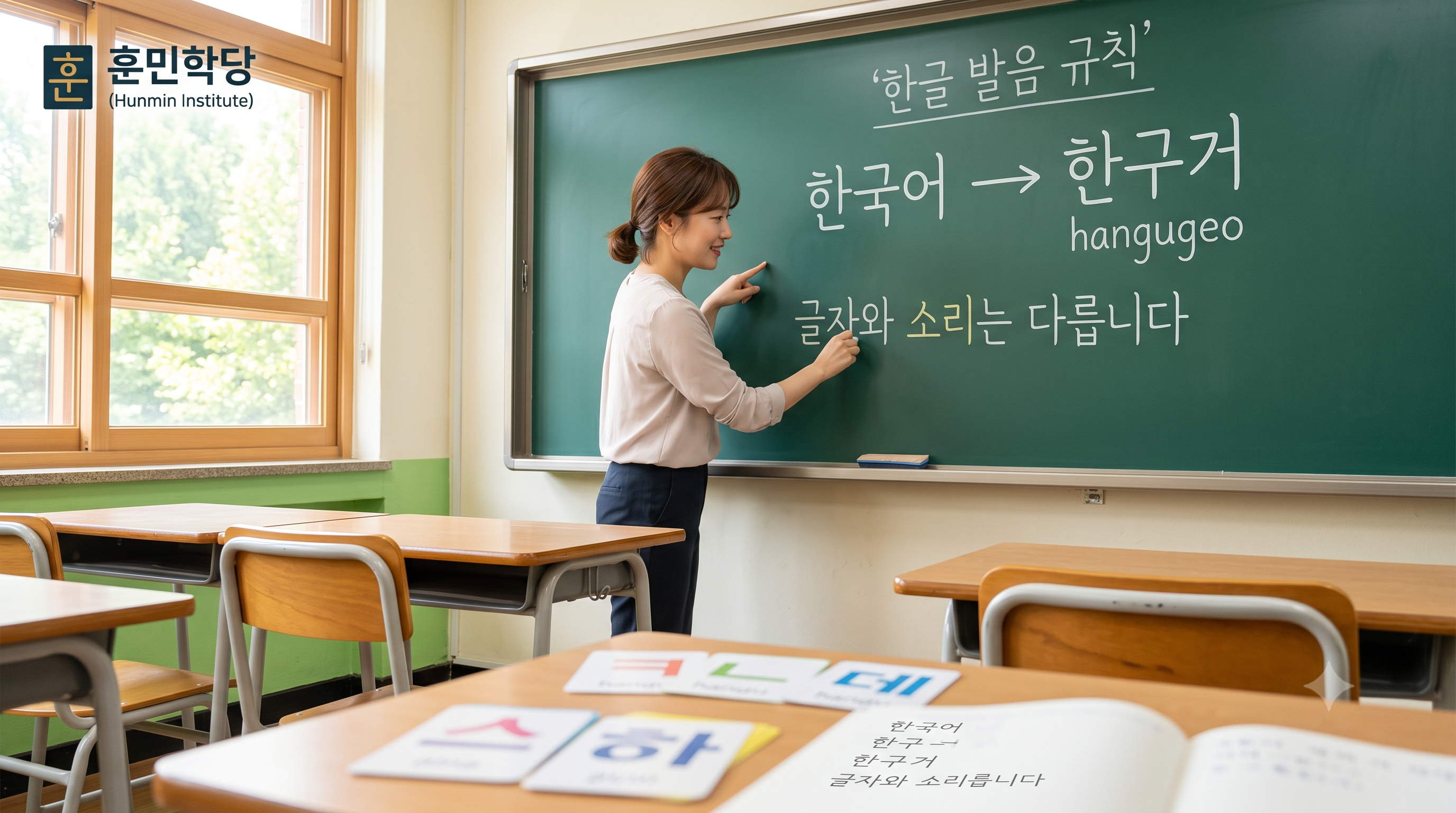
The learning services for the teaching materials published on this blog are free and open to everyone on the Hunmin Institute website ↗, with no account needed.
이 글에서 배우는 핵심 문장
Key Sentences in This Lesson
적는 글자와 들리는 소리가 어긋나는 자리에서 오가는 말입니다. 좌우는 한 쌍의 대화가 아니라 각각 따로 익히는 문장입니다.
These are the lines that come up where the written letter and the heard sound diverge. The two columns are not paired dialogue; learn each side on its own.
| 듣는 문장 Listening |
쓰는 문장 Writing |
|---|---|
| 소리가 바뀌어요. [soriga bakkwieoyo] The sound changes. |
왜 다르게 들려요? [wae dareuge deullyeoyo] Why does it sound different? |
| 이어서 읽어 보세요. [ieoseo ilgeo boseyo] Try reading them joined. |
이 낱말 뭐라고 읽어요? [i natmal mworago ilgeoyo] How is this word read? |
| 함니다로 발음해요. [hamnidaro bareumhaeyo] It is pronounced 함니다. |
이거 어떻게 발음해요? [igeo eotteoke bareumhaeyo] How do I pronounce this? |
첫째 줄은 소단락 1에서, 둘째 줄은 소단락 2에서, 셋째 줄은 소단락 4에서 각각 다룹니다.
The first row is covered in Section 1, the second in Section 2, and the third in Section 4.
1. 소리는 말하기 편한 쪽으로 움직입니다
Sound Moves Toward Whatever Is Easier to Say
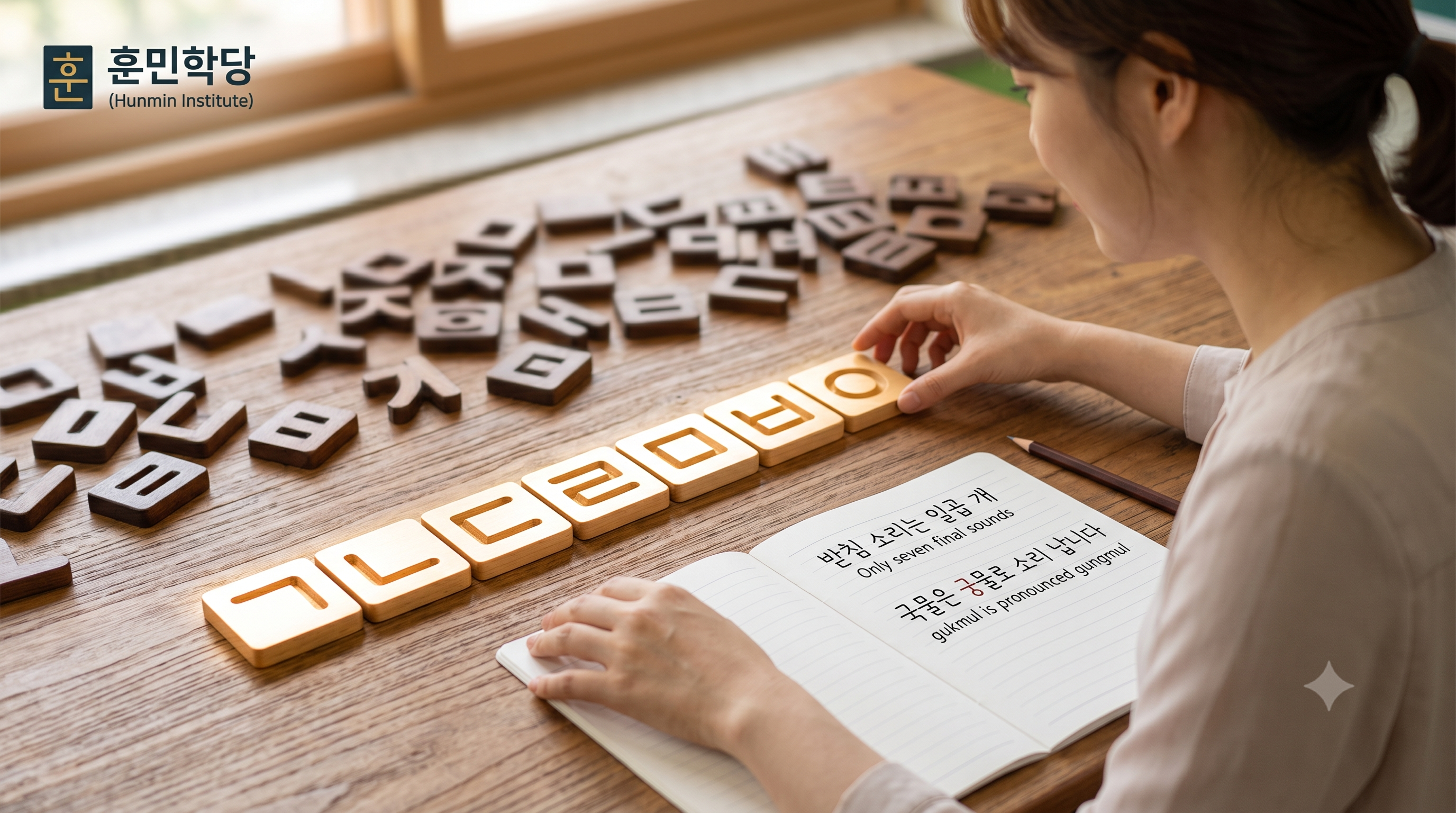
규칙이 생기는 이유는 단순합니다. 혀와 입이 덜 움직이는 쪽으로 소리가 기울기 때문입니다. 그 바탕에 2부에서 익힌 일곱 소리가 있으므로 먼저 확인하고 넘어가십시오.
The reason these rules exist is simple: sound leans toward whatever asks less of the tongue and mouth. The seven sounds you learned in Part 2 sit underneath all of it, so check them once before moving on.
| 받침에 쓰는 글자 Written finals |
실제 나는 소리 Sound it makes |
예시 Example |
|---|---|---|
| ㄱ, ㅋ, ㄲ | k | 부엌 / 약 / 책 / 밖 [bueok] / [yak] / [chaek] / [bak] kitchen / medicine / book / outside |
| ㄴ | n | 산 / 돈 / 문 / 눈 [san] / [don] / [mun] / [nun] mountain / money / door / eye |
| ㄷ, ㅅ, ㅆ, ㅈ, ㅊ, ㅌ | t | 옷 / 꽃 / 밭 / 낮 [ot] / [kkot] / [bat] / [nat] clothes / flower / field / daytime |
| ㄹ | l | 물 / 발 / 달 / 길 [mul] / [bal] / [dal] / [gil] water / foot / moon / road |
| ㅁ | m | 밤 / 봄 / 김 / 힘 [bam] / [bom] / [gim] / [him] night / spring / laver / strength |
| ㅂ, ㅍ | p | 앞 / 밥 / 입 / 옆 [ap] / [bap] / [ip] / [yeop] front / cooked rice / mouth / side |
| ㅇ | ng | 강 / 방 / 형 / 창문 [gang] / [bang] / [hyeong] / [changmun] river / room / older brother / window |
여기서 쓰는 문장부터 배워 봅시다. 들리는 소리가 글자와 어긋날 때 오가는 문장입니다.
Now for the sentences you use here. These go back and forth when what you hear does not match the letters.
| 듣는 문장 Listening |
쓰는 문장 Writing |
|---|---|
| 소리가 바뀌어요. [soriga bakkwieoyo] The sound changes. |
왜 다르게 들려요? [wae dareuge deullyeoyo] Why does it sound different? |
| 그게 말하기 편해요. [geuge malhagi pyeonhaeyo] That way is easier to say. |
글자하고 소리가 달라요? [geuljahago soriga dallayo] Does the letter differ from the sound? |
응용 Apply It
↳ 왜 [부사] 들려요?
wae [adverb] deullyeoyo
Why does it sound [adverb]?
ex 왜 [다르게] 들려요?/왜 [빠르게] 들려요?
ROM wae [dareuge] deullyeoyo/wae [ppareuge] deullyeoyo
EN Why does it sound different?/Why does it sound fast?
▶소리는 게을러지는 쪽으로 움직이고, 그 자리에서 규칙이 생깁니다.
Sound moves toward the lazier path, and that is where the rules come from.
국물을 적힌 대로 내려면 혀가 ㄱ 자리에서 ㅁ 자리로 단번에 건너뛰어야 합니다. 그래서 한국인은 궁물이라고 냅니다. 게으름이 아니라 경제성이며, 모든 언어가 같은 방식으로 소리를 다듬습니다.
To say 국물 as written, the tongue would have to leap from the ㄱ position straight to the ㅁ position. So Koreans say 궁물. This is economy rather than laziness, and every language trims its sounds the same way.
이 원리를 잡으면 아래 네 규칙이 외울 목록이 아니라 따라갈 수 있는 흐름으로 보입니다. 부엌의 ㅋ이 ㄱ으로, 옷의 ㅅ이 ㄷ으로 닫히는 것도 같은 자리에서 나온 일입니다.
Hold this and the four rules below stop being a list to memorize and become a logic you can follow. The ㅋ of 부엌 closing as ㄱ and the ㅅ of 옷 as ㄷ come from the same place.
2. 연음, 받침이 뒤 글자로 넘어갑니다
Liaison, the Final Consonant Slides Over
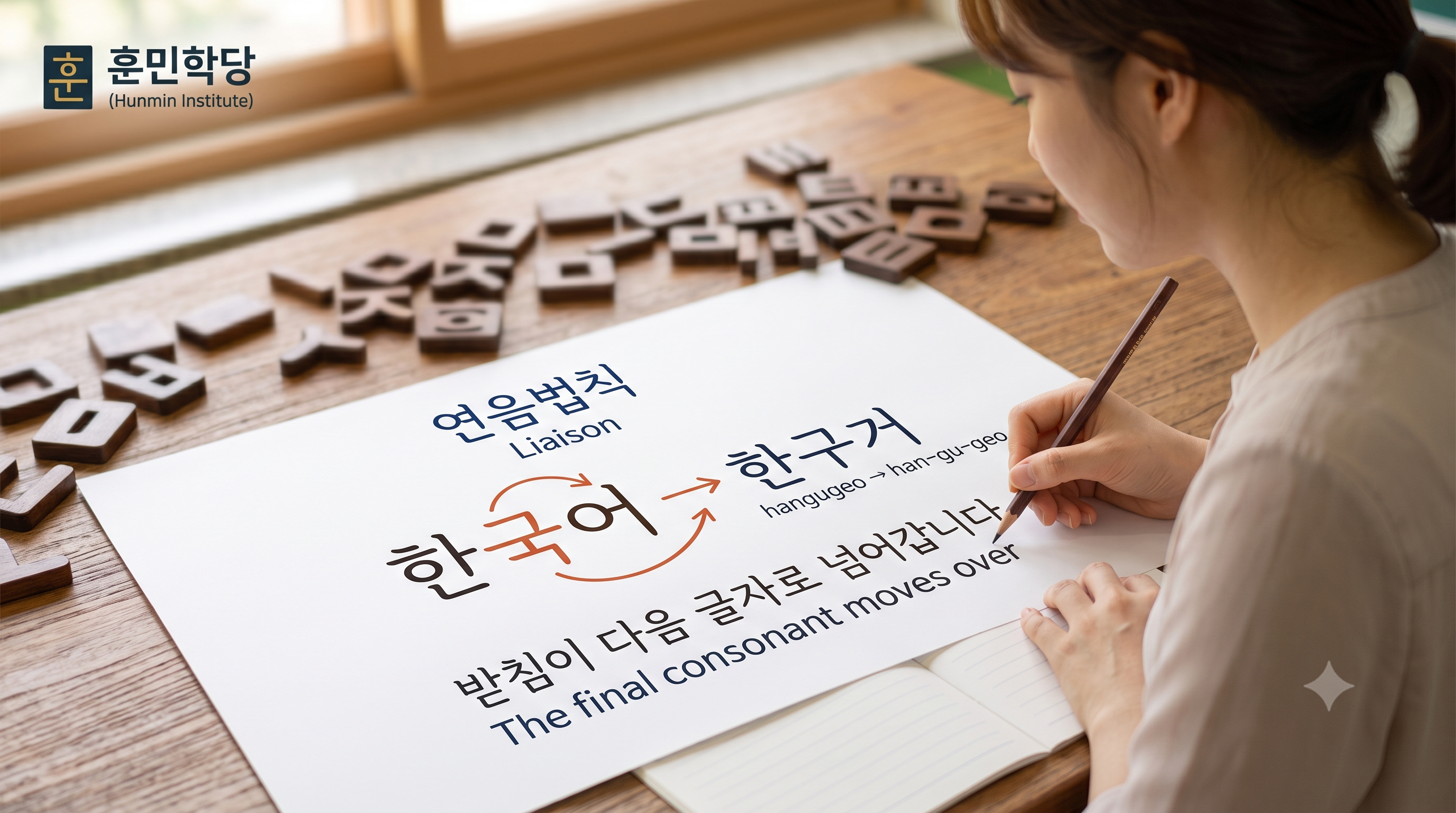
받침이 있는 글자 뒤에 모음으로 시작하는 글자가 오면 그 받침이 뒤 글자의 첫소리 자리로 넘어갑니다. 네 규칙 가운데 가장 자주 일어나는 것이 이것입니다.
When a syllable with a batchim is followed by one beginning with a vowel, that batchim slides into the next syllable’s initial slot. Of the four rules, this one happens most often.
| 표기 Spelling |
실제 발음 Actual sound |
확인할 점 What to check |
|---|---|---|
| 한국어 [hangugeo] |
한구거 | 받침 ㄱ이 뒤 글자로 넘어갑니다 The final ㄱ moves into the next syllable |
| 음악 [eumak] |
으막 | 받침 ㅁ이 뒤 글자로 넘어갑니다 The final ㅁ moves into the next syllable |
| 꽃을 [kkocheul] |
꼬츨 | 조사 앞에서 ㅊ이 그대로 넘어갑니다 Before a particle, ㅊ carries over as itself |
| 옷이 [osi] |
오시 | 홀로 있을 때는 옫이지만 조사가 붙으면 되살아납니다 Alone it closes as 옫, but a particle brings the ㅅ back |
| 국물이 [gungmuri] |
궁무리 | 비음화가 먼저 일어나고 그다음 연음이 일어납니다 Nasalization happens first, then liaison |
여기서 쓰는 문장부터 배워 봅시다. 이어 읽는 법을 물을 때 오가는 문장입니다.
Now for the sentences you use here. These go back and forth when you ask how to read things joined.
| 듣는 문장 Listening |
쓰는 문장 Writing |
|---|---|
| 이어서 읽어 보세요. [ieoseo ilgeo boseyo] Try reading them joined. |
이 낱말 뭐라고 읽어요? [i natmal mworago ilgeoyo] How is this word read? |
| 받침이 뒤로 넘어가요. [batchimi dwiro neomeogayo] The batchim moves to the next syllable. |
글자대로 안 읽어요? [geuljadaero an ilgeoyo] Do you not read it as written? |
▶받침이 넘어가는 것은 그 자리가 비어 있기 때문입니다.
The batchim moves because the slot ahead of it is empty.
첫소리 자리의 ㅇ은 아무 소리도 내지 않는 빈자리입니다. 1부에서 익힌 그 성질이 여기서 쓰입니다. 빈자리가 있으면 앞의 받침이 자연스럽게 그리로 옮겨 갑니다.
The ㅇ in the initial position makes no sound at all. The property you learned in Part 1 does its work here. Where a slot sits empty, the preceding final naturally slides into it.
조사가 붙는 자리에서 특히 자주 나타납니다. 한국어는 명사 뒤에 조사가 붙는 언어이고 그 조사가 대개 모음으로 시작하기 때문입니다. 연음은 규칙이라기보다 습관이므로 글자를 하나씩 끊지 말고 이어서 읽는 연습만 하시면 몸에 붙습니다.
It shows up most where particles attach, since Korean puts particles behind nouns and most of them begin with a vowel. Liaison is less a rule than a habit, so just practise reading in connected stretches instead of block by block.
3. 경음화와 격음화, 뒤 소리가 세집니다
Tensing and Aspiration, the Next Sound Grows Stronger
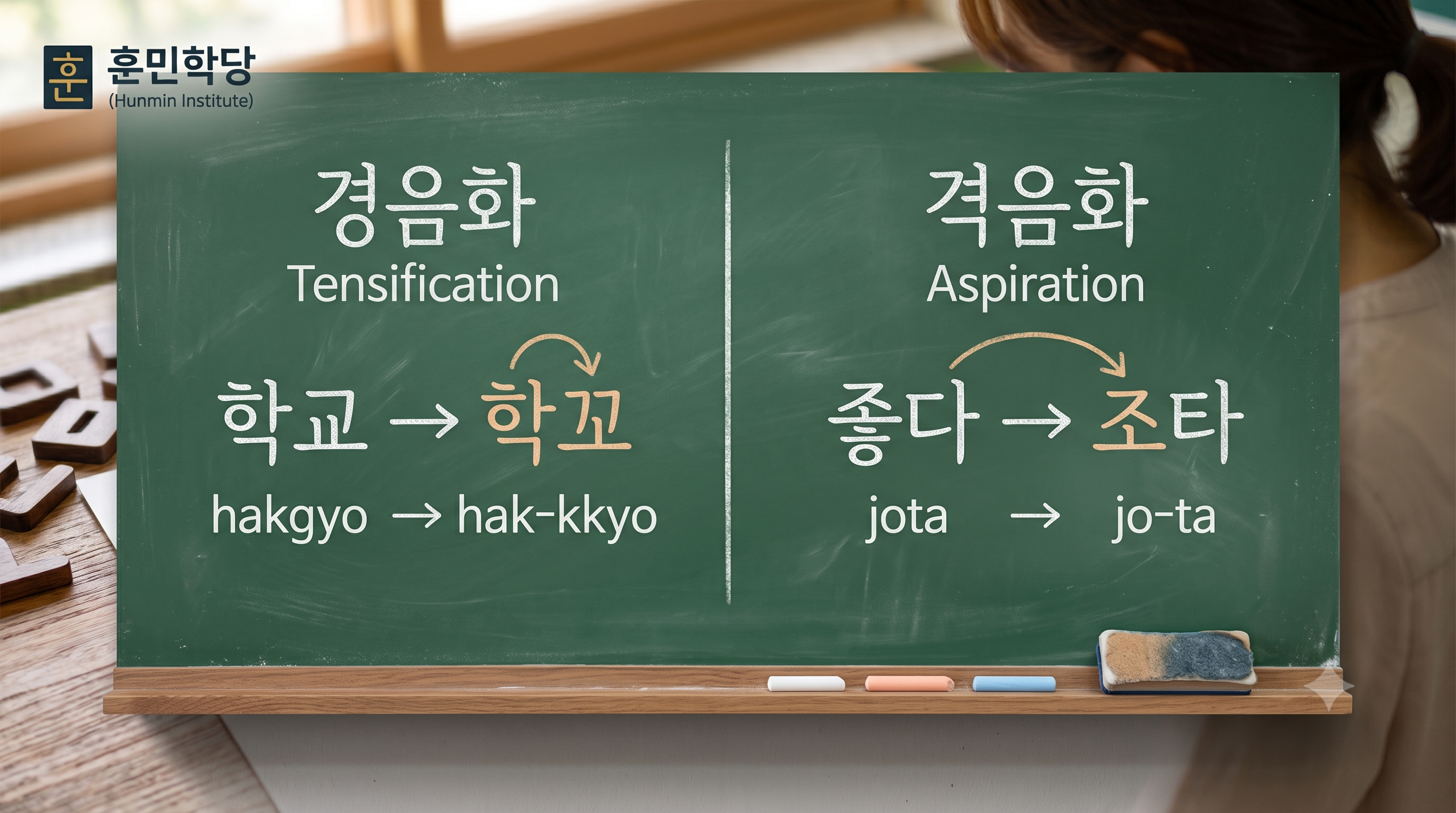
두 규칙은 뒤에 오는 소리를 세게 만든다는 점이 같고 세지는 방향이 다릅니다. 여기에 ㅎ이 아예 사라지는 자리까지 함께 봅니다.
Both rules strengthen the sound that follows, and they differ in direction. Alongside them sits a case where ㅎ disappears altogether.
| 구분 Type |
표기와 발음 Spelling and sound |
같은 규칙의 예 More of the same rule |
|---|---|---|
| 경음화 [gyeongeumhwa] |
학교 → 학꾜 | 국밥 / 식사 / 학생 / 잡지 [gukbap] / [siksa] / [haksaeng] / [japji] rice soup / a meal / student / magazine |
| 격음화 [gyeogeumhwa] |
좋다 → 조타 | 축하 / 많다 / 좋고 / 입학 [chuka] / [manta] / [joko] / [ipak] congratulation / to be many / good and / entering school |
| ㅎ 탈락 [hieut tallak] |
좋아요 → 조아요 | 넣어요 / 많아요 / 좋은 / 놓아요 [neoeoyo] / [manayo] / [joeun] / [noayo] to put in / there are many / good / to put down |
여기서 쓰는 문장부터 배워 봅시다. 세진 소리를 물을 때 오가는 문장입니다.
Now for the sentences you use here. These go back and forth when you ask about a strengthened sound.
| 듣는 문장 Listening |
쓰는 문장 Writing |
|---|---|
| 소리가 세져요. [soriga sejyeoyo] The sound gets stronger. |
이거 어떻게 읽어요? [igeo eotteoke ilgeoyo] How do I read this? |
| 히읗은 없어져요. [hieuseun eopseojyeoyo] The ㅎ disappears. |
여기 히읗은 뭐예요? [yeogi hieuseun mwoyeyo] What happens to this ㅎ? |
▶ㅎ은 제 소리를 버리는 대신 옆의 소리를 거세게 만듭니다.
ㅎ gives up its own sound to strengthen the one beside it.
경음화는 된소리가 되는 변화입니다. 받침 ㄱ, ㄷ, ㅂ 뒤에 ㄱ, ㄷ, ㅂ, ㅅ, ㅈ이 오면 각각 ㄲ, ㄸ, ㅃ, ㅆ, ㅉ으로 바뀝니다. 학교가 학꾜로, 국밥이 국빱으로 나는 것이 그것입니다.
Tensing makes the next consonant tense: after a final ㄱ, ㄷ, or ㅂ, the sounds ㄱ, ㄷ, ㅂ, ㅅ, ㅈ become ㄲ, ㄸ, ㅃ, ㅆ, ㅉ. That is why 학교 sounds as 학꾜 and 국밥 as 국빱.
격음화는 거센소리가 되는 변화이며 ㅎ이 관여합니다. 받침 ㅎ이 ㄱ, ㄷ, ㅂ, ㅈ을 만나면 ㅋ, ㅌ, ㅍ, ㅊ이 됩니다. 다만 ㅎ 뒤에 모음이 오면 아예 사라집니다. 좋아요를 조아요로 내는 것이 그 경우이며 이것은 격음화가 아니라 ㅎ 탈락입니다.
Aspiration involves ㅎ: a final ㅎ meeting ㄱ, ㄷ, ㅂ, or ㅈ turns them into ㅋ, ㅌ, ㅍ, ㅊ. Before a vowel, though, ㅎ vanishes entirely. 좋아요 said as 조아요 is that case, and it is deletion, not aspiration.
4. 비음화, 코로 나가는 소리로 바뀝니다
Nasalization, Sounds That Turn Toward the Nose
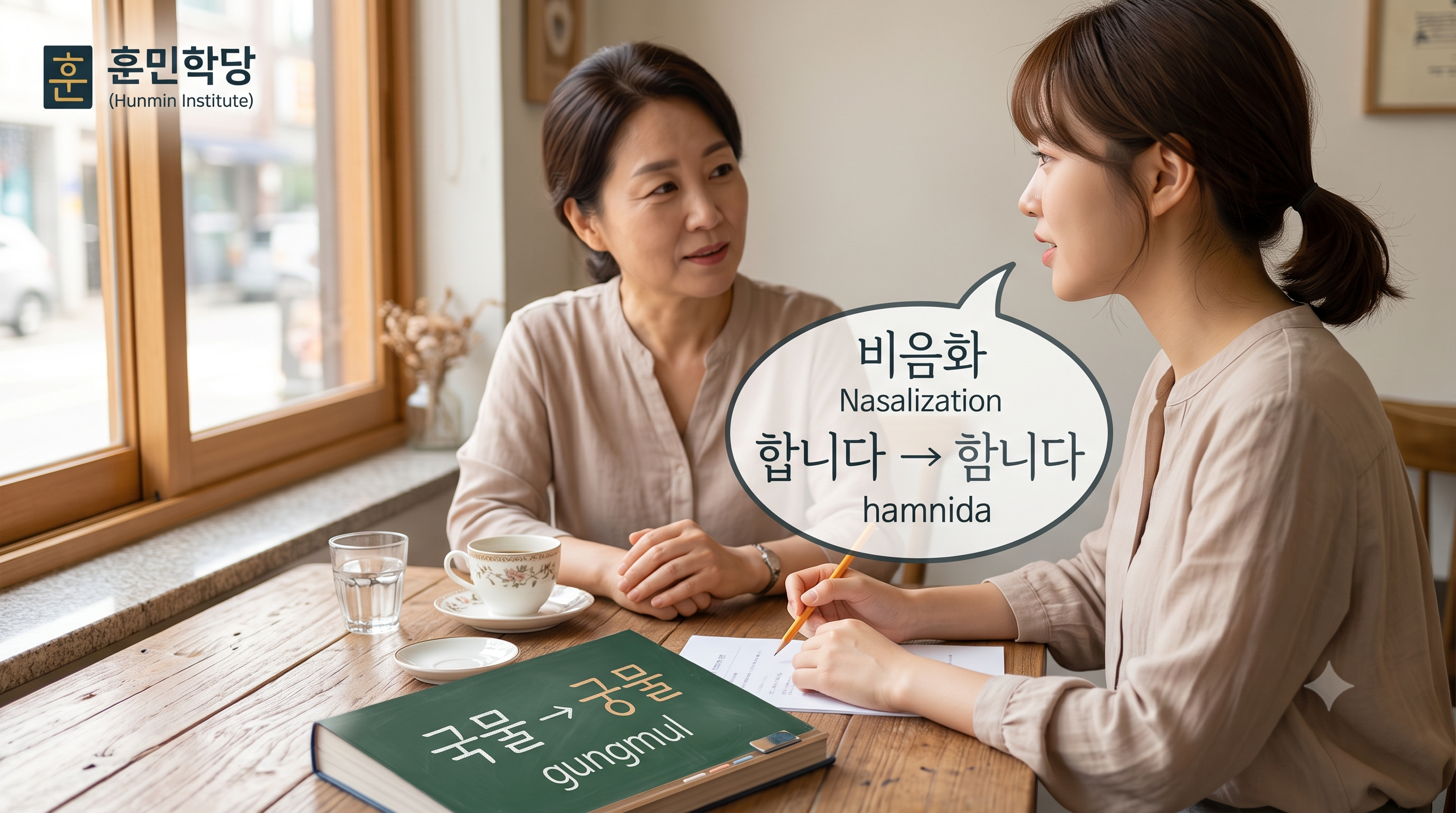
비음은 코로 공기가 나가며 나는 소리이며 한국어에서는 ㄴ, ㅁ, ㅇ이 여기 듭니다. 받침 ㄱ, ㄷ, ㅂ이 ㄴ이나 ㅁ 앞에서 각각 ㅇ, ㄴ, ㅁ으로 바뀌는 것이 비음화입니다.
A nasal is made as air passes through the nose; in Korean these are ㄴ, ㅁ, and ㅇ. Nasalization is when a final ㄱ, ㄷ, or ㅂ becomes ㅇ, ㄴ, or ㅁ before ㄴ or ㅁ.
| 표기 Spelling |
실제 발음 Actual sound |
바뀌는 자리 Where it changes |
|---|---|---|
| 국물 [gungmul] |
궁물 | ㄱ이 ㅁ 앞에서 ㅇ으로 ㄱ becomes ㅇ before ㅁ |
| 합니다 [hamnida] |
함니다 | ㅂ이 ㄴ 앞에서 ㅁ으로 ㅂ becomes ㅁ before ㄴ |
| 입니다 [imnida] |
임니다 | ㅂ이 ㄴ 앞에서 ㅁ으로 ㅂ becomes ㅁ before ㄴ |
| 받는 [banneun] |
반는 | ㄷ이 ㄴ 앞에서 ㄴ으로 ㄷ becomes ㄴ before ㄴ |
| 학년 [hangnyeon] |
항년 | ㄱ이 ㄴ 앞에서 ㅇ으로 ㄱ becomes ㅇ before ㄴ |
여기서 쓰는 문장부터 배워 봅시다. 말끝의 발음을 물을 때 오가는 문장입니다.
Now for the sentences you use here. These go back and forth when you ask about a sentence ending.
| 듣는 문장 Listening |
쓰는 문장 Writing |
|---|---|
| 함니다로 발음해요. [hamnidaro bareumhaeyo] It is pronounced 함니다. |
이거 어떻게 발음해요? [igeo eotteoke bareumhaeyo] How do I pronounce this? |
| 코로 나가는 소리예요. [koro naganeun soriyeyo] It is a sound that goes out through the nose. |
왜 미음으로 들려요? [wae mieumeuro deullyeoyo] Why does it sound like ㅁ? |
▶가장 자주 쓰는 말끝이 이 규칙 위에 있어 듣기가 크게 편해집니다.
The most common sentence ending sits on this rule, so learning it makes listening far easier.
존댓말에서 특히 중요합니다. 정중한 말끝인 합니다는 거의 언제나 함니다로 납니다. 감사합니다, 반갑습니다, 알겠습니다가 모두 이 규칙 위에 서 있으므로 이 하나만 잡아도 들리는 말이 크게 늘어납니다.
It matters most in polite speech. The polite ending 합니다 is almost always said as 함니다. 감사합니다, 반갑습니다, and 알겠습니다 all stand on this rule, so holding just this one sharply increases what you can catch.
글자 그대로 또박또박 내면 오히려 어색하게 들립니다. 규칙을 어기지 않으려다 규칙을 어기는 셈이므로, 적을 때는 합니다로 적고 읽을 때는 함니다로 읽는다고 갈라 두십시오.
Pronouncing every letter clearly actually sounds unnatural; trying not to break the rule is how you break it. Keep the two apart: write 합니다, read 함니다.
5. 규칙은 외우지 말고 확인하십시오
Do Not Memorize the Rules, Confirm Them
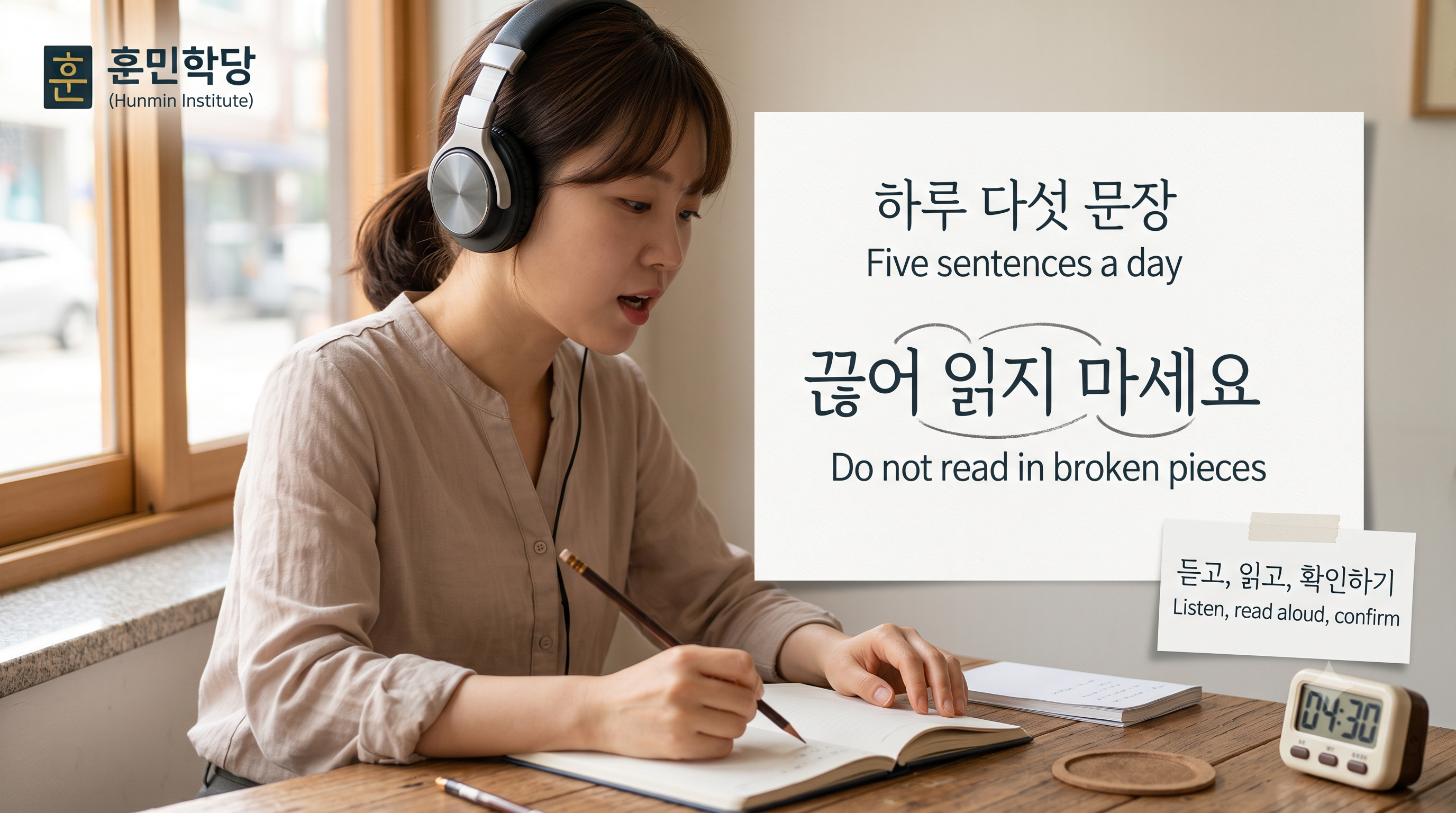
네 가지를 다 읽으셨다면 이제 외우려 하지 마십시오. 규칙은 외우는 것이 아니라 문장 안에서 확인하는 것입니다. 아래 세 단계를 하루 분량으로 잡으십시오.
Now that you have read all four, do not try to memorize them. Rules are for confirming inside sentences, not for memorizing. Take the three steps below as one day’s work.
| 단계 Step |
무엇을 하는가 What you do |
오늘 읽을 문장 Read this aloud today |
|---|---|---|
| 1단계 듣기 Step 1, listen |
짧은 문장을 듣고 자막과 다르게 들리는 자리를 표시합니다 Listen to a short sentence and mark where it differs from the subtitles |
감사합니다 → 감사함니다 |
| 2단계 읽기 Step 2, read aloud |
눈으로만 보지 않고 입으로 냅니다. 하루 다섯 문장이면 충분합니다 Say it with your mouth, not just your eyes. Five sentences a day is enough |
음악 좋아요 → 으막 조아요 |
| 3단계 덩어리 Step 3, chunk it |
두세 글자를 한 덩어리로 묶어 읽으면 연음이 저절로 일어납니다 Group two or three syllables and liaison happens on its own |
국물이 맛있어요 → 궁무리 마시써요 |
여기서 쓰는 문장부터 배워 봅시다. 연습 방법을 정할 때 오가는 문장입니다.
Now for the sentences you use here. These go back and forth when you settle on how to practise.
| 듣는 문장 Listening |
쓰는 문장 Writing |
|---|---|
| 끊어서 읽지 마세요. [kkeuneoseo ikji maseyo] Do not read it in broken pieces. |
이제 이어서 읽어 볼게요. [ije ieoseo ilgeo bolgeyo] Let me try reading it joined now. |
| 매일 소리 내어 읽으세요. [maeil sori naeeo ilgeuseyo] Read aloud every day. |
하루에 몇 문장이 좋아요? [harue myeot munjangi joayo] How many sentences a day is good? |
▶눈으로만 보면 지식으로 남고 입으로 내면 습관이 됩니다.
Eyes alone leave knowledge; the mouth makes habit.
먼저 소리부터 들으십시오. 짧은 문장을 듣고 자막을 보며 어느 자리가 다르게 들리는지 표시하면, 그 자리가 대개 오늘 배운 넷 가운데 하나입니다. 규칙을 찾아 붙이는 것이 아니라 이미 일어난 것을 확인하는 순서입니다.
Start with sound. Listen to a short sentence, follow the subtitles, and mark where the two differ; that spot is almost always one of the four you learned today. The order is to confirm what has already happened, not to hunt for a rule to apply.
끊어 읽지 마십시오. 규칙은 글자와 글자가 만나는 자리에서 일어나므로 한 글자씩 떼어 읽으면 규칙이 일어날 자리 자체가 사라집니다. 두세 글자를 한 덩어리로 묶어 읽는 것만으로 연음은 저절로 일어납니다.
Do not read in broken pieces. The rules happen where letters meet, so reading one block at a time removes the very place they occur. Group two or three syllables and liaison takes care of itself.
한글은 적는 대로 읽지 않습니다. 소리가 말하기 편한 쪽으로 움직이면서 받침이 넘어가고, 뒤 소리가 세지고, 코로 나가는 소리로 바뀝니다. 네 규칙을 외우는 대신 문장 안에서 확인하는 습관을 들이면 적힌 글과 들리는 말이 하나로 이어집니다. 다음은 지금까지 배운 것을 실제 문장으로 읽어 보는 자리입니다.
Hangul is not read the way it is written. As sound leans toward what is easier to say, finals slide over, following sounds tense, and others turn toward the nose. Build the habit of confirming the four rules inside sentences instead of memorizing them, and what is written joins up with what you hear. Next comes reading real sentences with everything you have learned so far.
Next: How to Read Hangul Part 4: Reading Practice ↗
토픽 맛보기
TOPIK Preview
유형: TOPIK Ⅰ 읽기 [40~42], 설명문, 일치하지 않는 내용 고르기
Type: TOPIK I Reading [40–42], expository text, choose the statement that does not match
다음을 읽고 내용이 같지 않은 것을 고르십시오.
Read the passage and choose the statement that does not match.
받침 ㄱ, ㄷ, ㅂ은 ㄴ이나 ㅁ 앞에서 소리가 바뀝니다. 국물은 궁물로, 합니다는 함니다로 납니다. 코로 공기가 나가는 소리로 바뀌기 때문입니다.
Final ㄱ, ㄷ, and ㅂ change before ㄴ or ㅁ. 국물 sounds as 궁물 and 합니다 as 함니다, because they turn into sounds made with air passing through the nose.
① 국물은 궁물로 발음합니다.
② 합니다는 함니다로 발음합니다.
③ 받침이 ㄴ이나 ㅁ 앞에서 바뀝니다.
④ 바뀐 소리는 코로 나가지 않습니다.
Answer ▾
정답 ④ 바뀐 소리는 코로 나가지 않습니다.
Answer: ④ The changed sounds do not go through the nose.
지문이 코로 공기가 나가는 소리로 바뀐다고 했으므로 코로 나가지 않는다는 ④가 지문과 다릅니다. ①과 ②는 예로 든 두 낱말을 그대로 옮겼고, ③은 바뀌는 자리를 그대로 옮겨 모두 지문과 같습니다. 흉내 낸 대문항은 TOPIK Ⅰ 읽기 [40~42] 일치하지 않는 내용 고르기이고 배점은 3점입니다.
The passage says the sounds turn into ones made with air through the nose, so ④ contradicts it. ① and ② repeat the two example words as given, and ③ repeats where the change happens, so all three match the passage. The item type modeled here is TOPIK I Reading [40–42], worth 3 points.
FAQ
Q1. 규칙을 다 외워야 하나요?Answer ▾
Q1. Do I have to memorize all the rules?
A1. 외우는 것이 아니라 확인하는 것입니다. 짧은 문장을 듣고 자막과 다르게 들리는 자리를 표시하면 그 자리가 대개 네 규칙 가운데 하나입니다. 규칙을 먼저 외우고 문장을 찾는 것보다 문장에서 규칙을 찾아내는 편이 훨씬 빠릅니다.
A1. They are for confirming, not memorizing. Listen to a short sentence, follow the subtitles, and mark where the two differ; that spot is almost always one of the four. Finding rules inside sentences beats memorizing rules and then hunting for sentences.
Q2. 적을 때도 소리 나는 대로 적나요?Answer ▾
Q2. Do I write it the way it sounds?
A2. 아닙니다. 적을 때는 본디 글자를 그대로 씁니다. 합니다를 함니다로 적지 않습니다. 소리 나는 대로 적으면 낱말의 뿌리가 보이지 않아 뜻을 찾기 어려워집니다. 소리는 읽을 때만 바뀝니다.
A2. No. Write the original letters. 합니다 is never written 함니다. Spelling by sound would hide the root of the word and make its meaning hard to trace. The sound changes only when you read.
Q3. 또박또박 발음하면 안 되나요?Answer ▾
Q3. Is it wrong to pronounce every letter clearly?
A3. 뜻은 통하지만 어색하게 들립니다. 특히 합니다처럼 자주 쓰는 말끝은 거의 언제나 함니다로 납니다. 글자 그대로 내면 오히려 알아듣기 어려워하는 경우도 있습니다.
A3. The meaning gets through, but it sounds unnatural. Common endings like 합니다 are almost always said as 함니다. Saying every letter can even make you harder to follow.
Q4. 규칙이 두 개 겹치는 낱말은 어떻게 읽나요?Answer ▾
Q4. How do I read a word where two rules overlap?
A4. 순서가 있습니다. 국물이는 먼저 비음화로 궁물이 되고 그다음 연음이 일어나 궁무리가 됩니다. 겹치는 자리는 드물지 않으므로 낱말 단위로 익혀 두시는 편이 편합니다.
A4. There is an order. 국물이 first becomes 궁물 by nasalization, then liaison gives 궁무리. Overlaps are not rare, so it is easier to learn them word by word.
Q5. 표준 발음이 헷갈리면 어디서 확인하나요?Answer ▾
Q5. Where do I check a standard pronunciation?
A5. 국립국어원 누리집의 표준 발음법 원문과 한국어기초사전에서 확인할 수 있습니다. 기초사전은 낱말마다 표준 발음을 함께 실어 두어 초급 학습자도 바로 확인할 수 있습니다.
A5. In the Standard Pronunciation Rules on the National Institute of Korean Language site and in its Korean Basic Dictionary. The dictionary lists the standard pronunciation with each word, so beginners can check it directly.
Vocabulary and Pronunciation for Foreigners
| No | Korean | Romanisation | Meaning |
|---|---|---|---|
| 1 | 발음 | bareum | (n) pronunciation [prəˌnʌnsiˈeɪʃn] |
| 2 | 연음 | yeoneum | (n) liaison [liˈeɪzɑːn] |
| 3 | 경음화 | gyeongeumhwa | (n) tensing [ˈtensɪŋ] |
| 4 | 비음화 | bieumhwa | (n) nasalization [ˌneɪzələˈzeɪʃn] |
| 5 | 받침 | batchim | (n) batchim, final consonant [ˈfaɪnl] |
| ▾ 단어 84개 더 보기 Show 84 more ↗ | |||
The blog page has limits of space and function, so only five words are shown here. The rest of the word list, the audio, the sentences and tables, the FAQ, the worksheet, the TOPIK questions and the lesson video are on the Hunmin Institute website ↗, free and open to everyone, with no account needed.
참고 기관
Official Sources
국립국어원 ↗
National Institute of Korean Language
https://www.korean.go.kr/
기관 설명 보기 About this institute ▾
This institute sets Korean orthography, the standard pronunciation rules, and the Romanization system. The Language Norms menu at the top of the site holds the full text of the Standard Pronunciation Rules, where you can see which article covers liaison, tensing, aspiration, and nasalization. Word-by-word standard pronunciations sit in the Korean Basic Dictionary run by the same institute. Norms can be revised, so check here whenever something is unclear.
※ 본 콘텐츠(원고, 이미지, 예문 포함)는 저작권법에 의해 보호받는 훈민학당의 저작물입니다. 무단 복제, 전재, 재배포 및 AI 학습 데이터로의 이용을 금합니다.
This content (manuscript, images, and example sentences) is the copyrighted property of Hunmin Institute, protected under copyright law. Unauthorized copying, reproduction, redistribution, and use as AI training data are prohibited.
'Reading Skills' 카테고리의 다른 글
| TOPIK Is a Scoring System, Not Just a Test (0) | 2026.07.27 |
|---|---|
| Korean Word Order Explained: Understand Any Sentence (0) | 2026.07.25 |
| How to Read Hangul Part 4: Reading Practice (0) | 2026.07.25 |
| How to Read Hangul Part 2: Batchim (0) | 2026.07.23 |
| How to Read Hangul Part 1: Consonants and Vowels (0) | 2026.07.22 |


