
Korean Parcel Delivery Phrases
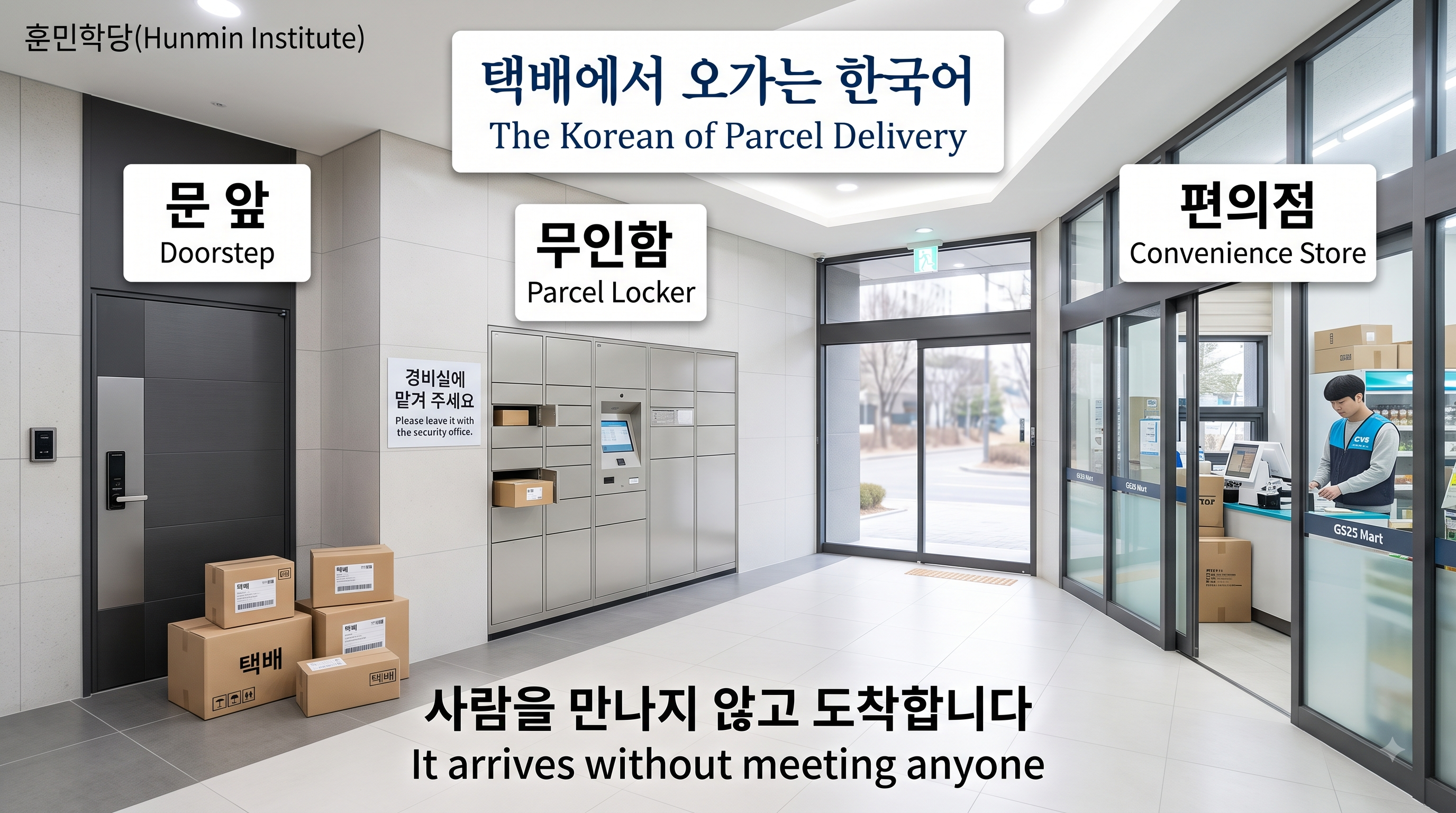
한국에서 택배는 대개 사람을 만나지 않고 끝납니다
A parcel in Korea meets a person in only two places: the store counter and the driver's call.
This post teaches the Korean for picking one up, sending one out, and reporting one that went missing.
한국에서 택배가 사람을 만나는 자리는 편의점 카운터와 기사의 전화 두 곳뿐입니다.
이 글에서 택배를 찾고 보내고 문제가 생겼을 때 쓰는 한국어를 익힙니다.
이 글에서 배우는 핵심 회화
Key Expressions in This Lesson
택배에서 오가는 말은 자리마다 정해져 있습니다. 아래 여섯 문장은 좌우가 한 쌍의 대화가 아니라 각각 따로 익히는 문장입니다. 먼저 눈에 담고 본문으로 들어가십시오.
The lines that come up around parcels are fixed, and they change with where you are standing. The two columns are not paired dialogue; each sentence is learned on its own. Take them in first, then move into the main text.
| 듣는 말 Listening |
하는 말 Speaking |
|---|---|
| 문 앞에 두고 갈까요? [mun ape dugo galkkayo] Shall I leave it at your door? |
경비실에 맡겨 주세요. [gyeongbisire matgyeo juseyo] Please leave it with the security office. |
| 성함이랑 뒷번호 네 자리 불러 주세요. [seonghamirang dwitbeonho ne jari bulleo juseyo] Your name and the last four digits, please. |
택배 찾으러 왔어요. [taekbae chajeureo wasseoyo] I am here to pick up a parcel. |
| 송장 번호로 조회해 보세요. [songjang beonhoro johoehae boseyo] Try looking it up with the tracking number. |
배송 완료라는데 물건이 없어요. [baesong wallyoraneunde mulgeoni eopseoyo] It says delivered, but there is nothing here. |
첫째 줄은 소단락 2에서, 둘째 줄은 소단락 3에서, 셋째 줄은 소단락 5에서 다룹니다.
The first row is covered in Section 2, the second in Section 3, and the third in Section 5.
1. 사람을 만나지 않는 배송
Delivery Without Meeting Anyone
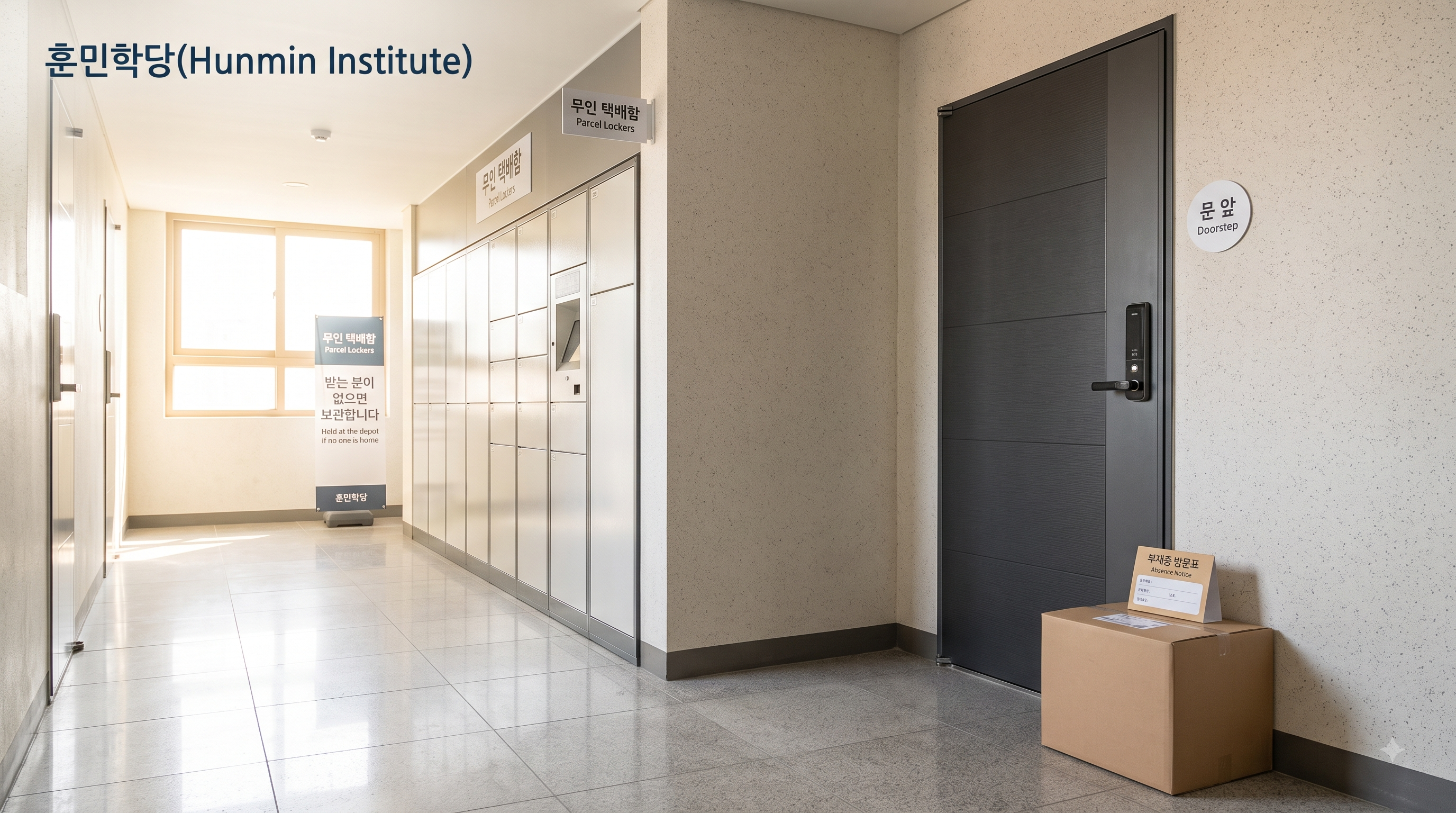
한국에서 택배를 받는 데 필요한 한국어는 많지 않습니다. 물건은 문 앞이나 무인 보관함, 편의점 세 갈래로 흘러가고 그 사이에 사람이 마주치는 일이 거의 없습니다.
Receiving a parcel in Korea does not take much Korean. Packages flow along three routes, the doorstep, the parcel locker, and the convenience store, and hardly anyone meets anyone along the way.
세 갈래가 어떻게 다른지 표로 먼저 보십시오.
See in the table how the three routes differ.
| 갈래 Route |
어떻게 받는가 How you receive it |
|---|---|
| 문 앞 [mun ap] The doorstep |
전화가 오지 않아 편하지만 사라지면 책임이 갈립니다 No call comes, but liability shifts if it vanishes |
| 무인 보관함 [muin bogwanham] Parcel locker |
비밀번호로 열며 사람을 만나지 않습니다 Opened with a code, with no one to meet |
| 편의점 [pyeonuijeom] Convenience store |
도착 문자를 받고 카운터에서 찾습니다 An arrival text comes and you collect at the counter |
| 경비실 [gyeongbisil] Security office |
사람이 대신 받아 지켜 줍니다 A person takes it in and keeps it for you |
여기서 쓰는 표현부터 배워봅시다. 어디로 받을지 정할 때 오가는 말입니다.
Start with the expressions you will use here. These pass as the route is decided.
| 듣는 말 Listening |
하는 말 Speaking |
|---|---|
| 어디에 둘까요? [eodie dulkkayo] Where shall I leave it? |
경비실에 맡겨 주세요. [gyeongbisire matgyeo juseyo] Please leave it with the security office. |
| 무인함 비밀번호 보내 드릴게요. [muinham bimilbeonho bonae deurilgeyo] I will send you the locker code. |
무인함에 넣어 주세요. [muinhame neoeo juseyo] Please put it in the parcel locker. |
| 편의점으로 보내 드릴까요? [pyeonuijeomeuro bonae deurilkkayo] Shall I send it to a convenience store? |
편의점으로 부탁드려요. [pyeonuijeomeuro butakdeuryeoyo] The convenience store, please. |
응용 Apply It
↳ [장소]에 맡겨 주세요
[place]e matgyeo juseyo
Please leave it with [place].
ex 경비실에 맡겨 주세요./옆집에 맡겨 주세요.
ROM gyeongbisire matgyeo juseyo/yeopjibe matgyeo juseyo
EN Please leave it with the security office./Please leave it next door.
▶택배는 세 갈래로 흘러갑니다.
Parcels travel along three routes.
문 앞, 무인 보관함, 편의점입니다. 어느 쪽으로 갈지는 주문할 때 적는 배송 요청사항과 기사의 전화 한 통으로 정해집니다.
The doorstep, the parcel locker, and the convenience store. Which one it takes is decided by the delivery notes you write when ordering and by a single call from the driver.
받는 사람이 없다고 아무 데나 두고 가도 되는 것은 아닙니다. 공정거래위원회 택배 표준약관은 부재 시 방문표를 남기고 사업소에 보관하도록 정하고 있습니다.
Nobody being home does not mean a parcel may be left anywhere. The standard delivery terms issued by the Korea Fair Trade Commission require the driver to leave a notice and hold the parcel at the depot.
편하게 받는 방법과 안전하게 받는 방법이 늘 같지는 않습니다. 이 차이는 소단락 2와 5에서 다시 짚겠습니다.
The easiest way to receive something and the safest way are not always the same, and that gap comes back in Sections 2 and 5.
2. 배송 요청사항과 기사 전화
Delivery Notes and the Driver's Call
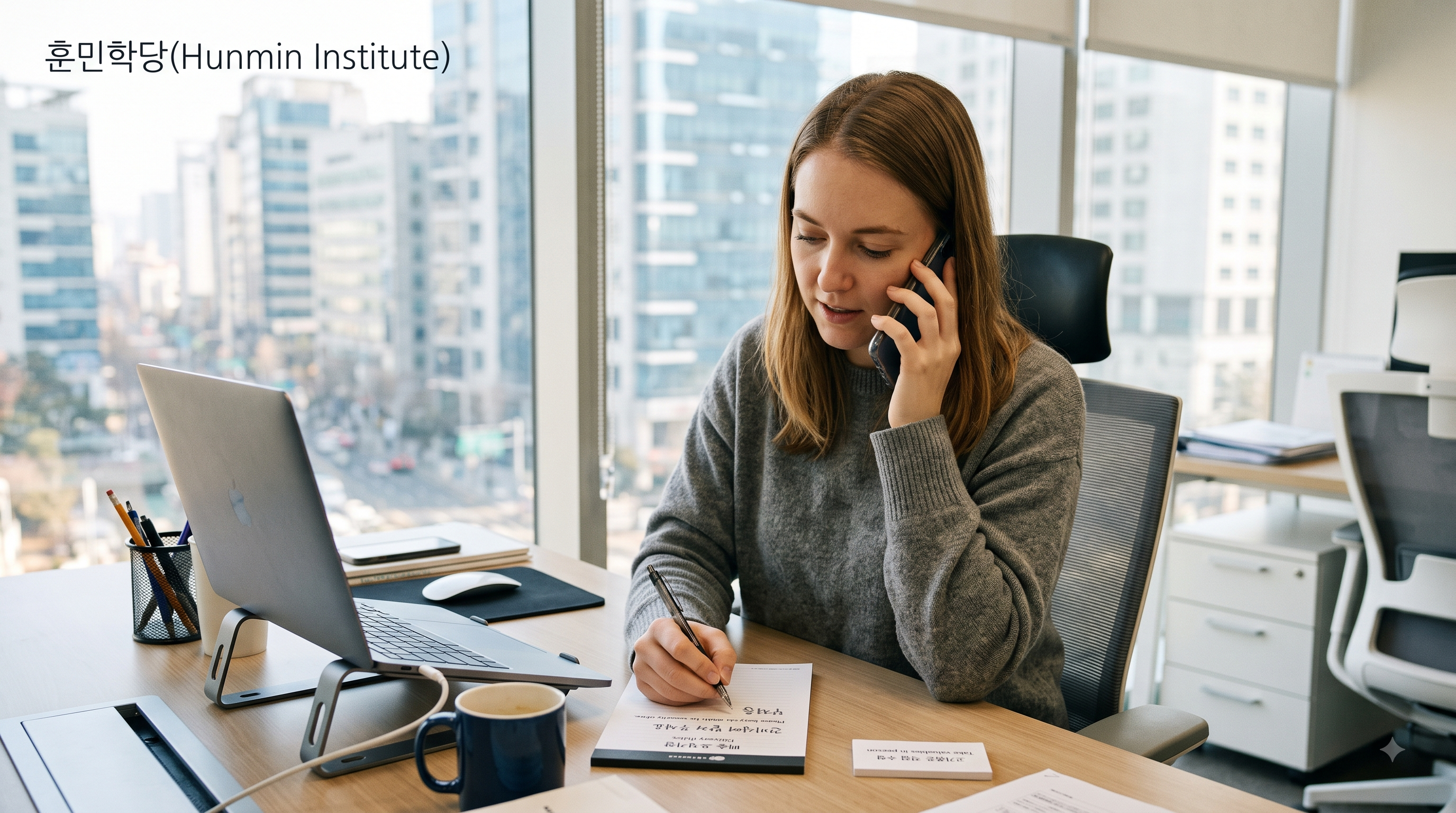
주문할 때 배송 요청사항 칸에 한 줄을 적어 두면 대화가 대부분 줄어듭니다. 그래도 집에 사람이 없거나 공동현관이 닫혀 있으면 전화가 옵니다.
One line in the delivery notes box when you order removes most of the conversation. Even so, if nobody is home or the main entrance is locked, the phone rings.
여기서 쓰는 표현부터 배워봅시다. 기사와 통화하며 오가는 말입니다.
Start with the expressions you will use here. These pass on the call with the driver.
| 듣는 말 Listening |
하는 말 Speaking |
|---|---|
| 문 앞에 두고 갈까요? [mun ape dugo galkkayo] Shall I leave it at your door? |
부재중이라 경비실에 맡겨 주세요. [bujaejungira gyeongbisire matgyeo juseyo] I am out, so please leave it with the security office. |
| 공동현관이 잠겨 있어요. [gongdonghyeongwani jamgyeo isseoyo] The main entrance is locked. |
비밀번호 알려 드릴게요. [bimilbeonho allyeo deurilgeyo] I will give you the door code. |
| 오늘 안에 배송 완료해야 해서요. [oneul ane baesong wallyohaeya haeseoyo] It has to be delivered today. |
내일 다시 와 주실 수 있어요? [naeil dasi wa jusil su isseoyo] Could you come again tomorrow? |
▶문 앞 지정은 편의와 배상 사이의 선택입니다.
Asking for doorstep delivery is a choice between convenience and compensation.
요청사항에 문 앞에 두라고 적으면 전화가 오지 않아 편합니다. 다만 내가 그렇게 두라고 한 뒤 물건이 사라지면 택배사가 책임을 지지 않을 수 있습니다.
Write leave it at the door in the notes and no call comes, which is convenient. But if you asked for that and the parcel then disappears, the carrier may bear no liability.
값이 나가는 물건은 지정하지 말고 직접 받거나 무인 보관함을 쓰시는 편이 안전합니다. 사람이 받아 주는 경비실에는 맡기다를, 사람이 없는 무인함에는 넣다를 씁니다.
For anything of value, do not specify the door; take it in person or use a parcel locker. Use 맡기다 for the security office where a person receives it, and 넣다 for a locker where no one does.
3. 편의점에서 택배 찾기
Picking Up at a Convenience Store
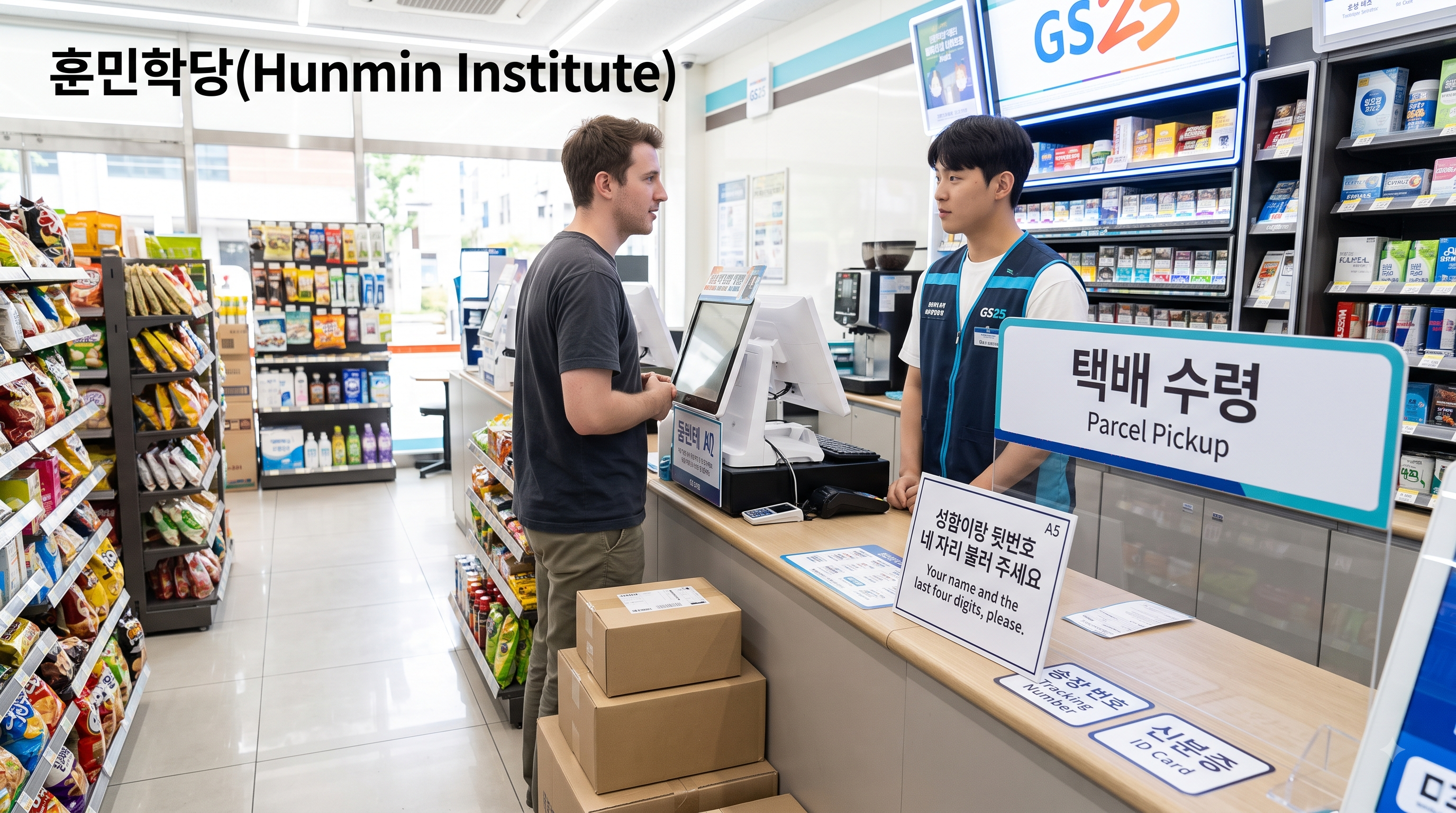
편의점으로 보낸 택배는 도착 문자가 오면 그때부터 찾을 수 있습니다. 카운터에서 쓰는 말은 두 마디뿐입니다. 무엇을 찾으러 왔는지, 그리고 이름과 전화번호 뒷자리입니다.
A parcel sent to a convenience store can be collected once the arrival text lands. Two things are said at the counter: what you came for, and your name with the last digits of your phone number.
여기서 쓰는 표현부터 배워봅시다. 카운터에서 오가는 말입니다.
Start with the expressions you will use here. These pass at the counter.
| 듣는 말 Listening |
하는 말 Speaking |
|---|---|
| 어떤 거 찾으세요? [eotteon geo chajeuseyo] What are you looking for? |
택배 찾으러 왔어요. [taekbae chajeureo wasseoyo] I am here to pick up a parcel. |
| 성함이랑 뒷번호 네 자리 불러 주세요. [seonghamirang dwitbeonho ne jari bulleo juseyo] Your name and the last four digits, please. |
신분증 보여 드릴까요? [sinbunjeung boyeo deurilkkayo] Shall I show you my ID? |
| 그 이름으로는 안 나오는데요. [geu ireumeuroneun an naoneundeyo] Nothing comes up under that name. |
송장 번호 좀 확인해 주세요. [songjang beonho jom hwaginhae juseyo] Could you check the tracking number? |
▶[뒷번호]는 전화번호의 마지막 네 자리를 가리킵니다.
뒷번호 means the last four digits of your phone number.
한국에서는 본인 확인을 할 때 전화번호 전체를 묻지 않고 뒷자리만 묻는 경우가 많습니다. 이름은 주문할 때 적은 그대로 대셔야 합니다. 영문으로 주문했다면 영문 그대로 말하는 편이 빠릅니다.
Korean shops usually verify you with the last digits of your number rather than the whole thing. Give your name exactly as it was entered on the order; if you ordered in the Latin alphabet, saying it that way is quicker.
보관 기간은 매장과 배송사에 따라 다르며 기한이 지나면 되돌아갑니다. 정확한 날짜는 도착 문자에 적혀 있고 카운터에서 물어보셔도 됩니다.
How long it is held varies by store and by carrier, and past the deadline it goes back. The exact date is in the arrival text, and you can also ask at the counter.
4. 편의점에서 택배 보내기
Sending From a Convenience Store
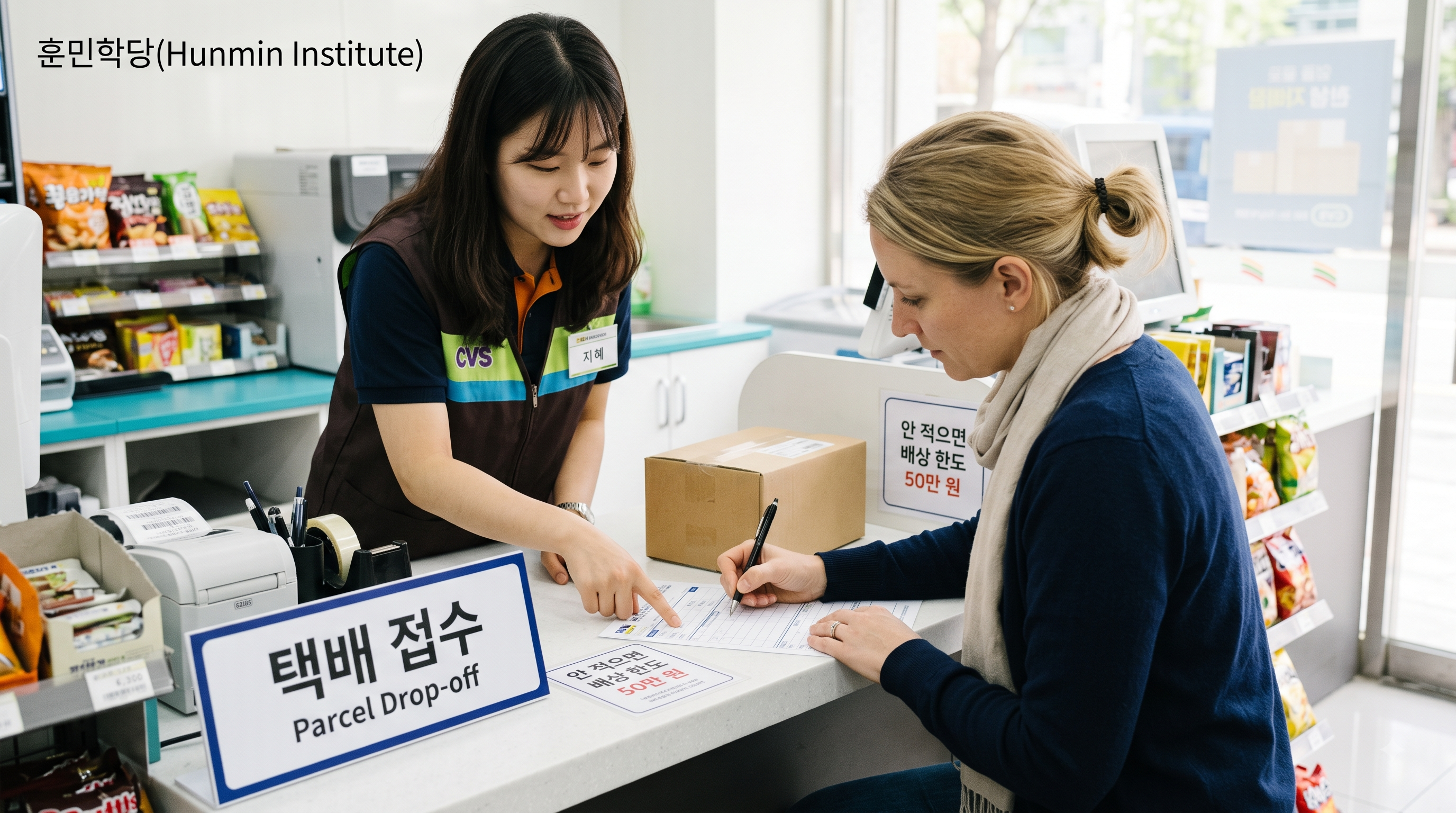
보내는 일은 찾는 일보다 문장이 조금 더 많습니다. 요금을 누가 내는지, 물건이 무엇인지, 값이 얼마인지를 적어야 하기 때문입니다. 반품도 이 자리에서 접수합니다.
Sending takes a few more sentences than collecting, because you have to settle who pays, what is inside, and what it is worth. Returns are dropped off here as well.
여기서 쓰는 표현부터 배워봅시다. 물건을 부치며 오가는 말입니다.
Start with the expressions you will use here. These pass as you send something.
| 듣는 말 Listening |
하는 말 Speaking |
|---|---|
| 착불이에요, 선불이에요? [chakburieyo seonburieyo] Is it cash on delivery or prepaid? |
착불로 보낼게요. [chakbullo bonaelgeyo] I will send it cash on delivery. |
| 안에 뭐 들었어요? [ane mwo deureosseoyo] What is inside? |
이거 반품 접수하려고요. [igeo banpum jeopsuharyeogoyo] I would like to send this back as a return. |
| 여기 가액도 적어 주세요. [yeogi gaaekdo jeogeo juseyo] Please write the value here too. |
물건값도 적어야 해요? [mulgeongapdo jeogeoya haeyo] Do I have to write the value as well? |
▶물건값을 적는 칸을 비우면 배상이 오십만 원에서 멈춥니다.
Leave the value box empty and compensation stops at 500,000 won.
운송장에 가액을 적지 않으면 사고가 났을 때 받을 수 있는 금액이 오십만 원으로 묶입니다. 적어 두었다면 그 가액을 기준으로 산정합니다.
Leave the declared value off the waybill and what you can recover after an incident is capped at 500,000 won. Write it in and the figure you wrote becomes the basis.
다만 기사의 고의나 중대한 과실로 물건이 사라진 경우에는 적지 않았어도 이 한도가 적용되지 않습니다. 착불은 받는 사람이, 선불은 보내는 사람이 요금을 냅니다.
Where the loss came from the driver's intent or gross negligence, though, the cap does not apply even if you left it blank. 착불 means the recipient pays; 선불 means the sender does.
5. 문제가 생겼을 때
When Something Goes Wrong
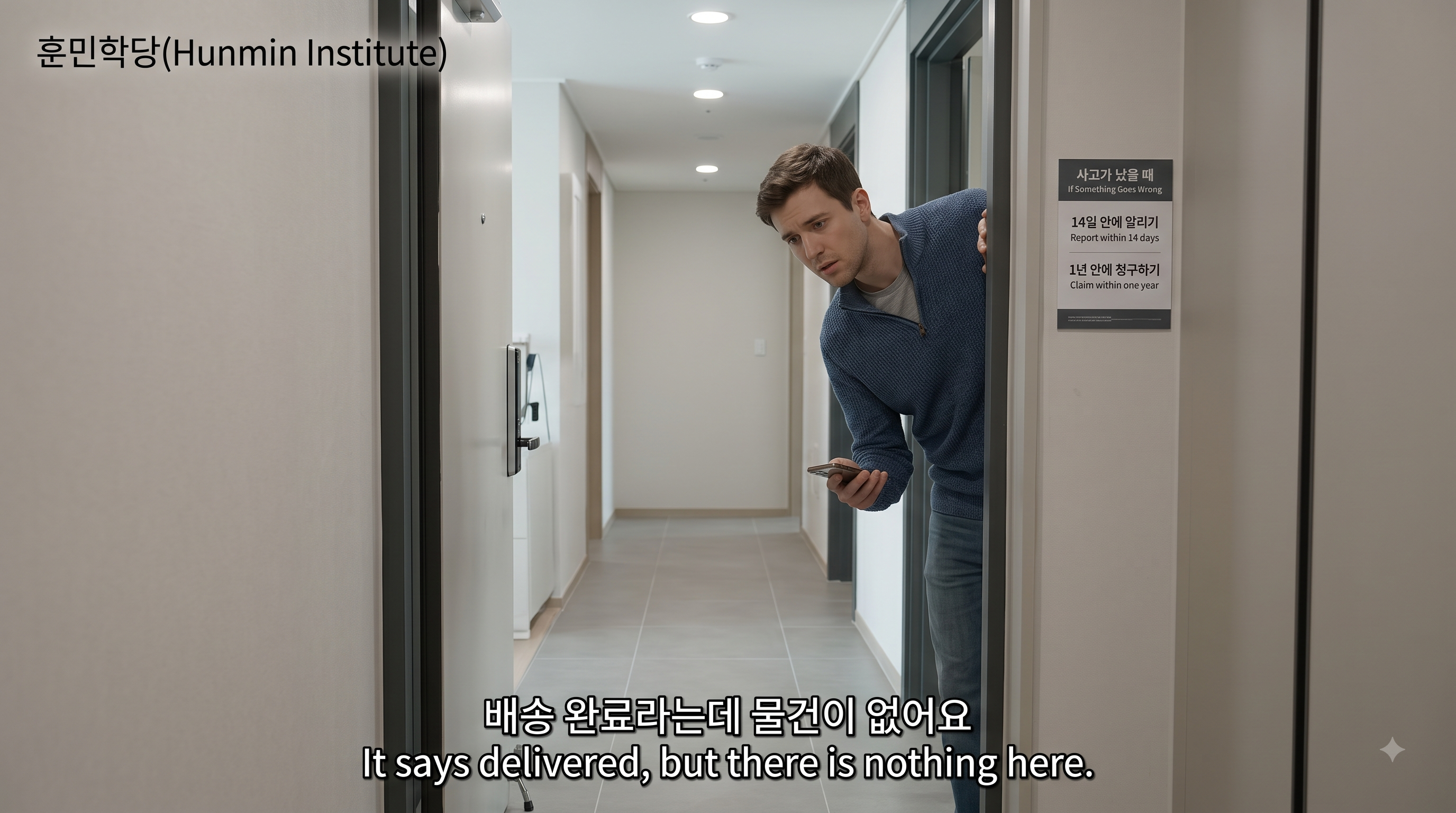
택배가 오지 않거나 깨져서 왔을 때 가장 먼저 할 일은 알리는 것입니다. 여기서 책임이 누구에게 있는지가 한 가지로 갈립니다. 내가 문 앞에 두라고 지정했는지, 아니면 기사가 알아서 두고 갔는지입니다.
When a parcel does not arrive or arrives broken, the first thing to do is report it. Who carries the responsibility turns on one question: did you ask for it to be left at the door, or did the driver decide that on his own.
알려야 하는 기한을 표로 먼저 보십시오.
See the reporting deadlines in the table first.
| 무엇을 What |
언제까지 By when |
|---|---|
| 일부가 없어지거나 깨진 사실을 알리기 Reporting that part is missing or broken |
받은 날부터 14일 이내, 넘기면 배상 책임이 사라집니다 Within 14 days; miss it and the liability disappears |
| 배상 책임이 남아 있는 기간 How long the liability lasts |
받은 날부터 1년, 전부 없어졌다면 도착 예정일부터 One year from receipt, or from the expected date if nothing came |
| 늦게 도착한 경우의 배상 Compensation for a late arrival |
하루에 운임의 절반씩, 운임의 두 배가 한도입니다 Half the fee per day, capped at twice the fee |
여기서 쓰는 표현부터 배워봅시다. 사고를 알리며 오가는 말입니다.
Start with the expressions you will use here. These pass as you report a problem.
| 듣는 말 Listening |
하는 말 Speaking |
|---|---|
| 송장 번호로 조회해 보세요. [songjang beonhoro johoehae boseyo] Try looking it up with the tracking number. |
택배가 아직 안 왔어요. [taekbaega ajik an wasseoyo] My parcel still has not arrived. |
| 배송 완료로 찍혀 있는데요. [baesong wallyoro jjikyeo inneundeyo] It is marked as delivered. |
배송 완료라는데 물건이 없어요. [baesong wallyoraneunde mulgeoni eopseoyo] It says delivered, but there is nothing here. |
| 사진 좀 보내 주시겠어요? [sajin jom bonae jusigesseoyo] Could you send us a photograph? |
열어 보니까 파손됐어요. [yeoreo bonikka pasondwaesseoyo] I opened it and it was damaged. |
▶누가 그 자리를 정했는지가 책임을 가릅니다.
Who chose the spot is what decides the liability.
내가 동의한 적 없는데 기사가 문 앞에 두고 갔다가 물건이 사라지면 택배사의 과실로 봅니다. 반대로 내가 문 앞에 두라고 지정했다면 택배사가 책임을 지지 않을 수 있습니다.
If the driver left it at your door without your agreement and it then vanished, that is treated as the carrier's fault. If you were the one who asked for the door, the carrier may bear no liability.
알릴 때는 전화만 하지 말고 기록이 남는 방법을 함께 쓰십시오. 나중에 언제 무엇을 알렸는지 다투게 되면 내용증명 우편이 근거가 됩니다.
When you report it, do not rely on a phone call alone; use something that leaves a record. If it later comes down to when you said what, certified mail is what stands as proof.
택배사와 이야기가 되지 않으면 1372 소비자상담센터에 접수할 수 있습니다. 접수 전에 송장 번호와 사진을 준비해 두시면 빠릅니다.
If the carrier will not engage, you can file with the 1372 Consumer Counseling Center. Having the tracking number and photographs ready before you file speeds things up.
택배에서 한국어가 필요한 자리는 좁습니다. 기사의 전화 한 통, 편의점 카운터, 그리고 문제가 생겼을 때의 통화입니다. 오늘 나온 문장 가운데 딱 세 개만 외우자면 택배 찾으러 왔어요, 경비실에 맡겨 주세요, 배송 완료라는데 물건이 없어요입니다.
Parcels ask little Korean of you: one call from the driver, one counter at the convenience store, and one more call when something goes wrong. If you memorize only three of today's lines, make them 택배 찾으러 왔어요, 경비실에 맡겨 주세요, and 배송 완료라는데 물건이 없어요.
Next: How to Order in a Korean Restaurant: Call, Ask, Pay ↗
토픽 맛보기
TOPIK Preview
유형: TOPIK Ⅰ 읽기 [34~39], 대화, 빈칸에 알맞은 것 고르기
Type: TOPIK I Reading [34–39], dialogue, choose the correct word for the blank
( )에 들어갈 말로 가장 알맞은 것을 고르십시오.
Choose the most appropriate word for the blank.
오늘 도착 문자를 받았습니다. 편의점에서 택배를 ( ).
The arrival text came today. I ( ) the parcel at the convenience store.
① 찾습니다
② 만듭니다
③ 배웁니다
④ 심습니다
Answer ▾
정답 ① 찾습니다
Answer: ① 찾습니다
편의점에 맡겨 둔 물건을 받아 오는 것이므로 찾다를 써서 ①이 정답입니다. ②는 무엇을 새로 지어내는 말이라 택배와 이어지지 않고, ③은 지식이나 기술을 대상으로 해 근거가 없으며, ④는 땅에 무엇을 넣어 기르는 말이라 자리가 맞지 않습니다. 흉내 낸 대문항은 TOPIK Ⅰ 읽기 [34~39]입니다.
You are collecting something left in the store's keeping, so the verb is 찾다 and ① is correct. ② is for making something new, ③ takes knowledge or a skill as its object, and ④ is for planting in the ground. The item type modeled here is TOPIK I Reading [34–39].
FAQ
Q1. 문 앞에 두라고 했는데 없어지면 누가 책임지나요?Answer ▾
Q1. If I asked for doorstep delivery and it disappears, who is liable?
A1. 내가 지정한 경우에는 택배사가 책임을 지지 않을 수 있습니다. 반대로 동의한 적 없는데 기사가 문 앞에 두고 갔다면 택배사의 과실로 봅니다. 값이 나가는 물건은 문 앞을 지정하지 말고 직접 받거나 무인 보관함을 쓰시는 편이 안전합니다.
A1. Where you specified it, the carrier may bear no liability. Where you never agreed and the driver left it there anyway, it is treated as the carrier's fault. For anything of value, skip the doorstep and take it in person or use a parcel locker.
Q2. 운송장에 물건값을 꼭 적어야 하나요?Answer ▾
Q2. Do I really have to write the value on the waybill?
A2. 적지 않으면 사고가 났을 때 배상 한도가 오십만 원으로 묶입니다. 적어 두었다면 그 가액을 기준으로 산정합니다. 다만 기사의 고의나 중대한 과실로 사라진 경우에는 적지 않았어도 이 한도가 적용되지 않습니다.
A2. Leave it blank and compensation is capped at 500,000 won. Write it in and that figure becomes the basis. Where the loss came from the driver's intent or gross negligence, the cap does not apply even without it.
Q3. 택배가 파손된 것을 나중에 발견하면 어떻게 하나요?Answer ▾
Q3. What if I only notice the damage later?
A3. 받은 날부터 십사 일 안에 알리셔야 합니다. 이 기한을 넘기면 배상 책임이 사라집니다. 알릴 때는 사진을 함께 남기시고, 전화로만 알리기보다 기록이 남는 방법을 쓰시는 편이 안전합니다.
A3. You must report it within fourteen days of receiving it. Past that, the liability is gone. Take photographs when you report, and use a method that leaves a record rather than a phone call alone.
Q4. 편의점에서 며칠까지 보관해 주나요?Answer ▾
Q4. How long will a convenience store hold my parcel?
A4. 매장과 배송사에 따라 다릅니다. 대개 도착 문자를 받은 날부터 며칠 안에 찾아가야 하며, 기한이 지나면 되돌아갑니다. 정확한 날짜는 도착 문자에 적혀 있고, 카운터에서 며칠까지 보관되는지 직접 물어보셔도 됩니다.
A4. It varies by store and by carrier. Usually you have a few days from the arrival text, after which the parcel is sent back. The exact date is in the text itself, and you can simply ask at the counter how long it will be held.
Q5. 이름을 영문으로 적었는데 편의점에서 찾을 수 있나요?Answer ▾
Q5. I ordered under a Latin-alphabet name. Can I still collect it?
A5. 찾을 수 있습니다. 다만 주문할 때 적은 이름 그대로 말씀하셔야 합니다. 영문으로 주문했다면 영문 철자를 그대로 불러 주시고, 확인이 잘 되지 않으면 전화번호 뒷자리와 송장 번호를 함께 대시면 됩니다.
A5. Yes. Just give the name exactly as it was entered on the order. If it was in the Latin alphabet, spell it out that way, and if the search still fails, give the last digits of your phone number together with the tracking number.
Vocabulary and Pronunciation for Foreigners
| No | Korean | Romanisation | Meaning |
|---|---|---|---|
| 1 | 택배 | taekbae | (n) parcel delivery [ˈpɑːrsl] |
| 2 | 택배사 | taekbaesa | (n) delivery company [ˈkʌmpəni] |
| 3 | 기사 | gisa | (n) delivery driver [ˈdraɪvər] |
| 4 | 배송 | baesong | (n) delivery [dɪˈlɪvəri] |
| 5 | 배송 완료 | baesong wallyo | (n) delivered status [dɪˈlɪvərd] |
| ▾ 단어 54개 더 보기 Show 54 more ↗ | |||
The blog page has limits of space and function, so only five words are shown here. The rest of the word list, the audio, the sentences and tables, the FAQ, the worksheet, the TOPIK questions and the lesson video are on the Hunmin Institute website ↗, free for blog subscribers.
참고 기관
Official Sources
공정거래위원회 ↗
Korea Fair Trade Commission
https://www.ftc.go.kr
기관 설명 보기 About this institute ▾
This commission issues the standard delivery terms. How an absence is handled, the compensation cap, and the deadline for reporting an incident all follow them. The terms are revised, so check the current source directly.
1372 소비자상담센터 ↗
1372 Consumer Counseling Center
https://www.ccn.go.kr
기관 설명 보기 About this institute ▾
This is where you file when the carrier will not engage. You can call 1372 or apply online. Having the tracking number and photographs ready before you file speeds things up.
※ 본 콘텐츠(원고, 이미지, 예문 포함)는 저작권법에 의해 보호받는 훈민학당의 저작물입니다. 무단 복제, 전재, 재배포 및 AI 학습 데이터로의 이용을 금합니다.
This content (manuscript, images, and example sentences) is the copyrighted property of Hunmin Institute, protected under copyright law. Unauthorized copying, reproduction, redistribution, and use as AI training data are prohibited.
'Real Talk' 카테고리의 다른 글
| How to Order Coffee in Korean: From Counter to Buzzer (0) | 2026.08.17 |
|---|---|
| How to Order in a Korean Restaurant: Call, Ask, Pay (0) | 2026.08.16 |
| Korean Part-Time Job Interview Phrases for Foreigners (0) | 2026.08.11 |
| Korean Optician Phrases: No Prescription Needed (0) | 2026.08.09 |
| Korean Dentist Phrases: Covered or Not Covered (0) | 2026.08.08 |


