Korean Numbers: Why Korea Counts in Ten Thousands
한국어 숫자는 10,000에서 한 번 무너집니다
If you have ever read 10,000 as ten thousand in Korean, the grammar was fine.
Korean breaks its numbers every four digits, not every three, and here is why.
10,000을 십천이라고 읽어 본 적이 있다면 규칙을 몰라서가 아닙니다.
한국어는 세 자리가 아니라 네 자리마다 끊기 때문이며 이 글에서 그 자리를 익힙니다.
The learning services for the teaching materials published on this blog are free and open to everyone on the Hunmin Institute website ↗, with no account needed.
이 글에서 배우는 핵심 문장
Key Sentences in This Lesson
숫자를 묻고 답하는 자리에서 오가는 말입니다. 좌우는 한 쌍의 대화가 아니라 각각 따로 익히는 문장입니다.
These are the lines exchanged when numbers are asked and answered. The two columns are not paired dialogue; learn each side on its own.
| 듣는 문장 Listening |
쓰는 문장 Writing |
|---|---|
| 만 원이에요. [man wonieyo] It is ten thousand won. |
얼마예요? [eolmayeyo] How much is it? |
| 세 잔 주세요. [se jan juseyo] Three cups, please. |
몇 개 드릴까요? [myeot gae deurilkkayo] How many shall I give you? |
| 유월 십육 일이에요. [yuwol simnyuk irieyo] It is the sixteenth of June. |
며칠이에요? [myeochirieyo] What is the date? |
첫째 줄은 소단락 1에서, 둘째 줄은 소단락 3에서, 셋째 줄은 소단락 4에서 각각 다룹니다.
The first row is covered in Section 1, the second in Section 3, and the third in Section 4.
1. 네 자리마다 이름이 바뀝니다
A New Name Every Four Digits
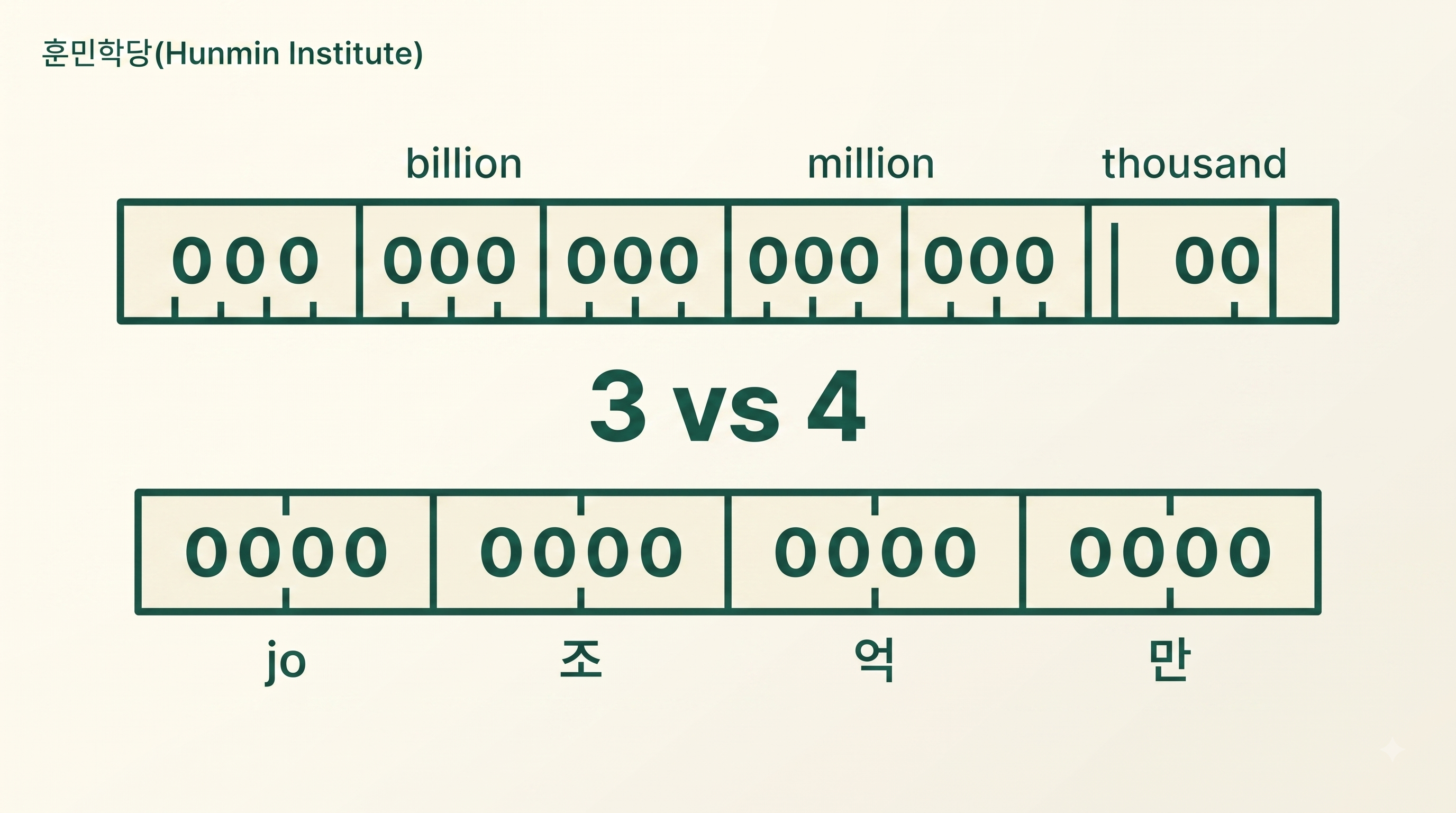
영어는 세 자리마다 이름이 바뀝니다. thousand, million, billion이 그것입니다. 한국어는 네 자리마다 바뀝니다. 만과 억, 조가 그것입니다. 숫자가 어려운 것이 아니라 끊는 칸이 어긋나 있는 것입니다.
English gives a new name every three digits: thousand, million, billion. Korean gives one every four: 만, 억, 조. The numbers are not hard; the grid you break them on is set differently.
| 숫자 Number |
한국어 Korean |
영어 단독 이름 Single English word |
|---|---|---|
| 1,000 | 천 [cheon] |
thousand |
| 10,000 | 만 [man] |
no single word |
| 100,000 | 십만 [simman] |
no single word |
| 1,000,000 | 백만 [baengman] |
million |
| 10,000,000 | 천만 [cheonman] |
no single word |
| 100,000,000 | 억 [eok] |
no single word |
여기서 쓰는 문장부터 배워 봅시다. 값을 묻고 답할 때 오가는 문장입니다.
Now for the sentences you use here. These go back and forth when a price is asked and given.
| 듣는 문장 Listening |
쓰는 문장 Writing |
|---|---|
| 만 원이에요. [man wonieyo] It is ten thousand won. |
얼마예요? [eolmayeyo] How much is it? |
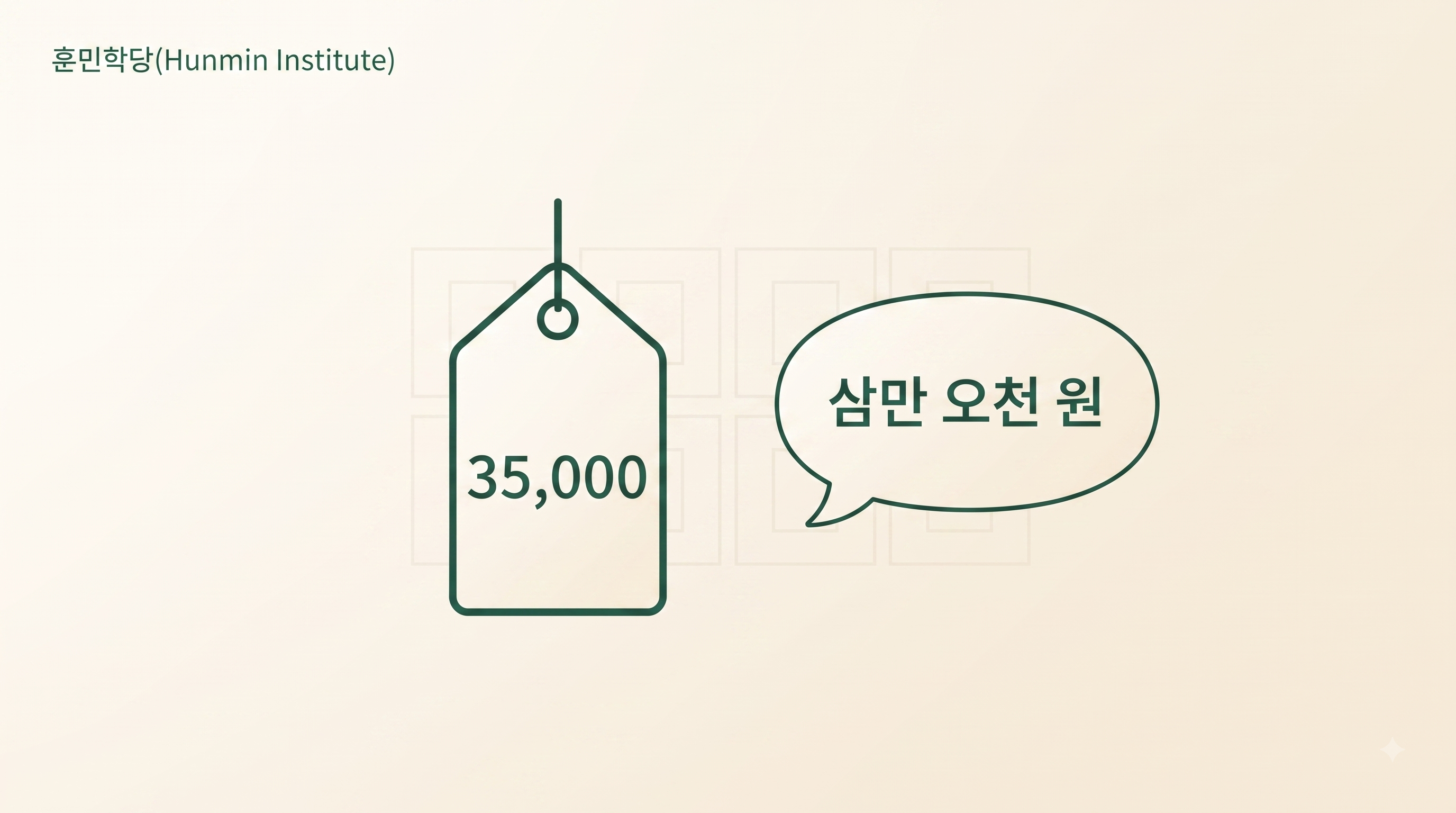
| 삼만 오천 원입니다. [samman ocheon wonimnida] It is thirty-five thousand won. |
십만 원 넘어요? [simman won neomeoyo] Is it over a hundred thousand won? |
응용 Apply It
↳ [숫자]만 원이에요
[number]man wonieyo
It is [number] ten-thousands of won.
ex [삼]만 원이에요./[십]만 원이에요.
ROM [sam]man wonieyo/[sim]man wonieyo
EN It is thirty thousand won./It is a hundred thousand won.
▶10,000은 십천이 아니라 만입니다.
10,000 is not 십천 but 만.
100,000도 백천이 아니라 십만입니다. 자릿수 이름 하나만 새로 잡으면 그 위는 전부 따라옵니다. 만이 서면 십만과 백만, 천만이 차례로 서고 그다음이 억입니다.
100,000 likewise is not 백천 but 십만. Learn that one new place name and everything above falls into line: once 만 is fixed, 십만, 백만, and 천만 follow in order, and then comes 억.
만 앞에 붙는 일은 말할 때 생략합니다. 10,000은 일만이 아니라 그냥 만이라고 읽습니다. 다만 은행 서류나 계약서처럼 금액을 못 박아야 하는 자리에서는 일만이라고 적습니다. 말할 때와 적을 때가 갈리는 몇 안 되는 자리입니다.
The 일 before 만 is dropped in speech: 10,000 is read simply 만, not 일만. In bank forms and contracts, where the amount must be fixed beyond doubt, it is written 일만. This is one of the few places where speech and writing part ways.
2. 숫자를 읽는 방법이 두 벌입니다
Korea Has Two Sets of Numbers
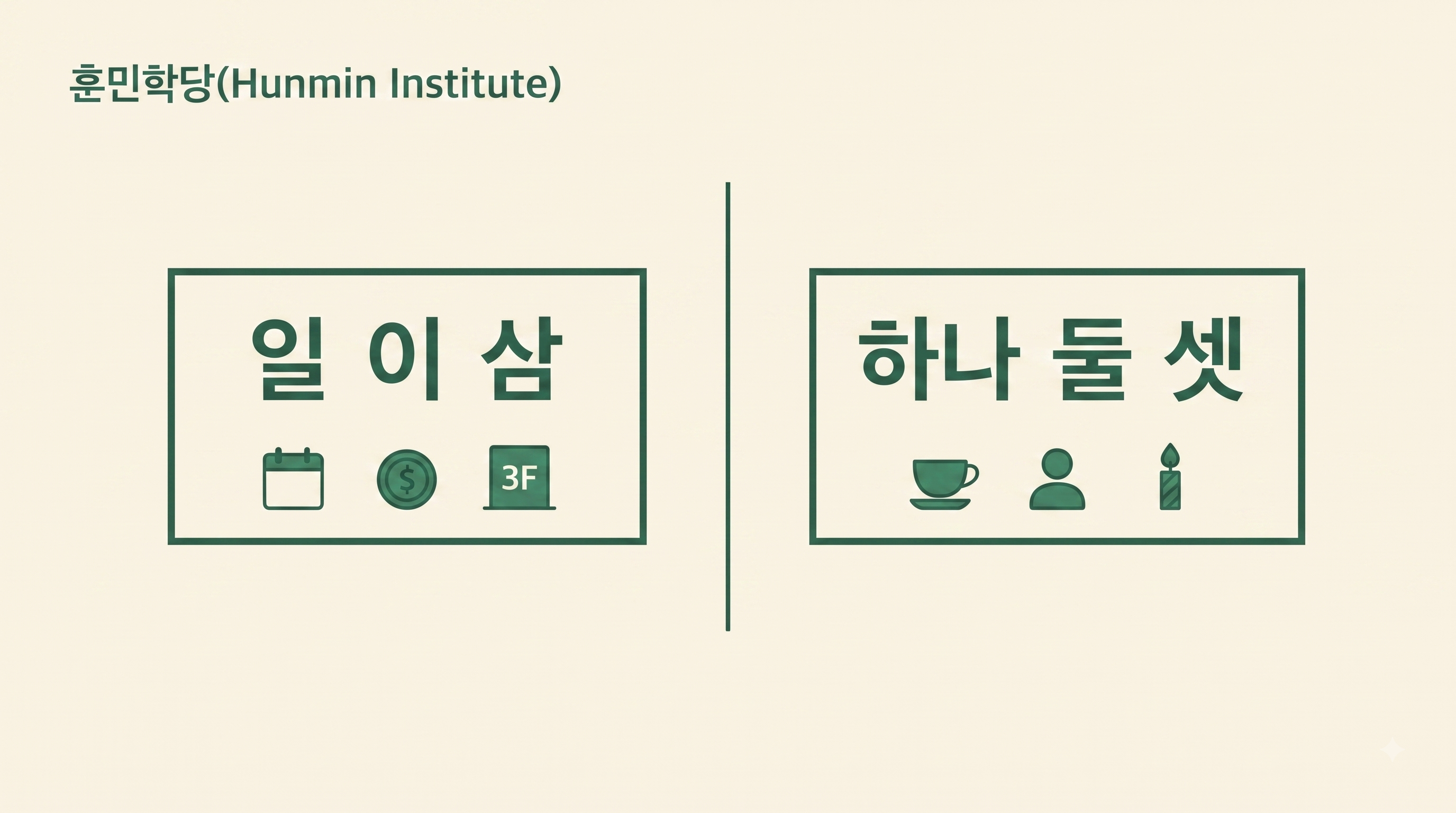
한국어에는 숫자를 읽는 체계가 둘 있습니다. 하나는 한자에서 온 일, 이, 삼이고 다른 하나는 본디 한국말인 하나, 둘, 셋입니다. 둘은 섞이지 않고 자리에 따라 갈립니다. 갈리는 기준은 뒤에 무엇이 오느냐입니다.
Korean has two number systems: 일, 이, 삼 from Chinese characters, and 하나, 둘, 셋 from native Korean. They do not blend; each belongs to its own set of slots, and what decides the set is the word that follows.
| 뒤에 오는 말 Following word |
쓰는 체계 Set used |
예 Example |
|---|---|---|
| 년, 월, 일 | 한자어 Sino-Korean |
이천이십육 년 / 오 월 / 이십 일 / 삼 월 [icheonisibyuk nyeon] / [o wol] / [isip il] / [sam wol] the year 2026 / May / the twentieth / March |
| 분(시간), 초 | 한자어 Sino-Korean |
삼십 분 / 이십 분 / 십 초 / 사십오 분 [samsip bun] / [isip bun] / [sip cho] / [sasibo bun] thirty minutes / twenty minutes / ten seconds / forty-five minutes |
| 원 | 한자어 Sino-Korean |
오천 원 / 삼천 원 / 이만 원 / 오십만 원 [ocheon won] / [samcheon won] / [iman won] / [osimman won] five thousand won / three thousand won / twenty thousand won / five hundred thousand won |
| 층, 번, 호 | 한자어 Sino-Korean |
삼 층 / 오 층 / 이십 번 / 삼백이 호 [sam cheung] / [o cheung] / [isip beon] / [sambaegi ho] the third floor / the fifth floor / number twenty / room 302 |
| 개, 장, 잔 | 고유어 Native Korean |
다섯 개 / 여섯 장 / 일곱 잔 / 아홉 개 [daseot gae] / [yeoseot jang] / [ilgop jan] / [ahop gae] five items / six sheets / seven cups / nine items |
| 명, 분(사람) | 고유어 Native Korean |
다섯 명 / 여섯 명 / 두 분 / 세 분 [daseot myeong] / [yeoseot myeong] / [du bun] / [se bun] five people / six people / two people, honorific / three people, honorific |
| 살 | 고유어 Native Korean |
열 살 / 서른 살 / 마흔 살 / 쉰 살 [yeol sal] / [seoreun sal] / [maheun sal] / [swin sal] ten years old / thirty years old / forty years old / fifty years old |
여기서 쓰는 문장부터 배워 봅시다. 어느 체계로 읽을지 물을 때 오가는 문장입니다.
Now for the sentences you use here. These go back and forth when you ask which set to read with.
| 듣는 문장 Listening |
쓰는 문장 Writing |
|---|---|
| 한자어로 읽어요. [hanjaeoro ilgeoyo] It is read with the Sino-Korean set. |
어느 쪽으로 읽어요? [eoneu jjogeuro ilgeoyo] Which set do I read it with? |
| 뒤에 오는 말을 보세요. [dwie oneun mareul boseyo] Look at the word that follows. |
이건 무슨 뜻이에요? [igeon museun tteusieyo] What does this one mean? |
▶숫자를 고르는 것이 아니라 뒤에 오는 말을 보는 것입니다.
You do not choose the number; you look at the word that follows it.
년과 월, 일, 원, 층, 번처럼 한자에서 온 말 뒤에는 한자어 숫자가 옵니다. 개와 명, 살, 마리처럼 본디 한국말 뒤에는 고유어 숫자가 옵니다. 단위를 익히면 숫자는 따라옵니다.
Words of Chinese origin such as 년, 월, 일, 원, 층, and 번 take the Sino-Korean set. Native Korean words such as 개, 명, 살, and 마리 take the native set. Learn the unit and the number follows.
개와 명, 잔도 늘 고유어인 것은 아닙니다. 수가 스물을 넘어가면 삼십 개, 오십 명처럼 한자어가 더 자주 쓰입니다. 고유어 숫자는 아흔아홉에서 멈추고 백부터는 한자어만 남기 때문입니다.
개, 명, and 잔 are not always native either. Past twenty, forms like 삼십 개 and 오십 명 grow more common, since the native set stops at ninety-nine and from one hundred only the Sino-Korean set remains.
3. 앞에 붙으면 모양이 줄어듭니다
Native Numbers Shrink Before a Noun

고유어 숫자는 뒤에 말이 붙으면 모양이 줄어듭니다. 하나가 한이 되고 둘이 두가 됩니다. 이것을 모르면 하나 개, 둘 명처럼 읽게 되고 그 순간 문장이 무너집니다. 바뀌는 것은 다섯뿐입니다.
Native numbers shrink when a counting word follows: 하나 becomes 한, 둘 becomes 두. Without this you end up saying 하나 개 or 둘 명, and the sentence collapses on the spot. Only five of them change.
| 홀로 쓸 때 Standing alone |
앞에 붙을 때 Before a noun |
예 Example |
|---|---|---|
| 하나 [hana] |
한 [han] |
한 개 / 한 명 / 한 잔 / 한 시 [han gae] / [han myeong] / [han jan] / [han si] one item / one person / one cup / one o’clock |
| 둘 [dul] |
두 [du] |
두 개 / 두 명 / 두 잔 / 두 시 [du gae] / [du myeong] / [du jan] / [du si] two items / two people / two cups / two o’clock |
| 셋 [set] |
세 [se] |
세 개 / 세 명 / 세 잔 / 세 시 [se gae] / [se myeong] / [se jan] / [se si] three items / three people / three cups / three o’clock |
| 넷 [net] |
네 [ne] |
네 개 / 네 명 / 네 장 / 네 시 [ne gae] / [ne myeong] / [ne jang] / [ne si] four items / four people / four sheets / four o’clock |
| 스물 [seumul] |
스무 [seumu] |
스무 살 / 스무 개 / 스무 명 / 스무 장 [seumu sal] / [seumu gae] / [seumu myeong] / [seumu jang] twenty years old / twenty items / twenty people / twenty sheets |
여기서 쓰는 문장부터 배워 봅시다. 개수를 주고받을 때 오가는 문장입니다.
Now for the sentences you use here. These go back and forth when quantities are exchanged.
| 듣는 문장 Listening |
쓰는 문장 Writing |
|---|---|
| 세 잔 주세요. [se jan juseyo] Three cups, please. |
몇 개 드릴까요? [myeot gae deurilkkayo] How many shall I give you? |
| 스무 살이에요. [seumu sarieyo] I am twenty years old. |
몇 살이에요? [myeot sarieyo] How old are you? |
▶다섯 개만 몸에 붙이면 그 자리는 끝납니다.
Get these five automatic and that whole slot is done.
한과 두, 세, 네, 스무. 이 다섯이 전부입니다. 다섯을 넘어가는 수는 모양이 바뀌지 않으므로 다섯 개, 여섯 명처럼 그대로 씁니다. 자주 쓰는 자리가 대부분 이 다섯 안에 들어 있어 효과가 큽니다.
한, 두, 세, 네, 스무 — that is the whole list. Numbers above five keep their shape, so 다섯 개 and 여섯 명 stay as they are. Most of the slots you use daily fall inside those five, so the return is large.
셋과 넷은 한 겹 더 갈립니다. 달과 장, 되 같은 몇몇 말 앞에서는 석 달, 넉 장처럼 석과 넉으로 바뀝니다. 지금 단계에서는 세와 네를 먼저 몸에 붙이고 석과 넉은 그런 형태가 있다는 것만 알아 두면 됩니다.
셋 and 넷 split once more, becoming 석 and 넉 before certain words, as in 석 달 and 넉 장. For now, make 세 and 네 automatic and simply be aware that 석 and 넉 exist.
4. 숫자는 쓴 대로 읽히지 않습니다
Numbers Are Not Read the Way They Are Written
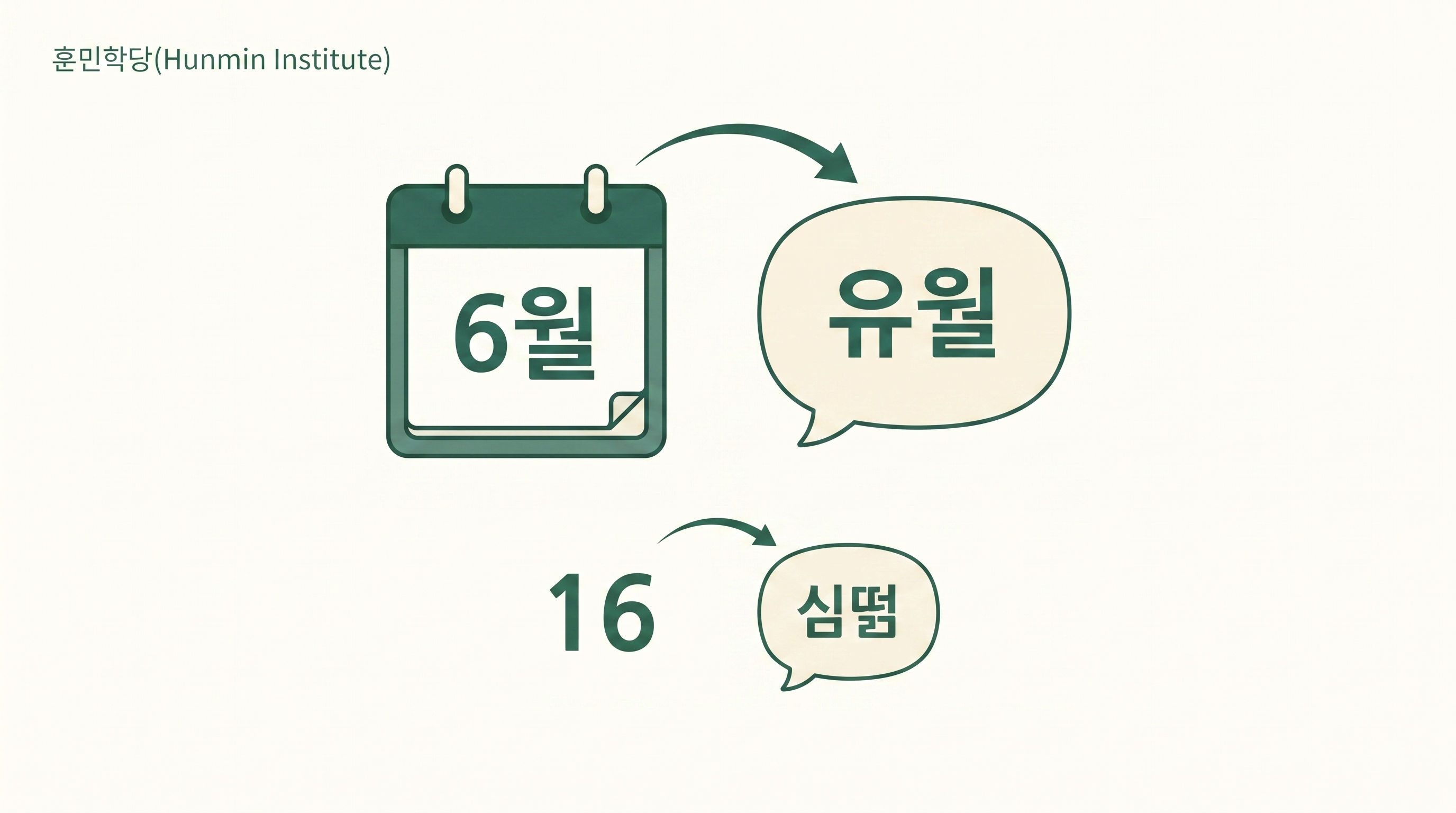
숫자에는 표기와 소리가 어긋나는 자리가 몰려 있습니다. 규칙이 없어서가 아니라 앞뒤 소리가 만나면서 바뀌기 때문입니다. 3부에서 익힌 발음 규칙이 숫자에서 그대로 되풀이됩니다.
Numbers are full of places where spelling and sound part ways, not because the rules break down but because sounds change where they meet. The pronunciation rules from Part 3 come back here unchanged.
| 표기 Written |
소리 Sound |
무엇이 일어났는가 What happened |
|---|---|---|
| 6월 | 유월 [yuwol] |
표기 자체가 바뀝니다 The spelling itself changes |
| 10월 | 시월 [siwol] |
표기 자체가 바뀝니다 The spelling itself changes |
| 16 | 심뉵 [simnyuk] |
ㄴ이 끼어들고 앞이 코 소리가 됩니다 An ㄴ is inserted and the sound before turns nasal |
| 1,000,000 | 뱅만 [baengman] |
ㄱ이 코 소리가 됩니다 ㄱ turns nasal |
| 60 | 육씹 [yukssip] |
ㅅ이 된소리가 됩니다 ㅅ tightens |
| 10,000원 | 마눤 [manwon] |
받침이 뒤로 넘어갑니다 The final consonant carries over |
여기서 쓰는 문장부터 배워 봅시다. 날짜를 묻고 답할 때 오가는 문장입니다.
Now for the sentences you use here. These go back and forth when a date is asked and given.
| 듣는 문장 Listening |
쓰는 문장 Writing |
|---|---|
| 유월 십육 일이에요. [yuwol simnyuk irieyo] It is the sixteenth of June. |
며칠이에요? [myeochirieyo] What is the date? |
| 마눤이라고 읽어요. [manwonirago ilgeoyo] It is read as 마눤. |
쓴 대로 안 읽어요? [sseun daero an ilgeoyo] Is it not read as written? |
▶6월과 10월은 아예 글자가 달라집니다.
June and October change even in spelling.
육월과 십월이 아니라 유월과 시월이라고 적고 그대로 읽습니다. 소리가 이어지면서 굳어진 형태이며 한국인도 까닭을 설명하지 못하지만 예외 없이 이렇게 씁니다. 달력에 6월이라고 적혀 있어도 입으로는 유월입니다.
They are written and read 유월 and 시월, not 육월 and 십월. The forms settled through repeated pronunciation, and although Koreans cannot explain why, no one says them otherwise. The calendar says 6월; the mouth says 유월.
나머지 넷은 3부에서 익힌 규칙이 숫자에서도 그대로 작동하는 것입니다. 십육이 심뉵이 되고 백만이 뱅만이 되는 것은 비음화이고, 육십이 육씹이 되는 것은 경음화이며, 만 원이 마눤이 되는 것은 연음입니다. 새로 외우는 것이 아니라 이미 아는 규칙을 여기서 다시 만나는 것입니다.
The other four are the Part 3 rules at work again: 십육 to 심뉵 and 백만 to 뱅만 are nasalization, 육십 to 육씹 is tensing, and 만 원 to 마눤 is liaison. Nothing new to memorize; you are meeting rules you already know.
5. 규칙에는 예외가 있습니다
The Rules Have Exceptions
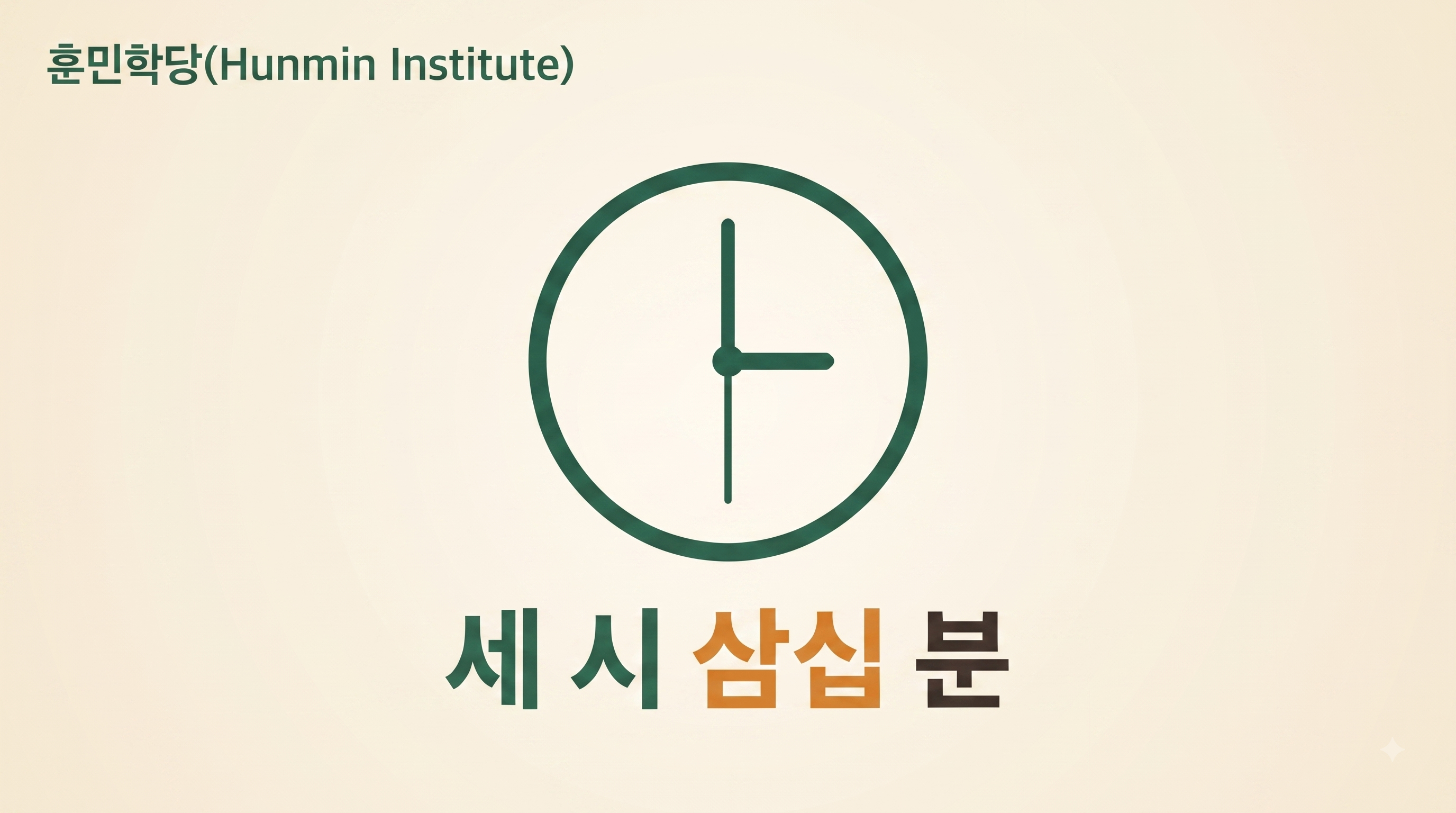
소단락 2에서 두 체계는 자리에 따라 갈린다고 했습니다. 그런데 한 문장 안에서 두 체계가 동시에 나오는 자리가 있습니다. 시각이 대표적입니다.
Section 2 said the two sets belong to separate slots. Yet there are places where both appear in a single sentence, and telling the time is the clearest one.
| 표기 Written |
읽는 법 How to read it |
갈리는 지점 Where it splits |
|---|---|---|
| 3시 30분 | 세 시 삼십 분 [se si samsip bun] |
시는 고유어, 분은 한자어 Native hour, Sino-Korean minute |
| 2시 15분 | 두 시 십오 분 [du si sibo bun] |
한 문장에 두 체계 Two sets in one phrase |
| 1시 5분 | 한 시 오 분 [han si o bun] |
한 문장에 두 체계 Two sets in one phrase |
여기서 쓰는 문장부터 배워 봅시다. 시각을 묻고 답할 때 오가는 문장입니다.
Now for the sentences you use here. These go back and forth when the time is asked and given.
| 듣는 문장 Listening |
쓰는 문장 Writing |
|---|---|
| 한 시 오 분이에요. [han si o bunieyo] It is five past one. |
지금 몇 시예요? [jigeum myeot siyeyo] What time is it now? |
| 시하고 분이 달라요. [sihago buni dallayo] The hour and the minute use different sets. |
왜 섞여 있어요? [wae seokkyeo isseoyo] Why are they mixed? |
▶규칙이 깨진 것이 아니라 시와 분이 서로 다른 계통의 말입니다.
The rule has not broken; 시 and 분 simply come from different origins.
3시 30분은 세 시 삼십 분입니다. 시는 고유어로 읽고 분은 한자어로 읽습니다. 한 문장 안에 두 체계가 나란히 서지만 각자 자기 자리를 지키고 있을 뿐입니다.
3:30 is 세 시 삼십 분: the hour takes the native set and the minute the Sino-Korean set. Two systems stand side by side in one phrase, each holding its own slot.
지금 이 예외를 외우려 하지 마십시오. 두 체계가 한 문장에서 만나는 자리가 있다는 사실만 알아 두면 됩니다. 규칙을 먼저 세우고 예외를 나중에 붙이는 것이 순서이며 예외부터 보면 규칙이 흔들립니다. 이런 자리는 다음 편에서 하나씩 짚습니다.
Do not try to memorize this exception now; it is enough to know that the two sets can meet in one sentence. Build the rule first and attach the exceptions later, because starting from exceptions unsettles the rule. Part 2 walks through them one by one.
한국어 숫자에서 어려운 것은 숫자가 아니라 끊는 자리와 소리입니다. 네 자리마다 이름이 바뀐다는 것, 체계가 두 벌이라는 것, 앞에 붙으면 모양이 줄어든다는 것, 표기와 소리가 어긋나는 자리가 있다는 것. 이 넷이 오늘 가져갈 전부이며 나머지는 자주 쓰면서 붙습니다.
What is hard about Korean numbers is not the numbers but where you break them and how they sound. A new name every four digits, two systems, shapes that shrink before a noun, and places where spelling parts from sound — those four are all you need from today, and the rest settles in with use.
Next: Korean Numbers Part 2: How to Read Prices and Time ↗
토픽 맛보기
TOPIK Preview
유형: TOPIK Ⅰ 읽기 [43~45], 설명문, 일치하는 내용 고르기
Type: TOPIK I Reading [43–45], expository text, choose the matching statement
다음의 내용과 같은 것을 고르십시오.
Choose the statement that matches the passage.
한국어에는 숫자를 읽는 방법이 두 가지 있습니다. 하나는 일, 이, 삼이고 다른 하나는 하나, 둘, 셋입니다. 나이를 말할 때는 하나, 둘, 셋을 씁니다. 그런데 이 말들은 뒤에 다른 말이 오면 모양이 바뀝니다. 하나는 한이 되고 둘은 두가 됩니다.
Korean has two ways of reading numbers: 일, 이, 삼 and 하나, 둘, 셋. Ages take 하나, 둘, 셋. These change shape when another word follows: 하나 becomes 한 and 둘 becomes 두.
① 한국어 숫자를 읽는 방법은 한 가지입니다.
② 나이를 말할 때는 일, 이, 삼을 씁니다.
③ 하나는 뒤에 말이 오면 한으로 바뀝니다.
④ 둘은 뒤에 말이 와도 모양이 그대로입니다.
Answer ▾
정답 ③ 하나는 뒤에 말이 오면 한으로 바뀝니다.
Answer: ③ 하나 becomes 한 when a word follows.
지문 마지막 문장이 하나는 한이 된다고 했으므로 ③이 맞습니다. ①은 두 가지라고 한 첫 문장과 정반대이고, ②는 나이가 지문에 나오지만 하나, 둘, 셋을 쓴다고 한 자리라 체계를 뒤바꿔 놓았으며, ④는 둘이 두가 된다고 한 마지막 문장과 어긋납니다. 흉내 낸 대문항은 TOPIK Ⅰ 읽기 [43~45] 일치하는 내용 고르기이고 배점은 3점입니다.
The last sentence says 하나 becomes 한, so ③ is correct. ① contradicts the opening, which says there are two. ② picks up ages from the passage but swaps the sets. ④ runs against the last sentence, where 둘 becomes 두. The item type modeled here is TOPIK I Reading [43–45], worth 3 points.
FAQ
Q1. 0은 영이라고 하나요, 공이라고 하나요?Answer ▾
Q1. Is zero 영 or 공?
A1. 둘 다 씁니다. 계산이나 점수에서는 영을 쓰고 전화번호에서는 공을 씁니다. 010은 공일공이라고 읽습니다. 자리에 따라 갈리는 것이므로 어느 하나가 틀린 것은 아닙니다.
A1. Both are used. 영 goes with calculations and scores, 공 with phone numbers, so 010 is read 공일공. The choice depends on the slot; neither form is wrong.
Q2. 만 원과 일만 원 가운데 어느 쪽이 맞나요?Answer ▾
Q2. Which is correct, 만 원 or 일만 원?
A2. 말할 때는 만 원이고 금액을 적을 때는 일만 원입니다. 둘 다 틀린 표기가 아니며 쓰이는 자리가 다릅니다. 은행 서류나 계약서처럼 금액을 못 박아야 하는 자리에서 일만이라고 적습니다.
A2. 만 원 in speech, 일만 원 when writing an amount. Neither is wrong; they belong to different places. 일만 appears in bank forms and contracts, where the sum must be fixed beyond doubt.
Q3. 고유어 숫자는 몇까지 있나요?Answer ▾
Q3. How far does the native number set go?
A3. 아흔아홉까지입니다. 백부터는 한자어만 남습니다. 그래서 수가 스물을 넘어가면 개와 명, 잔 앞에서도 삼십 개, 오십 명처럼 한자어가 더 자주 쓰입니다.
A3. Up to ninety-nine; from one hundred only the Sino-Korean set remains. That is why past twenty, forms like 삼십 개 and 오십 명 become more common even before 개, 명, and 잔.
Q4. 왜 6월만 유월이라고 하나요?Answer ▾
Q4. Why is June alone read as 유월?
A4. 소리가 이어지면서 굳어진 형태이며 표기 자체가 그렇게 정해져 있습니다. 10월도 같은 까닭으로 시월입니다. 달력에 6월이라고 적혀 있어도 입으로는 유월이며 예외 없이 이렇게 씁니다.
A4. The form settled through repeated pronunciation and the spelling was fixed to match. 10월 is 시월 for the same reason. The calendar says 6월, the mouth says 유월, and no one says it otherwise.
Q5. 두 체계를 한꺼번에 외워야 하나요?Answer ▾
Q5. Do I have to memorize both sets at once?
A5. 아닙니다. 뒤에 오는 말이 어느 쪽인지만 가리면 숫자는 따라옵니다. 자주 만나는 단위부터 익히십시오. 원과 층, 번은 한자어이고 개와 명, 살은 고유어입니다. 이 여섯만 몸에 붙어도 일상에서 막히는 자리가 크게 줄어듭니다.
A5. No. Identify which set the following word belongs to and the number follows. Start with the units you meet most: 원, 층, and 번 are Sino-Korean; 개, 명, and 살 are native. Get those six automatic and most everyday stumbles disappear.
Vocabulary and Pronunciation for Foreigners
| No | Korean | Romanisation | Meaning |
|---|---|---|---|
| 1 | 숫자 | sutja | (n) number [ˈnʌmbər] |
| 2 | 자릿수 | jarissu | (n) place value [pleɪs ˈvæljuː] |
| 3 | 단위 | danwi | (n) unit, counter [ˈjuːnɪt] |
| 4 | 한자어 | hanjaeo | (n) Sino-Korean word [ˌsaɪnoʊ kəˈriːən] |
| 5 | 고유어 | goyueo | (n) native Korean word [ˈneɪtɪv] |
| ▾ 단어 45개 더 보기 Show 45 more ↗ | |||
The blog page has limits of space and function, so only five words are shown here. The rest of the word list, the audio, the sentences and tables, the FAQ, the worksheet, the TOPIK questions and the lesson video are on the Hunmin Institute website ↗, free and open to everyone, with no account needed.
참고 기관
Official Sources
국립국어원 ↗
National Institute of Korean Language
https://www.korean.go.kr
기관 설명 보기 About this institute ▾
This institute sets Korean orthography and the standard pronunciation rules. The Language Norms menu at the top of the site holds the full text of the pronunciation rules, where you can check why 십육 is read 심뉵 and 백만 is read 뱅만. Fixed spellings such as 유월 and 시월 are laid down in the orthography, and word-by-word pronunciations sit in the Korean Basic Dictionary run by the same institute.
※ 본 콘텐츠(원고, 이미지, 예문 포함)는 저작권법에 의해 보호받는 훈민학당의 저작물입니다. 무단 복제, 전재, 재배포 및 AI 학습 데이터로의 이용을 금합니다.
This content (manuscript, images, and example sentences) is the copyrighted property of Hunmin Institute, protected under copyright law. Unauthorized copying, reproduction, redistribution, and use as AI training data are prohibited.
'Reading Skills' 카테고리의 다른 글
| Korean Spacing Rules: Where One Chunk Ends (0) | 2026.08.16 |
|---|---|
| Korean Numbers Part 2: How to Read Prices and Time (0) | 2026.08.16 |
| Korean Particle Errors: What Learner Data Reveals (0) | 2026.08.05 |
| TOPIK Is a Scoring System, Not Just a Test (0) | 2026.07.27 |
| Korean Word Order Explained: Understand Any Sentence (0) | 2026.07.25 |


