
BTS Trail Part 3: Gyeongbokgung and Korean Traditional Art
경복궁과 미술관으로 걷는 한국 전통 예술 투어 3부
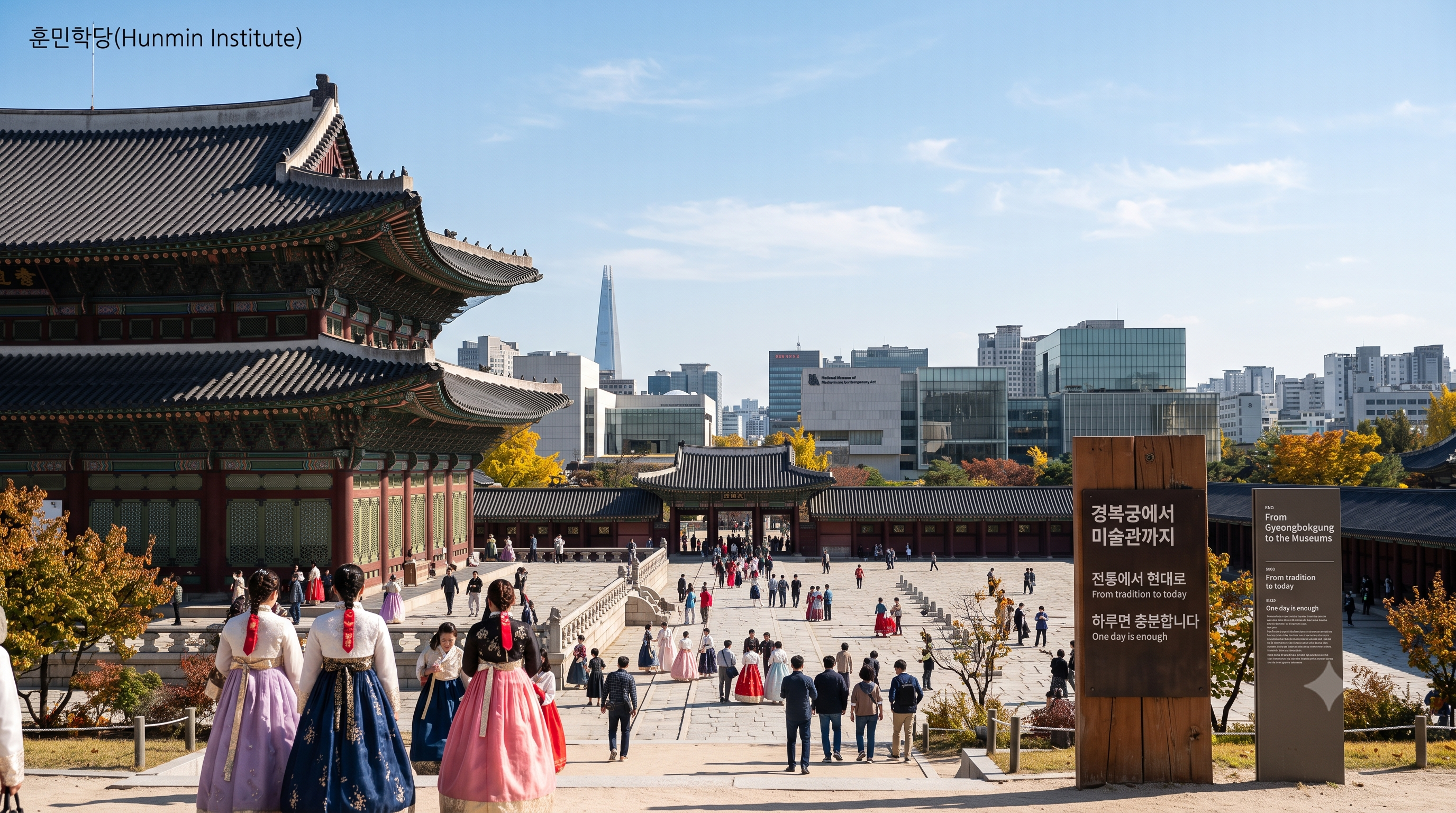
Gyeongbokgung holds two free museums, with an art museum just outside.
Learn the one-day route and the Korean used at ticket booths and in galleries.
경복궁 안에는 무료 박물관 두 곳이 있고 궁 밖 도보 거리에 현대미술관이 있습니다.
하루 코스와 함께 매표소와 전시실에서 쓰는 한국어를 익힙니다.
All learning services for the teaching materials published on this blog are free for blog subscribers on the Hunmin Institute website ↗.
이 글에서 배우는 핵심 회화
Key Expressions in This Lesson
매표소와 전시실에서 오가는 말은 몇 마디로 정해져 있습니다. 아래 여섯 문장은 좌우가 한 쌍의 대화가 아니라 각각 따로 익히는 문장입니다. 먼저 눈에 담고 본문으로 들어가십시오.
Only a few lines go back and forth at the ticket booth and inside the halls. The two columns are not paired dialogue; each sentence is learned on its own. Take them in first, then move into the main text.
| 듣는 말 Listening |
하는 말 Speaking |
|---|---|
| 오늘 휴관입니다. [oneul hyugwanimnida] We are closed today. |
어른 두 장 주세요. [eoreun du jang juseyo] Two adult tickets, please. |
| 입장 마감되었습니다. [ipjang magamdoeeotseumnida] Entry has closed. |
영어 해설 있어요? [yeongeo haeseol isseoyo] Is there an English tour? |
| 가방은 보관함에 넣어 주세요. [gabangeun bogwanhame neoeo juseyo] Please put your bag in a locker. |
사진 찍어도 돼요? [sajin jjigeodo dwaeyo] May I take photos? |
여섯 문장은 모두 소단락 1에서 나머지 문장과 함께 다룹니다.
All six lines are covered in Section 1, together with the rest.
1. 매표소와 전시실에서 쓰는 한국어
The Korean for Ticket Booths and Galleries
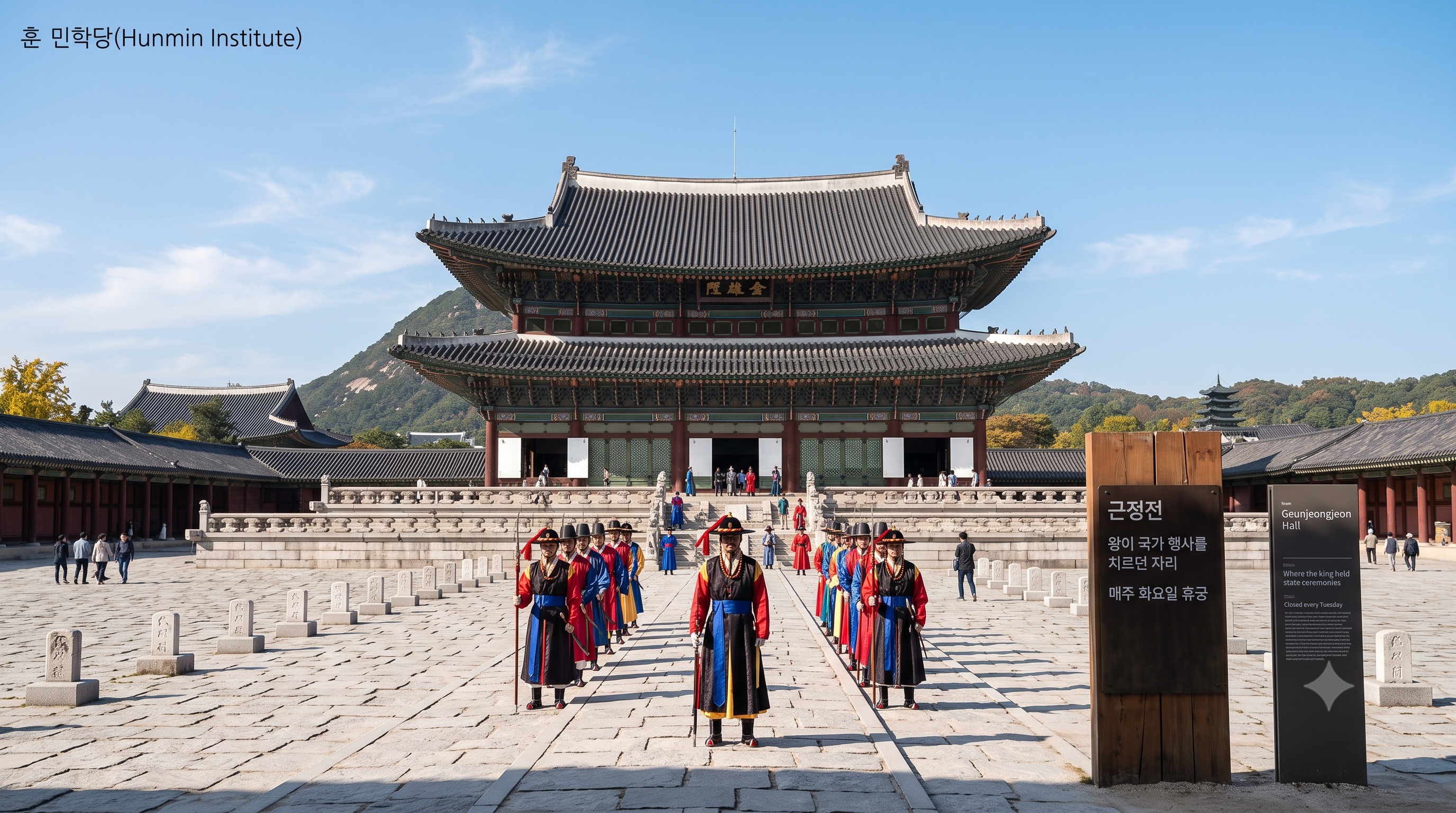
궁과 박물관, 미술관은 표를 끊고 안내를 듣는 곳입니다. 손님이 하는 말은 네댓 마디면 충분하고, 직원이 하는 말은 알아듣기만 해도 헛걸음을 막습니다.
Palaces, museums, and galleries are places where you buy a ticket and listen to instructions. Four or five lines cover what you say, and simply understanding what the staff says saves a wasted trip.
여기서 쓰는 표현부터 배워봅시다. 매표소와 입구에서 오가는 말입니다.
Start with the expressions you will use here. These go back and forth at the booth and the entrance.
| 듣는 말 Listening |
하는 말 Speaking |
|---|---|
| 오늘 휴관입니다. [oneul hyugwanimnida] We are closed today. |
어른 두 장 주세요. [eoreun du jang juseyo] Two adult tickets, please. |
| 입장 마감되었습니다. [ipjang magamdoeeotseumnida] Entry has closed. |
영어 해설 있어요? [yeongeo haeseol isseoyo] Is there an English tour? |
| 가방은 보관함에 넣어 주세요. [gabangeun bogwanhame neoeo juseyo] Please put your bag in a locker. |
사진 찍어도 돼요? [sajin jjigeodo dwaeyo] May I take photos? |
| 여기서 잠시 기다려 주세요. [yeogiseo jamsi gidaryeo juseyo] Please wait here a moment. |
화장실이 어디예요? [hwajangsiri eodiyeyo] Where is the restroom? |
응용 Apply It
↳ [대상] 두 장 주세요
[category] du jang juseyo
Two [category] tickets, please.
ex 어른 두 장 주세요./학생 두 장 주세요./아이 두 장 주세요.
ROM eoreun du jang juseyo/haksaeng du jang juseyo/ai du jang juseyo
EN Two adult tickets, please./Two student tickets, please./Two child tickets, please.
▶장은 표를 세는 말이고, 앞의 대상과 숫자만 바꾸면 어느 매표소에서나 그대로 쓰입니다.
장 counts tickets, and swapping the category and the number in front works at any booth.
어른 자리에 학생이나 아이를 넣으면 학생 한 장 주세요, 아이 두 장 주세요가 됩니다. 사람을 셀 때는 명이나 분을 쓰므로 직원이 두 분이시죠라고 되받는 것입니다.
Swap 어른 for 학생 or 아이 and you get 학생 한 장 주세요 or 아이 두 장 주세요. People are counted with 명 or the polite 분, which is why the staff answers 두 분이시죠.
되었습니다로 끝나는 말은 이미 끝났다는 뜻입니다. 마감되었습니다를 들으면 폐관 시각이 남아 있어도 오늘은 들어갈 수 없습니다. 마감은 문을 닫는다는 뜻이 아니라 더 받지 않는다는 뜻입니다.
A sentence ending in 되었습니다 means it is already done. If you hear 마감되었습니다 you cannot enter today, even with closing time still ahead, because 마감 means no one else is being admitted rather than that the gates are shut.
2. 경복궁, 시작점이자 기준점
Gyeongbokgung, the Anchor of the Day
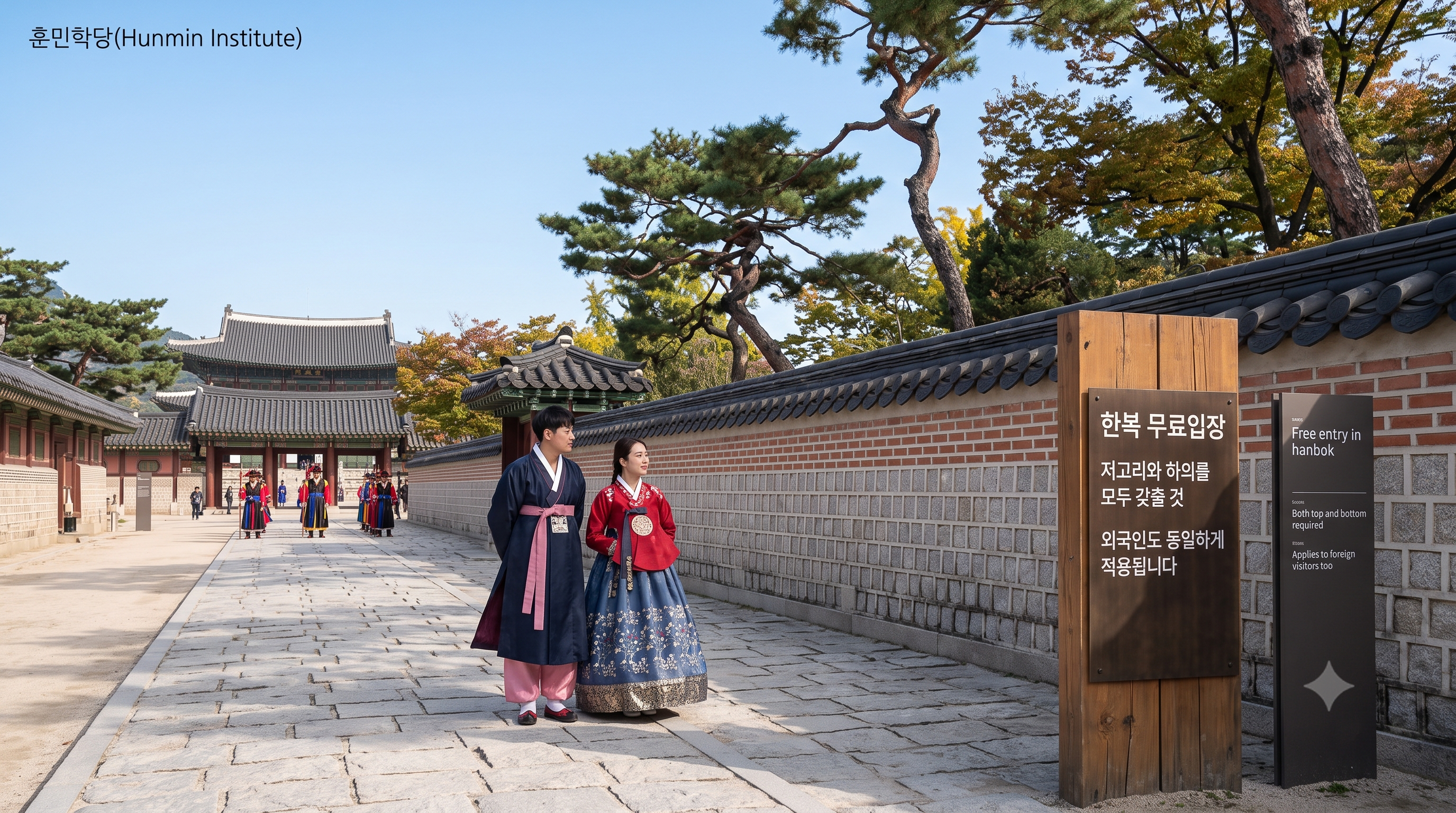
경복궁은 1395년에 세워진 조선의 첫 궁궐입니다. 지하철 3호선 경복궁역에서 바로 연결되고 5호선 광화문역에서도 걸어갈 수 있습니다. 출입문은 넷이며 남쪽 광화문이 정문이고, 삼청동으로 나가실 계획이면 동쪽 문을 쓰십시오.
Built in 1395, it was the first palace of Joseon. It connects directly to Gyeongbokgung Station on Line 3 and is walkable from Gwanghwamun on Line 5. There are four gates, with Gwanghwamun as the main one to the south; use the east gate if you are heading to Samcheong-dong.
여기서 쓰는 표현부터 배워봅시다. 궁 안에서 길과 시각을 묻는 말입니다.
Start with the expressions you will use here. These are for asking directions and times inside the grounds.
| 듣는 말 Listening |
하는 말 Speaking |
|---|---|
| 오늘은 문을 엽니다. [oneureun muneul yeomnida] We are open today. |
오늘 여나요? [oneul yeonayo] Are you open today? |
| 열 시에 시작합니다. [yeol sie sijakamnida] It starts at ten. |
교대 의식 몇 시예요? [gyodae uisik myeot siyeyo] What time is the changing of the guard? |
| 저쪽 근정전 뒤예요. [jeojjok geunjeongjeon dwiyeyo] It is behind Geunjeongjeon over there. |
경회루 어디예요? [gyeonghoeru eodiyeyo] Where is Gyeonghoeru? |
| 동쪽 문으로 나가시면 돼요. [dongjjok muneuro nagasimyeon dwaeyo] Go out through the east gate. |
삼청동 어느 문으로 나가요? [samcheongdong eoneu muneuro nagayo] Which gate do I take for Samcheong-dong? |
▶경복궁은 매주 화요일에 문을 닫습니다. 다른 궁과 달리 월요일이 아닙니다.
Gyeongbokgung closes on Tuesdays, not Mondays like the other palaces.
화요일이 공휴일이나 대체공휴일과 겹치면 그날은 문을 열고 그다음 첫 평일이 대신 휴궁일이 됩니다. 창덕궁과 덕수궁, 창경궁은 월요일에 닫으므로 궁마다 요일이 다릅니다.
If that Tuesday falls on a public holiday the palace opens, and the next non-holiday weekday closes instead. Changdeokgung, Deoksugung, and Changgyeonggung close on Mondays, so the day differs by palace.
안에서 놓치지 말 곳은 왕이 신하를 만나던 근정전과 연못 위에 세운 경회루 둘입니다. 수문장 교대 의식 시각은 계절에 따라 조정되므로 당일 확인하시고, 행사 중에는 여기서 잠시 기다려 주세요라는 안내를 듣게 됩니다.
Inside, do not miss Geunjeongjeon, the throne hall, and Gyeonghoeru, the pavilion over the pond. Ceremony times shift with the season, so check on the day, and during the event you will hear 여기서 잠시 기다려 주세요.
3. 한복을 입으면 입장료가 없습니다
Wear Hanbok and Entry Is Free
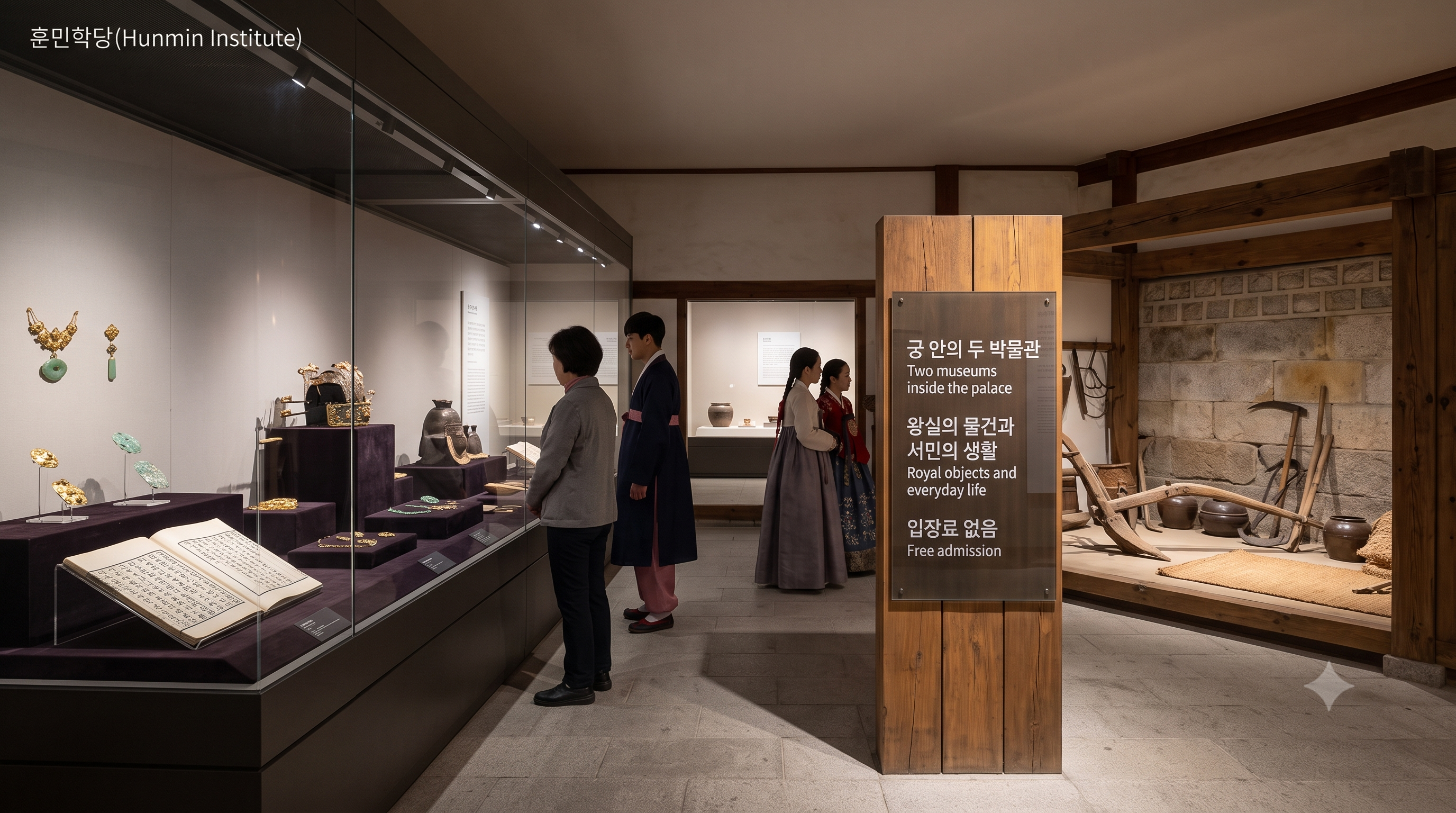
경복궁은 유료 입장이지만 한복을 입으면 무료입니다. 국적과 무관하며 외국인도 똑같이 적용됩니다. 대여점은 경복궁역과 광화문 주변, 삼청동에 모여 있고 보통 두 시간 단위로 빌려줍니다.
Admission is charged, but hanbok makes it free, and nationality makes no difference. Rental shops cluster around Gyeongbokgung Station, Gwanghwamun, and Samcheong-dong, usually renting in two-hour blocks.
여기서 쓰는 표현부터 배워봅시다. 대여점과 매표소에서 오가는 말입니다.
Start with the expressions you will use here. These go back and forth at the rental shop and the booth.
| 듣는 말 Listening |
하는 말 Speaking |
|---|---|
| 네, 무료로 들어가십니다. [ne muryoro deureogasimnida] Yes, you go in free. |
한복 입으면 무료죠? [hanbok ibeumyeon muryojyo] It is free in hanbok, right? |
| 상의와 하의를 다 갖추셔야 해요. [sanguiwa hauireul da gatchusyeoya haeyo] You need both the top and the bottom. |
이거 입어 봐도 돼요? [igeo ibeo bwado dwaeyo] May I try this on? |
| 두 시간에 만 원입니다. [du sigane man wonimnida] Ten thousand won for two hours. |
두 시간 빌릴 수 있어요? [du sigan billil su isseoyo] Can I rent it for two hours? |
| 신발도 같이 드릴게요. [sinbaldo gachi deurilgeyo] I will give you shoes as well. |
편한 신발 있어요? [pyeonhan sinbal isseoyo] Do you have comfortable shoes? |
▶상의와 하의를 모두 갖춰야 무료 입장이 인정됩니다.
Free entry requires both the top and the bottom.
여미는 깃 형태의 저고리에 치마 또는 바지를 함께 입어야 합니다. 청바지에 저고리만 걸치거나 한복 하의에 티셔츠를 입은 경우는 해당하지 않고, 머리로 뒤집어 입는 티셔츠 형태의 생활한복 저고리도 인정되지 않습니다.
A jeogori with an overlapping collar must be paired with a skirt or trousers. A jeogori over jeans, a T-shirt with hanbok trousers, or a pullover T-shirt-style modern top do not qualify.
전통한복과 생활한복은 모두 인정되며 저고리에 고름이 없어도 깃이 여며지면 괜찮습니다. 궁 관람은 걷는 시간이 길어 치마가 길면 계단과 자갈길에서 발밑을 살피시고, 대여점에서 편한 신발도 함께 받으십시오. 인정 기준은 개정될 수 있으므로 방문 전 궁능유적본부 안내를 확인하시기 바랍니다.
Both traditional and modern hanbok count, and tie strings are not required as long as the collar overlaps. Touring means a lot of walking, so watch your footing on steps and gravel in a long skirt and ask the shop for comfortable shoes. The criteria can be revised, so check the Royal Palaces and Tombs Center notice before you go.
4. 궁 안 두 박물관과 궁 밖 미술관
Two Museums Inside, One Art Museum Outside
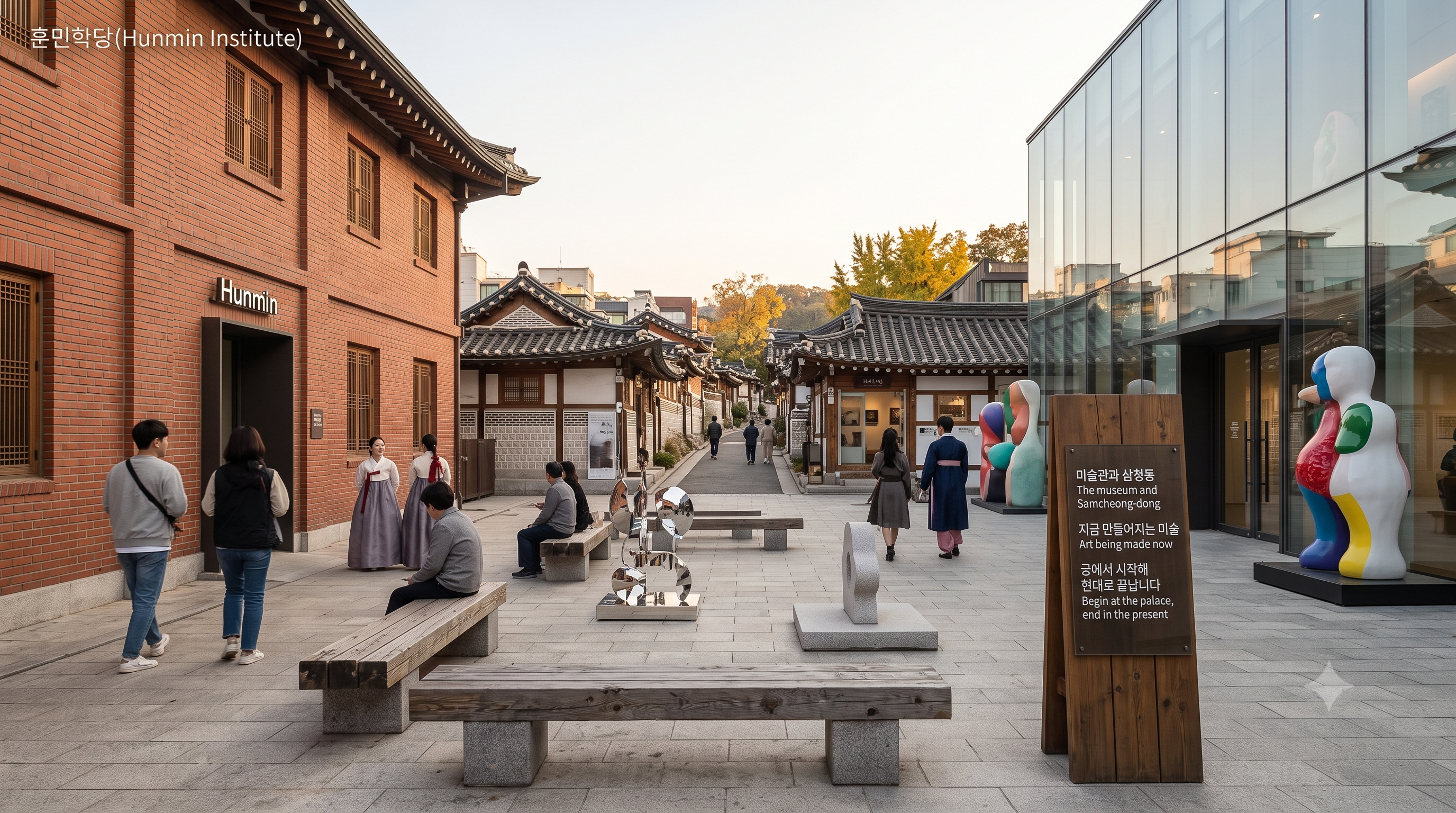
입장권을 사고 들어가면 안에 박물관이 두 곳 있고 둘 다 별도 입장료가 없습니다. 국립고궁박물관은 조선 왕실이 실제로 쓰던 어보와 의복, 궁중 회화, 천문 기구를 보여 주고, 국립민속박물관은 왕실이 아니라 평범한 사람들의 생활을 다룹니다. 동쪽 문으로 나오면 길 건너에 국립현대미술관 서울관이 있습니다.
Once inside, two museums await and neither charges a separate fee. The National Palace Museum shows the seals, garments, court paintings, and astronomical instruments the royal family actually used, while the National Folk Museum covers ordinary life rather than the court. Step out the east gate and MMCA Seoul stands across the road.
| 구분 Category |
경복궁 Gyeongbokgung |
궁 안 두 박물관 Museums inside |
국립현대미술관 서울관 MMCA Seoul |
|---|---|---|---|
| 위치 Location |
3호선 경복궁역 Gyeongbokgung Stn, Line 3 |
경복궁 경내 Inside the palace grounds |
경복궁 동문 건너편 Across from the east gate |
| 입장료 Admission |
유료, 한복 착용 시 무료 Paid, free in hanbok |
무료 Free |
유료 전시 있음 Some paid exhibitions |
| 휴관일 Closing day |
매주 화요일 Every Tuesday |
기관별로 다름 Varies by museum |
기관 안내 확인 Check the official notice |
| 관람 시간 Time needed |
두세 시간 Two to three hours |
한두 시간 One to two hours |
한두 시간 One to two hours |
| 주요 볼거리 Highlights |
근정전, 경회루, 교대 의식 Geunjeongjeon, Gyeonghoeru, the ceremony |
왕실 유물과 야외 옛 거리 Royal artifacts and the retro outdoor street |
근현대 미술과 붉은 벽돌 건물 Modern art and the red-brick building |
| 추천 순서 Suggested order |
오전 Morning |
궁 관람 직후 Right after the palace |
점심 이후 After lunch |
여기서 쓰는 표현부터 배워봅시다. 전시실 안팎에서 오가는 말입니다.
Start with the expressions you will use here. These come up in and around the exhibition halls.
| 듣는 말 Listening |
하는 말 Speaking |
|---|---|
| 여기는 무료입니다. [yeogineun muryoimnida] This one is free. |
입장료 있어요? [ipjangnyo isseoyo] Is there an admission fee? |
| 보관함은 저쪽에 있습니다. [bogwanhameun jeojjoge itseumnida] The lockers are over there. |
보관함 어디예요? [bogwanham eodiyeyo] Where are the lockers? |
| 여섯 시에 닫습니다. [yeoseot sie datseumnida] We close at six. |
몇 시까지 해요? [myeot sikkaji haeyo] Until what time are you open? |
| 걸어서 오 분이에요. [georeoseo o bunieyo] It is a five-minute walk. |
여기서 얼마나 걸려요? [yeogiseo eolmana geollyeoyo] How long does it take from here? |
▶오전에 경복궁, 이어서 궁 안 박물관 한 곳, 점심 뒤 현대미술관이면 하루가 자연스럽게 채워집니다.
The palace in the morning, one museum inside, and the art museum after lunch fills the day naturally.
앞서 본 두 박물관이 과거를 보여 준다면 현대미술관은 지금 한국에서 만들어지는 것을 보여 줍니다. 하루 안에 옛것과 지금 것을 나란히 보게 되는 구성입니다.
The two museums show the past; the art museum shows what is being made in Korea now. In one day you see the old and the current side by side.
운영시간과 요금, 휴관일은 기관마다 다르고 바뀔 수 있으니 방문 전날 각 기관의 공식 안내를 확인하십시오. 국립민속박물관 야외에는 1970년대와 1980년대 거리를 재현한 구역이 있어 옛 상점과 다방을 걸어 다니며 볼 수 있습니다.
Hours, fees, and closing days differ by institution and change, so check each one’s official notice the day before. Outside the Folk Museum, a street recreated from the 1970s and 1980s lets you walk past old shops and tearooms.
경복궁 한 곳에서 시작해 박물관과 미술관까지 걸으면 옛것과 지금 것이 한 줄로 이어집니다. 매표소와 전시실에서 익힌 문장은 서울의 다른 궁과 미술관에서도 그대로 쓰입니다.
Starting at Gyeongbokgung and walking on to the museums and the art museum lines up the old and the current in one stretch. The lines you picked up at the booth and in the halls work the same at any other palace or museum in Seoul.
Next: BTS Trail Part 4: Yongsan and Hongdae ↗
토픽 맛보기
TOPIK Preview
유형: TOPIK Ⅰ 읽기 [34~39], 대화, 빈칸에 알맞은 것 고르기
Type: TOPIK I Reading [34–39], dialogue, choose the correct word for the blank
( )에 들어갈 말로 가장 알맞은 것을 고르십시오.
Choose the most appropriate word for the blank.
가: 어른 ( ) 주세요. 나: 네, 두 분이시죠?
A: ( ) adult tickets, please. B: Sure, two people, right?
① 두 명
② 두 장
③ 두 개
④ 두 번
Answer ▾
정답 ② 두 장
Answer: ② 두 장
표는 장으로 셉니다. ①의 명은 사람을 세는 말이라 표를 달라는 자리에 맞지 않고, ③의 개는 물건 일반을, ④의 번은 횟수를 세는 말입니다. 직원이 두 분이시죠라고 사람 수로 되받는 것은 표 두 장이 두 사람분이기 때문입니다. 흉내 낸 대문항은 TOPIK Ⅰ 읽기 [34~39]입니다.
Tickets are counted with 장. ① 명 counts people and does not fit a request for tickets, ③ 개 counts objects in general, and ④ 번 counts occurrences. The staff reply 두 분이시죠 switches to people because two tickets means two visitors. The item type modeled here is TOPIK I Reading [34–39].
FAQ
Q1. 한복을 입지 않으면 못 들어가나요?Answer ▾
Q1. Can I enter without hanbok?
A1. 들어가실 수 있습니다. 한복은 무료 입장 조건일 뿐이고 입장권을 사면 관람이 가능합니다. 복장 규정은 없습니다.
A1. You can. Hanbok is only the condition for free entry; buy a ticket and go in. There is no dress code.
Q2. 하루에 네 곳을 다 볼 수 있나요?Answer ▾
Q2. Can I see all four places in one day?
A2. 가능하지만 빠듯합니다. 여유롭게 보시려면 궁 안 박물관은 한 곳만 고르고 남은 시간을 삼청동 산책에 쓰십시오.
A2. Possible but tight. For a relaxed pace, pick one museum inside and spend the rest walking Samcheong-dong.
Q3. 영어 안내를 받을 수 있나요?Answer ▾
Q3. Is English information available?
A3. 받으실 수 있습니다. 네 곳 모두 영어 안내판과 자료를 갖추고 있고 궁능유적본부 누리집에도 영문 화면이 있습니다. 매표소에서는 영어 해설 있어요라고 물으시면 됩니다.
A3. Yes. All four provide English signage and materials, and the Royal Palaces and Tombs Center site has an English version. At the booth, ask 영어 해설 있어요.
Q4. 화요일이 공휴일이면 어떻게 되나요?Answer ▾
Q4. What if the Tuesday is a public holiday?
A4. 그날은 문을 엽니다. 대신 그다음 첫 평일이 휴궁일이 되므로 연휴에 가실 계획이면 공식 안내로 요일을 확인하십시오.
A4. It opens that day, and the next non-holiday weekday closes instead. If you are going over a holiday, check the official notice for the day.
Q5. 전시실 안에서 사진을 찍어도 되나요?Answer ▾
Q5. May I take photos inside the exhibition halls?
A5. 전시와 작품에 따라 다릅니다. 촬영 금지 표시가 붙은 곳이 있으므로 사진 찍어도 돼요라고 먼저 물으시고, 플래시와 삼각대는 대체로 제한됩니다.
A5. It depends on the exhibition and the work. Some areas are marked no photography, so ask 사진 찍어도 돼요 first. Flash and tripods are generally restricted.
Vocabulary and Pronunciation for Foreigners
| No | Korean | Romanisation | Meaning |
|---|---|---|---|
| 1 | 입장료 | ipjangnyo | (n) admission fee [fiː] |
| 2 | 해설 | haeseol | (n) commentary, guided talk [ˈkɑːmənteri] |
| 3 | 보관함 | bogwanham | (n) locker [ˈlɑːkər] |
| 4 | 한복 | hanbok | (n) hanbok, Korean traditional dress [dres] |
| 5 | 매표소 | maepyoso | (n) ticket booth [ˈtɪkɪt] |
| ▾ 단어 45개 더 보기 Show 45 more ↗ | |||
The blog page has limits of space and function, so only five words are shown here. The rest of the word list, the audio, the sentences and tables, the FAQ, the worksheet, the TOPIK questions and the lesson video are on the Hunmin Institute website ↗, free for blog subscribers.
참고 기관
Official Sources
국가유산청 궁능유적본부 ↗
Royal Palaces and Tombs Center, Korea Heritage Service
https://royal.khs.go.kr
기관 설명 보기 About this institute ▾
This is the agency that runs Gyeongbokgung and the other palaces and royal tombs. It has an English section where you can check opening hours, fees, closing days, and the hanbok free-entry guidelines for each palace. The closing day and the acceptance criteria change when the notices are revised, so check before you go. It does not cover the museums or the art museum, so look at each of those sites separately.
※ 본 콘텐츠(원고, 이미지, 예문 포함)는 저작권법에 의해 보호받는 훈민학당의 저작물입니다. 무단 복제, 전재, 재배포 및 AI 학습 데이터로의 이용을 금합니다.
This content (manuscript, images, and example sentences) is the copyrighted property of Hunmin Institute, protected under copyright law. Unauthorized copying, reproduction, redistribution, and use as AI training data are prohibited.
'K-Travel' 카테고리의 다른 글
| Garden of Morning Calm: Four Seasons, One Day Trip (0) | 2026.07.30 |
|---|---|
| Nami Island by Train: A Car-Free Day Trip from Seoul (0) | 2026.07.30 |
| BTS Trail Part 4: Yongsan and Hongdae (0) | 2026.07.25 |
| BTS Trail Part 2: Gangneung to Samcheok (0) | 2026.07.25 |
| BTS Trail Part 1: Nonhyeon-dong to Garosugil (0) | 2026.07.23 |


