Half of It Is Applied, Half of It Is Eaten
한국인의 피부는 10단계 루틴이 아니라 습관에서 나옵니다
Korean skincare is not a ten-step routine but a set of daily habits.
Learn the habits that actually hold and the Korean for talking about skin.
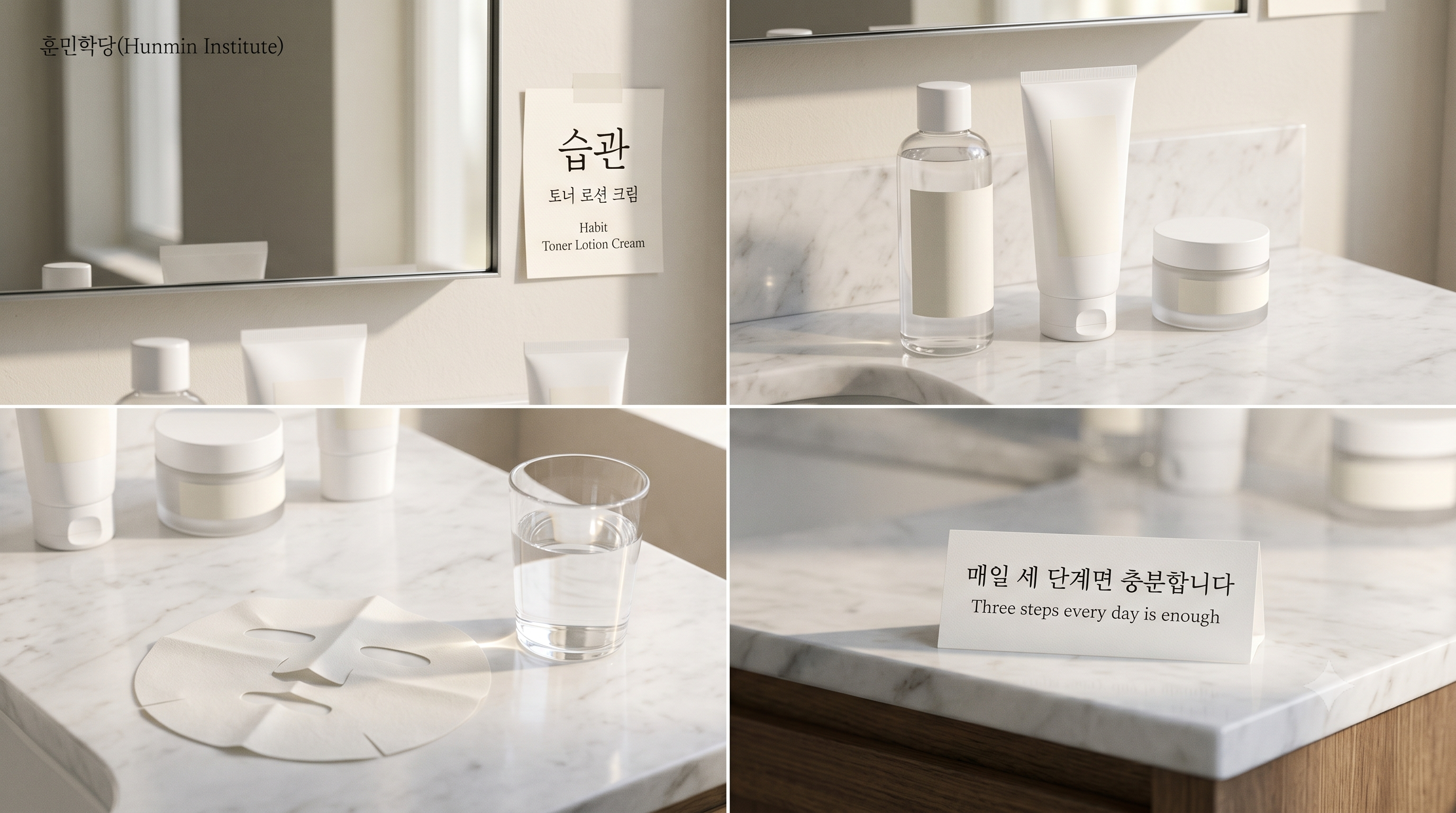
한국인의 피부 관리는 10단계 루틴이 아니라 바르는 것 절반, 먹는 것 절반의 습관입니다.
이 글에서 실제 통용되는 습관과 피부를 말할 때 쓰는 한국어를 익힙니다.
All learning services for the teaching materials published on this blog are free for blog subscribers on the Hunmin Institute website ↗.
이 글에서 배우는 핵심 회화
Key Expressions in This Lesson
화장품 매장과 피부과에서 오가는 말은 몇 마디로 정해져 있습니다. 아래 여섯 문장은 좌우가 한 쌍의 대화가 아니라 각각 따로 익히는 문장입니다. 먼저 눈에 담고 본문으로 들어가십시오.
Only a few lines go back and forth in a cosmetics shop or a dermatology clinic. The two columns are not paired dialogue; each sentence is learned on its own. Take them in first, then move into the text.
| 듣는 말 Listening |
하는 말 Speaking |
|---|---|
| 피부 타입이 어떻게 되세요? [pibu taibi eotteoke doeseyo] What is your skin type? |
저는 건성이에요. [jeoneun geonseongieyo] I have dry skin. |
| 트러블 있으세요? [teureobeul isseuseyo] Are you having breakouts? |
순한 거 있어요? [sunhan geo isseoyo] Do you have something mild? |
| 지금 원 플러스 원이에요. [jigeum won peulleoseu wonieyo] It is buy one get one right now. |
샘플 받을 수 있어요? [saempeul badeul su isseoyo] Can I get a sample? |
여섯 문장은 소단락 1에서 나머지 문장과 함께 다루고, 제품과 시간대, 먹는 것까지는 소단락 2에서 7까지 이어집니다.
These six lines are covered in Section 1 with the rest, while products, timing, and what you eat run from Sections 2 to 7.
피부를 말할 때 쓰는 한국어
The Korean for Talking About Your Skin
한국에서 피부 이야기는 매장과 병원에서 오갑니다. 제품을 고르든 진료를 받든 먼저 자기 피부를 설명해야 하므로 여기서 쓰는 표현부터 배워 봅시다.
In Korea, skin talk happens in shops and clinics. Whether you are choosing a product or seeing a doctor, you describe your own skin first, so start with the expressions used here.
| 듣는 말 Listening |
하는 말 Speaking |
|---|---|
| 피부 타입이 어떻게 되세요? [pibu taibi eotteoke doeseyo] What is your skin type? |
저는 건성이에요. [jeoneun geonseongieyo] I have dry skin. |
| 트러블 있으세요? [teureobeul isseuseyo] Are you having breakouts? |
순한 거 있어요? [sunhan geo isseoyo] Do you have something mild? |
| 테스트해 보세요. [teseuteuhae boseyo] Try it on your hand. |
샘플 받을 수 있어요? [saempeul badeul su isseoyo] Can I get a sample? |
응용 Apply It
↳ 저는 [명사]이에요
jeoneun [myeongsa]ieyo
I have [noun] skin
ex 저는 [건성]이에요/저는 [지성]이에요/저는 [복합성]이에요
ROM jeoneun [geonseong]ieyo/jeoneun [jiseong]ieyo/jeoneun [bokhapseong]ieyo
EN I have dry skin/I have oily skin/I have combination skin
| 한국어 Korean |
무엇을 가리키는가 What it refers to |
|---|---|
| 건성 [geonseong] |
수분과 기름기가 모두 부족한 피부 Skin short of both moisture and oil |
| 지성 [jiseong] |
기름기가 많아 번들거리는 피부 Skin with excess oil that turns shiny |
| 복합성 [bokhapseong] |
이마와 코는 지성, 볼은 건성인 피부 Oily on the forehead and nose, dry on the cheeks |
| 민감성 [minganseong] |
자극에 쉽게 붉어지는 피부 Skin that reddens easily at the slightest irritation |
| 트러블 [teureobeul] |
여드름이나 뾰루지 같은 피부 문제 Skin problems such as acne and blemishes |
▶명사에 이에요나 예요를 붙이면 그대로 상태를 말하는 문장이 됩니다.
Attach 이에요 or 예요 to a noun and you have a sentence stating a condition.
틀은 저는 [명사]이에요입니다. 지성이에요, 복합성이에요, 민감성이에요처럼 앞의 단어만 바꾸면 되고, 받침이 없는 말 뒤에는 예요가 붙습니다.
The pattern is 저는 [noun]이에요, as in 지성이에요, 복합성이에요, or 민감성이에요. After a word ending in a vowel, 예요 is used instead.
순한 거 있어요의 거는 것의 준말입니다. 형용사 뒤에 붙여 물건을 가리키며 가벼운 거, 큰 거, 향 없는 거처럼 어디서나 씁니다. 매장에서 가장 많이 쓰는 틀이라 이것 하나로 대부분의 요청이 해결됩니다.
거 is short for 것 and follows an adjective to point at an item: 가벼운 거, 큰 거, 향 없는 거. It is the frame you will use most in shops, and it covers nearly every request on its own.
1+1은 원 플러스 원으로 읽고 2+1은 투 플러스 원입니다. 매장 진열대에서 자주 보이므로 눈보다 귀로 먼저 익혀 두시면 좋습니다.
1+1 is read as 원 플러스 원 and 2+1 as 투 플러스 원. You will see these on shelves constantly, so it helps to learn them by ear first.
10단계 루틴이라는 오해와 실제 3단계
The Ten-Step Myth and the Real Three Steps
10단계 루틴은 한국 화장품이 해외에 알려지던 시기에 만들어진 마케팅 언어에 가깝습니다. 실제 일상은 훨씬 간결하며, 매장에서는 순서를 묻는 말이 오갑니다.
The ten-step routine is closer to marketing language coined when Korean cosmetics were first reaching overseas markets. Everyday practice is far simpler, and in a shop it is the order that gets asked about.
| 듣는 말 Listening |
하는 말 Speaking |
|---|---|
| 세안 후에 토너부터 바르세요. [sean hue toneobuteo bareuseyo] After washing, start with the toner. |
순서가 어떻게 되나요? [sunseoga eotteoke doenayo] What is the order? |
| 이건 마지막에 바르시면 돼요. [igeon majimage bareusimyeon dwaeyo] Put this one on last. |
이거 먼저 발라요? [igeo meonjeo ballayo] Do I put this on first? |
| 너무 많이 바르지 마세요. [neomu mani bareuji maseyo] Do not layer on too much. |
몇 단계면 돼요? [myeot dangyemyeon dwaeyo] How many steps do I need? |
| 한국어 Korean |
무엇입니까 What it is |
|---|---|
| 세안 [sean] |
얼굴을 씻는 것, 모든 단계의 출발점 Washing the face, the start of every routine |
| 토너 [toneo] |
세안 뒤 피부 결을 정리하는 물 같은 제품 A watery product that settles the skin after washing |
| 로션 [rosyeon] |
수분을 얹는 가벼운 제품 A light product that adds moisture |
| 영양크림 [yeongyangkeurim] |
앞서 얹은 수분을 가두는 무거운 제품 A heavier product that seals in what came before |
| 피부장벽 [pibujangbyeok] |
피부 겉면이 수분을 지키는 구조 The outer structure that holds moisture in |
▶핵심은 순서 자체가 아니라 빠뜨리지 않는 것입니다.
What matters is not the order but never skipping it.
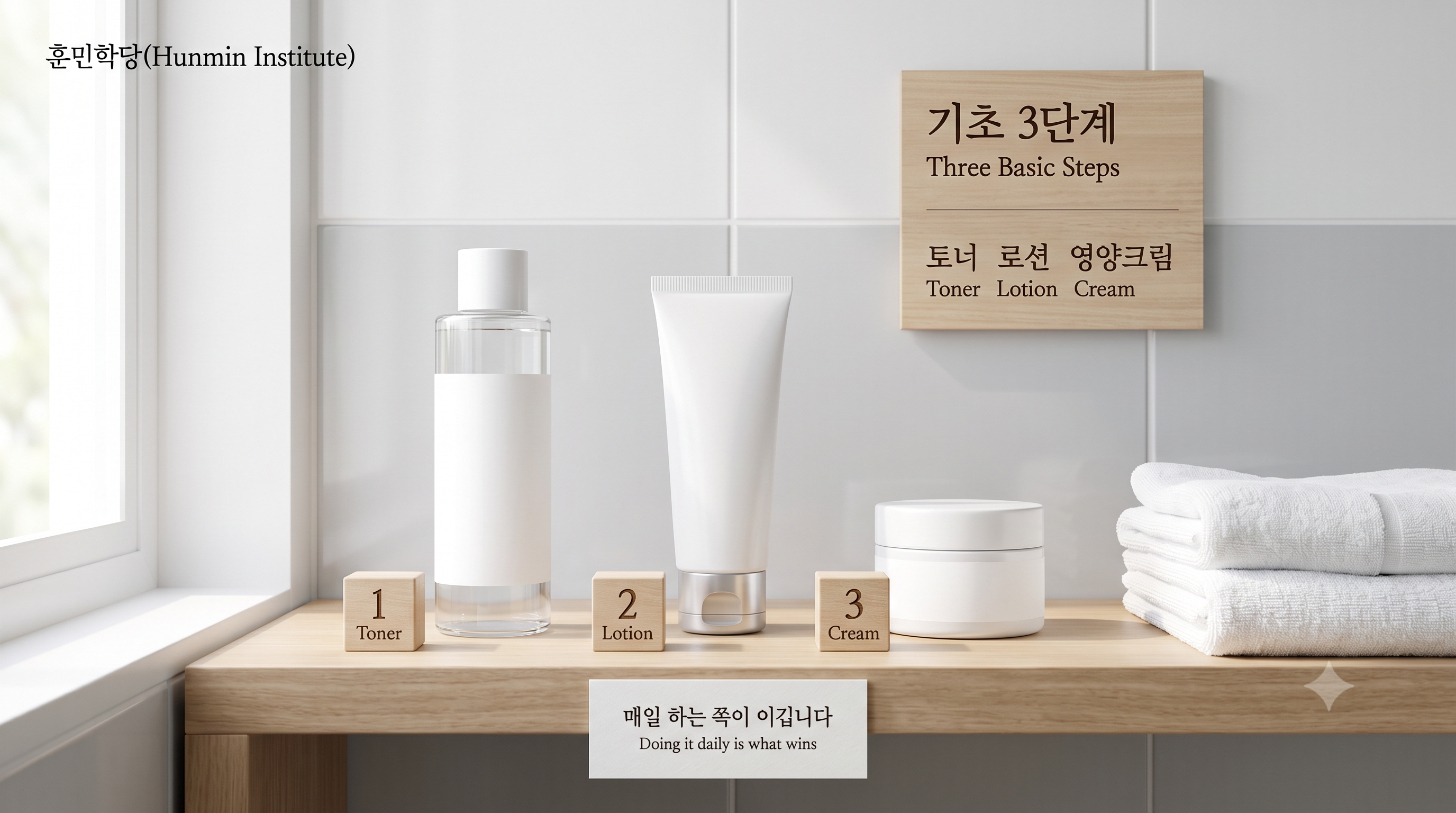
한국인의 기본 순서는 단순합니다. 세안 후 토너, 로션, 영양크림 순서로 바릅니다. 토너로 결을 정리하고 로션으로 수분을 얹고 영양크림으로 그것을 가둡니다. 열 단계를 사흘 하는 것보다 세 단계를 매일 하는 쪽이 결과가 좋습니다.
The standard order is simple: after washing, toner, then lotion, then a nourishing cream. The toner settles the texture, the lotion adds moisture, and the cream seals it in. Three steps every day beats ten steps for three days.
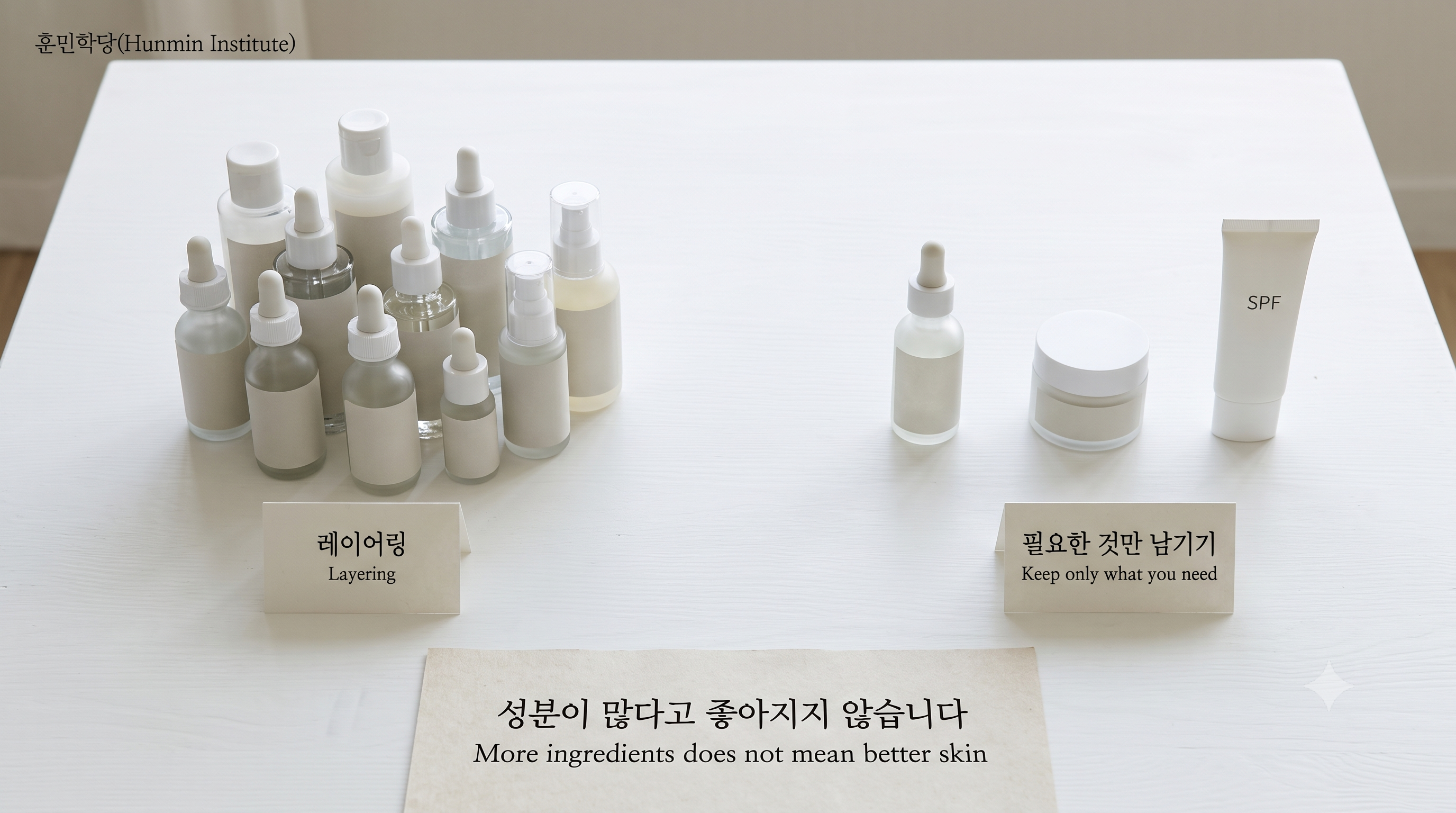
이유는 피부과학 쪽에 있습니다. 제품을 과도하게 겹쳐 바르면 피부장벽이 손상될 수 있고 자극성 피부염이나 접촉성 알레르기로 이어지기도 합니다. 성분이 많다고 결과가 좋아지지 않는다는 뜻입니다.
The reason lies in dermatology. Layering too many products can damage the skin barrier and may lead to irritant dermatitis or contact allergy; more ingredients does not mean better results.
그래서 최근 한국에서는 세안, 토너, 모이스처라이저, 자외선 차단제로 이어지는 3~4단계를 지키며 유수분 밸런스를 관리하는 흐름이 자리를 잡았습니다.
This is why the current approach in Korea keeps three to four steps, cleansing, toner, moisturizer, and sunscreen, while managing the balance of oil and moisture.
아침과 밤은 목적이 다릅니다
Morning and Night Serve Different Purposes
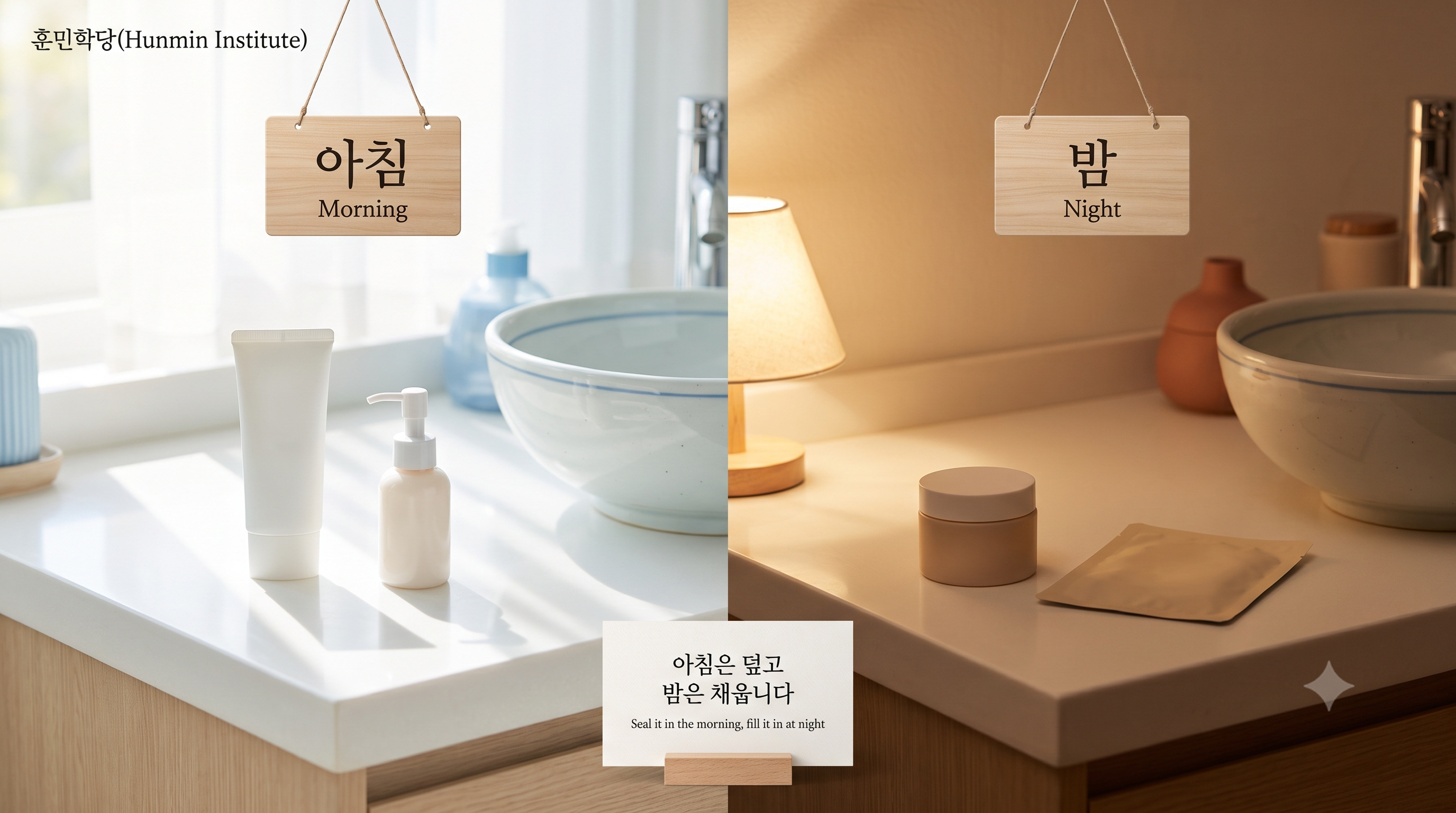
같은 3단계라도 아침과 밤에 하는 일이 다릅니다. 시간대를 두고 오가는 말부터 보십시오.
Even within the same three steps, morning and night do different work. Start with the lines that go back and forth about timing.
| 듣는 말 Listening |
하는 말 Speaking |
|---|---|
| 밤에는 이중 세안 하세요. [bameneun ijung sean haseyo] Do a double cleanse at night. |
아침에도 발라야 해요? [achimedo ballaya haeyo] Do I need to apply it in the morning too? |
| 이건 밤에만 쓰시는 게 좋아요. [igeon bameman sseusineun ge joayo] This one is better at night only. |
아침용은 따로 있어요? [achimyongeun ttaro isseoyo] Is there a separate one for mornings? |
| 아침에는 가볍게 하세요. [achimeneun gabyeopge haseyo] Keep it light in the morning. |
이중 세안이 뭐예요? [ijung seani mwoyeyo] What is a double cleanse? |
| 구분 Category |
아침 Morning |
밤 Night |
|---|---|---|
| 목적 Purpose |
하루 동안 피부를 지킨다 Protect the skin through the day |
낮에 받은 부담을 회복시킨다 Repair the load the skin took during the day |
| 세안 Cleansing |
물세안 또는 순한 클렌저로 가볍게 A water rinse or a mild cleanser, kept light |
이중 세안으로 자외선 차단제와 노폐물 제거 A double cleanse to remove sunscreen and residue |
| 기초 Basic care |
토너와 가벼운 로션 위주 Toner and a light lotion |
토너, 로션, 영양크림까지 충분히 Toner, lotion, and a nourishing cream in full |
| 마무리 Finish |
자외선 차단제를 반드시 바른다 Always finish with sunscreen |
마스크팩은 주 2회 이 시간대에 Sheet masks go here, twice a week |
| 핵심 Key point |
가볍게 덮는다 Keep it light and sealed |
무겁게 채운다 Fill it in richly |
▶이 차이만 이해해도 제품을 두 배로 살 필요가 없어집니다.
Understanding this difference alone means you do not need twice as many products.
아침에는 가볍게 마무리하고 자외선 차단제로 덮고, 밤에는 무겁게 채우고 자는 것이 기본입니다.
Finish light and seal with sunscreen in the morning, fill in richly before sleep at night.
이중 세안은 두 번 씻는다는 뜻이지 세게 씻는다는 뜻이 아닙니다. 기름을 녹이는 제품으로 먼저 지우고 물로 씻어 내는 두 단계이며, 힘을 주어 문지르면 오히려 피부장벽이 상합니다.
이중 세안 means washing twice, not washing hard. It is a two-stage process, an oil-based remover followed by a water rinse, and scrubbing with force damages the barrier instead.
자외선 차단은 계절도 실내도 가리지 않습니다
Sun Protection Ignores Both Season and Setting
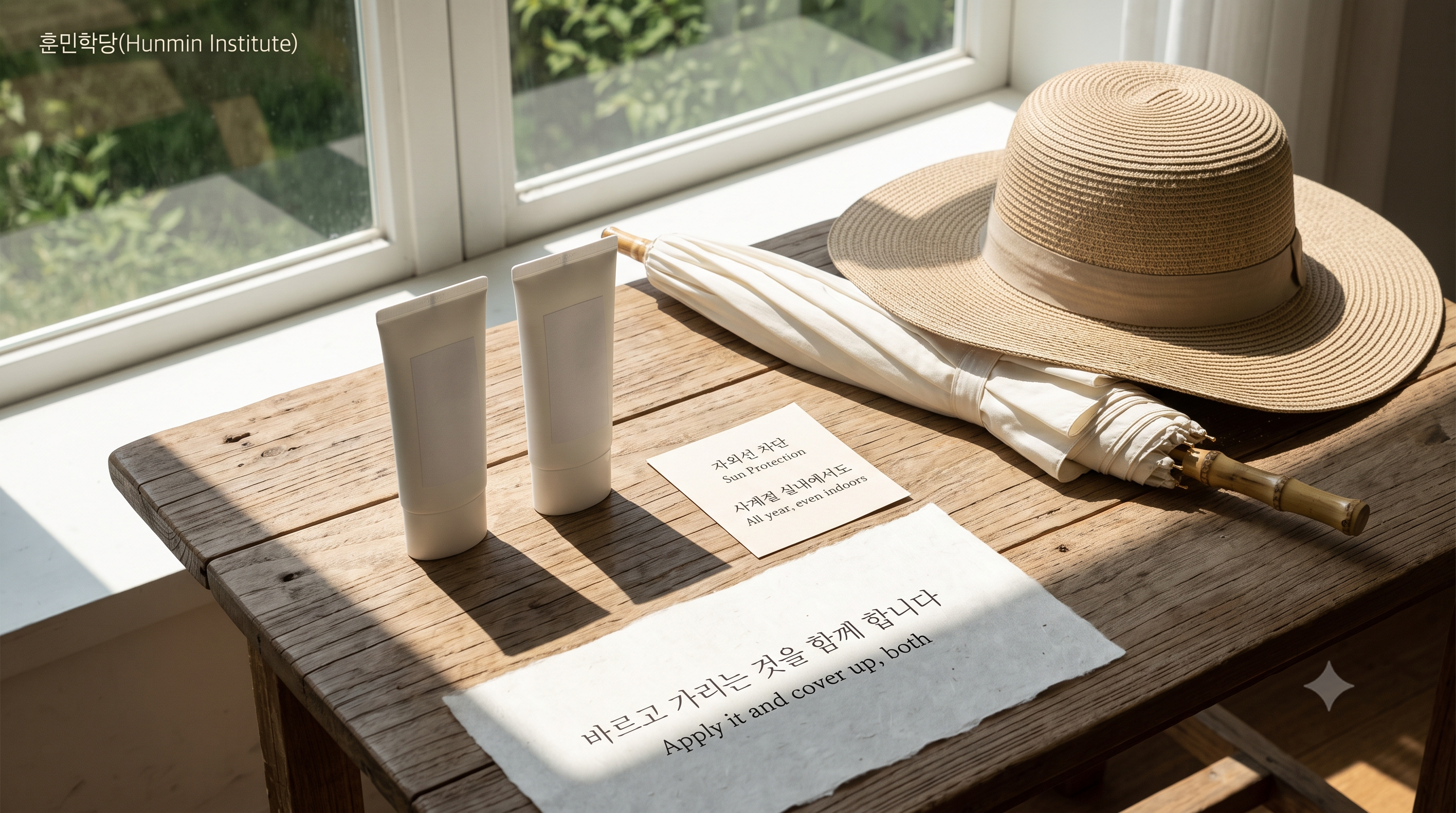
한국에서 자외선 차단제는 선택 항목이 아니고 여름에만 바르는 것도 아닙니다. 선크림 진열대 앞에서 오가는 말부터 정리하십시오.
In Korea sunscreen is not optional, nor is it only for summer. Start by sorting the lines exchanged in front of the sunscreen shelf.
| 듣는 말 Listening |
하는 말 Speaking |
|---|---|
| 백탁 없는 걸로 드릴까요? [baektak eomneun geollo deurilkkayo] Shall I give you one without a white cast? |
무기자차 있어요? [mugijacha isseoyo] Do you have a mineral sunscreen? |
| 이건 좀 뻑뻑할 수 있어요. [igeon jom ppeokppeokal su isseoyo] This one may feel a bit heavy. |
발림성 가벼운 거 있어요? [ballimseong gabyeoun geo isseoyo] Do you have one that spreads lightly? |
| 실내에서도 바르세요. [sillaeeseodo bareuseyo] Apply it indoors as well. |
백탁 없는 거 있어요? [baektak eomneun geo isseoyo] Do you have one without a white cast? |
| 한국어 Korean |
무엇입니까 What it is |
|---|---|
| 자외선 [jaoeseon] |
눈에 보이지 않는 햇빛의 한 종류 An invisible part of sunlight |
| 자외선 차단제 [jaoeseon chadanje] |
선크림의 정식 명칭, 제품 표기에 씁니다 The formal name for sunscreen, used on labels |
| 무기자차 [mugijacha] |
자극이 적어 민감한 피부에 무난한 방식 The gentler type, suited to sensitive skin |
| 유기자차 [yugijacha] |
발림성이 가볍고 백탁이 적은 방식 The type that spreads lightly with less white cast |
| 백탁 [baektak] |
바른 자리가 하얗게 뜨는 현상 The whitish film left where it is applied |
▶무기자차와 유기자차는 우열이 아니라 선택의 문제입니다.
Mineral and chemical are a choice, not a ranking.
무기자차는 자극이 적어 민감한 피부에 무난하고 유기자차는 발림성이 가볍고 백탁이 적습니다. 한국 선크림이 해외에서 평가받는 지점도 이 사용감입니다. 이름만 보면 무기와 유기가 어떤 성능 등급처럼 읽히지만 성분 계열을 가리키는 말일 뿐입니다.
Mineral formulas are gentle and suit sensitive skin, while chemical formulas spread lightly and leave less white cast. That feel is exactly what Korean sunscreens are praised for abroad. The names may read like grades of performance, but they only indicate the family of ingredients.
생활 습관까지 함께 갑니다. 여름철 양산은 흔한 물건이고 챙이 넓은 모자와 자외선 차단 기능이 있는 토시도 일상적으로 쓰입니다. 바르는 것과 가리는 것을 함께 하는 방식입니다.
Daily habits move with it. Parasols are common in summer, and wide-brimmed hats and UV-blocking arm sleeves are everyday items. The approach combines applying and covering.
바르는 것만큼 먹는 것이 절반입니다
What You Eat Is Half of It
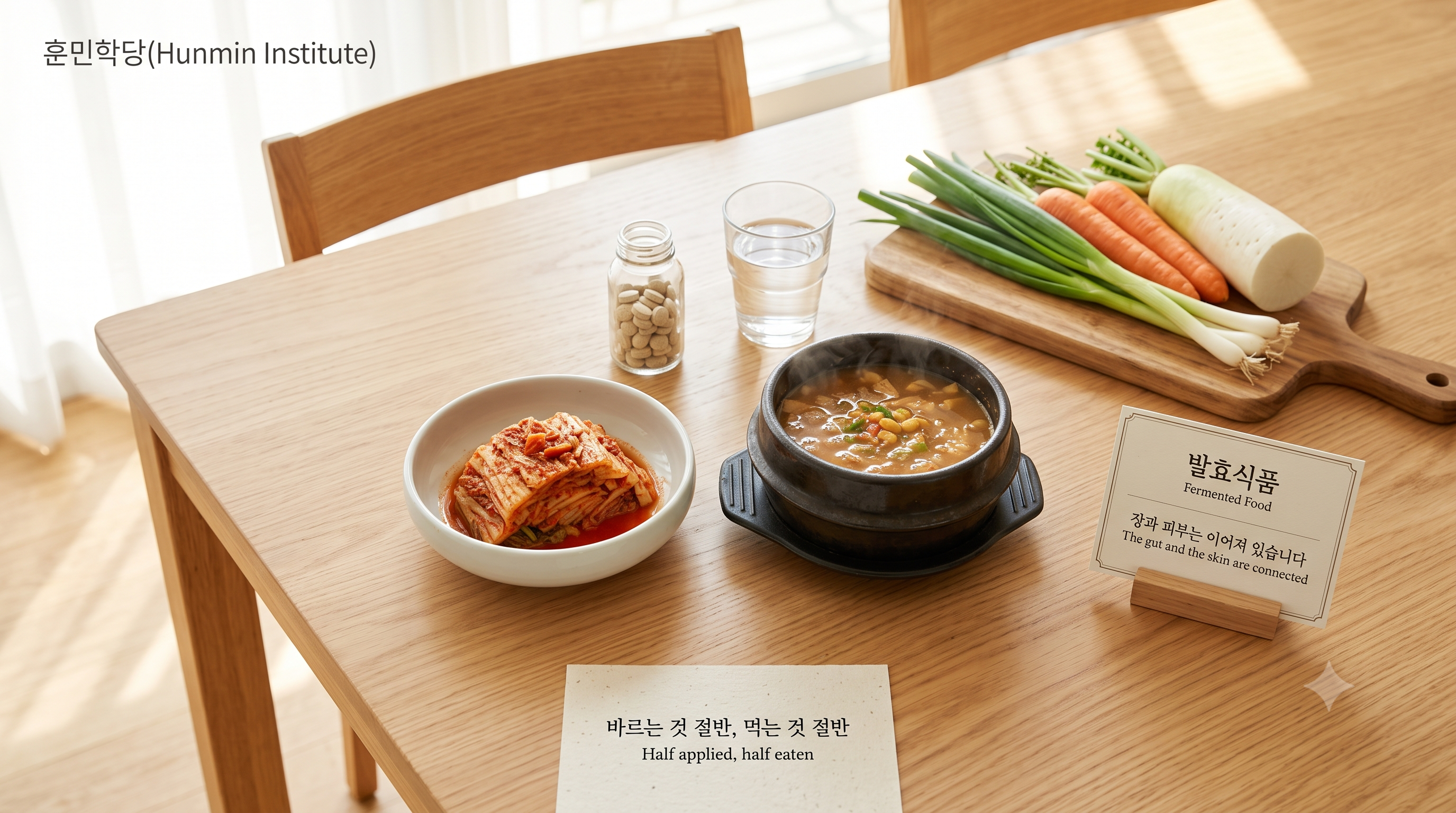
한국인에게 피부 관리는 화장대에서만 이루어지지 않습니다. 약국이나 건강식품 매장에서 오가는 말부터 확인하십시오.
For Koreans, skincare does not happen only at the vanity. Start with the lines exchanged at a pharmacy or a health food shop.
| 듣는 말 Listening |
하는 말 Speaking |
|---|---|
| 공복에 드시면 됩니다. [gongboge deusimyeon doemnida] Take it on an empty stomach. |
이거 공복에 먹어도 돼요? [igeo gongboge meogeodo dwaeyo] Can I take this on an empty stomach? |
| 하루에 한 알씩 드세요. [harue han alssik deuseyo] One tablet a day. |
하루에 몇 알이에요? [harue myeot arieyo] How many a day? |
| 식후에 드셔도 됩니다. [sikhue deusyeodo doemnida] After a meal is fine as well. |
오래 먹어도 돼요? [orae meogeodo dwaeyo] Is it all right to take it long term? |
| 한국어 Korean |
무엇입니까 What it is |
|---|---|
| 발효식품 [balhyosikpum] |
미생물의 작용으로 익힌 음식 Food matured by the work of microorganisms |
| 김치 [gimchi] |
채소를 절여 발효시킨 대표 반찬 Salted, fermented vegetables, the signature side dish |
| 된장 [doenjang] |
콩을 발효시킨 장, 국과 찌개의 기본 Fermented soybean paste, the base of soups and stews |
| 공복 [gongbok] |
아무것도 먹지 않은 상태, 약 안내에 자주 나옵니다 Having eaten nothing; common on medicine labels |
| 보충제 [bochungje] |
부족한 것을 채우는 제품, 약이 아닙니다 A product that fills a gap; not a medicine |
▶발효식품이 피부와 이어지는 통로는 장입니다.
The path from fermented food to skin runs through the gut.
김치와 된장 같은 발효식품은 장내 미생물군을 개선하는 데 도움이 되고, 장과 피부가 서로 영향을 주고받는 장-피부 축을 통해 피부 상태와 연결됩니다. 한국 음식을 꾸준히 먹기 어려운 환경이라면 아침 공복에 프리바이오틱스를 챙기는 방법이 대안이 됩니다.
Fermented foods such as kimchi and doenjang help improve the gut microbiome, which connects to skin condition through the gut-skin axis. If eating Korean food regularly is not realistic, taking prebiotics on an empty stomach in the morning is an alternative.
다만 보충제는 보조 수단이며 효과에는 개인차가 있습니다. 지속되는 피부 문제를 보충제로 해결하려 하지 마시고 진료를 받으시기 바랍니다.
Supplements, however, are a support, and results vary from person to person. Do not try to solve a persistent skin problem with supplements; see a doctor instead.
수분과 마스크팩은 같은 목적입니다
Water and Sheet Masks Serve the Same Goal
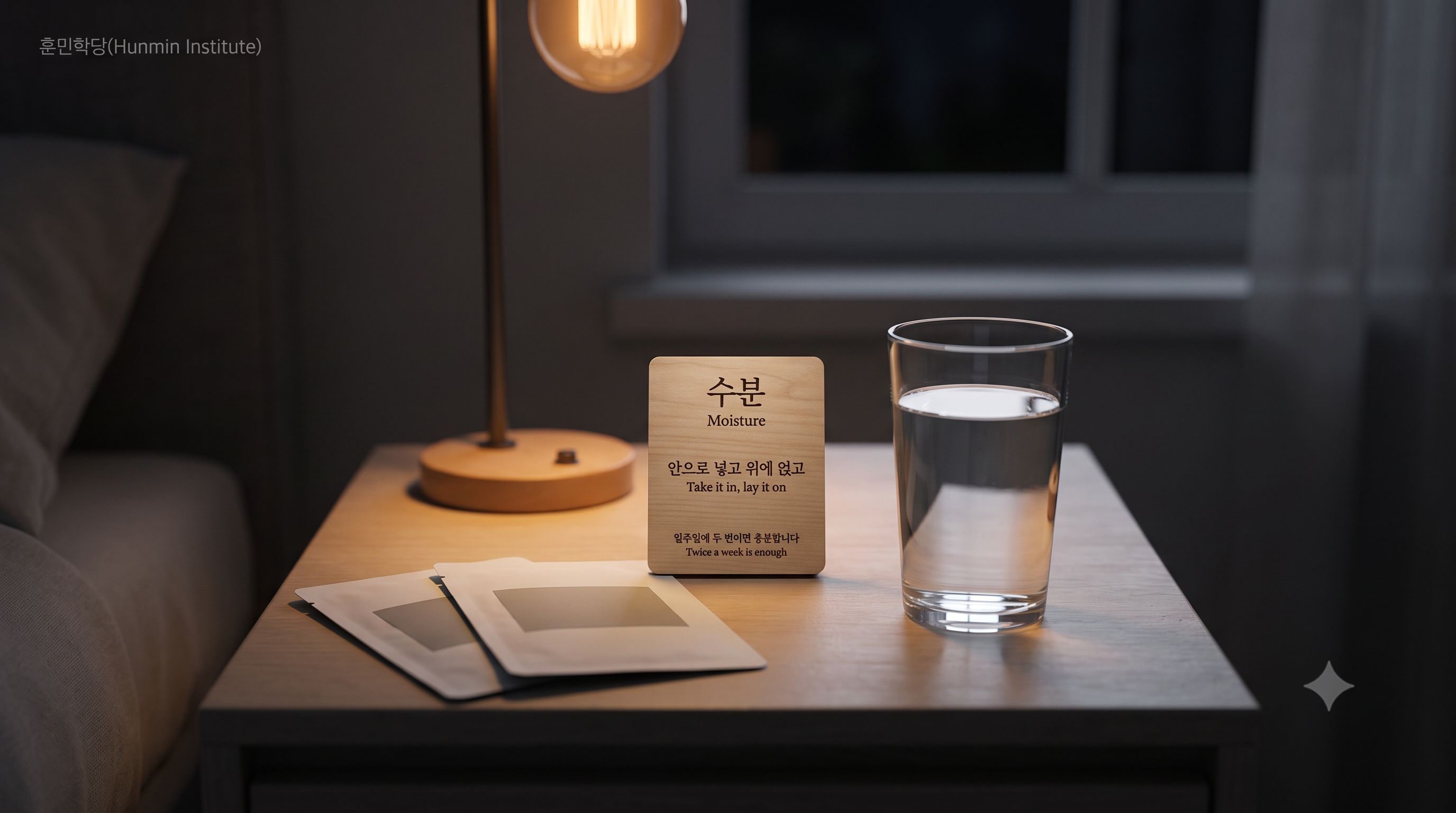
한국인은 물을 자주 마시고 하루 2리터를 목표로 삼는 사람이 많습니다. 다만 2리터는 흔히 쓰이는 목표치일 뿐 모든 사람에게 적용되는 의학적 기준은 아닙니다. 마스크팩을 두고 오가는 말부터 보십시오.
Koreans drink water often, and many set two litres a day as a target. That figure is a common target rather than a medical standard for everyone. Start with the lines exchanged about sheet masks.
| 듣는 말 Listening |
하는 말 Speaking |
|---|---|
| 주 2회 정도가 적당해요. [ju ihoe jeongdoga jeokdanghaeyo] About twice a week is right. |
매일 해도 돼요? [maeil haedo dwaeyo] Can I do it every day? |
| 자기 전에 하시면 좋아요. [jagi jeone hasimyeon joayo] It is best just before bed. |
언제 하는 게 좋아요? [eonje haneun ge joayo] When is the best time? |
| 매일은 오히려 안 좋아요. [maeireun ohiryeo an joayo] Every day is actually not better. |
하고 나서 씻어요? [hago naseo ssiseoyo] Do I rinse afterwards? |
| 한국어 Korean |
무엇입니까 What it is |
|---|---|
| 수분 [subun] |
물기, 피부가 머금는 물의 양 Water content, the moisture the skin holds |
| 유수분 [yusubun] |
기름기와 물기의 균형, 관리의 기준이 됩니다 The balance of oil and water, the measure of care |
| 마스크팩 [maseukeupaek] |
얼굴에 얹어 수분을 채우는 시트 A sheet laid on the face to fill in moisture |
| 수분 크림 [subun keurim] |
물기를 채우는 쪽의 제품 The product that fills in water |
| 영양 크림 [yeongyang keurim] |
기름기를 채워 가두는 쪽의 제품 The product that fills in oil and seals it |
▶몸 안으로 넣는 수분과 피부 위에 얹는 수분이 짝을 이룹니다.
Moisture taken into the body and moisture laid on the skin work as a pair.
마스크팩도 결국 같은 목적입니다. 일주일에 두 번, 자기 전에 하는 것이 일반적인 기준이며 피곤한 날이라면 가장 편한 시간대에 두 번을 채우는 쪽을 권합니다.
Sheet masks serve the same purpose. Twice a week before bed is the usual guideline, and on tired days it is better to fit those two sessions in whenever suits you.
필요한 물의 양은 체중과 활동량, 기후에 따라 달라집니다. 제품 설명에 수분 크림과 영양 크림이 나란히 있으면 앞의 것은 물기를, 뒤의 것은 기름기를 채우는 쪽이라고 보시면 됩니다.
The amount of water you need shifts with body weight, activity level, and climate. When a shelf carries 수분 크림 next to 영양 크림, the first fills in water and the second fills in oil.
한국인의 피부는 인프라의 결과이기도 합니다
Korean Skin Is Also a Product of Infrastructure
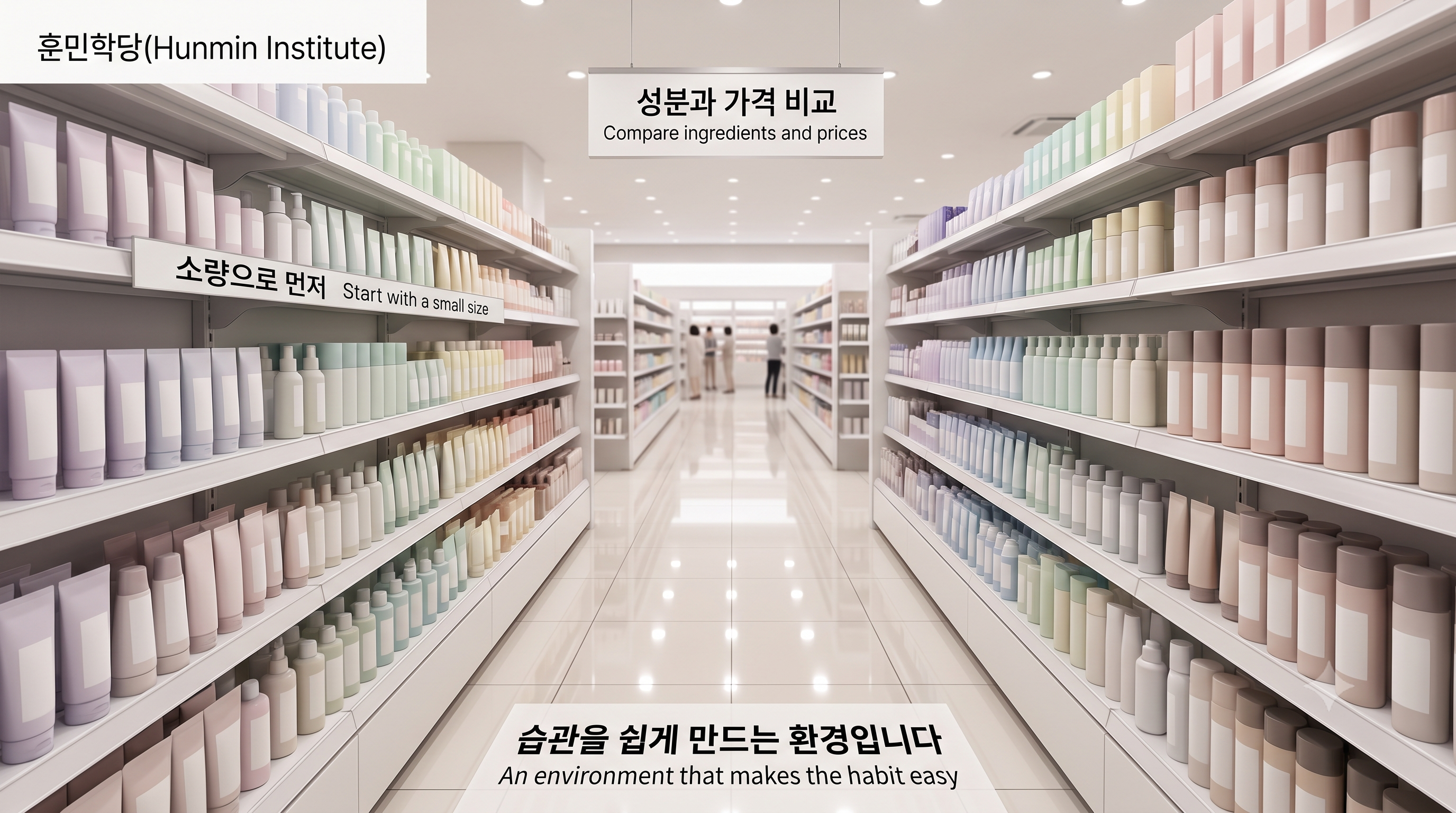
솔직히 말하면 습관만으로 설명되지 않는 부분도 있습니다. 피부과의 접근성이 높아 정기적으로 관리를 받는 사람도 적지 않으니, 병원에서 오가는 말부터 보십시오.
To be honest, habits alone do not explain everything. Dermatology clinics are easy to reach and many people go regularly, so start with the lines exchanged at a clinic.
| 듣는 말 Listening |
하는 말 Speaking |
|---|---|
| 예약하고 오셨어요? [yeyakago osyeosseoyo] Do you have an appointment? |
통역 되나요? [tongyeok doenayo] Is interpretation available? |
| 오늘은 예약이 다 찼어요. [oneureun yeyagi da chasseoyo] We are fully booked today. |
내일 예약할 수 있어요? [naeil yeyakal su isseoyo] Can I book for tomorrow? |
| 관리보다 진료가 필요해 보여요. [gwallliboda jillyoga piryohae boyeoyo] This looks like it needs treatment rather than care. |
카드 되나요? [kadeu doenayo] Do you take cards? |
| 한국어 Korean |
무엇입니까 What it is |
|---|---|
| 피부과 [pibugwa] |
피부 질환을 진료하는 병원 A clinic that treats skin conditions |
| 예약 [yeyak] |
미리 시간을 잡아 두는 것 Booking a time in advance |
| 통역 [tongyeok] |
말을 옮겨 주는 사람 또는 그 일 An interpreter, or the service itself |
| 진료 [jillyo] |
의사가 병을 살피고 치료하는 일 A doctor examining and treating a condition |
| 관리 [gwalli] |
집이나 매장에서 하는 일상적인 손질 Everyday care done at home or in a shop |
▶이 글의 내용은 건강한 피부를 유지하기 위한 생활 습관입니다.
Everything here is about daily habits for maintaining healthy skin.
여드름, 아토피, 지속되는 홍조처럼 치료가 필요한 피부 질환이 있다면 자가 관리로 해결하려 하지 말고 피부과 진료를 받으시기 바랍니다. 관리와 진료는 다른 일이며, 관리로 덮어 둔 질환은 시간이 지날수록 다루기 어려워집니다.
If you have a condition that needs treatment, such as acne, atopic dermatitis, or persistent redness, please see a dermatologist rather than managing it yourself. Care and treatment are different things, and a condition covered up by care only gets harder to handle.
동네마다 있는 매장에서 성분과 가격을 비교해 소량으로 사 보고, 맞으면 계속 쓰는 소비가 가능합니다. 한국 여행 일정에 뷰티 코스를 넣는 방문객도 늘고 있는데 서울의 피부과 스킨케어 체험이나 화장품 제조 과정을 볼 수 있는 코스가 대표적입니다.
At a shop in nearly every neighbourhood you can compare ingredients and prices, try a small size, and keep using it if it suits you. More visitors now add a beauty course to their Korea itinerary, usually a clinic skincare session in Seoul or a tour showing how cosmetics are made.
한국인의 피부는 열 단계를 쌓아 만든 결과가 아니라 세 단계를 거르지 않고, 바르는 것과 먹는 것을 함께 챙기고, 가까운 매장과 병원을 활용해 온 시간의 결과입니다. 오늘 나온 문장 가운데 딱 세 개만 외우자면 저는 건성이에요, 순한 거 있어요, 샘플 받을 수 있어요입니다.
Korean skin is not the result of stacking ten steps. It is the result of never skipping three, of treating what you apply and what you eat as one, and of years of easy access to shops and clinics. If you memorise only three of today’s lines, make them 저는 건성이에요, 순한 거 있어요, and 샘플 받을 수 있어요.
You have completed all six lessons of the K-Culture guide. From the creation of Hangeul through bunsik and hansik, two lessons on noodles, the braised dishes, and skincare, you now carry the Korean used at the table, in the shop, and at the clinic. Congratulations.
토픽 맛보기
TOPIK Preview
유형: TOPIK Ⅰ 읽기 [34~39], 대화, 빈칸에 알맞은 것 고르기
Type: TOPIK I Reading [34–39], dialogue, choose the correct word for the blank
( )에 들어갈 말로 가장 알맞은 것을 고르십시오.
Choose the most appropriate word for the blank.
가: 피부 타입이 어떻게 되세요? 나: 저는 ( ).
A: What is your skin type? B: I have ( ).
① 건성이에요
② 건성해요
③ 건성을 해요
④ 건성이 돼요
Answer ▾
정답 ① 건성이에요
Answer: ① 건성이에요
건성은 명사이므로 상태를 말할 때 이에요를 붙입니다. ②는 지문과 같은 낱말을 쓰지만 명사를 동사처럼 만들어 진술이 어긋나고, ③도 같은 방식이라 일부만 걸리며, ④는 그럴듯해 보여도 그렇게 변한다는 뜻이 되어 지금의 상태를 말하는 대답이 되지 않습니다. 흉내 낸 대문항은 TOPIK Ⅰ 읽기 [34~39]이고 배점은 2점입니다.
건성 is a noun, so stating the condition takes 이에요. ② uses the same word but turns a noun into a verb, which does not hold; ③ does the same and is only partly right; ④ looks plausible but means becoming that way rather than being that way now. The item type modeled here is TOPIK I Reading [34–39], worth 2 points.
FAQ
Q1. 한국 매장에서 제 피부 타입을 모르면 어떻게 말해야 하나요?Answer ▾
Q1. What do I say in a Korean shop if I do not know my skin type?
A1. 잘 모르겠어요라고 말한 뒤 순한 거 있어요를 이어 붙이면 됩니다. 직원이 손등에 테스트를 권하는 경우가 많고, 그 자리에서 유수분 상태를 봐 주는 매장도 있습니다.
A1. Say 잘 모르겠어요 and follow it with 순한 거 있어요. Staff will often invite you to test a product on the back of your hand, and some shops will check your oil and moisture balance on the spot.
Q2. 마스크팩을 한 뒤에 얼굴을 씻어야 하나요?Answer ▾
Q2. Should I wash my face after using a sheet mask?
A2. 대부분은 씻지 않고 남은 것을 두드려 흡수시킵니다. 끈적임이 남으면 가볍게 헹구셔도 되며, 제품마다 안내가 다르므로 포장의 사용법을 확인하시기 바랍니다.
A2. Most people do not rinse; they pat in what is left. If it feels sticky you may rinse lightly. Instructions differ by product, so check the packaging.
Q3. 한국 제품을 해외에서 사려면 어디를 봐야 하나요?Answer ▾
Q3. Where can I buy Korean products from abroad?
A3. 국내 화장품 매장들이 운영하는 해외 배송 서비스를 이용할 수 있습니다. 처음에는 소용량으로 시작해 피부에 맞는지 확인하는 방식을 권합니다.
A3. Korean retailers run international shipping services you can use. Starting with small sizes to check how your skin responds is the safer approach.
Q4. 비타민C나 프리바이오틱스를 먹으면 피부가 좋아지나요?Answer ▾
Q4. Will vitamin C or prebiotics improve my skin?
A4. 보조적인 역할을 합니다. 식습관과 수면, 자외선 차단이 먼저이며 보충제만으로 큰 변화를 기대하기는 어렵습니다.
A4. They play a supporting role. Diet, sleep, and sun protection come first, and supplements alone rarely produce a large change.
Q5. 피부과에서 한국어를 못해도 진료를 받을 수 있나요?Answer ▾
Q5. Can I see a dermatologist without speaking Korean?
A5. 가능합니다. 서울의 큰 병원과 외국인 환자를 받는 의원에는 통역이 있는 경우가 많습니다. 다만 예약 여부와 통역 제공은 병원마다 다르므로 방문 전에 확인하시기 바랍니다.
A5. Yes. Large hospitals in Seoul and clinics that serve international patients often provide interpretation. Whether booking is required and whether interpretation is offered differ by clinic, so check before you go.
Vocabulary and Pronunciation for Foreigners
| No | Korean | Romanisation | Meaning |
|---|---|---|---|
| 1 | 피부 | pibu | (n) skin [skɪn] |
| 2 | 건성 | geonseong | (n) dry skin type [draɪ skɪn] |
| 3 | 트러블 | teureobeul | (n) breakouts, blemishes [ˈbreɪkaʊts] |
| 4 | 샘플 | saempeul | (n) sample [ˈsæmpl] |
| 5 | 순하다 | sunhada | (adj) to be mild [maɪld] |
| ▾ 단어 57 개 더 보기 Show 57 more ↗ | |||
The blog page has limits of space and function, so only five words are shown here. The rest of the word list, the audio, the sentences and tables, the FAQ, the worksheet, the TOPIK questions and the lesson video are on the Hunmin Institute website ↗, free for blog subscribers.
참고 기관
Official Sources
식품의약품안전처 ↗
Ministry of Food and Drug Safety
https://www.mfds.go.kr
기관 설명 보기 About this institute ▾
This is the agency that runs cosmetic ingredient and labelling standards. It has an English section where you can check notices on labelling and ingredients. These standards are revised from time to time, so check the current notice directly.
※ 본 콘텐츠(원고, 이미지, 예문 포함)는 저작권법에 의해 보호받는 훈민학당의 저작물입니다. 무단 복제, 전재, 재배포 및 AI 학습 데이터로의 이용을 금합니다.
This content (manuscript, images, and example sentences) is the copyrighted property of Hunmin Institute, protected under copyright law. Unauthorized copying, reproduction, redistribution, and use as AI training data are prohibited.
'K-Culture' 카테고리의 다른 글
| Korean Jjim: The Braised Dishes You Should Not Miss (0) | 2026.07.25 |
|---|---|
| Hangeul: The Alphabet a King Refused to Give Up (0) | 2026.07.25 |
| Korean Noodle Dishes Part 2: Jjajangmyeon, Bibim-guksu, Kongguksu (0) | 2026.07.25 |
| Korean Noodle Dishes Part 1: Kalguksu to Naengmyeon (0) | 2026.07.25 |
| Bunsik vs Hansik: Know the Difference (0) | 2026.07.22 |


