
Three Noodles That Split by Sauce, Not by Season
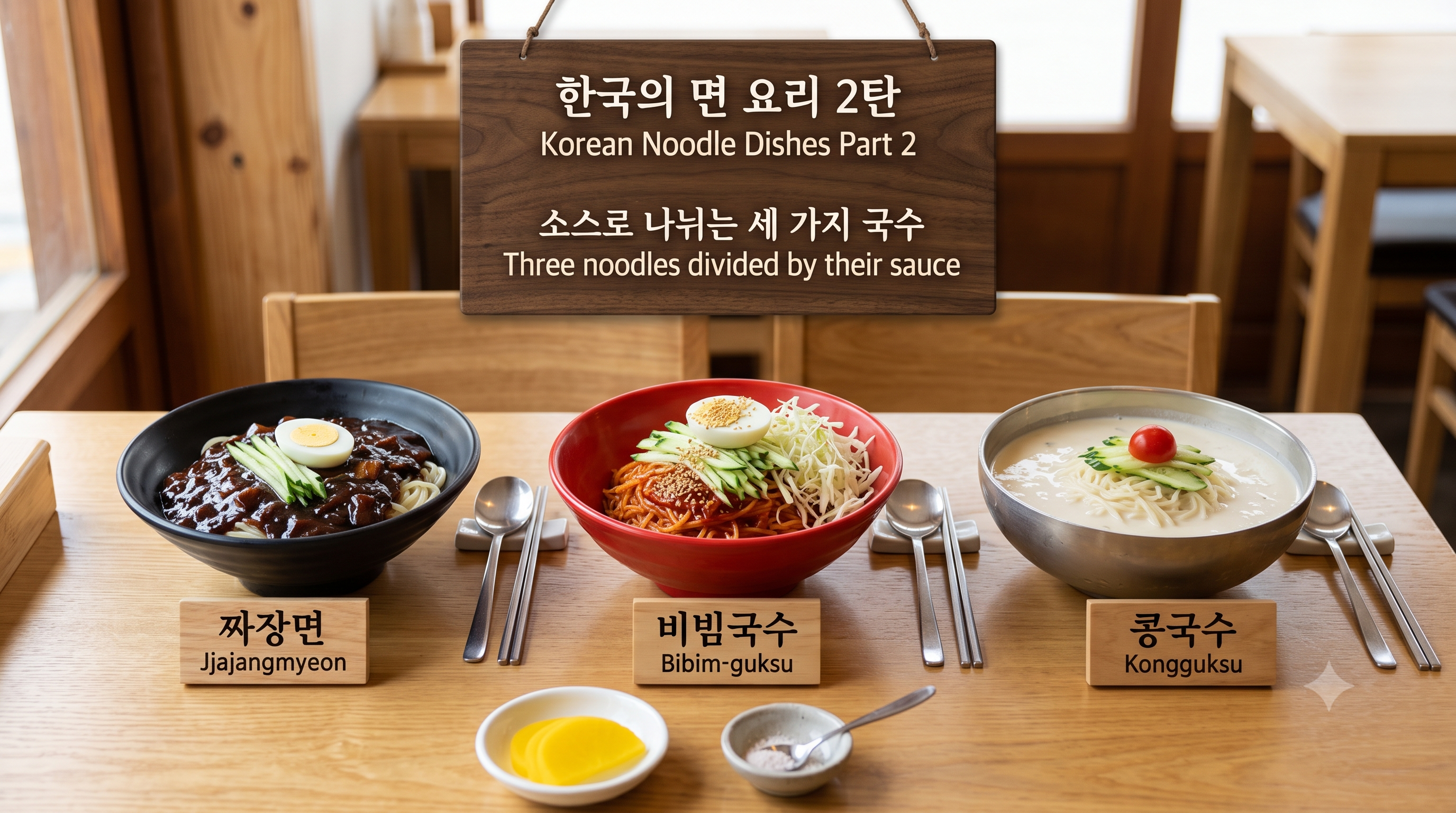
한국의 면 요리 2탄, 짜장면 비빔국수 콩국수
These three divide by sauce, not by the temperature of a broth.
Learn the day each one belongs to and the Korean you use to order it.
이 세 가지는 국물 온도가 아니라 소스로 갈립니다.
이 글에서 각각이 놓이는 자리와 주문할 때 쓰는 한국어를 익힙니다.
All learning services for the teaching materials published on this blog are free for blog subscribers on the Hunmin Institute website ↗.
이 글에서 배우는 핵심 회화
Key Expressions in This Lesson
중국집과 분식집에서 오가는 말은 몇 마디로 정해져 있습니다. 아래 여섯 문장은 좌우가 한 쌍의 대화가 아니라 각각 따로 익히는 문장입니다. 먼저 눈에 담고 본문으로 들어가십시오.
Only a few lines go back and forth at a Korean-Chinese or snack shop. The two columns are not paired dialogue; each sentence is learned on its own. Take them in first, then move into the text.
| 듣는 말 Listening | 하는 말 Speaking |
|---|---|
| 면 다 됐습니다. [myeon da dwaetseumnida] The noodles are ready. | 짜장면 하나요. [jjajangmyeon hanayo] One jjajangmyeon. |
| 비벼 드릴까요? [bibyeo deurilkkayo] Shall I mix it for you? | 짬짜면 돼요? [jjamjjamyeon dwaeyo] Can I get jjamjjamyeon? |
| 더 필요하신 거 있으세요? [deo piryohasin geo isseuseyo] Do you need anything else? | 앞접시 좀 주세요. [apjeopsi jom juseyo] A small plate, please. |
세 국수의 이름과 재료는 소단락 1에서 3까지, 주문에서 오가는 말과 세 국수 비교는 소단락 4에서 다룹니다.
The names and ingredients come in Sections 1 to 3, and the lines exchanged when ordering, together with the side-by-side comparison, come in Section 4.
짜장면, 검은 소스에 담긴 이민의 역사
Jjajangmyeon, a Sauce with a History
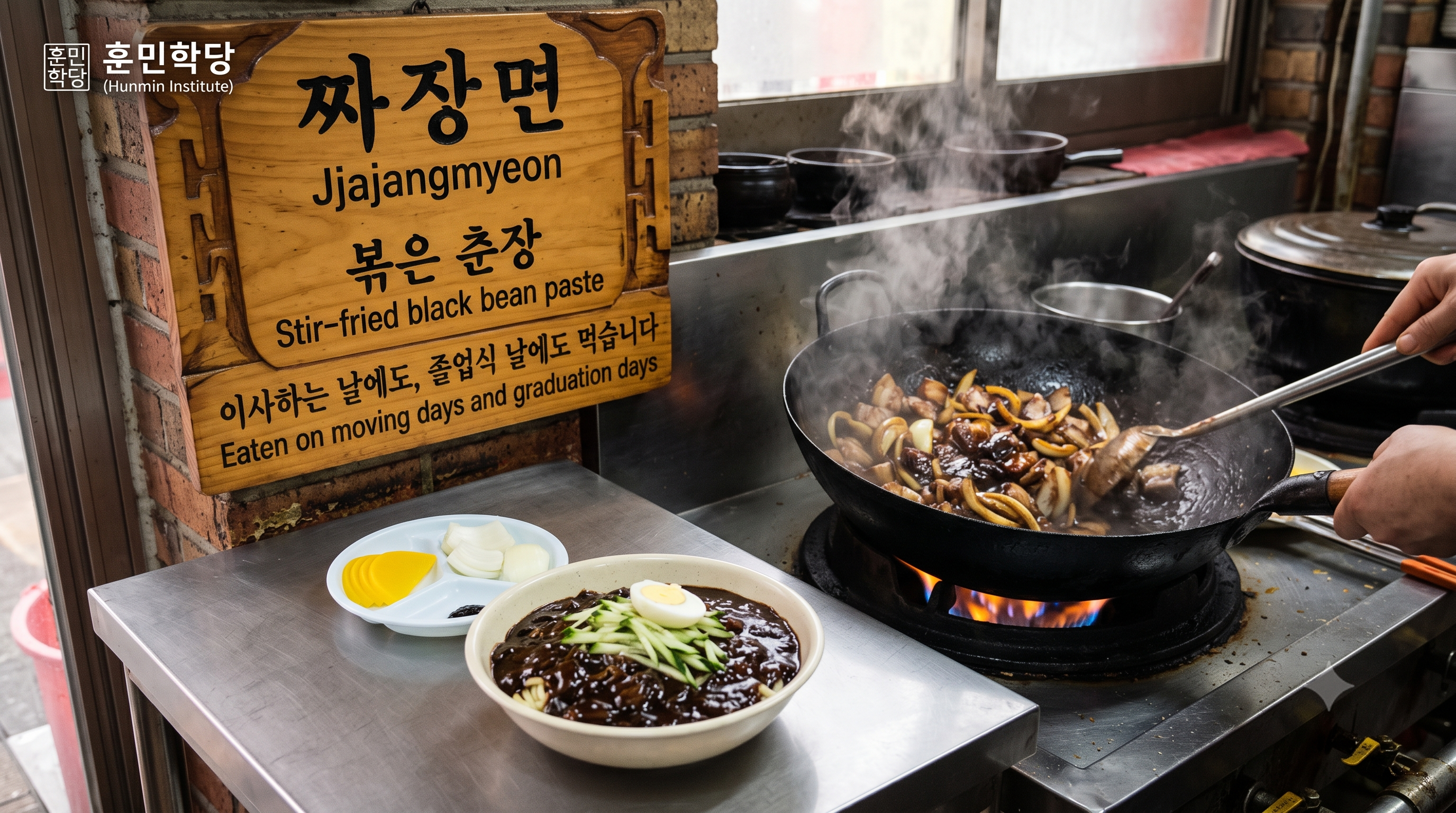
중국에서 건너왔지만 지금의 형태는 한국에서 완성되었습니다. 중국집에서 오가는 말부터 확인하십시오.
It came from China but took its present form in Korea. Start with the lines exchanged at a Korean-Chinese restaurant.
| 듣는 말 Listening | 하는 말 Speaking |
|---|---|
| 면 다 됐습니다. [myeon da dwaetseumnida] The noodles are ready. | 짜장면 하나요. [jjajangmyeon hanayo] One jjajangmyeon. |
| 비벼 드릴까요? [bibyeo deurilkkayo] Shall I mix it for you? | 짬짜면 돼요? [jjamjjamyeon dwaeyo] Can I get jjamjjamyeon? |
| 단무지 더 드릴까요? [danmuji deo deurilkkayo] Would you like more pickled radish? | 네, 비벼 주세요. [ne, bibyeo juseyo] Yes, please mix it. |
응용 Apply It
↳ [명사] 하나요
[myeongsa] hanayo
One [noun]
ex [짜장면] 하나요/[콩국수] 하나요/[간짜장] 하나요
ROM [jjajangmyeon] hanayo/[kongguksu] hanayo/[ganjjajang] hanayo
EN One jjajangmyeon/One kongguksu/One ganjjajang
| 한국어 Korean | 메뉴판에서 무슨 뜻인가 What it means on a menu |
|---|---|
| 춘장 [chunjang] | 콩을 발효시킨 검은 장, 기름에 볶아야 단맛이 납니다 Fermented black soybean paste; stir-frying brings out the sweetness |
| 간짜장 [ganjjajang] | 주문 뒤 즉석에서 볶은 소스, 소스가 따로 나옵니다 Sauce stir-fried to order and served on the side |
| 유니짜장 [yunijjajang] | 고기를 곱게 간 소스, 부드러워 아이들이 좋아합니다 Sauce with finely minced pork, smooth and popular with children |
| 짬짜면 [jjamjjamyeon] | 짜장면과 짬뽕을 반씩, 그릇이 둘로 나뉘어 나옵니다 Half jjajangmyeon and half jjamppong, in a bowl split in two |
| 단무지 [danmuji] | 노란 절임 무, 생양파와 춘장과 함께 나옵니다 Yellow pickled radish, served with raw onion and chunjang |
▶짜장면 앞에 붙는 한 글자가 조리 방식을 말해 줍니다.
The word in front of 짜장 tells you how it was cooked.
1890년대 인천항에서 일하던 산둥 출신 노동자들이 고향 음식을 먹던 것이 출발점입니다. 핵심은 춘장이며, 콩을 발효시킨 검은 장을 기름에 볶으면 짠맛이 누그러지고 고소한 단맛이 올라옵니다. 여기에 돼지고기와 양파를 볶아 넣고 전분으로 걸쭉하게 만듭니다.
It started with Shandong labourers at the port of Incheon in the 1890s. The heart is chunjang: stir-fried in oil, the fermented black paste loses its salt edge and turns nutty and sweet. Pork and onion go in, thickened with starch.
이사하는 날 바닥에 앉아 먹는 짜장면, 졸업식 날 가족과 가는 중국집, 4월 14일 블랙데이가 모두 이 음식과 붙어 있습니다. 생양파를 춘장에 찍어 먹는 것이 한국식입니다.
Moving day on the floor, graduation day with family, and Black Day on April 14 are all tied to this dish. Dipping the raw onion in the paste is the Korean way.
비빔국수, 입맛을 되살리는 붉은 국수
Bibim-guksu, the Red Noodles
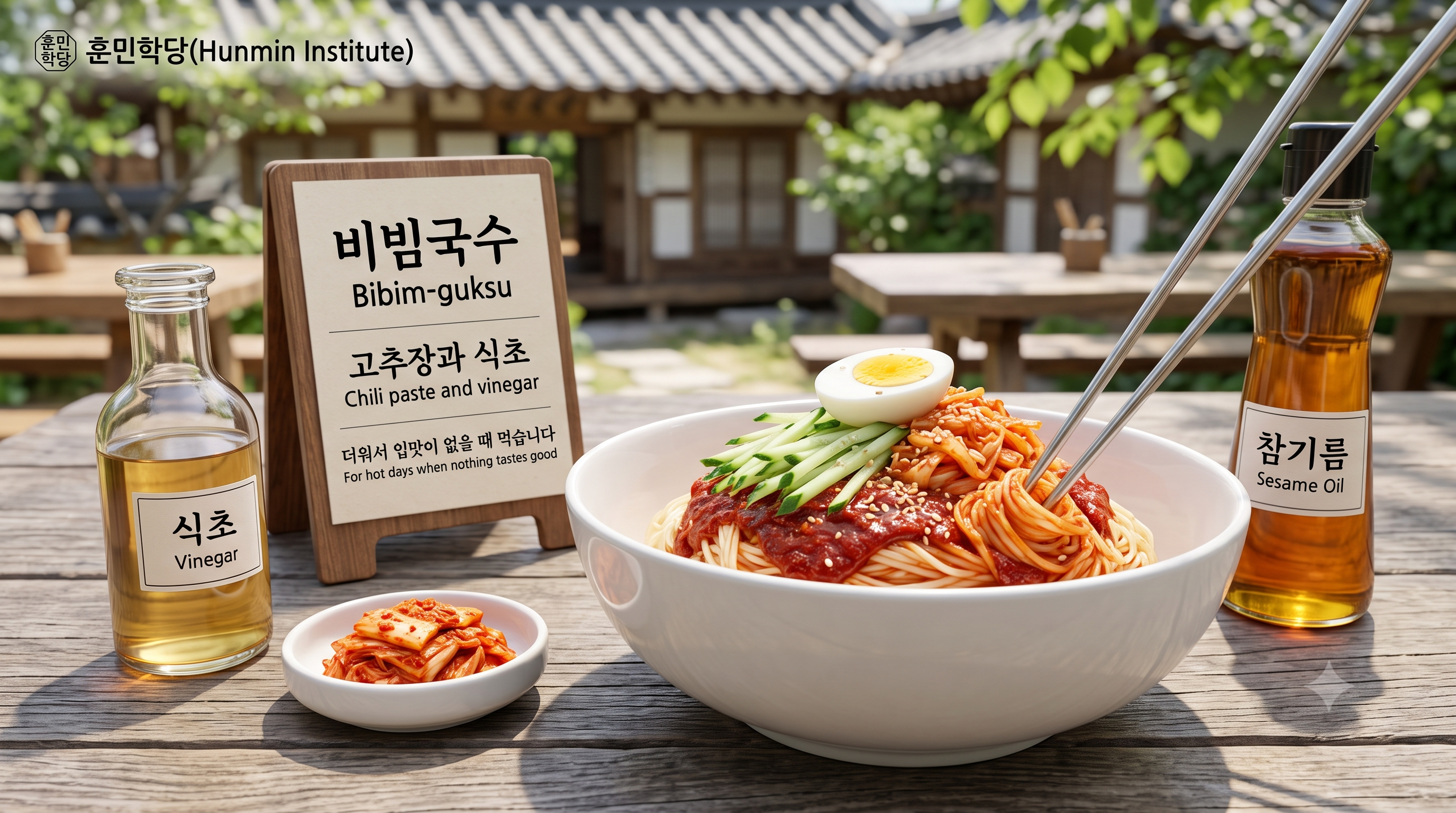
한국 가정에서 가장 자주 만드는 면 요리입니다. 매운 정도를 정하는 자리에서 오가는 말부터 보십시오.
The noodle dish Korean homes make most. Start with the lines exchanged when you settle how spicy it will be.
| 듣는 말 Listening | 하는 말 Speaking |
|---|---|
| 매운 거 잘 드세요? [maeun geo jal deuseyo] Do you handle spicy food well? | 덜 맵게 해 주세요. [deol maepge hae juseyo] Less spicy, please. |
| 김치 더 넣어 드릴까요? [gimchi deo neoeo deurilkkayo] Shall I add more kimchi? | 이거 뭐 넣었어요? [igeo mwo neoeosseoyo] What did you put in this? |
| 다 드셨어요? [da deusyeosseoyo] Have you finished? | 새콤해서 좋아요. [saekomhaeseo joayo] I like it because it is tangy. |
| 한국어 Korean | 이 음식에서 무슨 역할인가 What it does in this dish |
|---|---|
| 소면 [somyeon] | 삶아 찬물에 헹궈 씁니다, 잔치국수와 같은 면입니다 Boiled and rinsed in cold water; the same noodle as janchi-guksu |
| 고추장 [gochujang] | 붉은 색과 매운맛을 내는 양념의 바탕입니다 The base of the sauce, giving the red colour and the heat |
| 신 김치 [sin gimchi] | 오래 익어 신맛이 오른 김치, 신맛이 매운맛을 밀어 올립니다 Kimchi fermented until sour; the acidity lifts the heat |
| 참기름 [chamgireum] | 고소한 향을 더하며 깨와 함께 마지막에 넣습니다 Adds the nutty aroma, going in last with sesame seeds |
| 고명 [gomyeong] | 오이채와 김치, 삶은 달걀로 색과 식감을 더합니다 Cucumber, kimchi and boiled egg, adding colour and texture |
▶양념의 핵심은 고추장이 아니라 신 김치와 식초입니다.
The key to the sauce is not chili paste but sour kimchi and vinegar.
신맛이 매운맛을 밀어 올려 입맛을 살립니다. 삶은 소면을 찬물에 헹궈 물기를 빼고 양념에 비비면 끝이라 십 분이면 됩니다.
Acidity lifts the heat and wakes the appetite. Rinse boiled somyeon in cold water, drain, toss it in the sauce, and it is done in ten minutes.
냉면과 자주 비교되지만 성격이 다릅니다. 냉면은 육수와 식감이, 비빔국수는 양념의 균형이 중심입니다. 더워서 밥이 넘어가지 않을 때, 고기를 구워 먹은 뒤 입가심이 필요할 때 찾습니다.
It is often compared with naengmyeon, but their centres differ: broth and texture there, the balance of sauce here. Koreans reach for it when it is too hot for rice, and when a grilled meat meal needs closing.
콩국수, 콩을 갈아 만든 흰 국물
Kongguksu, a Broth Ground from Soybeans
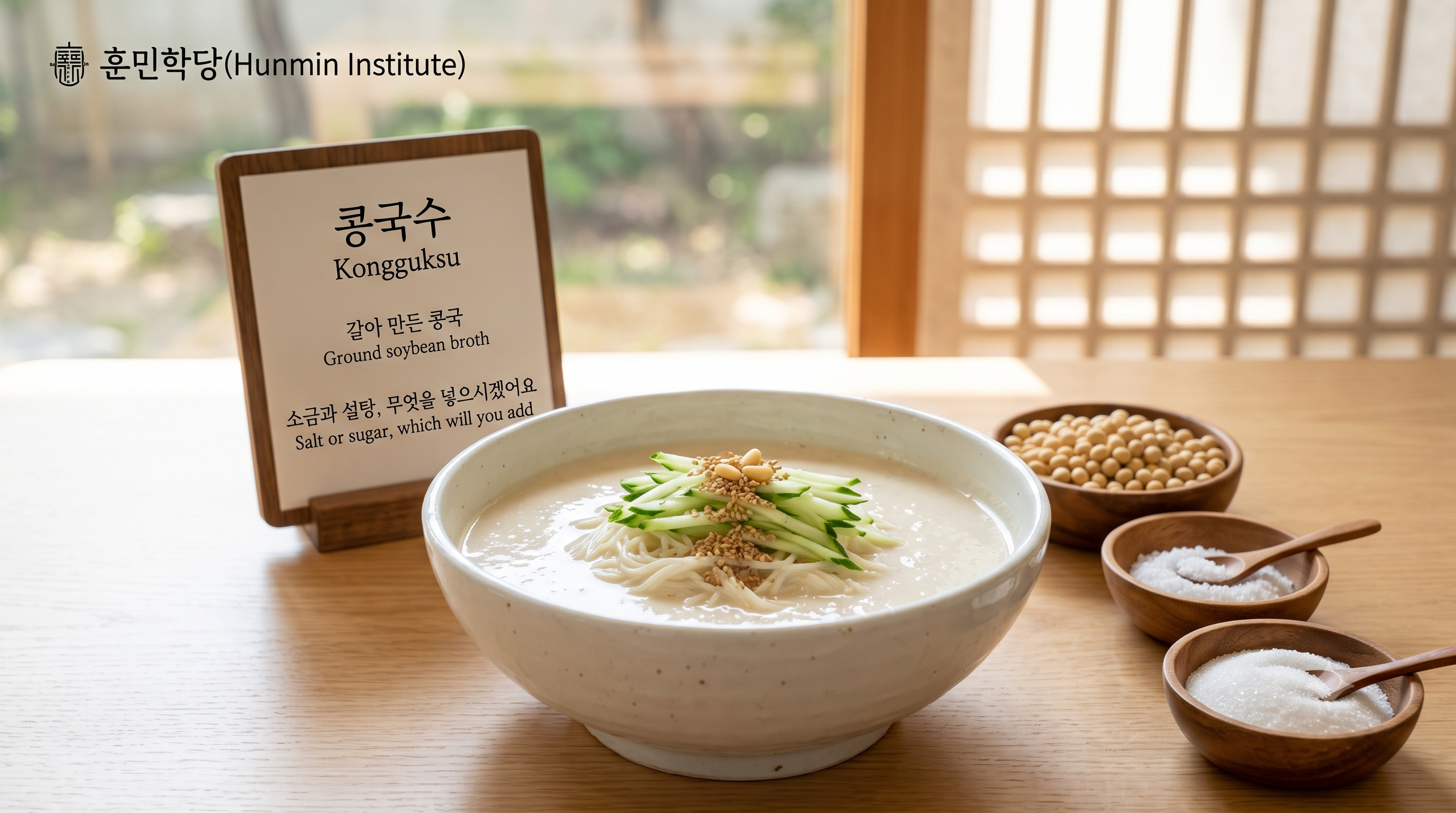
흰 국물이 우유도 크림도 아니라 삶은 콩을 곱게 간 콩국이라는 점부터 놀랍습니다. 여름에만 파는 집이 많으니 묻는 말부터 익히십시오.
The surprise is that the white broth is neither milk nor cream but ground boiled soybeans. Many shops sell it only in summer, so learn the asking lines first.
| 듣는 말 Listening | 하는 말 Speaking |
|---|---|
| 소금이랑 설탕 여기 있습니다. [sogeumirang seoltang yeogi itseumnida] Salt and sugar are here. | 지금 돼요? [jigeum dwaeyo] Is it available now? |
| 여름에만 팔아요. [yeoreumeman parayo] We sell it only in summer. | 소금 조금만 주세요. [sogeum jogeumman juseyo] Just a little salt, please. |
| 고소하죠? [gosohajyo] It has a nutty taste, doesn’t it? | 고기 안 들어가요? [gogi an deureogayo] There is no meat in it, right? |
| 한국어 Korean | 무엇을 가리키는가 What it refers to |
|---|---|
| 콩국 [kongguk] | 삶은 콩을 곱게 간 국물, 우유가 아닙니다 Boiled soybeans ground fine; it is not milk |
| 백태 [baektae] | 희고 담백한 국물이 나는 흰 콩 The white soybean that gives a pale, clean broth |
| 서리태 [seoritae] | 회색빛에 고소함이 짙은 검은 콩 The black soybean with a grey tone and deeper nuttiness |
| 소금, 설탕 [sogeum, seoltang] | 직접 넣어 간을 맞추며 지역마다 갈립니다 You season it yourself, and the choice divides by region |
| 여름 한정 [yeoreum hanjeong] | 여름에만 파는 메뉴, 메뉴판에 자주 붙는 말입니다 Sold in summer only; a phrase that often appears on menus |
▶소금이냐 설탕이냐로 한국인끼리도 갈립니다. 정답은 없습니다.
Koreans themselves split over salt or sugar. There is no right answer.
대체로 서울과 중부는 소금, 남부는 설탕 쪽이 많습니다. 식당에서 둘 다 내주니 조금씩 넣어 보고 정하시고, 처음이라면 아무것도 넣지 않고 한 입 드셔 보기를 권합니다.
Broadly salt in Seoul and the centre, sugar in the south. Both sit on the table, so try a little of each, and on a first visit take one sip with nothing added.
콩을 불려 삶고 껍질을 벗겨 곱게 간 뒤 차갑게 식힙니다. 콩국이 쉽게 상해 여름 한정으로 파는 집이 많으며, 고기나 해산물이 들어가지 않아 채식하는 분도 드실 수 있는 드문 국수입니다.
Soaked, boiled, peeled, ground, and chilled. The broth spoils easily, so it is often summer only, and with no meat or seafood it is a rare Korean noodle dish that suits a vegetarian diet.
국수집에서 오가는 한국어
The Korean Spoken at the Table
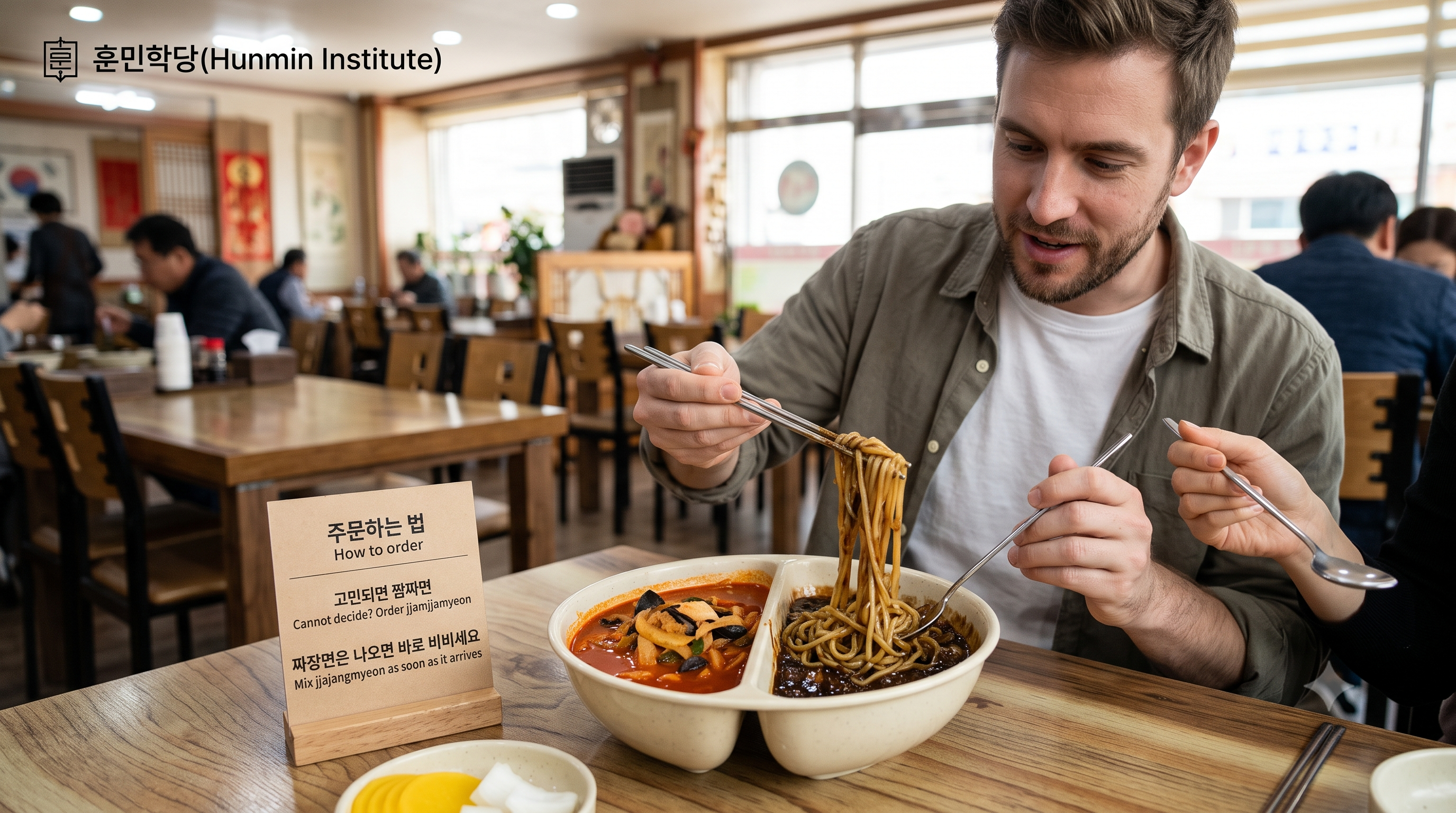
여기서 쓰는 표현부터 배워 봅시다. 부탁하고 사양하고 계산하기까지가 몇 마디로 끝납니다.
Now for the expressions used here. Asking, declining, and paying all fit into a few lines.
| 듣는 말 Listening | 하는 말 Speaking |
|---|---|
| 더 필요하신 거 있으세요? [deo piryohasin geo isseuseyo] Do you need anything else? | 앞접시 좀 주세요. [apjeopsi jom juseyo] A small plate, please. |
| 포장이세요? [pojangiseyo] Is it to take away? | 아니요, 괜찮아요. [aniyo, gwaenchanayo] No, I am fine. |
| 여기 앞접시요. [yeogi apjeopsiyo] Here is your plate. | 계산할게요. [gyesanhalgeyo] I would like to pay. |
| 구분 Category | 짜장면 Jjajangmyeon | 비빔국수 Bibim-guksu | 콩국수 Kongguksu |
|---|---|---|---|
| 면 재료 Noodle base | 중화면 Thick wheat noodles | 소면 Thin wheat noodles | 소면 Thin wheat noodles |
| 소스와 국물 Sauce or broth | 볶은 춘장 Stir-fried black bean paste | 고추장 양념 Red chili seasoning | 갈아 만든 콩국 Ground soybean broth |
| 온도 Temperature | 따뜻함 Warm | 차가움 Cold | 차가움 Cold |
| 매운맛 Spice | 없음 Not spicy | 매움 Spicy | 없음 Not spicy |
| 먹는 때 When | 이사, 졸업식, 블랙데이 Moving day, graduation, Black Day | 더운 날, 고기 먹은 뒤 Hot days, after grilled meat | 한여름 Peak summer |
| 파는 곳 Where | 중국집 Korean-Chinese restaurants | 분식집, 고깃집 Snack shops, barbecue places | 국수 전문점, 여름 한식당 Noodle shops and summer menus |
| 곁들임 Served with | 단무지, 생양파, 춘장 Pickled radish, raw onion, chunjang | 오이채, 김치, 삶은 달걀 Cucumber, kimchi, boiled egg | 소금 또는 설탕 Salt or sugar |
| 채식 가능 Vegetarian | 어려움, 돼지고기 No, it contains pork | 확인 필요, 김치 젓갈 Check; kimchi may contain fish sauce | 가능 Yes |
▶하나요는 하나 주세요를 줄인 말입니다. 짧지만 무례하지 않습니다.
하나요 is a shortened 하나 주세요. It is brief but not rude.
식당에서 가장 많이 들리는 형태이며 메뉴 이름만 갈아 끼우면 어디서나 쓰입니다. 돼요는 가능한지 묻는 틀이라 짬짜면 돼요, 포장 돼요처럼 앞의 명사만 바꾸면 되고, 덜은 정도를 낮추는 말이라 덜 맵게, 덜 짜게처럼 형용사 앞에 붙여 씁니다.
It is the form you hear most in restaurants, and swapping the dish name carries it anywhere. 돼요 asks whether something is possible, so you only change the noun in front, and 덜 lowers a degree, going before an adjective as in 덜 맵게 or 덜 짜게.
드릴까요가 들리면 나에게 해 주겠다는 뜻이므로 네 한마디면 됩니다. 사양할 때는 괜찮아요라고 하면 되며, 이 말은 거절이 아니라 지금은 되었다는 부드러운 표현입니다.
When you hear 드릴까요 something is being offered to you, so 네 is all you need. To decline, say 괜찮아요, a soft way of saying you are fine as you are.
짜장면은 나오는 즉시 비벼야 합니다. 소스가 가라앉으면 섞이지 않으므로 젓가락으로 아래에서 위로 크게 몇 번 뒤집으십시오. 콩국수는 국물을 남기지 않는 편이 좋습니다. 국물 자체가 콩이라 영양이 그 안에 있고 그릇을 들고 마셔도 실례가 아닙니다.
Mix jjajangmyeon the moment it arrives; once the sauce settles it will not combine, so turn it from the bottom with a few broad strokes. With kongguksu, finish the broth: it is the soybean itself, and lifting the bowl to drink is not rude.
세 국수는 국물의 온도가 아니라 소스로 갈리고, 파는 곳도 서로 다릅니다. 중국집에서는 짜장면, 분식집과 고깃집에서는 비빔국수, 한여름 국수 전문점에서는 콩국수를 찾으십시오. 오늘 나온 음식 이름과 주문 문장은 아래 단어장에서 정리하고 가시기 바랍니다.
The three divide by sauce rather than by the temperature of a broth, and they are sold in different places. Look for jjajangmyeon at a Korean-Chinese restaurant, bibim-guksu at a snack shop or barbecue place, and kongguksu at a noodle house in high summer. Gather the dish names and ordering lines from today in the vocabulary list below.
Next: Korean Jjim: The Braised Dishes You Should Not Miss ↗
토픽 맛보기
TOPIK Preview
유형: TOPIK Ⅰ 읽기 [34~39], 대화, 빈칸에 알맞은 것 고르기
Type: TOPIK I Reading [34–39], dialogue, choose the correct word for the blank
( )에 들어갈 말로 가장 알맞은 것을 고르십시오.
Choose the most appropriate word for the blank.
가: 비벼 드릴까요? 나: 네, ( ) 주세요.
A: Shall I mix it for you? B: Yes, please ( ) it.
① 비벼
② 비비고
③ 비빔
④ 비비다
Answer ▾
정답 ① 비벼
Answer: ① 비벼
주세요 앞에는 동사에 아 또는 어가 붙은 형태가 오므로 비비다에 어가 붙은 비벼가 맞습니다. ②는 지문과 같은 낱말이지만 두 동작을 잇는 형태라 뒤가 어긋나고, ③은 명사라 일부만 걸리며, ④는 그럴듯해 보여도 사전에 실리는 기본형이라 이 자리에 근거가 없습니다. 흉내 낸 대문항은 TOPIK Ⅰ 읽기 [34~39]이고 배점은 2점입니다.
Before 주세요 comes a verb with 아 or 어 attached, so 비비다 becomes 비벼. ② uses the same word but links two actions, which does not fit; ③ is a noun and only partly fits; ④ looks plausible but is the dictionary form, so nothing here supports it. The item type modeled here is TOPIK I Reading [34–39], worth 2 points.
FAQ
Q1. 짜장면과 짬뽕 중 무엇을 고를까요?Answer ▾
Q1. Jjajangmyeon or jjamppong?
A1. 처음이라면 짜장면이 안전합니다. 맵지 않고 맛이 단순합니다. 둘 다 궁금하면 짬짜면 돼요라고 물으십시오.
A1. For a first visit jjajangmyeon is safer, mild and straightforward. Curious about both, just ask 짬짜면 돼요.
Q2. 콩국수에 소금과 설탕 중 무엇을 넣나요?Answer ▾
Q2. Salt or sugar in kongguksu?
A2. 정답은 없습니다. 처음에는 아무것도 넣지 않고 한 입 드신 뒤 소금을 조금씩 더해 보십시오.
A2. There is no right answer. Take one sip plain, then work in a little salt.
Q3. 세 가지 중 매운 것은 무엇인가요?Answer ▾
Q3. Which one is spicy?
A3. 비빔국수만 맵습니다. 덜 맵게 해 주세요라고 하면 양념을 줄여 주는 식당도 있습니다.
A3. Only bibim-guksu. Say 덜 맵게 해 주세요 and some places will cut back the sauce.
Q4. 짜장면을 비벼 주기도 하나요?Answer ▾
Q4. Will they mix the jjajangmyeon for me?
A4. 비벼 드릴까요라고 묻는 곳이 있습니다. 네라고 하면 직원이 비벼 줍니다.
A4. Some places ask 비벼 드릴까요. Say 네 and the staff will mix it for you.
Q5. 채식을 하는데 셋 중 무엇을 먹을 수 있나요?Answer ▾
Q5. I am vegetarian. Which of the three can I eat?
A5. 콩국수가 맞습니다. 고기나 해산물이 들어가지 않습니다. 짜장면은 돼지고기가 들어가고, 비빔국수는 김치에 젓갈이 들어갈 수 있으니 먼저 물어보십시오.
A5. Kongguksu is the one; it contains no meat or seafood. Jjajangmyeon has pork, and the kimchi in bibim-guksu may contain fish sauce, so ask first.
Vocabulary and Pronunciation for Foreigners
| No | Korean | Romanisation | Meaning |
|---|---|---|---|
| 1 | 짜장면 | jjajangmyeon | (n) black bean sauce noodles [blæk biːn sɔːs] |
| 2 | 춘장 | chunjang | (n) black bean paste [blæk biːn peɪst] |
| 3 | 비빔국수 | bibimguksu | (n) spicy mixed noodles [mɪkst ˈnuːdlz] |
| 4 | 콩국수 | kongguksu | (n) chilled soybean noodle soup [tʃɪld] |
| 5 | 앞접시 | apjeopsi | (n) small serving plate [smɔːl pleɪt] |
| ▾ 단어 59 개 더 보기 Show 59 more ↗ | |||
The blog page has limits of space and function, so only five words are shown here. The rest of the word list, the audio, the sentences and tables, the FAQ, the worksheet, the TOPIK questions and the lesson video are on the Hunmin Institute website ↗, free for blog subscribers.
※ 본 콘텐츠(원고, 이미지, 예문 포함)는 저작권법에 의해 보호받는 훈민학당의 저작물입니다. 무단 복제, 전재, 재배포 및 AI 학습 데이터로의 이용을 금합니다.
This content (manuscript, images, and example sentences) is the copyrighted property of Hunmin Institute, protected under copyright law. Unauthorized copying, reproduction, redistribution, and use as AI training data are prohibited.
'K-Culture' 카테고리의 다른 글
| Korean Jjim: The Braised Dishes You Should Not Miss (0) | 2026.07.25 |
|---|---|
| Korean Skin Is a Habit, Not a 10-Step Routine (0) | 2026.07.25 |
| Hangeul: The Alphabet a King Refused to Give Up (0) | 2026.07.25 |
| Korean Noodle Dishes Part 1: Kalguksu to Naengmyeon (0) | 2026.07.25 |
| Bunsik vs Hansik: Know the Difference (0) | 2026.07.22 |


