One Word Decides Whether You Sit Down or Grab and Go
분식과 한식의 차이, 제대로 알고 즐기기
Bunsik and hansik split Korean food into a quick bite and a full table.
This post teaches that split and the Korean for ordering on either side.
분식과 한식은 한국 음식을 빠른 한 끼와 제대로 차린 상으로 가릅니다.
이 글에서 그 갈림과 양쪽에서 주문하는 한국어를 익힙니다.
All learning services for the teaching materials published on this blog are free for blog subscribers on the Hunmin Institute website ↗.
이 글에서 배우는 핵심 회화
Key Expressions in This Lesson
분식집과 백반집에서 오가는 말은 몇 마디로 정해져 있습니다. 아래 여섯 문장은 좌우가 한 쌍의 대화가 아니라 각각 따로 익히는 문장입니다. 먼저 눈에 담고 본문으로 들어가십시오.
Only a few lines pass across the counter at a bunsik shop or a baekban restaurant. The two columns are not paired dialogue; each sentence is learned on its own. Take them in first, then move into the text.
| 듣는 말 Listening |
하는 말 Speaking |
|---|---|
| 뭐 드릴까요? [mwo deurilkkayo] What can I get you? |
떡볶이 하나 주세요. [tteokbokki hana juseyo] One tteokbokki, please. |
| 여기서 드세요? [yeogiseo deuseyo] Are you eating here? |
여기서 먹을게요. [yeogiseo meogeulgeyo] I will eat here. |
| 반찬 더 드릴까요? [banchan deo deurilkkayo] Would you like more side dishes? |
반찬 더 주세요. [banchan deo juseyo] More side dishes, please. |
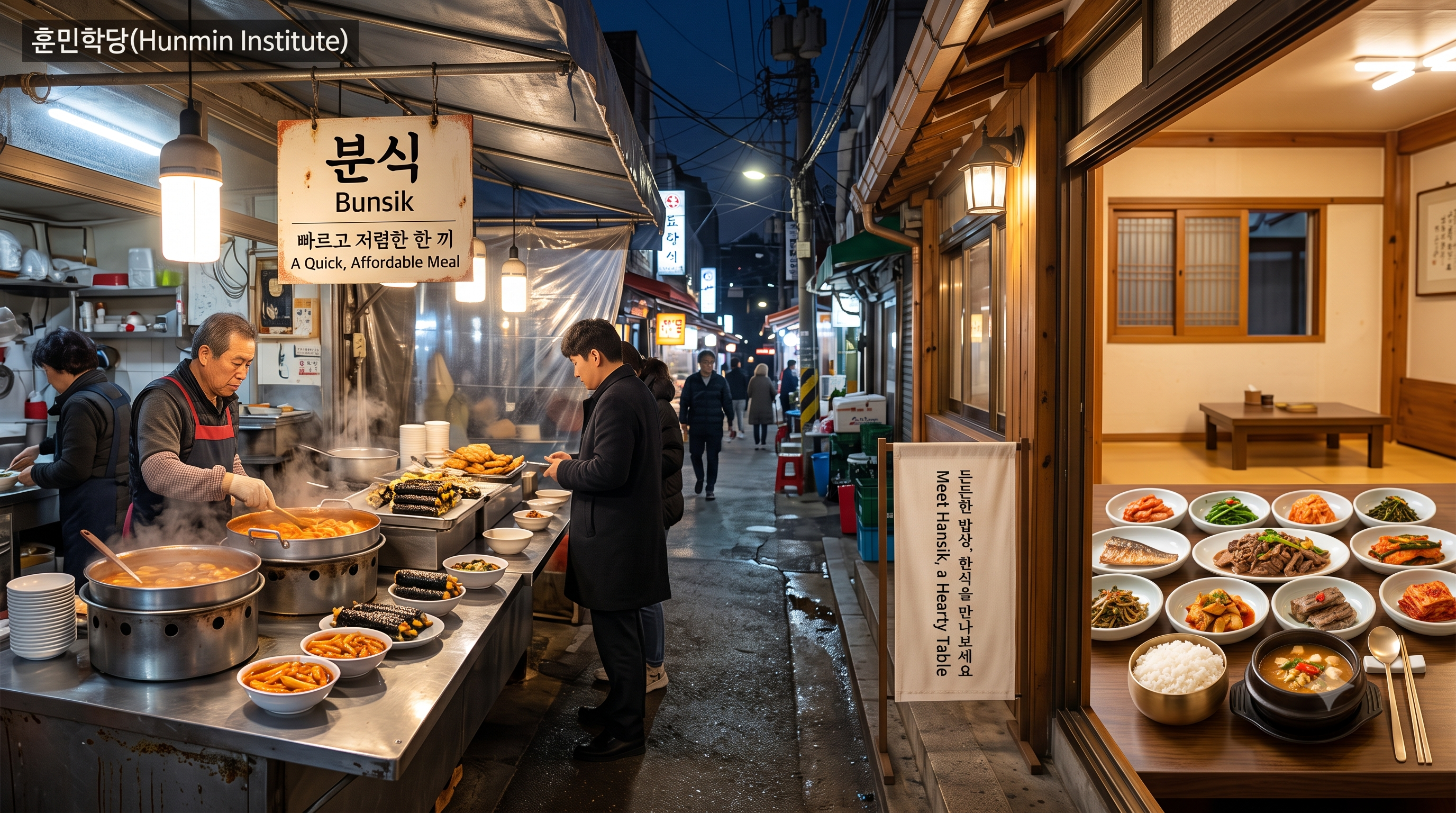
앞의 두 문장은 소단락 1에서, 뒤의 네 문장은 소단락 2와 5에서 다루고, 두 말이 갈리는 이유는 소단락 3과 4에서 이어집니다.
The first two lines come in Section 1 and the rest in Sections 2 and 5, while the reason the two words split runs through Sections 3 and 4.
분식이란 무엇인가
What Is Bunsik
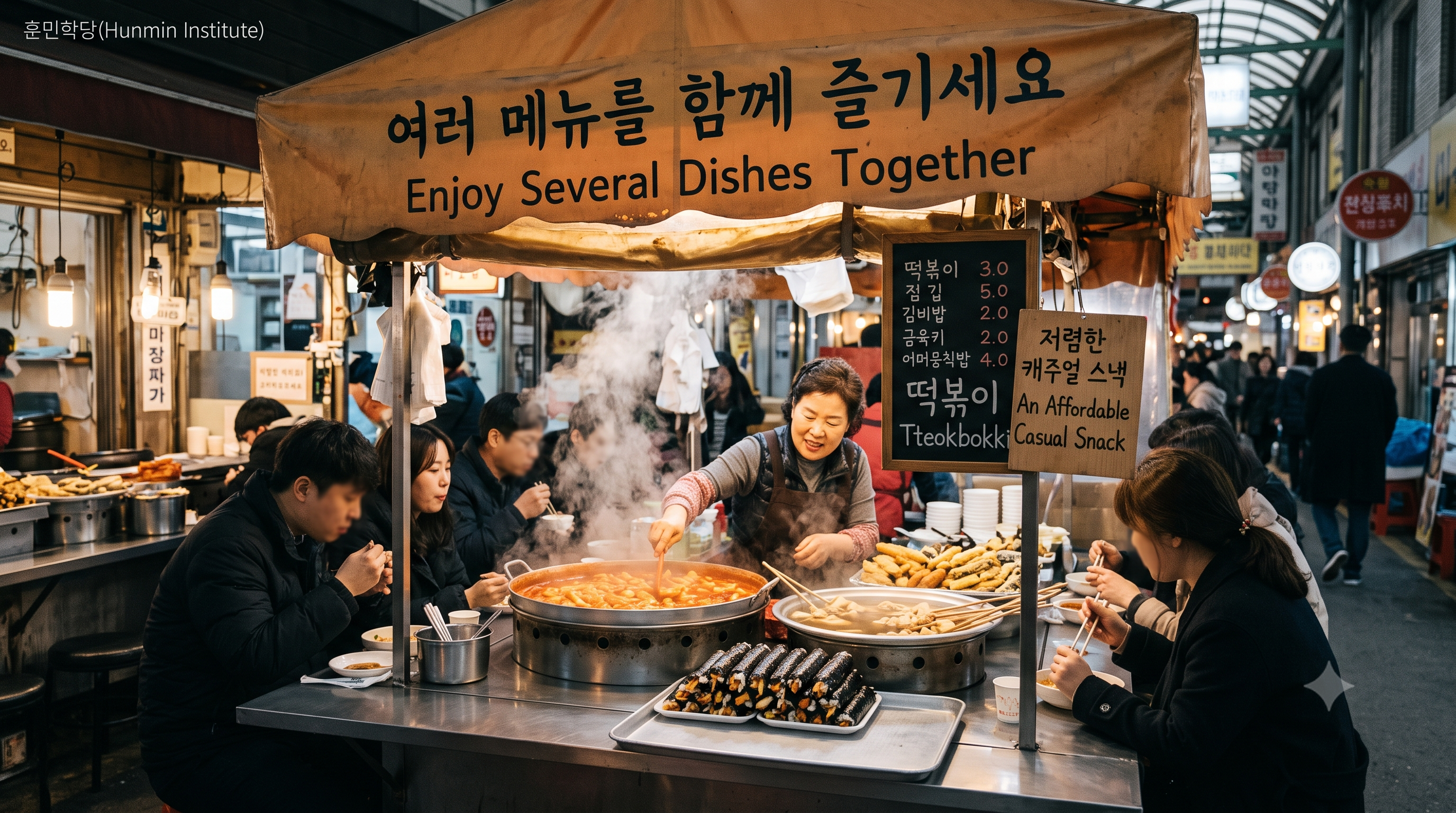
분식은 원래 밀가루나 가루로 만든 음식을 가리키는 말에서 출발했습니다. 지금은 빠르고 저렴하게 먹는 음식 전반을 뜻하며, 그 가게에서 오가는 말부터 확인하십시오.
Bunsik began as a term for food made from flour or powder. Today it covers food eaten quickly and cheaply, so start with the lines exchanged in those shops.
| 듣는 말 Listening |
하는 말 Speaking |
|---|---|
| 뭐 드릴까요? [mwo deurilkkayo] What can I get you? |
떡볶이 하나 주세요. [tteokbokki hana juseyo] One tteokbokki, please. |
| 매운 거 괜찮으세요? [maeun geo gwaenchaneuseyo] Is spicy all right for you? |
안 맵게 해 주세요. [an maepge hae juseyo] Please make it not spicy. |
| 여기서 드세요? [yeogiseo deuseyo] Are you eating here? |
여기서 먹을게요. [yeogiseo meogeulgeyo] I will eat here. |
응용 Apply It
↳ [명사] 하나 주세요
[myeongsa] hana juseyo
One [noun], please
ex [떡볶이] 하나 주세요/[김밥] 하나 주세요/[라면] 하나 주세요
ROM [tteokbokki] hana juseyo/[gimbap] hana juseyo/[ramyeon] hana juseyo
EN One tteokbokki, please/One gimbap, please/One ramyeon, please
| 한국어 Korean |
어떤 음식인가 What kind of food |
|---|---|
| 떡볶이 [tteokbokki] |
고추장 양념에 볶은 떡 Rice cakes cooked in a red chilli sauce |
| 김밥 [gimbap] |
밥과 반찬을 김에 말아 썬 것 Rice and fillings rolled in seaweed and sliced |
| 라면 [ramyeon] |
끓여 먹는 즉석 국수 Instant noodles boiled in broth |
| 쫄면 [jjolmyeon] |
매콤하게 비벼 먹는 쫄깃한 면 Chewy noodles tossed in a spicy sauce |
| 순대 [sundae] |
당면과 재료를 채워 쪄 낸 것 Steamed sausage filled with noodles and other ingredients |
▶분식은 재료가 아니라 먹는 방식을 가리키는 말이 되었습니다.
Bunsik no longer names an ingredient; it names a way of eating.
말의 뿌리는 밀가루에 있지만 지금 분식집 차림표에는 밀가루가 들어가지 않는 음식이 더 많습니다. 떡볶이와 순대, 어묵이 모두 그렇습니다. 그래서 분식을 밀가루 음식이라고 옮기면 차림표의 절반이 설명되지 않습니다.
The word is rooted in flour, yet most of what a bunsik shop serves today contains none. Tteokbokki, sundae, and eomuk are all flour-free. Translate bunsik as flour food and half the menu stops making sense.
가격이 저렴한 만큼 여러 메뉴를 함께 시켜 조금씩 맛보기에 좋습니다. 김밥천국 같은 동네 분식집이나 광장시장과 통인시장의 분식 골목에 가면 이런 음식을 한자리에서 만날 수 있습니다.
Because it is cheap, ordering several dishes and tasting a little of each works well. A neighbourhood shop like Gimbap Cheonguk, or the bunsik alleys of Gwangjang and Tongin Markets, put all of it in one place.
한식이란 무엇인가
What Is Hansik
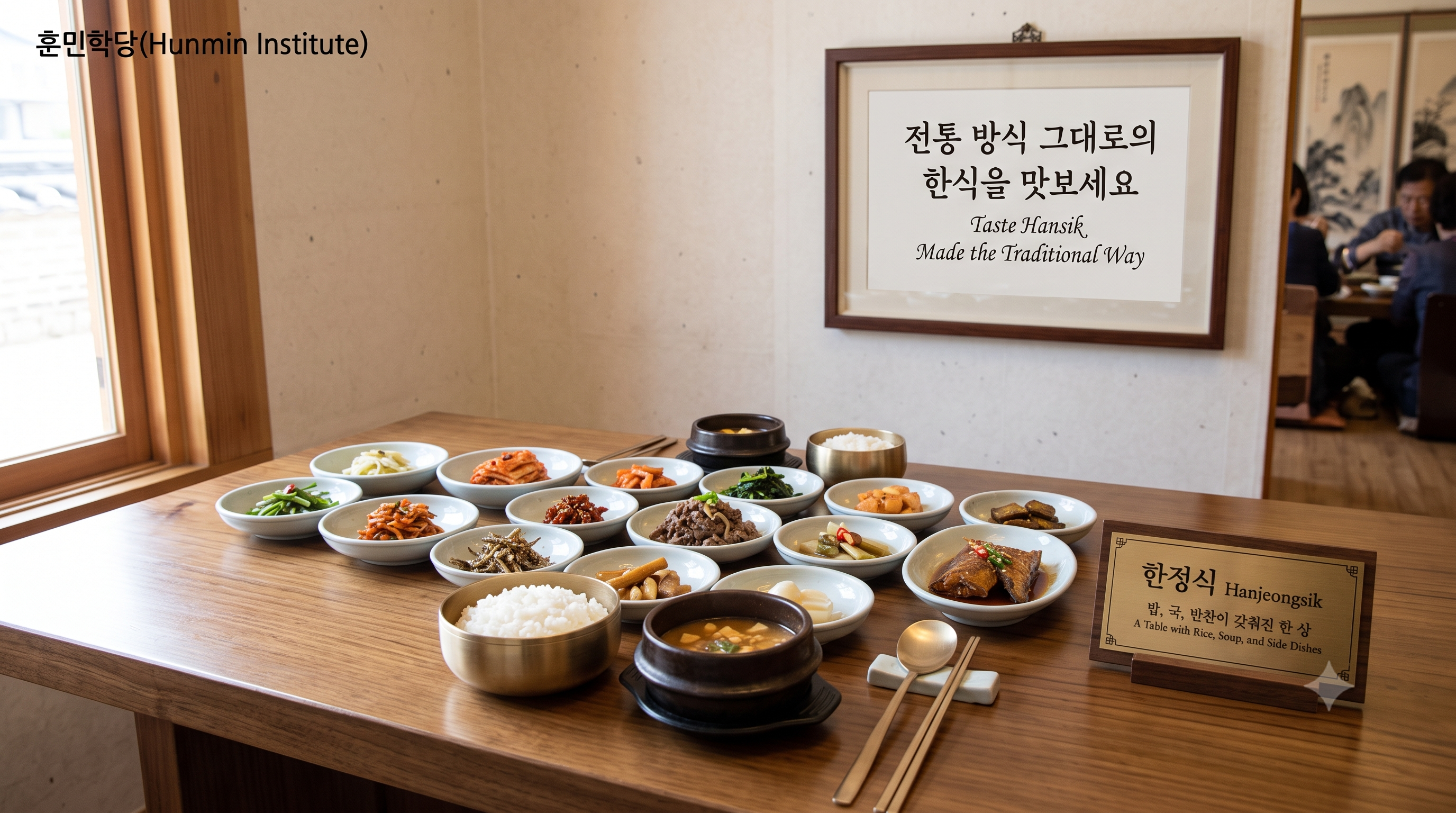
한식은 밥과 국, 반찬이 갖춰진 제대로 된 한 상을 뜻합니다. 그 상을 받는 자리에서 오가는 말은 분식집과 다릅니다.
Hansik means a properly set table with rice, soup and side dishes. The lines exchanged at that table differ from those at a bunsik shop.
| 듣는 말 Listening |
하는 말 Speaking |
|---|---|
| 몇 분이세요? [myeot bunieyo] How many people? |
두 명이요. [du myeongiyo] Two people. |
| 반찬 더 드릴까요? [banchan deo deurilkkayo] Would you like more side dishes? |
반찬 더 주세요. [banchan deo juseyo] More side dishes, please. |
| 밥 더 드릴까요? [bap deo deurilkkayo] Would you like more rice? |
아니요, 괜찮아요. [aniyo, gwaenchanayo] No, I am fine. |
| 한국어 Korean |
상에서 무엇을 가리키는가 What it names on the table |
|---|---|
| 밥 [bap] |
상의 중심에 놓이는 쌀밥 The bowl of rice at the centre of the table |
| 국 [guk] |
밥과 함께 나오는 국물 The soup that comes alongside the rice |
| 반찬 [banchan] |
밥에 곁들여 나오는 여러 접시 The many small dishes served with the rice |
| 백반 [baekban] |
밥과 국, 반찬을 한 상에 차린 기본 식사 A set meal of rice, soup and side dishes |
| 한정식 [hanjeongsik] |
여러 차례에 걸쳐 차려 내는 정식 A formal meal served in several courses |
▶한식의 중심은 요리 하나가 아니라 상 전체입니다.
The centre of hansik is not a single dish but the whole table.
불고기와 비빔밥, 삼겹살, 김치찌개처럼 이름이 알려진 메뉴가 한식에 듭니다. 다만 한국 식당에서 그 메뉴 하나만 나오는 일은 드뭅니다. 밥과 국이 따라오고 반찬이 여러 접시 깔립니다.
Bulgogi, bibimbap, samgyeopsal and kimchi-jjigae are the names people know. Yet a Korean restaurant rarely serves one of them alone: rice and soup follow, and several side dishes are laid out.
반찬은 대개 값을 따로 받지 않고 더 달라고 하면 다시 채워 줍니다. 이것이 처음 오는 사람이 가장 놀라는 지점이며, 반찬 더 주세요 한 문장을 알아 두면 그 자리에서 바로 쓸 수 있습니다.
Side dishes usually carry no extra charge and are refilled if you ask. This is what surprises first-time visitors most, and knowing the single line 반찬 더 주세요 puts it to use right away.
분식과 한식, 어떻게 다른가
How Bunsik and Hansik Differ
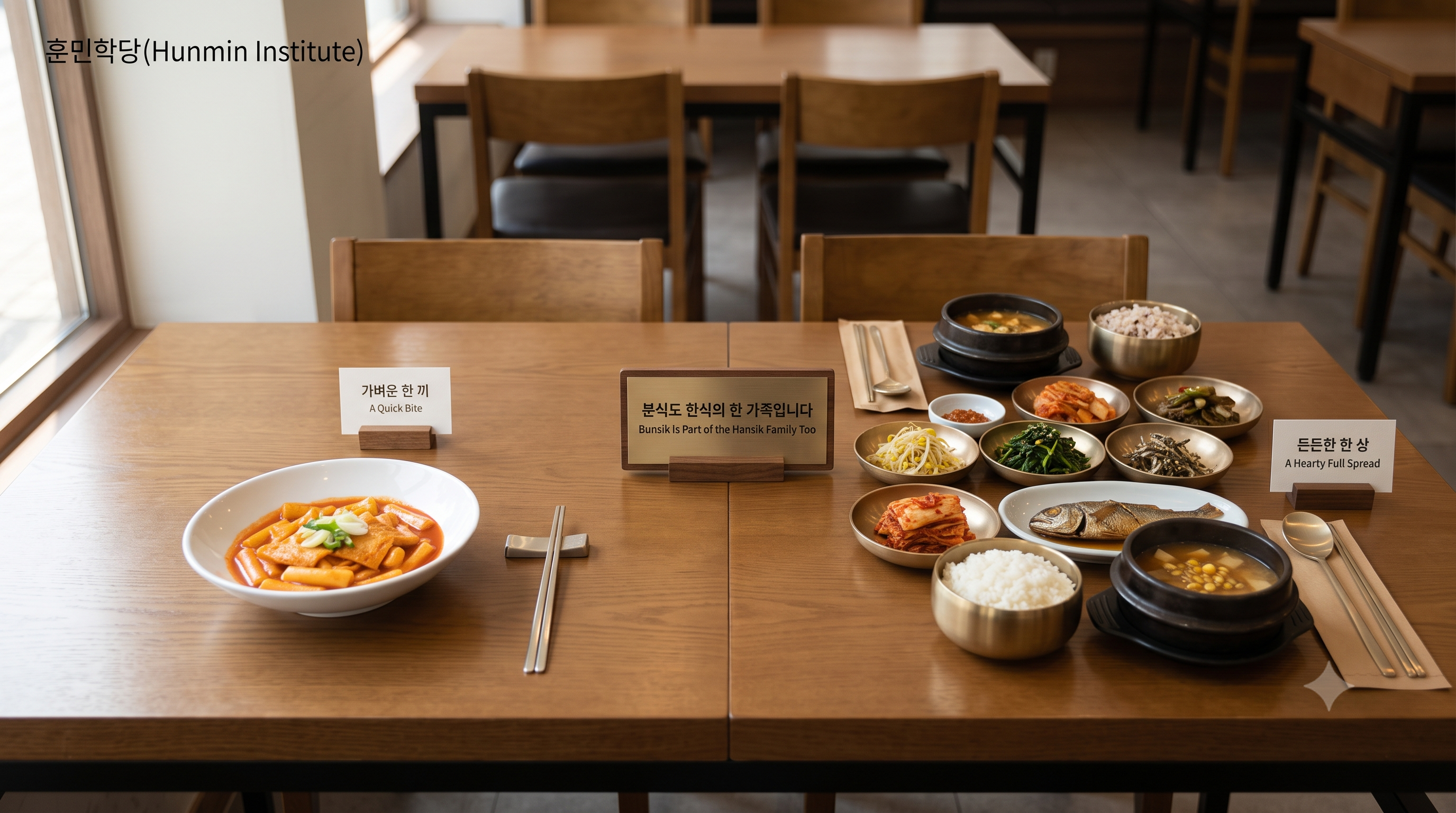
가장 큰 차이는 식사의 무게감입니다. 어느 쪽으로 갈지 정할 때 오가는 말부터 보십시오.
The biggest difference is how substantial the meal feels. Start with the lines exchanged when you decide which way to go.
| 듣는 말 Listening |
하는 말 Speaking |
|---|---|
| 식사하시게요? [siksahasigeyo] Are you having a full meal? |
간단하게 먹을게요. [gandanhage meogeulgeyo] I will keep it simple. |
| 간단하게 드실래요? [gandanhage deusillaeyo] Would you like something light? |
제대로 먹고 싶어요. [jedaero meokgo sipeoyo] I want a proper meal. |
| 포장이세요? [pojangiseyo] Is it to take away? |
포장해 주세요. [pojanghae juseyo] To take away, please. |
| 구분 Category |
분식 Bunsik |
한식 Hansik |
|---|---|---|
| 성격 Nature |
캐주얼 스낵, 빠른 한 끼 A casual snack, a quick bite |
정식 식사, 든든한 한 상 A formal meal, a hearty full spread |
| 대표 메뉴 Signature dishes |
떡볶이, 김밥, 라면, 쫄면 Tteokbokki, gimbap, ramyeon, jjolmyeon |
불고기, 비빔밥, 삼겹살, 김치찌개 Bulgogi, bibimbap, samgyeopsal, kimchi-jjigae |
| 먹는 자리 Where you eat |
서서 또는 좁은 탁자에서 짧게 Standing, or briefly at a small table |
자리에 앉아 상을 받고 길게 Seated, with a full table set before you |
| 걸리는 시간 Time it takes |
십 분 안팎 Around ten minutes |
삼십 분 이상 Thirty minutes or more |
▶두 말은 반대말이 아닙니다. 분식도 한국 음식 안에 듭니다.
The two words are not opposites. Bunsik sits inside Korean food as well.
분식이 빠르게 때우는 한 끼라면 한식은 자리를 잡고 제대로 먹는 밥상입니다. 그렇다고 둘을 완전히 별개로 볼 필요는 없습니다. 넓은 의미에서 분식도 한국 음식이라는 큰 틀 안에 있습니다.
If bunsik is a quick bite, hansik is a table you sit down to. Even so, there is no need to treat them as entirely separate: in the broad sense, bunsik belongs under the same umbrella of Korean food.
가르는 기준은 재료도 값도 아니고 시간과 자세입니다. 서서 십 분에 끝내면 분식이고, 앉아서 삼십 분을 쓰면 한식입니다. 같은 김치찌개라도 어디에서 어떻게 먹느냐로 갈립니다.
The line is drawn by time and posture, not by ingredient or price. Ten minutes on your feet is bunsik; thirty minutes in a chair is hansik. Even the same kimchi-jjigae falls on one side or the other depending on where and how you eat it.
어디에서 만나는가
Where You Meet Them
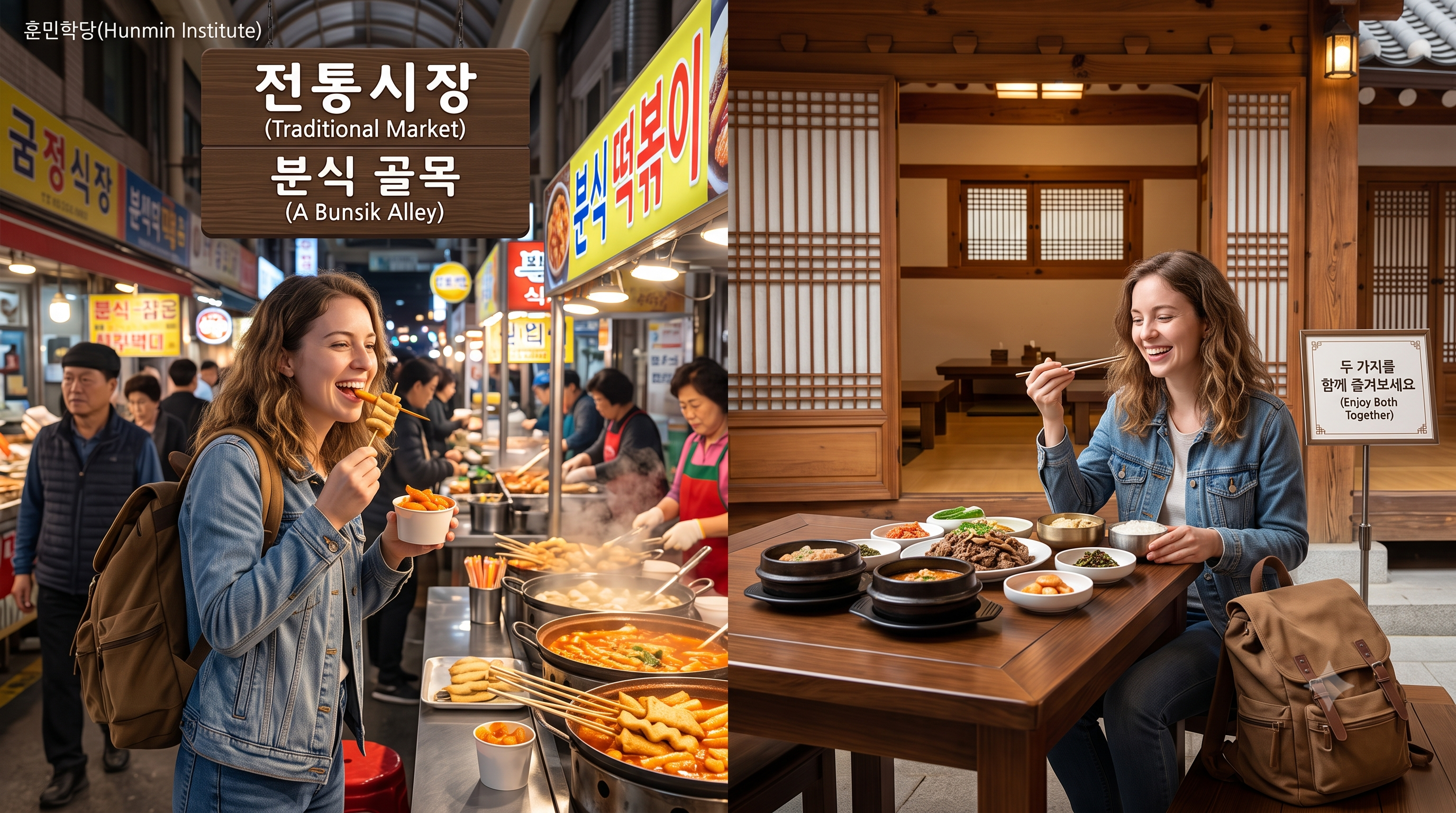
두 말은 가게 이름에서 먼저 갈립니다. 문을 열고 들어갈 때 오가는 말을 보십시오.
The two words split first in the name over the door. Look at the lines exchanged as you walk in.
| 듣는 말 Listening |
하는 말 Speaking |
|---|---|
| 이쪽으로 오세요. [ijjogeuro oseyo] Come this way. |
자리 있어요? [jari isseoyo] Do you have a table? |
| 지금 자리 없어요. [jigeum jari eopseoyo] There are no seats right now. |
얼마나 기다려요? [eolmana gidaryeoyo] How long is the wait? |
| 처음 오셨어요? [cheoeum osyeosseoyo] Is this your first time here? |
여기 뭐가 맛있어요? [yeogi mwoga masisseoyo] What is good here? |
| 한국어 Korean |
어떤 곳인가 What kind of place |
|---|---|
| 분식집 [bunsikjip] |
분식을 파는 작은 가게 A small shop selling bunsik |
| 백반집 [baekbanjip] |
백반 한 상을 내는 식당 A restaurant serving a baekban set |
| 전통시장 [jeontongsijang] |
분식 골목이 서는 재래 시장 A traditional market with a bunsik alley |
| 한옥마을 [hanongmaeul] |
한옥이 모여 있는 거리 A street where traditional Korean houses stand together |
| 골목 [golmok] |
가게가 늘어선 좁은 길 A narrow lane lined with shops |
▶가게 이름의 끝 글자가 무엇을 파는 곳인지 알려 줍니다.
The last syllable of a shop name tells you what it sells.
분식집과 백반집처럼 끝에 집이 붙으면 작고 값싼 밥집이라는 뜻입니다. 앞에 붙은 말이 그 집이 무엇을 내는 곳인지 알려 주므로 간판만 보고도 어느 쪽인지 가릴 수 있습니다.
When a name ends in 집, as in 분식집 or 백반집, it means a small and inexpensive eating place. The word in front tells you what it serves, so the sign alone is enough to tell which side you are on.
분식은 동네 분식집과 광장시장, 통인시장 같은 전통시장의 분식 골목에서 만납니다. 한식은 백반집과 한정식 전문점에서 만나며, 기차로 다녀오는 전주한옥마을이나 서울 인사동이 대표적인 자리입니다.
You meet bunsik at neighbourhood shops and in the bunsik alleys of traditional markets like Gwangjang and Tongin. You meet hansik at baekban restaurants and hanjeongsik houses, with Jeonju Hanok Village, reachable by train, and Insadong in Seoul as the best-known places.
분식과 한식을 제대로 즐기는 법
How to Enjoy Both Properly
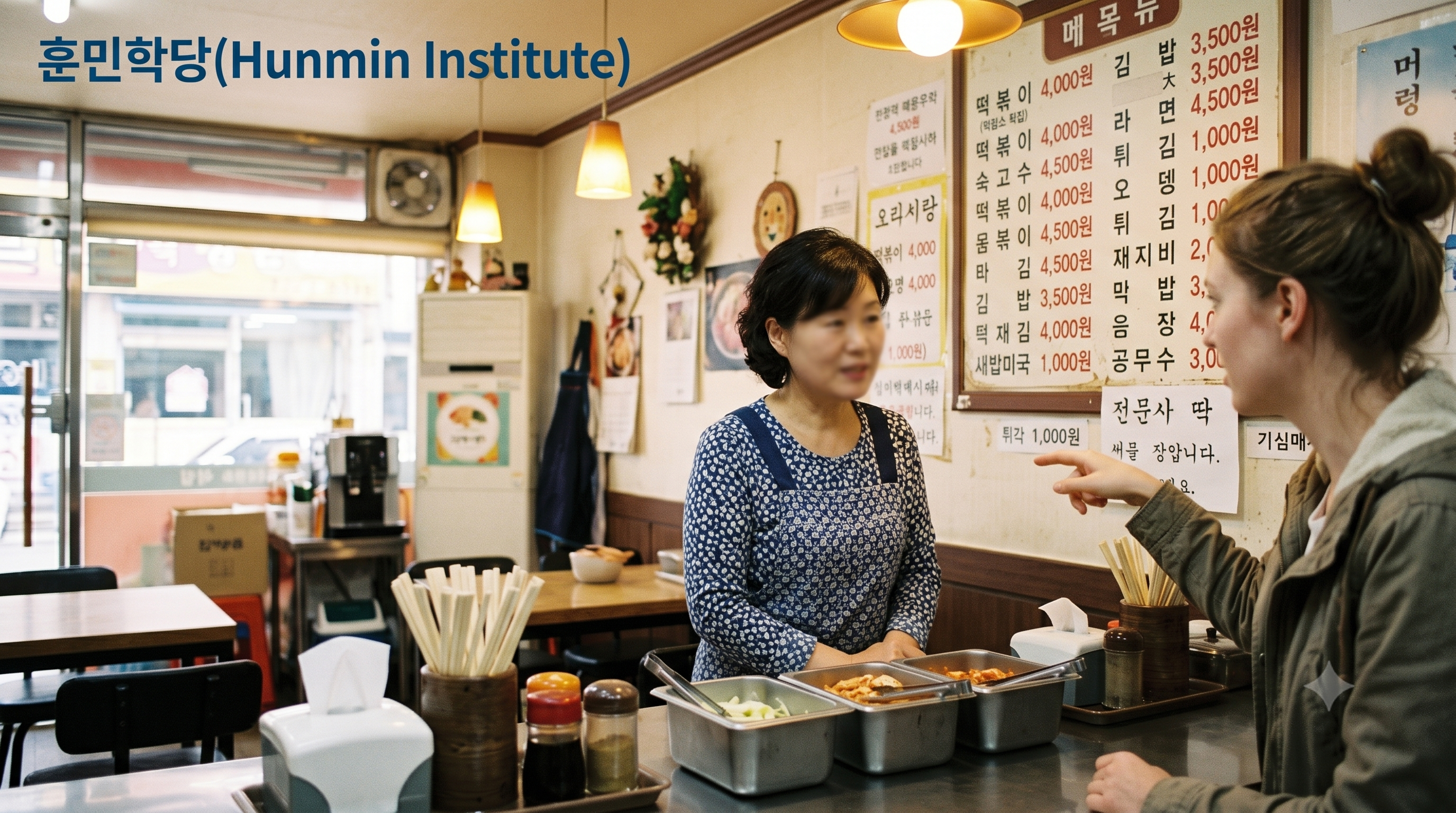
두 가지를 번갈아 놓으면 여행 일정이 편해집니다. 상을 받고 나서 오가는 말로 마무리하십시오.
Alternating between the two makes a trip easier to plan. Close with the lines exchanged once the food arrives.
| 듣는 말 Listening |
하는 말 Speaking |
|---|---|
| 맛있게 드세요. [masitge deuseyo] Enjoy your meal. |
잘 먹겠습니다. [jal meokgetseumnida] I will enjoy this meal. |
| 더 필요하시면 말씀하세요. [deo piryohasimyeon malsseumhaseyo] Let me know if you need anything more. |
잘 먹었습니다. [jal meogeotseumnida] Thank you for the meal. |
| 계산은 여기서 하세요. [gyesaneun yeogiseo haseyo] Please pay over here. |
계산할게요. [gyesanhalgeyo] I would like to pay. |
| 한국어 Korean |
언제 쓰는 말인가 When you use it |
|---|---|
| 잘 먹겠습니다 [jal meokgetseumnida] |
먹기 전에 하는 인사 Said before you start eating |
| 잘 먹었습니다 [jal meogeotseumnida] |
먹고 나서 하는 인사 Said after you finish eating |
| 계산 [gyesan] |
값을 치르는 일, 대개 나가는 길에 합니다 Paying the bill, usually on the way out |
| 포장 [pojang] |
싸서 가져가는 일 Having the food wrapped to take away |
| 출출하다 [chulchulhada] |
조금 배가 고픈 상태, 분식이 어울리는 때 Slightly hungry, the moment bunsik suits |
▶두 인사는 한 글자 차이로 시점이 갈립니다.
One syllable separates the two greetings in time.
잘 먹겠습니다는 먹기 전에, 잘 먹었습니다는 먹은 뒤에 씁니다. 겠과 었 한 글자가 시점을 가르므로 순서를 바꿔 말하면 뜻이 어긋납니다. 두 문장은 분식집에서도 백반집에서도 그대로 쓸 수 있습니다.
잘 먹겠습니다 comes before the meal and 잘 먹었습니다 after it. The single syllable 겠 or 었 sets the time, so reversing them makes no sense. Both work equally at a bunsik shop and at a baekban restaurant.
일정이 빡빡한 날에는 분식집에서 빠르게 한 끼를 해결하고, 여유가 있는 날에는 백반집이나 한정식 전문점에서 한 상을 받으십시오. 전통시장 분식 골목에서 여러 메뉴를 조금씩 맛보고 다른 날에 한옥마을에서 정갈한 한식을 먹으면 한국 음식의 폭이 한 번에 넓어집니다.
On a tight day, settle a meal quickly at a bunsik shop; on an open day, take a full table at a baekban or hanjeongsik house. Taste a little of everything in a market bunsik alley one day and sit down to a neat hansik meal in a hanok village the next, and your range of Korean food widens at once.
분식과 한식은 값이나 재료로 갈리는 말이 아니라 시간과 자세로 갈리는 말입니다. 이 한 줄을 잡고 나면 메뉴판 앞에서 망설이는 시간이 줄고, 그날의 기분에 맞는 한 끼를 고르게 됩니다. 오늘 나온 어휘는 아래 단어장에서 정리하고 가시기 바랍니다.
Bunsik and hansik are divided not by price or ingredient but by time and posture. Hold on to that one line and you will hesitate less at the menu and pick the meal that fits your day. Gather the words from today in the vocabulary list below.
Next: Korean Noodle Dishes Part 1: Kalguksu to Naengmyeon ↗
토픽 맛보기
TOPIK Preview
유형: TOPIK Ⅰ 읽기 [31~33], 설명문, 화제 고르기
Type: TOPIK I Reading [31–33], expository text, choose the topic
무엇에 대한 이야기입니까? 알맞은 것을 고르십시오.
What is this about? Choose the correct answer.
분식은 서서 빠르게 먹습니다. 한식은 앉아서 천천히 먹습니다. 두 가지는 먹는 방식이 다릅니다.
Bunsik is eaten quickly on your feet. Hansik is eaten slowly in a chair. The two differ in how they are eaten.
① 값
② 차이
③ 시간
④ 장소
Answer ▾
정답 ② 차이
Answer: ② 차이
세 문장이 모두 두 음식이 어떻게 갈리는지를 말하고 있으므로 화제는 차이입니다. ①은 지문에 나오지 않은 값을 끌어와 진술이 어긋나고, ③은 빠르게와 천천히라는 말의 일부만 걸리며, ④는 그럴듯해 보여도 서서와 앉아서가 자세를 가리키지 장소를 가리키지 않습니다. 흉내 낸 대문항은 TOPIK Ⅰ 읽기 [31~33]이고 배점은 2점입니다.
All three sentences describe how the two foods are divided, so the topic is the difference. ① brings in price, which the passage never mentions; ③ catches only the words quickly and slowly; and ④ looks plausible, but standing and sitting name posture, not place. The item type modeled here is TOPIK I Reading [31–33], worth 2 points.
FAQ
Q1. 분식과 한식 중 어느 쪽이 더 전통적인 음식인가요?Answer ▾
Q1. Which one is more traditional, bunsik or hansik?
A1. 한식이 전통 식문화에 뿌리를 둔 정식 개념에 가깝습니다. 다만 분식도 오랜 세월 한국인의 일상에 자리 잡아 왔으므로 넓은 의미에서는 한국 음식의 한 갈래로 봅니다.
A1. Hansik is closer to a formal concept rooted in traditional food culture. Still, bunsik has been part of everyday Korean life for a long time, so in the broad sense it counts as one branch of Korean food.
Q2. 처음 한국에 왔을 때 어떤 음식부터 시작하면 좋을까요?Answer ▾
Q2. Which food should I start with on a first visit to Korea?
A2. 값이 싸고 부담이 적은 분식으로 시작해 떡볶이나 김밥으로 입맛을 익힌 뒤 백반집이나 한정식으로 넘어가면 폭이 자연스럽게 넓어집니다.
A2. Start with cheap, low-pressure bunsik such as tteokbokki or gimbap to get used to the flavours, then move on to a baekban or hanjeongsik house; your range widens naturally.
Q3. 분식집과 한정식 전문점은 가격 차이가 큰가요?Answer ▾
Q3. Is there a big price gap between a bunsik shop and a hanjeongsik house?
A3. 가격대는 폭이 넓습니다. 분식은 대체로 저렴하지만 한정식도 구성에 따라 값싼 곳부터 고급스러운 곳까지 있으므로 가격만으로 두 말을 가르기는 어렵습니다.
A3. Prices vary widely. Bunsik is generally cheap, but hanjeongsik runs from affordable to upscale depending on the courses, so price alone will not separate the two words.
Q4. 반찬은 정말 공짜로 더 주나요?Answer ▾
Q4. Are side dishes really refilled for free?
A4. 대부분의 백반집에서 기본 반찬은 값을 따로 받지 않고 더 채워 줍니다. 다만 고기나 해산물이 들어간 반찬은 따로 받는 곳도 있으므로 차림표를 한번 보시는 편이 안전합니다.
A4. At most baekban restaurants the basic side dishes are refilled at no extra charge. Some places do charge for dishes containing meat or seafood, so a glance at the menu is the safe move.
Q5. 혼자 가도 되나요?Answer ▾
Q5. Can I go alone?
A5. 분식집은 혼자 가는 것이 보통입니다. 백반집도 혼자 받는 곳이 많지만 한정식은 두 사람부터 받는 곳이 있으므로 자리 있어요라고 먼저 물어보시면 됩니다.
A5. Going alone is the norm at a bunsik shop. Many baekban restaurants also seat single diners, while some hanjeongsik houses take parties of two or more, so simply ask 자리 있어요 first.
Vocabulary and Pronunciation for Foreigners
| No | Korean | Romanisation | Meaning |
|---|---|---|---|
| 1 | 떡볶이 | tteokbokki | (n) tteokbokki [tʌkˈboʊki] |
| 2 | 반찬 | banchan | (n) side dish [saɪd dɪʃ] |
| 3 | 자리 | jari | (n) seat, table [siːt] |
| 4 | 계산 | gyesan | (n) payment, the bill [bɪl] |
| 5 | 포장 | pojang | (n) takeaway, wrapping [ˈteɪkəweɪ] |
| ▾ 단어 47 개 더 보기 Show 47 more ↗ | |||
The blog page has limits of space and function, so only five words are shown here. The rest of the word list, the audio, the sentences and tables, the FAQ, the worksheet, the TOPIK questions and the lesson video are on the Hunmin Institute website ↗, free for blog subscribers.
※ 본 콘텐츠(원고, 이미지, 예문 포함)는 저작권법에 의해 보호받는 훈민학당의 저작물입니다. 무단 복제, 전재, 재배포 및 AI 학습 데이터로의 이용을 금합니다.
This content (manuscript, images, and example sentences) is the copyrighted property of Hunmin Institute, protected under copyright law. Unauthorized copying, reproduction, redistribution, and use as AI training data are prohibited.
'K-Culture' 카테고리의 다른 글
| Korean Jjim: The Braised Dishes You Should Not Miss (0) | 2026.07.25 |
|---|---|
| Korean Skin Is a Habit, Not a 10-Step Routine (0) | 2026.07.25 |
| Hangeul: The Alphabet a King Refused to Give Up (0) | 2026.07.25 |
| Korean Noodle Dishes Part 2: Jjajangmyeon, Bibim-guksu, Kongguksu (0) | 2026.07.25 |
| Korean Noodle Dishes Part 1: Kalguksu to Naengmyeon (0) | 2026.07.25 |


