
In Korea, glasses are made from a conversation, not a prescription.
한국에서 안경은 처방전이 아니라 대화로 맞춥니다
At a Korean optician's, the test, the choice, and the fitting all happen in one place.
Learn the Korean for lenses, frames, and how they sit on your face.
한국 안경원에서는 검사와 선택, 조정과 수령이 한자리에서 이어집니다.
도수와 렌즈, 착용감을 말하는 한국어 문장을 익힙니다.

You can check the vocabulary list summarizing today's key words at the bottom of this post.
Related: Korean Dentist Phrases: Covered or Not Covered
관련 글: 한국 피부과에서 가격을 말하는 사람은 대개 의사가 아닙니다
Related: Korean Skin Clinic Phrases: What Staff Actually Ask
Key Expressions in This Lesson
안경원에서 오가는 말은 자리마다 정해져 있습니다. 아래 여덟 문장을 먼저 눈에 담고 본문으로 들어가십시오. 좌우 두 열은 한 쌍의 대화가 아니라 각각 따로 익히는 문장입니다.
At an optician's, the lines that come up are fixed, and they change with where you are standing. Take in these eight sentences first, then move into the main text. The two columns are not one paired conversation; learn each side on its own.
| 듣는 말 Listening |
하는 말 Speaking |
|---|---|
| 흐리면 말씀해 주세요. Tell me if it looks blurry. heurimyeon malsseumhae juseyo |
오른쪽이 잘 안 보여요. The right side is not clear. oreunjjogi jal an boyeoyo |
| 렌즈는 얇게 해 드릴까요? Shall I make the lenses thin? renjeuneun yalkke hae deurilkkayo |
가벼운 걸로 보여 주세요. Could you show me a light one? |
| 다 되면 문자 드릴게요. I will text you when it is ready. da doemyeon munja deurilkkeyo |
여기 좀 조여 주세요. Could you tighten it here? |
| 렌즈 껴 보신 적 있으세요? Have you worn contact lenses before? renjeu kkyeo bosin jeogisseuseyo |
렌즈도 여기서 살 수 있어요? Can I buy contact lenses here too? renjeudo yeogiseo sal ssu isseoyo |
여덟 문장은 소단락 2부터 5까지 두 문장씩 나눠 다룹니다.
These eight lines are covered two at a time across Sections 2 through 5.
It Starts Without a Prescription
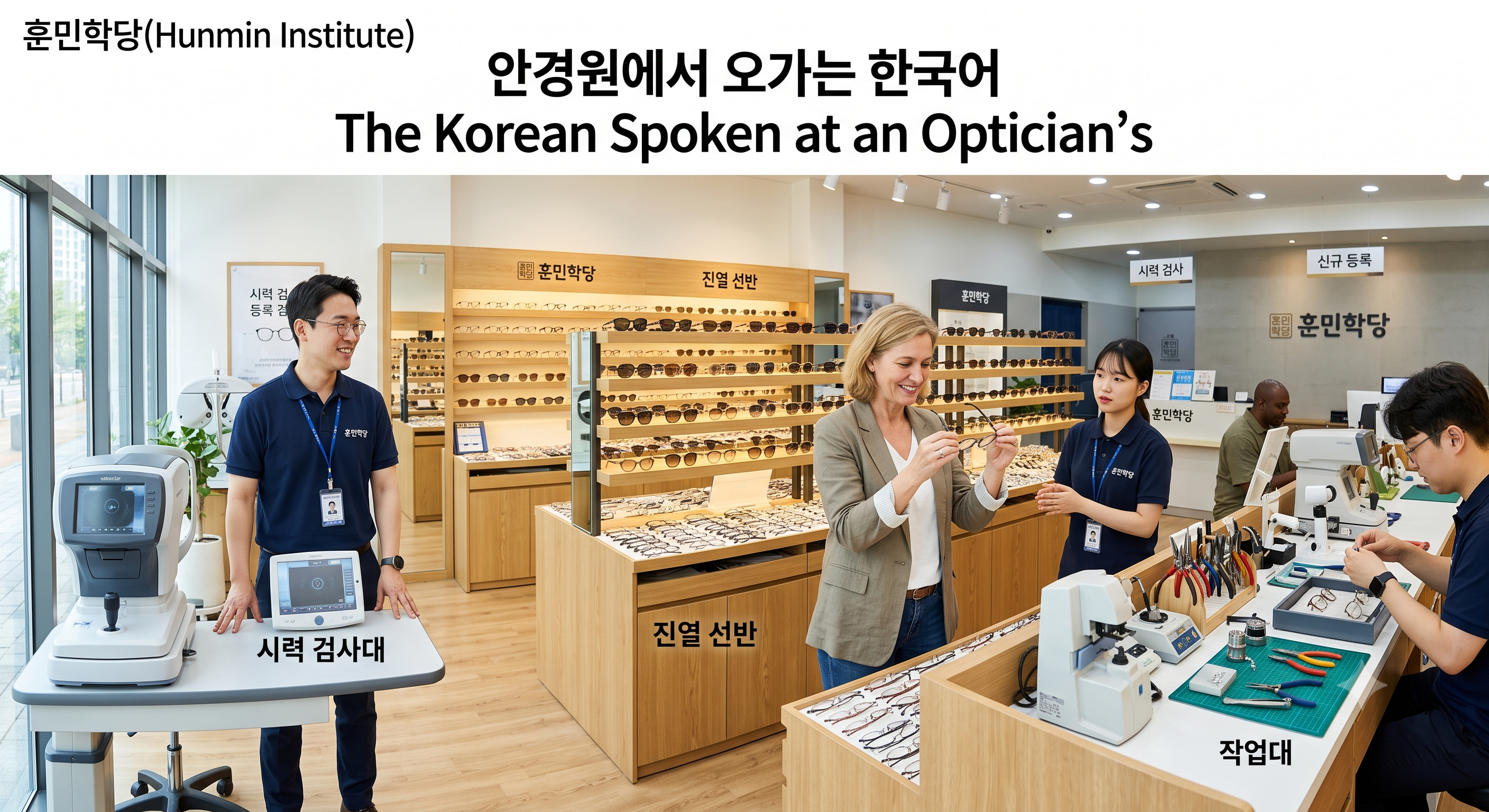
한국에서 안경을 맞추는 일은 병원을 거치지 않습니다. 안경원 문을 열고 들어가면 그 자리에서 시력을 재고, 도수를 정하고, 테를 고르고, 다 되면 찾아 나옵니다. 안과에 먼저 가서 처방전을 받아 오는 절차가 없습니다.
Getting glasses in Korea does not run through a clinic. You walk into an optician's, have your eyes measured on the spot, settle on a strength, pick a frame, and come back for the finished pair. There is no step where you visit an eye doctor first for a prescription.
미국이나 유럽 여러 나라에서는 검안 결과를 받아야 안경을 살 수 있는데, 한국은 안경사가 도수를 맞추기 위한 검사를 직접 하도록 되어 있어 그 단계가 필요하지 않습니다. 다만 만 여섯 살 이하 아이의 안경과 콘택트렌즈는 의사 처방에 따라야 합니다.
In the United States and much of Europe you need the results of an eye examination before you can buy glasses. In Korea the optician is the one who runs the test used to set the strength, so that step falls away. Glasses and contact lenses for children aged six and under are the exception; those follow a doctor's prescription.
그래서 이 글에서 배울 것은 서류가 아니라 문장입니다. 잘 보이는지 흐린지, 무엇이 무거운지 가벼운지, 어디가 조이는지를 말로 전해야 안경이 맞게 나옵니다.
So what this post teaches is not paperwork but sentences. Whether it looks clear or blurry, what feels heavy or light, where it pinches: the glasses come out right only if you can say these things.
▶ 검사는 쉽지만 구매는 매장에서만 됩니다.
▶ The test is easy to get; the purchase happens in store only.
도수가 들어간 안경과 콘택트렌즈는 인터넷으로 팔 수 없게 되어 있습니다. 이 규정은 헌법재판소에서도 합헌으로 판단되었습니다. 들어가는 문턱은 낮지만 나가는 문은 매장 하나뿐이라고 기억해 두시면 됩니다.
Glasses and contact lenses carrying a prescription strength may not be sold over the internet, and the Constitutional Court has upheld the rule. The way in is easy; the way out runs through the shop and nowhere else.
At the Testing Station
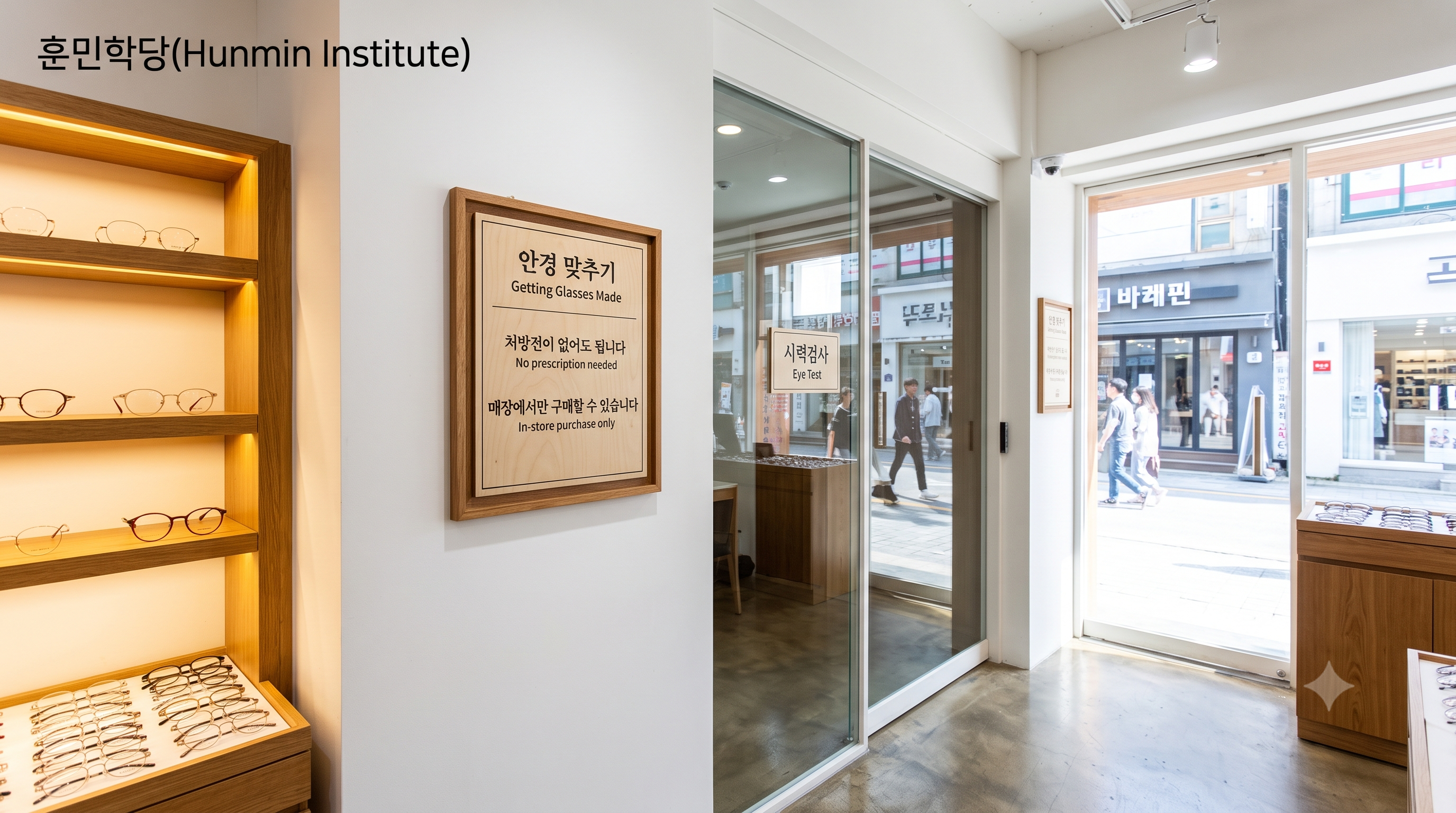
들어가면 대개 먼저 검사대로 안내합니다. 기계에 턱을 대고 몇 초를 보고 나면 지금 눈 상태가 화면에 뜹니다. 그다음부터가 대화입니다. 어느 쪽이 흐린지, 어디까지 보이는지를 말로 확인하며 도수를 좁혀 갑니다. 아래 표에는 듣는 말과 하는 말이 함께 들어 있습니다.
You are usually shown to the testing station first. You rest your chin on the machine, look ahead for a few seconds, and your current condition appears on the screen. From there it becomes a conversation, narrowing the strength by asking which side is blurry and how far you can read. The table below holds both what you hear and what you say.
| 한국어 Korean |
발음 Pronunciation |
언제 쓰는가 When to use it |
|---|---|---|
| 안경 새로 맞추려고요. I would like to have new glasses made. |
angyeong saero matchuryeogoyo | 들어가서 용건을 말할 때 When saying why you came in |
| 지금 쓰시는 안경 도수 확인해 드릴게요. Let me check the strength of the pair you are wearing. |
jigeum ssusineun angyeong dosu hwaginhae deurilkkeyo | 쓰던 안경을 건네받으며 듣는 말 Heard as they take your current pair Listening |
| 흐리면 말씀해 주세요. Tell me if it looks blurry. |
heurimyeon malsseumhae juseyo | 검사 중에 듣는 말 Heard during the eye test Listening |
| 오른쪽이 잘 안 보여요. The right side is not clear. |
oreunjjogi jal an boyeoyo | 한쪽이 더 흐릴 때 When one side is blurrier |
| 이제 잘 보여요. It is clear now. |
도수가 맞았을 때 When the strength is right |
Swap-in Pattern [noun] is not clear.
▶ 흐리다는 안 보인다와 다른 말입니다.
▶ 흐리다 is not the same as not being able to see.
보이기는 하는데 선명하지 않다는 뜻입니다. 검사 중에는 아예 안 보이는 경우보다 흐린 경우가 훨씬 많으므로 이 단어를 알아듣는 것이 중요합니다. 틀에 넣을 명사를 바꿔 왼쪽이, 글씨가, 멀리가처럼 쓰시면 그대로 통합니다.
It means you can see it, but not sharply. During the test, blurry comes up far more often than not visible at all, so this is the word to catch. Swap the noun in the pattern and it keeps working: 왼쪽이, 글씨가, 멀리가.
Choosing Frames and Lenses
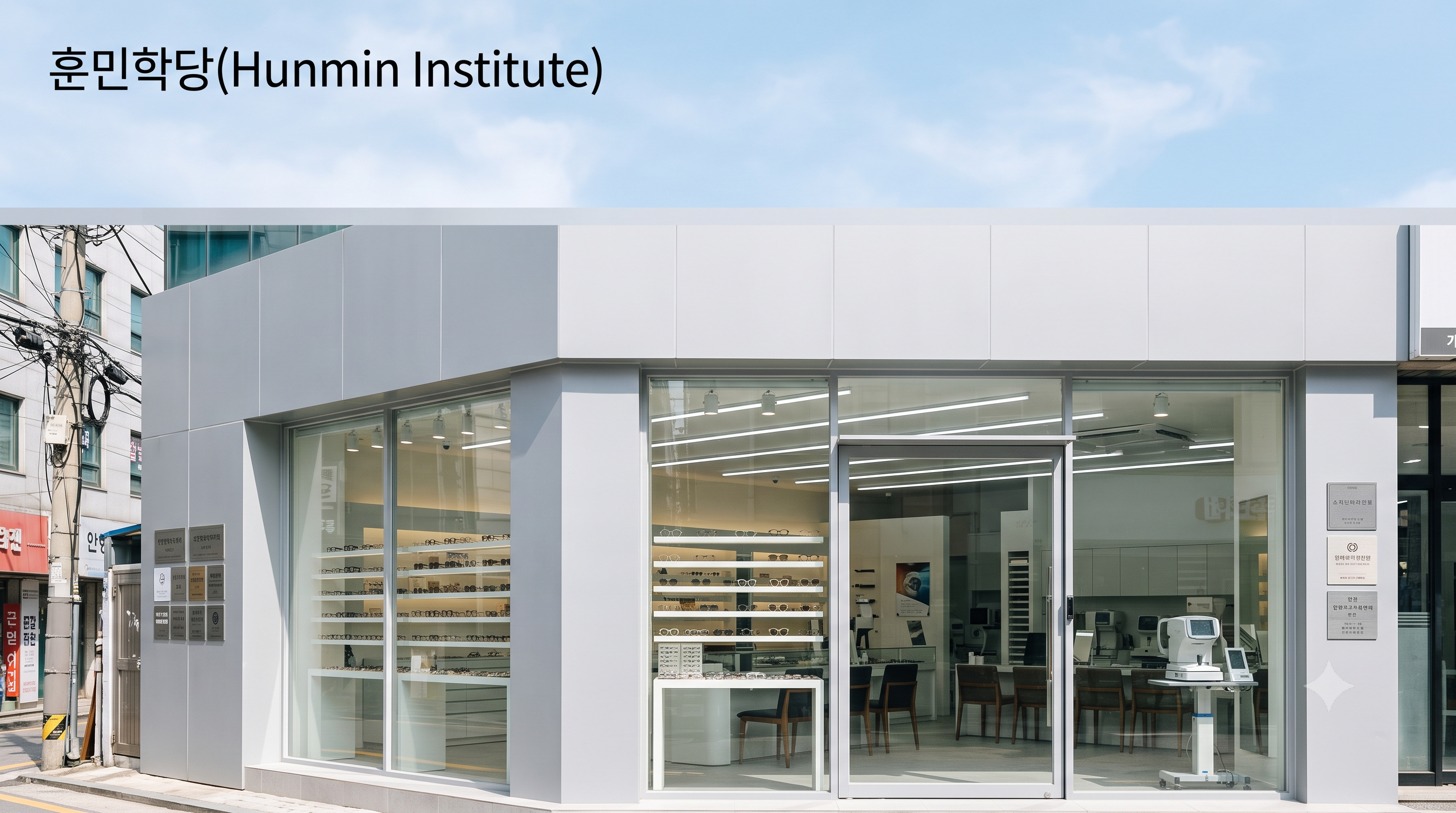
도수가 정해지면 고르는 일이 남습니다. 한국 안경원에서는 테와 렌즈를 따로 셈합니다. 테를 먼저 고르고 그 위에 어떤 렌즈를 넣을지 정하는 순서입니다. 아래 표에도 듣는 말과 하는 말이 함께 들어 있습니다.
Once the strength is set, the choosing begins. Korean opticians price the frames and the lenses separately: you pick the frame first, then decide which lenses go into it. This table, too, holds both what you hear and what you say.
| 한국어 Korean |
발음 Pronunciation |
언제 쓰는가 When to use it |
|---|---|---|
| 어떤 스타일 찾으세요? What sort of style are you after? |
eotteon seutail chajeuseyo | 테를 보기 시작할 때 듣는 말 Heard as you start looking at frames Listening |
| 가벼운 걸로 보여 주세요. Could you show me a light one? |
원하는 조건을 말할 때 When naming what you want |
|
| 렌즈는 얇게 해 드릴까요? Shall I make the lenses thin? |
renjeuneun yalkke hae deurilkkayo | 렌즈 종류를 정할 때 듣는 말 Heard while the lens type is decided Listening |
| 테값이랑 렌즈값은 따로예요. The frames and the lenses are priced separately. |
tegapsirang renjeukkabeun ttaroyeyo | 셈이 나뉜다고 안내받을 때 Heard when the pricing is explained |
| 한번 써 봐도 돼요? May I try it on? |
hanbeon sseo bwado dwaeyo | 테를 착용해 볼 때 When trying a frame on |
Swap-in Pattern Could you show me a [adjective] one?
▶ 걸로는 것으로를 줄인 말이며 매장에서 가장 많이 쓰입니다.
▶ 걸로 is the short form of 것으로, and it is everywhere in shops.
가벼운 걸로, 얇은 걸로, 동그란 걸로처럼 앞의 형용사만 바꾸면 그대로 통합니다. 테와 렌즈의 값이 따로 매겨진다는 점도 기억해 두십시오. 테만 보고 셈을 짐작하면 마지막 금액이 달라집니다.
Change only the adjective in front and it keeps working: 가벼운 걸로, 얇은 걸로, 동그란 걸로. Keep in mind as well that frames and lenses are priced apart. Judging the total from the frame alone leaves you surprised at the counter.
Fitting and Pickup Day
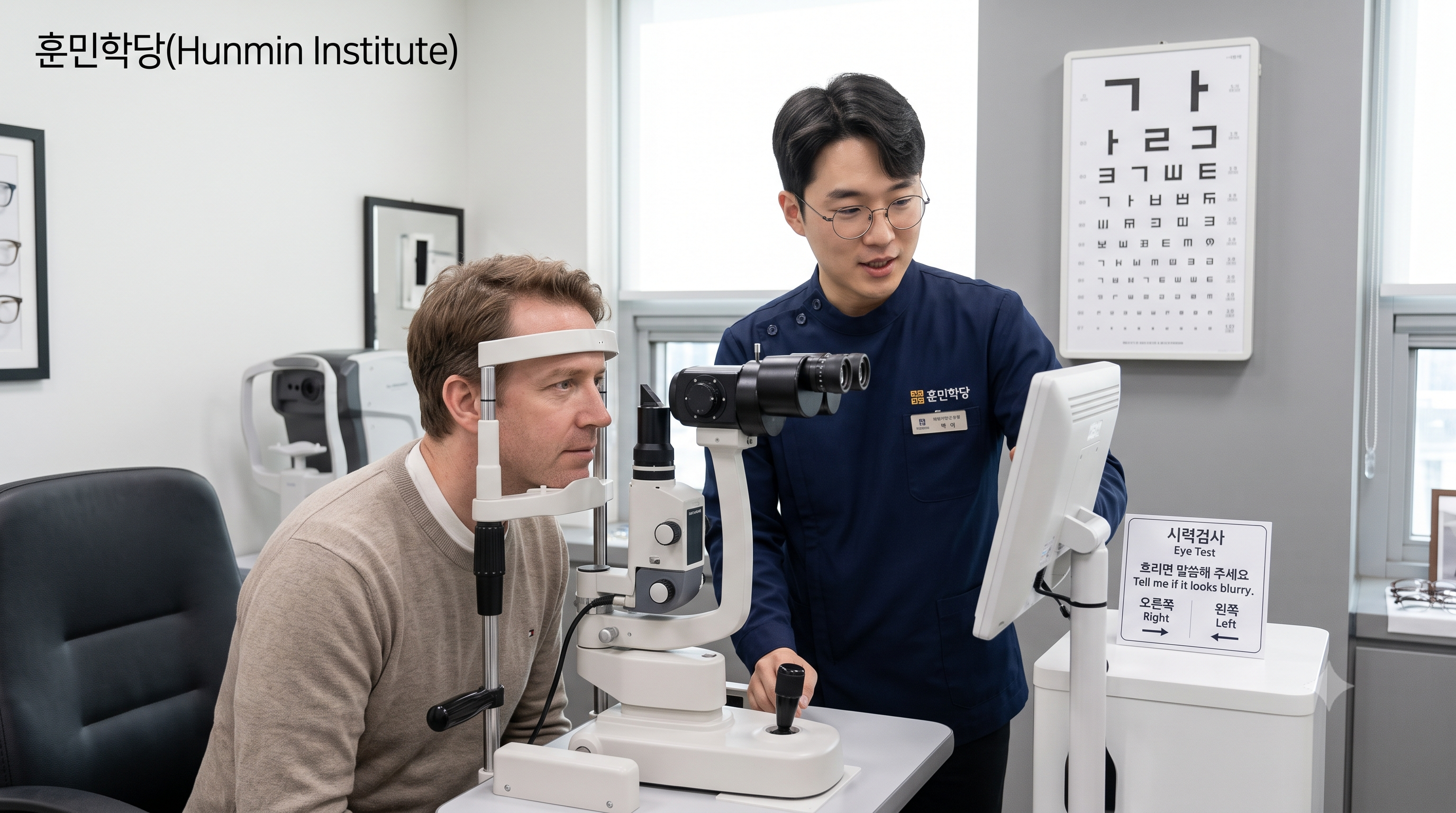
안경이 나오면 바로 씌워 보고 미세하게 손봅니다. 코받침의 높이와 다리의 각도를 조절하는 이 과정이 착용감을 좌우합니다. 이 자리에서 어디가 불편한지 말하지 않으면 그대로 쓰고 살게 됩니다. 아래 표에도 듣는 말과 하는 말이 함께 들어 있습니다.
When the pair is ready, it goes straight onto your face and gets fine-tuned. Setting the height of the nose pads and the angle of the arms is what decides how it feels all day. If you do not say what is uncomfortable here, you live with it. This table, too, holds both what you hear and what you say.
| 한국어 Korean |
발음 Pronunciation |
언제 쓰는가 When to use it |
|---|---|---|
| 다 되면 문자 드릴게요. I will text you when it is ready. |
da doemyeon munja deurilkkeyo | 완성 시점을 안내받을 때 Heard when told it is being made |
| 언제 찾으러 오면 돼요? When should I come to pick it up? |
eonje chajeureo omyeon dwaeyo | 수령 시점을 물을 때 When asking about pickup |
| 여기 좀 조여 주세요. Could you tighten it here? |
헐거울 때 조정을 요청하며 When it is loose and needs adjusting |
|
| 귀 뒤가 아파요. It hurts behind my ear. |
gwi dwiga apayo | 눌리는 곳을 말할 때 When pointing out where it presses |
| 자꾸 흘러내려요. It keeps sliding down. |
jakku heulleonaeryeoyo | 안경이 내려올 때 When the glasses slide down |
Swap-in Pattern Could you [verb] it here?
▶ 조정은 산 뒤에도 계속 받을 수 있습니다.
▶ Adjustments keep going long after the purchase.
안경은 쓰다 보면 벌어지고 내려앉습니다. 대부분의 안경원이 자기 매장에서 맞춘 안경의 조정은 따로 받지 않고 해 줍니다. 그러니 불편한 채로 버티지 말고 다시 들러 여기 좀 조여 주세요 한마디만 하시면 됩니다. 틀에 넣을 동사를 바꿔 넓혀, 좁혀, 닦아처럼 쓰셔도 그대로 통합니다.
Frames spread and slip with use. Most opticians will readjust a pair made at their own shop without charging for it. So do not put up with discomfort; drop back in and say 여기 좀 조여 주세요. Swap the verb and it still works: 넓혀, 좁혀, 닦아.
번역기가 놓치는 자리What the translator misses
안경은 맞추는 것이고 찾는 것입니다
Glasses Are 맞추다 and Then 찾다
안경을 맞추다를 번역기에 넣으면 대개 match나 adjust가 나옵니다. 그러나 여기서의 맞추다는 무엇을 서로 대어 보는 일이 아니라 내 눈에 맞게 주문해 만든다는 뜻입니다. 옷을 맞추다, 양복을 맞추다와 같은 계열이며, 기성품을 사는 것과 구분되는 자리에 씁니다. 그래서 안경 새로 맞추려고요 한마디가 새 안경을 주문하겠다는 뜻으로 그대로 전해집니다.
Run 안경을 맞추다 through a translator and you usually get match or adjust. But this 맞추다 is not about holding two things against each other; it means having something made to your own eyes. It belongs with 옷을 맞추다 and 양복을 맞추다, and marks the difference from buying off the shelf. That is why 안경 새로 맞추려고요 lands as a complete order for a new pair.
안경을 찾다도 마찬가지입니다. 직역하면 잃어버린 안경을 뒤진다는 뜻이 되지만, 안경원에서의 찾다는 맡겨 둔 물건을 받아 온다는 뜻입니다. 세탁물을 찾다, 짐을 찾다와 같은 쓰임이며 은행에서 돈을 찾다도 여기에 속합니다. 언제 찾으러 오면 돼요라는 문장을 잃어버린 것을 찾는다는 뜻으로 알아들으면 대화가 어긋납니다.
The same goes for 안경을 찾다. Taken literally it sounds like hunting for a lost pair, but at the optician's 찾다 means collecting something you left with them. It sits with 세탁물을 찾다 and 짐을 찾다, and 은행에서 돈을 찾다 belongs there too. Hear 언제 찾으러 오면 돼요 as searching for something lost and the conversation goes sideways.
Contact Lenses Follow Different Rules

먼저 원칙 하나를 세워 두겠습니다. 도수가 들어간 콘택트렌즈는 인터넷으로 살 수 없습니다. 안경사가 있는 안경원에서만 살 수 있고, 착용과 관리 방법을 그 자리에서 안내받도록 되어 있습니다. 렌즈가 눈에 직접 닿는 의료기기로 다뤄지기 때문입니다. 그래서 이 소단락의 문장은 사는 자리에서 오가는 말로 짜였습니다.
One rule first: contact lenses with a prescription strength cannot be bought online. They are sold only at an optician's with a licensed optician present, and you are to be shown how to wear and care for them on the spot, because a lens sits directly on the eye and is treated as a medical device. The sentences in this section are therefore the ones spoken where you buy them.
| 한국어 Korean |
발음 Pronunciation |
언제 쓰는가 When to use it |
|---|---|---|
| 렌즈도 여기서 살 수 있어요? Can I buy contact lenses here too? |
renjeudo yeogiseo sal ssu isseoyo | 렌즈 구매가 되는지 물을 때 When asking whether lenses are sold |
| 렌즈 껴 보신 적 있으세요? Have you worn contact lenses before? |
renjeu kkyeo bosin jeogisseuseyo | 경험을 확인하며 듣는 말 Heard as they check your experience Listening |
| 도수 있는 렌즈로 주세요. I would like lenses with a prescription strength. |
dosu inneun renjeuro juseyo | 시력 교정용을 고를 때 When choosing corrective lenses |
| 하루용으로 주세요. Daily disposables, please. |
haruyongeuro juseyo | 사용 주기를 말할 때 When naming the wear cycle |
| 끼는 법 알려 주세요. Could you show me how to put them in? |
kkineun ppeop allyeo juseyo | 착용법을 안내받고 싶을 때 When you want to be shown how |
Swap-in Pattern Can I buy [noun] here too?
▶ 렌즈는 안경과 달리 사는 곳이 정해져 있습니다.
▶ Unlike glasses, lenses have one place they can be bought.
도수가 없는 미용 렌즈도 의료기기로 다뤄지므로 같은 자리에서 삽니다. 쓰다가 눈이 붉어지거나 통증이 생기면 스스로 판단하지 말고 안과에 가십시오. 제품 자체의 문제나 판매 과정에서 분쟁이 생겼다면 한국소비자원에 상담을 신청할 수 있습니다.
Cosmetic lenses without a prescription strength are treated as medical devices too, so they are bought in the same place. If your eyes redden or start to hurt while wearing them, do not judge it yourself; go to an eye clinic. If the trouble is with the product or with how it was sold, you can take it to the Korea Consumer Agency for advice.
한국 안경원에서 필요한 것은 서류가 아니라 말입니다. 흐린지 잘 보이는지, 가벼운지 무거운지, 어디가 조이는지를 말하면 안경이 그만큼 맞게 나옵니다. 오늘 나온 문장 가운데 세 개만 챙기신다면 오른쪽이 잘 안 보여요, 가벼운 걸로 보여 주세요, 여기 좀 조여 주세요입니다. 아래 단어장에서 오늘의 어휘를 정리하고 가시기 바랍니다.
What a Korean optician's asks of you is words, not documents. Say whether it is blurry or clear, light or heavy, where it pinches, and the glasses come out that much closer to right. If you carry only three lines away from today, make them 오른쪽이 잘 안 보여요, 가벼운 걸로 보여 주세요, and 여기 좀 조여 주세요. Work through the vocabulary list below before you go.
TOPIK Preview
유형: 토픽 Ⅰ 읽기 34~39번대, 빈칸에 들어갈 말 고르기
Type: TOPIK I Reading, questions 34-39, choosing the word for the blank
<보기>와 같이 ( )에 들어갈 말로 가장 알맞은 것을 고르십시오.
As in the example, choose the word that best fits the blank.
<보기> 저는 학생입니다. 아침에 학교에 ( 갑니다 ).
한국에서는 안경원에서 눈을 검사합니다. 그래서 병원 ( )이 없어도 됩니다.
① 처방전 ② 영수증 ③ 진료실 ④ 신분증
정답과 해설은 이 글의 맨 아래에 있습니다. 먼저 스스로 답해 보십시오.
The answer and explanation are at the very bottom of this post. Try it yourself first.
Q1. 안과에 먼저 가야 하나요?
Q1. Do I have to see an eye doctor first?
A1. Not as an adult. The optician runs the test used to set the strength and makes the glasses from it. If your eyes hurt or your vision has changed suddenly, though, that belongs to medicine rather than eyewear, and you should see an eye clinic.
Q2. 본국에서 받은 처방전을 쓸 수 있나요?
Q2. Can I use a prescription from my home country?
A2. Bring it and it will be used as a reference. Most shops will still run their own test before settling the strength, since notation differs from country to country and your eyes may have moved on since it was written.
Q3. 렌즈를 인터넷으로 살 수 있나요?
Q3. Can I buy contact lenses online?
A3. No. The law bars electronic commerce in glasses and contact lenses that carry a prescription strength, and the Constitutional Court has upheld it. Lenses have to be bought at an optician's with a licensed optician present.
Q4. 안경이 맞지 않으면 다시 조정해 주나요?
Q4. Will they readjust the glasses if they do not fit?
A4. For a pair made at that shop, readjustment is usually done again without fuss. If the strength itself is off, how retesting and lens replacement are handled varies by shop, so it is safer to ask when you order.
Q5. 아이 안경도 안경원에서 바로 맞출 수 있나요?
Q5. Can a child's glasses be made at the optician's directly?
A5. For children aged six and under, a doctor's prescription is required. Sight is still developing at that age, so an eye clinic examination is built into the process. Older children are handled the same way as adults.
1. 안경원(angyeongwon) : (n) optician's shop[ɑːpˈtɪʃnz]
2. 안경사(angyeongsa) : (n) optician[ɑːpˈtɪʃn]
3. 안과(ankwa) : (n) eye clinic[aɪ ˈklɪnɪk]
4. 안경(angyeong) : (n) glasses[ˈɡlæsɪz]
5. 테(te) : (n) frame[freɪm]
6. 안경테(angyeongte) : (n) eyeglass frame[freɪm]
7. 렌즈(renjeu) : (n) lens[lenz]
8. 콘택트렌즈(kontaengteurenjeu) : (n) contact lens[ˈkɑːntækt lenz]
9. 도수(dosu) : (n) prescription strength[strengkθ]
10. 시력(siryeok) : (n) eyesight[ˈaɪsaɪt]
11. 시력검사(siryeokgeomsa) : (n) eye test[aɪ test]
12. 처방전(cheobangjeon) : (n) prescription[prɪˈskrɪpʃn]
13. 근시(geunsi) : (n) nearsightedness[ˈnɪrsaɪtɪdnəs]
14. 원시(wonsi) : (n) farsightedness[ˈfɑːrsaɪtɪdnəs]
15. 난시(nansi) : (n) astigmatism[əˈstɪɡmətɪzəm]
16. 코받침(kobatchim) : (n) nose pad[noʊz pæd]
17. 다리(dari) : (n) temple arm[ˈtempl ɑːrm]
18. 착용감(chagyonggam) : (n) fit and feel[fɪt]
19. 조정(jojeong) : (n) adjustment[əˈdʒʌstmənt]
20. 수령(suryeong) : (n) pickup[ˈpɪkʌp]
21. 의료기기(uiryogigi) : (n) medical device[ˈmedɪkl dɪˈvaɪs]
22. 하루용(haruyong) : (n) daily disposable[dɪˈspoʊzəbl]
23. 미용렌즈(miyongrenjeu) : (n) cosmetic lens[kɑːzˈmetɪk]
24. 세척액(secheogaek) : (n) lens solution[səˈluːʃn]
25. 부작용(bujagyong) : (n) side effect[saɪd ɪˈfekt]
26. 스타일(seutail) : (n) style[staɪl]
27. 가격(gagyeok) : (n) price[praɪs]
28. 문자(munja) : (n) text message[tekst ˈmesɪdʒ]
29. 매장(maejang) : (n) store[stɔːr]
30. 보증(bojeung) : (n) warranty[ˈwɔːrənti]
31. 글씨(geulssi) : (n) letters, print[ˈletərz]
32. 오른쪽(oreunjjok) : (n) right side[raɪt saɪd]
33. 왼쪽(oenjjok) : (n) left side[left saɪd]
34. 귀(gwi) : (n) ear[ɪr]
35. 눈(nun) : (n) eye[aɪ]
36. 맞추다(matchuda) : (v) to have made to order[meɪd tu ˈɔːrdər]
37. 찾다(chatda) : (v) to pick up[pɪk ʌp]
38. 보이다(boida) : (v) to be visible[ˈvɪzəbl]
39. 흐리다(heurida) : (a) to be blurry[ˈblɜːri]
40. 선명하다(seonmyeonghada) : (a) to be clear[klɪr]
41. 가볍다(gabyeopda) : (a) to be light[laɪt]
42. 무겁다(mugeopda) : (a) to be heavy[ˈhevi]
43. 얇다(yalda) : (a) to be thin[θɪn]
44. 조이다(joida) : (v) to tighten[ˈtaɪtn]
45. 넓히다(neolpida) : (v) to widen[ˈwaɪdn]
46. 흘러내리다(heulleonaerida) : (v) to slip down[slɪp daʊn]
47. 끼다(kkida) : (v) to put on lenses[pʊt ɑːn]
48. 써 보다(sseo boda) : (v) to try on[traɪ ɑːn]
49. 안내하다(annaehada) : (v) to guide[ɡaɪd]
50. 확인하다(hwaginhada) : (v) to check[tʃek]
보건복지부
Ministry of Health and Welfare
https://www.mohw.go.kr
식품의약품안전처
Ministry of Food and Drug Safety
https://www.mfds.go.kr
한국소비자원
Korea Consumer Agency
https://www.kca.go.kr
TOPIK Preview Answer
정답 ① 처방전
Answer: ① 처방전
The optician does the testing, so no prescription from a clinic is needed. 영수증 in ② is what you get after paying, 진료실 in ③ is a room rather than a document and cannot fill this slot, and 신분증 in ④ has nothing to do with the conditions for ordering glasses.
※본 콘텐츠(원고, 이미지, 예문 포함)는 저작권법에 의해 보호받는 훈민학당의 저작물입니다. 무단 복제, 전재, 재배포를 금합니다.
This content (manuscript, images, and example sentences) is the copyrighted property of Hunmin Institute, protected under copyright law. Unauthorized copying, reproduction, or redistribution is prohibited.
'K-Language(한국어교육)' 카테고리의 다른 글
| Korean Dentist Phrases: Covered or Not Covered (1) | 2026.08.08 |
|---|---|
| Korean Skin Clinic Phrases: What Staff Actually Ask (0) | 2026.08.08 |
| Korean Health Insurance for Foreigners Explained (0) | 2026.08.08 |
| Getting a Phone Number in Korea as a Foreigner (0) | 2026.08.08 |
| Opening a Bank Account in Korea as a Foreigner (0) | 2026.08.08 |


