
Garden of Morning Calm: Four Seasons, One Day Trip
아침고요수목원, 계절마다 다른 정원과 가는 방법 두 가지
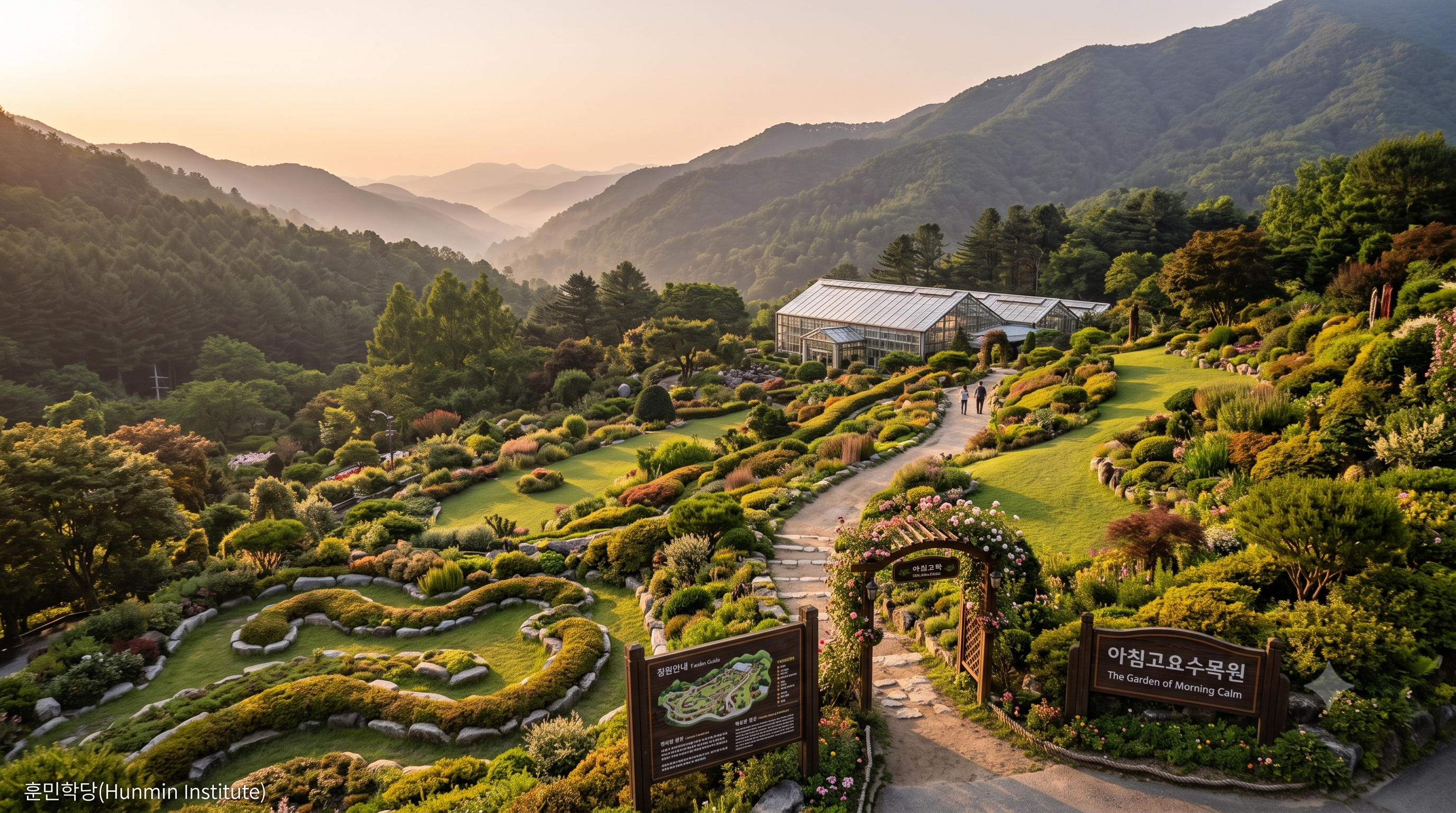
The Garden of Morning Calm is a hillside arboretum, different in each season.
Learn the viewing order and the Korean for ticket windows and bus stops.
아침고요수목원은 산비탈에 자리한 수목원으로 계절마다 다른 정원을 보여줍니다.
계절별 관람 순서와 매표소와 정류장에서 쓰는 한국어를 함께 익힙니다.
The learning services for the teaching materials published on this blog are free and open to everyone on the Hunmin Institute website ↗, with no account needed.
이 글에서 배우는 핵심 회화
Key Expressions in This Lesson
매표소와 정류장에서 오가는 말은 몇 마디로 정해져 있습니다. 아래 여섯 문장은 좌우가 한 쌍의 대화가 아니라 각각 따로 익히는 문장입니다. 먼저 눈에 담고 본문으로 들어가십시오.
Only a few lines go back and forth at the ticket office and the bus stop. The two columns are not paired dialogue; each sentence is learned on its own. Take them in first, then move into the main text.
| 듣는 말 Listening |
하는 말 Speaking |
|---|---|
| 입장 마감되었습니다. [ipjang magamdoeeotseumnida] Admission has closed. |
어른 두 장 주세요. [eoreun du jang juseyo] Two adult tickets, please. |
| 오늘은 여섯 시까지입니다. [oneureun yeoseot sikkajiimnida] We are open until six today. |
오늘 몇 시까지 해요? [oneul myeot sikkaji haeyo] How late are you open today? |
| 이쪽으로 올라가세요. [ijjogeuro ollagaseyo] Go up this way. |
가평역 가는 버스 어디서 타요? [gapyeongyeok ganeun beoseu eodiseo tayo] Where do I catch the bus to Gapyeong Station? |
첫째 줄과 둘째 줄은 소단락 1과 4에서 다루고, 셋째 줄은 소단락 5에서 다룹니다.
Rows one and two are covered in Sections 1 and 4, and row three in Section 5.
1. 산비탈을 따라 이어지는 스무 개의 정원
Twenty Gardens Running Up a Hillside
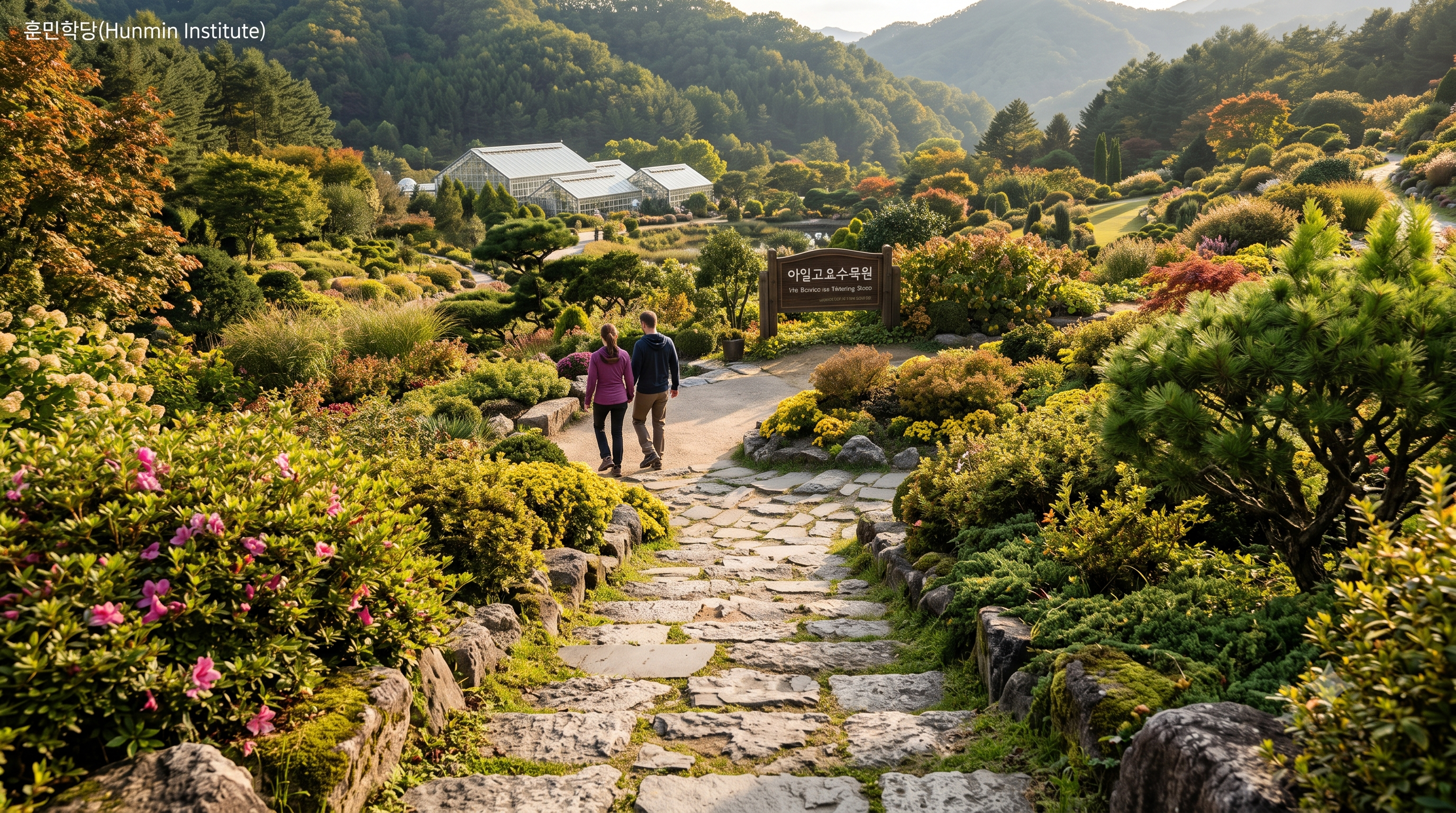
아침고요수목원은 경기도 가평군 상면에 있습니다. 부지는 약 33만 제곱미터이고 5,000여 종의 식물이 스무 개 남짓한 테마 정원에 나뉘어 심겨 있습니다. 한국 정원의 곡선을 살린 하경정원과 실내에서 사계절 식물을 보는 산수경온실이 대표적이고 그 사이사이에 서양식 정원이 섞여 있습니다.
The Garden of Morning Calm sits in Sang-myeon, Gapyeong-gun, Gyeonggi-do. The grounds cover about 330,000 square meters, and some 5,000 plant species are divided among roughly twenty themed gardens. The best known are Hagyeong Garden, which follows the curves of traditional Korean garden design, and the indoor Sansugyeong Greenhouse, with Western-style gardens set in between.
| 구분 Category |
요금과 시각 Fee or time |
비고 Notes |
|---|---|---|
| 어른 Adult |
11,000원 KRW 11,000 |
개인 기준 Individual rate |
| 청소년 Youth |
8,500원 KRW 8,500 |
중학생과 고등학생 Middle and high school students |
| 어린이 Child |
7,500원 KRW 7,500 |
36개월 이상부터 초등학생까지 From 36 months to elementary school |
| 경로와 유공자, 장애인 어른 Senior, veteran, adult with disability |
9,000원 KRW 9,000 |
증빙 서류 지참 Proof of eligibility required |
| 장애인 어린이와 청소년 Child or youth with disability |
6,500원 KRW 6,500 |
증빙 서류 지참 Proof of eligibility required |
| 기본 관람 시간 Regular opening hours |
오전 8시 30분부터 저녁 7시까지 8:30 a.m. to 7 p.m. |
입장 마감은 저녁 6시, 연중무휴 Last admission 6 p.m., open year-round |
| 겨울 야간개장 Winter night opening |
여는 시각과 닫는 시각이 따로 적용 Separate opening and closing times apply |
12월 초부터 3월 중순까지 Early December to mid-March |
여기서 쓰는 표현부터 배워봅시다. 매표소와 입구에서 오가는 말입니다.
Start with the expressions you will use here. These go back and forth at the ticket office and the gate.
| 듣는 말 Listening |
하는 말 Speaking |
|---|---|
| 어른 두 분이시죠? [eoreun du buniseyo] Two adults, is that right? |
어른 두 장 주세요. [eoreun du jang juseyo] Two adult tickets, please. |
| 예매 화면 보여 주세요. [yemae hwamyeon boyeo juseyo] Show me your booking screen. |
예매했어요. [yemaehaesseoyo] I booked online. |
| 오늘은 여섯 시까지입니다. [oneureun yeoseot sikkajiimnida] We are open until six today. |
오늘 몇 시까지 해요? [oneul myeot sikkaji haeyo] How late are you open today? |
| 이쪽으로 올라가세요. [ijjogeuro ollagaseyo] Go up this way. |
어디부터 보면 돼요? [eodibuteo bomyeon dwaeyo] Where should I start? |
응용 Apply It
↳ [명사] 몇 시까지 해요?
[noun] myeot sikkaji haeyo
Until what time is [noun] open?
ex [오늘] 몇 시까지 해요?/[온실] 몇 시까지 해요?/[매표소] 몇 시까지 해요?
ROM [oneul] myeot sikkaji haeyo/[onsil] myeot sikkaji haeyo/[maepyoso] myeot sikkaji haeyo
EN How late are you open today?/Until what time is the greenhouse open?/Until what time is the ticket office open?
▶몇 시까지 해요의 하다는 영업한다는 뜻이라 직역으로는 뜻이 잡히지 않습니다.
The 하다 in 몇 시까지 해요 means to be open for business, which a literal reading misses.
몇 시까지 해요는 문을 언제 닫는지 묻는 말이고, 까지를 부터로 바꾸면 여는 시각을 묻게 됩니다. 식당과 가게에서도 그대로 쓰는 말이라 한 번 익혀 두면 계속 씁니다. 요금과 시각은 해마다 조정되므로 방문 전에 공식 누리집에서 확인하십시오.
몇 시까지 해요 asks when a place closes; swap 까지 for 부터 and you ask when it opens. The same line works at restaurants and shops. Fees and hours are adjusted each year, so check the official site before your visit.
처음 찾는 사람이 가장 많이 놓치는 사실은 정원이 평지에 있지 않다는 점입니다. 정원은 산비탈을 따라 위로 이어지고 위쪽으로 갈수록 오르막이 길어집니다. 관람은 대체로 두 시간에서 세 시간이 걸리는데, 체력이 있을 때 위쪽을 먼저 보고 내려오면서 아래쪽 정원을 보는 편이 편합니다.
What first-time visitors most often miss is that these gardens are not on flat ground. They run up a hillside, and the higher you go, the longer the climb. A visit usually takes two to three hours, and it is easier to climb to the upper gardens while you still have energy and see the lower ones on the way down.
2. 봄, 수선화가 지면 튤립이 자리를 채웁니다
Spring, When Daffodils Fade and Tulips Take Their Place
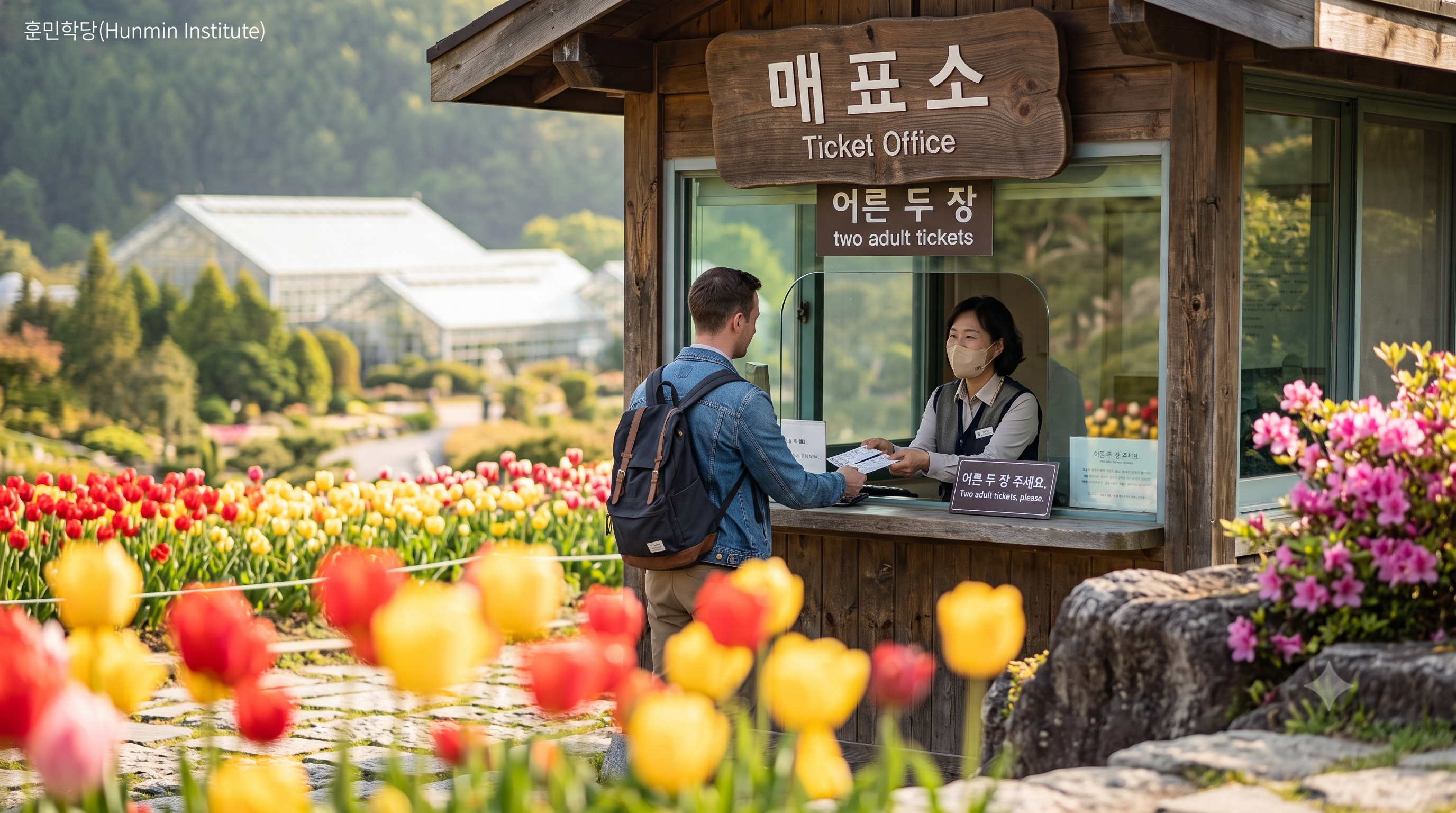
봄은 이 수목원이 가장 붐비는 계절입니다. 4월 중순부터 5월 하순까지 봄꽃 행사가 이어집니다. 색이 한 번에 터지는 것이 아니라 몇 주에 걸쳐 주인공이 바뀌기 때문에 같은 봄에 두 번 와도 다른 정원을 봅니다.
Spring is the busiest season here, with a spring flower event running from mid-April to late May. The color does not arrive all at once; the lead flower changes over several weeks, so two visits in the same spring show you two different gardens.
여기서 쓰는 표현부터 배워봅시다. 무엇이 피었는지 묻고 답하는 말입니다.
Start with the expressions you will use here. These are for asking and hearing what is in bloom.
| 듣는 말 Listening |
하는 말 Speaking |
|---|---|
| 지금은 튤립이 한창이에요. [jigeumeun tyullibi hanchangieyo] The tulips are at their peak now. |
지금 무슨 꽃 피어요? [jigeum museun kkot pieoyo] What flowers are blooming now? |
| 수선화는 다 졌어요. [suseonhwaneun da jyeosseoyo] The daffodils have all faded. |
수선화 아직 있어요? [suseonhwa ajik isseoyo] Are the daffodils still out? |
| 주말에는 많이 붐벼요. [jumareneun mani bumbyeoyo] It gets very crowded on weekends. |
오늘 사람 많아요? [oneul saram manayo] Is it busy today? |
| 위쪽 정원부터 보세요. [wijjok jeongwonbuteo boseyo] Start with the upper gardens. |
어디가 제일 예뻐요? [eodiga jeil yeppeoyo] Which spot is the prettiest? |
▶꽃이 지다는 떨어진다는 뜻이지 죽는다는 뜻이 아닙니다.
꽃이 지다 means the blossoms fall, not that the plant dies.
지다는 해가 지다처럼 무엇이 저물어 사라지는 자리에 두루 쓰입니다. 반대말은 피다이며 꽃이 피다, 꽃이 지다로 짝을 이룹니다.
지다 covers anything that sinks out of view, as in 해가 지다. Its opposite is 피다, giving the pair 꽃이 피다 and 꽃이 지다.
이 시기에는 오전에 도착하는 편이 낫습니다. 주말 오후에는 매표소 대기가 길어지고 위쪽 정원까지 올라갔다 내려오는 시간이 빠듯해집니다. 앞에서 익힌 어른 두 장 주세요가 가장 자주 쓰이는 자리가 여기입니다.
In this season, arrive in the morning. On weekend afternoons the ticket line grows long and the time to climb and come back down gets tight. This is where 어른 두 장 주세요 gets used most.
3. 여름의 초록과 가을의 단풍
Summer Green and Autumn Color
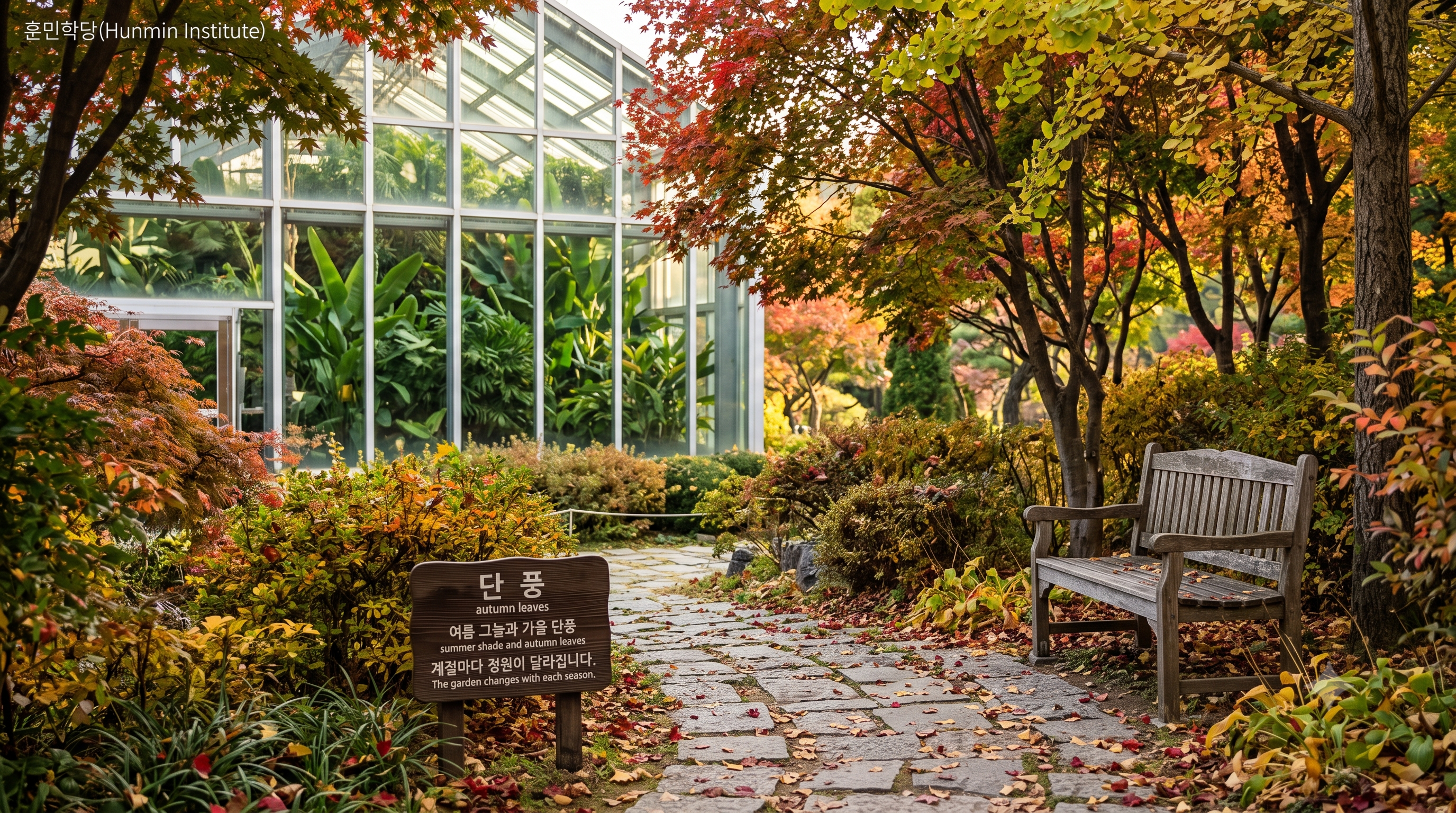
여름의 정원은 꽃보다 잎이 주인공입니다. 나무 그늘이 깊어지고 정원 전체가 초록 한 가지 색으로 채워지며, 이 계절에는 실내인 산수경온실이 더위를 피하는 자리가 됩니다. 가을에는 단풍이 들면서 정원의 윤곽이 가장 또렷해집니다.
In summer, leaves rather than flowers take the lead. The shade deepens and the whole garden fills with a single shade of green, and the indoor Sansugyeong Greenhouse becomes the place to escape the heat. In autumn the leaves turn and the outlines become clearest.
여기서 쓰는 표현부터 배워봅시다. 쉴 자리와 볼 때를 묻는 말입니다.
Start with the expressions you will use here. These ask where to rest and when to come.
| 듣는 말 Listening |
하는 말 Speaking |
|---|---|
| 온실은 저 아래예요. [onsireun jeo araeyeyo] The greenhouse is down that way. |
온실 어디예요? [onsil eodiyeyo] Where is the greenhouse? |
| 그늘에서 좀 쉬세요. [geuneureseo jom swiseyo] Rest a while in the shade. |
쉴 데 있어요? [swil de isseoyo] Is there somewhere to rest? |
| 단풍은 시월 말이 좋아요. [danpungeun siwol mari joayo] Late October is best for the leaves. |
단풍 언제가 제일 좋아요? [danpung eonjega jeil joayo] When are the autumn leaves best? |
| 여기가 사진 잘 나와요. [yeogiga sajin jal nawayo] Photos come out well here. |
사진 찍기 좋은 데 있어요? [sajin jjikgi joeun de isseoyo] Is there a good spot for photos? |
▶단풍은 나무 이름이자 잎이 물드는 현상을 함께 가리키는 말입니다.
단풍 names both the maple tree and the turning of the leaves.
단풍이 들다라고 하면 잎이 물든다는 뜻이고, 단풍나무라고 하면 나무 자체를 가리킵니다. 단풍 구경, 단풍철처럼 계절을 가리키는 말로도 씁니다.
단풍이 들다 means the leaves are turning, while 단풍나무 is the tree itself. It also names the season, as in 단풍 구경 or 단풍철.
가을에는 정원과 정원 사이의 경계가 눈에 보이기 시작하고, 봄에는 꽃에 가려 보이지 않던 지형의 굴곡이 드러납니다. 사진을 목적으로 오신다면 봄과 가을이 가장 다른 결과를 줍니다.
In autumn the borders between one garden and the next appear, and the folds of the land, hidden behind flowers in spring, come into view. If you come for photographs, spring and autumn give you the most different results.
4. 겨울, 정원이 밤에 열립니다
Winter, When the Garden Opens at Night
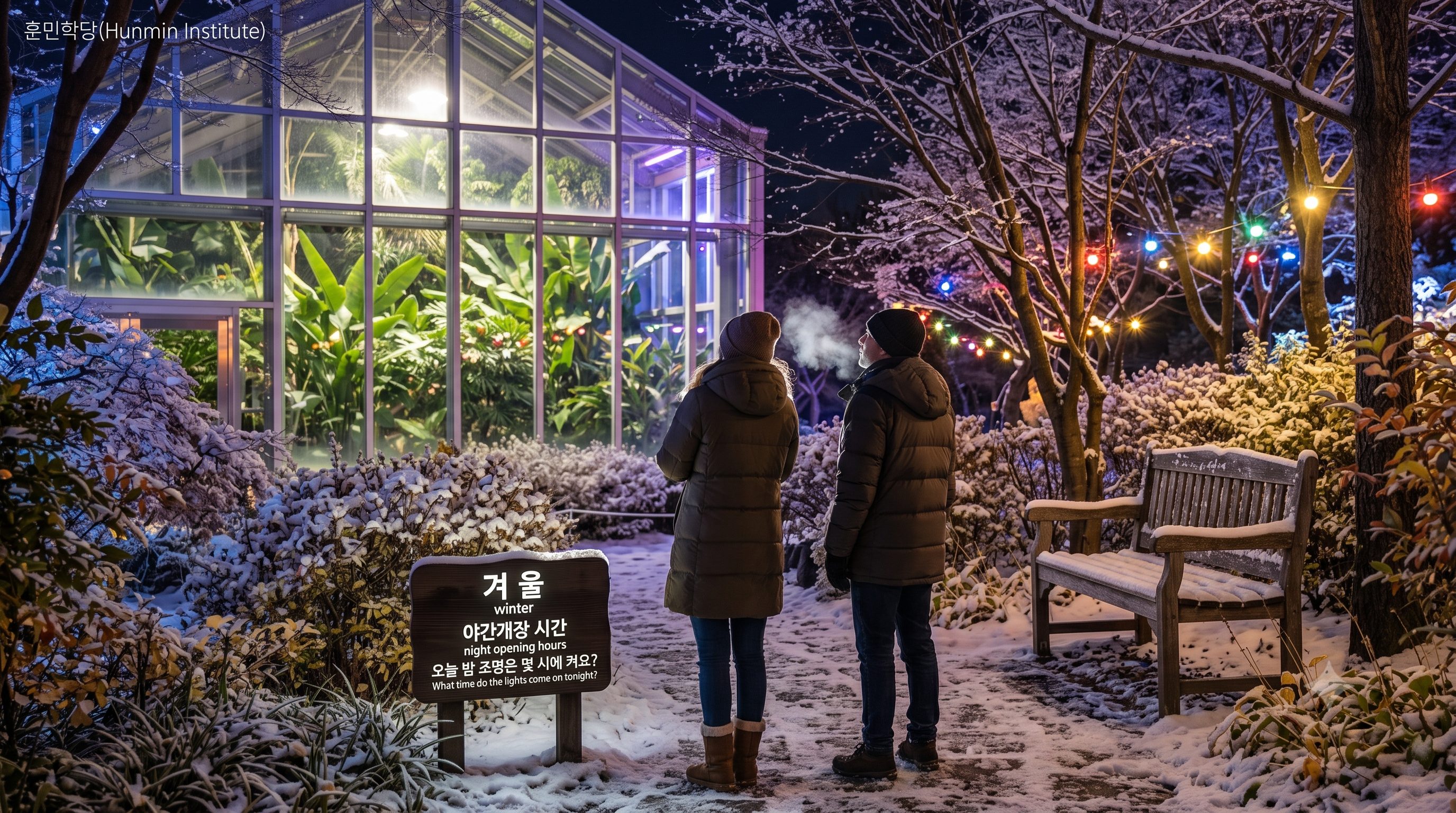
겨울에는 야간 조명 행사가 12월 초부터 이듬해 3월 중순까지 이어집니다. 이 기간에는 낮에 본 정원과 밤에 본 정원이 완전히 다른 공간이 됩니다. 여는 시각과 닫는 시각이 달라지는 기간이라 직원의 안내를 알아듣는 것이 중요합니다.
In winter, a night lighting event runs from early December to mid-March. During this period, the garden by day and the garden by night are two entirely different places. Since the opening and closing hours shift, understanding what the staff says matters.
여기서 쓰는 표현부터 배워봅시다. 입장과 폐장을 두고 오가는 말입니다.
Start with the expressions you will use here. These come up around entry and closing.
| 듣는 말 Listening |
하는 말 Speaking |
|---|---|
| 입장 마감되었습니다. [ipjang magamdoeeotseumnida] Admission has closed. |
지금 들어갈 수 있어요? [jigeum deureogal su isseoyo] Can I still go in now? |
| 오늘은 아홉 시까지입니다. [oneureun ahop sikkajiimnida] We are open until nine today. |
야간개장 오늘 해요? [yagangaejang oneul haeyo] Is the night opening on today? |
| 곧 폐장합니다. [got pyejanghamnida] We are closing soon. |
조명 몇 시에 켜져요? [jomyeong myeot sie kyeojyeoyo] What time do the lights come on? |
| 미끄러우니 조심하세요. [mikkeureouni josimhaseyo] Careful, it is slippery. |
여기 미끄러워요? [yeogi mikkeureowoyo] Is it slippery here? |
▶입장 마감과 폐장은 다른 시각입니다.
Last admission and closing are two different times.
입장 마감은 더 들여보내지 않는 시각이고 폐장은 문을 닫는 시각입니다. 안에 있는 사람은 폐장까지 머물 수 있지만 밖에 있는 사람은 마감 뒤에는 들어갈 수 없습니다.
입장 마감 is when they stop letting people in; 폐장 is when the gates shut. Those inside may stay until closing, but no one outside gets in after the cutoff.
야간개장 기간에는 여는 시각과 닫는 시각, 입장 마감이 모두 평상시와 다르게 적용됩니다. 방문 전에 공식 자료에서 그날의 운영 시각을 확인하시고, 현장에서는 오늘 몇 시까지 해요라고 물으면 바로 답을 받을 수 있습니다. 가평 산자락이라 해가 지면 체감 온도가 크게 떨어지므로 겉옷을 한 겹 더 준비하는 편이 좋습니다.
In this period the opening time, the closing time, and the last admission are all different. Check the hours for your date before you go, and on site, asking 오늘 몇 시까지 해요 gets you an answer straight away. This is the foot of the mountains, so it feels much colder once the sun sets. Bring one extra layer.
5. 가는 방법, 차가 있을 때와 없을 때
Getting There, With a Car and Without One
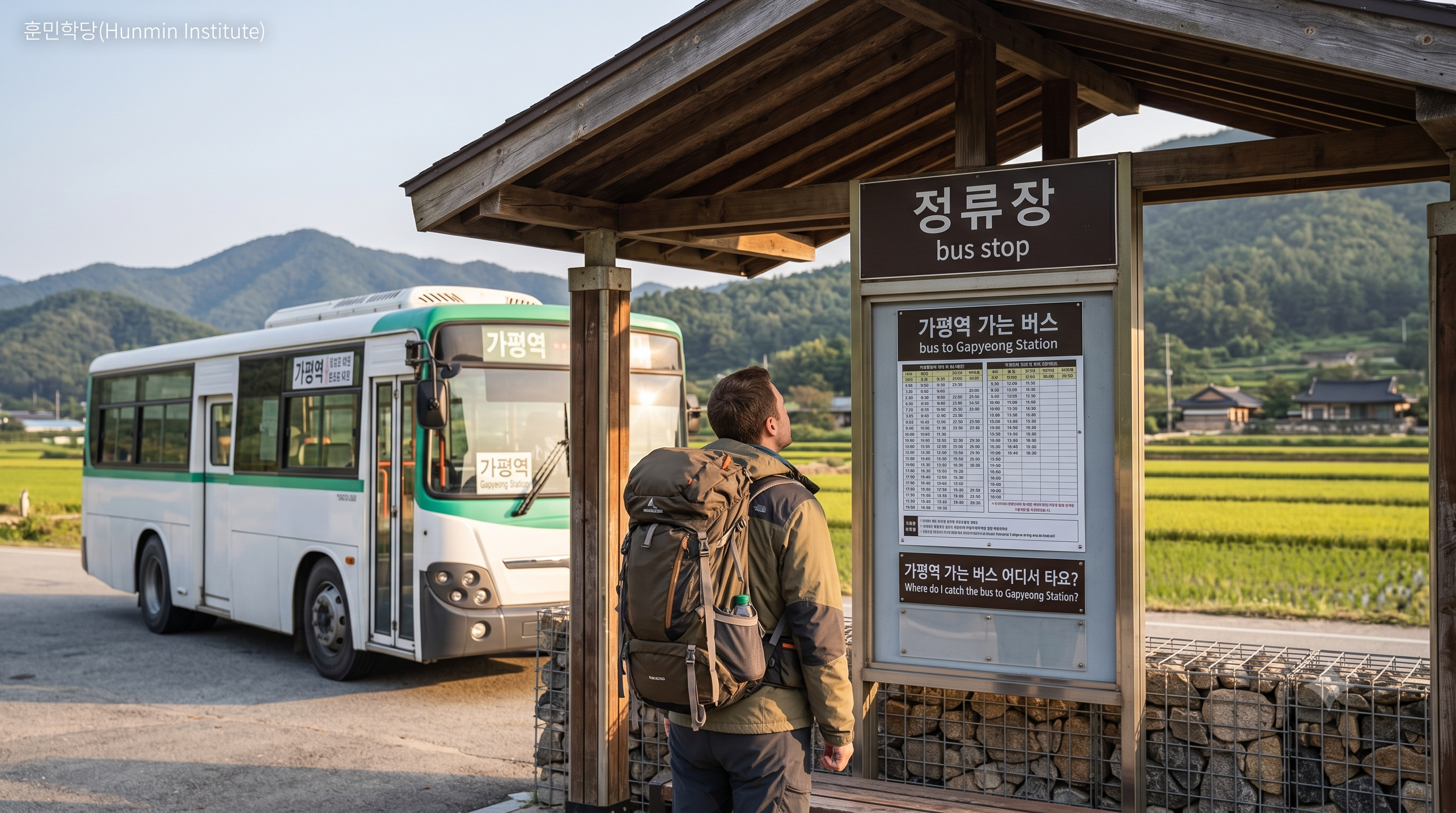
차가 있을 때와 없을 때의 하루가 다릅니다. 차가 없다면 기차가 먼저입니다. 청량리역에서 ITX-청춘이나 경춘선을 타고 가평역이나 청평역에서 내린 뒤 남은 구간을 시내버스나 택시, 순환버스 가운데 하나로 채웁니다.
The day differs depending on whether you drive. Without a car, the train comes first: take the ITX-Cheongchun or the Gyeongchun Line from Cheongnyangni to Gapyeong or Cheongpyeong Station, then cover the rest by local bus, taxi, or the circular tour bus.
| 경로 Route |
소요 시간 Travel time |
비고 Notes |
|---|---|---|
| 자가용, 서울 출발 Car, from Seoul |
한 시간에서 한 시간 이십 분 One hour to one hour twenty |
주차 무료 Parking is free |
| 청량리역에서 가평역 또는 청평역 Cheongnyangni to Gapyeong or Cheongpyeong |
열차편에 따라 다름 Varies by service |
ITX-청춘은 정차역이 편마다 다름 ITX-Cheongchun stops vary by service |
| 가평역에서 수목원, 시내버스 Gapyeong Station to the garden, local bus |
약 40분 About forty minutes |
배차 간격 확인 필요 Check the timetable |
| 가평역에서 수목원, 택시 Gapyeong Station to the garden, taxi |
약 20분 About twenty minutes |
일행이 셋 이상이면 유리 Better value for three or more |
| 청평역에서 수목원, 택시 Cheongpyeong Station to the garden, taxi |
약 20분 About twenty minutes |
야간개장 기간에는 대기 발생 Expect waiting during the night opening |
| 가평시티투어버스 A코스 Gapyeong City Tour Bus, Course A |
순환 배차에 따름 Depends on the circular timetable |
당일권으로 자유롭게 타고 내림 Day ticket allows hop-on hop-off |
여기서 쓰는 표현부터 배워봅시다. 정류장과 돌아가는 길에서 오가는 말입니다.
Start with the expressions you will use here. These come up at the stop and on the way back.
| 듣는 말 Listening |
하는 말 Speaking |
|---|---|
| 버스는 저기서 타세요. [beoseuneun jeogiseo taseyo] Catch the bus over there. |
가평역 가는 버스 어디서 타요? [gapyeongyeok ganeun beoseu eodiseo tayo] Where do I catch the bus to Gapyeong Station? |
| 사십 분쯤 걸려요. [sasip bunjjeum geollyeoyo] It takes about forty minutes. |
버스로 얼마나 걸려요? [beoseuro eolmana geollyeoyo] How long does the bus take? |
| 막차는 여섯 시예요. [makchaneun yeoseot siyeyo] The last bus is at six. |
막차 몇 시예요? [makcha myeot siyeyo] What time is the last bus? |
| 택시는 이십 분이면 됩니다. [taeksineun isip bunimyeon doemnida] A taxi takes twenty minutes. |
택시로 가면 얼마나 걸려요? [taeksiro gamyeon eolmana geollyeoyo] How long does a taxi take? |
▶차 없이 온 사람에게 하루를 결정하는 것은 입장 시각이 아니라 돌아가는 차편 시각입니다.
Without a car, the day is decided not by when you enter but by when your ride leaves.
정원에 들어가기 전에 돌아갈 버스나 열차 시각을 먼저 확인해 두십시오. 경춘선 전철은 가평역과 청평역에 모두 서지만 ITX-청춘은 열차편에 따라 서는 역이 다르므로 예매할 때 정차역을 확인하십시오.
Check the departure time of your return bus or train before you walk in. The Gyeongchun Line stops at both Gapyeong and Cheongpyeong, but the ITX-Cheongchun varies by service, so check the stops when you book.
가평시티투어버스 A코스는 가평역과 남이섬, 쁘띠프랑스, 청평역, 아침고요수목원을 순환하고 당일 승차권 한 장으로 자유롭게 타고 내릴 수 있습니다. 요금과 배차는 바뀔 수 있으므로 공식 자료를 확인하십시오.
Course A of the Gapyeong City Tour Bus circles Gapyeong Station, Nami Island, Petite France, Cheongpyeong Station, and the garden, with a day ticket for hop-on hop-off travel. Fares and timetables can change, so check the official information.
아침고요수목원은 한 번 다녀오면 끝나는 곳이 아니라 계절이 바뀔 때마다 다시 확인하러 가는 곳에 가깝습니다. 언제 갈지와 어떻게 갈지 두 가지만 정하면 하루는 어렵지 않게 짜입니다.
This is less a place you finish in one visit than one you return to each time the season changes. Settle two things, when to go and how to get there, and the day comes together easily.
Next: Gyeongju Travel Guide: Free Sites and Bus Korean ↗
토픽 맛보기
TOPIK Preview
유형: TOPIK Ⅰ 읽기 [34~39], 대화, 빈칸에 알맞은 것 고르기
Type: TOPIK I Reading [34–39], dialogue, choose the correct word for the blank
( )에 들어갈 말로 가장 알맞은 것을 고르십시오.
Choose the most appropriate word for the blank.
가: 오늘 몇 시까지 해요? 나: ( ) 문을 닫습니다.
A: How late are you open today? B: We close ( ).
① 여섯 시부터
② 여섯 시까지
③ 여섯 시에
④ 여섯 시라도
Answer ▾
정답 ③ 여섯 시에
Answer: ③ 여섯 시에
문을 닫는 시각 하나를 가리키므로 시각에 붙는 에가 옵니다. ①의 부터는 시작하는 때를 가리키고, ②의 까지는 끝나는 지점까지 이어지는 범위를 가리켜 닫는다는 동작과 맞지 않으며, ④는 양보의 뜻이라 문장이 성립하지 않습니다. 흉내 낸 대문항은 TOPIK Ⅰ 읽기 [34~39]입니다.
A single point in time takes 에. ① 부터 marks a starting point, ② 까지 marks a span running up to an end, neither of which fits the act of closing, and ④ carries a concessive meaning that does not work here. The item type modeled here is TOPIK I Reading [34–39].
FAQ
Q1. 남이섬과 아침고요수목원을 하루에 같이 볼 수 있나요?Answer ▾
Q1. Can I see Nami Island and the Garden of Morning Calm in one day?
A1. 가능하지만 여유롭지는 않습니다. 두 곳 모두 관람에 두세 시간이 걸리고 사이 이동에도 시간이 듭니다. 순환버스로 묶어 도는 방법이 있으나 겨울 야간 조명까지 보실 계획이라면 하루에 한 곳으로 잡는 편이 낫습니다.
A1. It is possible, but not relaxed. Each takes two to three hours, and the trip between them takes time. The circular bus can link the two, but if you also plan to see the winter lights, one place per day is better.
Q2. 예약을 꼭 해야 하나요?Answer ▾
Q2. Do I have to book in advance?
A2. 아닙니다. 현장 매표소에서 바로 입장권을 살 수 있습니다. 다만 주말과 공휴일에는 매표 대기가 길어질 수 있어 온라인 사전 예매를 해 두면 시간을 아낍니다.
A2. No. You can buy a ticket on the spot. On weekends and holidays the line can be long, so booking online saves time.
Q3. 드론으로 촬영해도 되나요?Answer ▾
Q3. Can I film with a drone?
A3. 안 됩니다. 수목원 안에서는 드론 촬영이 제한됩니다. 촬영 관련 규정은 행사 기간마다 달라질 수 있으므로 방문 전에 확인하시기 바랍니다.
A3. No. Drone filming is restricted inside the garden. Rules can change from one event period to the next, so check before your visit.
Q4. 아이나 부모님과 함께 가도 괜찮나요?Answer ▾
Q4. Is it suitable for visiting with children or elderly parents?
A4. 가능합니다. 다만 정원이 산비탈에 있어 오르막 구간이 이어집니다. 위쪽까지 다 보지 않고 아래쪽 정원과 온실 위주로 도는 방법도 있으니 일행의 걸음에 맞춰 코스를 줄이는 편이 낫습니다.
A4. Yes. The gardens sit on a hillside with continuous uphill stretches. You can skip the upper gardens and stay with the lower ones and the greenhouse, shortening the course to your group’s pace.
Q5. 돌아가는 버스를 놓치면 어떻게 하나요?Answer ▾
Q5. What if I miss the bus back?
A5. 택시를 부르시면 됩니다. 다만 산자락이라 호출이 바로 잡히지 않을 수 있어 여유를 두는 편이 안전합니다. 겨울 야간개장 기간에는 폐장 시각에 사람이 몰리므로 마지막 버스 시각을 미리 적어 두십시오.
A5. Call a taxi. Being at the foot of the mountains, a car may not come right away, so leave yourself margin. During the winter night opening the crowd leaves all at once, so note the last bus time in advance.
Vocabulary and Pronunciation for Foreigners
| No | Korean | Romanisation | Meaning |
|---|---|---|---|
| 1 | 매표소 | maepyoso | (n) ticket office [ˈɔːfɪs] |
| 2 | 입장 마감 | ipjang magam | (n) last admission [læst] |
| 3 | 야간개장 | yagangaejang | (n) night opening [naɪt] |
| 4 | 단풍 | danpung | (n) autumn leaves, maple [ˈɔːtəm] |
| 5 | 막차 | makcha | (n) last bus or train [læst] |
| ▾ 단어 45개 더 보기 Show 45 more ↗ | |||
The blog page has limits of space and function, so only five words are shown here. The rest of the word list, the audio, the sentences and tables, the FAQ, the worksheet, the TOPIK questions and the lesson video are on the Hunmin Institute website ↗, free and open to everyone, with no account needed.
참고 기관
Official Sources
한국관광공사 ↗
Korea Tourism Organization
https://english.visitkorea.or.kr
기관 설명 보기 About this institute ▾
This is the public agency that provides travel information for Korea. Its English site lets you search sights, transport, and seasonal events around Gapyeong. For values that change each year, such as admission fees and night-opening hours, check the garden’s own site as well.
한국철도공사 ↗
Korea Railroad Corporation
https://www.letskorail.com
기관 설명 보기 About this institute ▾
This is the agency that runs train timetables and seat reservations. Its English site lets you check ITX-Cheongchun times and stops between Cheongnyangni, Gapyeong, and Cheongpyeong and book them. Stops vary by service, so check when you book.
※ 본 콘텐츠(원고, 이미지, 예문 포함)는 저작권법에 의해 보호받는 훈민학당의 저작물입니다. 무단 복제, 전재, 재배포 및 AI 학습 데이터로의 이용을 금합니다.
This content (manuscript, images, and example sentences) is the copyrighted property of Hunmin Institute, protected under copyright law. Unauthorized copying, reproduction, redistribution, and use as AI training data are prohibited.
'K-Travel' 카테고리의 다른 글
| Jeonju Travel Guide: Hanok Village and How to Order (0) | 2026.08.12 |
|---|---|
| Gyeongju Travel Guide: Free Sites and Bus Korean (0) | 2026.08.12 |
| Nami Island by Train: A Car-Free Day Trip from Seoul (0) | 2026.07.30 |
| BTS Trail Part 4: Yongsan and Hongdae (0) | 2026.07.25 |
| BTS Trail Part 3: Gyeongbokgung and Korean Traditional Art (0) | 2026.07.25 |


