
Exchange Student vs Language Course: Two Korean Student Visas
교환학생과 어학연수, 두 가지 학생 비자의 차이
D-2 exchange and D-4 language visas differ on work, funds and degree transfer.
Learn those differences and the Korean used on the forms and at the counter.
D-2 교환학생과 D-4 어학연수는 아르바이트와 잔고, 학위 전환 조건이 갈립니다.
이 글에서 두 비자의 차이와 서류와 창구에서 쓰는 한국어를 익힙니다.
All learning services for the teaching materials published on this blog are free for blog subscribers on the Hunmin Institute website ↗.
이 글에서 배우는 핵심 회화
Key Expressions in This Lesson
비자 서류가 끝나면 창구가 기다립니다. 아래 여덟 문장은 좌우가 한 쌍의 대화가 아니라 각각 따로 익히는 문장입니다. 먼저 눈에 담고 본문으로 들어가십시오.
Once the paperwork is done, a counter is waiting. The two columns below are not paired dialogue; each sentence is learned on its own. Take them in first, then move into the main text.
| 듣는 말 Listening | 하는 말 Speaking |
|---|---|
| 체류 자격이 어떻게 되세요? [cheryu jagyeogi eotteoke doeseyo] What is your status of stay? | D-2 교환학생이에요. [di tu gyohwanhaksaengieyo] I am a D-2 exchange student. |
| 예치 기간이 모자랍니다. [yechi gigani mojaramnida] The holding period is not long enough. | 얼마나 넣어 둬야 해요? [eolmana neoreo dwoya haeyo] How long does the money have to stay in? |
| 6개월이 지나야 신청됩니다. [yukgaewori jinaya sincheongdoemnida] You may apply only after six months. | 6개월은 언제부터 세요? [yukgaeworeun eonjebuteo seyo] From when do the six months count? |
| 번호표 뽑고 기다리세요. [beonhopyo ppopgo gidariseyo] Take a number and wait. | 외국인등록 하러 왔어요. [oegugindeungnok hareo wasseoyo] I am here for alien registration. |
첫째 줄은 소단락 1에서, 둘째 줄은 소단락 2에서, 셋째 줄은 소단락 3에서, 넷째 줄은 소단락 4에서 다룹니다.
The first row is covered in Section 1, the second in Section 2, the third in Section 3, and the fourth in Section 4.
1. 두 비자는 분류부터 다릅니다
The Two Visas Are Classified Differently
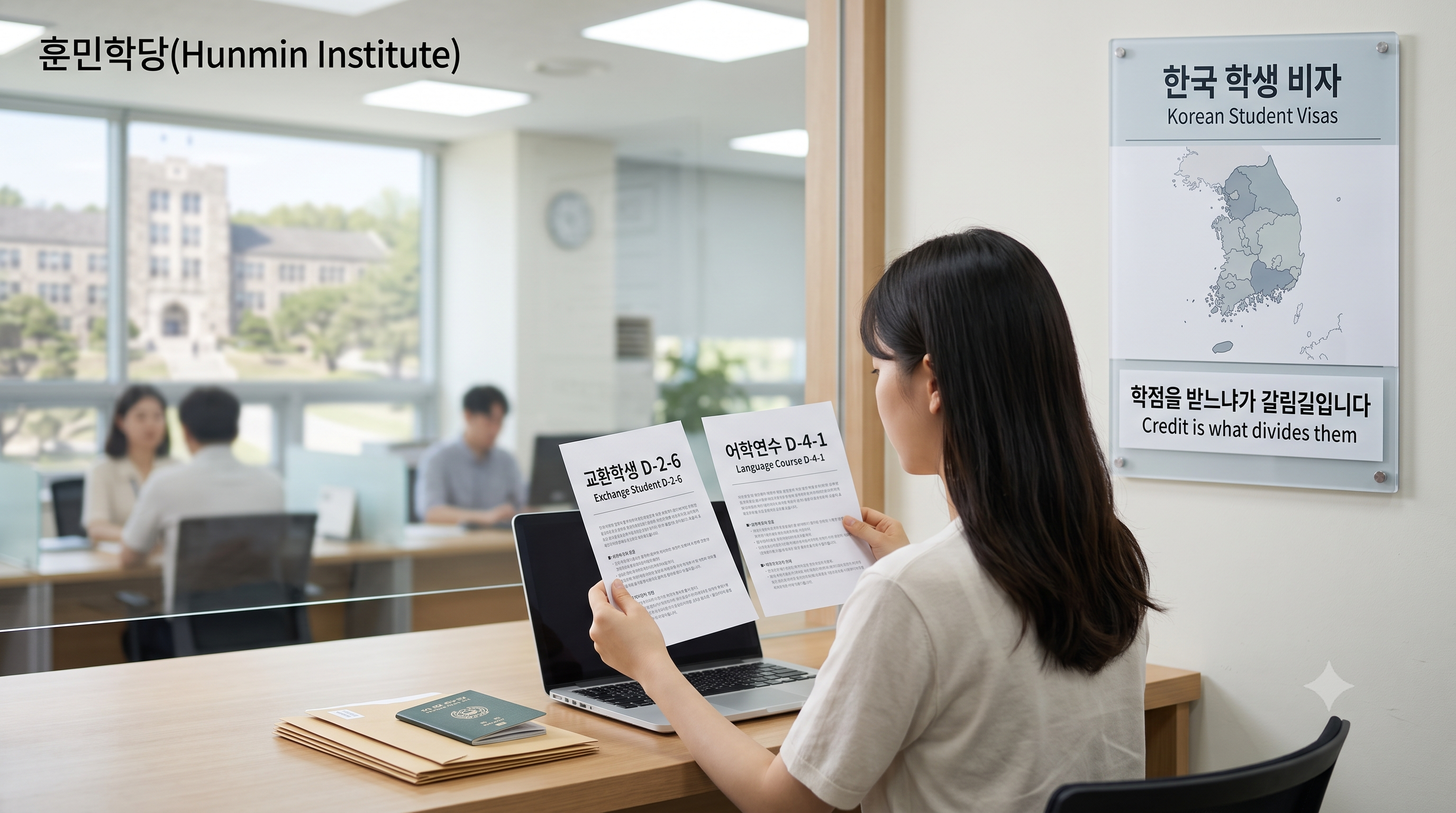
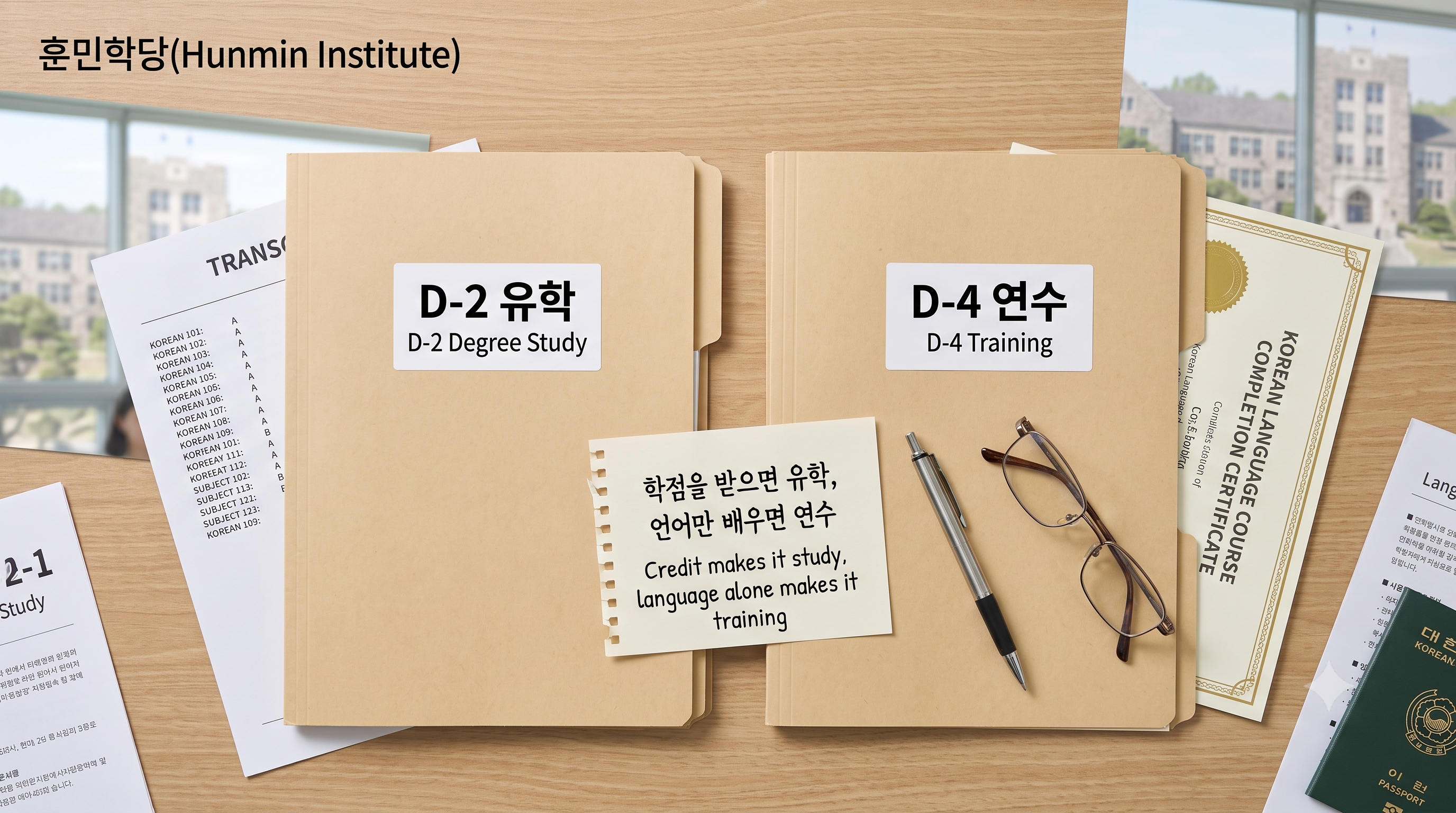
한국의 체류 자격에는 알파벳과 숫자로 된 코드가 붙습니다. 교환학생은 D-2 계열의 D-2-6, 어학연수는 D-4 계열의 D-4-1입니다. 두 자격을 가르는 기준은 학점을 받느냐 받지 않느냐 하나입니다.
Korean residence statuses carry codes of a letter and numbers. Exchange students are D-2-6 under the degree group, and language students are D-4-1 under the training group. One line divides them: whether you earn academic credit.
그런데 학생을 먼저 막아서는 것은 코드가 아니라 낱말입니다. 말할 때 쓰는 말과 서류에 적힌 말이 다르기 때문입니다. 서류에서 만나는 여섯 낱말부터 봅니다.
What blocks students first, though, is not the code but the vocabulary. The word you say and the word printed on the form are different. Start with the six words you meet on the paperwork.
| 한국어 Korean | 서류에서 무슨 뜻인가 What it means on a form |
|---|---|
| 사증 [sajeung] Visa, official term | 서류에는 비자가 아니라 사증으로 적힙니다 Forms say 사증, not 비자 |
| 체류 자격 [cheryu jagyeok] Status of stay | 한국에 머물 수 있는 법적 신분입니다 The legal basis on which you stay |
| 표준입학허가서 [pyojunipakheogaseo] Certificate of admission | 대학이 발급하는 핵심 문서입니다 The core document the university issues |
| 잔고증명서 [jangojeungmyeongseo] Bank balance certificate | 계좌에 돈이 있음을 증명하는 서류입니다 Proof that the money is in your account |
| 시간제 취업 [siganje chwieop] Part-time work | 아르바이트의 공식 명칭입니다 The official name for a part-time job |
| 외국인등록증 [oegugindeungnokjeung] Alien registration card | 입국 후 받는 신분증입니다 The ID you receive after arrival |
여기서 쓰는 표현부터 배워봅시다. 서류의 낱말을 창구에서 확인할 때 오가는 말입니다.
Start with the expressions you will use here. These go back and forth as you check a form word at the counter.
| 듣는 말 Listening | 하는 말 Speaking |
|---|---|
| 사증발급신청서 작성하셨어요? [sajeungbalgeupsincheongseo jakseonghasyeosseoyo] Have you filled in the visa application form? | 사증이 비자 맞나요? [sajeungi bija mannayo] Is 사증 the same as a visa? |
| 체류 자격이 어떻게 되세요? [cheryu jagyeogi eotteoke doeseyo] What is your status of stay? | D-2 교환학생이에요. [di tu gyohwanhaksaengieyo] I am a D-2 exchange student. |
| 표준입학허가서 가져오셨어요? [pyojunipakheogaseo gajyeoosyeosseoyo] Did you bring the certificate of admission? | 여기 있어요. [yeogi isseoyo] Here it is. |
| 원본으로 주셔야 해요. [wonboneuro jusyeoya haeyo] You need to give us the original. | 사본은 안 되나요? [saboneun an doenayo] Is a copy not acceptable? |
응용 Apply It
↳ [명사] 맞나요?
[noun] mannayo
Is this the right [noun]?
ex 사증이 비자 맞나요?/이 서류 맞나요?/여기 맞나요?
ROM sajeungi bija mannayo/i seoryu mannayo/yeogi mannayo
EN Is 사증 the same as a visa?/Is this the right form?/Is this the right place?
▶말할 때 쓰는 낱말과 서류에 적힌 낱말이 다릅니다.
The word you speak is not the word on the form.
사증과 비자는 같은 것입니다. 말할 때는 비자라고 하지만 신청서와 공고문은 사증으로 적습니다. 사증발급신청서를 찾으라는 안내를 받고 비자 신청서를 찾다가 헤매는 경우가 많습니다.
사증 and 비자 mean the same thing. People say 비자 in speech, while forms and notices write 사증. Being told to find a 사증발급신청서 and looking for a visa form is a common way to get lost.
아르바이트도 마찬가지입니다. 일상에서는 알바라고 줄여 말하지만 출입국 서류에서는 시간제 취업입니다. 같은 캠퍼스에 있어도 서류상으로는 다른 신분이며, 이 글의 절반은 그 서류에서 만나는 말입니다.
The same goes for part-time work. Everyday speech shortens it to 알바, but immigration paperwork calls it 시간제 취업. On the same campus the paperwork makes you a different person, and half of this article is about the language of that paperwork.
원본과 사본을 가르는 자리도 자주 걸립니다. 표준입학허가서처럼 대학이 발급한 문서는 원본을 요구하는 경우가 많으므로 창구에 가기 전에 어느 쪽이 필요한지 먼저 확인하십시오.
The split between original and copy trips people up too. University documents such as the certificate of admission are often required in the original, so check which one is needed before you go to the counter.
2. 교환학생 비자, 학점을 받는 학생의 자격
The Exchange Student Visa, for Students Who Earn Credit
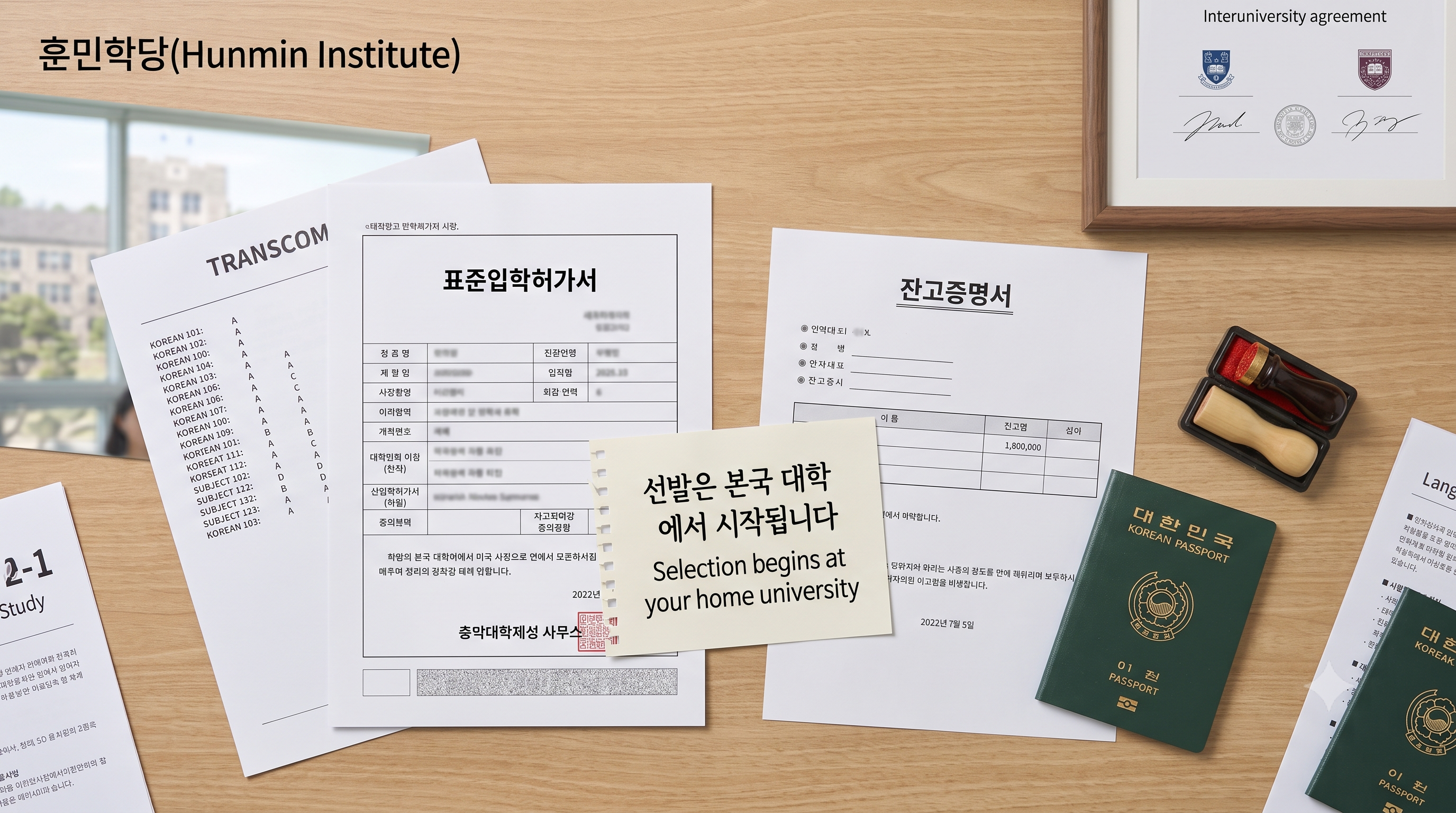
교환학생 비자는 소속 대학이 이미 절반을 해 준 상태에서 시작합니다. 절차의 출발점은 한국이 아니라 본국의 국제교류처이며, 그 과정에서 아래 다섯 낱말이 반복됩니다.
With an exchange visa, your home university has already done half the work. The process starts at your home international office, and these five words repeat throughout it.
| 한국어 Korean | 절차에서 무슨 뜻인가 What it means in the process |
|---|---|
| 협정 [hyeopjeong] Agreement | 두 대학이 맺은 약속이며 이것이 없으면 교환학생이 성립하지 않습니다 The pact between two universities; without it there is no exchange |
| 선발 [seonbal] Selection | 본국 대학이 갈 학생을 뽑는 절차입니다 Your home university choosing who goes |
| 재정 능력 증명 [jaejeong neungnyeok jeungmyeong] Proof of financial capability | 등록금과 체재비를 낼 수 있음을 보이는 서류입니다 Papers showing you can cover tuition and living costs |
| 예치 기간 [yechi gigan] Holding period | 그 돈이 계좌에 머물러 있어야 하는 기간입니다 How long the money must have sat in the account |
| 시간제 취업 허가 [siganje chwieop heoga] Part-time work permit | 일을 시작하기 전에 반드시 받아야 하는 승인입니다 The approval you must hold before starting work |
여기서 쓰는 표현부터 배워봅시다. 서류를 준비하며 오가는 말입니다.
Start with the expressions you will use here. These go back and forth while you prepare the papers.
| 듣는 말 Listening | 하는 말 Speaking |
|---|---|
| 선발 결과는 학교에서 알려드립니다. [seonbal gyeolgwaneun hakgyoeseo allyeodeurimnida] The school will tell you the selection result. | 언제 선발돼요? [eonje seonbaldwaeyo] When is the selection decided? |
| 잔고증명서는 30일 이내 것으로 주세요. [jangojeungmyeongseoneun samsibil inae geoseuro juseyo] The balance certificate must be within thirty days. | 잔고증명서 언제 떼야 해요? [jangojeungmyeongseo eonje ttaeya haeyo] When should I have it issued? |
| 예치 기간이 모자랍니다. [yechi gigani mojaramnida] The holding period is not long enough. | 얼마나 넣어 둬야 해요? [eolmana neoreo dwoya haeyo] How long does the money have to stay in? |
| 학교 확인을 먼저 받으세요. [hakgyo hwagineul meonjeo badeuseyo] Get your school confirmation first. | 아르바이트 언제부터 돼요? [areubaiteu eonjebuteo dwaeyo] From when can I work part-time? |
▶6개월 대기가 없다는 것이 도착하자마자 일할 수 있다는 뜻은 아닙니다.
No six-month wait does not mean you can work the day you land.
선발되면 한국 대학이 표준입학허가서를 발급합니다. 대학 총장 또는 학장 명의로 나오며 이것 없이는 신청이 시작되지 않습니다.
Once selected, the Korean university issues a certificate of admission under the name of the president or dean. Nothing begins without it.
재정 능력은 금액만의 문제가 아닙니다. 정부가 단일 금액을 못 박아 두지는 않았고 등록금과 체재비를 합쳐 일정 기간분을 입증하는 방식이 원칙이며, 대학과 공관이 일반적으로 요구하는 수준은 2천만 원 안팎입니다. 잔고증명서는 발급일로부터 30일 이내의 것만 유효한 것으로 봅니다.
Financial capability is not only about the number. The government sets no single figure; the principle is to prove tuition plus living costs for a set period, and universities and consulates commonly look for around twenty million won. A balance certificate is generally accepted only within thirty days of issue.
아르바이트에서는 어학연수 비자에 붙는 6개월 대기 기간이 없다는 점이 결정적입니다. 다만 외국인등록을 마치고 학교 확인을 받은 뒤 출입국관서의 허가가 나와야 근무를 시작할 수 있습니다.
For part-time work, the decisive point is that there is no six-month wait. Even so, you must complete alien registration, obtain your school confirmation, and receive permission from the immigration office before starting.
3. 어학연수 비자, 언어만 배우는 학생의 자격
The Language Visa, for Students Who Only Study the Language
어학연수 비자는 개인이 직접 신청하는 경로입니다. 대학 부설 어학원에 지원하고 합격한 뒤 비자를 신청합니다. 문턱이 낮은 대신 조건이 붙으며, 그 조건마다 알아 두어야 할 말이 있습니다.
The language visa is a route you take on your own: apply to a university language institute, get accepted, then apply for the visa. The threshold is lower, but conditions come attached, and each condition has a word to know.
| 한국어 Korean | 조건에서 무슨 뜻인가 What it means as a condition |
|---|---|
| 학력 [hangnyeok] Educational background | 고등학교 졸업 이상이어야 합니다 High school graduation or above is required |
| 무비자 90일 [mubija guusibil] Ninety visa-free days | 90일 이내 단기 과정은 비자 없이 들을 수 있습니다 A course of ninety days or less needs no visa |
| 6개월 경과 [yukgaewol gyeonggwa] Six months elapsed | 이 기간이 지나야 시간제 취업을 신청할 수 있습니다 Only after this can you apply for a work permit |
| 출석률 [chulseongnyul] Attendance rate | 기준을 넘지 못하면 허가와 연장이 막힙니다 Falling below the bar blocks permits and extensions |
| 근무처 [geunmucheo] Workplace | 어학연수생은 한 곳으로 한정됩니다 Language students are limited to one |
| 자격 변경 [jagyeok byeongyeong] Change of status | 출국하지 않고 유학 비자로 바꾸는 절차입니다 Switching to a degree visa without leaving Korea |
여기서 쓰는 표현부터 배워봅시다. 조건을 확인할 때 오가는 말입니다.
Start with the expressions you will use here. These go back and forth as you check the conditions.
| 듣는 말 Listening | 하는 말 Speaking |
|---|---|
| 6개월이 지나야 신청됩니다. [yukgaewori jinaya sincheongdoemnida] You may apply only after six months. | 6개월은 언제부터 세요? [yukgaeworeun eonjebuteo seyo] From when do the six months count? |
| 출석률이 기준에 못 미쳐요. [chulseongnyuri gijune mot michyeoyo] Your attendance is below the standard. | 출석률 몇 퍼센트예요? [chulseongnyul myeot peosenteuyeyo] What percentage is required? |
| 근무처는 한 곳만 됩니다. [geunmucheoneun han gotman doemnida] Only one workplace is allowed. | 두 군데는 안 되나요? [du gundeneun an doenayo] Are two places not possible? |
| 자격 변경은 국내에서 됩니다. [jagyeok byeongyeongeun gungnaeeseo doemnida] You can change status inside Korea. | 출국해야 하나요? [chulgukaeya hanayo] Do I have to leave the country? |
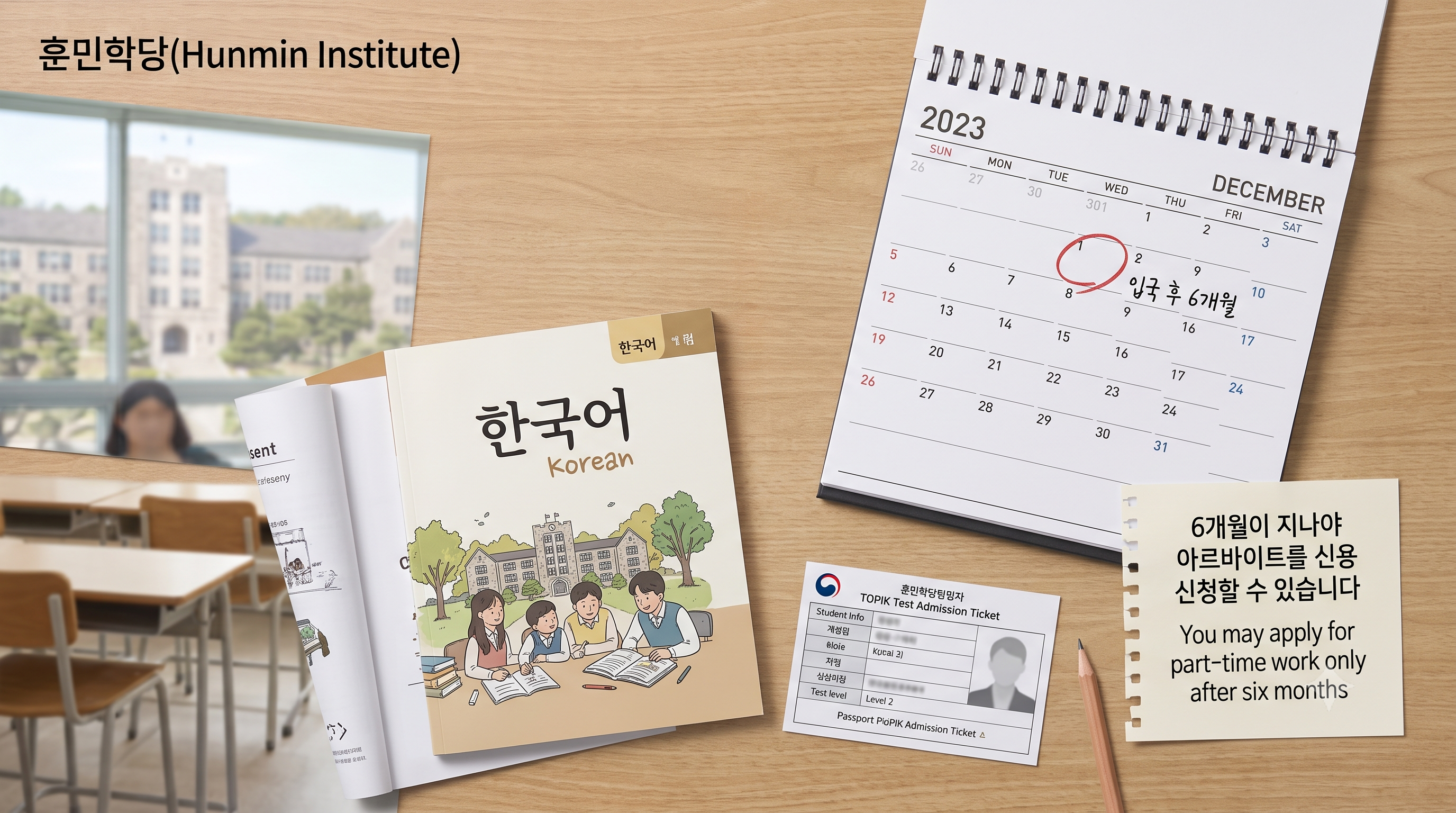
▶6개월이라는 시간이 어학연수생의 생활을 가릅니다.
Six months is what shapes a language student’s life.
어학연수 비자로 들어오면 입국일 또는 자격 변경일로부터 6개월이 지나야 시간제 취업 허가를 신청할 수 있고, 이 규정은 방학에도 동일하게 적용됩니다. 생활비를 벌면서 공부할 계획이라면 첫 6개월치 자금을 따로 준비해야 합니다.
On a language visa you may apply for a work permit only six months after your entry or status change date, and the rule applies during vacations too. If you planned to earn while studying, set aside funds for the first six months.
6개월이 지난 뒤에도 조건이 남습니다. 출석률이 기준을 넘어야 하고, 한국어 능력에 따라 허용 시간이 갈립니다. 허가 없이 일하면 범칙금에 그치지 않고 체류 기간 연장이 제한되거나 출국 명령을 받을 수 있으며 고용주도 함께 제재를 받습니다.
Conditions remain even after six months. Attendance must clear the bar, and permitted hours vary with your Korean ability. Working without permission brings more than a fine: extensions can be refused, a departure order issued, and employers penalized.
어학연수로 시작해 나중에 유학 비자로 바꾸는 길은 열려 있습니다. 출국하지 않고 국내에서 자격을 바꿀 수 있지만 어학원 이수 증명과 한국어 성적, 재정 능력 증명이 다시 요구됩니다.
You can begin on a language visa and later switch to a degree visa. The change can be made inside Korea without leaving, but proof of course completion, a language score, and financial capability will be required again.
4. 신청 전과 입국 후에 확인할 것
What to Check Before Applying and After Arrival
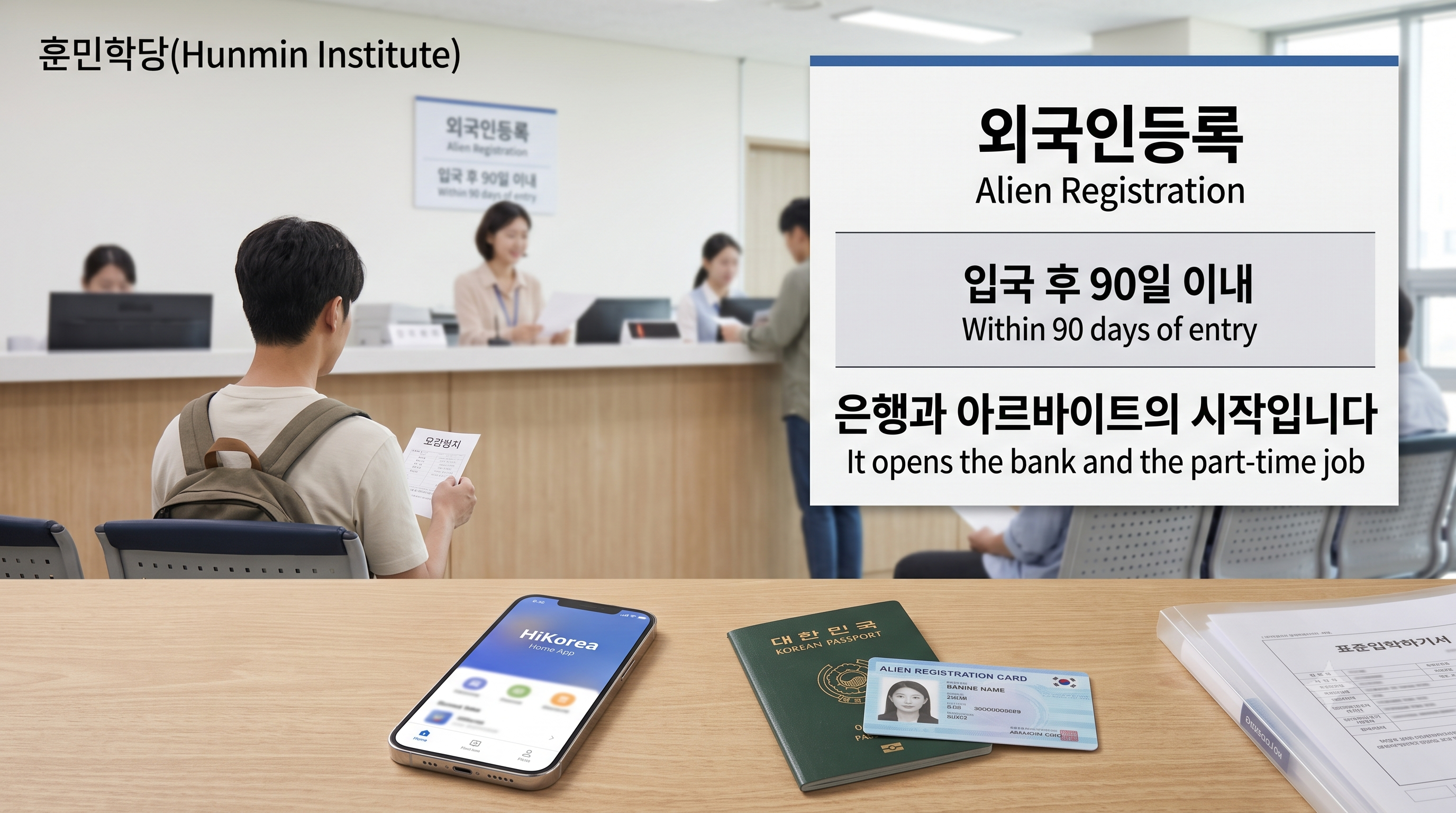
두 비자 모두 사증발급신청서, 여권, 수수료, 표준입학허가서 사본을 공통으로 준비합니다. 처리 기간은 근무일 기준 약 20일이며 최소 두 달 전에 시작해야 합니다. 창구에 서면 말이 필요합니다.
Both visas share the same core documents: the application form, your passport, the fee, and a copy of the certificate of admission. Processing takes about twenty business days, so begin at least two months ahead. At the counter you will need words.
여기서 쓰는 표현부터 배워봅시다. 출입국관서 창구에서 오가는 말입니다.
Start with the expressions you will use here. These go back and forth at the immigration counter.
| 듣는 말 Listening | 하는 말 Speaking |
|---|---|
| 번호표 뽑고 기다리세요. [beonhopyo ppopgo gidariseyo] Take a number and wait. | 외국인등록 하러 왔어요. [oegugindeungnok hareo wasseoyo] I am here for alien registration. |
| 여권 주세요. [yeogwon juseyo] Passport, please. | 서류가 이게 맞나요? [seoryuga ige mannayo] Are these the right documents? |
| 이 서류가 빠졌어요. [i seoryuga ppajyeosseoyo] This document is missing. | 뭐가 빠졌어요? [mwoga ppajyeosseoyo] Which one is missing? |
| 문자로 안내드릴게요. [munjaro annaedeurilgeyo] We will notify you by text. | 언제쯤 나와요? [eonjejjeum nawayo] About when will it be ready? |
▶관공서 창구의 첫 문장은 언제나 목적을 밝히는 말입니다.
The first sentence at any government counter states your purpose.
하러 왔어요는 목적을 밝히는 틀이고, 려고 하는데요는 하려는 의도를 부드럽게 여는 틀입니다. 앞의 낱말만 바꾸면 어느 창구에서나 쓰입니다.
The frame 하러 왔어요 states your purpose and 려고 하는데요 opens your intention gently. Change only the word in front and they work at any counter.
번호표는 한국 관공서와 은행의 기본 절차입니다. 들어가자마자 뽑지 않으면 아무리 기다려도 순서가 오지 않습니다.
The number ticket is standard at Korean offices and banks. If you do not pull one as you enter, your turn never comes.
외국인등록은 입국일로부터 90일 이내에 마쳐야 하며, 이 카드 없이는 은행 계좌 개설도 휴대전화 개통도 시간제 취업 허가도 진행되지 않습니다. 입국 후 모든 행정은 하이코리아에서 이루어지고 전화 문의는 1345입니다.
Alien registration must be completed within ninety days of entry, and without the card you cannot open a bank account, activate a phone, or obtain a work permit. All post-arrival administration runs through Hi Korea, and phone inquiries go to 1345.
두 비자를 가르는 것은 학점 하나이고, 생활을 가르는 것은 6개월이라는 시간입니다. 서류에서 만나는 낱말과 창구에서 쓰는 네 문장을 손에 넣으면 그다음은 절차만 남습니다. 비자 규정은 정책에 따라 바뀌므로 신청 전에 아래 참고 기관에서 확인하십시오.
One line of academic credit separates the two visas, and six months separates the lives that follow. Once the form words and the four counter sentences are yours, only the procedure is left. Visa rules change with policy, so confirm with the official sources below before you apply.
Next: Essential Korea Travel Apps Before Visiting ↗
토픽 맛보기
TOPIK Preview
유형: TOPIK Ⅰ 읽기 [34~39], 대화, 빈칸에 알맞은 것 고르기
Type: TOPIK I Reading [34–39], dialogue, choose the correct word for the blank
( )에 들어갈 말로 가장 알맞은 것을 고르십시오.
Choose the most appropriate word for the blank.
가: 무슨 일로 오셨어요? 나: 외국인등록 ( ) 왔어요.
A: What brings you here? B: I came ( ) alien registration.
① 하러
② 하고
③ 해서
④ 하면
Answer ▾
정답 ① 하러
Answer: ① 하러
러 왔어요는 온 목적을 밝히는 틀이므로 창구에서 용건을 말하는 이 자리에 맞습니다. ②는 지문과 같은 동사를 쓰면서 두 동작을 잇기만 해 진술이 어긋나고, ③은 이유나 순서만 밝혀 일부만 걸리며, ④는 그럴듯해 보여도 조건을 세우는 말이라 목적을 답하는 자리에 들어가지 않습니다. 흉내 낸 대문항은 TOPIK Ⅰ 읽기 [34~39]입니다.
러 왔어요 states the purpose of coming, which fits stating your business at a counter. ② uses the same verb but only links two actions, ③ gives a reason or sequence and so fits only in part, and ④ looks plausible but sets a condition rather than a purpose. The item type modeled here is TOPIK I Reading [34–39].
FAQ
Q1. 교환학생인데 어학연수 비자를 받아도 되나요?Answer ▾
Q1. I am an exchange student. Can I use a language visa instead?
A1. 권하지 않습니다. 학점을 받는 과정은 유학 비자 계열에 해당하며 자격과 목적이 맞지 않으면 심사에서 문제가 될 수 있습니다.
A1. It is not advisable. Credit-bearing programs fall under the degree visa group, and a mismatch between status and purpose can cause problems during review.
Q2. 어학연수 비자로 처음부터 아르바이트를 할 수 있나요?Answer ▾
Q2. Can I work part-time from the start on a language visa?
A2. 할 수 없습니다. 입국일 또는 자격 변경일로부터 6개월이 지나야 신청할 수 있고 이 규정은 방학에도 동일하게 적용됩니다.
A2. No. You may apply only six months after your entry or status change date, and the rule applies during vacations too.
Q3. 외국인등록증은 언제까지 받아야 하나요?Answer ▾
Q3. By when do I need the alien registration card?
A3. 입국일로부터 90일 이내에 등록하셔야 합니다. 이 카드가 없으면 계좌 개설과 취업 허가 신청이 불가능합니다.
A3. You must register within ninety days of entry. Without the card you cannot open a bank account or apply for a work permit.
Q4. 어학연수에서 유학 비자로 바꾸면 6개월을 다시 기다리나요?Answer ▾
Q4. If I switch to a degree visa, does the six months restart?
A4. 규정의 기준은 입국일 또는 자격 변경일입니다. 체류 이력과 변경 시점에 따라 달라지므로 1345에 확인하시기 바랍니다.
A4. The rule counts from your entry date or status change date. It depends on your record and timing, so check with 1345.
Vocabulary and Pronunciation for Foreigners
| No | Korean | Romanisation | Meaning |
|---|---|---|---|
| 1 | 사증 | sajeung | (n) visa, official term [ˈviːzə] |
| 2 | 체류 자격 | cheryu jagyeok | (n) status of stay [ˈsteɪtəs] |
| 3 | 시간제 취업 | siganje chwieop | (n) part-time work, official term [pɑːrt taɪm] |
| 4 | 외국인등록증 | oegugindeungnokjeung | (n) alien registration card [kɑːrd] |
| 5 | 잔고증명서 | jangojeungmyeongseo | (n) bank balance certificate [ˈbæləns] |
| ▾ 단어 50개 더 보기 Show 50 more ↗ | |||
The blog page has limits of space and function, so only five words are shown here. The rest of the word list, the audio, the sentences and tables, the FAQ, the worksheet, the TOPIK questions and the lesson video are on the Hunmin Institute website ↗, free for blog subscribers.
참고 기관
Official Sources
법무부 출입국·외국인정책본부 하이코리아 ↗
Korea Immigration Service, Ministry of Justice
https://www.hikorea.go.kr
기관 설명 보기 About this institute ▾
This is the agency that runs residence statuses and part-time work permits. It has an English site, and the 1345 line offers interpretation. Permitted hours and requirements change by notice, so check before you apply.
한국유학종합시스템 스터디인코리아 ↗
Study in Korea, National Institute for International Education
https://www.studyinkorea.go.kr
기관 설명 보기 About this institute ▾
This is where you search university and language institute programs and check the certified university list. It has an English site gathering requirements and application schedules by school.
※ 본 콘텐츠(원고, 이미지, 예문 포함)는 저작권법에 의해 보호받는 훈민학당의 저작물입니다. 무단 복제, 전재, 재배포 및 AI 학습 데이터로의 이용을 금합니다.
This content (manuscript, images, and example sentences) is the copyrighted property of Hunmin Institute, protected under copyright law. Unauthorized copying, reproduction, redistribution, and use as AI training data are prohibited.
'K-Life' 카테고리의 다른 글
| Opening a Bank Account in Korea as a Foreigner (0) | 2026.08.08 |
|---|---|
| Korean Lease Contract Part 2: Protect Your Deposit (0) | 2026.08.08 |
| How to Find Housing in Korea Part 1: Room Types (0) | 2026.08.07 |
| Alien Registration Card Korea: The 90-Day Deadline (0) | 2026.08.04 |
| Essential Korea Travel Apps Before Visiting (0) | 2026.07.22 |


