
Alien Registration Card Korea: The 90-Day Deadline (외국인등록증 발급, 90일이라는 시계는 입국 도장을 찍는 순간 돌아갑니다)
The alien registration card puts your name and address into Korea's system.
Here you learn the Korean spoken on the HiKorea screen and at the counter.
외국인등록증은 카드 한 장이 아니라 한국이라는 시스템에 내 이름과 주소를 올리는 절차입니다.
이 글에서는 하이코리아 예약 화면과 출입국 창구에서 실제로 오가는 한국어를 익힙니다.

You can check the vocabulary list summarizing today's key words at the bottom of this post.
Previous: Essential Korea Travel Apps You Must Download Before Visiting
■ 이 글에서 배우는 한국어
The Korean You Learn in This Post
외국인등록 창구에서는 짧은 문장 몇 개가 오갑니다.
At the alien registration counter, only a few short sentences go back and forth.
아래 여섯 문장을 먼저 눈에 담고 본문으로 들어가십시오.
Take in these six sentences first, then move into the main text.
| 알아들어야 할 말 What You Must Understand |
말해야 할 말 What You Must Say |
|---|---|
| 체류지 입증 서류 가져오셨어요? Did you bring the document proving your place of residence? |
외국인등록 신청하러 왔습니다. I am here to apply for alien registration. |
| 여기는 관할이 아니라서 접수가 안 됩니다. This is not your jurisdiction, so we cannot accept your application here. |
서류가 뭐가 더 필요한가요? What other documents do I need? |
| 서류가 하나 빠졌네요. 보완해서 다시 오셔야 합니다. One document is missing. You need to bring it and come again. |
언제 받을 수 있나요? When can I receive it? |
왼쪽 세 문장은 3번 소단락에서, 오른쪽 세 문장은 4번 소단락에서 나머지 문장과 함께 다룹니다.
The three sentences on the left are covered in section 3, and those on the right in section 4, together with the rest.
1. 90일이라는 시계
The Clock That Starts at 90 Days

한국에 91일 이상 머무를 예정이라면 입국한 날부터 90일 안에 외국인등록을 해야 합니다.
If you plan to stay in Korea for 91 days or more, you must complete alien registration within 90 days of your entry.
유학이든 취업이든 결혼이든 체류자격은 관계없습니다.
It does not matter whether your status is study, work, or marriage.
이 절차를 마쳐야 외국인등록번호가 부여되고, 그 번호가 있어야 은행과 통신, 건강보험처럼 이름으로 걸리는 모든 계약이 열립니다.
Only after this step do you receive a foreign resident registration number, and only with that number do contracts in your name open up, such as banking, mobile service, and health insurance.
많은 사람이 이 절차를 카드 발급으로 이해합니다.
Many people think of this process as getting a card issued.
그러나 외국인등록의 본질은 내 주소를 국가에 등록하는 일입니다.
In substance, however, alien registration is the act of registering your address with the state.
그래서 신청서에는 반드시 체류지, 곧 내가 사는 곳을 적어야 하고 그것을 증명하는 서류가 필요합니다.
That is why the application requires your place of residence, the address where you actually live, along with a document that proves it.
집이 먼저이고 등록증이 나중인 이유가 여기 있습니다.
This is why housing comes first and the card comes second.
| 항목 Item |
내용 Details |
|---|---|
| 등록 대상 Who must register |
91일 이상 체류할 예정인 외국인 Any foreigner staying 91 days or more |
| 신청 기한 Deadline |
입국한 날부터 90일 이내 Within 90 days of the entry date |
| 수수료 Fee |
3만 5천 원 KRW 35,000 |
| 신청 장소 Where to apply |
체류지를 관할하는 출입국·외국인청 또는 사무소 The immigration office with jurisdiction over your address |
| 준비 서류 Documents |
신청서, 여권, 컬러 사진, 체류지 입증 서류, 체류자격별 추가 서류 Application form, passport, color photo, proof of residence, and documents required for your status |
| 방문 방법 How to visit |
하이코리아 방문예약이 원칙 A HiKorea visit reservation is the rule |
수수료는 2025년 1월 전자칩이 내장된 등록증이 도입되면서 3만 원에서 3만 5천 원으로 올랐습니다.
The fee rose from KRW 30,000 to KRW 35,000 in January 2025, when cards with an embedded IC chip were introduced.
금액과 서류는 제도가 바뀌면 함께 바뀌므로 신청 전에 하이코리아에서 한 번 확인하십시오.
Fees and documents change when the rules change, so check HiKorea once before you apply.
체류자격에 따라 등록이 면제되거나 외국인등록이 아니라 국내거소신고로 갈리는 경우가 있습니다.
Depending on your status, registration may be exempted, or your path may branch to a domestic residence report instead of alien registration.
외교나 공무 목적의 체류가 그렇고, 외국국적동포는 거소신고 절차를 밟습니다.
Diplomatic and official stays fall in that group, and overseas Koreans follow the residence report procedure.
본인이 어느 쪽인지는 외국인종합안내센터 1345에서 먼저 확인하십시오.
Check which one applies to you by calling the Immigration Contact Center at 1345 first.
기한을 넘기면 가벼운 문제로 끝나지 않습니다.
Missing the deadline is not a light matter.
체류지 변경 신고를 빠뜨린 경우가 과태료 대상인 것과 달리, 외국인등록을 하지 않은 것은 출입국관리법의 벌칙 조항이 걸리는 사안입니다.
Failing to report a change of address draws an administrative fine, but failing to register at all falls under the penalty provisions of the Immigration Act.
실무에서는 통고처분으로 범칙금이 부과되는 경우가 많고 금액은 위반 기간과 정황에 따라 갈립니다.
In practice a penalty fine is often imposed through a notice disposition, and the amount varies with the length of the violation and the circumstances.
정확한 값은 사안별로 다르므로 1345나 관할 사무소에서 확인하십시오.
The exact amount differs case by case, so confirm it with 1345 or your local office.
요점은 하나입니다. 89일째까지 미루지 마십시오.
The point is simple. Do not put this off until day 89.
서류가 하나라도 빠지면 다시 예약을 잡아야 하고, 그 사이에 90일이 지나갑니다.
If even one document is missing you have to book another appointment, and the 90 days pass while you wait.
2. 하이코리아 예약 화면에서 만나는 한국어
The Korean on the HiKorea Booking Screen

출입국·외국인청은 예약 없이 가는 곳이 아닙니다.
An immigration office is not a place you walk into without an appointment.
하이코리아에서 방문예약을 잡는 것이 원칙이며, 아직 등록증이 없는 신규 입국자는 여권번호로 예약할 수 있습니다.
Booking a visit on HiKorea is the rule, and new arrivals without a card yet can book with their passport number.
문제는 이 화면이 행정 한국어로 채워져 있다는 점입니다.
The problem is that the screen is filled with administrative Korean.
영어 화면을 선택해도 서류 명칭은 한국어로 적혀 나오는 경우가 많습니다.
Even on the English screen, document names often appear in Korean.
여기서 쓰는 표현부터 배워봅시다.
Let us start with the expressions used here.
| 화면에 뜨는 말 What Appears on the Screen |
뜻 Meaning |
|---|---|
| 방문예약 bangmun-yeyak |
사무소에 가기 전에 날짜와 시간을 잡는 절차 Booking a date and time before you go to the office |
| 민원업무 선택 minwon-eopmu seontaek |
무슨 일로 방문하는지 고르는 항목 Selecting what you are coming to do |
| 관할 기관 gwanhal gigwan |
내 주소를 담당하는 사무소 The office responsible for your address |
| 체류지 cheryuji |
한국에서 실제로 사는 곳의 주소 The address where you actually live in Korea |
| 신청인 sincheongin |
신청하는 본인. 여권에 적힌 영문 이름 그대로 입력 The applicant. Enter the English name exactly as in your passport |
| 예약 확인·취소 yeyak hwagin, chwiso |
잡아 둔 예약을 다시 보거나 없애는 메뉴 The menu to review or cancel a booking you made |
가장 많이 걸리는 항목은 관할입니다.
The item that trips people up most is jurisdiction.
관할은 가까운 곳이 아니라 내 주소를 담당하는 곳을 뜻합니다.
Jurisdiction means the office in charge of your address, not the office nearest to you.
서울에 살아도 자치구에 따라 담당 사무소가 나뉘므로, 지도에서 가까운 사무소를 골랐다가 창구에서 접수를 거절당하는 일이 실제로 자주 생깁니다.
Even within Seoul the office depends on your district, so choosing the closest one on the map and being turned away at the counter happens often.
예약 화면에서 사무소를 고를 때는 내가 사는 동네가 어느 사무소 관할인지부터 확인해야 합니다.
When choosing an office on the booking screen, first check which office covers your neighborhood.
예약 슬롯이 열리지 않아 막히는 것도 흔한 병목입니다.
Another common bottleneck is that no booking slots are open.
대도시 사무소는 특히 그렇습니다.
This is especially true at offices in large cities.
취소분이 다시 풀리는 시간대가 있으니 하루 중 여러 번 접속해 보는 편이 낫고, 그래도 자리가 없으면 1345로 상담해 대안을 확인하십시오.
Cancelled slots are released at certain times, so it helps to check several times a day, and if nothing opens, call 1345 to ask about alternatives.
관할 사무소에 직접 문의하면 별도 창구 운영 여부를 알려주는 경우도 있습니다.
Contacting your local office directly may also reveal whether a separate counter is running.
예약을 잡고 사무소에 도착했다면 첫 마디는 이것입니다. "방문 예약했습니다."
Once you have a booking and arrive at the office, this is your first line. "I have a visit reservation."
3. 창구에서 듣게 되는 말
What You Will Hear at the Counter
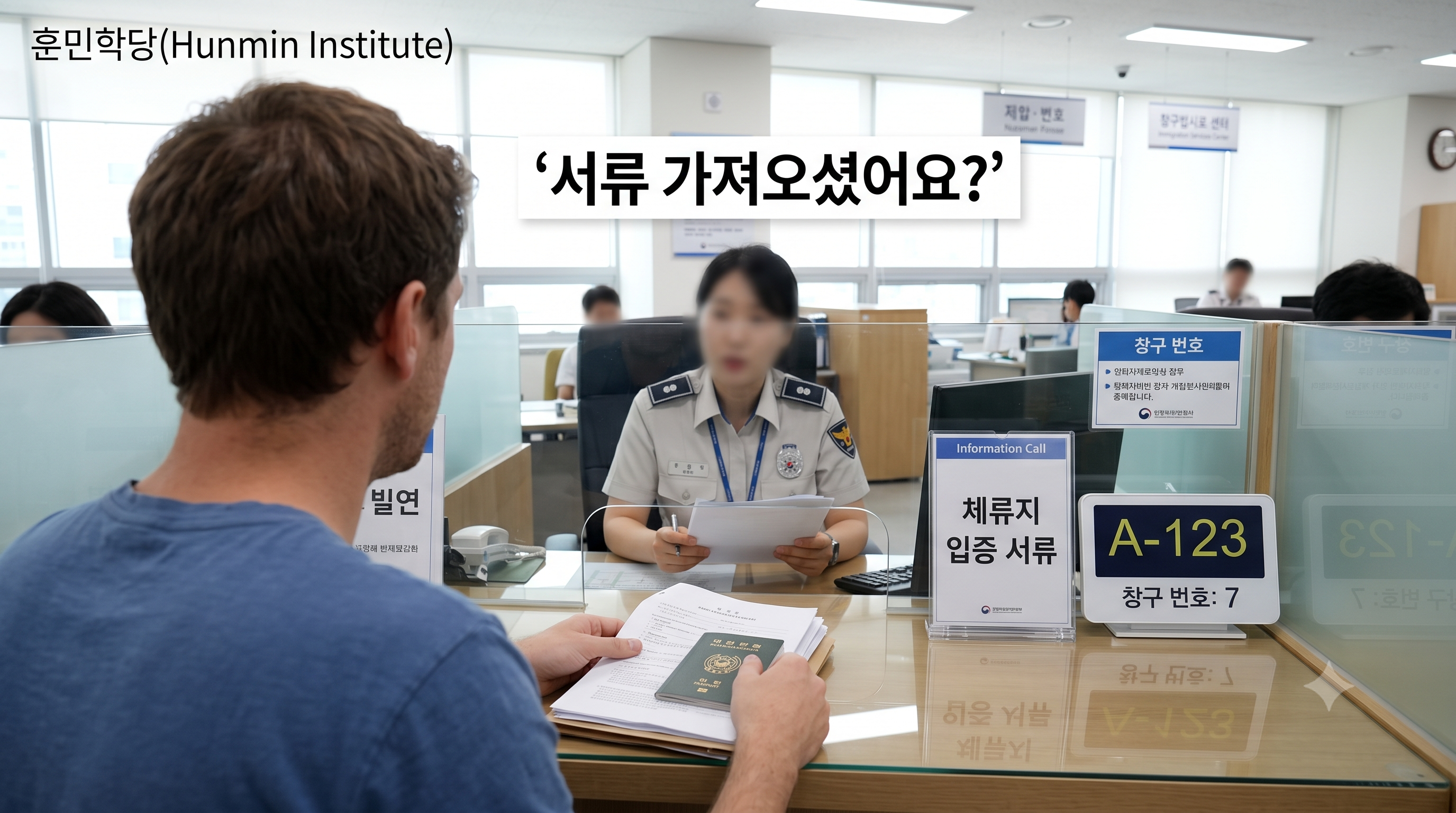
창구에서 주무관이 던지는 문장은 짧고 빠릅니다.
The sentences an officer throws at you across the counter are short and fast.
그리고 대부분 명사 하나에 무게가 실려 있습니다.
And in most of them, the weight sits on a single noun.
그 명사를 못 들으면 문장 전체를 놓칩니다.
Miss that noun and you lose the whole sentence.
여기서 쓰는 표현부터 배워봅시다.
Let us start with the expressions used here.
| 창구에서 듣는 말 What You Hear |
무슨 뜻인가 What It Means |
|---|---|
| 체류지 입증 서류 가져오셨어요? Did you bring the document proving your place of residence? |
임대차계약서나 숙소제공확인서를 내라는 뜻 Hand over your lease or a housing confirmation letter |
| 여기는 관할이 아니라서 접수가 안 됩니다. This is not your jurisdiction, so we cannot accept your application here. |
주소를 담당하는 다른 사무소로 가야 한다는 뜻 You must go to the office that covers your address |
| 지문 등록하겠습니다. 손가락 올려 주세요. We will register your fingerprints. Please place your finger here. |
기계에 손가락을 대라는 안내 Put your finger on the scanner |
| 수수료 납부하고 오세요. Please pay the fee and come back. |
지정된 곳에서 돈을 내고 영수증을 가져오라는 뜻 Pay at the designated point and bring the receipt |
| 서류가 하나 빠졌네요. 보완해서 다시 오셔야 합니다. One document is missing. You need to bring it and come again. |
거절이 아니라 빠진 서류만 채워 오라는 안내 Not a rejection. Just bring the missing document |
| 접수증 잃어버리지 마세요. 받으실 때 필요합니다. Do not lose the receipt. You will need it when you collect the card. |
등록증을 찾을 때 제시해야 하는 종이 The paper you must show when picking up the card |
"보완해서 다시 오셔야 합니다"를 거절로 받아들이는 학습자가 많습니다.
Many learners hear "you need to supplement it and come again" as a rejection.
그러나 이 말은 신청이 거부되었다는 뜻이 아니라 빠진 서류를 채워 다시 오라는 안내입니다.
It does not mean your application was denied. It means to fill the gap and return.
보완이라는 단어 자체가 부족한 부분을 메운다는 뜻이며, 이 경우 처음부터 다시 하는 것이 아니라 그 서류만 들고 가면 됩니다.
The word bowan means filling in what is missing, and in this case you do not start over. You simply bring that one document.
문장의 틀도 함께 익혀 두면 다른 창구에서 그대로 쓸 수 있습니다.
Learn the sentence patterns as well and you can reuse them at any other counter.
"[명사] 가져오셨어요?"는 서류를 확인하는 물음이고, "여기는 [명사]이 아니라서 [명사]가 안 됩니다"는 조건이 맞지 않아 처리할 수 없다는 통보입니다.
"Did you bring [noun]?" is a check on your documents, and "this is not [noun], so [noun] is not possible" tells you a condition is not met.
은행과 주민센터, 병원 접수처에서도 같은 틀이 반복됩니다.
The same patterns repeat at banks, community centers, and hospital reception desks.
지문 등록은 놀랄 일이 아닙니다.
Fingerprint registration is nothing to be alarmed about.
열일곱 살 이상이면 등록 절차에 지문과 얼굴 정보 제공이 포함되며, 창구 직원이 손가락을 올려 달라고 안내합니다.
For applicants aged 17 and over the process includes providing fingerprints and facial information, and the officer will ask you to place your finger on the scanner.
어느 손가락인지는 사무소의 장비와 절차에 따라 지시가 달라지므로 그 자리의 안내를 따르면 됩니다.
Which finger depends on the equipment and procedure at that office, so simply follow the instruction you are given.
4. 창구에서 해야 할 말
What You Must Say at the Counter
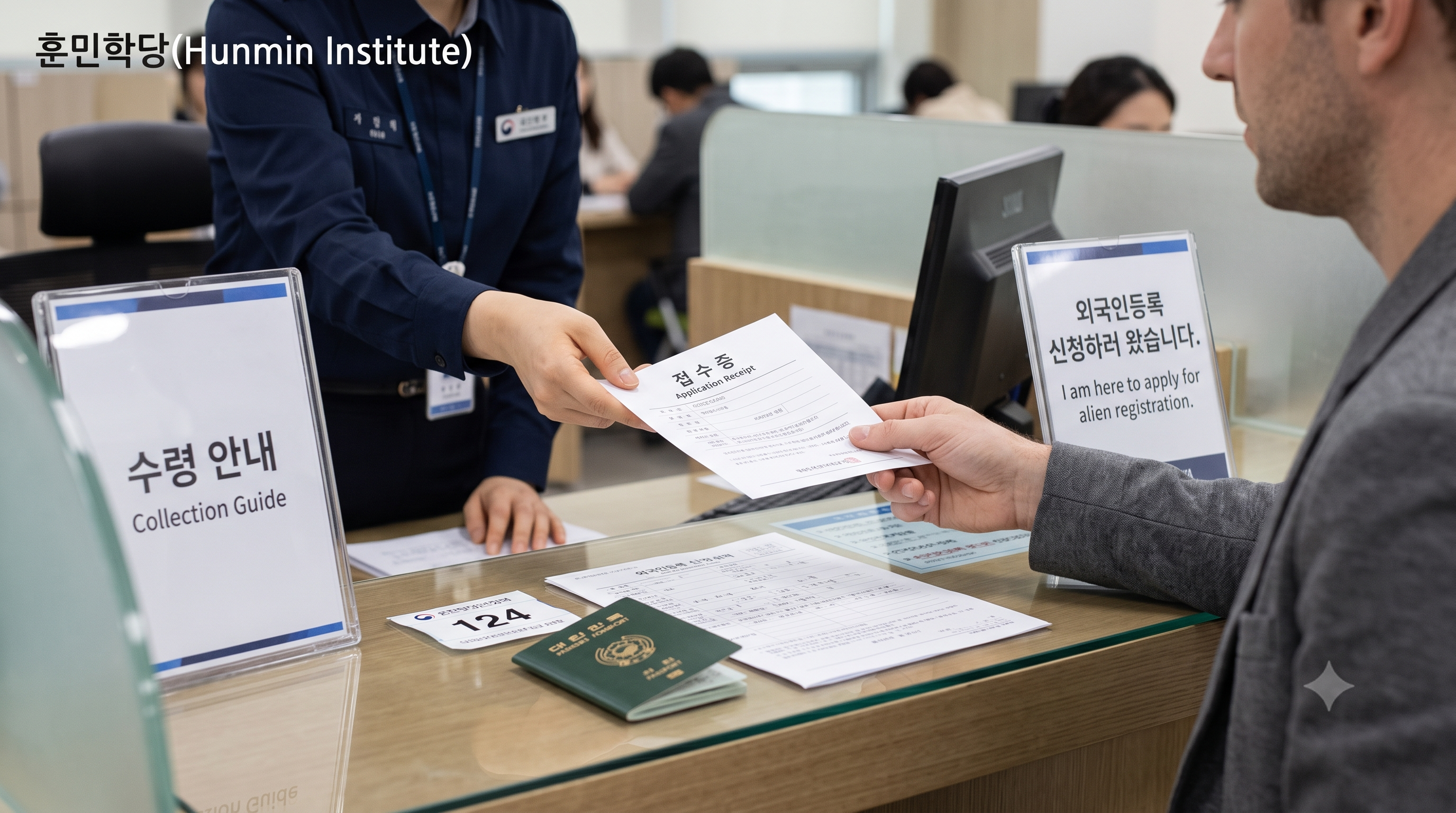
듣기만으로는 절반입니다.
Listening alone gets you only halfway.
신청 목적을 말하고, 주소를 확인해 주고, 언제 받는지 물어야 창구가 끝납니다.
You finish at the counter by stating your purpose, confirming your address, and asking when you can collect the card.
여기서 쓰는 표현부터 배워봅시다.
Let us start with the expressions used here.
| 이렇게 말하십시오 Say It Like This |
언제 쓰나 When to Use It |
|---|---|
| 외국인등록 신청하러 왔습니다. I am here to apply for alien registration. |
번호표를 뽑고 창구에 앉은 첫 마디 Your first line after taking a number and sitting down |
| 방문 예약했습니다. I have a visit reservation. |
입구 안내 직원이 방문 목적을 물을 때 When staff at the entrance ask why you are there |
| 이 주소로 등록해 주세요. Please register this address. |
체류지를 확인받을 때 When your place of residence is being confirmed |
| 서류가 뭐가 더 필요한가요? What other documents do I need? |
보완 안내를 들었을 때 When you are told something is missing |
| 언제 받을 수 있나요? When can I receive it? |
접수가 끝나고 수령 시점을 물을 때 After filing, to ask when the card is ready |
| 우편으로 받을 수 있나요? Can I receive it by mail? |
수령 방법을 고를 때 When choosing how to collect the card |
"외국인등록 신청하러 왔습니다"의 틀은 "[명사]하러 왔습니다"입니다.
The pattern behind "I am here to apply for alien registration" is "I am here to do [noun]."
목적을 밝히는 가장 짧은 문장이며, 명사만 바꾸면 어디서든 통합니다.
It is the shortest way to state your purpose, and swapping the noun makes it work anywhere.
은행에서는 계좌 개설, 주민센터에서는 전입신고, 병원에서는 접수가 그 자리에 들어갑니다.
At a bank it becomes opening an account, at a community center a move-in report, at a hospital registration.
묻는 문장도 틀로 익혀 두십시오.
Learn the questions as patterns too.
"언제 [동사]-을 수 있나요?"는 시점을 묻는 틀이고, "[명사]이 뭐가 더 필요한가요?"는 부족한 것을 확인하는 틀입니다.
"When can I [verb]?" asks about timing, and "what other [noun] do I need?" checks what is missing.
두 문장이면 대부분의 행정 창구에서 필요한 질문이 해결됩니다.
Those two cover most of what you need to ask at any administrative counter.
접수가 끝나면 접수증을 받습니다.
Once your application is filed, you receive a receipt.
이 종이가 카드보다 먼저 쓰입니다.
That piece of paper goes to work before the card does.
접수 단계에서 외국인등록번호가 부여되는 것이 일반적이며, 카드 실물이 나오기까지는 보통 몇 주가 걸립니다.
A foreign resident registration number is generally assigned at the filing stage, while the physical card usually takes a few weeks.
정확한 처리 기간과 수령 방법은 사무소마다 다르므로 창구에서 직접 확인하십시오.
Processing time and collection methods differ by office, so confirm them at the counter.
다만 실물 카드가 없는 동안에는 계좌 개설이나 통신 계약처럼 신분 확인이 필요한 절차가 제한될 수 있으니, 그 기간을 감안해 일정을 잡는 편이 안전합니다.
While you wait, procedures that require identity verification, such as opening an account or signing a phone contract, may be limited, so plan your schedule around that gap.
5. 카드를 받은 다음부터, 이번엔 15일
After You Get the Card, the Clock Says 15 Days
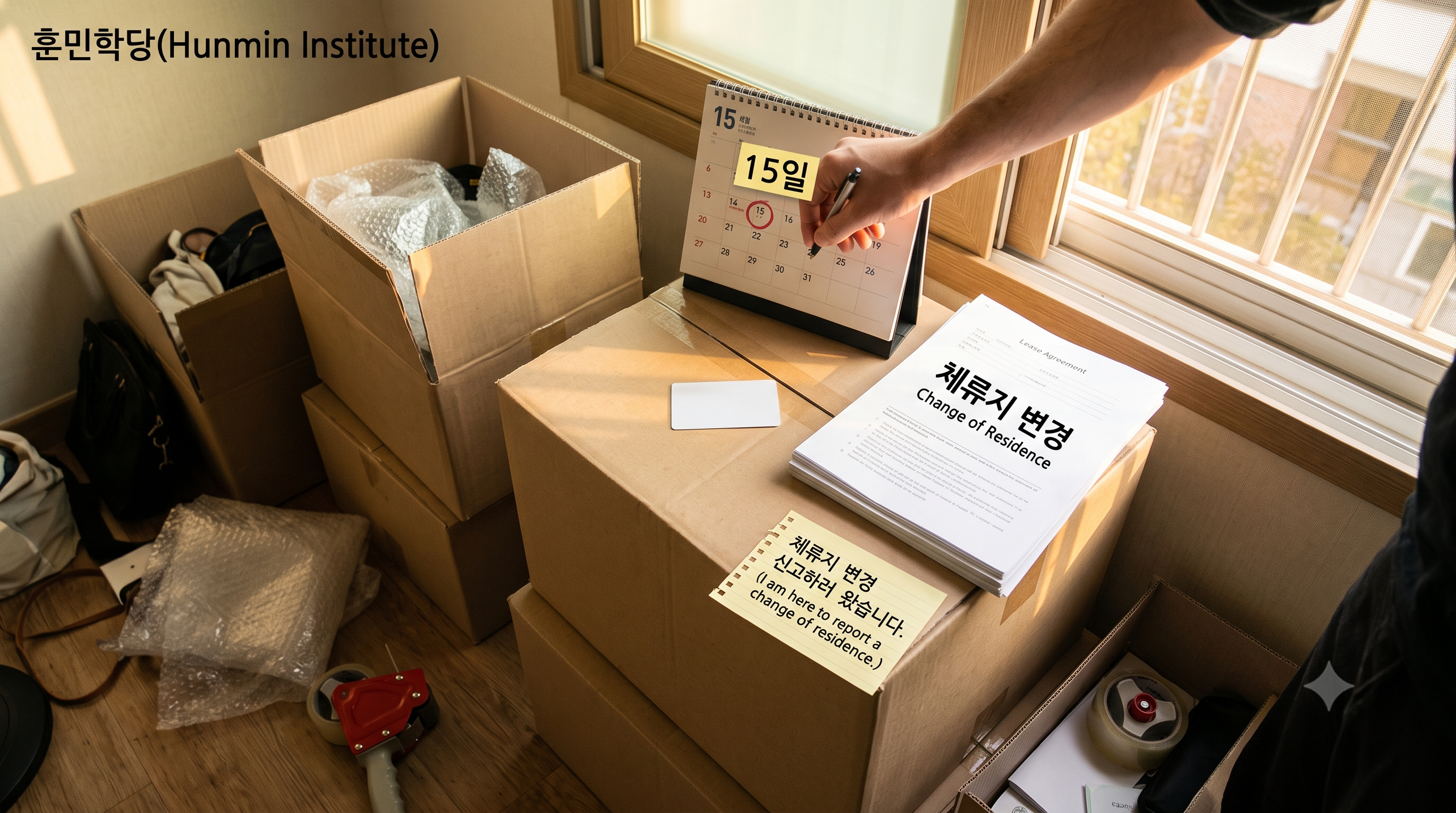
90일로 시작한 시계는 카드를 받는다고 멈추지 않습니다.
The clock that started at 90 days does not stop when the card arrives.
다음 시계는 15일입니다.
The next one is set to 15 days.
여기서 쓰는 표현부터 배워봅시다.
Let us start with the expressions used here.
| 상황 Situation |
기한 Deadline |
어디서 하나 Where to File |
|---|---|---|
| 이사했을 때, 체류지 변경 신고 Moving house, report of change of residence |
15일 이내 Within 15 days |
하이코리아 또는 관할 사무소 HiKorea or your local immigration office |
| 이름, 국적, 여권 번호가 바뀌었을 때 Change of name, nationality, or passport number |
15일 이내 Within 15 days |
관할 사무소 Your local immigration office |
| 등록증을 잃어버리거나 훼손했을 때 Lost or damaged card |
지체 없이 Without delay |
관할 사무소. 기한과 수수료는 1345에서 확인 Your local office. Check the deadline and fee at 1345 |
이사를 하면 전입한 날부터 15일 안에 체류지 변경 신고를 해야 합니다.
When you move, you must report the change of residence within 15 days of moving in.
기산점은 계약한 날이 아니라 실제로 들어가 산 날입니다.
The count starts from the day you actually moved in, not the day you signed the contract.
계약서에 적힌 날짜를 기준으로 계산했다가 기한을 넘기는 사례가 여기서 나옵니다.
Counting from the date on the contract is exactly how people miss the deadline.
내국인의 전입신고 기한인 14일과 헷갈리는 경우도 많은데, 외국인에게 적용되는 기한은 15일입니다.
Many confuse it with the 14-day move-in report that applies to Korean nationals, but for foreign residents the deadline is 15 days.
이름이나 국적, 여권 번호처럼 등록증에 적힌 사항이 바뀌었을 때도 같은 15일이 적용됩니다.
The same 15 days apply when details printed on the card change, such as name, nationality, or passport number.
신고를 빠뜨리면 100만 원 이하의 과태료가 부과될 수 있고, 실제로는 체류기간 연장 창구에서 뒤늦게 적발되는 경우가 많습니다.
Missing the report can bring an administrative fine of up to KRW 1,000,000, and in practice it is often caught later at the extension counter.
연장 심사에서 미신고 기록이 함께 드러나면 절차가 길어집니다.
When an unreported change surfaces during an extension review, the process drags out.
기한을 이미 넘겼다면 적발을 기다리지 말고 먼저 신고하십시오.
If you have already missed the deadline, report it yourself instead of waiting to be caught.
자진해서 신고하고 정해진 기간 안에 납부하면 감경을 받을 여지가 있습니다.
Reporting voluntarily and paying within the set period may reduce the amount.
신고 자체는 하이코리아 온라인으로 처리할 수 있는 경우가 많지만, 자격과 상황에 따라 방문이 필요할 수 있으니 신청 전에 확인하십시오.
The report can often be filed online through HiKorea, but a visit may be required depending on your status and situation, so check before you file.
사무소를 찾아갔다면 이렇게 말하면 됩니다. "체류지 변경 신고하러 왔습니다."
If you go to the office, this is what you say. "I am here to report a change of residence."
외국인등록은 카드를 받는 일이 아니라 내 주소와 신분을 한국의 행정 체계에 올려 두고 계속 최신 상태로 유지하는 일입니다.
Alien registration is not about receiving a card. It is about placing your address and identity in Korea's administrative system and keeping them current.
90일과 15일, 두 숫자와 창구에서 오가는 문장 몇 개만 손에 쥐고 있으면 이 절차는 어렵지 않습니다.
Hold on to two numbers, 90 and 15, and a handful of counter sentences, and this process is not difficult.
오늘 나온 행정 어휘는 아래 단어장에서 다시 확인하십시오.
Review today's administrative vocabulary in the word list below.
■ FAQ
Q1. 등록증이 나오기 전에 한국을 떠나도 되나요?
Q1. Can I leave Korea before the card is issued?
A1. 신청 후 출국 계획이 있다면 접수 단계에서 반드시 창구에 알리십시오. 체류자격과 출국 기간에 따라 재입국 절차가 달라지고, 수령 방법도 조정해야 할 수 있습니다. 판단이 서지 않으면 1345에서 본인 자격 기준으로 확인하십시오.
A1. If you plan to travel after filing, tell the counter at the time of application. Re-entry procedures differ by status and length of absence, and your collection method may need adjusting. If you are unsure, check with 1345 based on your own status.
Q2. 등록증을 우편으로 받을 수 있나요?
Q2. Can the card be sent to me by mail?
A2. 사무소에 따라 방문 수령과 등기우편 수령이 모두 운영됩니다. 신청할 때 선택하는 방식이므로 창구에서 "우편으로 받을 수 있나요?"라고 물어보십시오. 우편 수령을 선택하면 주소가 정확해야 하므로 신청서의 체류지 표기를 다시 확인하는 것이 좋습니다.
A2. Some offices offer both in-person pickup and registered mail. You choose when you apply, so ask at the counter, "Can I receive it by mail?" If you choose mail, your address must be exact, so double-check the residence details on your form.
Q3. 외국인등록증 없이 은행 계좌를 만들 수 있나요?
Q3. Can I open a bank account without an alien registration card?
A3. 여권만으로 개설이 가능한 상품이 있지만 이체 한도나 온라인 뱅킹 사용에 제한이 걸리는 경우가 많습니다. 은행과 지점마다 기준이 다르므로 방문 전에 확인하고, 제한 없는 계좌를 원한다면 등록증이 나온 뒤에 다시 방문하는 편이 낫습니다.
A3. Some accounts can be opened with a passport alone, but transfer limits and online banking restrictions are common. Standards differ by bank and branch, so check in advance. For an account without limits, return once your card is issued.
Q4. 예약한 날짜에 가지 못하면 어떻게 하나요?
Q4. What if I cannot make my booked appointment?
A4. 하이코리아에서 예약을 취소하고 다시 잡을 수 있습니다. 취소하지 않고 방문하지 않으면 이후 예약에 불이익이 생길 수 있으니 반드시 취소 처리를 하십시오. 90일 기한이 얼마 남지 않았다면 취소 전에 1345로 상황을 알리고 방법을 확인하십시오.
A4. You can cancel and rebook on HiKorea. Failing to show up without cancelling may count against future bookings, so always cancel properly. If your 90-day deadline is close, call 1345 before cancelling and confirm your options.
■ Vocabulary and Pronunciation for Foreigners
1. 외국인등록증(oegugin-deungnokjeung) : (n.) alien registration card [ˈeɪliən ˌredʒɪˈstreɪʃən kɑːrd]
2. 외국인등록번호(oegugin-deungnokbeonho) : (n.) foreign resident registration number [ˈfɒrən ˈrezɪdənt ˌredʒɪˈstreɪʃən ˈnʌmbər]
3. 체류(cheryu) : (n.) stay [steɪ]
4. 체류지(cheryuji) : (n.) place of residence [pleɪs əv ˈrezɪdəns]
5. 체류자격(cheryu-jagyeok) : (n.) status of stay [ˈsteɪtəs əv steɪ]
6. 입국(ipguk) : (n.) entry into a country [ˈentri]
7. 출국(chulguk) : (n.) departure from a country [dɪˈpɑːrtʃər]
8. 신청(sincheong) : (n.) application [ˌæplɪˈkeɪʃən]
9. 신고(singo) : (n.) official report [rɪˈpɔːrt]
10. 접수(jeopsu) : (n.) intake of an application [ɪnˈteɪk]
11. 접수증(jeopsujeung) : (n.) application receipt [ˌæplɪˈkeɪʃən rɪˈsiːt]
12. 수수료(susuryo) : (n.) fee [fiː]
13. 납부(nabu) : (n.) payment [ˈpeɪmənt]
14. 관할(gwanhal) : (n.) jurisdiction [ˌdʒʊrɪsˈdɪkʃən]
15. 출입국(churipguk) : (n.) immigration [ˌɪmɪˈɡreɪʃən]
16. 사무소(samuso) : (n.) office [ˈɒfɪs]
17. 방문예약(bangmun-yeyak) : (n.) visit reservation [ˈvɪzɪt ˌrezərˈveɪʃən]
18. 예약(yeyak) : (n.) appointment [əˈpɔɪntmənt]
19. 취소(chwiso) : (n.) cancellation [ˌkænsəˈleɪʃən]
20. 서류(seoryu) : (n.) document [ˈdɒkjumənt]
21. 여권(yeogwon) : (n.) passport [ˈpæspɔːrt]
22. 사진(sajin) : (n.) photograph [ˈfoʊtəɡrɑːf]
23. 지문(jimun) : (n.) fingerprint [ˈfɪŋɡərprɪnt]
24. 등록(deungnok) : (n.) registration [ˌredʒɪˈstreɪʃən]
25. 발급(balgeup) : (n.) issuance [ˈɪʃuəns]
26. 수령(suryeong) : (n.) collection of a document [kəˈlekʃən]
27. 우편(upyeon) : (n.) mail [meɪl]
28. 보완(bowan) : (n.) supplementation [ˌsʌplɪmenˈteɪʃən]
29. 기한(gihan) : (n.) deadline [ˈdedlaɪn]
30. 과태료(gwataeryo) : (n.) administrative fine [ədˈmɪnɪstreɪtɪv faɪn]
31. 범칙금(beomchikgeum) : (n.) penalty fine [ˈpenəlti faɪn]
32. 임대차계약서(imdaecha-gyeyakseo) : (n.) lease contract [liːs ˈkɒntrækt]
33. 숙소(sukso) : (n.) accommodation [əˌkɒməˈdeɪʃən]
34. 주소(juso) : (n.) address [ˈædres]
35. 전입(jeonip) : (n.) moving into a new residence [ˈmuːvɪŋ ɪn]
36. 변경(byeongyeong) : (n.) change [tʃeɪndʒ]
37. 유효기간(yuhyo-gigan) : (n.) period of validity [ˈpɪəriəd əv vəˈlɪdəti]
38. 만료(mallyo) : (n.) expiration [ˌekspəˈreɪʃən]
39. 연장(yeonjang) : (n.) extension [ɪkˈstenʃən]
40. 면제(myeonje) : (n.) exemption [ɪɡˈzempʃən]
41. 거소신고(geoso-singo) : (n.) domestic residence report [dəˈmestɪk ˈrezɪdəns rɪˈpɔːrt]
42. 계좌(gyejwa) : (n.) bank account [bæŋk əˈkaʊnt]
43. 개설(gaeseol) : (n.) opening of an account [ˈoʊpənɪŋ]
44. 창구(changgu) : (n.) service counter [ˈkaʊntər]
45. 상담(sangdam) : (n.) consultation [ˌkɒnsəlˈteɪʃən]
46. 확인(hwagin) : (n.) confirmation [ˌkɒnfərˈmeɪʃən]
47. 제한(jehan) : (n.) restriction [rɪˈstrɪkʃən]
48. 감경(gamgyeong) : (n.) reduction of a penalty [rɪˈdʌkʃən]
49. 이내(inae) : (adv.) within [wɪˈðɪn]
50. 반드시(bandeusi) : (adv.) without fail [ˈnesəserəli]
51. 미리(miri) : (adv.) in advance [ɪn ədˈvæns]
52. 직접(jikjeop) : (adv.) in person [dəˈrektli]
■ 참고 기관 (Official Sources)
법무부 출입국·외국인정책본부
Korea Immigration Service, Ministry of Justice
https://www.immigration.go.kr
하이코리아
Hi Korea
https://www.hikorea.go.kr
외국인종합안내센터 1345
Immigration Contact Center 1345
https://www.immigration.go.kr
본 원고와 예문의 저작권은 훈민학당(Hunmin Institute)에 있습니다. 무단 복제, 전재, 재배포를 금합니다.
Copyright of this article and its examples belongs to Hunmin Institute. Unauthorized reproduction or redistribution is prohibited.
'K-Language(한국어교육)' 카테고리의 다른 글
| Korean Clinic Phrases: What the Doctor Actually Asks (0) | 2026.08.02 |
|---|---|
| Garden of Morning Calm: Four Seasons, One Day Trip (0) | 2026.07.30 |
| Nami Island by Train: A Car-Free Day Trip from Seoul (0) | 2026.07.30 |
| TOPIK Is a Scoring System, Not Just a Test (0) | 2026.07.27 |
| Exchange Student vs Language Course: Two Korean Student Visas (0) | 2026.07.26 |


