
Oppa and Eonni: When They Are Not Your Siblings
오빠는 오빠가 아닐 때가 더 많습니다
Oppa, eonni, hyeong and nuna are used far more often between people who are not family.
Learn which word to use by who is speaking and how to ask for a new one.
오빠, 언니, 형, 누나는 가족이 아닌 사이에서 훨씬 자주 쓰이는 말입니다.
이 글에서 말하는 사람에 따라 갈리는 호칭과 호칭을 바꾸자고 하는 한국어를 익힙니다.
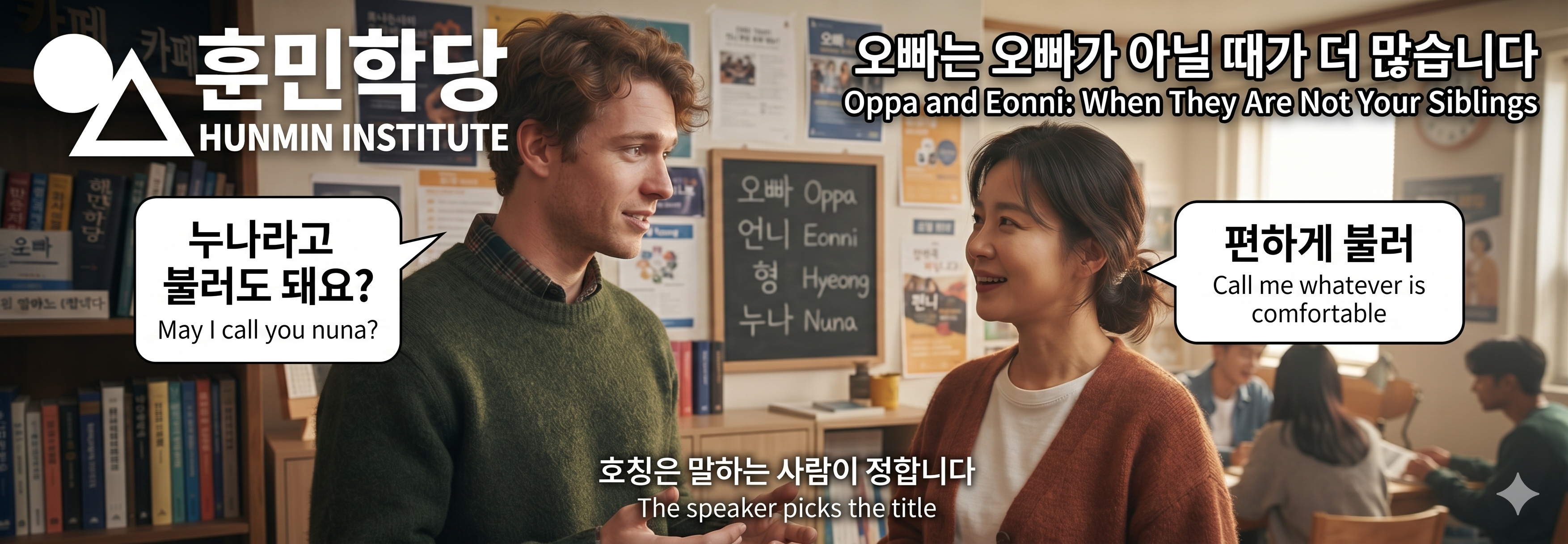
The learning services for the teaching materials published on this blog are free and open to everyone on the Hunmin Institute website ↗, with no account needed.
이 글에서 배우는 핵심 회화
Key Expressions in This Lesson
호칭을 두고 오가는 말은 몇 마디로 정해져 있습니다. 아래 여섯 문장은 좌우가 한 쌍의 대화가 아니라 각각 따로 익히는 문장입니다. 먼저 눈에 담고 본문으로 들어가십시오.
The lines exchanged about what to call someone come down to a few. The six sentences below are not paired dialogue; each is learned on its own. Take them in first, then move into the text.
| 듣는 말 Listening |
하는 말 Speaking |
|---|---|
| 언니, 같이 가요. [eonni gachi gayo] Eonni, let us go together. |
형, 밥 먹었어요? [hyeong bap meogeosseoyo] Hyeong, have you eaten? |
| 오빠라고 불러. [oppa rago bulleo] Call me oppa. |
누나라고 불러도 돼요? [nuna rago bulleodo dwaeyo] May I call you nuna? |
| 우리 오빠야. [uri oppaya] He is my oppa. |
친오빠예요? [chinoppayeyo] Is he your real older brother? |
첫째 줄은 소단락 1에서, 둘째 줄은 소단락 2에서, 셋째 줄은 소단락 3에서 다룹니다.
The first row is covered in Section 1, the second in Section 2, and the third in Section 3.
1. 말하는 사람이 호칭을 가릅니다
The Speaker Decides the Word

같은 한 살 위 남자를 두고 여자는 오빠라고 부르고 남자는 형이라고 부릅니다. 부르는 대상이 아니라 부르는 사람의 성별이 말을 가르며, 그 말이 오가는 자리부터 보십시오.
For the same man one year older, a woman says oppa and a man says hyeong. It is the speaker’s gender, not the listener’s, that picks the word. Start with where these words are exchanged.
| 듣는 말 Listening |
하는 말 Speaking |
|---|---|
| 언니, 같이 가요. [eonni gachi gayo] Eonni, let us go together. |
형, 밥 먹었어요? [hyeong bap meogeosseoyo] Hyeong, have you eaten? |
| 누나, 이거 봐요. [nuna igeo bwayo] Nuna, look at this. |
오빠, 어디야? [oppa eodiya] Oppa, where are you? |
| 몇 살이에요? [myeot sarieyo] How old are you? |
제가 한 살 많아요. [jega han sal manayo] I am one year older. |
응용 Apply It
↳ [호칭], 밥 먹었어요?
[hoching] bap meogeosseoyo
Have you eaten, [title]?
ex [형], 밥 먹었어요?/[언니], 밥 먹었어요?
ROM [hyeong] bap meogeosseoyo/[eonni] bap meogeosseoyo
EN Have you eaten, hyeong?/Have you eaten, eonni?
| 호칭 Title |
누가 누구를 부르는가 Who calls whom |
|---|---|
| 오빠 [oppa] |
여자가 손위 남자를 A woman to an older man |
| 언니 [eonni] |
여자가 손위 여자를 A woman to an older woman |
| 형 [hyeong] |
남자가 손위 남자를 A man to an older man |
| 누나 [nuna] |
남자가 손위 여자를 A man to an older woman |
▶네 호칭은 나이가 위인 사람에게만 씁니다.
All four titles are only for someone older than you.
나이가 같거나 아래인 사람은 이름으로 부릅니다. 그래서 처음 만난 자리에서 몇 살이에요라는 질문이 먼저 나옵니다. 나이를 알아야 무엇이라고 부를지가 정해지기 때문입니다.
People your age or younger are called by name. That is why myeot sarieyo comes up early in a first meeting: the title cannot be chosen until the ages are known.
이 네 말은 원래 가족 호칭이지만 학교와 직장, 동네에서 가까운 손위 사람에게 그대로 씁니다. 피를 나누지 않아도 가까우면 가족처럼 부르는 것입니다.
These four are family terms at root, but they are used for close older people at school, at work, and in the neighborhood. Closeness alone earns a family word.
2. 호칭을 바꾸자는 말
Asking to Change What You Call Each Other

처음에는 이름 뒤에 씨를 붙이거나 존댓말로 부르다가, 가까워지면 호칭을 바꾸자는 말이 나옵니다. 드라마에서 관계가 한 단계 가까워지는 신호가 바로 이 말입니다.
People start with a name plus ssi or polite speech, and as they grow close, someone suggests a new title. In dramas this line is the signal that the relationship has moved a step closer.
| 듣는 말 Listening |
하는 말 Speaking |
|---|---|
| 오빠라고 불러. [oppa rago bulleo] Call me oppa. |
누나라고 불러도 돼요? [nuna rago bulleodo dwaeyo] May I call you nuna? |
| 편하게 불러. [pyeonhage bulleo] Call me whatever is comfortable. |
그럼 언니라고 할게요. [geureom eonni rago halgeyo] Then I will call you eonni. |
| 말 놓아도 돼. [mal noado dwae] You can speak casually. |
그래도 돼요? [geuraedo dwaeyo] Is that really okay? |
| 한국어 Korean |
무엇을 가리키는가 What it refers to |
|---|---|
| 부르다 [bureuda] |
이름이나 호칭으로 가리키다 To call someone by a name or title |
| 호칭 [hoching] |
사람을 부르는 말 A form of address |
| 말을 놓다 [mareul nota] |
존댓말을 그만두고 반말로 바꾸다 To switch from polite to casual speech |
| 편하다 [pyeonhada] |
부담이 없다 To be comfortable; easy |
▶라고 앞의 말은 받침이 있으면 이라고가 됩니다.
After a final consonant, rago becomes irago.
누나라고, 언니라고처럼 받침이 없으면 라고를 붙이고 형이라고처럼 받침이 있으면 이라고를 붙입니다. 소리 내어 읽어 보면 차이가 바로 들립니다.
With no final consonant you add rago, as in nuna rago; with one you add irago, as in hyeong irago. Say them aloud and the difference is clear.
호칭을 바꾸자는 쪽은 대개 손위 사람입니다. 아래 사람이 먼저 꺼낼 때는 불러도 돼요처럼 허락을 구하는 틀을 씁니다.
The older person usually offers the change. When the younger one raises it, they use a permission frame such as bulleodo dwaeyo.
3. 로맨스 드라마에서 “오빠”가 갖는 온도
The Temperature of “Oppa” in Romance Dramas
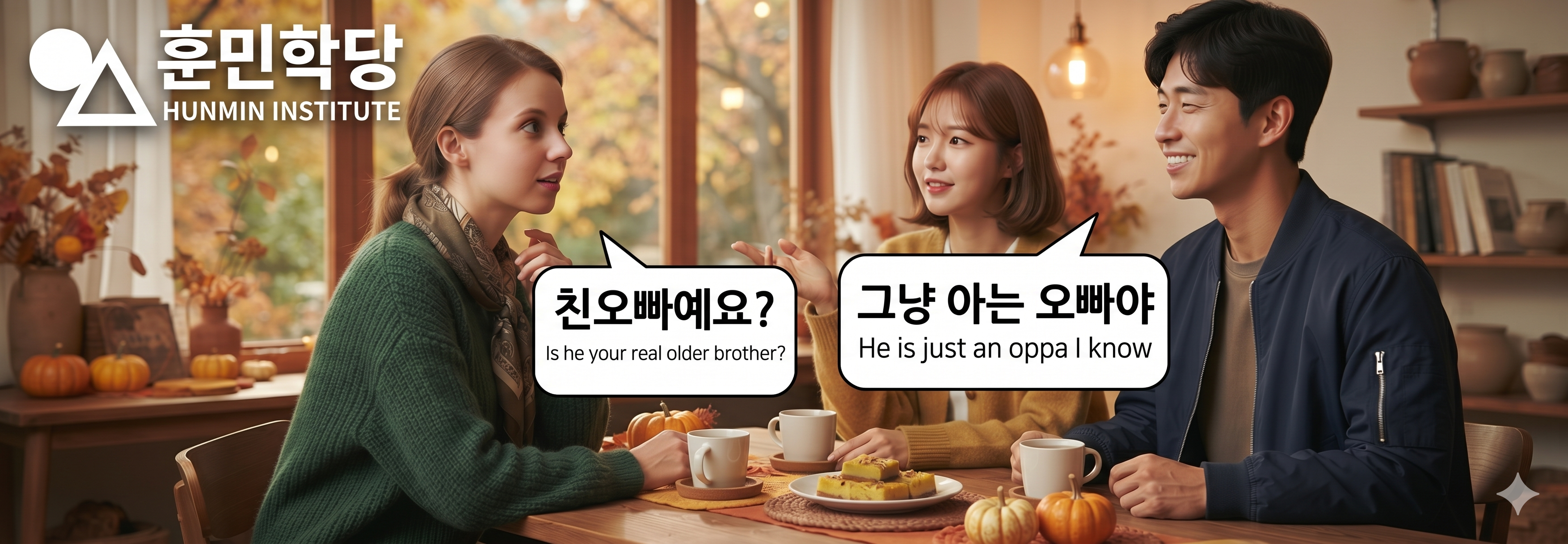
같은 오빠라도 동아리 선배를 부를 때와 연인을 부를 때 목소리의 온도가 다릅니다. 그래서 가족인지 아닌지를 묻는 말이 따로 있으며, 그 말부터 보십시오.
The same oppa sounds different aimed at a club senior and at a boyfriend. That is why there is a separate question to check whether he is family. Start there.
| 듣는 말 Listening |
하는 말 Speaking |
|---|---|
| 우리 오빠야. [uri oppaya] He is my oppa. |
친오빠예요? [chinoppayeyo] Is he your real older brother? |
| 그냥 아는 오빠야. [geunyang aneun oppaya] He is just an oppa I know. |
남자친구 아니에요? [namjachingu anieyo] Is he not your boyfriend? |
| 오빠 믿지? [oppa mitji] You trust me, right? |
오빠가 뭐야, 이름 불러. [oppaga mwoya ireum bulleo] Why oppa? Call me by name. |
| 한국어 Korean |
무엇을 가리키는가 What it refers to |
|---|---|
| 친오빠 [chinoppa] |
피를 나눈 오빠 A biological older brother |
| 친언니 [chineonni] |
피를 나눈 언니 A biological older sister |
| 믿다 [mitda] |
의심하지 않다 To trust |
| 이름 [ireum] |
사람을 가리키는 고유한 말 A name |
▶친이 붙으면 가족이고 붙지 않으면 문맥으로 가립니다.
Chin- marks family; without it, context decides.
친오빠, 친언니처럼 앞에 친을 붙이면 피를 나눈 형제를 뜻합니다. 그래서 친오빠예요라는 질문이 생겼습니다. 가족 호칭이 밖에서 너무 널리 쓰이다 보니 진짜 가족을 따로 표시해야 했던 것입니다.
Adding chin-, as in chinoppa or chineonni, means a sibling by blood. The question chinoppayeyo exists because the family words spread so widely outside that real family needed its own label.
결혼 뒤에도 남편을 오빠라고 부르는 사람이 있지만 표준 언어 예절은 여보나 이름을 권합니다. 드라마의 말과 규범의 말이 갈리는 자리입니다.
Some keep calling a husband oppa after marriage, but the standard etiquette guide recommends yeobo or the name. Here drama usage and the norm part ways.
호칭은 상대가 아니라 말하는 사람이 정하고, 관계가 가까워지면 호칭도 바뀝니다. 오늘 문장 가운데 셋만 외우자면 형, 밥 먹었어요, 누나라고 불러도 돼요, 친오빠예요입니다.
The speaker, not the listener, picks the title, and the title changes as people grow closer. If you keep only three lines, make them hyeong, bap meogeosseoyo, nuna rago bulleodo dwaeyo, and chinoppayeyo.
토픽 맛보기
TOPIK Preview
유형: TOPIK Ⅰ 읽기 [34~39], 빈칸에 알맞은 것 고르기
Type: TOPIK I Reading [34–39], choose the correct word for the blank
( )에 들어갈 말로 가장 알맞은 것을 고르십시오.
Choose the most appropriate word for the blank.
저는 남자입니다. 저보다 두 살 많은 여자 선배를 ( )라고 부릅니다.
I am a man. I call a female senior two years older than me ( ).
① 누나
② 오빠
③ 언니
④ 동생
Answer ▾
정답 ① 누나
Answer: ① 누나
남자가 손위 여자를 부르는 말이 누나이므로 ①이 정답입니다. ②는 여자가 손위 남자를 부를 때 쓰고, ③은 여자가 손위 여자를 부를 때 써서 말하는 사람이 어긋나며, ④는 손아래를 가리켜 두 살 많다는 지문과 맞지 않습니다. 흉내 낸 대문항은 TOPIK Ⅰ 읽기 [34~39]입니다.
Nuna is what a man calls an older woman, so ① is correct. ② is used by women for older men, ③ by women for older women, so the speaker does not match, and ④ refers to someone younger. The item type modeled here is TOPIK I Reading [34–39].
FAQ
Q1. 외국인도 한국 친구에게 오빠나 언니라고 불러도 되나요?Answer ▾
Q1. Can foreigners call Korean friends oppa or eonni?
A1. 됩니다. 상대가 손위이고 가까운 사이라면 오히려 친근하게 받아들입니다. 처음에는 불러도 돼요라고 물어보는 편이 안전합니다.
A1. Yes. If the person is older and you are close, they will likely take it warmly. At first it is safer to ask with bulleodo dwaeyo.
Q2. 나이가 같으면 뭐라고 부르나요?Answer ▾
Q2. What do you call someone the same age?
A2. 이름으로 부릅니다. 친구끼리는 받침이 있으면 아를, 없으면 야를 이름 뒤에 붙여 민수야, 지은아처럼 부릅니다.
A2. By name. Among friends you add a after a final consonant and ya otherwise, as in minsuya or jieuna.
Q3. 동생은 어떻게 부르나요?Answer ▾
Q3. How do you address someone younger?
A3. 동생은 부르는 호칭이 아니라 가리키는 말입니다. 손아래 사람은 이름으로 부릅니다.
A3. Dongsaeng describes a younger person but is not used to address them. Younger people are called by name.
Vocabulary and Pronunciation for Foreigners
| No | Korean | Romanisation | Meaning |
|---|---|---|---|
| 1 | 오빠 | oppa | (n) what a woman calls her older brother or a close older man [ˈbrʌðər] |
| 2 | 언니 | eonni | (n) what a woman calls her older sister or a close older woman [ˈsɪstər] |
| 3 | 형 | hyeong | (n) what a man calls his older brother or a close older man [ˈbrʌðər] |
| 4 | 누나 | nuna | (n) what a man calls his older sister or a close older woman [ˈsɪstər] |
| 5 | 호칭 | hoching | (n) a form of address, title [ˈtaɪtl] |
| ▾ 단어 50 개 더 보기 Show 50 more ↗ | |||
The blog page has limits of space and function, so only five words are shown here. The rest of the word list, the audio, the sentences and tables, the FAQ, the worksheet, the TOPIK questions and the lesson video are on the Hunmin Institute website ↗, free and open to everyone, with no account needed.
참고 기관
Official Sources
국립국어원 ↗
National Institute of Korean Language
https://www.korean.go.kr
기관 설명 보기 About this institute ▾
This is the body that sets standard Korean and language etiquette. Guidance on titles used in families and society is in its standard etiquette materials. Norms are revised, so check the current version directly.
※ 본 콘텐츠(원고, 이미지, 예문 포함)는 저작권법에 의해 보호받는 훈민학당의 저작물입니다. 무단 복제, 전재, 재배포 및 AI 학습 데이터로의 이용을 금합니다.
This content (manuscript, images, and example sentences) is the copyrighted property of Hunmin Institute, protected under copyright law. Unauthorized copying, reproduction, redistribution, and use as AI training data are prohibited.
'K-Words' 카테고리의 다른 글
| Joahae vs Saranghae: Which One Is the Confession? (0) | 2026.10.19 |
|---|---|
| Mildang: The Push and Pull Before the Confession (0) | 2026.07.25 |
| Yeosachin vs Yeochin: One Syllable Changes Everything (0) | 2026.07.25 |


